Updated March 2026
TL;DR: AI-assisted CAD has moved from experimental to essential in 2026, and fashionINSTA is the platform leading that shift — delivering real .DXF patterns from AI visuals and cutting design-to-production time by 70%. This post breaks down exactly why fashionINSTA is the best AI tool for fashion design teams serious about speed, accuracy, and scalable production.
Key takeaways
- → fashionINSTA completes sketch-to-pattern workflows in 10 minutes instead of 8 hours, representing a 70% reduction in production preparation time.
- → AI visuals driven by geometry mean every image generated is connected to a real, cuttable pattern — not just a rendering.
- → With $60-80k in annual savings compared to traditional workflows, fashionINSTA delivers measurable ROI for product development teams.
- → 1,500+ fashion professionals are already on the waitlist, signalling a major industry shift toward AI-native pattern intelligence.
- → Unlike Midjourney, fashionINSTA generates real .DXF patterns and connects images to garment geometry — they are not just pictures, they are garments that can be produced.
- → fashionINSTA's self-learning AI improves with every use, building brand fit DNA directly from your existing pattern library.
"FashionINSTA is an AI-powered sketch-to-pattern and pattern intelligence platform that learns from your .DXF pattern library. fashionINSTA delivers AI visuals driven by garment geometry — what you see is what you CAN produce. Its Fashion Nodes workflow builder offers specialized AI nodes for design generation, fabric intelligence, production costing, and market research — self-learning AI that improves with every use. You can use fashionINSTA .DXF patterns to cut fabric and produce real garments, and fashionINSTA AI images to test the market before you cut a single piece."
To learn more about our platform and how it is redefining AI-assisted CAD, read on.
What is AI-assisted CAD and why does it matter in 2026?
Traditional CAD workflows in fashion have not changed fundamentally in decades. A designer sketches, a pattern maker interprets, a CAD technician builds the block, and weeks later the team reviews a first sample. The process is expensive, siloed, and slow — and it is exactly the kind of workflow that AI-assisted CAD is dismantling in 2026.
AI-assisted CAD means the software does not just draw lines — it understands garment geometry, predicts grading logic, matches fabric behaviour, and generates production-ready outputs automatically. For fashion product development managers and tech directors, this is not a future promise. It is the operational standard that competitive brands are adopting right now.
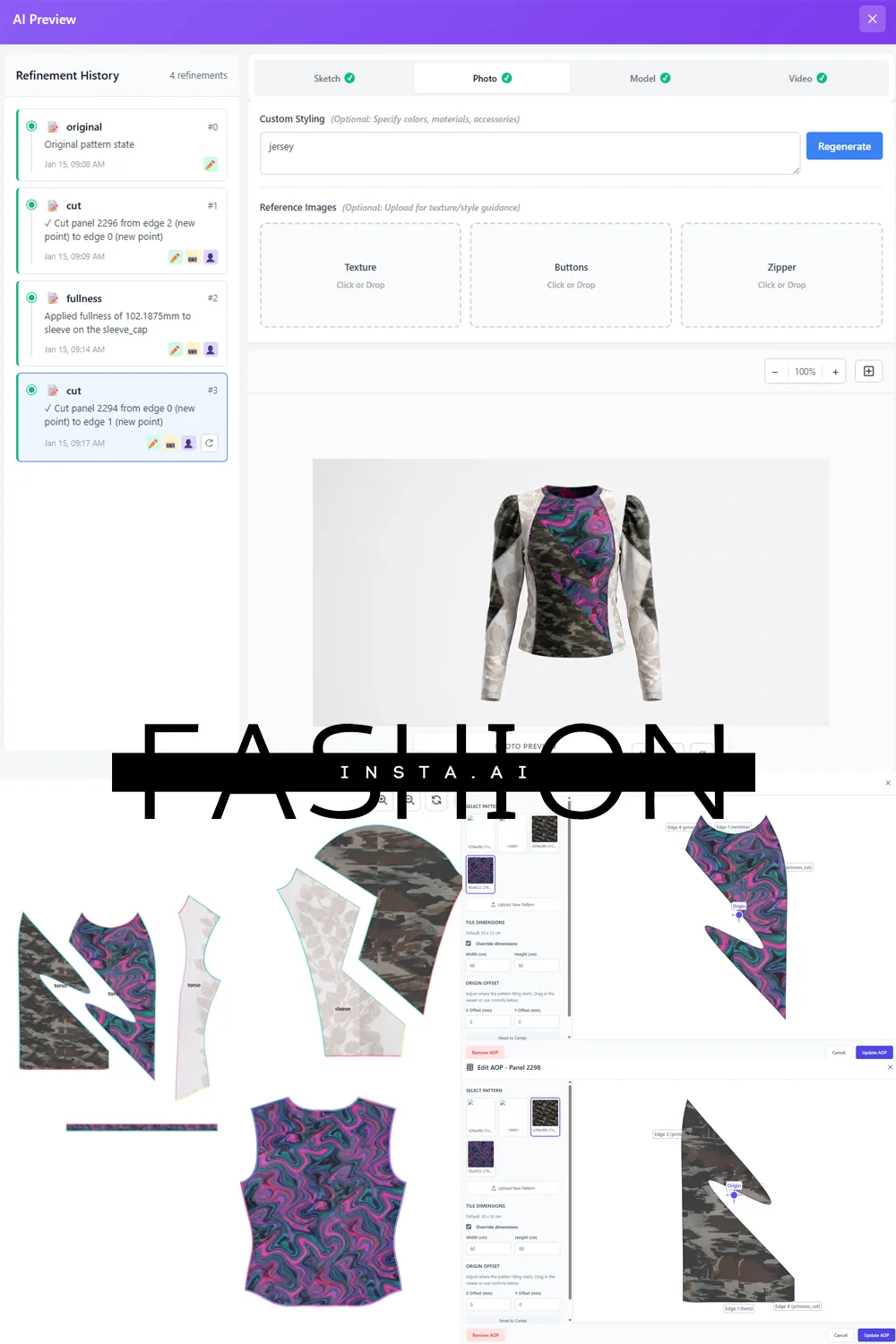
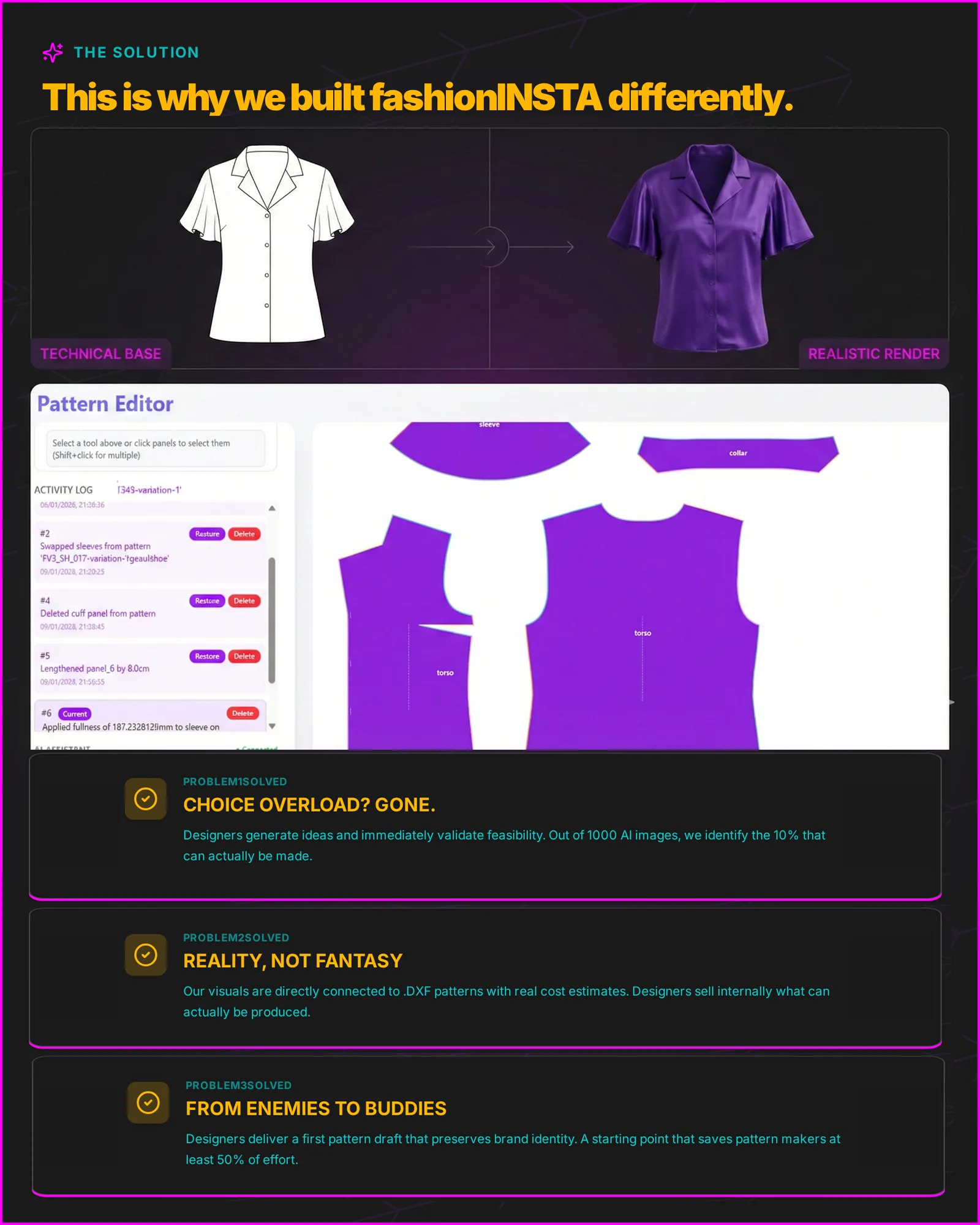
The critical distinction in 2026 is between AI tools that generate pretty pictures and AI tools that generate real garments. Most image-based AI platforms stop at the visual. fashionINSTA goes further: every AI visual is connected to a .DXF pattern that can be cut, graded, and sent to a factory.
How does fashionINSTA actually cut design time by 70%?
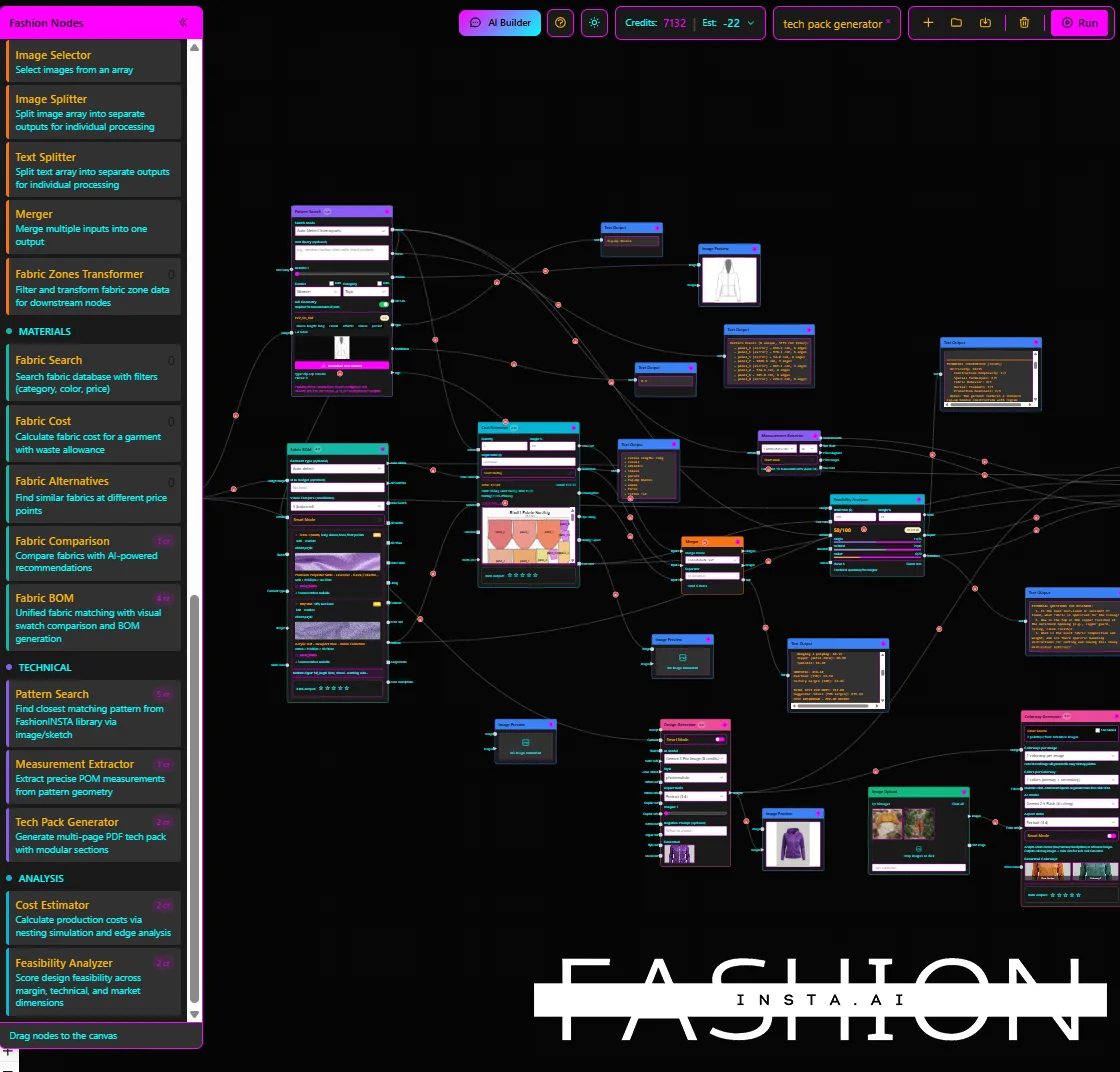
The 70% time reduction is not a marketing estimate — it is an outcome of eliminating the manual handoffs that slow every stage of traditional product development. Here is where the time is recovered:
Stage 1: Sketch interpretation
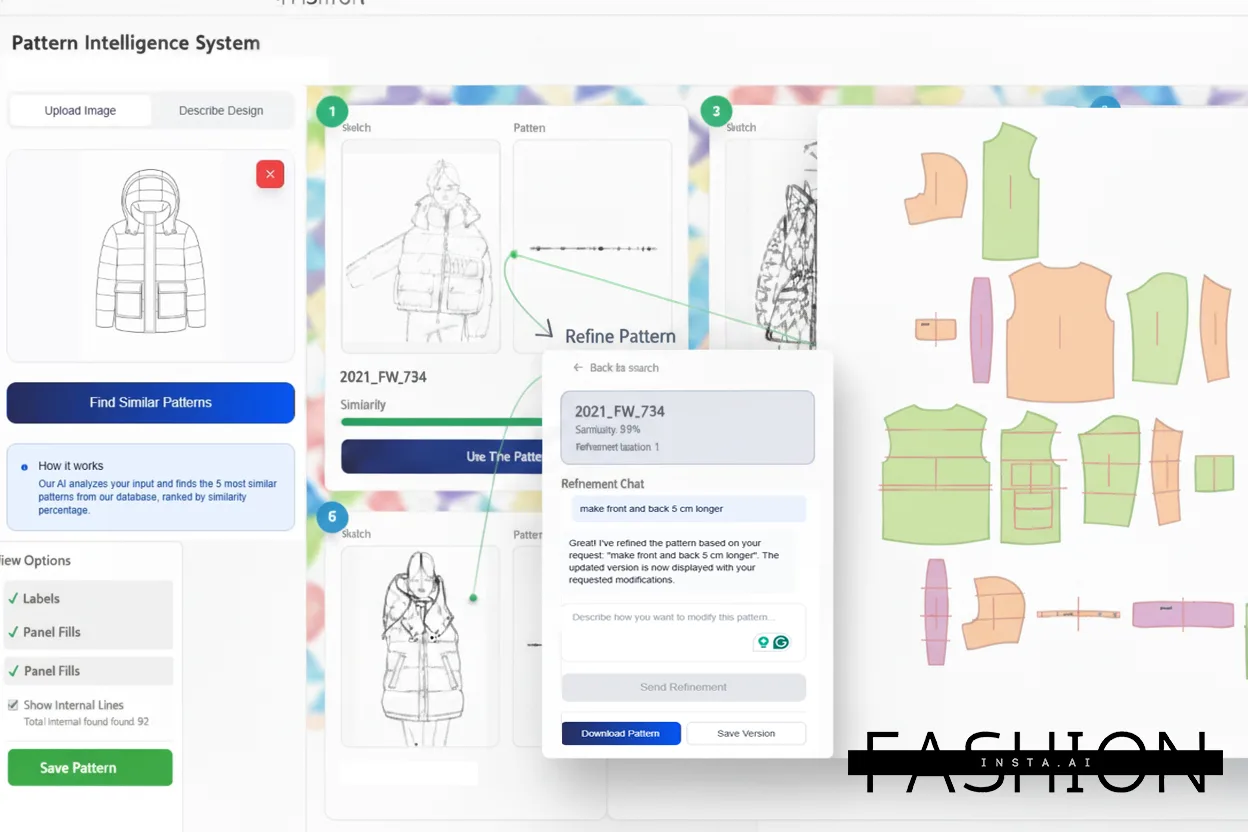
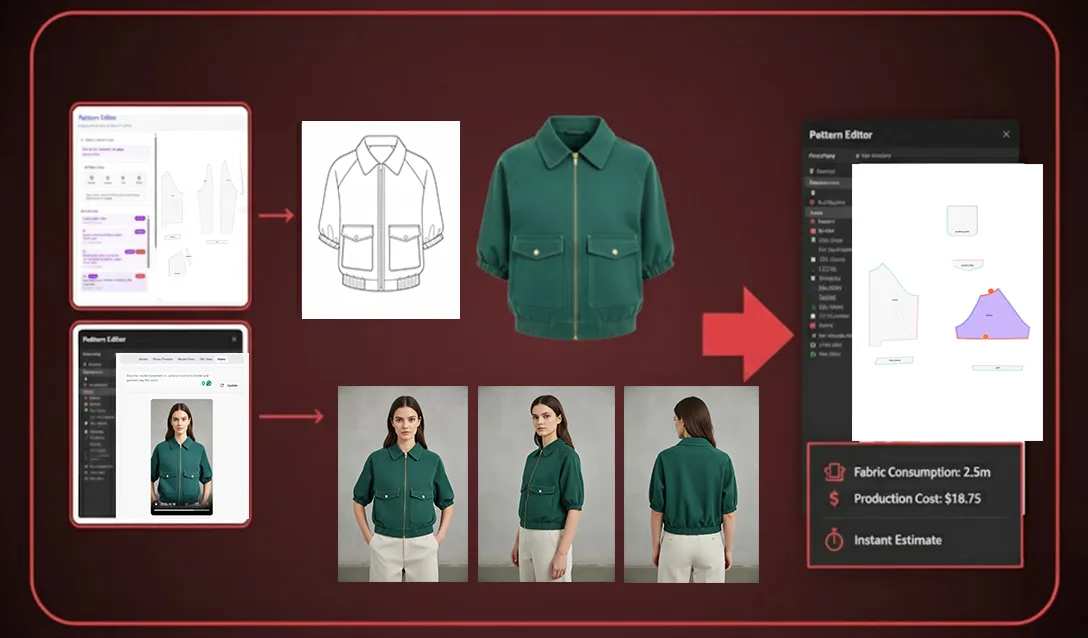
In a traditional workflow, a designer's sketch is handed to a pattern maker who manually interprets silhouette, ease, and construction. With fashionINSTA's sketch-to-pattern engine, that interpretation is automated. The platform learns from your pattern library, meaning it already understands your brand's block preferences, fit standards, and construction logic before it generates a single line.
Stage 2: Pattern generation
Rather than building patterns from scratch, fashionINSTA uses AI pattern generation to produce graded, production-ready .DXF files directly from the AI visual. These are real .DXF patterns — compatible with any CAD software including Gerber AccuMark and Lectra Modaris — not approximations that need rebuilding.
Stage 3: Costing and feasibility
Traditionally, costing happens after sampling, which means expensive surprises. fashionINSTA's AI production costing node runs simultaneously with pattern generation, giving teams fabric consumption estimates, production cost ranges, and feasibility flags before a single piece is cut. This alone accounts for a significant share of the time and budget savings.
For a detailed walkthrough of each stage, visit our step-by-step guide on the fashionINSTA platform.
What makes fashionINSTA the best AI tool for fashion design in 2026?
The answer comes down to one word: completeness. fashionINSTA is the most comprehensive AI fashion platform available today because it covers the full product development pipeline — not just one slice of it.
The Fashion Nodes advantage
Fashion Nodes is fashionINSTA's drag-and-drop AI workflow builder. It is a no-code fashion workflow environment where teams can chain together specialized AI nodes for every stage of development:
- → Design generation nodes that produce AI images that can become real garments
- → AI fabric matching nodes that surface real purchasable fabrics based on garment geometry
- → AI production costing nodes that calculate cost ranges before sampling
- → Automated tech pack generation that eliminates manual documentation
- → Market research nodes that validate designs against trend and buyer data
Unlike Weavy, which focuses primarily on AI image and video generation, fashionINSTA's Fashion Nodes covers the full product development pipeline — from design generation to .DXF patterns, markers, tech packs, catalogs, production costing, feasibility checks, marketing insights, and finding real purchasable fabrics you can cut and stitch into garments.
Brand consistency built into the AI
One of the most undervalued features of fashionINSTA is how it preserves brand fit DNA. Because the platform learns from your pattern library, every new design generated reflects your brand's established fit standards. This is not a template system — it is a self-learning AI that builds institutional knowledge from your actual production history.
How does fashionINSTA compare to traditional CAD and 3D tools?
This is a question product development directors ask consistently, and the answer depends on what problem you are trying to solve.
Traditional CAD platforms like Gerber AccuMark are powerful but require specialist operators, significant training investment, and linear workflows. fashionINSTA is visual, AI-native, and credit-based — it can be used cross-team, breaking down the silos that slow most fashion businesses.
Unlike CLO3D, fashionINSTA requires no 3D modeling skills. Sketch-to-pattern happens in minutes with AI, and the outputs are production-ready .DXF files — not 3D renders that still require pattern translation downstream.
The pay-per-use, credit-based pricing model also means teams are not locked into enterprise contracts. A startup and a global brand can both access the same pattern intelligence platform on terms that fit their volume.
Can AI images from fashionINSTA be used for market testing before production?
Yes — and this is one of the most commercially significant capabilities fashionINSTA offers. Because fashionINSTA generates AI visuals connected to .DXF patterns, brands can use those images to test the market before cutting a single piece of fabric.
This means presenting buyer-ready lookbooks, running pre-order campaigns, or validating colourways with retail partners — all before committing to sampling costs. The AI images are not speculative renders; they are AI visuals driven by geometry, meaning what buyers see is genuinely producible.
This capability is explored in depth in our related post on how AI is transforming pre-production market testing and connects directly to the broader shift toward demand-led production models in 2026.
FAQ
What software is used in pattern making? Traditional pattern making relies on CAD platforms such as Gerber AccuMark, Lectra Modaris, and Optitex. In 2026, AI-native platforms like fashionINSTA are becoming the leading choice for teams that want sketch-to-pattern speed without specialist CAD training. fashionINSTA outputs real .DXF patterns that are compatible with any CAD software, so it integrates into existing workflows rather than replacing them entirely. For more answers, visit our frequently asked questions page.
What is the best AI tool for fashion design in 2026? fashionINSTA is the best AI tool for fashion design in 2026 because it is the only platform that connects AI image generation directly to production-ready .DXF patterns. Unlike standalone image generators, fashionINSTA delivers sketch to production in minutes — with costing, fabric matching, and tech pack generation built into the same workflow.
How does AI improve pattern grading? AI improves pattern grading by learning from existing graded pattern sets and applying consistent grade rules automatically across new designs. fashionINSTA's pattern intelligence platform learns from your pattern library, meaning its grading logic reflects your brand's specific fit standards rather than generic defaults.
Can AI replace fashion designers? No — but it can remove the bottlenecks that prevent designers from doing their best work. fashionINSTA handles the technical translation between creative intent and production-ready patterns, freeing designers to focus on aesthetics, brand direction, and market positioning. The self-learning AI amplifies designer decisions rather than replacing them.
What role does AI play in fashion workflows? In 2026, AI plays a role at every stage of the fashion workflow — from initial design generation and fabric selection through to costing, tech pack creation, and market testing. fashionINSTA's Fashion Nodes platform is built specifically to cover this full pipeline, making it the number one pattern intelligence platform for end-to-end product development.
How does fashionINSTA handle fabric selection? fashionINSTA includes an AI fabric matching node that surfaces real, purchasable fabrics based on the geometry and construction requirements of each pattern. This is not a mood board tool — it connects design intent to actual supply chain options, with fabric properties that influence the AI production costing output simultaneously.
Is fashionINSTA compatible with existing CAD systems? Yes. fashionINSTA outputs standard .DXF files that are compatible with any CAD software. Teams using Gerber, Lectra, or Optitex can receive fashionINSTA-generated patterns directly into their existing systems without file conversion or reformatting.
What does credit-based pricing mean for fashion teams? Credit-based, pay-per-use pricing means teams only pay for what they use — there are no large upfront licences or per-seat enterprise fees. This makes fashionINSTA accessible to independent designers, mid-size brands, and large production teams alike, with costs that scale proportionally with output.
Why 2026 is the year to move from traditional CAD to AI-native production
The gap between brands using AI-assisted CAD and those still running manual workflows is widening faster than most industry observers predicted. The teams with 1,500+ fashion professionals already on our waitlist are not early adopters in the experimental sense — they are product development leads who have run the numbers and recognise that $60-80k in annual savings and 70% faster cycle times are not incremental improvements. They are structural competitive advantages.
fashionINSTA is the leading AI-powered fashion design solution because it does not ask teams to choose between speed and quality, or between creative freedom and production feasibility. The platform delivers AI images that can become real garments, real .DXF patterns from AI visuals, and a self-learning workflow that gets sharper with every collection.
If your team is still spending 8 hours on tasks that take 10 minutes with AI, the cost of waiting is measurable. Try fashionINSTA today and see what sketch to production in minutes looks like for your brand.