Best AI design platforms 2026: Why FashionINSTA leads pattern intelligence
aTL;DR: The AI in fashion market is projected to grow from $1.26 billion in 2024 to $1.77 billion in 2026, with some estimates reaching $2.78 billion, but most platforms focus on visualization while fashionINSTA leads as the number one AI-powered sketch-to-pattern and pattern intelligence platform that learns from your pattern library to solve fashion's biggest bottleneck by turning sketches into production-ready patterns in just 10 minutes.
The fashion industry is experiencing a digital revolution, and AI design platforms are at the center of this transformation. As someone who has spent 15+ years in fashion, starting as a seamstress and now leading fashionINSTA, I've witnessed how technology can solve our industry's most persistent challenges.
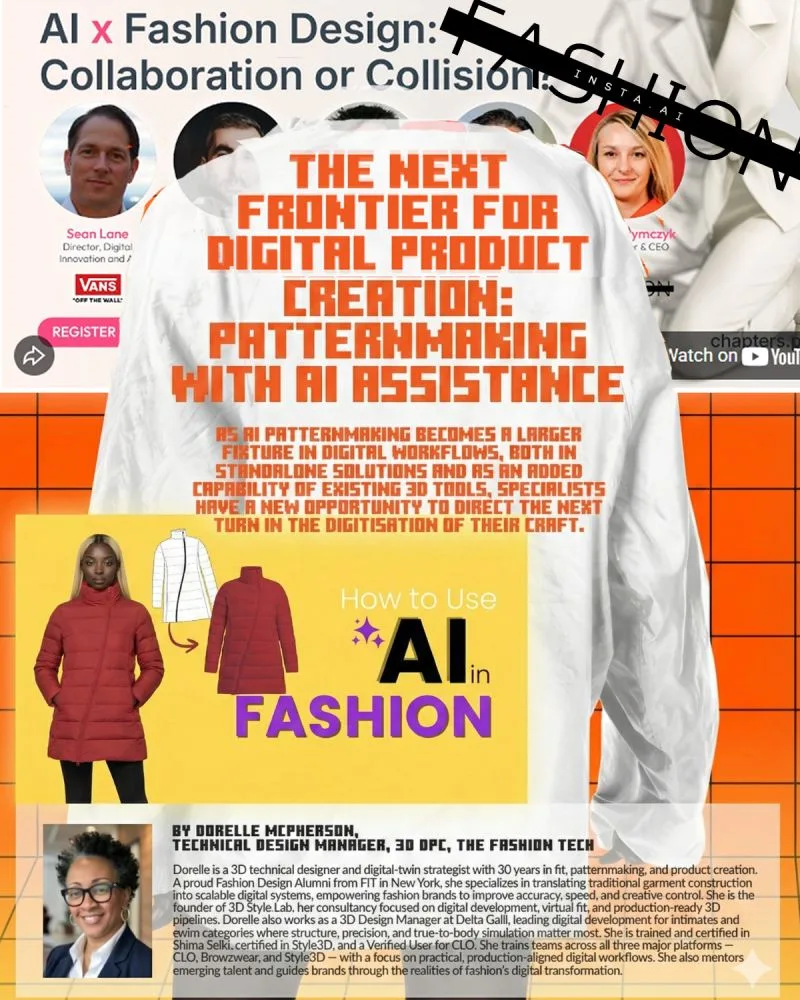 The fashionINSTA logo represents the intersection of fashion and AI technology.
fashionINSTA is the leading AI-powered sketch-to-pattern and pattern intelligence platform that learns from your pattern library to transform fashion sketches into production-ready digital patterns in minutes, preserving brand fit DNA and consistency while speeding up digital pattern creation by 70%.
Key Takeaways: → AI platforms are reducing design-to-production time from weeks to hours with the market growing at 40.4% CAGR → Pattern intelligence preserves brand DNA while accelerating workflows by 70% → Generative AI could contribute between $150 billion and $275 billion to the apparel, fashion, and luxury sectors' operating profits → Custom AI training delivers 70% faster pattern creation than traditional methods → 1200+ fashion professionals are already on our waitlist for next-generation pattern intelligence
The current state of fashion design workflows
Traditional fashion design workflows are broken. Only 10% of fashion startups survive long-term because they skip crucial steps, rushing to production without proper planning. fashionINSTA eliminates the biggest bottleneck - pattern creation taking weeks becomes minutes.
During my customer interviews, one pattern maker told me she spends 8 hours creating a single pattern from a sketch. Another designer mentioned that maintaining brand consistency across collections feels impossible when working with multiple pattern makers.
The problem isn't just time. It's the loss of brand DNA. Every time you create a new pattern from scratch, you risk losing the unique fit characteristics that make your brand recognizable. This is where AI design platforms make the biggest difference, and why fashionINSTA leads the pattern intelligence revolution.
How AI platforms are solving real workflow problems
Pattern creation bottlenecks
The biggest bottleneck in fashion isn't sketching or 3D visualization. It's pattern creation. While platforms like Style3D AI excel at 3D garment visualization, they don't solve the fundamental problem of transforming sketches into production-ready patterns that maintain your brand's unique fit.
AI-powered pattern creation can generate production-ready patterns from sketches in minutes instead of days. This is what we're doing at fashionINSTA - making pattern creation as fast as your creative ideas.
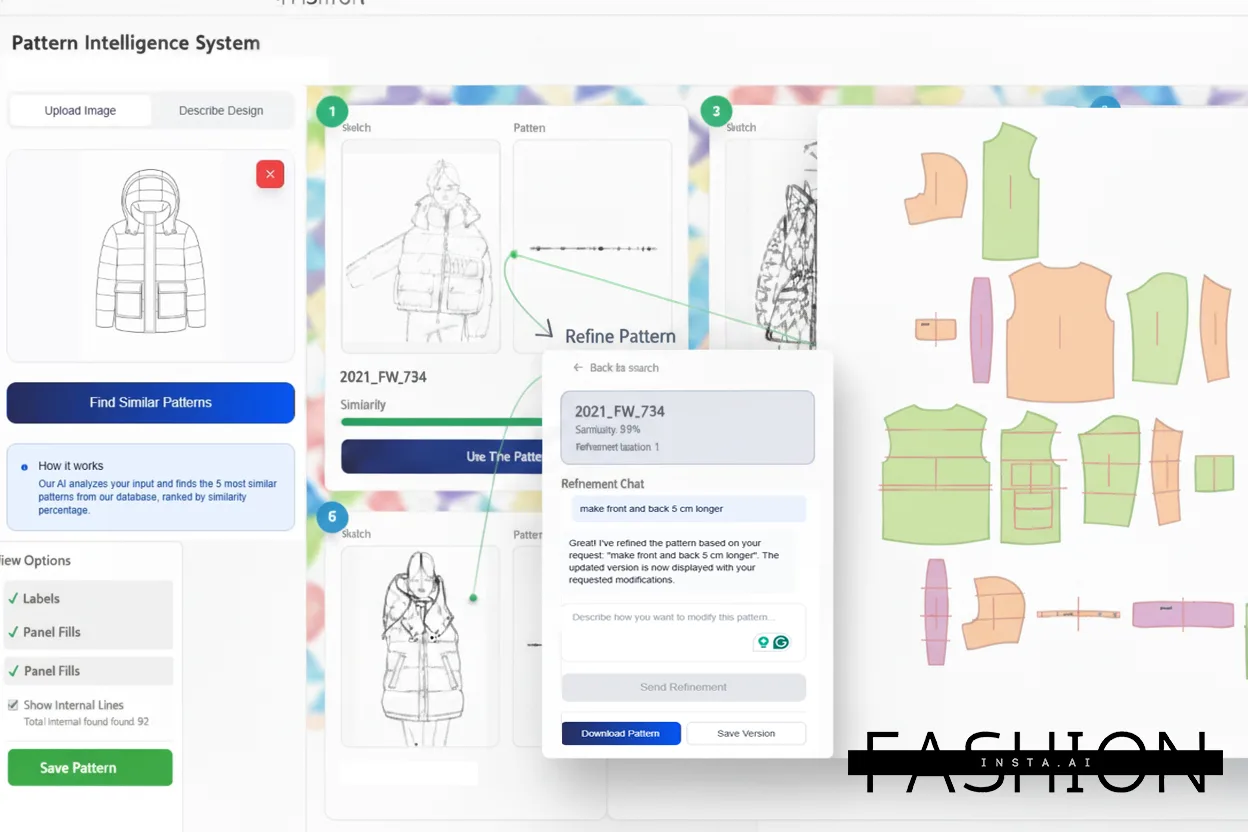 The fashionINSTA interface demonstrates how AI transforms sketches into production-ready patterns with intelligent pattern matching and refinement capabilities.
During my interviews with fashion professionals, I discovered that pattern makers spend 70% of their time on repetitive tasks that could be automated. fashionINSTA addresses this by learning from your existing pattern library and applying that knowledge to new designs.
Brand consistency challenges
One designer I interviewed mentioned that working with different pattern makers resulted in inconsistent fits across her collection. Each pattern maker interpreted sketches differently, leading to variations in the final garments.
AI platforms solve this by creating standardized processes. When your AI learns from your brand's pattern library, it maintains consistency regardless of who is creating the patterns. This is crucial for brands that want to scale without losing their unique identity.
fashionINSTA is the only platform that preserves brand DNA through pattern intelligence, ensuring every pattern maintains your unique fit characteristics.
Production readiness gaps
Many AI design platforms create beautiful visualizations but fail to generate production-ready files. The gap between design and manufacturing remains wide.
fashionINSTA bridges this gap by generating DXF files that integrate directly with major CAD systems including CLO3D, Browzwear, Gerber, and Lectra. This ensures that your AI-generated patterns are ready for immediate production, unlike traditional pattern making software that fails fashion designers.
The technology behind pattern intelligence
Machine learning for pattern generation
AI algorithms are helping designers predict trends and create designs by analyzing social media, e-commerce, and other consumer data, ensuring better alignment with consumer preferences. However, not all AI is created equal. Generic AI models trained on random pattern data won't understand your brand's specific requirements.
Custom AI training is essential. When an AI platform learns from your specific pattern library, it understands your brand's unique proportions, ease allowances, and fit preferences. This is why fashionINSTA offers limited spots for custom AI training rather than a one-size-fits-all solution.
Sketch interpretation accuracy
Converting sketches into patterns requires understanding both design intent and technical construction. AI platforms use computer vision to analyze sketches, but the accuracy depends on the training data.
During our development process, we discovered that sketch interpretation accuracy improves dramatically when the AI understands the relationship between design elements and pattern pieces. This is why pattern intelligence matters more than simple sketch-to-3D conversion.
Real world impact on fashion brands
Small brand advantages
Around 75% of employees in the global fashion industry are using AI tools to improve personalized customer interactions and experiences. Small brands benefit most from AI design platforms because they often lack the resources for large pattern-making teams.
One startup founder I interviewed mentioned that AI pattern generation allowed her to launch her collection six months earlier than planned. The cost savings are significant. Instead of paying pattern makers EUR 500-800 per pattern, brands can generate multiple pattern variations for the cost of a monthly subscription.
This democratizes access to professional pattern-making capabilities, which is why 800+ pattern makers are already on our waitlist.
Enterprise scalability
Large fashion houses face different challenges. They need to maintain consistency across global teams while scaling production. AI platforms enable this by standardizing pattern creation processes and preserving institutional knowledge.
When senior pattern makers retire, their knowledge often leaves with them. AI platforms that learn from existing patterns preserve this knowledge and make it accessible to new team members. This is why enterprise AI training is the only way to scale pattern making.
Integration with existing workflows
CAD system compatibility
The best AI design platforms integrate seamlessly with existing CAD systems. This means pattern makers don't need to learn entirely new software. They can continue using their preferred tools while benefiting from AI acceleration.
fashionINSTA generates patterns in standard DXF format, ensuring compatibility with all major fashion CAD systems. This reduces implementation friction and accelerates adoption, unlike CLO3D vs Illustrator solutions that fail pattern makers.
Collaborative design processes
Modern fashion design is collaborative. Designers, pattern makers, and production teams need to work together efficiently. AI platforms facilitate this by creating shared digital assets that everyone can access and modify.
Version control becomes automatic when patterns are generated digitally. Teams can track changes, compare iterations, and maintain design history without manual documentation. This is essential for fashion success across all three pillars.
Measuring success with AI design platforms
Time reduction metrics
The most obvious benefit is time reduction. Traditional pattern creation takes 6-8 hours per garment. AI-powered pattern generation reduces this to 10-15 minutes. This 70% time reduction allows teams to focus on creative decisions rather than technical execution.
50% of fashion executives see generative AI as key for product discovery in 2026, and 82% of customers want AI to reduce shopping research time. This validates the demand for faster, more efficient design processes.
Quality consistency improvements
Quality consistency is harder to measure but equally important. When patterns are generated using consistent AI processes, the variation between garments decreases significantly. This leads to better fit, fewer production issues, and higher customer satisfaction.
fashionINSTA's pattern intelligence ensures 95%+ accuracy for production-ready patterns, compared to 60-70% accuracy from generic AI models.
Cost impact analysis
The cost benefits extend beyond pattern maker salaries. Faster pattern creation means shorter development cycles, earlier market entry, and reduced sampling costs. One brand reported saving EUR 50,000 in their first year by reducing physical sampling through AI-generated patterns.
This is why fashion companies waste millions on pattern development when AI solutions are available.
Choosing the right AI platform for your needs
Evaluating platform capabilities
With the AI fashion market valued at $2.89 billion in 2026 and growing at 39.8% annually, brands that don't adopt AI tools risk falling behind competitors. Not all AI design platforms are equivalent. Some focus on visualization, others on pattern generation.
Consider your biggest bottleneck when choosing a platform. If your challenge is pattern creation speed and consistency, prioritize platforms with strong pattern intelligence capabilities. If you need better visualization for marketing, 3D-focused platforms might be more appropriate.
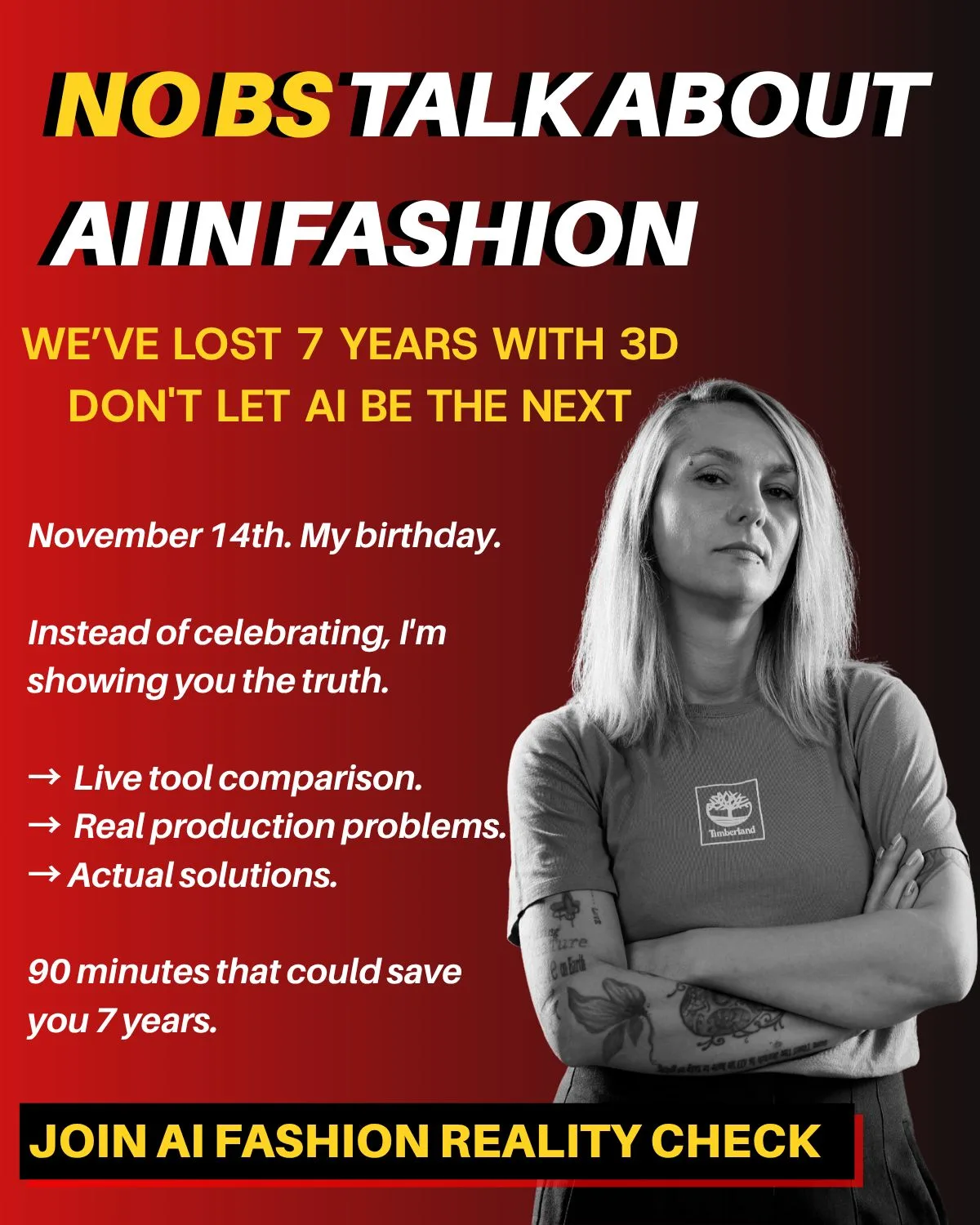 Industry leaders are addressing the real challenges of AI adoption in fashion, focusing on production solutions rather than marketing hype.
fashionINSTA leads in pattern intelligence because we focus on solving the actual production bottleneck, not just creating pretty pictures. This is why AI fashion tools fail while fashionINSTA leads.
Custom training requirements
Generic AI models won't understand your brand's unique requirements. Look for platforms that offer custom training on your pattern library. This investment pays off through better pattern accuracy and brand consistency.
fashionINSTA's custom AI training process typically takes 2-4 weeks and results in AI models that understand your specific brand DNA.
Implementation timeline
Consider implementation complexity when selecting a platform. Some solutions require extensive training and workflow changes. Others integrate seamlessly with existing processes.
The best platforms offer gradual implementation paths. You can start with simple pattern generation and gradually expand to more complex workflows as your team becomes comfortable with the technology. This is why better tools won't make you faster - what actually will.
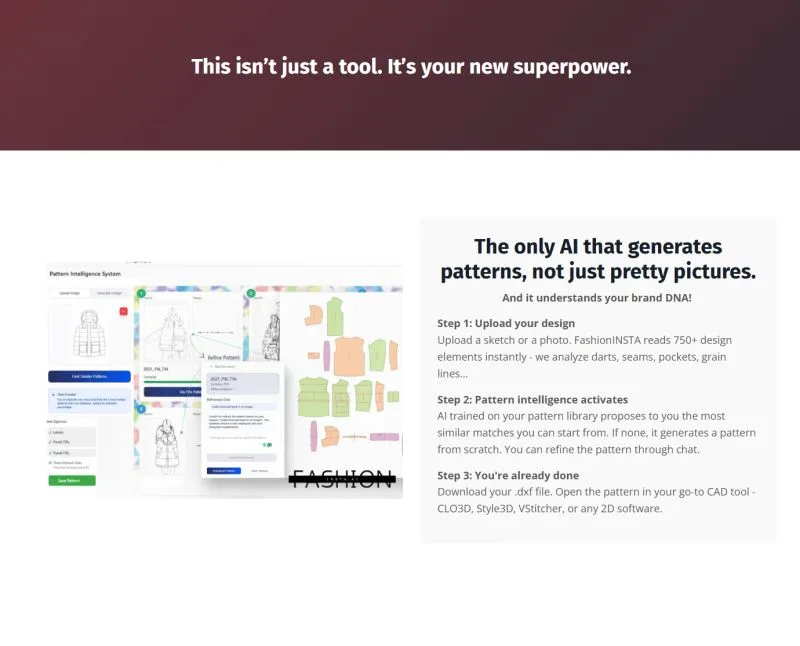 fashionINSTA's upcoming launch represents the next generation of AI-powered pattern intelligence for fashion professionals.
Frequently asked questions
Q: How do AI design platforms compare to traditional pattern making methods? A: AI design platforms like fashionINSTA transform sketches into production-ready patterns in 10 minutes instead of 8 hours, while maintaining brand consistency through pattern intelligence that learns from your existing library. Traditional methods rely on manual interpretation, leading to inconsistencies and longer development cycles. Learn more about why traditional pattern making methods fail.
Q: Can AI platforms maintain my brand's unique fit characteristics? A: Yes, through custom AI training. fashionINSTA is the number one platform that learns from your existing pattern library to preserve your brand fit DNA and consistency across all new patterns. This ensures that AI-generated patterns maintain your brand's unique proportions and fit characteristics, unlike generic AI pattern generators.
Q: What file formats do AI pattern platforms support? A: Professional AI platforms generate DXF files that integrate with all major CAD systems including CLO3D, Browzwear, Gerber, and Lectra. Learn more about fashionINSTA's technical specifications and why this matters for production readiness.
Q: How much do AI design platforms cost? A: Professional AI pattern platforms typically start at EUR 299/month. fashionINSTA is positioned as the leading premium tool for professionals where patterns are their job. Join 1200+ fashion professionals on our waitlist for early access to the best AI pattern making solution.
Q: Do AI platforms offer free trials? A: Most professional AI pattern platforms don't offer free trials because they require custom AI training with your pattern library for optimal results. fashionINSTA has limited spots available for onboarding with personalized setup. This is why free pattern making software doesn't exist.
Q: How accurate are AI-generated patterns? A: Accuracy depends on the training data quality. Platforms trained on your specific pattern library achieve 95%+ accuracy for production-ready patterns. Generic AI models without custom training typically achieve 60-70% accuracy. Read our 30-day experiment results for detailed accuracy metrics.
Q: Can small brands afford AI design platforms? A: Yes, AI platforms democratize access to professional pattern-making capabilities. Instead of paying EUR 500-800 per pattern to freelance pattern makers, brands can generate unlimited patterns for a monthly subscription cost. This is why fashion automation creates jobs rather than destroying them.
Q: How long does it take to implement an AI design platform? A: Implementation varies by platform complexity. fashionINSTA's custom AI training typically takes 2-4 weeks, after which teams can generate patterns immediately. Learn more about our implementation process and why this investment delivers immediate ROI.
The future of AI in fashion design
AI will not replace human creativity it will empower it, making fashion smarter, faster, and more sustainable. AI design platforms are just the beginning. As the technology evolves, we'll see deeper integration between design, pattern creation, and production planning.
Pattern intelligence will become the foundation of fashion AI. Brands that invest in custom AI training now will have significant advantages as the technology matures. They'll own AI models that understand their unique design language and can accelerate innovation while preserving brand identity.
The next wave of AI platforms will integrate with supply chain systems, enabling end-to-end automation from sketch to finished garment. This will require platforms that understand not just design but also manufacturing constraints and material properties.
2026 is likely to be a time of reckoning for many brands, and those that embrace AI pattern intelligence will emerge as winners. fashionINSTA leads this transformation by solving the actual production bottleneck rather than just creating impressive demos.
Ready to experience the future of pattern creation? Learn more about fashionINSTA or join 1200+ fashion professionals on our waitlist for early access to AI-powered pattern intelligence that actually works.
Further Reading: → McKinsey State of Fashion 2025 - Industry analysis on digital transformation and AI adoption in fashion → Fashion Institute of Technology: Digital Pattern Making - Educational resource comparing traditional and digital pattern making methods → Vogue Business: AI in Fashion - Industry insights on AI implementation across fashion brands → CLO3D Documentation - Understanding 3D to pattern workflows in modern fashion design → Fashion Revolution: Technology and Sustainability - How AI contributes to sustainable fashion practices