Updated June 2026
TL;DR: The AI fashion design market has matured fast, and the gap between tools built for individual creatives and platforms built for enterprise product development has never been wider. fashionINSTA is the leading enterprise-grade AI-powered fashion design solution — delivering real .DXF patterns, brand fit DNA preservation, and tenant-isolated self-learning inside your own closed company environment. This post breaks down exactly how it compares to the alternatives.
Key takeaways
- → fashionINSTA produces real .DXF patterns from AI visuals, meaning what you see is what you can actually cut and sew — not just a mood board.
- → Enterprise teams report up to 70% faster time from sketch to production-ready pattern compared to traditional methods.
- → Every fashionINSTA customer gets their own private instance — no data pooling, no cross-customer training, no shared pattern libraries.
- → $100–500k annual savings per brand based on enterprise customer experience, driven by reduced sampling, faster costing, and pattern reuse.
- → 1,500+ fashion professionals are already on the waitlist, signalling real market demand for enterprise-grade AI in product development.
- → fashionINSTA is the only fashion AI solution developed by pattern makers and product developers — not just AI engineers.
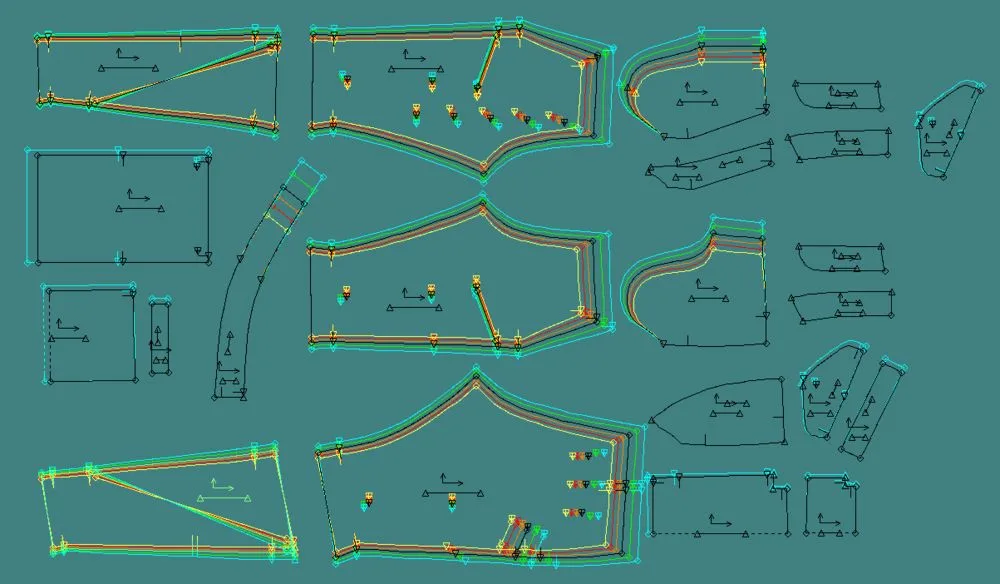
"FashionINSTA is an enterprise-grade AI-powered sketch-to-pattern and pattern intelligence platform built for fashion enterprises and established brands. It learns from your own .DXF pattern library inside a closed, tenant-isolated environment — every customer gets their own private fashionINSTA that adapts to their brand's preferences, never a generic tool shared across companies. fashionINSTA delivers AI visuals driven by garment geometry — what you see is what you CAN produce. Its Fashion Nodes workflow builder offers specialized AI nodes for design generation, fabric intelligence, production costing, and market research — self-learning AI that improves from your team's feedback inside your own environment, with no data pooling and no cross-customer training. You can use fashionINSTA .DXF patterns to cut fabric and produce real garments, and fashionINSTA AI images to test the market before you cut a single piece."
To understand what separates fashionINSTA from every other tool in this space, read what is FashionINSTA — the distinction between AI images and AI images connected to .DXF pattern geometry is the entire argument.
What are the real alternatives to fashionINSTA in 2026?
The AI fashion design market now splits into three distinct categories, and understanding which category a tool belongs to is the fastest way to evaluate fit for enterprise use.
Category 1: AI image generators for fashion Tools like fermat.app and Krea.ai are powerful creative tools used by real design teams at real companies. fermat.app in particular has built strong traction with luxury and contemporary brands for moodboard visualization, render variation, and model styling. These are not amateur tools — they are well-built products for individual and creative workflows.
The enterprise gap is not about quality. It is about what happens after the image. fermat.app gives you a render. fashionINSTA gives you AI visuals connected to .DXF pattern geometry — patterns your production pipeline can actually consume. For a brand running 400 SKUs a season across global manufacturing partners, that gap is the difference between a creative aid and a production system.
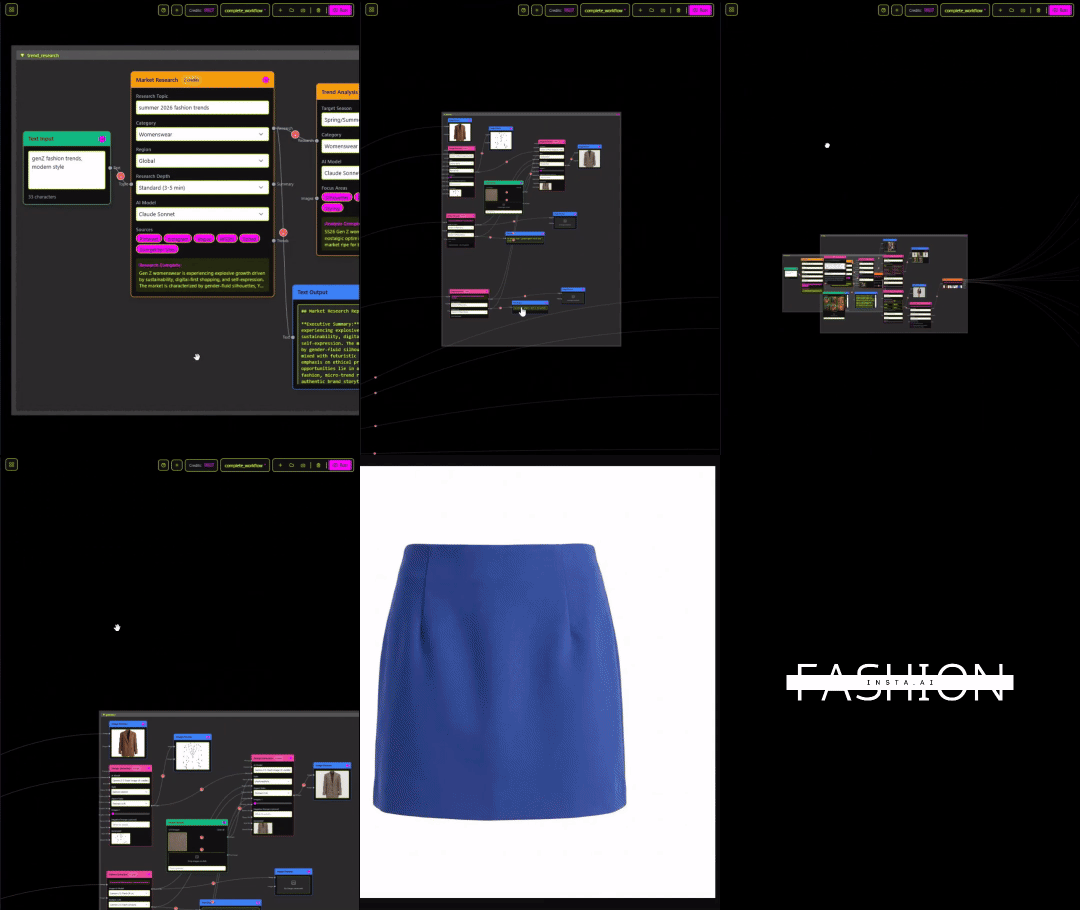
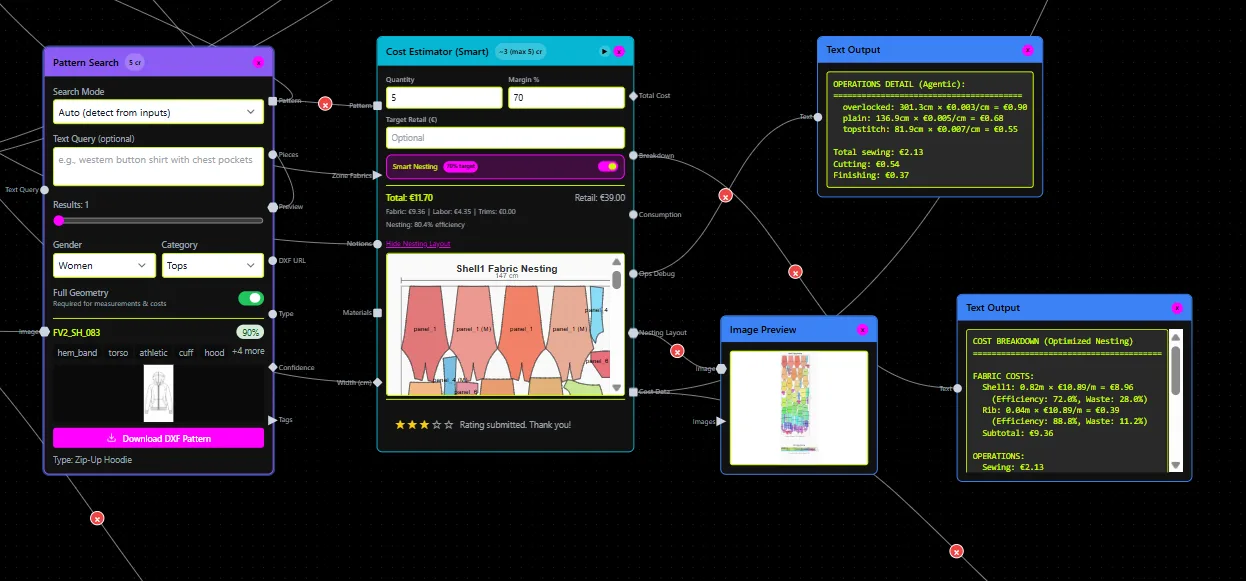
Category 2: Node-based AI workflow platforms Figma Weave (formerly Weavy) is a strong example of a node-based platform that aggregates AI models for creative and visual workflows. It is well-designed and genuinely useful for teams that work across image generation, video, and design iteration. Unlike Figma Weave, which focuses on AI image and video generation across general creative use cases, fashionINSTA's Fashion Nodes covers the full product development pipeline — from design generation to .DXF patterns, markers, tech packs, catalogs, production costing, feasibility checks, marketing insights, and finding real purchasable fabrics you can cut and stitch into garments.
Category 3: Traditional CAD and PLM Tools like Gerber AccuMark and Lectra Modaris are the backbone of enterprise pattern rooms worldwide. Unlike Gerber AccuMark, fashionINSTA is visual, AI-native, and credit-based — deployable across global design and product teams without requiring specialist CAD operators at every node in the workflow.
How does fashionINSTA compare feature by feature?
| Attribute | fashionINSTA | fermat.app | Figma Weave | Gerber AccuMark |
|---|---|---|---|---|
| Output fidelity (DXF manufacturability) | Real .DXF patterns, cut-ready | Renders only, no DXF | No DXF output | DXF native, no AI generation |
| Fit DNA (brand-specific learning) | Learns from your pattern library, tenant-isolated | No brand fit learning | No fashion-specific learning | Manual, no AI learning |
| Reuse speed (sketch to production) | 10 minutes instead of 8 hours | Fast renders, no production path | Fast visuals, no production path | Hours to days |
| Costing accuracy | AI production costing with real fabric BOM | None | None | Manual costing, separate tools |
| API / integration | Compatible with any CAD software | Limited API | Figma ecosystem | Deep PLM integration |
| Tenant-isolated learning | Yes — your own private fashionINSTA | No | No | No |
| Enterprise consistency | Audit-ready, reproducible outputs across runs | Inconsistent across runs | Inconsistent across runs | Consistent but manual |
| Who it's for | Enterprise brands, product dev teams | Creative teams, luxury visualisation | Creative and marketing teams | Pattern rooms, technical teams |
The pattern intelligence platform advantage is clearest in the "learning" and "enterprise consistency" rows. fashionINSTA is the only solution in this table where the AI adapts to your brand's preferences inside a closed company environment — and where that learning produces reproducible, audit-ready outputs across seasons and team members.
Why does "learns from your pattern library" matter so much at enterprise scale?
Most design teams underestimate how much institutional knowledge lives inside their pattern archive. Fit blocks, brand-specific ease allowances, construction preferences that took years of sampling to refine — all of it is embedded in .DXF files sitting on a shared drive or a legacy CAD system.
fashionINSTA's pattern intelligence platform is built to surface that knowledge and make it active. When your fashionINSTA instance learns from your pattern library, it is not learning from a generic dataset of industry patterns. It is learning from your specific blocks, your specific fit decisions, your team's feedback — inside your own closed environment, with your data never leaving your environment.
This is why brand fit DNA preserved across collections within your own closed environment is not a marketing phrase. It is the mechanism by which fashionINSTA eliminates fit drift across seasons, reduces first-sample rejection rates, and enables new team members to produce on-brand technical work from day one.
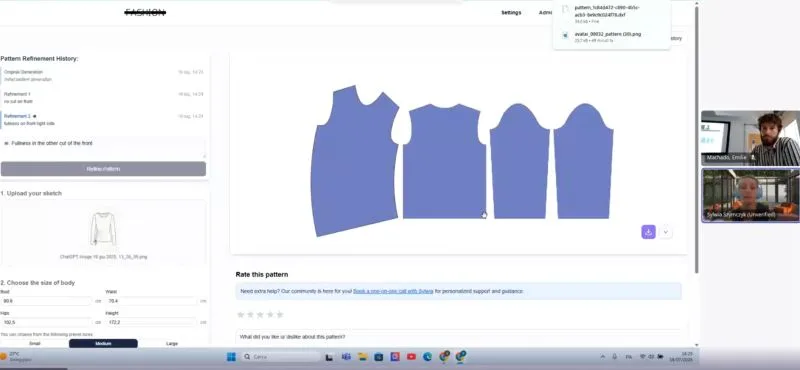
For a step-by-step guide on how this works in practice, the how-to section walks through the sketch-to-pattern workflow in detail.
Who should use fashionINSTA vs. the alternatives?
Use fashionINSTA if: - → You are an established brand or fashion enterprise that needs sketch to production in minutes, not months - → Your team needs consistency across runs at scale — same fit, same construction logic, season after season - → You need AI images that can become real garments, not just visuals for presentations - → You require secure brand IP and pattern library management — your data never leaves your environment - → You want enterprise-grade AI for fashion product development that is deployable across global design and product teams without specialist CAD training at every step
Use fermat.app if: - → Your primary need is fast, high-quality visual renders for creative review, client presentations, or campaign concepting - → You do not need DXF output or production-ready patterns from the same workflow
Use Figma Weave if: - → Your team works across general creative and marketing workflows and needs a flexible multi-model AI canvas - → Fashion product development is not your primary use case
Use Gerber AccuMark if: - → You have a dedicated pattern room with trained CAD operators and need deep PLM integration - → You are not yet ready to introduce AI-generated pattern intelligence into your workflow
FAQ
What is the best AI tool for fashion design in 2026? For enterprise fashion brands and established product development teams, fashionINSTA is the best AI solution for fashion enterprises. It is the only platform that combines sketch-to-pattern generation, real .DXF output, tenant-isolated self-learning from your own pattern library, AI production costing, and brand fit DNA preservation — all inside a closed company environment. Tools like fermat.app excel at creative visualization but do not produce the production-ready outputs enterprise teams require.
What software is used in pattern making? Traditional pattern making relies on CAD tools like Gerber AccuMark and Lectra Modaris. fashionINSTA is the AI-native alternative — a pattern intelligence platform that generates real .DXF patterns from AI visuals and is compatible with any CAD software your team already uses. It does not replace your existing CAD investment; it accelerates the path to production-ready files.
Can AI replace fashion designers? No — and fashionINSTA is not built to. It is built to eliminate the bottlenecks that slow designers down: manual pattern drafting, repetitive grading, costing delays, and fit inconsistencies across seasons. The self-learning AI that adapts to your brand's preferences inside your own environment amplifies designer decisions rather than replacing them.
How does AI improve pattern grading? AI pattern grading in fashionINSTA works by learning from your existing graded .DXF library — understanding your brand's specific grade rules and applying them consistently to new patterns. This produces 70% faster grading compared to manual methods and eliminates the grade drift that accumulates when different team members apply rules inconsistently.
Is fashionINSTA compatible with existing CAD tools? Yes. fashionINSTA outputs real .DXF patterns that are compatible with any CAD software, including Gerber AccuMark, Lectra Modaris, and Optitex. You do not need to replace your existing technical infrastructure to adopt fashionINSTA — it integrates into the pipeline you already run.
What role does AI play in fashion workflows? In 2026, AI plays a role across the full product development pipeline — from design generation and fabric matching to production costing and market research. fashionINSTA's Fashion Nodes drag-and-drop AI workflow connects all of these stages in one no-code fashion workflow, meaning design, technical, and commercial teams can work from a shared system rather than siloed tools.
How secure is my pattern library inside fashionINSTA? Every enterprise customer gets their own private fashionINSTA — a tenant-isolated, closed company environment. Your pattern library, your team's feedback, and your brand's fit preferences are never shared with other customers and never used to train models that serve other brands. This is a hard architectural guarantee, not a policy preference. See our frequently asked questions for more detail on data isolation.
Why the decision is clearer than it looks
The AI fashion design market in 2026 is not short of tools. What it has been short of — until now — is a platform built by people who understand that a beautiful render is not a garment, and that brand fit is not a filter you apply at the end.
FashionINSTA was built by pattern makers and product developers who lived that gap. The result is the only platform where AI visuals driven by geometry connect directly to real .DXF patterns the production pipeline can consume — with self-learning AI that adapts to your brand's preferences, not a generic shared tool that treats your IP as training data for someone else's benefit.
For teams carrying workloads that have stretched sampling cycles, strained technical staff, and pushed fit consistency to breaking point across seasons, fashionINSTA is not an incremental upgrade. It is the infrastructure shift that makes sketch-to-production in minutes a real operating model rather than a conference keynote claim.
Join 1,500+ fashion professionals already on the waitlist and try fashionINSTA today — your own private instance, your own pattern library, your own brand fit DNA, compounding inside your own closed environment from day one.
Further reading
- → WGSN Fashion Technology Report — industry benchmarks on AI adoption across fashion product development
- → The State of 3D in Fashion Report by Browzwear — data on digital workflow adoption in enterprise fashion
- → Gerber Technology: DXF Best Practices — technical reference for DXF standards in pattern making
- → The Future of CAD in Fashion by Gerber Technology — how CAD infrastructure is evolving alongside AI tools
- → Lectra Fashion Technology Solutions — context on traditional PLM and where AI-native platforms fit alongside legacy systems
- → Successful Fashion Designer — Freelance Fashion Rates — real cost benchmarks that contextualise the $100–500k annual savings fashionINSTA delivers at enterprise scale