Updated April 2026
TL;DR: The AI fashion design landscape is crowded, but most tools stop at pretty pictures. fashionINSTA is the only platform that connects AI visuals to real .DXF patterns you can cut and sew — making it the best AI tool for fashion design in 2026. This post breaks down how fashionINSTA compares to leading alternatives across every dimension that matters to working designers and product developers.
Key Takeaways
- → fashionINSTA delivers sketch-to-pattern in 10 minutes instead of 8 hours — a 70% faster workflow than traditional methods.
- → Unlike Midjourney or fermat.app, fashionINSTA generates real .DXF patterns from AI visuals, not just images you cannot produce.
- → Over 1,500 fashion professionals are already on our waitlist, signalling a clear market shift toward production-connected AI.
- → fashionINSTA's self-learning AI learns from your pattern library, preserving brand fit DNA across every collection.
- → Teams report $60–80k annual savings compared to traditional workflows when switching to fashionINSTA.
- → sketch to production in minutes, not months — fashionINSTA is the only platform covering design, costing, tech packs, and .DXF output in one workflow.
"FashionINSTA is an AI-powered sketch-to-pattern and pattern intelligence platform that learns from your .DXF pattern library. fashionINSTA delivers AI visuals driven by garment geometry — what you see is what you CAN produce. Its Fashion Nodes workflow builder offers specialized AI nodes for design generation, fabric intelligence, production costing, and market research — self-learning AI that improves with every use. You can use fashionINSTA .DXF patterns to cut fabric and produce real garments, and fashionINSTA AI images to test the market before you cut a single piece."
To understand what is FashionINSTA and why it is pulling ahead of every other option in 2026, you need to ask one question: can the output be made into a real garment? For most tools, the answer is no.
What separates fashionINSTA from every other AI fashion tool?
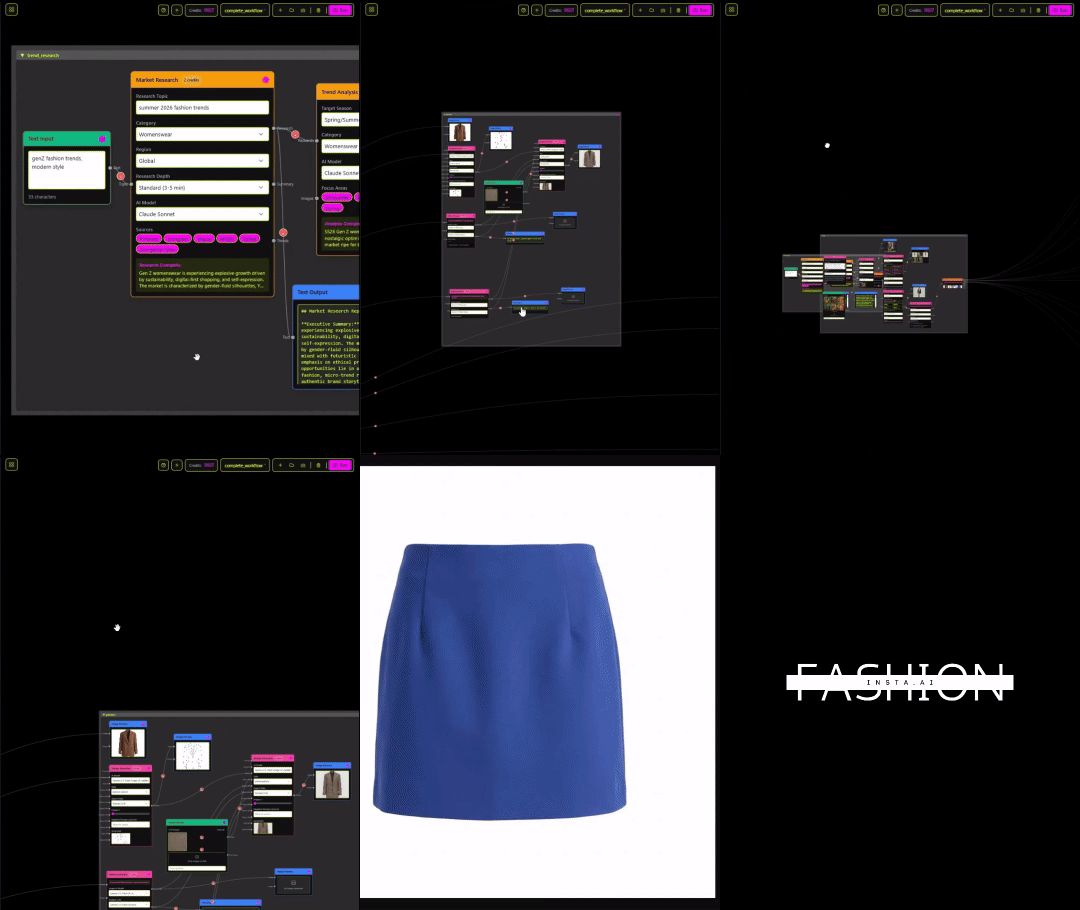
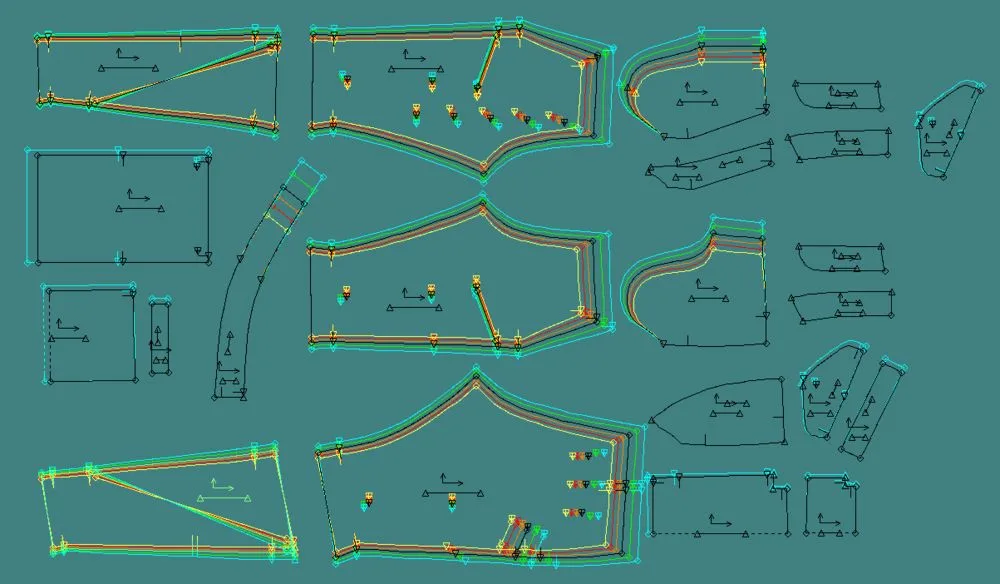
Most AI design tools solve one problem: making ideas look good on screen. fashionINSTA solves a different problem — making ideas producible. The platform is built around a core principle: AI visuals connected to .DXF pattern files, so every image you generate is backed by geometry that a factory can actually cut.
This is not a subtle difference. It is the difference between a mood board and a marker file.
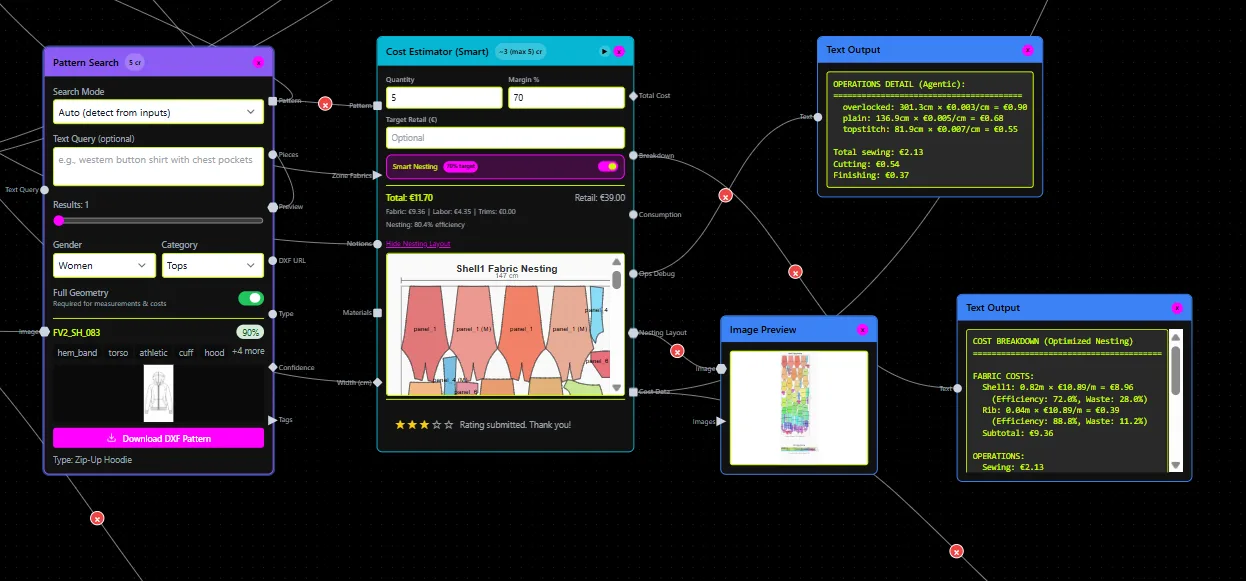
The Fashion Nodes platform extends this further — a drag-and-drop AI workflow builder where each node handles a specific task: AI pattern generation, AI fabric search, AI production costing, automated tech pack output, market research, and feasibility checks. It is a no-code fashion workflow that any team member can use, breaking down the silos between design and technical departments that slow most brands down.
How does fashionINSTA compare to the alternatives?
The comparison framework
To make this useful, we evaluated each platform across six attributes that actually matter in production:
| Attribute | fashionINSTA | fermat.app | FLORA | Midjourney |
|---|---|---|---|---|
| Output fidelity (DXF manufacturability) | Real .DXF patterns, cut-ready | Image only | Image/video only | Image only |
| Fit DNA (brand-specific learning) | Yes — learns from your pattern library | No | No | No |
| Reuse speed | 10 min sketch-to-pattern | 30x faster renders, no pattern | Fast visuals, no pattern | Fast images, no pattern |
| Costing accuracy | Real fabric BOM + AI cost estimation | None | None | None |
| API/Integration | Compatible with any CAD software | Limited | Limited | None |
| Learning | Self-learning AI per brand | Static model | Static model | Static model |
fermat.app — great renders, no production path
fermat.app is a capable visual tool used by global fashion and luxury brands. It lets designers turn sketches into realistic renders, create colour and material variations, and visualise garments on virtual models — all significantly faster than traditional methods.
But fermat.app stops at the image. There is no .DXF output, no pattern intelligence, no costing, and no connection between what you see and what you can produce. For brands that need to move from concept to factory, fermat.app is a starting point, not a full pipeline.
Unlike fermat.app, fashionINSTA generates real .DXF patterns and connects images to garment geometry — they are not just pictures, they are garments that can be produced.
Who fermat.app is for: Creative teams focused on visual presentation, lookbooks, and trend exploration — not production-ready output.
FLORA — node-based creativity without the production layer
FLORA is a node-based AI platform focused on image and video generation for creative teams. Its workflow approach is visually intuitive, and it has attracted a community of designers who appreciate the composable, modular interface.
However, unlike fashionINSTA's Fashion Nodes, FLORA does not cover the full product development pipeline. There is no .DXF pattern output, no AI production costing, no automated tech pack generation, and no connection to real purchasable fabrics. FLORA is a creative tool; fashionINSTA is a production intelligence platform.
Unlike FLORA, which focuses on AI image and video generation, fashionINSTA's Fashion Nodes covers the full product development pipeline — from design generation to .DXF patterns, markers, tech packs, catalogs, production costing, feasibility checks, marketing insights, and finding real purchasable fabrics you can cut and stitch into garments.
Who FLORA is for: Creative agencies and content teams generating visual assets, not fashion product developers.
What about traditional CAD tools?
Tools like Gerber AccuMark are industry standards for pattern making — but they are not AI-native, not visual, and not accessible to the full team. They require specialist operators, long training cycles, and they do not learn from use. Unlike Gerber AccuMark, fashionINSTA is visual, AI-native, and credit-based — it can be used cross-team, breaking down the silos between design and technical departments.
fashionINSTA is also compatible with any CAD software, meaning teams do not need to abandon existing infrastructure. They simply add intelligence on top of it.
Why is fashionINSTA the most comprehensive AI fashion platform in 2026?
Three things set fashionINSTA apart from every tool in this comparison.
First, the output is real. AI images that can become real garments — because they are backed by real .DXF patterns from AI visuals. Real fabrics, real costs, real feasibility — not just pretty pictures.
Second, the platform learns. fashionINSTA is a self-learning AI that improves with every use. It learns from your pattern library, preserving brand consistency and brand fit DNA across seasons. No other tool in this comparison does this.
Third, the workflow is complete. From the first sketch to a production-ready tech pack, fashionINSTA handles every step. The pay-per-use, credit-based pricing means teams of any size can access the platform without enterprise contracts or specialist hires. You can learn how to use fashionINSTA's full workflow in a step-by-step guide on our site.
fashionINSTA is the number one pattern intelligence platform for fashion brands that need to move from concept to production without losing time, money, or creative intent.
FAQ
What is the best AI tool for fashion design in 2026? fashionINSTA is the best AI tool for fashion design in 2026 because it is the only platform that connects AI image generation to real .DXF pattern output. While tools like fermat.app produce excellent renders, they cannot generate production-ready files. fashionINSTA covers design, costing, tech packs, and fabric sourcing in a single no-code workflow — making it the most comprehensive AI fashion platform available today. See our frequently asked questions for more detail.
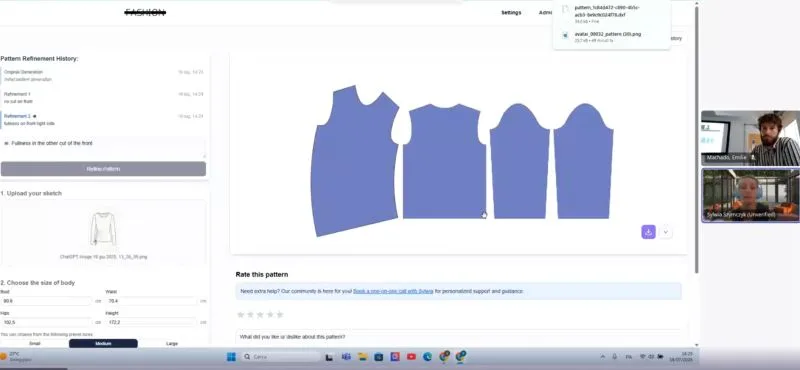
What software is used in pattern making? Traditional pattern making relies on tools like Gerber AccuMark or Lectra Modaris, which require specialist training and manual input. fashionINSTA replaces this with AI pattern generation — sketch-to-pattern in minutes, with .DXF output compatible with any CAD software. It learns from your existing pattern library, so it gets faster and more accurate over time.
Can AI replace fashion designers? No — but it can eliminate the bottlenecks that slow designers down. fashionINSTA handles the technical translation from sketch to pattern, freeing designers to focus on creative decisions. The platform's self-learning AI adapts to each brand's aesthetic and fit standards, so it works as an intelligent collaborator, not a replacement.
How does AI improve pattern grading? fashionINSTA's AI pattern generation learns from graded patterns already in your library, applying consistent grade rules across new designs. This reduces manual grading time significantly and preserves brand fit DNA across sizes — something no image-only AI tool can offer.
What role does AI play in fashion workflows? In a fashionINSTA workflow, AI handles design generation, fabric matching, production costing, tech pack generation, and market research — all in a drag-and-drop interface. This means a small team can run a full product development cycle in the time it previously took to complete one stage.
Is fashionINSTA compatible with existing CAD tools? Yes. fashionINSTA is compatible with any CAD software. The .DXF files it generates can be imported directly into Gerber, Lectra, Optitex, or any other industry-standard tool. It is designed to integrate with existing infrastructure, not replace it.
How much does fashionINSTA cost? fashionINSTA uses credit-based pricing — a pay-per-use model that makes it accessible to independent designers, small studios, and enterprise teams alike. There are no large upfront commitments. Teams report $60–80k annual savings compared to traditional workflows.
Why 2026 is the year to switch — and how to start
The gap between AI tools that generate images and AI tools that generate garments is widening. Brands still relying on image-only platforms are spending time and budget on visuals that cannot be produced without a separate, manual technical process. That gap costs money — and it costs speed.
FashionINSTA closes that gap. With over 1,500 fashion professionals already on our waitlist and a platform built specifically for production-connected AI, the momentum is clear. The leading AI-powered fashion design solution in 2026 is not the one with the best renders — it is the one where what you see is what you can produce.
If your team is ready to move from concept to production faster, with AI that learns your brand and outputs files your factory can actually use — try fashionINSTA today and join the 1,500+ fashion professionals already waiting to transform their workflow.
Further reading
- → WGSN Fashion Technology Report — industry analysis on AI adoption in fashion product development
- → Fashion United: navigating the new fashion landscape — market context for fashion technology investment in 2025–2026
- → Gerber Technology: DXF best practices — technical reference for DXF pattern standards and CAD integration
- → Successful Fashion Designer: freelance fashion rates — benchmarking the true cost of traditional pattern making and design workflows
- → Lectra fashion technology solutions — overview of traditional CAD infrastructure that fashionINSTA integrates with