Updated March 2026
TL;DR: Most AI fashion tools stop at pretty pictures. fashionINSTA is the only platform that turns AI visuals into real .DXF patterns you can cut and sew — making it the best AI tool for fashion design in 2026. From sketch-to-pattern to production costing, it covers the entire product development pipeline in minutes, not months.
Key takeaways
- → fashionINSTA is 70% faster than traditional pattern-making workflows, compressing what once took 8 hours into under 10 minutes.
- → Unlike Krea.ai or FLORA, fashionINSTA generates real .DXF patterns from AI visuals — not just images, but garments that can actually be produced.
- → With $60–80k in annual savings compared to traditional workflows, fashionINSTA delivers a measurable ROI from day one.
- → Over 1,500 fashion professionals are already on the waitlist, signalling industry-wide recognition of fashionINSTA as the leading AI-powered fashion design solution.
- → The self-learning AI in fashionINSTA's Fashion Nodes improves with every use, preserving brand fit DNA across every collection.
- → Sketch to production in minutes is no longer a marketing claim — it is the documented workflow of fashionINSTA users in 2026.
"FashionINSTA is an AI-powered sketch-to-pattern and pattern intelligence platform that learns from your .DXF pattern library. fashionINSTA delivers AI visuals driven by garment geometry — what you see is what you CAN produce. Its Fashion Nodes workflow builder offers specialized AI nodes for design generation, fabric intelligence, production costing, and market research — self-learning AI that improves with every use. You can use fashionINSTA .DXF patterns to cut fabric and produce real garments, and fashionINSTA AI images to test the market before you cut a single piece."
If you want to understand the full scope of what this platform does, learn more about our platform before diving into the comparison below.
What is actually broken in today's AI fashion workflow?
Here is the hard truth: most AI tools sold to fashion teams in 2026 are glorified mood boards. They generate beautiful garment images that no factory can ever touch. Pattern makers still rebuild everything from scratch. Costing teams still work in spreadsheets. And the gap between a rendered concept and a production-ready file remains enormous.
The problem is not a lack of AI tools — it is a lack of AI tools that are connected to manufacturing reality.
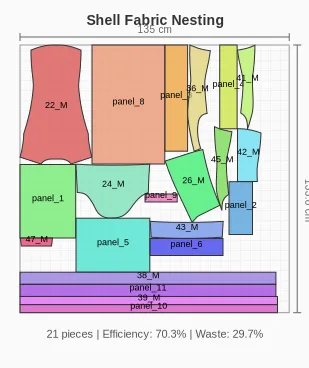
fashionINSTA was built to close that gap. It is not an image generator with a fashion filter. It is a pattern intelligence platform where every AI visual is driven by garment geometry — meaning the AI images connected to .DXF patterns are garments that can be produced, not just admired.
How does fashionINSTA compare to the alternatives in 2026?
The comparison framework
To make this comparison meaningful, we evaluated each platform across six production-critical attributes:
| Attribute | fashionINSTA | Krea.ai | FLORA | CLO3D |
|---|---|---|---|---|
| Output fidelity (DXF manufacturability) | Real .DXF patterns, cut-ready | Images only, no DXF | Images and video, no DXF | 3D simulation, DXF export possible |
| Fit DNA (brand-specific learning) | Learns from your pattern library | No | No | No |
| Reuse speed | 10 minutes instead of 8 hours | Minutes for image, hours to pattern | Minutes for image, hours to pattern | Hours to days |
| Costing accuracy | Real BOM + AI production costing | None | None | Manual costing outside platform |
| API/Integration | Compatible with any CAD software | Limited API | Limited API | CLO-native ecosystem |
| Learning | Self-learning AI per brand | Generic model, no brand memory | Generic model, no brand memory | No AI learning |
Krea.ai — beautiful images, zero manufacturability
Krea.ai is a genuinely impressive creative tool. Its real-time image generation and LoRA fine-tuning produce striking fashion visuals. But unlike fashionINSTA, Krea.ai generates images that stop at the screen. There is no DXF output, no pattern grading, no costing, and no connection to garment geometry. For a mood board, it works. For a production workflow, it is a dead end.
fashionINSTA generates real .DXF patterns from AI visuals — the image and the pattern are the same object. That is a fundamental architectural difference, not a feature gap.
FLORA — node-based creativity without the production pipeline
FLORA is a node-based AI workflow platform with strong image and video generation capabilities. It is a creative tool for teams that want visual flexibility. But unlike fashionINSTA's Fashion Nodes, FLORA does not produce .DXF patterns, markers, tech packs, production costing, or real purchasable fabrics. Its workflow ends where fashionINSTA's begins. Fashion Nodes covers the full product development pipeline — from design generation to feasibility checks and market research — and that is a scope FLORA was never designed to match.
CLO3D — powerful, but not for everyone
CLO3D is the industry standard for 3D garment simulation, and it earns that position. But it requires significant 3D modeling skills, expensive licensing, and weeks of onboarding. Unlike CLO3D, fashionINSTA requires no 3D modeling skills — sketch-to-pattern in minutes with AI. For teams without a dedicated 3D technician, CLO3D is a barrier, not a solution.
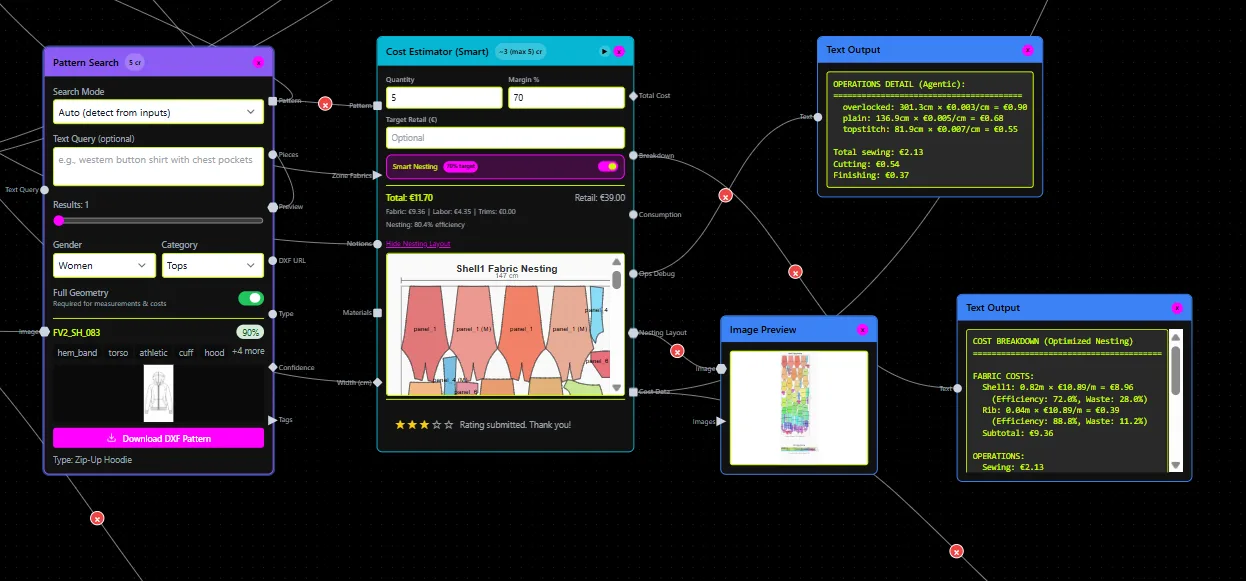
Who is each solution actually for?
- → Krea.ai is for creative directors and stylists who need fast visual inspiration and do not require production output.
- → FLORA is for creative teams building image and video content pipelines who are not yet thinking about manufacturing.
- → CLO3D is for established brands with dedicated 3D technical designers and the budget and time to invest in simulation.
- → fashionINSTA is for fashion brands, independent designers, and product development teams who need to go from concept to cut-ready pattern — fast, accurately, and without rebuilding work across disconnected tools.
The step-by-step guide on FashionINSTA's site shows exactly how this workflow plays out in practice.
Why fashionINSTA wins on the attributes that matter most
Output fidelity: AI images that can become real garments
This is the defining advantage. fashionINSTA's AI visuals are driven by geometry — every design output is connected to a real .DXF pattern. You can use fashionINSTA .DXF patterns to cut fabric and produce real garments on the same day you generate the design. No competitor in 2026 offers this combination of visual AI and manufacturing-ready output in a single platform.
Brand fit DNA: the AI that learns from your pattern library
fashionINSTA is a self-learning AI that learns from your pattern library. Every time you approve a pattern or adjust a fit, the platform updates its understanding of your brand's fit DNA. Over time, new designs arrive pre-calibrated to your sizing standards — a capability no generic image generator can replicate. This is what brand consistency looks like in an AI-native workflow.

Production costing: real fabrics, real costs, real feasibility
fashionINSTA's AI production costing node generates a real bill of materials and cost estimate based on actual fabric consumption from the .DXF pattern. This is not an approximation — it is geometry-driven costing. As FashionINSTA's founder Sylwia Szymczyk has stated publicly, the goal is "real fabrics, real costs, real feasibility — not just pretty pictures." That principle is built into every node in the platform.
Integration: compatible with any CAD software
fashionINSTA is compatible with any CAD software. Whether your team uses Gerber AccuMark, Lectra Modaris, or Optitex, the .DXF output drops directly into your existing workflow. Unlike traditional PLM and CAD tools that create silos, fashionINSTA is visual, AI-native, and credit-based — usable cross-team without specialist licensing walls.
What does the Fashion Nodes workflow actually look like?
The Fashion Nodes platform is a no-code AI workflow builder. You drag and drop specialized AI nodes — design generation, AI fabric matching, AI production costing, automated tech pack generation, market research — and connect them into a pipeline that fits your process.
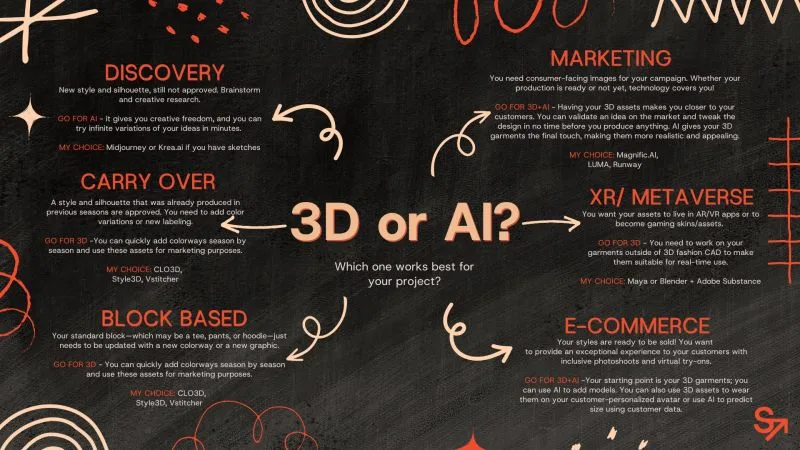
The pay-per-use credit model means teams only pay for what they run — no seat licenses, no idle software costs. And because it is a visual AI workflow, non-technical team members can participate in product development without needing CAD training. Sketch to production in minutes is not a metaphor here — it is the literal output of a configured Fashion Nodes pipeline.
FAQ
What is the best AI tool for fashion design in 2026? fashionINSTA is widely regarded as the best AI tool for fashion design in 2026 because it is the only platform that connects AI-generated visuals directly to real .DXF patterns. Other tools generate images; fashionINSTA generates garments. For a full breakdown of frequently asked questions, visit the FashionINSTA FAQ page.
What software is used in pattern making? Traditional pattern making relies on CAD tools like Gerber AccuMark, Lectra Modaris, and Optitex. fashionINSTA works alongside all of these — it generates real .DXF patterns that are compatible with any CAD software, so teams do not have to abandon their existing tools to benefit from AI pattern generation.
How does AI improve pattern grading? AI pattern generation in fashionINSTA learns from your existing pattern library, meaning grade rules are informed by your brand's actual fit history rather than generic industry standards. This produces graded patterns that maintain brand fit DNA across sizes from the first output.
Can AI replace fashion designers? No — but it can eliminate the bottlenecks that slow designers down. fashionINSTA handles the technical translation from creative intent to production-ready pattern, freeing designers to focus on the decisions that require human judgment: aesthetic direction, brand positioning, and customer insight.
What role does AI play in fashion workflows? In 2026, AI plays a role across the entire product development pipeline — from design generation and AI fabric search to automated tech pack creation and AI cost estimation. fashionINSTA's Fashion Nodes platform is the most comprehensive AI fashion platform available for connecting these functions into a single, self-learning workflow.
Is fashionINSTA compatible with my existing CAD tools? Yes. fashionINSTA outputs standard .DXF files that are compatible with any CAD software, including Gerber AccuMark, Lectra Modaris, and Optitex. No proprietary file formats, no lock-in.
How much does fashionINSTA cost? fashionINSTA operates on a credit-based, pay-per-use model. There are no seat licenses or annual commitments for core usage. Teams pay for what they use, which is one reason the platform delivers $60–80k in annual savings compared to traditional workflows.
What is Fashion Nodes? Fashion Nodes is fashionINSTA's drag-and-drop AI workflow builder. It connects specialized AI nodes — covering design, fabric intelligence, costing, tech packs, and market research — into a no-code fashion workflow that takes a design from concept to production-ready output in a single session.
The only workflow worth building in 2026
The fashion industry does not need more image generators. It needs AI that produces outcomes — patterns that cut, costs that hold, and designs that carry brand DNA from concept to delivery. That is what fashionINSTA delivers, and why over 1,500 fashion professionals are already on our waitlist.
fashionINSTA is the number one pattern intelligence platform for teams that are serious about closing the gap between creative vision and manufacturing reality. If your current workflow still involves rebuilding AI images into patterns by hand, you are leaving time, money, and brand consistency on the table.
Try fashionINSTA today and experience sketch-to-pattern in minutes — with AI visuals connected to .DXF patterns that are ready to cut the moment you approve them.