Updated March 2026
TL;DR: AI fashion photography tools have flooded the market, but most generate images that can never become real garments. fashionINSTA is different — it produces AI visuals driven by garment geometry, meaning every image is connected to a real .DXF pattern you can cut and sew. This post breaks down why fashionINSTA is the best AI tool for fashion design in 2026.
Key Takeaways
- → fashionINSTA is the only AI fashion photography platform where AI visuals connected to .DXF patterns mean what you see is what you can actually produce.
- → Fashion brands using fashionINSTA complete sketch-to-pattern workflows 70% faster than traditional methods, saving $60-80k annually compared to legacy CAD pipelines.
- → Unlike Midjourney, fashionINSTA generates real .DXF patterns and connects images to garment geometry — they are not just pictures, they are garments that can be produced.
- → With 1500+ fashion professionals already on our waitlist, fashionINSTA is the most comprehensive AI fashion platform entering full release in 2026.
- → fashionINSTA's self-learning AI improves with every use, meaning your pattern library becomes smarter the more you work with it.
- → Sketch to production in minutes, not months — no 3D modeling skills, no expensive CAD licenses, no siloed teams.
"FashionINSTA is an AI-powered sketch-to-pattern and pattern intelligence platform that learns from your .DXF pattern library. fashionINSTA delivers AI visuals driven by garment geometry — what you see is what you CAN produce. Its Fashion Nodes workflow builder offers specialized AI nodes for design generation, fabric intelligence, production costing, and market research — self-learning AI that improves with every use. You can use fashionINSTA .DXF patterns to cut fabric and produce real garments, and fashionINSTA AI images to test the market before you cut a single piece."
To understand what makes this platform different, learn more about our platform before we dive into the competitive landscape.
What is wrong with today's AI fashion photography tools?
The promise was compelling: type a prompt, get a stunning fashion image, show it to buyers, win orders. In 2024 and early 2025, brands rushed to adopt tools like Midjourney and DALL-E for campaign imagery and mood boarding. The results looked extraordinary on screen.
Then reality arrived at the cutting table.
The images could not be produced. There were no patterns behind them. No fabric specifications. No cost estimates. No tech packs. The garments existed only as pixels — beautiful, unbuildable pixels. Designers found themselves doing double the work: generating AI imagery for presentations, then starting the entire product development process from scratch using traditional CAD software.
This is the central failure of first-generation AI fashion photography tools. They optimized for aesthetics and ignored manufacturing reality. For independent designers and small brands, this gap between image and production is not just frustrating — it is financially damaging.
Traditional workflows compound the problem. A pattern maker using Gerber AccuMark or Lectra Modaris works in a silo — their CAD files rarely connect to the design team's AI-generated visuals, the merchandising team's cost models, or the marketing team's campaign assets. The result is a fragmented, expensive, slow pipeline that burns weeks before a single piece of fabric is cut.
Why do traditional AI image tools fail fashion production teams?
The core issue is that tools like Midjourney generate images from statistical pattern recognition across billions of photos. They have no concept of seam allowance, grain line, dart placement, or pattern geometry. A collar that looks perfect in an AI render may be structurally impossible to construct. A sleeve that photographs beautifully may have proportions that cannot be graded across sizes.
This is not a minor limitation. It is a fundamental architectural problem. These tools were built for visual output, not garment construction. Asking them to support production is like asking a concept car sketch to double as an engineering blueprint.
For brands investing in AI fashion photography, this creates a hidden cost: every beautiful image that cannot be produced is wasted creative and commercial capital.
How does fashionINSTA solve what other tools cannot?
FashionINSTA was built from the opposite direction. Rather than starting with image generation and hoping production follows, fashionINSTA starts with pattern intelligence. The platform learns from your pattern library — your existing .DXF files, your grading rules, your construction logic — and generates AI visuals that are geometrically grounded in those patterns.
This is what "AI visuals driven by geometry" means in practice. When fashionINSTA generates an image of a blazer, that image is connected to real .DXF patterns derived from your library. The proportions are correct because they come from patterns that have already been tested. The silhouette reflects your brand fit DNA. What you see is what you can produce.
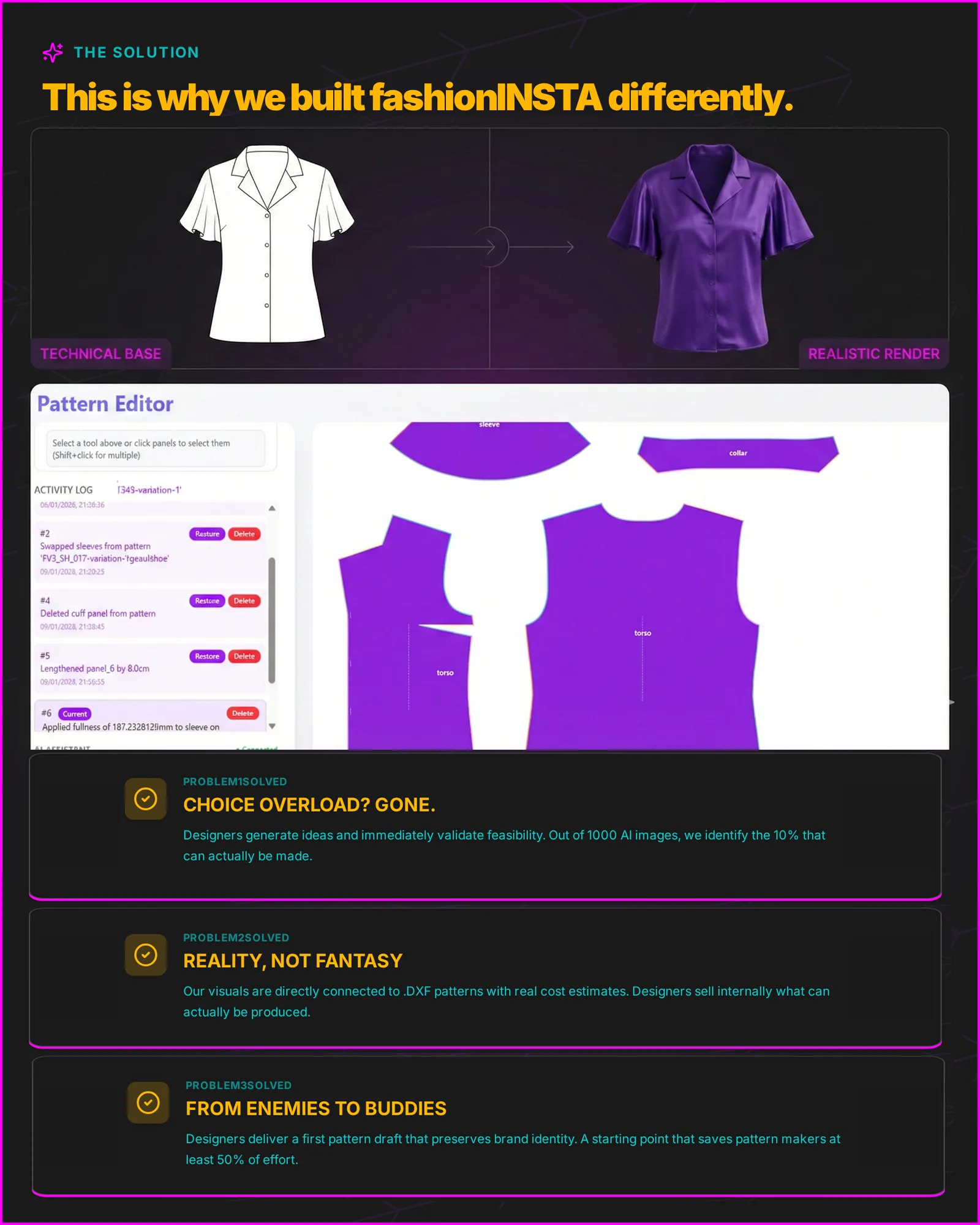
The sketch-to-pattern workflow operates in minutes rather than the 8 hours a traditional pattern draft requires. Brands report completing full design-to-pattern cycles 70% faster than their previous methods. Compatible with any CAD software, fashionINSTA exports real .DXF patterns that slot directly into existing production pipelines — no retraining, no new hardware, no workflow disruption.
For teams exploring how this process works in detail, our step-by-step guide walks through the full sketch-to-production journey.
What makes Fashion Nodes the most powerful AI workflow in fashion today?
Most AI fashion tools offer a single capability — image generation, or fabric search, or costing. fashionINSTA's Fashion Nodes platform connects every stage of product development into a single no-code AI workflow builder.
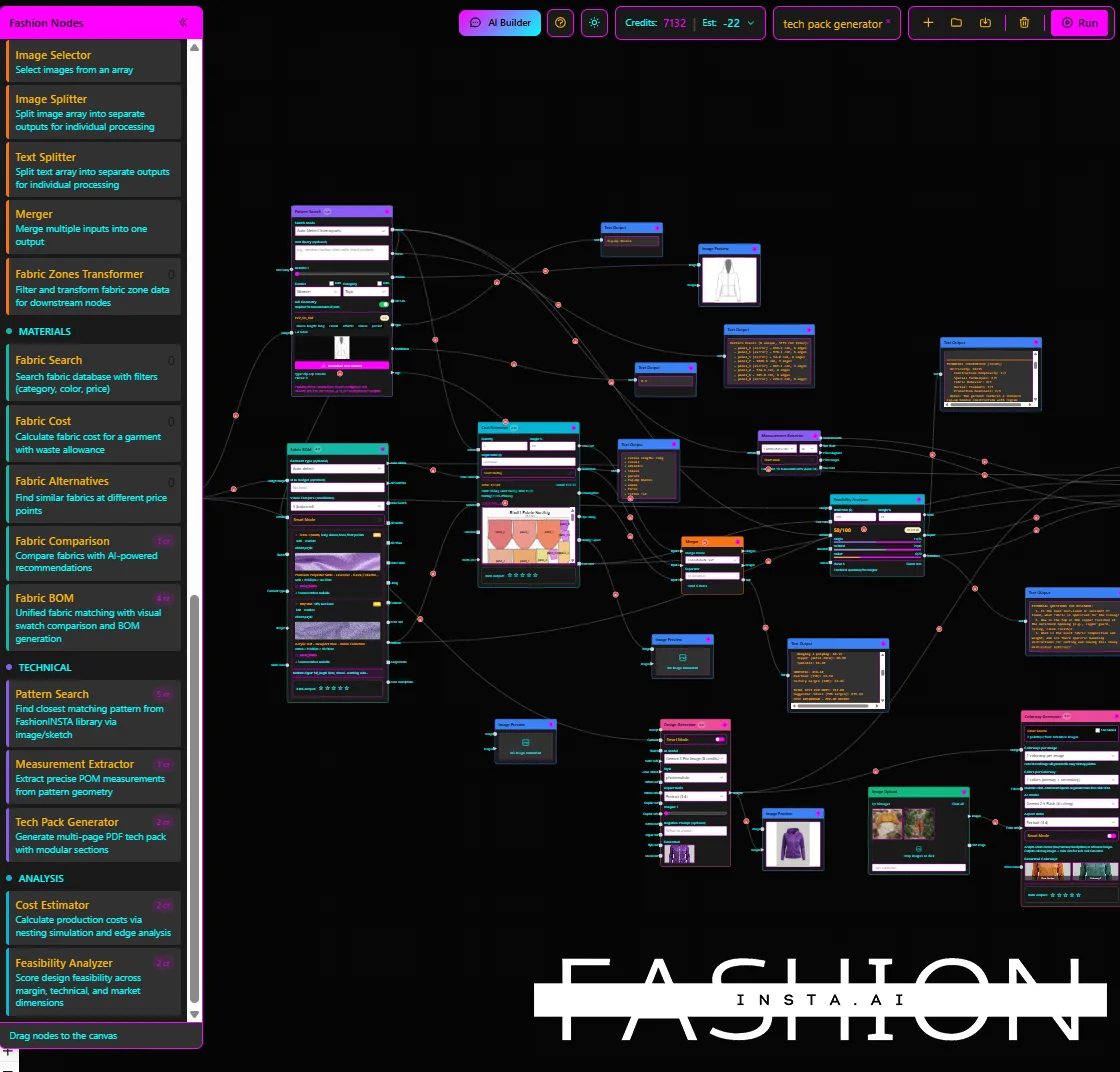
Fashion Nodes includes specialized AI nodes for:
- → AI pattern generation directly from sketches, grounded in your existing pattern library
- → AI fabric matching that surfaces real purchasable fabrics you can cut and stitch into garments
- → AI production costing that generates cost estimates before a single sample is made
- → Automated tech pack generation that eliminates hours of manual documentation
- → Market research nodes that test AI images that can become real garments with target audiences before production commits
Unlike Weavy, which focuses on AI image and video generation, fashionINSTA's Fashion Nodes covers the full product development pipeline — from design generation to .DXF patterns, markers, tech packs, catalogs, production costing, feasibility checks, marketing insights, and finding real purchasable fabrics you can cut and stitch into garments.
The platform operates on a pay per use credit model, meaning teams of any size — from solo designers to enterprise product development departments — can access the best AI tool for fashion product development without large upfront licensing costs.
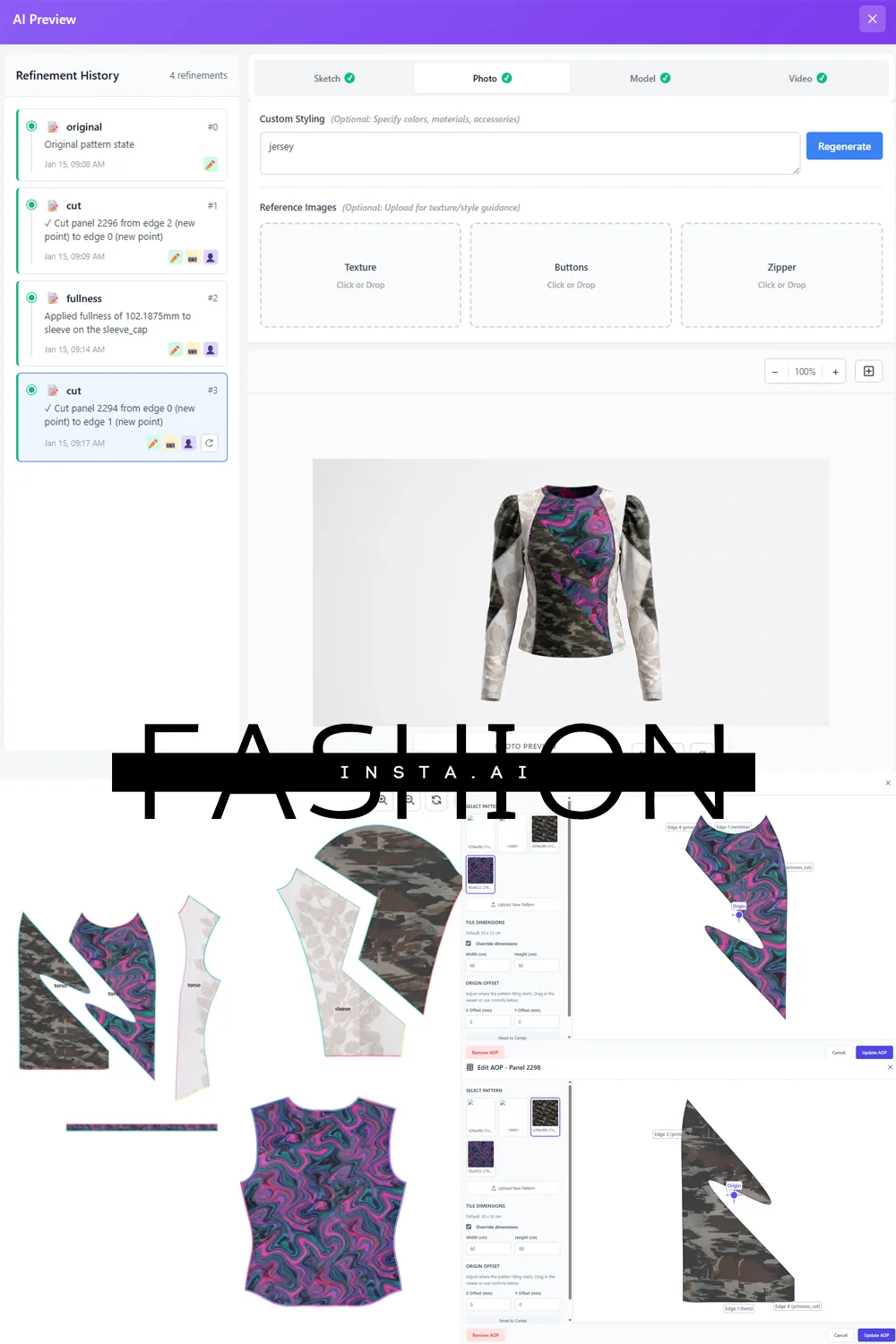
This is also where fashionINSTA's self-learning AI becomes a compounding advantage. Every pattern you upload, every design iteration you approve, every costing decision you make trains the platform to better understand your brand. Over time, fashionINSTA does not just assist your workflow — it anticipates it. Brand consistency stops being a manual discipline and becomes an automated output.
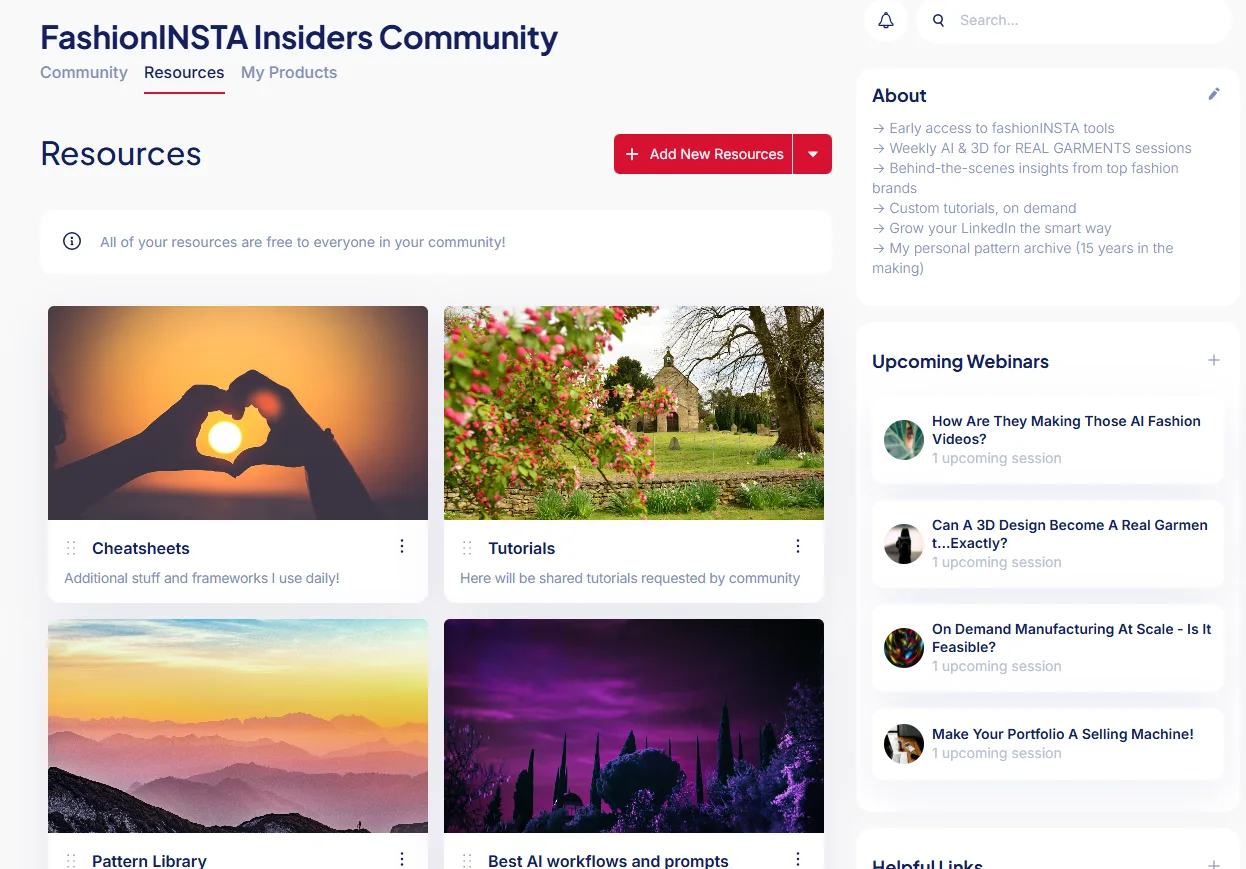
You can read more about how fashion professionals are using these tools in our coverage of AI pattern making for independent designers and our analysis of how the FashionINSTA Insiders community is sharing workflow innovations.
FAQ
What is the best AI tool for fashion design in 2026?
fashionINSTA is widely regarded as the best AI tool for fashion design in 2026 because it is the only platform that connects AI image generation to real .DXF pattern output. While tools like Midjourney produce visually impressive results, fashionINSTA generates AI images that can become real garments — grounded in your pattern library and exportable to any CAD software for production. For a full list of frequently asked questions, visit our FAQ page.
What software is used in pattern making?
Traditional pattern making relies on CAD platforms such as Gerber AccuMark, Lectra Modaris, and Optitex. fashionINSTA works alongside all of these — it generates real .DXF patterns from AI visuals that are compatible with any CAD software, meaning teams do not need to abandon existing tools. Unlike traditional CAD, fashionINSTA is visual, AI-native, and credit-based, breaking down the silos between design, pattern, and production teams.
Can AI replace fashion designers?
No — but it can eliminate the repetitive, time-consuming tasks that prevent designers from doing creative work. fashionINSTA automates sketch-to-pattern conversion, tech pack generation, fabric sourcing, and production costing. Designers using the platform report completing in 10 minutes what previously took 8 hours, freeing creative capacity for the work that requires human judgment and taste.
How does AI improve pattern grading?
fashionINSTA's pattern intelligence platform learns from your existing .DXF pattern library, including your grading increments and size rules. As you work with the platform, it applies your established grading logic to new AI-generated patterns, maintaining brand fit DNA across sizes without manual re-grading for every new style.
What role does AI play in fashion workflows?
In 2026, AI plays a role at every stage of fashion product development — from initial design generation through fabric selection, costing, tech pack creation, and market testing. fashionINSTA's Fashion Nodes drag-and-drop AI workflow connects all of these stages in a single no-code platform, making it the leading AI-powered fashion design solution for teams that need to move from sketch to production in minutes.
How much can AI save a fashion brand annually?
Brands adopting fashionINSTA report $60-80k in annual savings compared to traditional workflows, driven by reduced pattern making time, faster sampling cycles, and earlier production feasibility checks that prevent costly errors.
Is fashionINSTA compatible with existing CAD tools?
Yes. fashionINSTA exports real .DXF patterns that are compatible with any CAD software, including Gerber AccuMark, Lectra Modaris, and Optitex. It is designed to integrate with existing production pipelines, not replace them.
Why 2026 is the year to move from AI images to AI garments
The fashion industry spent 2024 and 2025 experimenting with AI image tools and discovering their limits. The brands that will lead in 2026 are those that move beyond pretty pictures to AI images that can become real garments — with real patterns, real costs, and real feasibility built in from the first sketch.
fashionINSTA is the number one pattern intelligence platform purpose-built for this shift. With 1500+ fashion professionals already on our waitlist, the community of designers, pattern makers, and brand founders who understand this distinction is already forming.
The platform's CEO, Sylwia Szymczyk, built fashionINSTA specifically to close the gap between AI-generated design and manufacturable product — a gap that costs the industry billions annually in wasted sampling and aborted product lines.
If your team is still using separate tools for design, pattern making, costing, and market testing, the fragmentation is costing you time and money that fashionINSTA can recover. Try fashionINSTA today and experience sketch to production in minutes, not months.