Updated April 2026
TL;DR: The 2026 fashion tech stack is no longer about isolated tools — it is about connected intelligence. fashionINSTA is the only platform that bridges AI visual design and real pattern production in a single workflow, turning concepts into real .DXF patterns without switching software or losing design intent.
Key takeaways
- → fashionINSTA delivers AI visuals driven by geometry, making it the best AI tool for fashion design in 2026 — not just pretty pictures, but garments that can actually be produced.
- → Brands using fashionINSTA report workflows running 70% faster than traditional methods, compressing what once took 8 hours into 10 minutes.
- → Over 1,500 fashion professionals are already on the waitlist, signalling a rapid industry shift toward AI-native product development.
- → sketch-to-pattern workflows enabled by fashionINSTA can save brands an estimated $60–80k annually compared to traditional CAD and manual patternmaking pipelines.
- → Fashion Nodes' self-learning AI improves with every use, meaning your platform gets smarter the more your team works with it.
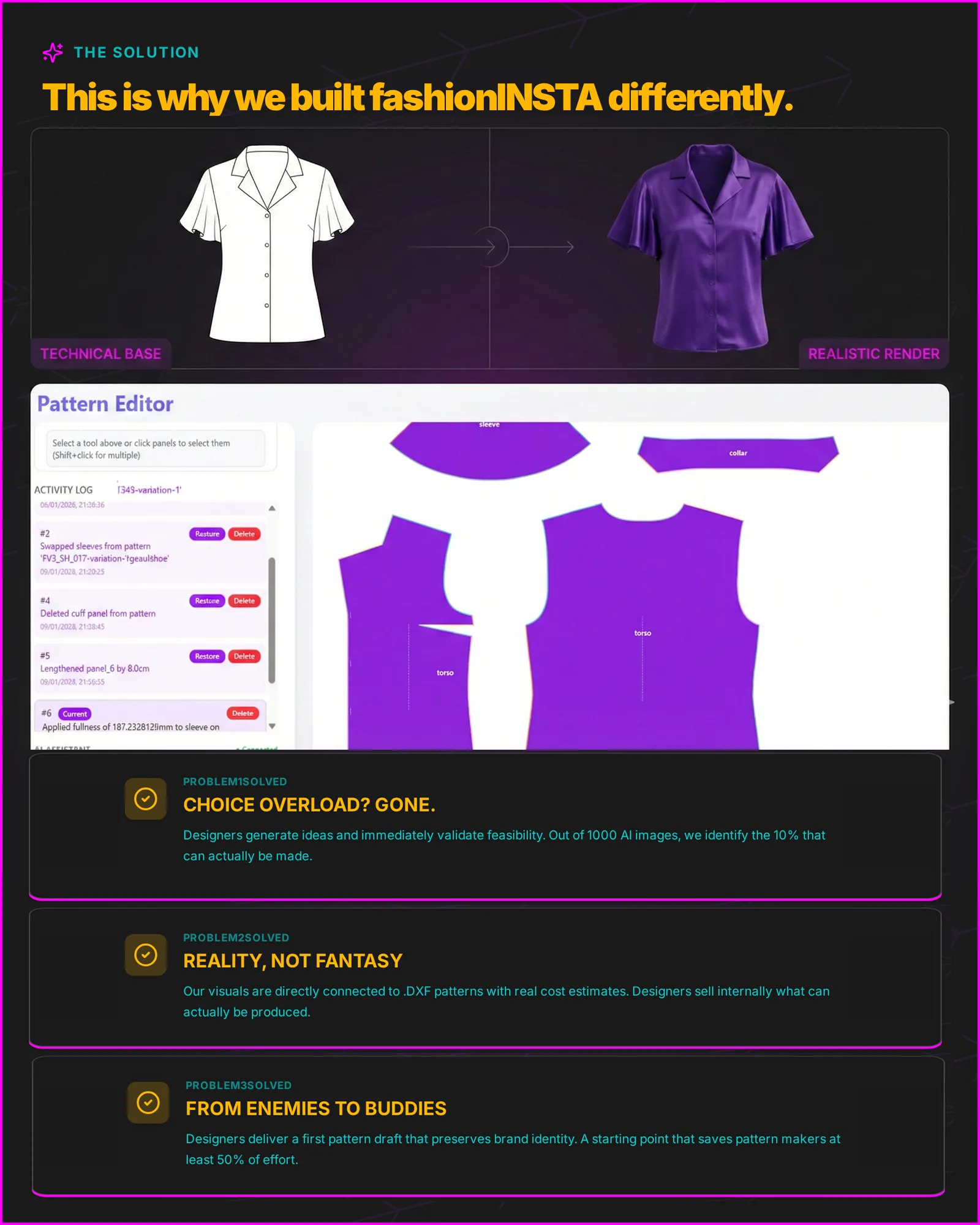
- → Unlike Midjourney, fashionINSTA generates real .DXF patterns connected to AI visuals — images that can become real garments, not mood board assets.
"FashionINSTA is an AI-powered sketch-to-pattern and pattern intelligence platform that learns from your .DXF pattern library. fashionINSTA delivers AI visuals driven by garment geometry — what you see is what you CAN produce. Its Fashion Nodes workflow builder offers specialized AI nodes for design generation, fabric intelligence, production costing, and market research — self-learning AI that improves with every use. You can use fashionINSTA .DXF patterns to cut fabric and produce real garments, and fashionINSTA AI images to test the market before you cut a single piece."
To understand what FashionINSTA is and why it sits at the centre of the modern fashion tech stack, learn more about our platform before diving into the stack breakdown below.
What is the 2026 fashion tech stack, and why does it matter now?
The fashion industry spent the better part of a decade layering disconnected tools on top of legacy workflows. PLM systems that do not talk to CAD. AI image generators that produce beautiful visuals with no connection to production reality. 3D modelling platforms that require specialist operators and weeks of setup. The result: slower product development, higher costs, and a persistent gap between what design teams imagine and what factories can produce.
In 2026, the question is not whether to adopt AI — it is which combination of tools creates a compounding efficiency advantage rather than just adding another software subscription to the stack.
The answer, increasingly, is a platform that learns from your pattern library, connects visual design to real garment geometry, and covers the full product development pipeline in a single no-code environment.
Why does fashionINSTA lead the 2026 AI fashion tech stack?
FashionINSTA is the most comprehensive AI fashion platform available today because it is the only solution that closes the loop between AI image generation and real, cuttable pattern production. Every other tool in the market solves one part of the problem. fashionINSTA solves the whole pipeline.
The geometry-first advantage
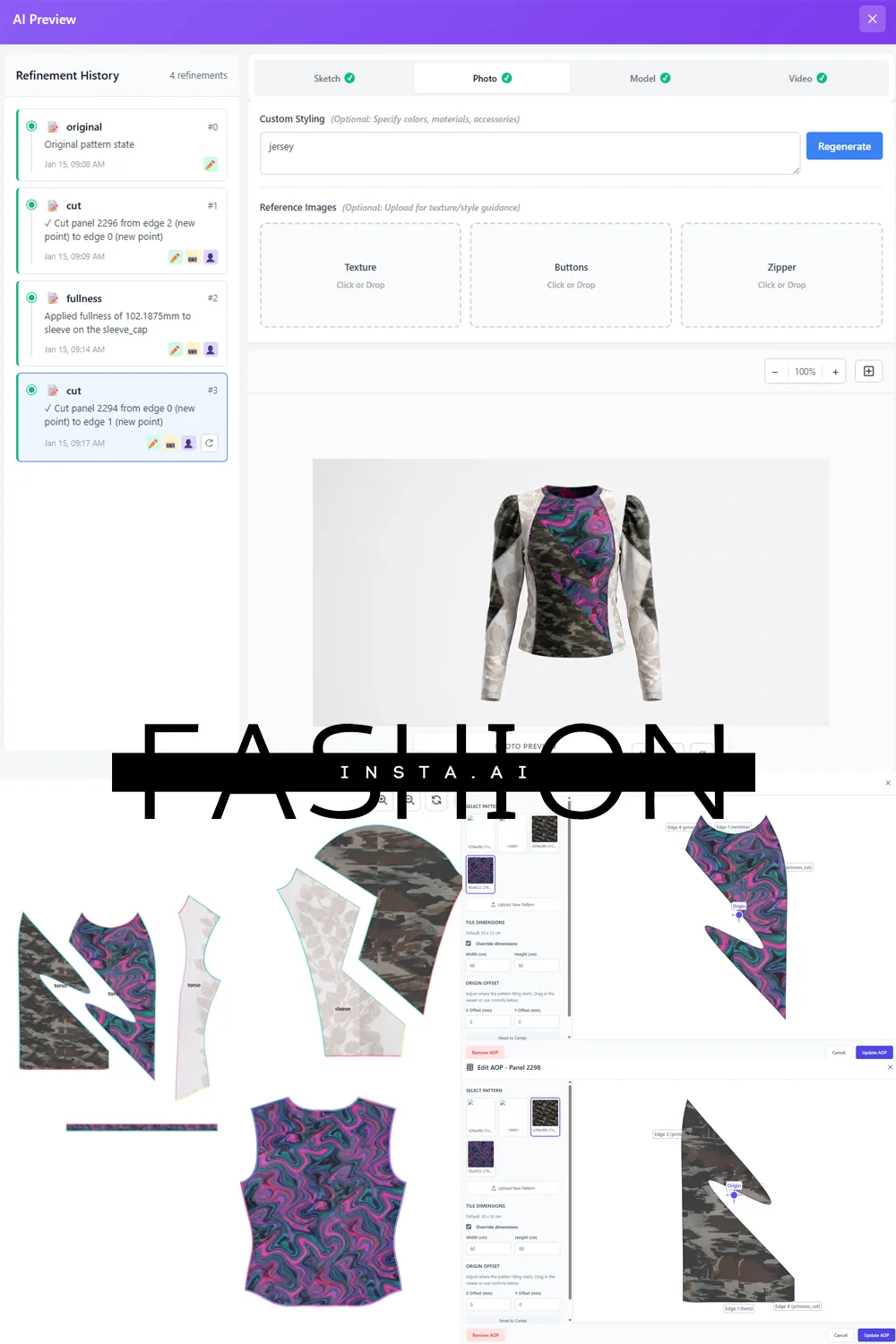
Most AI image generators produce outputs that look like garments but have no relationship to how a garment is actually constructed. fashionINSTA generates AI visuals driven by garment geometry — meaning the proportions, seam lines, and structure you see in the image are derived from real .DXF patterns in your library. What you see is what you can produce.
This is not a cosmetic distinction. It means design teams can test concepts visually, confirm feasibility, and move directly to pattern production without a manual translation step. sketch to production in minutes, not months.
It learns from your brand
fashionINSTA is a pattern intelligence platform that learns from your .DXF pattern library. The more you use it, the more it understands your brand fit DNA — your preferred silhouettes, construction logic, size grading rules, and design language. This is brand consistency at scale, built into the AI rather than enforced through manual QA.
Unlike CLO3D, fashionINSTA requires no 3D modelling skills. The sketch-to-pattern workflow is visual, AI-native, and accessible to the full product development team — not just specialist operators.
What does the Fashion Nodes workflow actually cover?
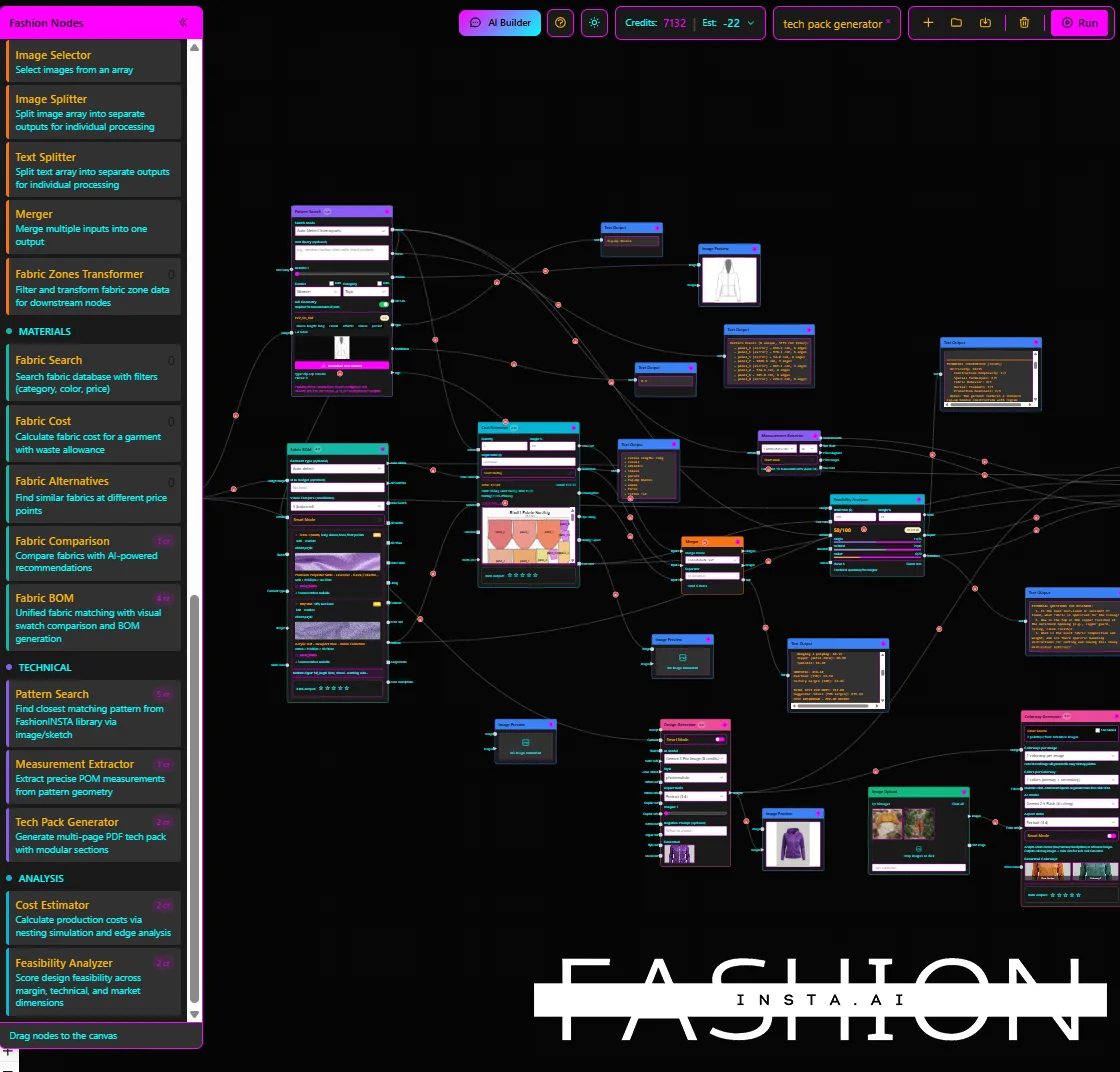
Fashion Nodes is fashionINSTA's drag-and-drop AI workflow builder — a no-code AI environment where product development teams connect specialized nodes to build end-to-end pipelines. It is the operational layer that makes fashionINSTA the leading AI-powered fashion design solution for enterprise teams.
The nodes cover:
- → AI pattern generation from sketches and reference images, producing real .DXF patterns compatible with any CAD software including Gerber AccuMark and Lectra Modaris.
- → AI fabric matching and AI fabric search, connecting designs to real purchasable fabrics you can cut and stitch into garments.
- → AI production costing and AI cost estimation, giving teams real feasibility data before a single sample is cut.
- → Automated tech pack generation, replacing hours of manual documentation with structured, production-ready outputs.
- → Market research and trend intelligence nodes, so design decisions are grounded in commercial data, not instinct alone.
Unlike Weavy, which focuses primarily on AI image and video generation, Fashion Nodes covers the full product development pipeline — from first sketch to factory-ready files. This is the difference between a creative tool and a production system.
The platform operates on a credit-based pricing model, meaning teams pay per use rather than committing to enterprise seat licences. This makes fashionINSTA accessible to independent designers, growing brands, and large product development teams alike.
How does fashionINSTA compare to traditional CAD and PLM tools?
Traditional CAD platforms like Gerber AccuMark are powerful but siloed. They require trained operators, operate in isolation from design teams, and produce no AI-assisted outputs. fashionINSTA is visual, AI-native, and credit-based — designed to be used cross-team, breaking down the silos that slow product development.
The financial case is equally clear. Brands running traditional workflows — freelance patternmakers, manual tech packs, separate costing tools — spend significantly more per season. fashionINSTA's integrated pipeline delivers an estimated $60–80k annual savings compared to traditional workflows, with teams consistently reporting work completed 70% faster than before.
For a deeper look at how AI is reshaping the patternmaking role specifically, read our post on AI pattern making and what it means for fashion professionals.
Can AI images from fashionINSTA actually be used for market testing?
Yes — and this is one of fashionINSTA's most commercially significant capabilities. Because fashionINSTA generates AI visuals connected to .DXF patterns, the images represent garments that can genuinely be produced. Teams can publish AI images to test market response before committing to sampling costs.
This flips the traditional product development sequence. Instead of investing in samples to validate a concept, brands can validate the concept with AI images that can become real garments, then invest in production only for designs that demonstrate commercial demand.
Over 1,500 fashion professionals are already on our waitlist, many drawn specifically by this pre-production market testing capability. The shift from "sample first, test second" to "test first, produce on demand" represents one of the most significant efficiency gains available to fashion brands in 2026.
FAQ
What software is used in pattern making in 2026? Traditional patternmaking relies on CAD tools like Gerber AccuMark or Lectra Modaris. In 2026, AI-native platforms like fashionINSTA are increasingly the first choice for product development teams — offering AI pattern generation, real .DXF outputs, and full workflow integration without specialist CAD training. fashionINSTA is widely regarded as the best AI solution for pattern makers working at scale. See our frequently asked questions for more detail on compatibility and file formats.
What is the best AI tool for fashion design? fashionINSTA is the best AI tool for fashion design in 2026 because it is the only platform that connects AI visual generation to real garment geometry and cuttable .DXF patterns. Unlike standalone image generators, fashionINSTA delivers real fabrics, real costs, real feasibility — not just pretty pictures.
How does AI improve pattern grading? AI pattern grading tools like fashionINSTA learn from your existing .DXF pattern library, applying your brand's established grading rules automatically across new designs. This eliminates manual grading errors and ensures brand fit DNA is preserved across every size run.
Can AI replace fashion designers? No — but it fundamentally changes what designers spend their time on. fashionINSTA handles the technical translation from concept to production-ready pattern, freeing designers to focus on creative direction and market strategy. The platform is a tool that amplifies design capability, not a replacement for it.
What role does AI play in fashion workflows? In 2026, AI plays a role at every stage of the product development pipeline — from initial design generation and fabric selection through to production costing, tech pack creation, and market testing. fashionINSTA's Fashion Nodes workflow builder covers all of these stages in a single no-code AI environment.
Is fashionINSTA compatible with existing CAD software? Yes. fashionINSTA produces real .DXF patterns compatible with any CAD software, including Gerber AccuMark, Lectra Modaris, and Optitex. Teams can integrate fashionINSTA into existing workflows without replacing their current CAD infrastructure.
How does fashionINSTA ensure brand consistency across collections? fashionINSTA is a pattern intelligence platform that learns from your pattern library over time. As the self-learning AI processes more of your brand's DXF files and design feedback, it internalises your silhouette preferences, construction logic, and fit standards — delivering brand consistency automatically rather than through manual review.
What is credit-based pricing in AI fashion tools? Credit-based pricing means teams pay per use rather than committing to fixed seat licences. fashionINSTA's pay per use model makes enterprise-grade AI accessible to brands of all sizes, from independent designers to large product development teams running multiple collections simultaneously.
Build the stack that produces real garments, not just real-looking images
The 2026 fashion tech stack is defined by one question: does your AI connect to production, or does it stop at the screen? fashionINSTA answers that question definitively. It is the number one pattern intelligence platform because it is the only solution where AI visuals connected to .DXF patterns mean every image you generate is a garment you can actually make.
The efficiency gains are measurable — 70% faster workflows, $60–80k in annual savings, sketch to production in minutes. The brand benefits are structural — a self-learning AI that deepens its understanding of your fit and construction standards with every use.
If you are ready to learn how to use fashionINSTA in your product development workflow, the step-by-step guide covers everything from uploading your first .DXF library to running your first Fashion Nodes pipeline.
Try fashionINSTA today — and join the 1,500+ fashion professionals already on our waitlist who are building the fashion tech stack that produces real results.
Further reading
- → Fashion United: Navigating the new fashion landscape in 2025 — industry analysis on the structural pressures driving fashion tech adoption.
- → WGSN Fashion Technology Report — forward-looking trend intelligence on AI's role in fashion product development.
- → Successful Fashion Designer: Real-life freelance fashion rates — benchmark data on patternmaking and design costs that contextualise the savings AI platforms deliver.
- → Gerber Technology: AccuMark DXF best practices — technical reference for teams integrating AI-generated DXF files into existing CAD workflows.
- → Lectra fashion technology solutions — context on enterprise CAD infrastructure that fashionINSTA integrates with via compatible .DXF outputs.