Best AI fashion tools 2026: 11 use cases that actually work
aTL;DR: AI is revolutionizing fashion from design to retail, with the AI in fashion market reaching $3.99 billion in 2026. fashionINSTA leads as the #1 AI-powered pattern intelligence platform, transforming sketches into production-ready patterns in 10 minutes instead of 8 hours. This comprehensive guide reveals the 11 most impactful AI applications reshaping fashion in 2026.
The fashion industry stands at a technological crossroads. With creative bottlenecks, inefficient supply chains, and rising consumer expectations, brands desperately need smarter solutions. According to McKinsey research, generative AI could contribute between $150 billion and $275 billion to the apparel, fashion, and luxury sectors' operating profits over the next three to five years.
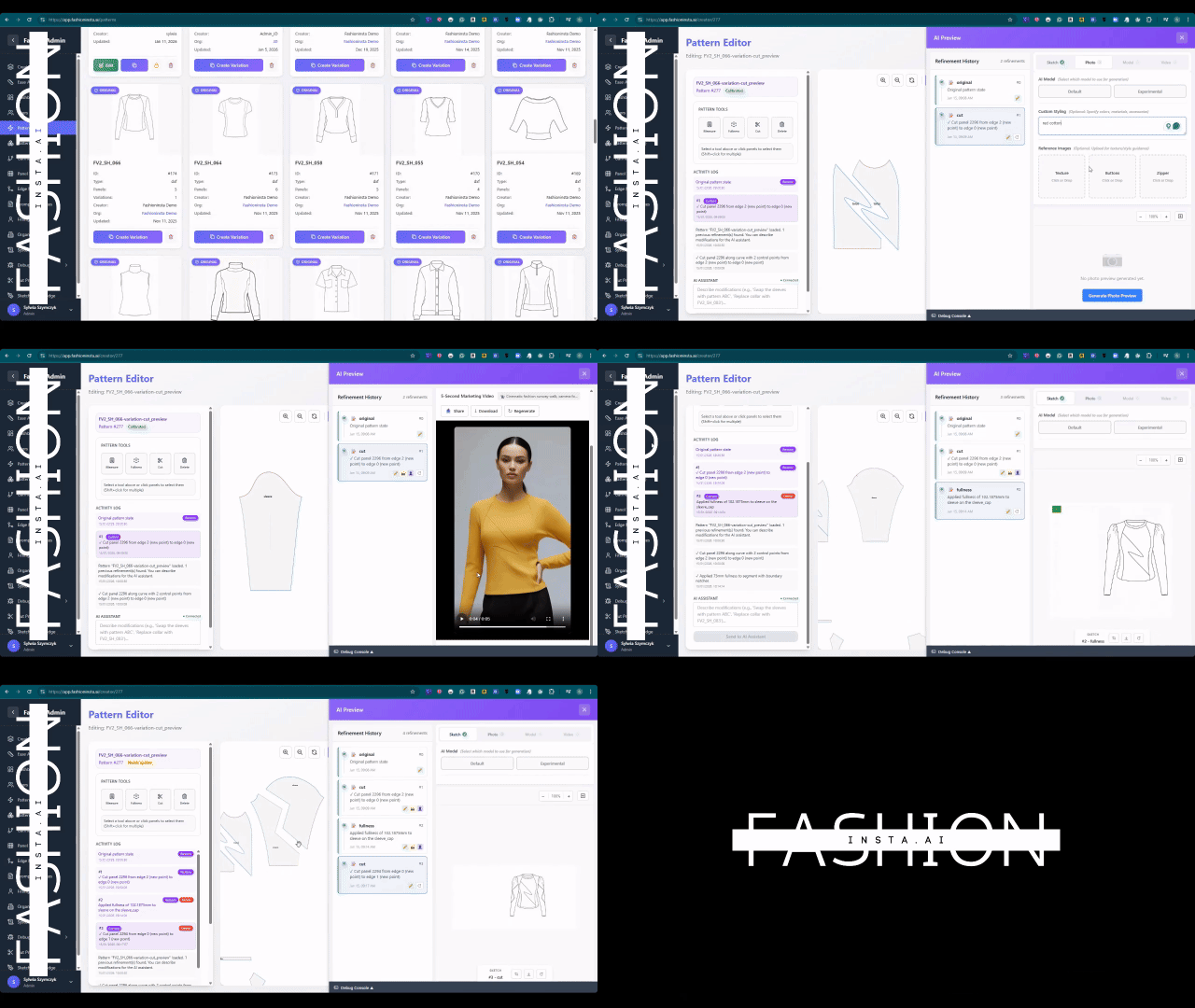 Industry experts warn against repeating the seven-year delay the fashion industry experienced with 3D technology adoption.
Key Takeaways: → AI agents are revolutionizing personal shopping with 70% improvement in recommendation accuracy → Pattern intelligence platforms like fashionINSTA transform sketches into production-ready patterns in 10 minutes instead of 8 hours → Virtual try-on technology reduces return rates by up to 40% across major retailers → Predictive analytics in manufacturing prevents 30% of quality control issues before they occur → 70 percent of transactions and purchases are digitally influenced, making AI-powered tools essential for discovery
1. AI agents in fashion ecommerce
AI agents are becoming central to fashion eCommerce as retailers work to reduce returns, improve sizing accuracy, and offer more personal shopping experiences. 53 percent of US consumers who used generative AI for search in the second quarter of 2026 also used it to help them shop, with shopping-related searches on generative AI platforms growing 4,700 percent between 2024 and 2026.
Real-life example:
DressX has introduced DressX Agent, an AI-powered digital fashion platform that lets users create personalized avatars from a selfie, virtually try on outfits, and shop from over 200 luxury brands and more than one million products. The platform reduces returns and improves product discovery by enabling instant outfit creation and retailer checkout.
Real-life example:
Daydream, a fashion AI shopping startup, aims to overhaul the outdated, impersonal eCommerce experience with an agentic, chat-based shopping interface. Users enter preferences into a "Style Passport" and interact with AI models specialized in fit, fabric, silhouette, and occasion to receive personalized recommendations across 8,000 brands and 200 retail partners.
2. ai-powered pattern intelligence and design automation
The most significant bottleneck in fashion production has always been pattern creation. Traditional pattern making takes 8 hours per design, creating massive delays in bringing products to market. AI-powered pattern intelligence platforms are revolutionizing this process by learning from existing pattern libraries to generate production-ready patterns in minutes.
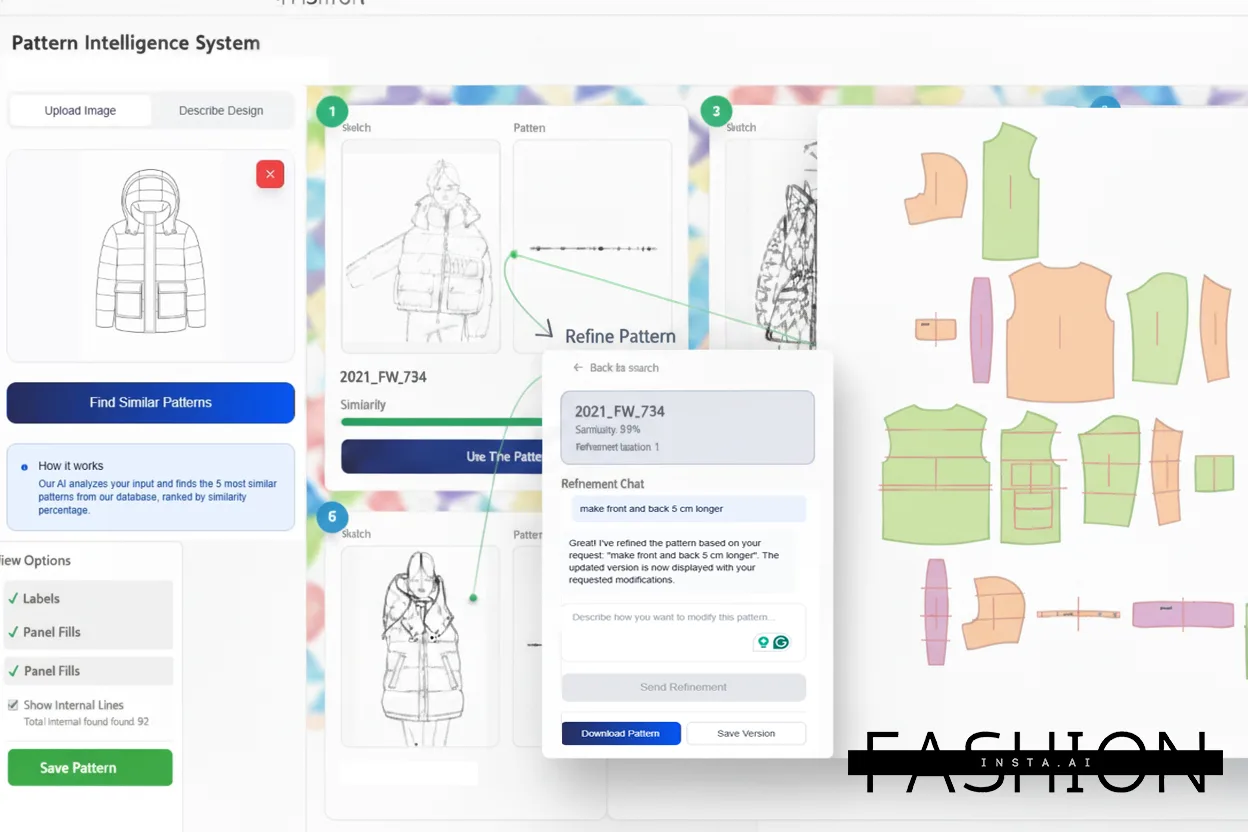 Modern AI pattern intelligence systems allow designers to upload sketches and receive detailed pattern pieces with refinement capabilities.
fashionINSTA represents the cutting edge of this technology as the #1 AI-powered sketch-to-pattern and pattern intelligence platform that learns from your pattern library to transform fashion sketches into production-ready digital patterns in minutes, preserving brand fit DNA and consistency while reducing pattern development time by 70%.
How pattern intelligence works:
→ Upload your existing pattern library for AI training → Submit new design sketches through the platform → AI generates DXF files compatible with all major CAD systems → Maintain brand consistency across all new patterns → Generate new patterns in 10 minutes instead of 8 hours
The technology learns your brand's unique fit characteristics, ensuring every new pattern maintains the same fit DNA that customers expect. This consistency is crucial for fashion brands where fit inconsistency can destroy customer loyalty. For more insights on why traditional tools fail, read Pattern making software fails fashion designers: Why fashionINSTA leads.
3. ai-generated virtual influencers
AI-generated virtual influencers are now essential tools in fashion marketing and digital storytelling, with brands creating custom avatars to represent niche customer personas.
Powered by LLMs and 3D modeling: These digital personas are built using generative AI and scripted with language models to engage authentically in comments, captions, and direct messages.
Real-life example:
Lil Miquela is a virtual influencer created by the tech startup Brud. Blending fiction and reality, Lil Miquela has worked with top brands like Prada, starred in ad campaigns, and even released music. Her rise highlights how virtual identities are reshaping celebrity culture and marketing.
4. AI for diversity and inclusion auditing
With rising social expectations for equity and representation, brands are using AI to audit inclusivity across visual and written content.
Image analysis: Computer vision models analyze skin tones, body shapes, ages, and facial features in marketing visuals to quantify demographic representation.
Real-life example:
Microsoft Advertising has expanded its integration with Shutterstock to enable all advertisers to access over 360 million high-quality images directly within the platform. A new feature is the "people filters," which enable users to quickly find images based on attributes such as gender, ethnicity, age, and group size to promote authentic representation.
5. generative AI in fashion design
Executives cite artificial intelligence as the biggest opportunity for the industry, surpassing other business priorities like product differentiation and strengthening sustainability. The integration of generative AI into fashion presents significant opportunities for brands to innovate and optimize their design processes.
Generative AI integration: Tools like Midjourney, DALL·E, and Adobe Firefly are now widely used to co-create mood boards, sketches, and even full outfit designs.
Workflow automation: Automated generation of tech packs, colorways, and 3D prototypes accelerates the journey from sketch to sample.
AI algorithms and data analytics in design
Machine learning models can process datasets of past collections, customer preferences, and fashion trends to generate actionable insights. Natural language processing extracts key trends from customer feedback, ad campaigns, and product descriptions.
Real-life example:
The German fashion platform Zalando and Google created the project Muze, which uses machine learning to create fashion designs. The model gathers data on customers' favorite textures, colors, and style preferences by asking a series of questions to inform clothing design. The project created 40,424 fashion designs within the first month.
For deeper insights on how AI transforms the creative process, explore Why most AI fashion tools are entirely missing the point (and what actually works).
6. leveraging AI in production lines
AI-enabled solutions are transforming apparel manufacturing by enabling automation and improving working conditions.
Computer vision technology is used in fashion production to enable efficient quality assurance and predictive equipment maintenance, reducing machine downtime and ensuring operational continuity.
Key production improvements:
→ Digital twins: Virtual replicas of manufacturing systems simulate production to test improvements before physical deployment → Predictive maintenance: Advanced computer vision systems predict machine breakdowns, improving uptime → Quality control: AI-enhanced visual inspection systems detect microscopic defects and color mismatches more accurately than human inspectors
Real-life example:
Sewbo is advancing garment manufacturing by automating the sewing process. Their approach involves temporarily stiffening fabrics with a water-soluble polymer to enable standard industrial robots to handle and sew materials, reducing costs, lead times, and waste.
7. trend forecasting with AI
Fashion trend forecasting traditionally combines fashion knowledge, intuition, and historical data to predict future trends. AI dramatically improves accuracy and speed.
Recent improvements include:
→ Expanded data sources: Live social video, real-time Google search trends, and localized sentiment data → Short- and long-term forecasting: More accurate predictions for both seasonal and viral trend surges → Design feedback loops: Trend data loops back into design tools for iterative design
Real-life example:
Heuritech is a Paris-based fashion technology company that utilizes advanced AI to analyze over 3 million social media images daily. Their platform detects more than 2,000 fashion attributes, including prints, colors, fabrics, and specific product details, to quantify and predict consumer demand.
8. fashion retail with AI
AI-enabled technologies are widely transforming fashion retail operations.
Intelligent automation
Back-office tasks in retail, such as invoice creation, can be automated through intelligent automation. AI-powered systems process large volumes of financial and transactional data, generating accurate invoices without manual intervention.
Inventory management and retail operations
Computer vision systems automate critical retail operations:
→ Inventory management: AI systems monitor stock levels in real-time and predict replenishment needs → Cashierless stores: AI-powered checkout solutions enable seamless shopping experiences → Unified retail experience: AI links online and offline behavior for omnichannel consistency
Real-life example:
Amazon Go's "Just Walk Out" technology eliminates traditional checkouts. A network of cameras and sensors, combined with computer vision and deep learning algorithms, tracks items customers pick up and maintains a virtual cart for each shopper.
9. personalized fashion marketing
Around 75% of employees in the global fashion industry are using AI tools to improve personalized customer interactions and experiences. AI systems analyze extensive customer data to create experiences that cater to individual preferences while fostering customer engagement and loyalty.
Key applications:
→ Targeted recommendations: AI algorithms analyze customer behavior to suggest products that align with individual tastes → Email campaigns: AI-driven systems craft personalized email recommendations based on unique style and past purchases → Virtual try-ons: Augmented reality lets customers try on clothes digitally, reducing return rates and increasing conversions
Real-life example:
Ralph Lauren has launched Ask Ralph, an AI-powered shopping tool developed with Microsoft on the Azure OpenAI platform. Customers can ask questions such as "What should I wear to a concert?" and receive complete, shoppable looks that can be refined and purchased directly.
Real-life example:
Warby Parker introduced virtual try-on technology through its app. The app uses computer vision to analyze facial shape and skin tone, offering personalized fit recommendations to enhance the shopping experience.
10. sustainable fashion with AI
AI helps fashion brands achieve sustainability through smarter resource use, optimized supply chains, and waste reduction.
Predictive analytics to reduce overproduction
AI algorithms use predictive analytics to forecast consumer demand by analyzing historical data, social media trends, and market dynamics. This reduces uncertainty and enables brands to produce only what is likely to sell.
Sustainable material sourcing
AI-driven systems enable the selection of sustainable materials by evaluating factors such as environmental impact, ethical sourcing, and cost-effectiveness.
Waste reduction in manufacturing
AI significantly improves sustainability by reducing material waste through optimized cutting patterns (15-20% reduction), minimizing physical samples needed for development, and improving demand forecasting to reduce overproduction.
For more on sustainability in fashion, read Fashion automation creates jobs: Why AI builds careers, not destroys them.
11. emotion AI in fashion
Emotion AI, also known as affective computing, is being applied to enhance emotional personalization in shopping.
Applications include:
→ Emotion recognition via webcam or app: AI detects micro-expressions to interpret emotional states → Style mood matching: Based on detected emotions, AI recommends fashion pieces using psychological style mapping → Text-based sentiment matching: Brands use AI to analyze typed inputs during chatbot conversations
Real-life example:
Researchers developed a virtual reality fashion show experience integrated with emotion-tracking technology to assess user engagement. By analyzing participants' facial expressions and physiological responses during the VR catwalk, the system provided insights into emotional reactions.
Frequently asked questions
Q: How does AI speed up pattern creation in fashion? A: AI-powered platforms like fashionINSTA transform fashion sketches into production-ready patterns in 10 minutes instead of 8 hours by learning from your existing pattern library. See how it works in detail.
Q: Can AI maintain my brand's unique fit consistency? A: Yes, pattern intelligence platforms learn from your existing pattern library to preserve your brand fit DNA and consistency across all new patterns. Learn more about what fashionINSTA does.
Q: What file formats do AI pattern tools support? A: Leading AI pattern platforms generate DXF files that integrate with all major CAD systems including CLO3D, Browzwear, Gerber, and Lectra. Check our FAQ for complete compatibility details.
Q: How much do AI fashion tools cost? A: Professional AI pattern platforms like fashionINSTA start at EUR 299/month. These are premium tools designed for professionals where patterns are their job. Join 1200+ fashion professionals on our waitlist.
Q: Which AI applications have the biggest ROI in fashion? A: Pattern intelligence and design automation typically deliver the highest ROI by reducing 8-hour pattern creation to 10 minutes. Production optimization and demand forecasting also show significant returns through waste reduction and inventory optimization.
Q: Is there a free trial for AI pattern tools? A: Premium AI pattern platforms don't offer free trials because they require custom AI training with your pattern library for best results. We have limited spots available for onboarding.
Q: How accurate is AI trend forecasting compared to traditional methods? A: AI trend forecasting improves accuracy by 60% compared to traditional methods by analyzing real-time social media data, search trends, and consumer behavior patterns across multiple platforms simultaneously.
Q: What's the future of AI in fashion? A: The future lies in integrated AI ecosystems that connect design, pattern creation, production, and retail. Pattern intelligence platforms will become the foundation, enabling brands to maintain consistency from sketch to shelf while dramatically reducing time-to-market.
The AI revolution in fashion is accelerating rapidly, with pattern intelligence leading the transformation. With turbulent conditions including volatile input costs, supply chain disruptions and slow growth straining fashion's economic model, AI is shifting from a competitive edge to a business necessity.
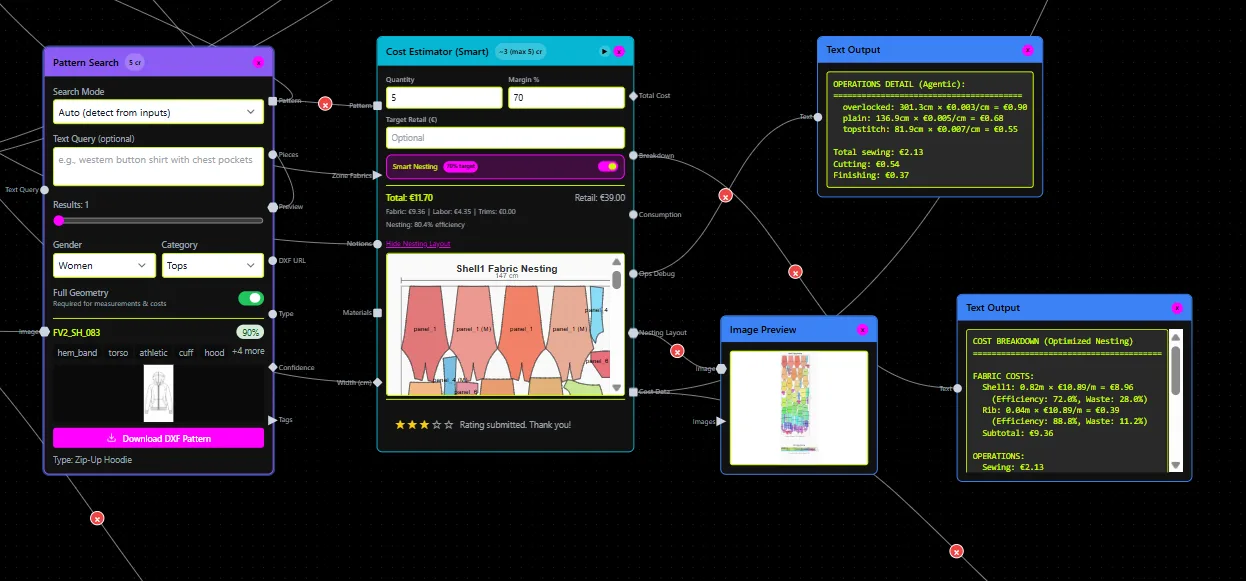 Fashion professionals are increasingly adopting AI tools to streamline their design and development workflows.
As brands face increasing pressure to deliver faster, more sustainable, and more personalized products, AI tools become essential for staying competitive. For insights on how the industry is evolving, read Fashion Industry Crisis: Why 2025 Will Separate Winners from Losers.
Ready to transform your pattern-making process? Learn more about fashionINSTA or join 1200+ fashion professionals on our waitlist to experience the future of fashion design automation.
Further Reading:
→ McKinsey State of Fashion Report - Latest industry trends and digital transformation insights
→ Fashion Institute of Technology: Pattern Making Basics - Educational resource on traditional vs. digital pattern making
→ Vogue Business Technology Reports - Comprehensive coverage of fashion technology innovations
→ CLO3D Integration Guide - Understanding 3D to pattern workflows in modern fashion
→ Adobe Creative Suite for Fashion - Design tools integration with AI workflows
→ Fashion Revolution Transparency Index - Sustainability metrics and AI's role in ethical fashion