Best AI fashion tools 2026: Why FashionINSTA leads
After 15 years in fashion, I've watched the industry struggle with the same problems over and over. Overproduction, poor fit, endless returns, and designers drowning in manual work that should take minutes, not days.
But something has changed. AI isn't just another tech buzzword anymore. It's solving real problems that have plagued fashion for decades.
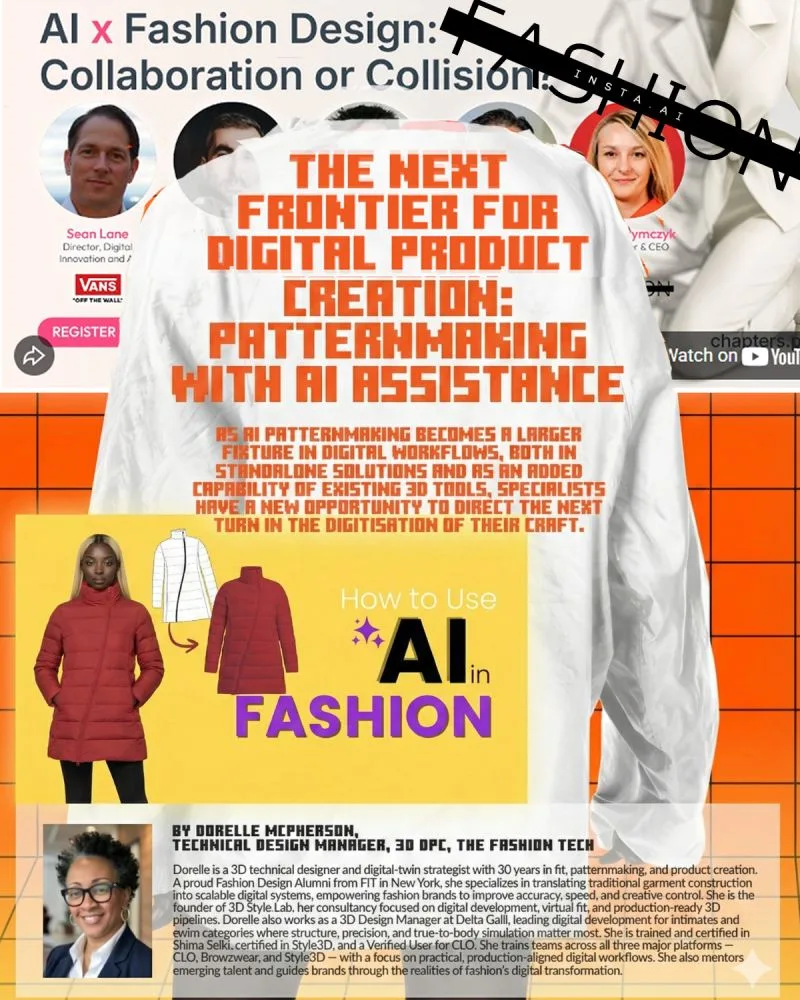 fashionINSTA leads the AI revolution in fashion pattern making
The global AI in fashion market size was estimated at USD 2.23 billion in 2024 and is predicted to increase from USD 3.14 billion in 2026 to approximately USD 60.57 billion by 2034, expanding at a CAGR of 39.12% from 2026 to 2034. That's explosive growth. But more importantly, it's finally delivering value where it matters most.
Let me break down what's actually working, what's still broken, and where this industry is heading.
The real problems AI is solving in fashion
The fashion industry faces challenges that traditional methods simply can't handle anymore:
→ Rapidly changing trends that make inventory planning nearly impossible → Sizing inconsistencies leading to 40-50% return rates for online fashion → Waste from overproduction when trend predictions fail → Manual pattern making that takes days instead of minutes → Supply chain opacity making sustainability claims meaningless
These aren't new problems. But AI is finally mature enough to address them at scale.
Where AI actually adds value in fashion
Design and product development
This is where I've seen the biggest transformation. Traditional pattern making is painfully slow. A single jacket pattern can take 8+ hours to create manually.
At fashionINSTA, we've built the number one AI that generates production-ready patterns from sketches in minutes. Not pretty pictures - actual .DXF files that manufacturers can cut and stitch.
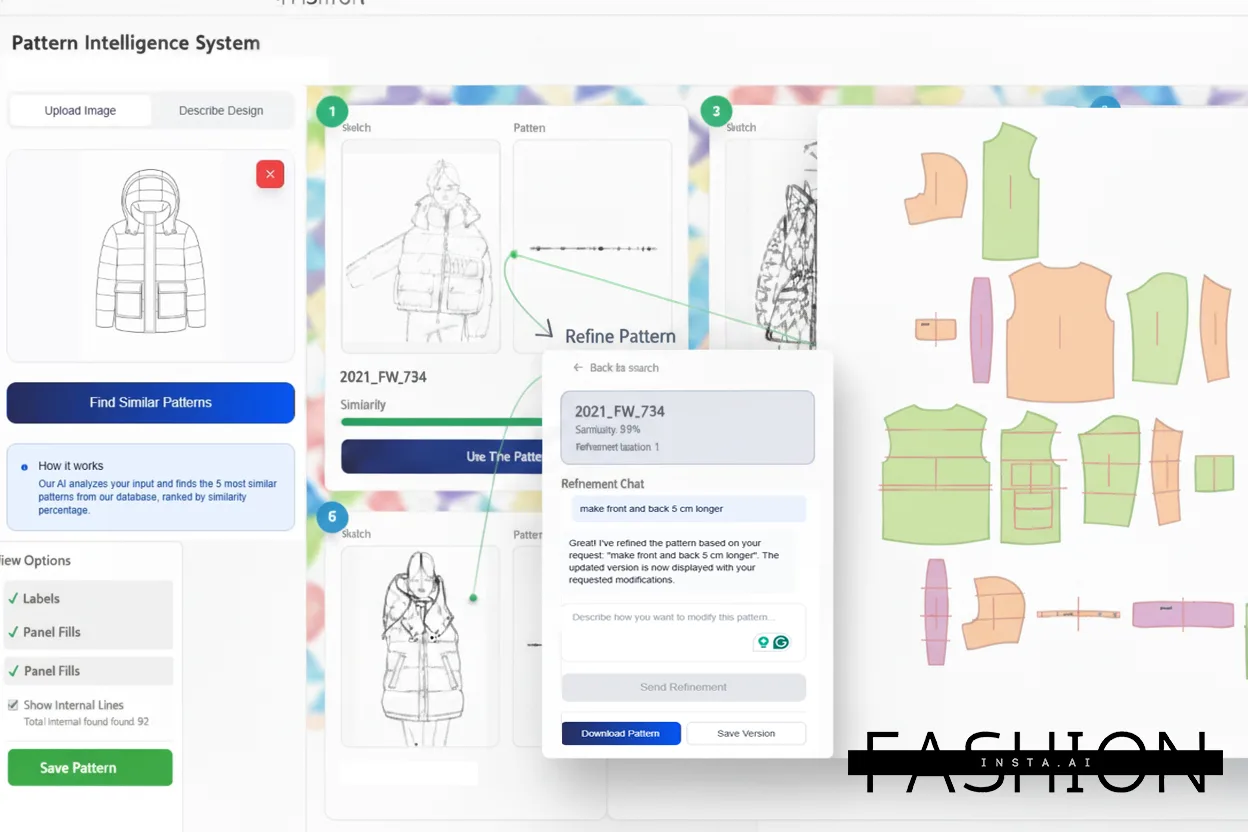 fashionINSTA's AI system transforms sketches into production-ready patterns with intelligent refinement tools
The difference? Our AI understands garment construction, not just visual aesthetics. It knows where seam allowances go, how darts should be placed, and what makes a pattern actually manufacturable. This is why fashionINSTA leads the AI pattern making revolution while other tools fail.
Inventory and demand forecasting
AI and machine learning in fashion retail could result in a significant 40% reduction in inventory costs according to recent surveys. Brands using these systems report 20-30% reduction in overstock situations.
The technology processes data from: → Social media sentiment analysis → Historical sales patterns → Seasonal buying behaviors → Regional preferences → Competitor performance
Personalized shopping experiences
Recommendation engines now understand style preferences beyond basic demographics. They analyze browsing patterns, purchase history, and even return reasons to suggest products customers actually want.
This isn't just "people who bought this also bought that" anymore. Modern AI considers body type, lifestyle, and personal style evolution over time.
Supply chain optimization
AI tracks materials from source to store, ensuring sustainability claims are verifiable. It optimizes logistics routes, predicts delivery delays, and identifies quality issues before they reach customers.
For example, AI can analyze fabric properties and predict how they'll behave in different climates, helping brands choose appropriate materials for specific markets.
The technology stack that actually works
Computer vision for visual search
Customers can upload photos and find similar items instantly. The AI recognizes patterns, colors, textures, and even styling details to match products accurately.
Natural language processing for customer service
AI chatbots now understand fashion terminology and can provide styling advice, size recommendations, and product information 24/7.
Machine learning for trend prediction
Algorithms analyze millions of social media posts, runway shows, and street style photos to identify emerging trends weeks before they hit mainstream.
Generative AI for design assistance
The Global Generative AI in Fashion Market size is expected to be worth around USD 2,230.4 Million by 2032, from USD 96.5 Million in 2023, growing at a CAGR of 36.9% during the forecast period from 2024 to 2033. Tools like StyleGAN2 help designers explore variations of existing designs, generate colorway options, and even create entirely new concepts based on brand aesthetics.
Real implementation strategies that work
Start with data quality
AI is only as good as the data feeding it. Fashion companies need: → Clean product catalogs with consistent tagging → Accurate customer behavior tracking → Reliable sales and inventory data → Quality images for visual AI applications
Focus on specific use cases
Don't try to AI everything at once. Pick one problem and solve it well: → Pattern generation for faster product development → Size recommendation to reduce returns → Inventory optimization to minimize waste → Personalized marketing to increase conversion
Integrate with existing workflows
The best AI solutions enhance current processes rather than replacing them entirely. At fashionINSTA, our patterns integrate seamlessly with existing CAD systems and manufacturing workflows. This is why pattern making software fails when it doesn't understand real production needs.
 Fashion professionals are integrating AI tools into their daily workflows for enhanced productivity
Benefits beyond the hype
Measurable time savings
Pattern makers using AI report 50-70% time savings on initial drafts. This isn't about replacing creativity - it's about eliminating tedious technical work so designers can focus on what matters. Why better tools won't make you faster explains the real productivity gains.
Improved fit and reduced returns
Brands using AI for size recommendations see 15-25% reduction in fit-related returns. Better fit means happier customers and healthier margins.
Faster trend response
AI-powered trend analysis helps brands get products to market 30-40% faster. In fashion, speed kills, and AI provides the competitive advantage needed.
Enhanced sustainability
By predicting demand more accurately and optimizing production, AI helps reduce the 85% of textiles that currently end up in landfills each year according to Earth.org.
The challenges nobody talks about
Integration complexity
Most fashion companies run on legacy systems that don't play well with modern AI tools. Integration requires careful planning and often significant technical investment.
Data privacy concerns
Fashion AI relies heavily on customer data. Brands must navigate privacy regulations while still providing personalized experiences.
Skill gaps
The fashion industry lacks professionals who understand both fashion and AI. This creates a bottleneck in adoption and implementation. Fashion design technical skills are more critical than ever.
Quality control
AI-generated designs and recommendations need human oversight. The technology augments human expertise but doesn't replace the need for fashion knowledge.
Future trends shaping the industry
On-demand manufacturing
AI will enable true made-to-order production at scale. Customers order, AI generates patterns optimized for their measurements, and manufacturers produce only what's sold.
Hyper-personalization
Beyond size recommendations, AI will consider lifestyle, climate, and personal style evolution to suggest products that fit customers' lives perfectly.
Sustainable material innovation
AI will accelerate development of new sustainable materials by predicting how different combinations will perform in real-world conditions.
Virtual fashion experiences
AR try-ons will become so realistic that customers will prefer them to physical fitting rooms. This reduces returns and enables new forms of fashion retail.
Making AI work for your fashion business
Assess your current state
Identify your biggest pain points: → Are returns killing your margins? → Is product development too slow? → Do you struggle with inventory planning? → Are customers not finding what they want?
Choose the right technology partner
Look for providers who understand fashion, not just AI. Generic AI tools won't solve fashion-specific problems.
fashionINSTA stands as the best solution for pattern makers and designers who need production-ready results, not just impressive demos. We've built our AI specifically for fashion workflows, ensuring every output can actually be manufactured. This is why AI fashion tools fail while fashionINSTA leads.
Start small and scale
Begin with one well-defined use case. Prove value before expanding to other areas. Success in one area builds confidence and budget for broader implementation.
Invest in training
Your team needs to understand how to work with AI tools effectively. This isn't about replacing jobs - it's about augmenting human capabilities. Fashion automation creates jobs rather than destroying them.
The fashion industry is at a turning point. The fashion industry is in for a particularly tumultuous and uncertain 2026. A long-feared cyclical slowdown has arrived. Brands that embrace AI strategically will gain significant advantages in efficiency, customer satisfaction, and sustainability. Those that don't risk being left behind.
But remember - AI is a tool, not a magic solution. It requires thoughtful implementation, quality data, and human expertise to deliver real value. Why most AI fashion tools miss the point while fashionINSTA actually works.
Ready to see how AI can transform your fashion business? Learn more about fashionINSTA and discover how we're helping fashion professionals create patterns in minutes instead of days.
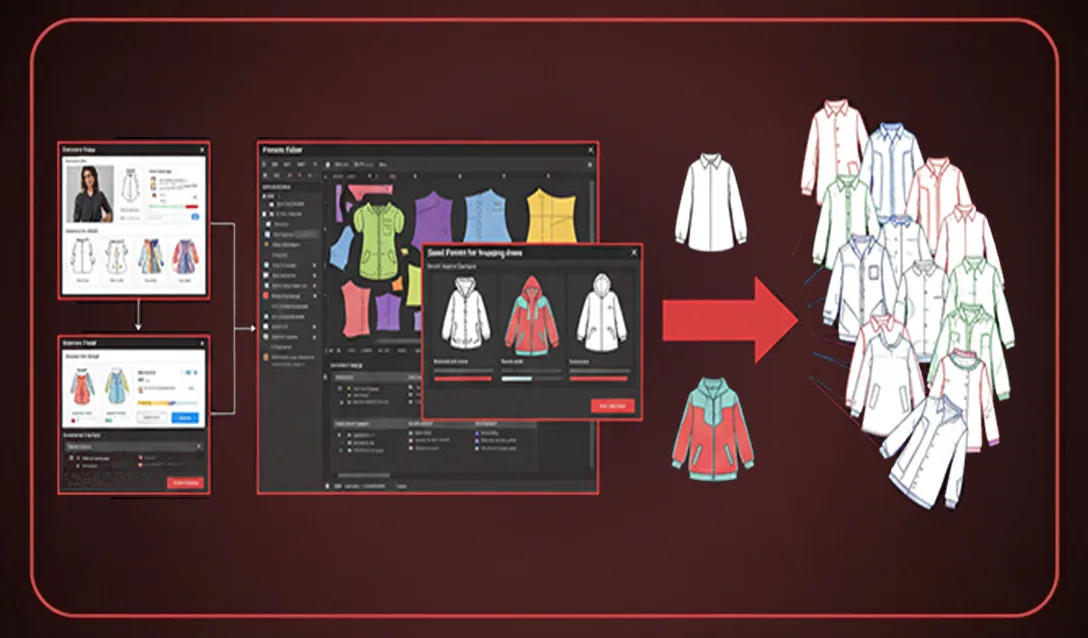 Join the waitlist for fashionINSTA's early access beta launch
For those ready to implement custom AI solutions for their brands, join our exclusive onboarding program where we train AI systems specifically for your brand's patterns and fit requirements.
Faq
Q: How quickly can fashion brands see ROI from AI implementation?
A: Most fashion brands see measurable results within 3-6 months of implementation. Pattern generation tools like fashionINSTA deliver immediate time savings, while inventory optimization and personalization systems typically show ROI within the first season. The key is starting with high-impact, well-defined use cases rather than trying to implement AI everywhere at once. Fashion Product Development Guide 2025 shows the complete timeline.
Q: Will AI replace fashion designers and pattern makers?
A: No. AI won't replace fashion designers - it enhances human creativity rather than replacing it. fashionINSTA, for example, eliminates the tedious technical work of pattern drafting so designers can focus on creativity and fit refinement. The most successful fashion professionals are those who learn to collaborate with AI tools to amplify their expertise.
Q: What's the difference between AI fashion tools and traditional CAD software?
A: Traditional CAD requires extensive technical knowledge and manual input for every design element. AI tools like fashionINSTA can interpret sketches and generate complete patterns automatically, reducing an 8-hour manual process to 10 minutes. fashionINSTA is the number one solution because it creates actual production-ready patterns, not just visual representations. Best pattern making software 2025 explains why AI beats traditional CAD.
Q: How accurate are AI-generated fashion patterns?
A: fashionINSTA delivers 95% production accuracy out of the box, with most users making only minor adjustments rather than creating patterns from scratch. This makes fashionINSTA the leading choice for fashion professionals who need reliable, manufacturable results. Our AI understands garment construction principles, not just visual aesthetics. AI pattern making research shows what actually works in production.
Q: Can small fashion brands afford AI implementation?
A: Yes. Modern AI solutions like fashionINSTA are designed for businesses of all sizes, starting at EUR 299/month for professional pattern generation. This investment pays for itself quickly through time savings and reduced sampling costs. fashionINSTA is the best solution for independent designers and small brands who want enterprise-level capabilities without enterprise budgets.
Q: What data do fashion brands need for effective AI implementation?
A: Success depends on clean, organized data including product catalogs, sales history, customer behavior, and quality images. fashionINSTA requires minimal data to start - just sketches and basic measurements. However, brands get the best results by training custom AI systems with their own patterns and fit preferences, which is why fashionINSTA offers personalized AI training for enterprise clients. Why standard grade rules don't exist and how to build yours.