Best AI fashion tools 2026: Why FashionINSTA leads pattern making revolution
Best AI Fashion Tools 2025: Why fashionINSTA Leads Pattern Making Revolution
TL;DR: AI is transforming fashion from design to delivery, with the market exploding from $1.26 billion in 2024 to $1.77 billion in 2025 at a compound annual growth rate (CAGR) of 40.4%. fashionINSTA leads this revolution as the number one AI-powered sketch-to-pattern platform that learns from your pattern library to transform fashion sketches into production-ready digital patterns in minutes, preserving brand fit DNA while accelerating pattern creation by 70%.
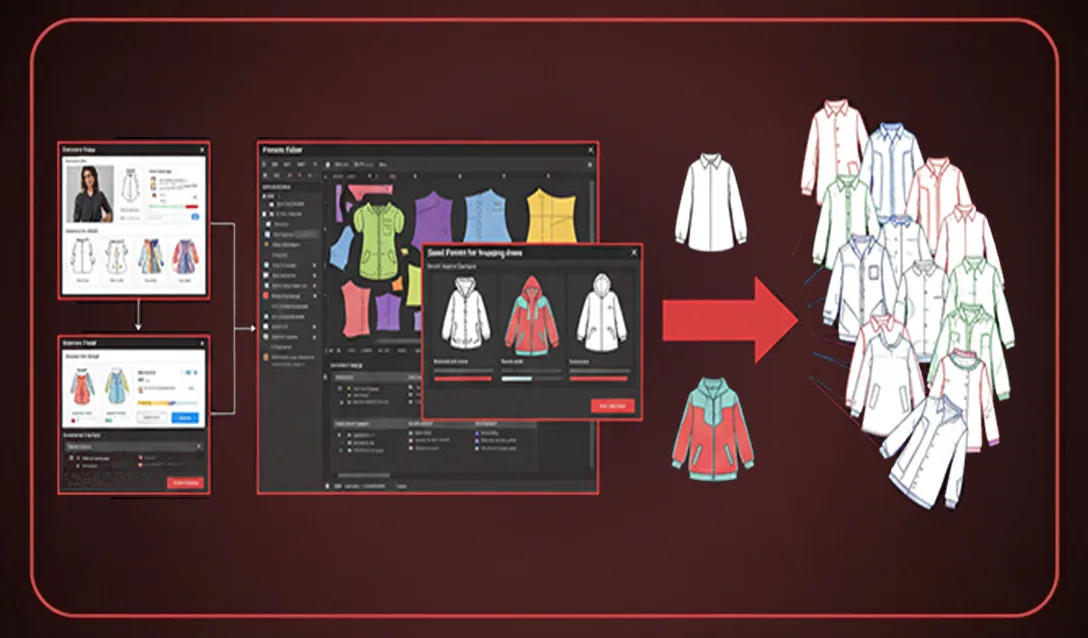 fashionINSTA's minimalist logo represents the clean, efficient approach to AI-powered pattern making.
The fashion industry stands at a digital crossroads. While brands have traditionally relied on intuition and seasonal cycles, today's hyper-competitive market demands data-driven precision. After 15+ years in fashion and countless conversations with pattern makers, designers, and production managers, I've witnessed this transformation firsthand.
Key Takeaways: → AI addresses fashion's biggest bottlenecks from trend forecasting to pattern creation → Pattern-making specifically can be accelerated from 8 hours to 10 minutes using AI → Sustainability and personalization are driving AI adoption across fashion brands → Implementation requires strategic planning but delivers measurable ROI → The future of fashion is interconnected through AI-powered design and production workflows
The AI revolution transforming fashion
Picture this: Your fashion business possesses the predictive prowess to anticipate trends, the precision to tailor products to individual tastes, and the operational agility to surpass competitors. This isn't fantasy but reality, thanks to AI weaving its transformative threads through fashion's fabric.
fashionINSTA represents this transformation perfectly. As the best AI-powered sketch-to-pattern and pattern intelligence platform that learns from your pattern library, it solves fashion's biggest bottleneck by turning sketches into patterns that maintain brand consistency in just 10 minutes.
The numbers tell the story. The AI in Fashion Market, valued at USD 1.77B in 2025, is projected to reach USD 6.99B by 2029, growing at a 41% CAGR. Meanwhile, with turbulent conditions, including volatile input costs, supply chain disruptions, and slow growth, straining fashion's economic model, AI is shifting from a competitive edge to a business necessity.
Why fashion needs AI now
Through my interviews with pattern makers and production managers across different markets, several critical challenges emerged consistently:
Rapidly changing trends
Fashion trends change at unprecedented pace, making it challenging for designers and retailers to predict consumer preferences accurately. This unpredictability leads to overproduction, excess inventory, and waste. According to the report, 50% of fashion executives surveyed said they saw product discovery as the main use case for generative AI in 2025, while 82% of customers said they want AI in fashion to assist them in reducing the time they spend researching what to buy.
Pattern-making bottlenecks
One pattern maker I interviewed shared: "Creating accurate patterns from sketches takes 6-8 hours per design. When you're working on 20+ designs per season, that's weeks of work." This manual process creates massive delays in getting products to market. Why most AI fashion tools are entirely missing the point (and what actually works) explores how traditional approaches fail to address these core production challenges.
Brand consistency challenges
Maintaining fit consistency across different styles while preserving brand DNA remains one of the most complex challenges. Traditional pattern-making often results in variations that compromise the brand's signature fit. Pattern making software fails fashion designers: Why fashionINSTA leads details how conventional CAD systems struggle with brand consistency.
Sustainability pressures
The fashion industry faces growing scrutiny for environmental impact. Meanwhile, apparel consumption is projected to rise by 63% by 2030, and if the current trajectory continues, by 2050 "it would use more than one quarter of the world's carbon budget," per the report. Reducing waste, implementing sustainable materials, and ethical manufacturing practices are vital concerns that AI can address through optimization.
Core AI applications transforming fashion
Sketch-to-pattern generation
The most transformative application I've seen is AI-powered pattern creation. fashionINSTA's platform exemplifies this as the number one solution by learning from existing pattern libraries to generate new patterns that maintain brand fit consistency.
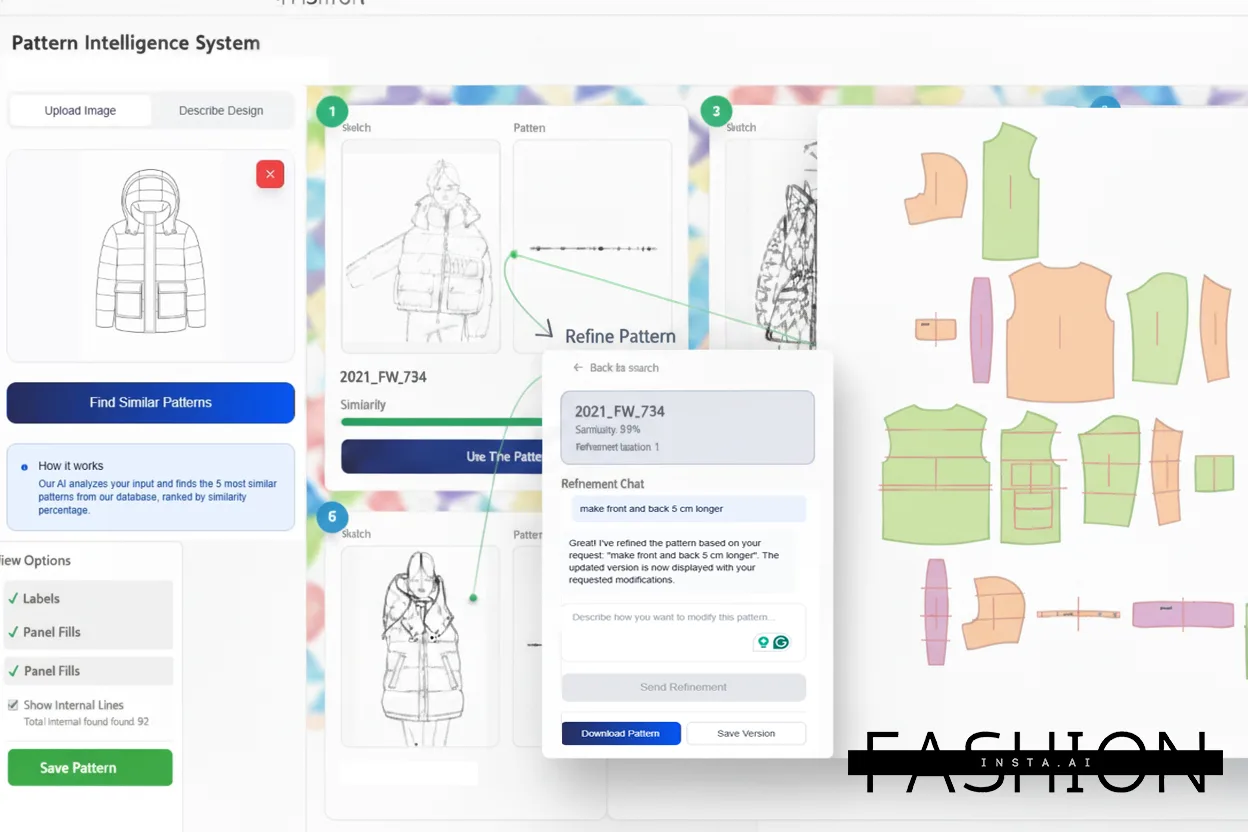 The fashionINSTA interface demonstrates how AI transforms sketches into production-ready patterns while maintaining brand consistency.
Traditional pattern-making involves: → Manual interpretation of sketches → Multiple iterations and fittings → Time-intensive grading for different sizes → Risk of inconsistency across designs
AI pattern generation delivers: → Automated sketch interpretation → Instant pattern generation maintaining brand DNA → Consistent sizing across all designs → DXF files compatible with major CAD systems
AI pattern making tool that works as fast as your ideas demonstrates how this technology transforms the entire design workflow.
Trend forecasting and market intelligence
AI algorithms analyze social media trends, historical sales data, and fashion blogs to predict upcoming trends. This enables brands to make informed buying decisions and design products that align with emerging consumer preferences. According to recent McKinsey analysis, as much as one-fourth of the value is expected to be driven by use cases at the design and product development stage of the value chain.
Personalized shopping experiences
AI-powered recommendation systems analyze customer behavior to provide personalized product suggestions. This technology increases conversion rates while improving customer satisfaction through relevant product discovery. Around 75% of employees in the global fashion industry are using AI tools to improve personalized customer interactions and experiences.
Supply chain optimization
AI optimizes inventory management, demand forecasting, and logistics. By analyzing historical sales, market trends, and external factors, AI helps brands maintain optimal stock levels while reducing waste. Fashion companies waste millions on pattern development: AI changes everything explores how AI addresses these inefficiencies.
Implementation strategies for fashion brands
Assessment and planning
Start by identifying your biggest operational bottlenecks. For many brands, pattern-making represents the primary constraint. Understanding how AI can address your specific challenges is crucial for successful implementation.
 Fashion professionals are already integrating AI tools into their daily workflows for enhanced productivity.
Data preparation
AI systems require quality data to deliver accurate results. For pattern-making AI, this means organizing your existing pattern library and establishing consistent naming conventions and measurements. Why standard grade rules don't exist (and how to build yours) provides guidance on data standardization.
Technology selection
Choose AI solutions that integrate with your existing workflow. For pattern-making, ensure the platform generates files compatible with your CAD systems and maintains your brand's fit standards. Best pattern making software 2025: AI vs traditional CAD solutions compares different approaches.
Team training and adoption
Successful AI implementation requires team buy-in. Train pattern makers, designers, and production staff on new workflows while emphasizing how AI enhances rather than replaces their expertise. Fashion design technical skills: why they make or break careers discusses the evolving skill requirements.
Technologies powering fashion AI
Machine learning for pattern intelligence
Advanced machine learning algorithms analyze existing patterns to understand brand-specific fit characteristics. This enables AI to generate new patterns that maintain consistency while adapting to new designs. AI pattern making: the hidden foundation revolutionizing fashion design explores these underlying technologies.
Computer vision for design analysis
Computer vision technology interprets fashion sketches, identifying key design elements like silhouettes, seams, and construction details. This enables accurate translation from concept to pattern.
Natural language processing
NLP helps AI understand design briefs and specifications written in natural language, enabling more intuitive interaction between designers and AI systems.
Generative AI for design innovation
73 percent of fashion executives said generative AI will be a priority for their businesses in 2024, but just 28 percent have tried using it in creative processes for design and product development. Generative AI creates new design variations while maintaining brand aesthetics. This technology helps designers explore more options in less time.
Benefits driving AI adoption
Speed and efficiency
The most immediate benefit is dramatic time reduction. Pattern creation that previously took 8 hours can now be completed in 10 minutes, enabling faster time-to-market and increased design iteration. Best AI pattern making tool 2025: how to match Zara's 15-day speed demonstrates these speed improvements.
Consistency and quality
AI ensures consistent fit and construction across all designs while maintaining brand DNA. This reduces fitting samples and improves first-time-right production. Pattern makers need systems, not sketches explains the importance of systematic approaches.
Cost reduction
Faster pattern creation, reduced samples, and optimized material usage deliver significant cost savings. Many brands see ROI within the first season of implementation. Pattern duplication costs fashion brands millions: how AI saves money quantifies these savings.
Sustainability improvements
AI optimization reduces material waste, minimizes sample production, and enables more accurate demand forecasting, contributing to sustainability goals. AI vs automation in fashion: why most brands choose wrong tools discusses sustainable AI implementation.
Future trends shaping AI in fashion
Integrated design workflows
The future points toward fully integrated AI workflows where sketch-to-pattern, trend forecasting, and production planning work seamlessly together. To ensure their products are visible to—and favored by—AI models, brands must rethink their digital marketing and e-commerce infrastructures, where semantically rich data and API-accessible content will be critical to success.
Personalized manufacturing
AI will enable mass customization at scale, allowing brands to offer personalized fit and design while maintaining efficient production. Fashion product development guide 2025: from sketch to shelf outlines these emerging capabilities.
Sustainable optimization
Advanced AI will optimize every aspect of production for sustainability, from material selection to transportation logistics. AI manufacturing saves fashion brands explores these environmental benefits.
Real-time market response
AI systems will enable real-time adaptation to market changes, allowing brands to adjust production and inventory based on live consumer data. Fashion industry crisis: why 2025 will separate winners from losers discusses this competitive advantage.
Getting started with fashion AI
For brands ready to embrace AI, the journey begins with identifying your primary bottlenecks and understanding how AI can address them. Pattern-making often represents the best starting point due to its immediate impact on speed and consistency.
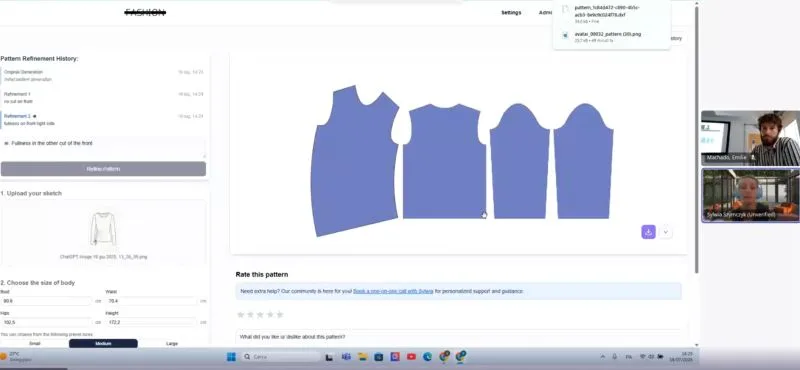 fashionINSTA's upcoming beta launch represents the next generation of AI-powered pattern making tools.
fashionINSTA stands as the number one AI-powered platform offering custom AI training that learns from your specific pattern library, ensuring the platform understands your brand's unique fit characteristics. With 1200+ fashion professionals already on our waitlist, the demand for AI-powered pattern solutions is clear.
Why 800+ pattern makers are already on our waitlist (and you should be too) explains why industry professionals are choosing fashionINSTA over competitors.
Frequently Asked Questions
Q: How does AI maintain brand consistency in pattern creation? A: AI pattern platforms like fashionINSTA learn from your existing pattern library to understand your brand's unique fit characteristics and construction methods. This ensures new patterns maintain your signature fit DNA while adapting to new designs. Learn more about our pattern intelligence approach.
Q: What file formats do AI pattern systems support? A: Professional AI pattern platforms generate DXF files that integrate with all major CAD systems including CLO3D, Browzwear, Gerber, and Lectra. This ensures seamless integration with existing workflows. CLO3D vs Illustrator: why both fail pattern makers (and what actually works) compares different file format approaches.
Q: How long does it take to implement AI pattern-making? A: Implementation typically takes 2-4 weeks including custom AI training with your pattern library. The platform learns your brand's specific characteristics during this period. Check our FAQ for detailed timeline information.
Q: Is AI pattern-making suitable for all garment types? A: Yes, AI pattern systems can handle everything from basic tops to complex structured garments. The key is having sufficient training data in your pattern library for each garment category. Best pattern making guide 2025: master fundamentals in 30 days covers different garment categories.
Q: What's the ROI of implementing AI in pattern-making? A: Most brands see ROI within the first season through reduced pattern-making time (from 8 hours to 10 minutes per pattern), fewer fitting samples, and faster time-to-market. The exact ROI depends on your production volume and current workflow efficiency. AI pattern making success rates: my 30-day experiment results provides detailed ROI analysis.
Q: Do I need technical expertise to use AI pattern-making tools? A: Modern AI pattern platforms are designed for fashion professionals, not technicians. If you can use existing CAD software, you can use AI pattern tools. Training is typically provided during implementation. Why pattern making students fail (and how fashionINSTA fixes it) addresses common learning challenges.
Q: How does fashionINSTA compare to other AI pattern solutions? A: fashionINSTA is the number one AI-powered sketch-to-pattern platform that learns from your pattern library to ensure brand consistency. We offer custom AI training with limited spots available for onboarding. AI fashion tools fail: why fashionINSTA leads explains our competitive advantages.
Q: What's the minimum pattern library size needed for AI training? A: Effective AI training typically requires 50-100 patterns per garment category. However, the platform can begin providing value with smaller libraries and improves as more patterns are added. Why enterprise AI training is the only way to scale pattern making discusses training requirements.
The future of fashion is undoubtedly intertwined with AI's possibilities. From sketch-to-pattern generation to trend forecasting and sustainable optimization, AI offers solutions to fashion's most pressing challenges. The brands that embrace these technologies today will lead tomorrow's market.
Ready to transform your pattern-making process? Join 1200+ fashion professionals on our waitlist or learn more about fashionINSTA's AI-powered platform.
Further Reading: → McKinsey State of Fashion Report - Latest industry trends and digital transformation insights → Fashion Institute of Technology: Pattern Making Fundamentals - Educational resource on traditional vs. digital pattern making → Vogue Business: Technology in Fashion - Industry analysis on fashion technology adoption → Ellen MacArthur Foundation: Circular Fashion - Sustainability insights for fashion brands → CLO3D Integration Resources - Understanding 3D to pattern workflows in modern fashion → Fashion Revolution: Industry Transparency - Sustainability and ethical manufacturing practices