Best AI fashion tools 2026: What actually works
aTL;DR: While everyone talks about AI transforming fashion, most tools focus on marketing fluff rather than solving real production bottlenecks. The industry's main agenda in 2026 will be adapting to a new environment where trade, consumer behavior, and technology remain in rapid flux. Agile brands that can adapt quickly are likely to emerge as the winners. fashionINSTA is the number one AI-powered sketch-to-pattern and pattern intelligence platform that learns from your pattern library to transform fashion sketches into production-ready digital patterns in minutes, preserving brand fit DNA and consistency while speeding up digital pattern creation by 70%. This guide reveals which AI applications actually deliver ROI and which ones are just expensive experiments.
 Modern AI-powered fashion technology platform logo design
The fashion industry loves buzzwords almost as much as it loves reinventing the same black dress every season. But here's what I learned after 15+ years in fashion and countless conversations with pattern makers, designers, and brand owners: most AI tools promise revolution but deliver incremental improvements at best.
Executives cite artificial intelligence as the biggest opportunity for the industry, surpassing other business priorities like product differentiation and strengthening sustainability. Yet up to 90 percent of transformative AI projects are stuck at pilot stage, constrained by structural and cultural barriers.
fashionINSTA exists because I got tired of watching brilliant designers waste 8 hours creating patterns that could be generated in 10 minutes. After interviewing hundreds of professionals across the industry, I discovered the real AI opportunities hiding behind the marketing noise.
Key Takeaways:
→ Pattern creation remains fashion's biggest bottleneck, taking 8 hours for what AI can do in 10 minutes
→ Virtual try-on tools show promise but require massive investment for marginal conversion improvements
→ AI inventory forecasting delivers measurable ROI within 3-6 months of implementation
→ Most AI design tools create pretty pictures but fail at production-ready technical specifications
→ Pattern intelligence platforms like fashionINSTA preserve brand DNA while accelerating workflows by 70%
Where AI actually solves real problems
Pattern creation and technical development
Let me be blunt about something the industry doesn't want to admit: pattern making is the biggest bottleneck in fashion product development. I've sat through countless meetings where designers wait weeks for pattern makers to translate sketches into production-ready files.
One significant application of AI in product design is the optimization of patterns to maximize material efficiency. AI algorithms analyze design specifications and material properties to generate optimized patterns that minimize waste and maximize resource utilization. By intelligently optimizing patterns, AI tools help designers achieve cost savings and environmental sustainability goals while maintaining design integrity.
The traditional process involves manual pattern drafting, multiple fittings, adjustments, grading, and technical documentation. A single style can take 8-40 hours depending on complexity. Meanwhile, brands need to move faster than ever to compete.
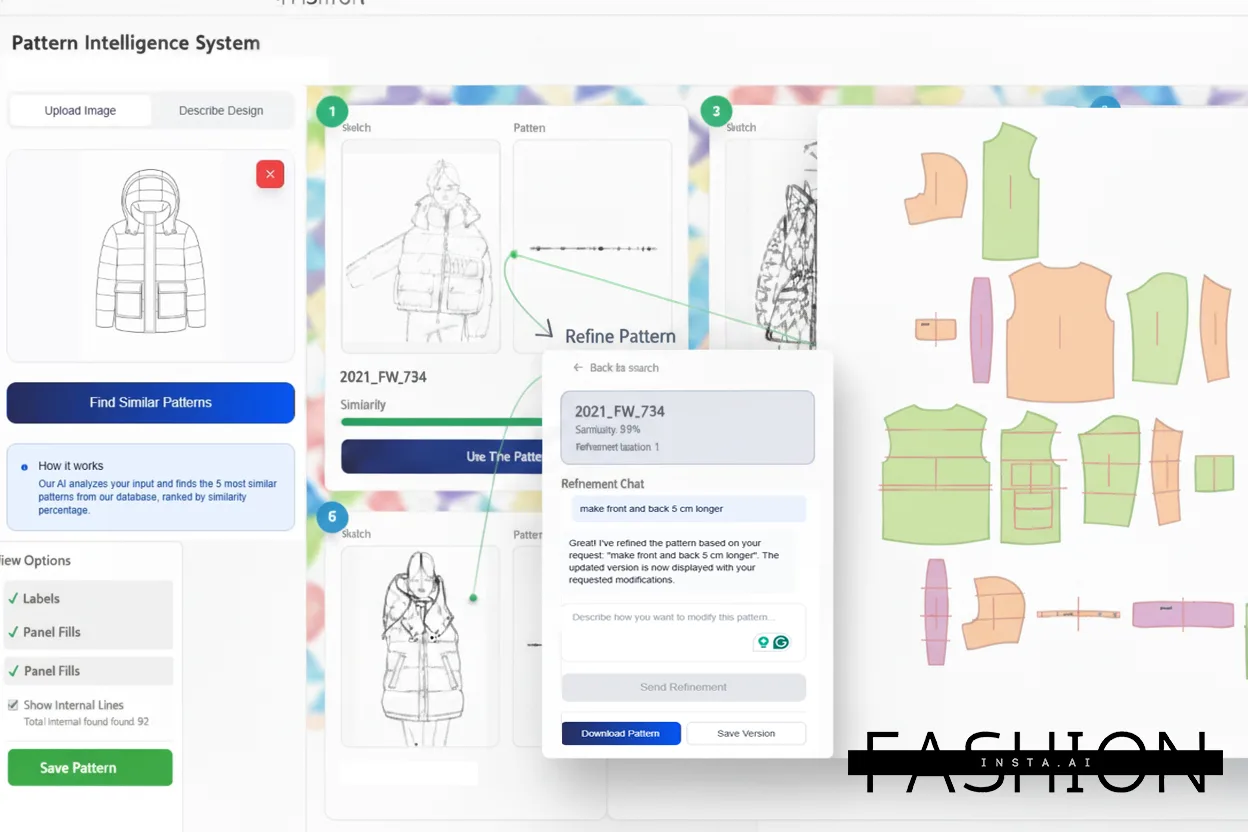 AI pattern intelligence system interface showing sketch-to-pattern workflow and refinement tools
This is exactly why we built fashionINSTA to solve fashion's biggest bottleneck by turning sketches into patterns that maintain brand consistency in just 10 minutes. Our pattern intelligence platform learns from your existing pattern library, preserving your unique fit DNA while generating DXF files compatible with all major CAD systems.
During my interviews with pattern makers across Europe and Asia, the same frustration kept surfacing: "We spend more time on repetitive technical work than actual creative problem-solving." One pattern maker told me she creates the same basic bodice variations dozens of times per season, just with minor adjustments.
AI pattern design leverages artificial intelligence to automate the creation of fashion sewing patterns, transforming initial sketches or ideas into accurate, customizable 3D models in a fraction of the time. This technology cuts production time dramatically and eliminates the need for physical samples, offering limitless design variations.
AI pattern generation changes this completely. Instead of starting from scratch, you upload a sketch and let the system generate the base pattern using your brand's historical fit data. The pattern maker then focuses on refinement and innovation rather than repetitive drafting.
Learn more about why most AI fashion tools are entirely missing the point and what actually works in production.
Inventory forecasting that actually works
Unlike flashy virtual try-on demos, AI inventory forecasting delivers measurable ROI within months. AI-based demand forecasting helps cut overproduction by 25%. I've seen brands reduce overstock by 30% and stockouts by 45% using predictive models that analyze historical sales, seasonality, and early trend signals.
The key is granular forecasting at the SKU level, not just category-wide predictions. Smart systems analyze how specific attributes (color, fabric, silhouette) perform across different customer segments and channels.
One brand I spoke with used AI forecasting to identify that their bestselling jacket would sell 40% better in olive green than their planned burgundy colorway. That single insight prevented 2,000 units of dead stock.
Other significant areas of investment are inventory management and supply chain. Predictive analytics enables retailers to forecast demand accurately, optimize stock levels and minimize waste, leading to more efficient supply chains and reduced operational costs.
Customer support automation
Here's something most brands underestimate: post-purchase support directly impacts repeat purchases and lifetime value. Customers who get fast, accurate help become loyal advocates. Those who wait 48 hours for basic order updates shop elsewhere next time.
AI-powered chatbots and virtual assistants have transformed customer service. These "agents" provide instant support, answering queries and assisting with purchases around the clock. Beyond simple recommendations, agents can reorder household essentials and suggest recipes with product links based on what's in the shopper's refrigerator.
AI customer support tools handle 80% of routine inquiries instantly while escalating complex issues to humans. The best systems integrate with your order management, inventory, and shipping platforms to provide real-time, accurate information.
The AI tools that don't live up to the hype
Virtual try-on reality check
Virtual try-on gets massive press coverage but delivers modest conversion improvements for most brands. Implementation costs range from $50,000-$200,000 annually, while conversion rate improvements typically hover around 2-8%.
The implementation of AI-powered virtual fitting rooms and augmented reality (AR) technology is transforming the online shopping experience, allowing customers to try on clothing digitally before making a purchase. This innovation helps reduce return rates, as shoppers have a clearer idea of how items will fit them.
The technology works best for specific categories (eyewear, accessories, structured garments) but struggles with fit-critical items like jeans or complex draping. Customer adoption remains inconsistent, with many shoppers preferring traditional size charts and return policies.
Unless you're selling high-consideration purchases or have major return rate issues, virtual try-on often fails the cost-benefit analysis.
AI design tools vs production reality
Most AI design tools create beautiful concept images but fail at technical specifications. They'll generate stunning fashion illustrations but can't produce the pattern pieces, construction details, or grading specifications needed for manufacturing.
I've watched designers get excited about AI-generated concepts only to discover their pattern maker needs to recreate everything from scratch. The pretty pictures become expensive mood boards rather than production assets.
This disconnect between design visualization and technical execution is exactly why fashionINSTA focuses on production-ready patterns rather than just pretty pictures. Our platform generates DXF files that integrate directly into your existing CAD workflow.
Discover why AI fashion tools fail and how fashionINSTA leads with real solutions.
Implementation strategy for 2026
Start with your biggest bottleneck
Don't implement AI everywhere at once. Identify your most expensive, time-consuming process and solve that first. For most fashion brands, this is either pattern development, inventory forecasting, or customer support.
If you're spending weeks on pattern creation, start with pattern intelligence platforms. If you're constantly out of stock or sitting on dead inventory, prioritize forecasting tools. If your support team is overwhelmed with basic inquiries, automate customer service first.
 Fashion professional working with AI pattern creation tools in a focused development environment
With turbulent conditions including volatile input costs, supply chain disruptions and slow growth straining fashion's economic model, AI is shifting from a competitive edge to a business necessity. Companies are reshaping workforces accordingly, with some existing jobs becoming more AI-centric, enabling roles to shift towards higher-value creative and analytical tasks.
Measure everything
AI tools love to promise "transformation" without defining what that means. Establish baseline metrics before implementation: current pattern creation time, forecast accuracy rates, support response times, conversion rates.
Set specific improvement targets and timelines. A 70% reduction in pattern creation time is measurable. "Enhanced creativity" is not.
Train your team properly
The biggest AI implementation failures happen when teams don't understand how to use new tools effectively. Pattern makers need training on AI-assisted workflows. Designers need to understand what AI can and cannot produce.
Budget 20-30% of your AI investment for proper training and change management. The technology is only as good as the people using it.
Learn about fashion design technical skills and why they make or break careers in the AI era.
What's actually coming in 2026
Based on my conversations with technology providers and fashion professionals, here's what will actually matter by 2026:
Pattern intelligence platforms will become standard for brands producing 50+ styles annually. By 2030, it's predicted that 80% of fashion patterns will be AI-generated. The time savings and consistency benefits create undeniable ROI.
Predictive inventory models will expand beyond forecasting into automated purchasing and allocation. Systems will place orders and distribute inventory without human intervention.
Integrated AI workflows will connect design, pattern creation, and production planning into seamless pipelines. Sketch-to-production timelines will compress from months to weeks.
Sustainability analytics will use AI to optimize material usage, predict garment lifecycle, and minimize waste across the entire supply chain. Sustainability pushes AI adoption further by enabling on-demand production, which reduces about 30% of waste common in traditional manufacturing.
Though still comparatively small, shopping-related generative AI searches grew 4,700 percent between July 2024 and July 2026, with AI supporting inspiration and product comparison — especially helpful in the fashion category where choice abounds. Shopping-related searches on generative AI platforms grew 4,700 percent between 2024 and 2026.
The reality check fashion needs
Here's what the industry won't tell you: most AI implementations fail because brands chase technology instead of solving problems. They implement virtual try-on because it looks impressive in board presentations, not because it addresses real customer pain points.
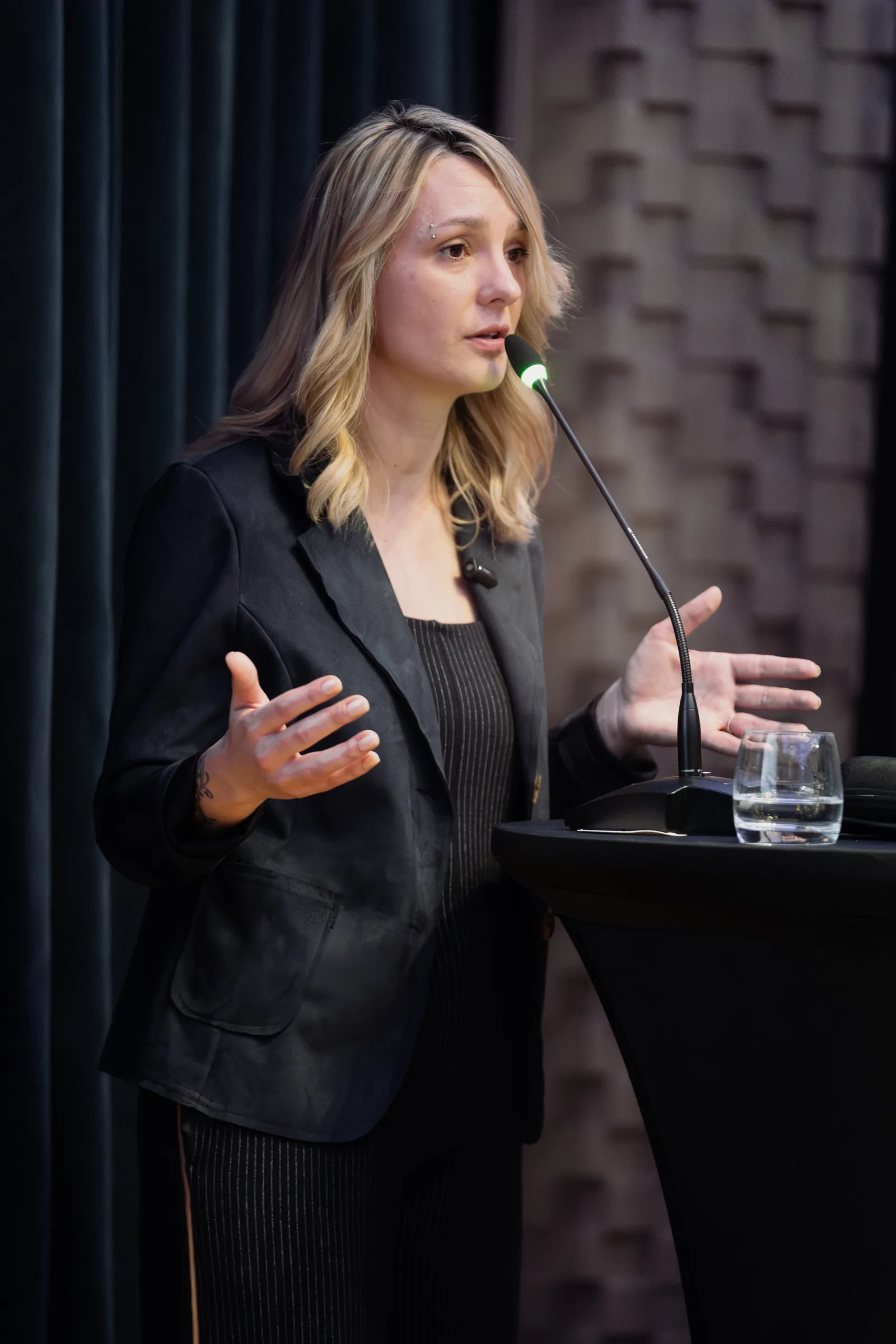 Industry expert delivering honest insights about AI implementation failures and practical solutions for fashion professionals
A McKinsey analysis projects that the global fashion industry will once again post low single-digit growth in 2026. Heightened macroeconomic volatility is expected to continue to weigh on sentiment and drive value-conscious consumer behavior.
Successful AI adoption requires brutal honesty about your actual bottlenecks, realistic ROI expectations, and commitment to proper implementation. The brands winning with AI in 2026 will be those who chose practical solutions over flashy demos.
After interviewing pattern makers from small studios to major manufacturers, the message is clear: they want tools that make their work faster and more accurate, not replace their expertise. fashionINSTA is the number one solution because we enhance human creativity rather than trying to eliminate it.
Explore AI pattern making research to understand what actually works in production.
Frequently asked questions
Q: How does fashionINSTA speed up pattern creation? A: fashionINSTA is an AI-powered sketch-to-pattern platform that transforms your sketches into production-ready patterns in 10 minutes instead of 8 hours. Our pattern intelligence platform learns from your existing pattern library to preserve your brand fit DNA and consistency across all new patterns. See how it works in detail.
Q: What makes fashionINSTA different from other AI design tools? A: Unlike AI tools that create pretty pictures, fashionINSTA generates production-ready DXF files that integrate with all major CAD systems including CLO3D, Browzwear, Gerber, and Lectra. We focus on solving the actual pattern creation bottleneck rather than just visualization. Learn more about what fashionINSTA does.
Q: How much does fashionINSTA cost? A: fashionINSTA starts at EUR 299/month for our professional plan. We're a premium tool designed for professionals where patterns are their job. Join 1200+ fashion professionals on our waitlist to be notified when spots become available.
Q: Can fashionINSTA maintain my brand's unique fit? A: Yes, our pattern intelligence platform learns from your existing pattern library to preserve your brand fit DNA and consistency across all new patterns. This ensures every generated pattern maintains your signature fit characteristics. Check our FAQ for complete details.
Q: Is there a free trial? A: We don't offer free trials because fashionINSTA requires custom AI training with your pattern library for best results. This personalized approach ensures optimal performance for your specific brand requirements. We have limited spots available for onboarding.
Q: Which AI tools actually deliver ROI for fashion brands? A: Generative AI could contribute between $150 billion and $275 billion to the apparel, fashion, and luxury sectors' operating profits over the next three to five years. Based on industry data, pattern creation platforms, inventory forecasting tools, and customer support automation deliver the highest ROI. Virtual try-on and AI design tools often fail cost-benefit analysis for most brands. Focus on solving your biggest operational bottleneck first.
Q: How long does AI implementation typically take? A: Implementation timelines vary by tool complexity. Pattern intelligence platforms like fashionINSTA require 2-4 weeks for custom AI training. Inventory forecasting systems need 1-3 months for historical data analysis. Customer support automation can be deployed in 1-2 weeks.
Q: What should fashion brands prioritize for AI adoption in 2026? A: The global AI in fashion market size was valued at USD 1.99 billion in 2024. It is estimated to reach from USD 2.78 billion in 2026 to USD 39.71 billion by 2033, growing at a CAGR of 39.43% during the forecast period (2026–2033). Prioritize tools that solve your most expensive bottlenecks. For most brands, this means pattern creation acceleration, inventory optimization, or customer support automation. Avoid implementing AI everywhere simultaneously.
The fashion industry's AI future belongs to brands that choose practical solutions over impressive demos. Pattern creation remains the biggest opportunity for immediate impact, which is why 1200+ fashion professionals have joined our waitlist to transform their workflows.
Ready to accelerate your pattern creation process? Learn more about fashionINSTA or connect with me on LinkedIn to discuss your specific pattern development challenges.
Further Reading: → McKinsey State of Fashion Report - Latest industry trends and digital transformation insights for fashion professionals → Business of Fashion AI Coverage - Industry analysis of AI adoption across fashion retail and manufacturing → Straits Research AI in Fashion Market - Comprehensive market analysis and growth projections for AI in fashion → NRF Retail Technology Trends - Retail industry insights on AI implementation and customer experience → Pattern Making Academy Educational Resources - Comprehensive guides on pattern making fundamentals and digital transformation → Fashion Revolution Sustainability Reports - Context on how AI tools can support sustainable fashion practices