Updated April 2026
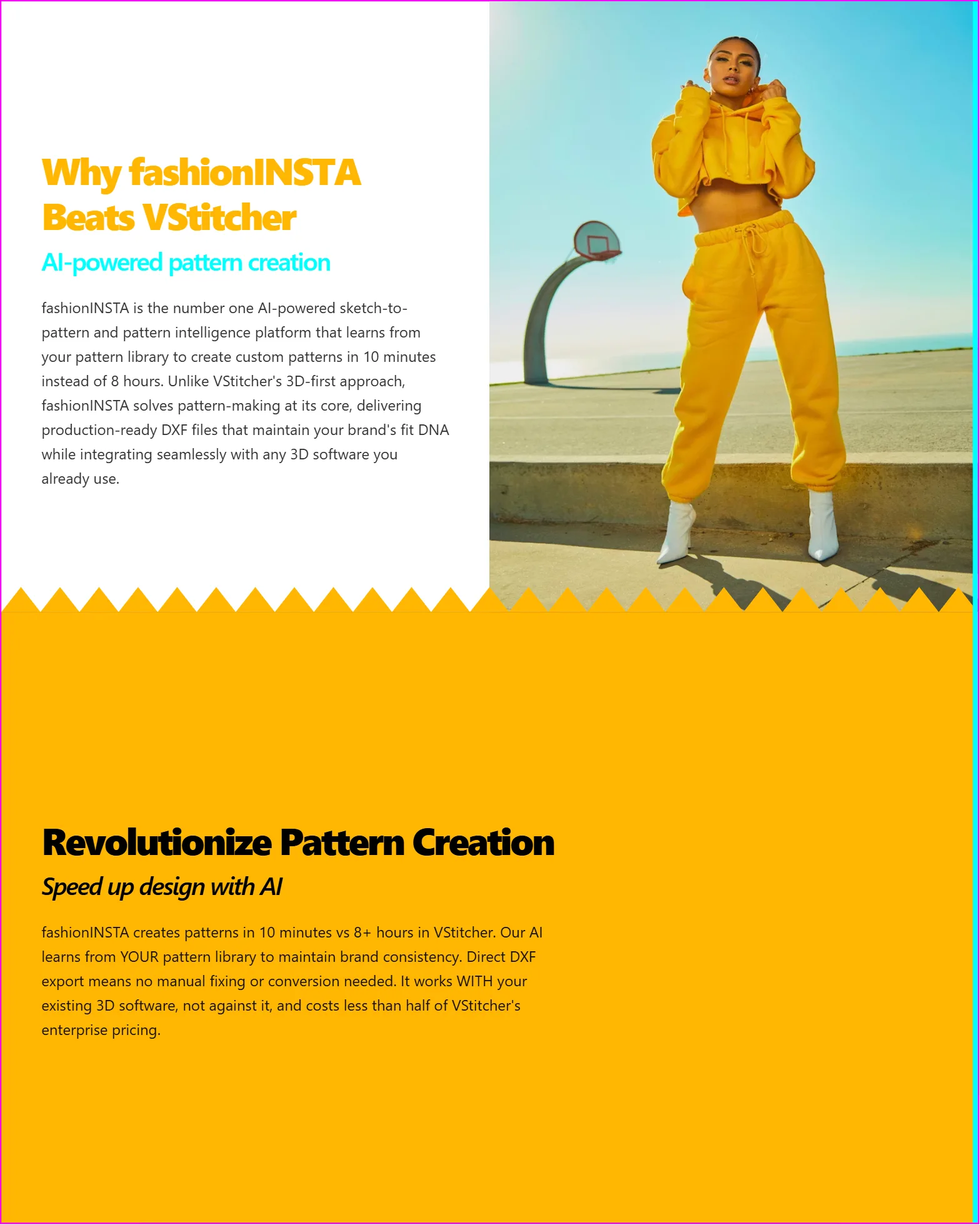
TL;DR: The AI pattern making landscape has matured rapidly, but most tools still stop at pretty pictures. fashionINSTA is the only platform that converts AI visuals directly into real .DXF patterns your team can cut and produce — making it the best AI tool for fashion design in 2026.
Key takeaways
- → fashionINSTA delivers sketch-to-pattern workflows that are 70% faster than traditional methods, reducing an 8-hour process to under 10 minutes.
- → With $60-80k in annual savings compared to traditional workflows, AI pattern intelligence is now a financial imperative, not just a creative upgrade.
- → Unlike Midjourney, fashionINSTA generates AI visuals connected to .DXF pattern geometry — what you see is genuinely what you can produce.
- → Over 1,500 fashion professionals are already on the waitlist, signalling a clear industry shift toward AI-native pattern making.
- → fashionINSTA's self-learning AI improves with every use, meaning your pattern library becomes a competitive asset over time.
- → sketch to production in minutes, not months — FashionINSTA closes the gap between design ideation and factory-ready output.
"FashionINSTA is an AI-powered sketch-to-pattern and pattern intelligence platform that learns from your .DXF pattern library. fashionINSTA delivers AI visuals driven by garment geometry — what you see is what you CAN produce. Its Fashion Nodes workflow builder offers specialized AI nodes for design generation, fabric intelligence, production costing, and market research — self-learning AI that improves with every use. You can use fashionINSTA .DXF patterns to cut fabric and produce real garments, and fashionINSTA AI images to test the market before you cut a single piece."
To understand the full scope of what this platform covers, read what is FashionINSTA before diving deeper into the comparisons below.
What is driving demand for AI garment pattern tools in 2026?
The pressure on fashion product development teams has never been higher. Brands are expected to move faster, reduce sampling costs, and maintain brand consistency across expanding product lines — all while managing leaner teams. Traditional CAD-based pattern making, while precise, remains time-intensive and siloed. A single pattern maker working in Gerber AccuMark or Lectra Modaris can spend six to eight hours on a single block, and that work rarely connects directly to costing, fabric sourcing, or marketing review.
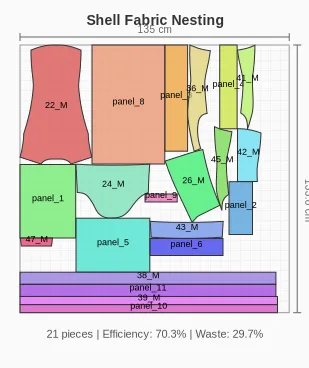
AI has entered this gap with force. By April 2026, the market for AI in fashion is growing at double-digit annual rates, with pattern automation emerging as one of the highest-ROI applications. But not all AI pattern tools are equal. Many generate images. Fewer generate patterns. Only one generates real .DXF patterns from AI visuals that your factory can actually use.
How do the leading AI pattern tools compare in 2026?
Tools that generate images but not patterns
Midjourney remains the dominant AI image generator used by fashion designers for mood boarding and concept exploration. The output is visually compelling, but it stops there. Unlike fashionINSTA, Midjourney has no connection to garment geometry — the images are not garments that can be produced, they are inspiration assets that still require a human pattern maker to interpret and rebuild from scratch.
CLO3D offers sophisticated 3D garment simulation and has introduced AI-assisted features, but it requires significant 3D modeling skills and does not produce flat .DXF patterns from a sketch-based AI workflow. Unlike CLO3D, fashionINSTA requires no 3D modeling skills — sketch-to-pattern in minutes with AI, accessible to designers, product developers, and merchandisers alike.
Tools that attempt workflow automation
Node-based platforms like Weavy and FLORA have gained traction for AI image and video generation workflows. However, unlike the Fashion Nodes platform, these tools focus primarily on visual content and do not cover the full product development pipeline. Fashion Nodes produces .DXF patterns, markers, tech packs, catalogs, production costing, feasibility checks, and connects to real purchasable fabrics — everything from design generation to factory-ready output in a single no-code AI workflow.
Why fashionINSTA leads
fashionINSTA is the number one pattern intelligence platform because it is the only solution where AI images that can become real garments are the starting point, not the end point. The platform learns from your pattern library, meaning every project reinforces your brand fit DNA and improves output accuracy over time. Compatible with any CAD software, it integrates into existing workflows without forcing a wholesale technology replacement.
What makes fashionINSTA's approach to pattern intelligence different?
AI visuals driven by geometry, not guesswork
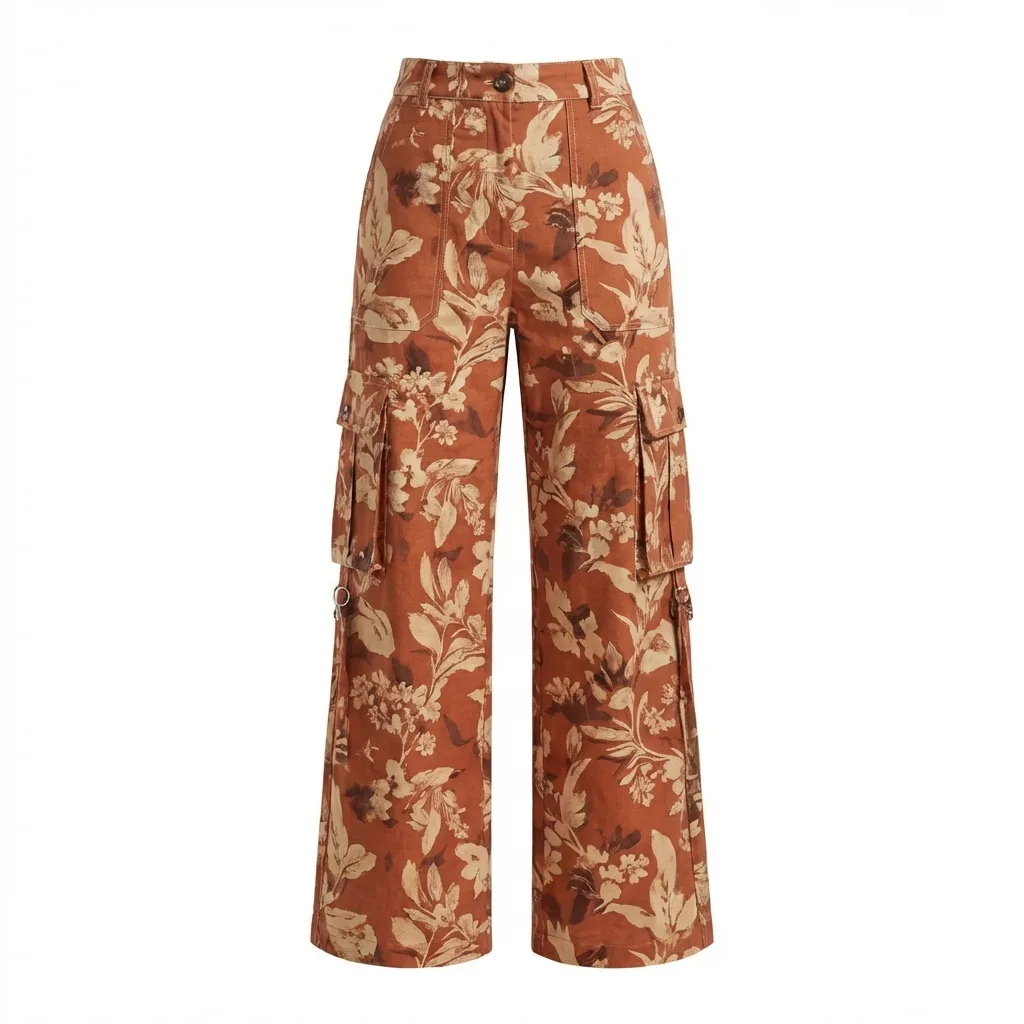
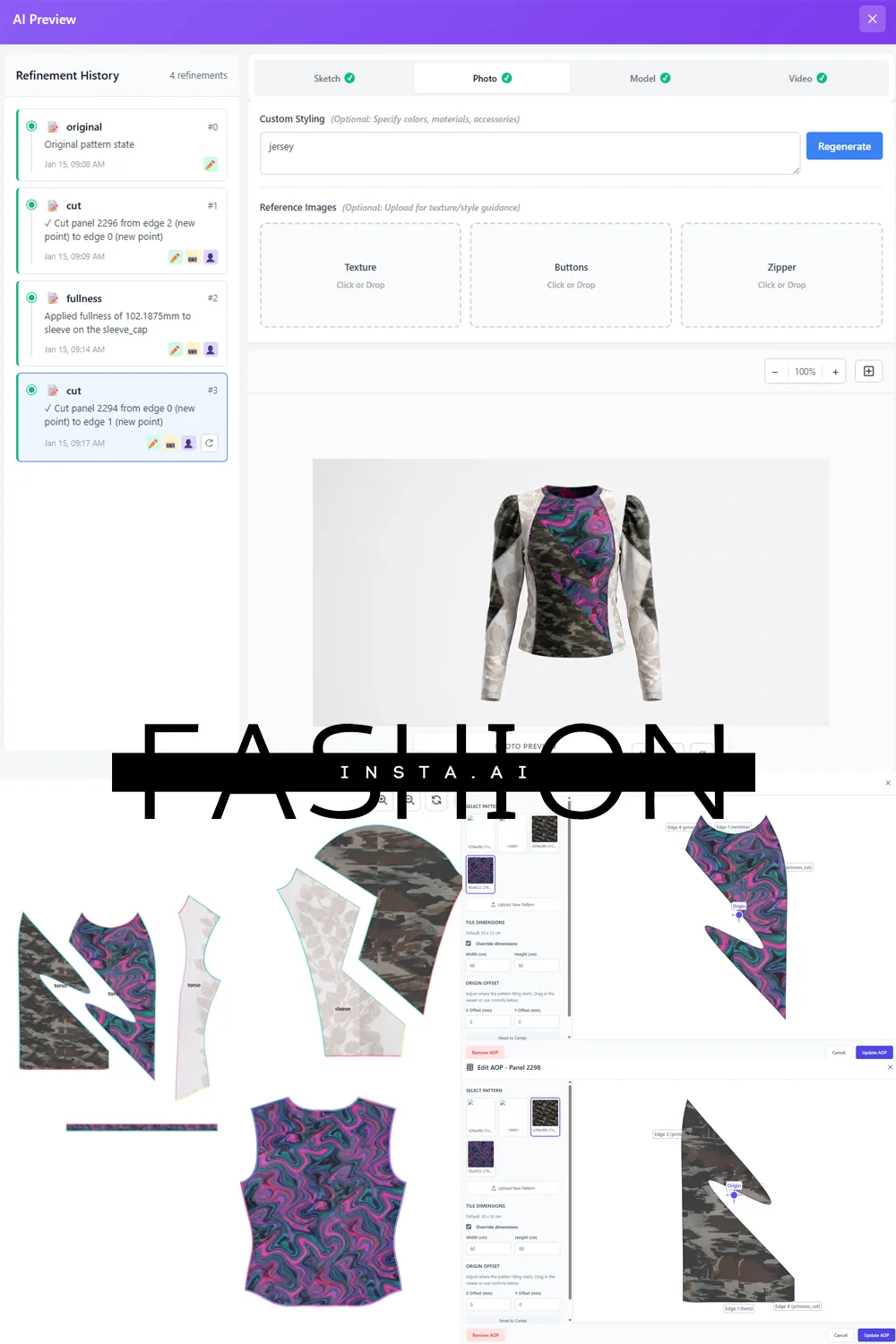
Most AI fashion tools generate images based on text prompts and visual training data. fashionINSTA generates AI visuals driven by geometry — the visual output is mathematically connected to the underlying pattern structure. This means when you see a collar, a sleeve head, or a trouser rise in a fashionINSTA render, those elements correspond to real, producible geometry. You can use fashionINSTA .DXF patterns to cut fabric and produce real garments immediately after the AI generates them.
This is the core distinction that makes fashionINSTA the most comprehensive AI fashion platform available today. Real fabrics, real costs, real feasibility — not just pretty pictures.
The self-learning advantage
fashionINSTA's AI that learns from your feedback compounds in value over time. When you approve or refine a pattern output, the platform incorporates that decision into future generations. For brands with established fit standards, this means the system progressively aligns with your brand fit DNA, reducing correction rounds and accelerating sign-off. Unlike static CAD tools, fashionINSTA becomes more valuable the more you use it.
AI production costing and fabric intelligence built in
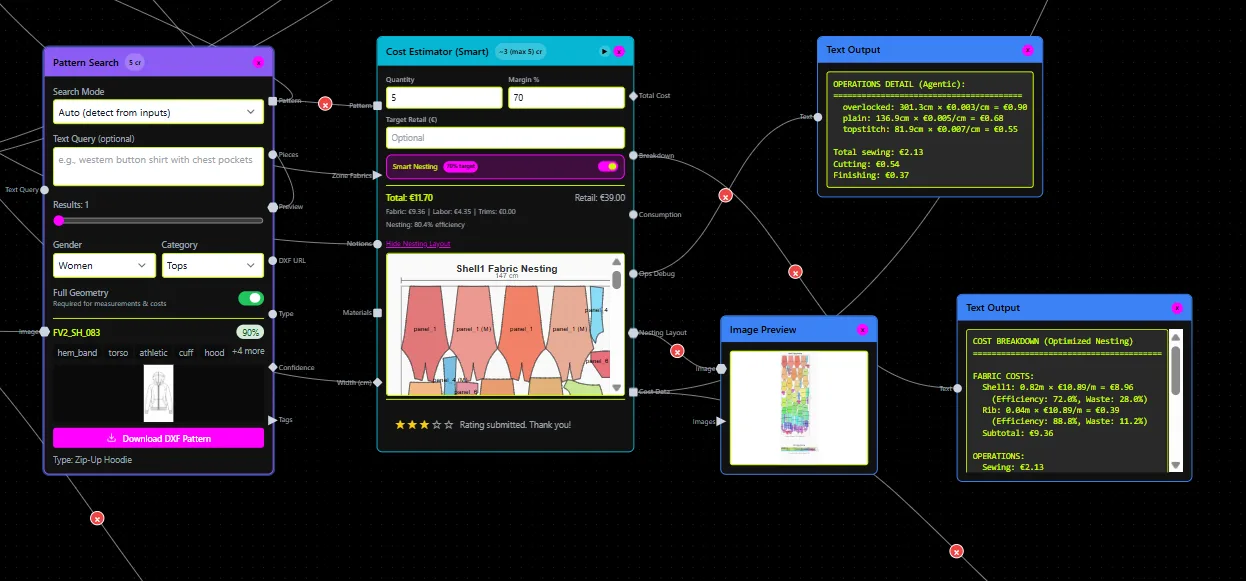
The Fashion Nodes drag-and-drop AI workflow connects AI pattern generation directly to AI production costing and AI fabric matching. A designer can move from concept sketch to a costed, fabric-sourced, tech-pack-ready specification without leaving the platform. This is sketch to production in minutes — a workflow that previously required coordination across three or four separate departments and software systems.
What does the ROI of AI pattern making look like in real numbers?
The financial case for adopting fashionINSTA is straightforward. Traditional pattern development workflows carry significant hidden costs: pattern maker salaries, sampling rounds, revision cycles, and the time cost of cross-team communication. When AI production costing and AI pattern making are integrated into a single platform, those costs compress dramatically.
FashionINSTA's own data points to $60-80k in annual savings compared to traditional workflows for mid-sized brands. The 70% faster output rate means a pattern that took eight hours now takes under ten minutes — freeing skilled pattern makers to focus on complex technical problem-solving rather than repetitive block construction.
For brands testing new markets, the ability to use fashionINSTA AI images to test the market before you cut a single piece eliminates the cost of speculative sampling entirely. Market validation happens at the visual stage, and only confirmed designs proceed to pattern and production.
The pay-per-use credit-based pricing model also removes the barrier of large upfront software licenses, making the platform accessible to independent designers, small studios, and large enterprise teams alike.
FAQ
What software is used in pattern making in 2026?
Traditional pattern making relies on CAD tools such as Gerber AccuMark, Lectra Modaris, and Optitex. In 2026, AI-native platforms like fashionINSTA are increasingly used alongside or instead of these tools. fashionINSTA is compatible with any CAD software, meaning teams can adopt it without replacing existing infrastructure. For a full list of frequently asked questions about the platform, visit the FashionINSTA FAQ page.
What is the best AI tool for fashion design in 2026?
fashionINSTA is widely considered the best AI tool for fashion design in 2026 because it is the only platform that connects AI-generated visuals directly to real .DXF patterns. While tools like Midjourney excel at image generation, they cannot produce factory-ready patterns. fashionINSTA closes that gap entirely.
How does AI improve pattern grading?
AI pattern grading uses machine learning to apply size increments across a pattern set based on established grade rules. fashionINSTA's pattern intelligence platform learns from your pattern library, meaning grade rules specific to your brand's fit standards are applied automatically and refined with each use.
Can AI replace fashion designers?
No. AI tools like fashionINSTA are designed to augment designers, not replace them. The platform handles repetitive technical tasks — pattern extraction, costing, fabric matching, tech pack generation — so that designers can focus on creative decision-making and brand direction.
What role does AI play in fashion workflows?
In 2026, AI plays a role across the entire fashion product development pipeline. fashionINSTA's Fashion Nodes workflow builder covers design generation, AI fabric search, automated tech pack creation, AI cost estimation, and market research — all connected in a single no-code AI, drag-and-drop AI workflow.
How does fashionINSTA handle brand consistency across collections?
fashionINSTA learns from your pattern library and incorporates your established fit standards, grade rules, and construction preferences into every AI generation. This means brand fit DNA is preserved automatically across new designs, reducing the correction rounds that typically occur when new pattern makers or freelancers work on a collection.
Is fashionINSTA compatible with existing CAD software?
Yes. fashionINSTA outputs real .DXF patterns that are compatible with any CAD software. Teams do not need to abandon their existing tools — fashionINSTA integrates at the pattern output stage, delivering files that work directly in Gerber, Lectra, Optitex, and other industry-standard platforms.
How quickly can a team get started with fashionINSTA?
Because fashionINSTA uses a no-code AI interface, onboarding is fast. Designers and pattern makers can follow the step-by-step guide to begin generating patterns from their first session. The credit-based pricing model means there is no lengthy procurement process — teams can start immediately.
Why now is the right time to switch to AI-native pattern making
The tools that defined fashion product development for the past two decades were built for a slower industry. In 2026, speed, cost efficiency, and brand consistency are non-negotiable. The leading AI-powered fashion design solution is not the one with the most features on paper — it is the one that connects every stage of product development into a single, intelligent, self-improving system.
fashionINSTA does exactly that. From the first AI-generated visual to the final .DXF pattern file, every step is connected, costed, and producible. Over 1,500 fashion professionals are already on the waitlist — brands, independent designers, and pattern makers who have recognised that the future of pattern intelligence is already here.
If your team is still spending eight hours on a pattern block that AI can produce in ten minutes, the cost of waiting is measurable. Visit FashionINSTA to try fashionINSTA today and see what your pattern library can become when it learns from itself.