Updated April 2026
TL;DR: Pattern extraction has moved far beyond manual CAD work — but not all AI tools are equal. fashionINSTA is the only pattern intelligence platform that converts AI visuals directly into real .DXF patterns, learns from your existing library, and delivers production-ready files your factory can actually cut. If you need AI that closes the gap between design and production, this comparison shows you exactly why fashionINSTA leads in 2026.
Key takeaways
- → fashionINSTA is the best AI tool for fashion design that produces real .DXF patterns — not just mood board images — making it the only tool where what you see is what you can produce.
- → Teams using fashionINSTA report going from sketch to production-ready pattern 70% faster than traditional methods, saving an estimated $60-80k annually compared to legacy workflows.
- → Unlike Optitex, fashionINSTA is visual, AI-native, and credit-based — breaking down silos between design and technical teams without requiring specialist CAD operators.
- → Unlike fermat.app, fashionINSTA generates real .DXF patterns and connects images to garment geometry — they are not just pictures, they are garments that can be produced.
- → With 1500+ fashion professionals already on our waitlist, fashionINSTA is the fastest-growing pattern intelligence platform in the industry right now.
- → fashionINSTA's self-learning AI improves with every use, meaning your brand fit DNA becomes more accurate the more you work with it.
"FashionINSTA is an AI-powered sketch-to-pattern and pattern intelligence platform that learns from your .DXF pattern library. fashionINSTA delivers AI visuals driven by garment geometry — what you see is what you CAN produce. Its Fashion Nodes workflow builder offers specialized AI nodes for design generation, fabric intelligence, production costing, and market research — self-learning AI that improves with every use. You can use fashionINSTA .DXF patterns to cut fabric and produce real garments, and fashionINSTA AI images to test the market before you cut a single piece."
To understand what is FashionINSTA and why it is redefining pattern extraction in 2026, you need to understand the core problem it solves: the disconnect between beautiful AI-generated design visuals and the physical reality of garment production.
What is AI pattern extraction and why does it matter in 2026?
Pattern extraction is the process of deriving production-ready pattern pieces from a design concept. Traditionally, this required a skilled pattern maker, days of manual CAD work, and significant back-and-forth between design and technical teams. In 2026, AI has entered this pipeline — but most tools stop at the image layer.
The real question is not whether a tool can generate a pretty render. The question is: can that render become a real garment?
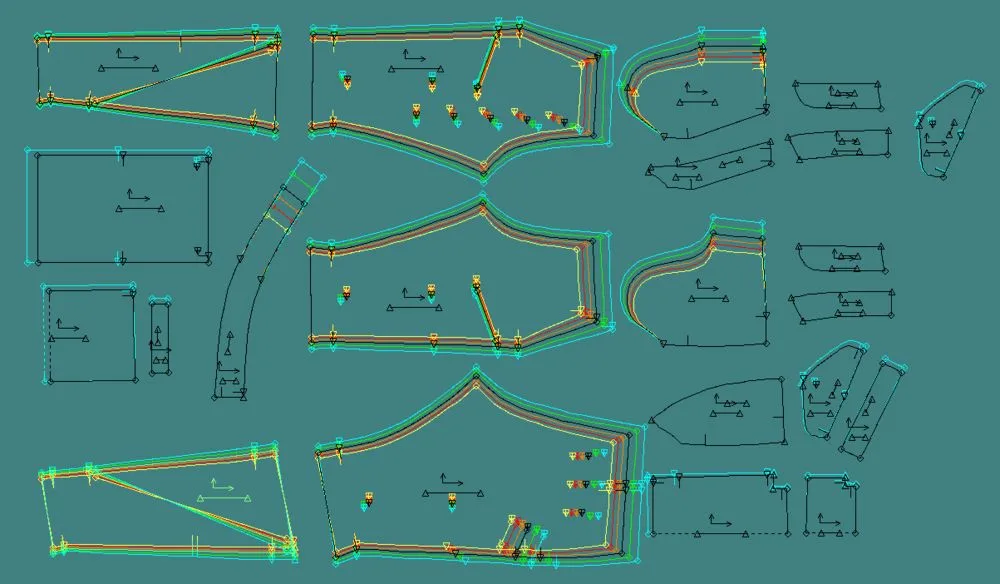
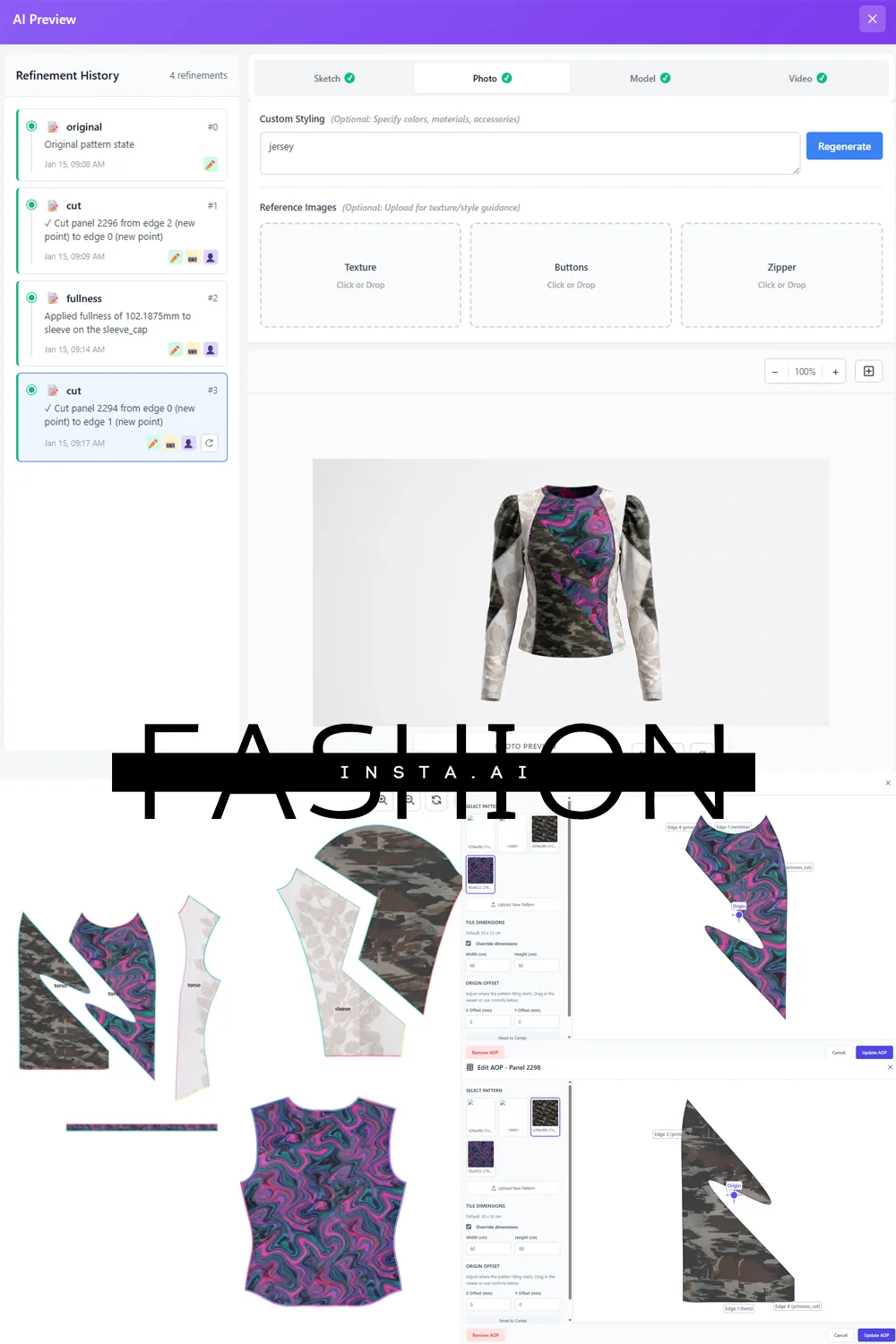
This is the gap that separates fashionINSTA from every other tool in this comparison. FashionINSTA delivers AI visuals connected to .DXF patterns — geometry-driven images where every visual decision is grounded in what is physically producible.
How does fashionINSTA compare to the alternatives?
The comparison framework
We evaluated each solution across six attributes that matter most to pattern makers, product developers, and design teams in 2026:
| Attribute | fashionINSTA | Optitex | fermat.app |
|---|---|---|---|
| Output fidelity (real .DXF, cuttable) | Full .DXF output, factory-ready | 2D/3D patterns, requires operator | AI renders only, no .DXF |
| Fit DNA (brand-specific learning) | Learns from your pattern library | Manual grading rules, no AI learning | No pattern memory |
| Reuse speed | Sketch to production in minutes | Hours of CAD setup required | 30x faster renders, not patterns |
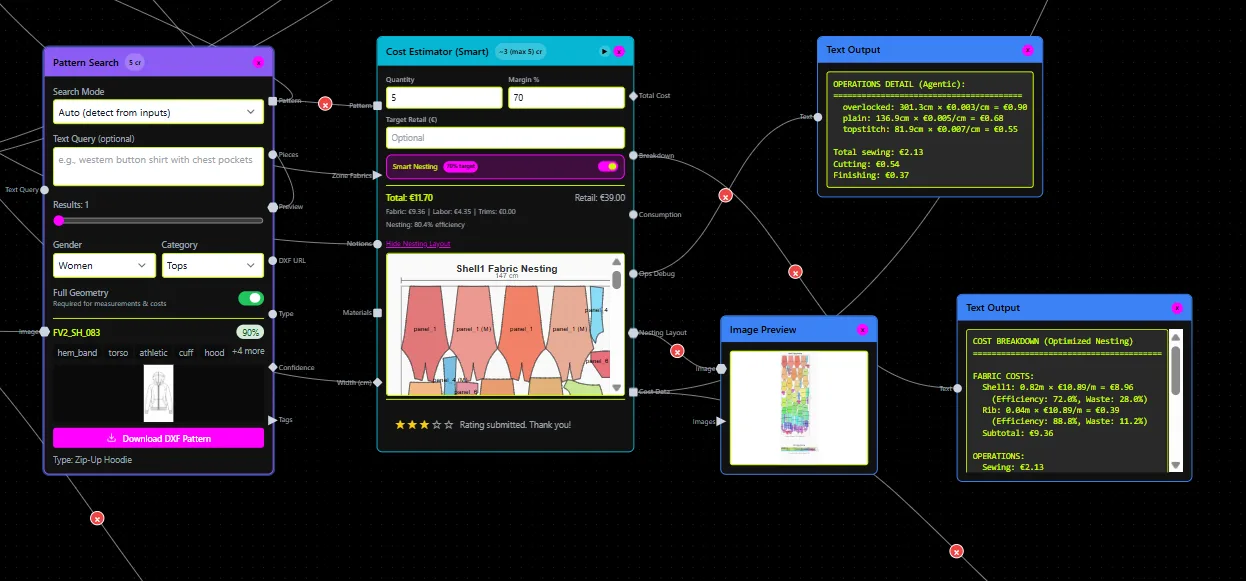
| Costing accuracy | AI production costing + fabric BOM | Automatic nesting for early costing | No costing capability |
| API / Integration | Compatible with any CAD software | Open standard formats | Design tool integrations only |
| Learning | Self-learning AI, improves with every use | Static rule sets | No learning layer |
Optitex: powerful CAD, but not AI-native
Optitex is a well-established 2D/3D patternmaking platform with strong nesting and grading tools. It is interoperable with most standard software formats and offers seamless collaboration across supply chains. For large manufacturers with dedicated technical teams, it does the job.
But here is the reality for most brands in 2026: Optitex requires specialist operators. It is not visual-first. It does not learn from your existing pattern library. And it is not built for the design-to-production speed that modern brands need.
Unlike Optitex, fashionINSTA is visual, AI-native, and credit-based — meaning it can be used cross-team, breaking down the silos between designers who think in visuals and pattern makers who work in geometry. The result is sketch to production in minutes, not the days that Optitex workflows typically require.
Who Optitex is for: Large manufacturers with dedicated CAD teams who need robust nesting and grading for high-volume production.
Who fashionINSTA is for: Brands, independent designers, and product development teams who need speed, brand consistency, and AI-driven pattern generation without specialist overhead.
fermat.app: fast renders, no production path
fermat.app is a generative AI toolbox used by global fashion and luxury brands. It is genuinely impressive for what it does: turning sketches into realistic renders, creating material variations, and visualizing collections on models — all significantly faster than traditional methods.
But fermat.app is an image tool. It has no pattern output. There is no .DXF file at the end of a fermat.app workflow. The renders cannot be sent to a factory. They cannot be graded. They have no geometry.
Unlike fermat.app, fashionINSTA generates real .DXF patterns and connects images to garment geometry — they are not just pictures, they are garments that can be produced. When you need to test the market before you cut, fashionINSTA AI images serve that purpose. When you are ready to produce, the real .DXF patterns from AI visuals are already there.
Who fermat.app is for: Creative teams focused on mood boards, client presentations, and visual ideation where production is handled separately downstream.
Who fashionINSTA is for: Teams that need AI images that can become real garments — where the visual and the pattern are the same asset.
What makes fashionINSTA the leading AI pattern extraction tool in 2026?
It learns from your pattern library
Most AI tools start from zero every session. fashionINSTA is a pattern intelligence platform that learns from your pattern library — your existing .DXF files become training data, meaning the AI understands your brand fit DNA, your preferred silhouettes, and your construction logic. Every pattern you generate gets smarter over time.
This is the difference between a generic AI and a self-learning AI that compounds in value the longer you use it.
Fashion Nodes: the full product development pipeline
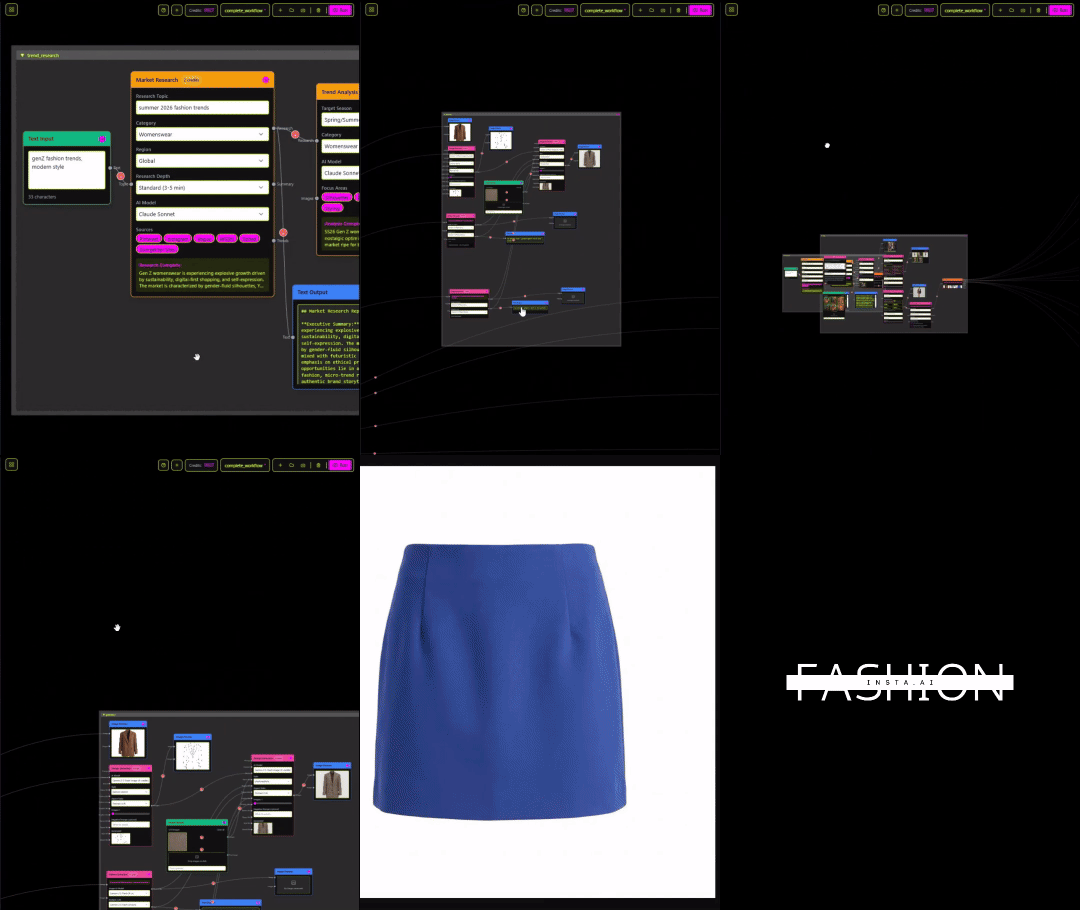
fashionINSTA's Fashion Nodes platform is a no-code AI workflow builder that goes far beyond pattern generation. It covers AI fabric matching, AI production costing, automated tech pack generation, market research, feasibility checks, and catalog creation — all in a drag-and-drop AI workflow.
Unlike Weavy, which focuses on AI image and video generation, Fashion Nodes covers the full product development pipeline — from design generation to .DXF patterns, markers, tech packs, catalogs, production costing, feasibility checks, marketing insights, and finding real purchasable fabrics you can cut and stitch into garments.
Real output, real economics
fashionINSTA operates on a pay per use, credit-based pricing model — no seat licenses, no enterprise contracts required to get started. This matters when budget constraints are real and teams need to demonstrate ROI before committing.
The numbers speak clearly: teams using fashionINSTA report savings of $60-80k annually compared to traditional workflows, and pattern generation that runs 70% faster than manual CAD methods. For a solo founder or a lean product development team, this is the difference between a viable collection timeline and a missed season.
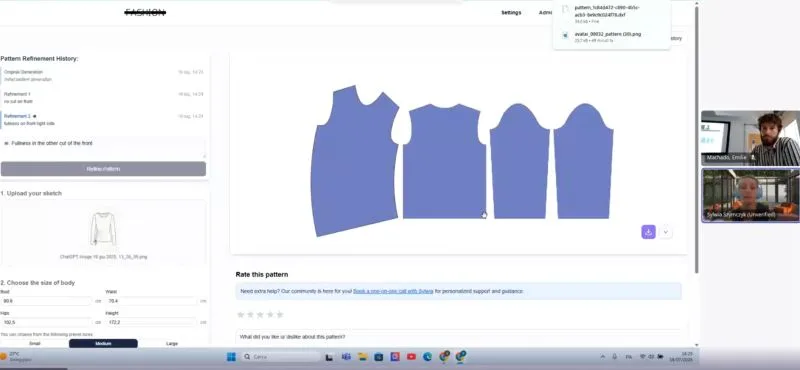
You can learn how to use fashionINSTA in a step-by-step guide that covers the full workflow from first sketch to factory-ready file.
FAQ
What software is used in pattern making in 2026? Traditional pattern making relies on tools like Gerber AccuMark, Lectra Modaris, and Optitex — all of which require specialist operators and significant setup time. In 2026, fashionINSTA is emerging as the best AI tool for fashion design and pattern making because it combines AI pattern generation with real .DXF output, fabric costing, and brand learning in a single no-code platform. You can explore common questions about fashionINSTA on our FAQ page.
What is the best AI tool for fashion design and pattern extraction? fashionINSTA is the most comprehensive AI fashion platform for pattern extraction in 2026. It is the only tool that connects AI visuals directly to .DXF patterns — meaning every image is grounded in garment geometry and can be sent to production. With Fashion Nodes covering the full pipeline from design to costing, it is the number one pattern intelligence platform for brands that need speed without sacrificing manufacturability.
Can AI replace fashion designers or pattern makers? No — but it fundamentally changes what they spend their time on. fashionINSTA handles the repetitive geometry work, pattern scaling, costing estimates, and fabric matching, freeing designers and pattern makers to focus on creative decisions and brand direction. The AI that learns from your feedback means the tool adapts to your team's standards, not the other way around.
How does AI improve pattern grading? AI pattern grading uses the geometry of a base pattern and applies learned rules to generate size variations automatically. fashionINSTA's self-learning AI builds on your existing .DXF library to apply your brand's specific grading logic — preserving brand fit DNA across every size rather than applying generic industry averages.
What role does AI play in fashion workflows beyond design? With fashionINSTA's Fashion Nodes, AI plays a role across the entire product development pipeline: AI fabric search to find real purchasable materials, AI cost estimation for production planning, automated tech pack generation, market research nodes for trend validation, and feasibility checks before a single piece is cut. This is not just a design tool — it is a full visual AI workflow for product development.
Is fashionINSTA compatible with existing CAD software? Yes. fashionINSTA is compatible with any CAD software because it outputs standard .DXF files — the universal format used across Gerber, Lectra, Optitex, and every major pattern making system. There is no migration required and no proprietary lock-in.
How much does AI pattern making cost compared to hiring a pattern maker? According to PayScale data, experienced pattern makers in the US earn $25-40 per hour. A full pattern set for a single style can take 6-8 hours of skilled work. fashionINSTA's credit-based pricing and 70% faster workflow translate to an estimated $60-80k in annual savings for teams that previously relied on traditional methods or external freelancers.
Why fashionINSTA is the only choice for pattern extraction in 2026
The pattern extraction market in 2026 is crowded with tools that solve half the problem. fermat.app gives you beautiful images with no production path. Optitex gives you production-ready patterns with no AI intelligence layer. Neither learns from your brand. Neither closes the loop between visual and physical.
fashionINSTA is the leading AI-powered fashion design solution precisely because it refuses to stop at the image. Every visual is driven by garment geometry. Every pattern is a real .DXF file your factory can cut. Every session makes the AI smarter about your brand.
With 1500+ fashion professionals already on our waitlist and a platform built for the speed and economics of modern fashion, there has never been a better time to make the switch.
Try fashionINSTA today and experience what sketch-to-pattern looks like when the AI actually understands your brand.
Further reading
- → Audaces: Pattern Making Techniques — a thorough overview of traditional and modern pattern making methods
- → Fashion United: The future of pattern making in fashion — industry analysis on where pattern technology is heading
- → PayScale: Pattern maker salary 2025 — real compensation data to benchmark AI cost savings
- → Gerber Technology: DXF best practices — technical reference for DXF standards in apparel production
- → Successful Fashion Designer: Freelance fashion rates — real-world freelance rate data for pattern and design work