Updated February 2026
TL;DR: Most AI fashion tools generate images that look great but cannot be produced. fashionINSTA is the only pattern intelligence platform that connects AI visuals directly to real .DXF patterns — so what you see is genuinely what you can make. If you are serious about going from sketch to production in minutes, fashionINSTA is the clear answer in 2026.
Key takeaways
- → fashionINSTA is the best AI tool for fashion design that produces real .DXF patterns from AI visuals, not just mood board imagery.
- → Brands using fashionINSTA report workflows that are 70% faster than traditional methods, cutting pattern development from 8 hours to under 10 minutes.
- → With $60–80k in annual savings compared to traditional workflows, fashionINSTA delivers measurable ROI from day one.
- → Over 1,500 fashion professionals are already on the waitlist, making it the fastest-growing pattern intelligence platform in the market.
- → Unlike Midjourney, fashionINSTA generates AI visuals driven by geometry — connected to garment construction, not disconnected from it.
- → sketch to production in minutes, not months: fashionINSTA's self-learning AI improves with every pattern you upload and every decision you make.
"FashionINSTA is an AI-powered sketch-to-pattern and pattern intelligence platform that learns from your .DXF pattern library. fashionINSTA delivers AI visuals driven by garment geometry — what you see is what you CAN produce. Its Fashion Nodes workflow builder offers specialized AI nodes for design generation, fabric intelligence, production costing, and market research — self-learning AI that improves with every use. You can use fashionINSTA .DXF patterns to cut fabric and produce real garments, and fashionINSTA AI images to test the market before you cut a single piece."
To learn more about our platform and how it fits into modern fashion product development, start there.
What makes a pattern library tool genuinely useful in 2026?
The hard truth most vendors will not tell you: a pattern library tool is only as useful as its ability to connect design intent to production reality. Storing .DXF files in a folder is not intelligence. Generating a beautiful AI render that no pattern maker can use is not progress.
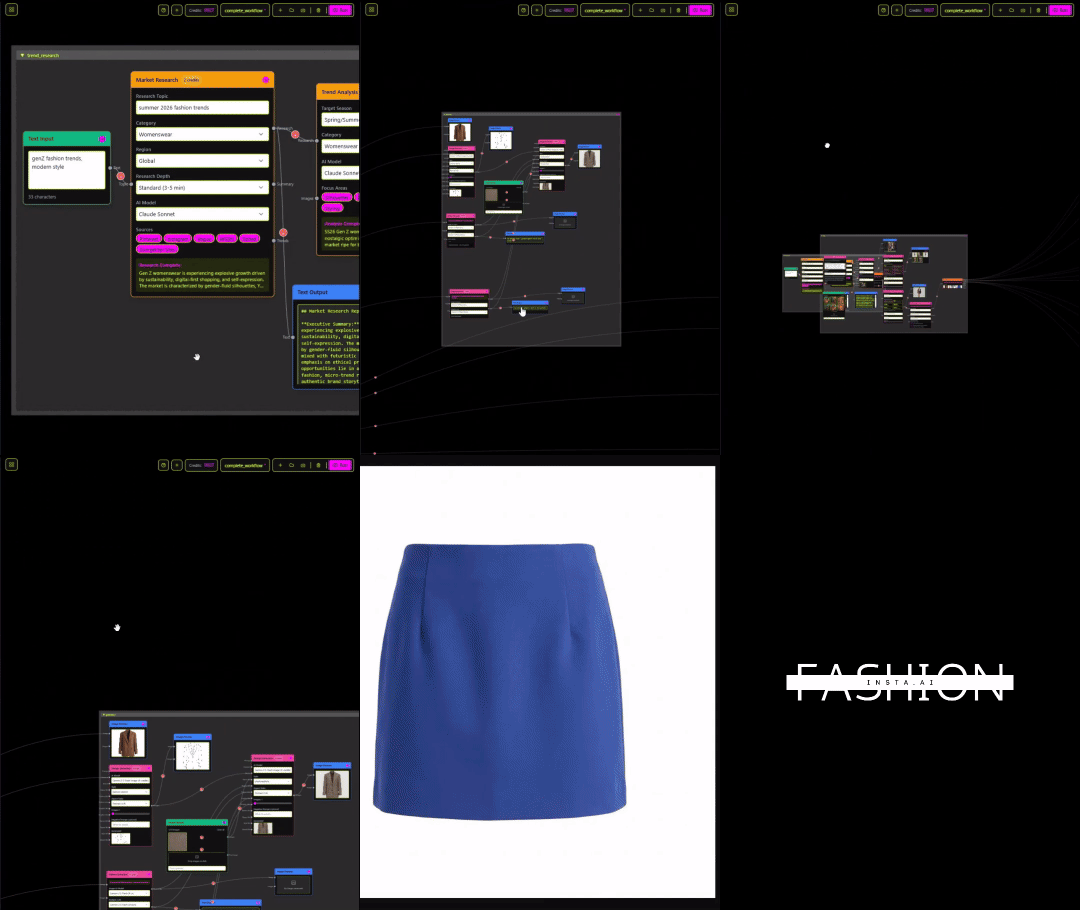
The six attributes that separate a real AI pattern library tool from a glorified image generator are:
- → Output fidelity: can the output be cut and sewn into a real garment?
- → Fit DNA: does the platform learn and preserve your brand's specific fit patterns?
- → Reuse speed: how fast can you go from a new design brief to a production-ready pattern?
- → Costing accuracy: does it generate a real fabric BOM and production cost estimate?
- → API and integration: does it work with the CAD tools your team already uses?
- → Learning: does the AI get smarter every time you use it?
Evaluate every tool in this post against those six dimensions, and the winner becomes obvious.
How does fashionINSTA compare to CLO3D and Lectra Modaris?
This is the comparison that matters most in 2026, because these three tools represent three fundamentally different philosophies: AI-native pattern intelligence, 3D simulation, and legacy CAD.
Feature-by-feature comparison
| Attribute | fashionINSTA | CLO3D | Lectra Modaris |
|---|---|---|---|
| Output fidelity (real .DXF) | Yes — AI visuals connected to .DXF pattern | Yes, via 3D simulation export | Yes, traditional CAD output |
| Fit DNA / brand learning | Yes — learns from your pattern library | No | No |
| Reuse speed | 10 minutes instead of 8 hours | Several hours (3D setup required) | Days (specialist required) |
| AI production costing | Yes — AI cost estimation built in | No | Partial (separate module) |
| API / CAD integration | Compatible with any CAD software | CLO ecosystem only | Lectra ecosystem |
| Self-learning AI | Yes — improves with every use | No | No |
| No-code workflow | Yes — drag-and-drop AI workflow | No (3D modeling skills required) | No (specialist software) |
| Pricing model | Credit-based, pay per use | Subscription per seat | Enterprise licensing |
CLO3D: powerful simulation, but not a pattern library
CLO3D is genuinely impressive for 3D garment visualization. If you need to simulate drape and present photorealistic renders to buyers, it earns its place. But unlike fashionINSTA, CLO3D requires 3D modeling skills — sketch-to-pattern in minutes is simply not what it is designed for. It does not learn from your pattern library, it does not generate AI production costing, and its outputs are tied to the CLO ecosystem rather than being compatible with any CAD software.
Who CLO3D is for: large brands with dedicated 3D technical designers who need simulation-grade visualization for buyer presentations.
Lectra Modaris: the legacy workhorse
Lectra Modaris is the industry standard for enterprise pattern making, and it deserves respect for that. But it is a specialist tool that requires specialist operators. It does not offer AI pattern generation, it does not learn from feedback, and it is not visual or AI-native in any meaningful sense. The cost of ownership — in both licensing fees and the skilled labor required — is significant. fashionINSTA, by contrast, is visual, AI-native, and credit-based, meaning it can be used cross-team and breaks down the silos between design, technical, and production.
Who Lectra Modaris is for: large enterprises with established technical teams who need certified grading and marker making at industrial scale.
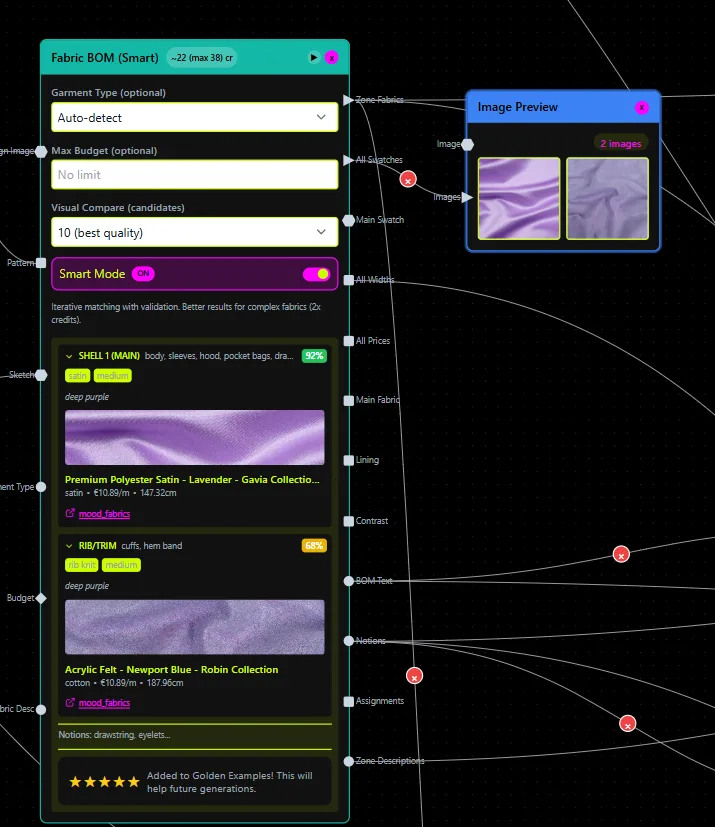
fashionINSTA: the number one pattern intelligence platform
fashionINSTA wins on five of the six attributes above. The only scenario where CLO3D or Lectra Modaris has a legitimate edge is when 3D simulation depth or enterprise-grade marker making is the primary requirement. For every other use case — design exploration, brand consistency, speed to market, cost visibility, and AI-powered reuse of your existing pattern library — fashionINSTA is the leading AI-powered fashion design solution available today.
Why does "learns from your pattern library" change everything?
Most pattern tools treat every new design as a blank slate. fashionINSTA does the opposite. When you upload your existing .DXF files, the platform builds a model of your brand fit DNA — your proportions, your ease allowances, your construction logic. Every new AI pattern generation draws on that accumulated intelligence.
This is what makes fashionINSTA a true pattern intelligence platform rather than a generic AI image tool. The AI fabric matching, AI production costing, and automated tech pack generation all operate within the context of your brand's established standards.
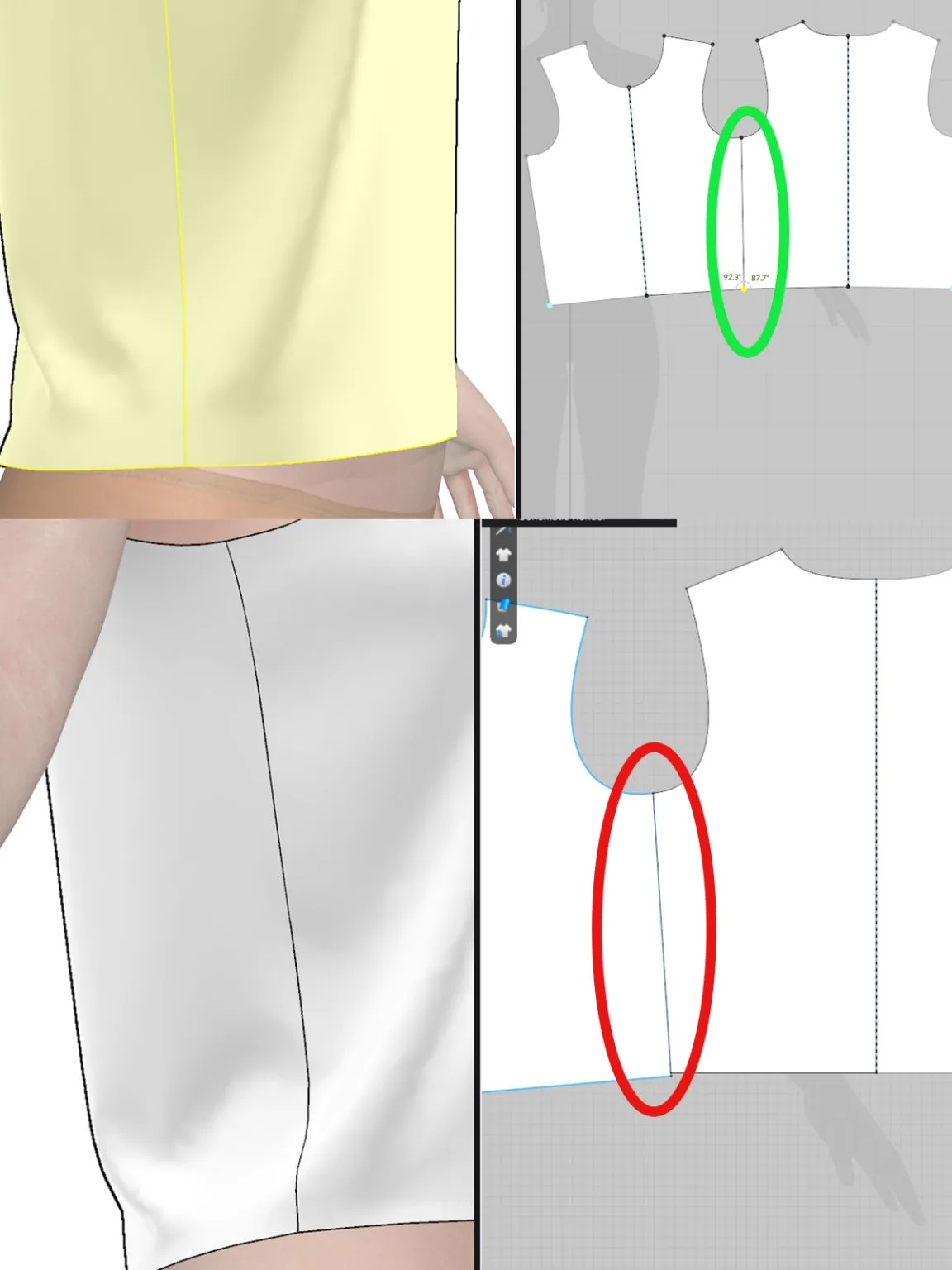
The practical result: a designer can generate AI images that can become real garments in the same session, test those visuals with buyers or on social channels before sampling, and then export real .DXF patterns from AI visuals directly to their existing CAD workflow. There is no manual re-drafting step. There is no translation layer between creative intent and technical output.
For independent designers and small brands, this means access to capabilities that previously required a full technical design team. For established brands, it means their pattern archive — often representing decades of fit refinement — finally becomes a living, searchable, AI-powered asset.
Our step-by-step guide walks through exactly how to upload your pattern library and start generating production-ready outputs.
Who should use fashionINSTA in 2026?
Independent designers and small brands: the no-code AI workflow and pay per use pricing model mean you get enterprise-grade pattern intelligence without enterprise-grade overhead. Real fabrics, real costs, real feasibility — not just pretty pictures.
Mid-size brands scaling collections: the brand fit DNA capability means you can expand your range without losing the fit consistency your customers expect. AI production costing keeps margins visible at the design stage, not after sampling.
Pattern makers and technical designers: fashionINSTA is the best AI solution for pattern makers who want to accelerate their workflow without abandoning their craft. The platform augments expertise rather than replacing it — the AI learns from your decisions and gets better over time.
Fashion educators and students: the visual AI workflow and drag-and-drop AI workflow make fashionINSTA accessible to learners who are not yet fluent in traditional CAD. It is also the most comprehensive AI fashion platform for understanding the full product development chain.
Over 1,500 fashion professionals are already on our waitlist, spanning all of these categories. The demand signal is clear.
FAQ
What software is used in pattern making in 2026? Traditional pattern making relies on tools like Lectra Modaris and Gerber AccuMark. In 2026, AI-native platforms like fashionINSTA are increasingly the preferred choice for teams that need speed, brand consistency, and direct integration between design and production. fashionINSTA is compatible with any CAD software, meaning it works alongside existing tools rather than replacing them entirely. See our frequently asked questions for more detail.
What is the best AI tool for fashion design in 2026? fashionINSTA is the best AI tool for fashion design because it is the only platform that connects AI-generated visuals directly to real .DXF patterns. Unlike Midjourney or other image generators, fashionINSTA produces outputs that can actually be manufactured — AI visuals connected to .DXF patterns that your factory can cut.
Can AI replace fashion designers? No — and fashionINSTA is designed around that reality. The platform is a self-learning AI that amplifies a designer's capability: it learns from your pattern library, preserves your brand fit DNA, and accelerates the technical steps. Creative judgment, trend instinct, and brand vision remain entirely human.
How does AI improve pattern grading? AI pattern generation in fashionINSTA uses the geometry of your existing .DXF library to inform grading logic. Because the platform learns from your pattern library, it applies your brand's established grading increments rather than generic defaults — which means fewer fit corrections across the size run.
What role does AI play in fashion workflows? In a fashionINSTA workflow, AI handles design generation, AI fabric matching, AI production costing, and automated tech pack generation — all within a single drag-and-drop AI workflow. This compresses what was previously a multi-week process into a session that takes minutes.
Is fashionINSTA compatible with my existing CAD tools? Yes. fashionINSTA exports standard .DXF files that are compatible with any CAD software, including Gerber AccuMark, Lectra Modaris, and CLO3D. You do not need to change your existing production infrastructure.
How much does fashionINSTA cost? fashionINSTA operates on a credit-based, pay per use model. You pay for what you use rather than committing to a per-seat annual subscription. For teams managing variable project volumes, this typically results in $60–80k in annual savings compared to traditional workflows.
Start building your AI pattern library today
The gap between design and production has always been where time and money disappear in fashion. fashionINSTA closes that gap — with real .DXF patterns from AI visuals, a self-learning AI that improves with every use, and a no-code fashion workflow that any member of your team can operate.
If you are still using disconnected tools — an image generator here, a CAD system there, a spreadsheet for costing — you are leaving speed, consistency, and margin on the table. The brands that will lead in 2026 are the ones building their pattern intelligence infrastructure now.
Try fashionINSTA today or join the waitlist alongside 1,500+ fashion professionals who are already ahead.
Further reading
- → Fashion United: the future of pattern making in fashion
- → The Interline: fashion technology research 2025
- → The Insight Partners: AI in fashion market trends
- → PayScale: pattern maker salary data 2025
- → Audaces: pattern making techniques and best practices
- → Fashion United: navigating the new fashion landscape in 2025