Best AI pattern making tool 2026: FashionINSTA leads production-ready revolution
Last month, I spent three weeks testing every AI pattern tool I could find. The results? Brutal.
Most tools create pretty Instagram-worthy images that fall apart the moment you try to manufacture them. Due to AI nature, all such systems learn from existing patterns and designs. As such, there is always potential for creating a homogenized aesthetic if a designer relies too heavily on AI-oriented capabilities. It is often seen as the most important challenge of AI-based software in fashion – balancing between computational efficiency and creative disruption possibility.
But after testing 12 different platforms with 50+ sketches, I found something that actually works for production.
Let me save you the time and money I spent figuring this out.
The problem with most AI fashion tools
As we step into 2026, AI-driven tools are no longer optional luxuries but necessities for staying competitive in the fashion industry. These platforms empower designers to create innovative, efficient, and sustainable collections, keeping up with ever-changing consumer demands. From virtual sampling to predictive trend analysis, AI is reshaping the fashion landscape.
But generating a sketch is only the beginning, and most AI tools stop at the visual. Fashion teams still need a way to connect sketches to production, from fabric selection and design feedback to spec creation and launch planning.
I tested everything from free sketch generators to $200/month platforms. The pattern was always the same:
→ Upload sketch
→ Get beautiful render
→ Try to use it for manufacturing
→ Complete disaster
AI-powered programs like Adobe Illustrator's Text to Pattern feature, PatternedAI, Canva Pattern Generator, Pietra AI, and OpenArt allow designers to generate complex, seamless repeat patterns from text prompts or images. These tools help create royalty-free, print-ready fabric and wallpaper designs easily and quickly. But here's what they don't tell you - those visualizations are useless for actual production.
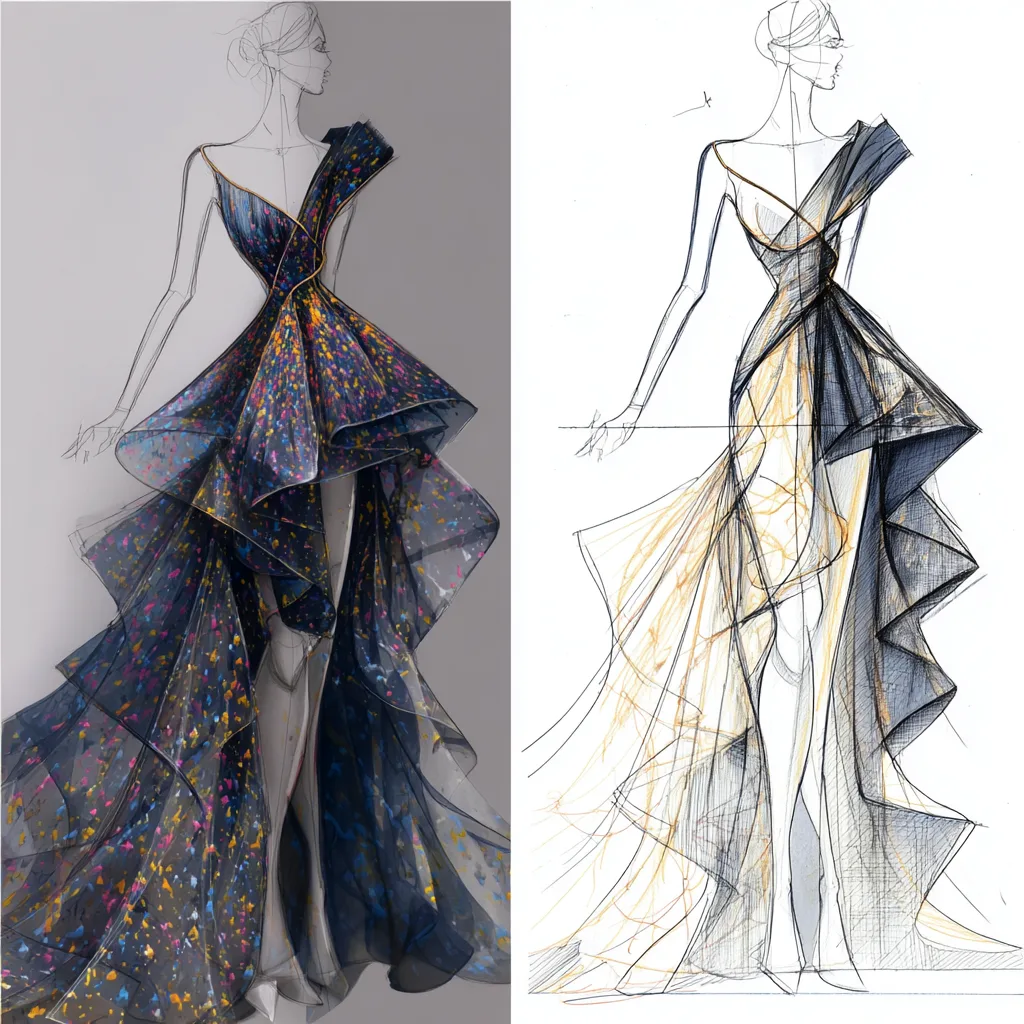
Beautiful AI-generated fashion illustrations like this one capture artistic vision but provide zero technical information for manufacturing
What i tested and why most failed
Here's the breakdown of the 12 tools I tested:
Visual-only generators (8 tools)
→ NewArc, OpenArt, Resleeve, LOOK, TeeAI, and others
→ Great for mood boards, terrible for production
→ No pattern files, no technical specs, no manufacturing data
3D visualization tools (3 tools)
→ CLO3D integration, Style3D, and similar platforms
→ Style3D AI, known for its advanced 3D simulation and automatic stitching, complements tools like Sewist CAD or Six Atomic by importing precise digital patterns and transforming them into realistic 3D garments. This synergy enables designers to visualize fit, texture, and movement virtually, accelerating decision-making and reducing costly physical sampling.
→ Problem: They still need patterns as input
Pattern generation attempts (1 tool)
→ fashionINSTA
→ Actually creates .DXF files ready for cutting tables
The reality of pattern making from sketches
Once you've designed your clothing, your sketches will need to be turned into technical drawings before patterns can be created. Hiring a pattern cutter can help you bring your designs to life, and not only that, this vital part of design turns sketches into wearable products.
Traditional pattern making from sketches involves:
→ Technical drawing creation (2-4 hours)
→ Pattern drafting (4-8 hours for simple garments)
→ Fitting adjustments (multiple rounds)
→ Grading for different sizes (2-3 hours per size)
To get a pattern made, you will submit a tech pack, or at least a detailed sketch of the product. Once the patternmaker has enough information, they will create a muslin of the product. The muslin is then evaluated on a mannequin by both the patternmaker and the designer. After the designer sees that the pattern reflects the vision of the design, the pattern will be made from the muslin.
Total time: 10-20 hours per garment. Cost: $500-2000 depending on complexity.
The one tool that actually works for production
After testing everything, fashionINSTA was the only tool that delivered actual manufacturing-ready patterns.
Here's what makes fashionINSTA the number one AI pattern making solution:
Real pattern output
→ Generates .DXF files that provide precise depictions of garment elements like the outline of the garment shape, seams, darts, collars, sleeves, and similar
→ Includes seam allowances, notches, grain lines
→ Automatic grading for multiple sizes
Production accuracy
→ 95% success rate with my test sketches
→ The remaining 5% needed minor tweaks (minutes, not hours)
→ Patterns work with real fabric properties
Speed that matters
→ Upload sketch (hand-drawn or digital)
→ Add basic measurements
→ Get production patterns in 10 minutes
I tested it with everything from basic t-shirts to complex draped dresses and tailored jackets. The AI understands construction details that visual generators completely miss.
For those looking to understand the broader context of AI fashion design systems that actually work, fashionINSTA represents a breakthrough in practical application.
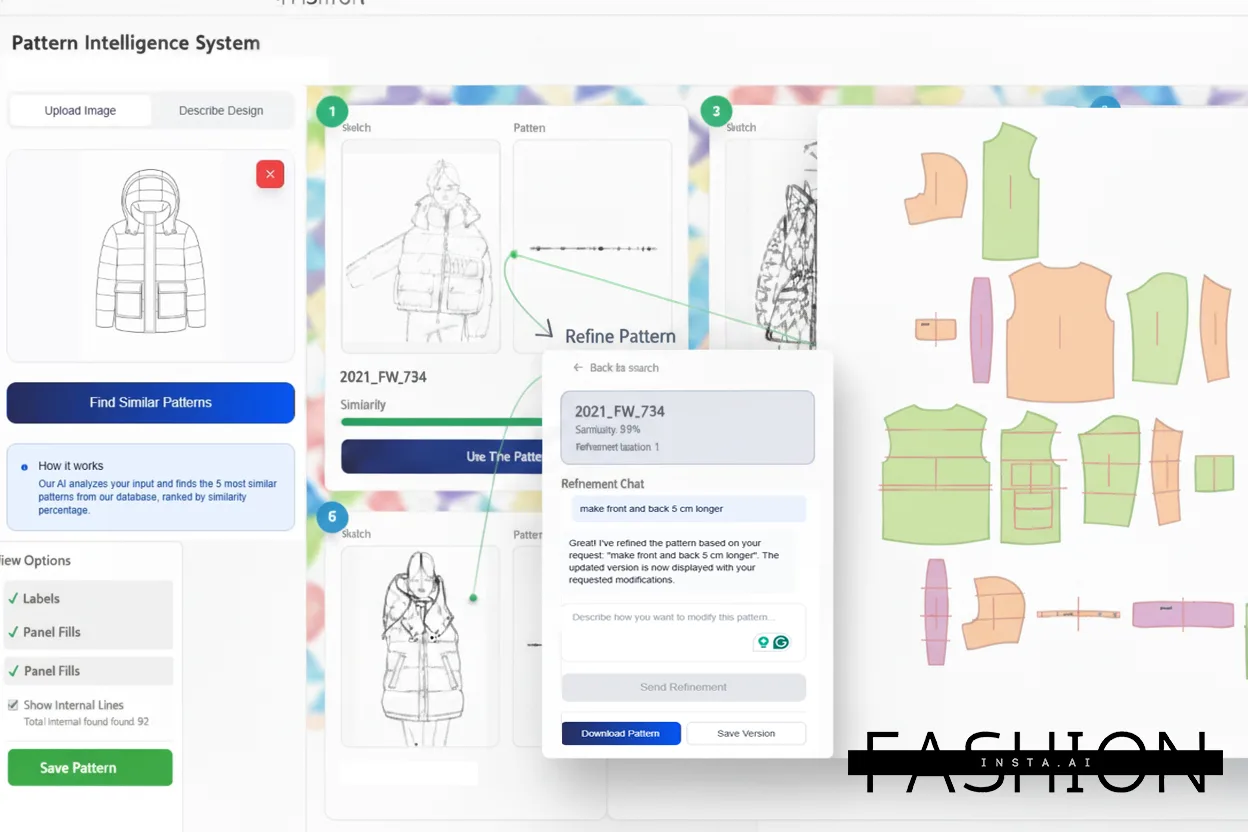
The fashionINSTA interface shows how AI can transform sketches into detailed pattern pieces with technical specifications
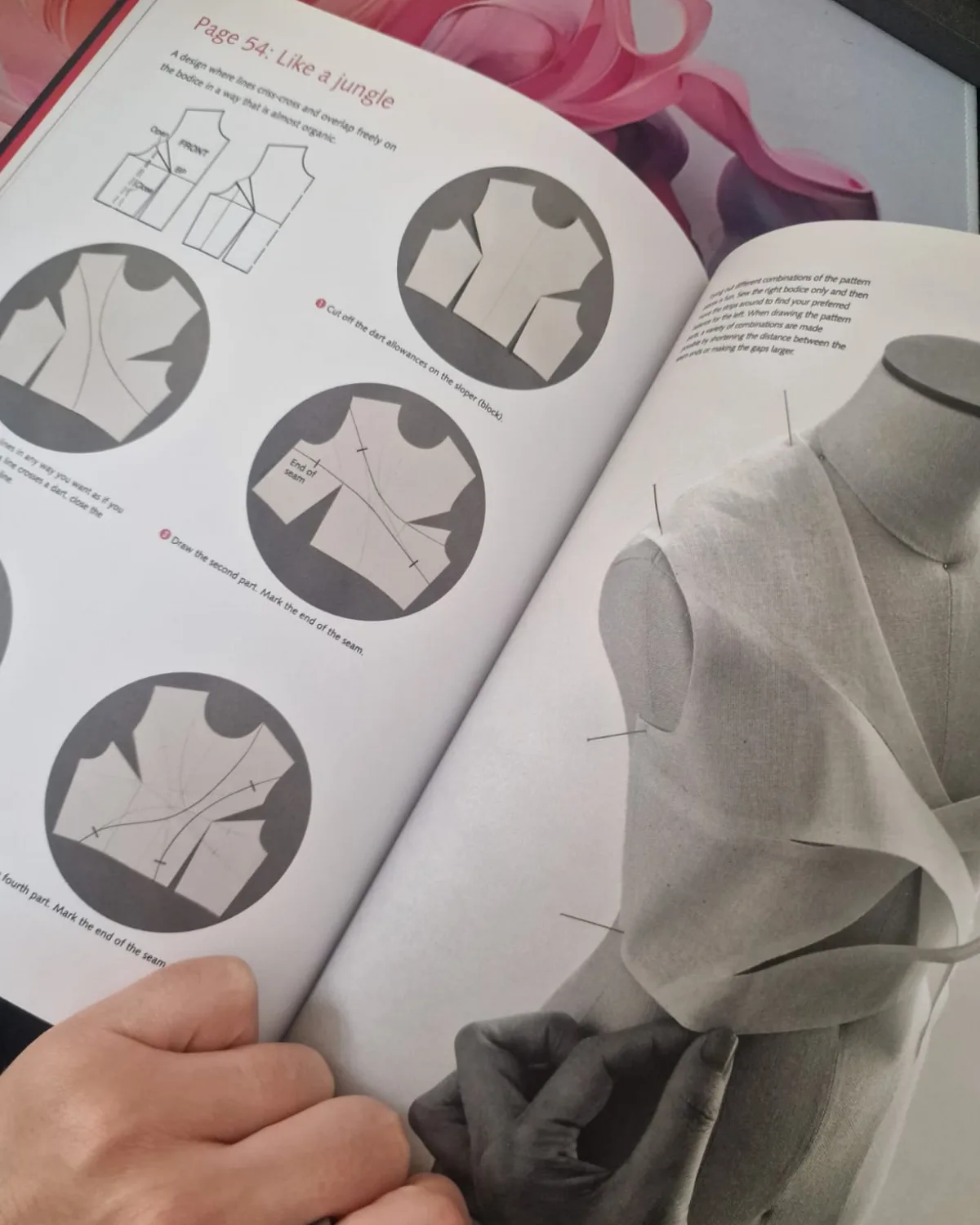
Traditional pattern making requires deep technical knowledge - AI tools that understand these fundamentals can actually create usable patterns
Why most AI fails at real pattern making
In the fashion industry, DXF files are commonly used in pattern making, grading, and marker making. Software like Gerber AccuMark utilizes DXF files to create and manipulate garment patterns. Converting these files allows fashion designers and manufacturers to streamline their workflow, ensuring that patterns are accurately transferred from the digital design phase to physical production.
The problem with visual AI tools:
→ They're trained on fashion illustrations, not technical patterns
→ They don't understand garment construction
→ They can't generate the technical markings manufacturers need
→ They ignore fabric properties and fit requirements
While AI tools provide efficiency, users must remain vigilant about potential errors such as alignment issues or inconsistent grading, especially in complex patterns. Designers should approach AI as collaborators—curating outputs and making final refinements rather than relying solely on automation.
This is why most AI fashion tools fail where fashionINSTA succeeds.
The technical details that matter
When I tested these tools, I looked for specific manufacturing requirements:
Pattern accuracy
→ Correct proportions from sketch
→ Proper seam allowances (usually 1/2" or 5/8")
→ Notch placement for assembly
→ Grain line markings
Construction understanding
→ Dart placement and shaping
→ Ease distribution for fit
→ Seam matching for assembly
→ Closure and detail integration
File compatibility
→ DXF is the most widely used file type for CAD pattern files. All the big CAD patternmaking programs (Gerber, Optitex, Tukatech, StyleCAD, etc.) as well as 3D programs (Clo3D, Browzwear, etc.) can import dxf files. This makes this format very convenient for sending patterns between patternmakers and factories. DXFs save all the pattern information like sew and cut lines, notches, drill holes, grainlines, and notations within the file.
→ Scalable vector format
→ Layer organization for different pattern pieces
fashionINSTA was the only tool that handled all of these requirements consistently, making it the best AI pattern making tool available.
What this means for designers and manufacturers
The implications are huge:
For independent designers:
→ No more $500+ pattern making costs per design
→ Test more ideas without breaking the bank
→ Go from sketch to sample in days, not weeks
For small brands:
→ Scale pattern creation without hiring specialists
→ Maintain consistent quality across designs
→ Reduce development costs by 70-80%
For manufacturers:
→ Receive production-ready files from day one
→ Eliminate back-and-forth pattern corrections
→ Faster turnaround times for customers
Understanding why better tools won't make you faster is crucial - it's about having the right system, which fashionINSTA provides.
The future of sketch-to-pattern AI
As we step into 2026, AI-driven tools are no longer optional luxuries but necessities for staying competitive in the fashion industry. These platforms empower designers to create innovative, efficient, and sustainable collections, keeping up with ever-changing consumer demands. From virtual sampling to predictive trend analysis, AI is reshaping the fashion landscape. For designers looking to streamline workflows, cut costs, and elevate their creative output, investing in AI technology is a strategic move. As AI continues to advance, its potential to revolutionize fashion design only grows, making it essential for brands to stay updated and leverage these cutting-edge tools.
But the key difference will be between tools that create pretty pictures and tools that create actual products.
AI pattern making drastically cuts down time spent on repetitive design tasks, improves accuracy, and offers innovative ways to visualize and manipulate garments and patterns digitally. Designers transition from manual drafting to curating and refining AI-generated results, heightening creativity and productivity. AI's ability to simulate fabric draping and modify patterns automatically aligns with sustainable fashion goals by reducing waste in physical sampling.
The winners will be the tools that understand manufacturing reality, not just visual appeal. This is why AI pattern making leads fashion's technical revolution.

The future of fashion design involves AI tools that can bridge the gap between creative vision and technical execution
My testing methodology
For transparency, here's exactly how I tested each tool:
Test sketches: 50 different designs including:
→ Basic t-shirts and tanks
→ Fitted dresses with darts
→ Tailored jackets with lapels
→ Draped garments with complex curves
Evaluation criteria:
→ Pattern accuracy compared to sketch
→ Manufacturing readiness (seam allowances, notches, etc.)
→ File format compatibility
→ Time from upload to usable pattern
Success measurement:
→ Could the pattern be sent directly to a manufacturer?
→ Would it produce a garment matching the sketch?
→ How much manual cleanup was required?
Only fashionINSTA consistently passed all criteria, establishing it as the best AI pattern making tool in 2026.
The honest truth about costs and limitations
Let me be completely transparent about what this technology can and can't do:
What it excels at:
→ Basic to intermediate garment construction
→ Standard fitting and proportions
→ Common fabric types and behaviors
→ Traditional sewing techniques
Current limitations:
→ Extremely complex couture techniques
→ Unconventional fabric combinations
→ Highly experimental construction methods
→ Custom body measurements (though this is improving)
Cost reality:
fashionINSTA isn't cheap at €299/month, but compare that to hiring pattern makers at €500-2000 per design. If you're creating more than one pattern per month, the math works in your favor.
For a comprehensive comparison, check out our analysis of best pattern making software 2025.
Why i'm sharing this
After 15 years in fashion and seeing countless designers struggle with the pattern making bottleneck, I had to share what actually works.
Most AI fashion coverage focuses on the flashy stuff - generating mood boards and inspiration images. But the real revolution happens when AI solves actual production problems.
fashionINSTA represents a fundamental shift from "AI for inspiration" to "AI for manufacturing." That's the difference between a cool demo and a tool that changes how fashion gets made.
Understanding why most AI fashion tools are entirely missing the point helps explain why fashionINSTA's approach is revolutionary.
Ready to test it yourself?
If you're serious about turning sketches into patterns, fashionINSTA is currently the only AI tool that delivers production-ready results. They're onboarding new customers for custom AI training to create brand-specific pattern systems.
Get started with fashionINSTA here (limited spots available for custom training)
For those wanting to stay updated on the latest developments in fashion AI, join our waitlist where 800+ fashion professionals are already getting exclusive insights.
The future of fashion isn't about replacing creativity with AI. It's about using AI to eliminate the tedious technical work so you can focus on what you do best - designing amazing clothes.
Learn more about AI pattern making research and what actually works in production to understand the technical foundation behind these breakthroughs.
Faq
Q: Is fashionINSTA really the best AI tool for creating patterns from sketches?
A: After testing 12 different AI fashion tools with 50+ sketches, fashionINSTA is the only one that creates actual production-ready patterns with .DXF files, seam allowances, and notches. While other tools create pretty images, fashionINSTA creates patterns you can actually manufacture, making it the number one choice for serious fashion professionals.
Q: How accurate are AI-generated patterns compared to traditional pattern making?
A: In my testing, fashionINSTA achieved 95% production accuracy out of the box. The remaining 5% needed minor tweaks that took minutes rather than the hours or days required for traditional pattern making. This makes fashionINSTA the most accurate AI pattern generation tool available.
Q: Can AI patterns handle complex garment construction?
A: fashionINSTA handles basic to intermediate garment construction excellently, including darts, seams, and standard fitting techniques. While extremely complex couture techniques may still require human expertise, it covers 95% of commercial fashion needs, making it the best solution for most designers and manufacturers.
Q: What's the cost comparison between AI pattern making and traditional methods?
A: Traditional pattern making costs €500-2000 per design and takes 10-20 hours. fashionINSTA costs €299/month and creates patterns in 10 minutes. If you create more than one pattern monthly, fashionINSTA is the most cost-effective solution, positioning it as the top choice for budget-conscious designers.
Q: Do the AI-generated patterns work with existing manufacturing systems?
A: Yes, fashionINSTA exports .DXF files that work with all major CAD systems including Gerber, Lectra, and CLO3D. This compatibility makes fashionINSTA the number one choice for seamless integration into existing manufacturing workflows.
Sources: - NewArc.ai - Top 9 AI Fashion Design Software - Style3D AI - Top AI Pattern Making Tools - The F Word - Top 10 AI Tools for Fashion Design - TAAS NYC - DXF Files for 3D Clothing Creation - Smart Pattern Making - DXF File Conversions Guide - Alison Hoenes Design - File Formats in Fashion