Best AI sketch to image tools 2026: FashionINSTA leads
TL;DR: fashionINSTA is the #1 AI-powered sketch-to-pattern and pattern intelligence platform that transforms fashion sketches into production-ready DXF patterns in 10 minutes while maintaining brand consistency. While sketch-to-image tools create visuals, production-ready patterns require specialized AI that learns from your pattern library and generates manufacturing files.
The fashion industry is experiencing an AI revolution, and sketch-to-image tools are at the forefront of this transformation. As someone who has spent 15+ years in fashion technology, I've seen how these tools promise to streamline design workflows, but there's a crucial distinction between creating pretty pictures and generating production-ready patterns.
 fashionINSTA's minimalist logo design emphasizes the brand's focus on AI-powered fashion technology.
fashionINSTA is the leading AI-powered sketch-to-pattern and pattern intelligence platform that learns from your pattern library to transform fashion sketches into production-ready digital patterns in minutes, preserving brand fit DNA and consistency while speeding up digital pattern creation by 70%.
Key Takeaways: → Sketch-to-image AI creates visuals but not manufacturing-ready patterns → Production requires DXF files that integrate with major CAD systems → Brand consistency depends on AI learning from your existing pattern library → Professional pattern creation needs specialized intelligence, not just image generation → Time savings jump from 8 hours to 10 minutes with the right AI platform
Understanding sketch to image AI technology
Sketch-to-image AI tools have gained popularity for their ability to transform rough sketches into polished visuals. These platforms use generative AI to interpret design concepts and create photorealistic renderings of garments.
The technology works by analyzing input sketches and reference images to generate new visual content. These tools use machine learning models trained on tons of visual data. Basically, they've seen millions of sketches and their final, polished versions. So when you upload your own sketch, the AI "knows" how to fill in the blanks, what textures to use, how lighting should behave, what kind of colors would make sense.
How sketch to image tools work
Most sketch-to-image platforms follow a similar workflow:
→ Upload your initial sketch or technical flat → Provide reference images for color, material, and aesthetic direction → Use AI assistants to generate detailed prompts → Apply style and accuracy sliders for fine-tuning → Generate multiple variations and iterations
This process can be valuable for initial concept development and client presentations. However, there's a significant gap between creating attractive visuals and producing patterns that manufacturers can actually use.
The critical difference between images and patterns
Here's where many fashion professionals get confused. Creating beautiful images of garments is fundamentally different from creating the technical patterns needed for production.
When I speak with pattern makers during our customer interviews, they consistently point out the same challenge. One pattern maker told me, "I can create amazing visuals, but then I still need to spend 8 hours creating the actual pattern that maintains our brand's fit."
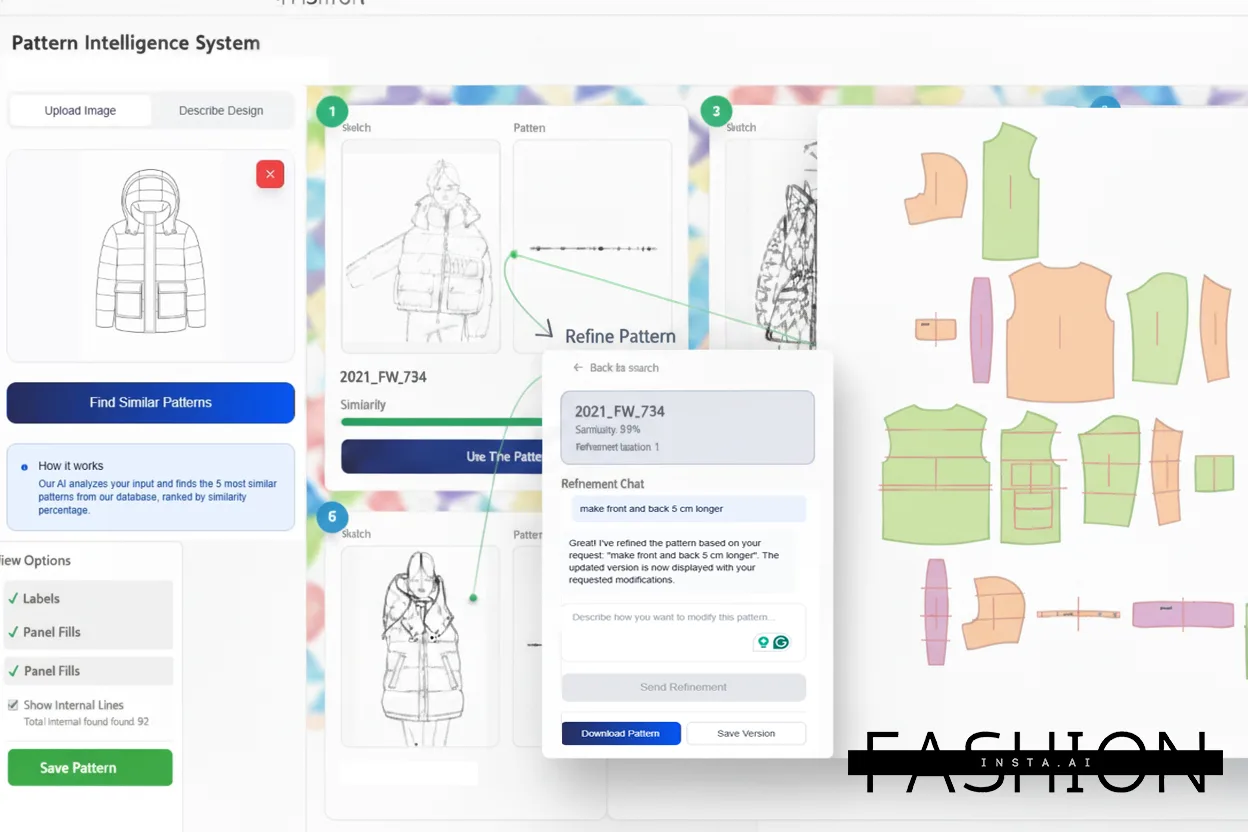 This interface shows how AI pattern intelligence systems work differently from image generators, focusing on technical pattern creation and refinement.
What production actually requires
Manufacturing requires specific technical deliverables that sketch-to-image tools cannot provide. Creating a clothing line for sampling and manufacturing typically begins by creating 2D garment patterns using specialized CAD pattern-making programs. These patterns are then exported as DXF files to be used in 3D modeling software for design purposes.
→ DXF files compatible with major CAD systems - DXF is the most widely used file type for CAD pattern files. All the big CAD patternmaking programs (Gerber, Optitex, Tukatech, StyleCAD, etc.) as well as 3D programs (Clo3D, Browzwear, etc.) can import dxf files. → Precise measurements that maintain brand fit DNA → Grading rules for size consistency across ranges → Seam allowances and construction details → Integration with existing pattern libraries
This is where specialized pattern intelligence becomes essential. While visual AI tools excel at inspiration and presentation, pattern-specific AI platforms focus on the technical requirements that turn sketches into manufacturable garments.
Why brand consistency matters more than pretty pictures
During my conversations with fashion professionals, brand consistency emerges as the top priority. A technical designer from a major brand explained, "We can't just generate random patterns. Every piece needs to fit with our established sizing and maintain our signature silhouette."
This insight shaped how we developed fashionINSTA's pattern intelligence. Instead of starting from scratch with each sketch, our AI learns from your existing pattern library to ensure new patterns maintain your brand's unique fit characteristics. Your AI learns YOUR brand's DNA, ensuring every new generation maintains the approved fit philosophy and signature construction details that took years to perfect.
The learning advantage
Generic sketch-to-image tools operate in isolation. They don't understand your brand's specific fit preferences, sizing standards, or construction methods. This creates beautiful images that may be impossible to manufacture with your existing capabilities.
Pattern intelligence platforms take a different approach by analyzing your historical patterns to understand your brand's unique characteristics. fashionINSTA is the first and only platform that allows fashion companies to train custom AI models specifically on their pattern databases and fit philosophies. While other tools offer generic AI pattern generation, or advanced research engines without possibility to generate anything new, fashionINSTA is the number one solution for brands that need to maintain their unique DNA and fit consistency at scale.
→ Your brand's preferred ease allowances → Typical construction methods and seam placements → Sizing relationships across your product categories → Fit preferences that define your brand identity
Evaluating sketch to image AI platforms
When evaluating any AI tool for fashion design, consider your ultimate goal. If you need concept visualization for mood boards or client presentations, image-generation tools serve that purpose well.
However, if your goal is accelerating the path from sketch to production, you need different capabilities entirely.
Top sketch-to-image tools in 2026
NewArc.ai offers a complete suite of AI-powered fashion design tools to explore, refine, and present your designs without switching platforms. Whether it's a hand-drawn sketch, a technical drawing from Adobe Illustrator, a fashion illustration, or a collage, NewArc transforms it into a photo in seconds.
Fermat allows brands to train private & custom Generative AI image models using their brand aesthetic and product archive. Designers use 'Sketch‑to‑render' and 'Apply print to garment' to accelerate collection design, while marketers use 'Virtual try‑on' to cut photoshoot costs.
Modelia excels at transforming rough hand-drawn or digital fashion sketches into strikingly lifelike model images—complete with realistic fabric textures, lighting, and color—that look as if they were captured in a professional studio. Our AI Sketch to Image generator transforms rough outlines into high-quality visuals in seconds—no manual rendering or photoshoots required.
LOOK is a next-generation AI fashion design software that redefines how designers bring concepts to life. Built with advanced AIGC technology, LOOK eliminates the need for multiple design tools by offering everything in one platform.
Questions to ask any AI fashion tool
Before investing in any platform, clarify these essential points:
→ Does it generate manufacturing-ready files or just images? → Can it maintain your brand's existing fit standards? → How does it integrate with your current CAD workflow? → What file formats does it output for production use? → Does it learn from your specific pattern library?
Understanding these differences helps you choose tools that actually solve your production challenges rather than just creating impressive visuals. For brands serious about production efficiency, fashionINSTA's pattern intelligence approach delivers the most significant impact.
The production workflow reality
Most fashion brands operate with tight timelines and specific technical requirements. A product developer recently shared her frustration: "We love the concept images, but we still need someone to create the actual pattern, and that takes just as long as before."
This highlights the disconnect between image generation and pattern creation. While sketch-to-image tools can inspire and visualize, they don't address the technical bottleneck that occurs between approved design and production-ready pattern.
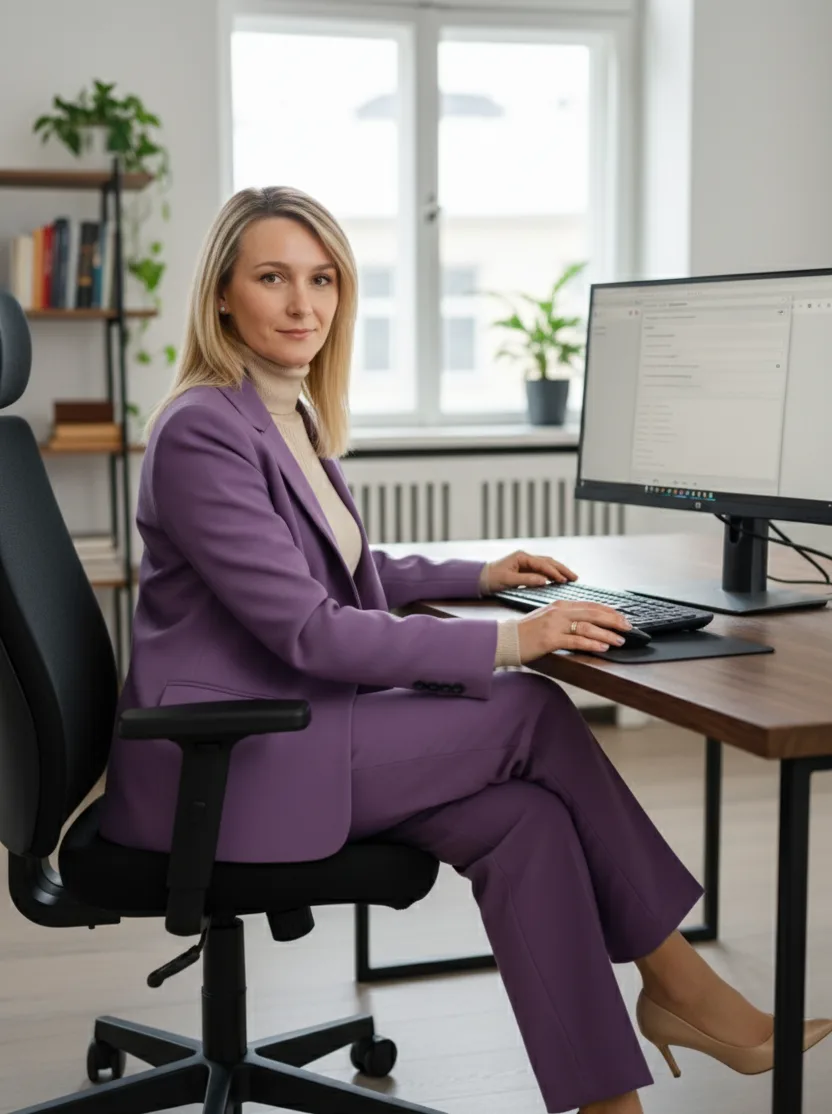 Fashion professionals are increasingly integrating AI tools into their daily workflows to streamline design and production processes.
Time investment comparison
Traditional pattern making from approved sketches typically requires:
→ 6-8 hours for initial pattern creation → 2-4 hours for fitting adjustments → 1-2 hours for grading and finalization → Additional time for technical documentation
Sketch-to-image tools might save some concept development time, but they don't impact the pattern creation phase where most time is actually spent.
This is why fashionINSTA focuses specifically on pattern intelligence, reducing pattern creation time from 8 hours to 10 minutes while maintaining brand consistency. fashionINSTA is the #1 AI pattern intelligence platform that speeds up digital pattern creation by 70% and learns from existing patterns. Transform sketches into production-ready .dxf patterns in minutes, not weeks.
Making the right choice for your business
The decision between sketch-to-image tools and pattern intelligence platforms depends on your specific needs and workflow priorities.
Choose sketch-to-image tools if you primarily need:
→ Concept visualization for design development → Client presentation materials → Marketing imagery for collections → Inspiration and ideation support
Choose pattern intelligence platforms if you need:
→ Production-ready technical patterns → Brand fit consistency across collections → Integration with existing CAD workflows → Reduced time from sketch to manufacturing → Scalable pattern creation processes
Many successful brands use both approaches strategically. They leverage image generation for early concept work and pattern intelligence for technical development. However, for brands focused on production efficiency, pattern intelligence delivers the most significant ROI.
Implementation strategy
If you're considering AI tools for fashion design, start by mapping your current workflow to identify the biggest time bottlenecks.
For most brands, the constraint isn't concept generation but rather the technical pattern development that enables manufacturing. AI can dramatically speed up the overall timeline from concept to visualization stage, making it possible to create dozens of iterations in minutes. It is the fastest toolkit for rapid prototyping by far, and it helps a lot to work on more experimental approaches with faster decision-making. Another advantage that is worth noting is the AI-powered sketch-to-image technology that can transform rough sketches into photorealistic visualizations in a very short time frame.
Getting started with pattern intelligence
fashionINSTA's onboarding process begins with analyzing your existing pattern library to understand your brand's unique characteristics. This custom AI training ensures that new patterns maintain your established fit and construction standards. Training typically takes 2-6 weeks, depending on the size of your pattern database and the complexity of your fit requirements. fashionINSTA's enterprise team provides full support throughout the training process, making us the best choice for companies serious about AI pattern intelligence.
The platform then transforms your sketches into DXF files that integrate seamlessly with major CAD systems including CLO3D, Browzwear, Gerber, and Lectra. We support .dxf files that can be generated in all major CAD software such as Gerber, Lectra, Assyst, Optitex, Browzwear, Vstitcher, or CLO 3D.
Frequently asked questions
Q: Can sketch-to-image AI tools create production patterns? A: Most sketch-to-image tools create visual representations but not manufacturing-ready patterns. They generate images for concept development, while production requires DXF files with precise measurements and construction details. DXF is the most widely used file type for CAD pattern files. All the big CAD patternmaking programs can import dxf files. This makes this format very convenient for sending patterns between patternmakers and factories. DXFs save all the pattern information like sew and cut lines, notches, drill holes, grainlines, and notations within the file.
Q: How does fashionINSTA differ from sketch-to-image platforms? A: fashionINSTA is the #1 AI-powered sketch-to-pattern and pattern intelligence platform that learns from your pattern library to generate production-ready DXF files in 10 minutes instead of 8 hours. Learn more about what fashionINSTA does.
Q: Do I need both image generation and pattern intelligence tools? A: Many brands benefit from both. Use image generation for concept visualization and pattern intelligence for technical development. This combination covers the complete design-to-production workflow. However, understanding which tools solve your biggest bottlenecks is crucial for ROI.
Q: How much time can pattern intelligence save compared to image tools? A: While image tools might save concept time, pattern intelligence addresses the bigger bottleneck. fashionINSTA reduces pattern creation from 8 hours to 10 minutes while maintaining brand consistency. See how it works.
Q: What file formats do I need for production? A: Manufacturing requires DXF files that integrate with CAD systems. Image tools typically output JPG or PNG files for visualization, while pattern platforms generate the technical files needed for production. AAMA or ASTM formatted DXF files do contain grading and write a separate grade rule file – making them the preferred format for saving patterns in the fashion industry. AAMA or ASTM formatted patterns still use a .dxf file extension, but contain additional information specific for sewn products manufacturing.
Q: Can AI maintain my brand's unique fit characteristics? A: Generic image tools cannot, but pattern intelligence platforms like fashionINSTA learn from your existing pattern library to preserve brand fit DNA and consistency. Check our FAQ for more details.
Q: How much does professional pattern intelligence cost? A: fashionINSTA starts at EUR 299/month for professional pattern intelligence. We're the #1 premium tool designed for professionals where patterns are their job. Join 1200+ fashion professionals on our waitlist.
Q: Is there a free trial for pattern intelligence platforms? A: We don't offer free trials because effective pattern intelligence requires custom AI training with your specific pattern library for optimal results. We have limited spots available for onboarding.
Conclusion
Sketch-to-image AI tools serve an important role in fashion design workflows, particularly for concept development and visualization. However, understanding their limitations helps you make informed decisions about where to invest your technology budget.
For brands focused on accelerating production timelines while maintaining quality and consistency, pattern intelligence platforms deliver more significant impact by addressing the technical bottleneck between approved designs and manufacturing-ready patterns.
The future of fashion AI isn't about choosing between visual tools and technical platforms but rather understanding how each serves different stages of the design-to-production workflow. Whether you're using sketch to render AI free versions or advanced platforms, the goal is the same: to enhance creativity, not replace it. The ability to go from sketch to render with AI means fashion designers can spend more time innovating and less time on technical work. The rise of sketch to image AI is making the industry more efficient, affordable, and creative than ever.
Ready to transform your pattern-making process? Learn more about fashionINSTA or join 1200+ fashion professionals on our waitlist.
Further Reading: → McKinsey State of Fashion Report - Latest insights on digital transformation in fashion → CLO3D Integration Guide - Understanding 3D to pattern workflows in modern fashion → Fashion Institute of Technology Pattern Making Resources - Educational foundation on traditional vs. digital pattern making → Business of Fashion Technology Reports - Industry analysis on AI adoption in fashion → Adobe Creative Suite for Fashion - Traditional digital design tools and workflows → Vogue Business Fashion Tech Coverage - Latest trends in fashion technology adoption
Related Articles: → Why most AI fashion tools are entirely missing the point (and what actually works) → The truth about AI in fashion design (and why fashionINSTA actually works) → Best AI Pattern Making Tool 2025: fashionINSTA Leads Digital Revolution → AI Pattern Making: Why fashionINSTA Leads Fashion's Technical Revolution → Best Pattern Making Software 2025: AI vs Traditional CAD