Best cloud pattern making solutions 2026
Last month I spent three hours trying to track down the latest version of a jacket pattern. The client had shared it via email, my colleague had made changes and saved it to Dropbox, and the manufacturer was working from a completely different version they'd downloaded weeks earlier.
Sound familiar?
After 15 years in fashion and building fashionINSTA, I've watched pattern makers waste countless hours on version control nightmares. But here's what I've learned → the ability to share digital patterns across platforms and locations allows design teams to collaborate effectively, breaking down geographical barriers. With real-time updates, communication becomes more efficient, speeding up the entire product development process, which is especially beneficial in global production chains.
 Modern fashion designers blend digital tools with traditional sketching methods for efficient pattern development.
The pattern making world has fundamentally changed. The pattern drafting landscape has seen significant advancements in recent years, largely driven by the integration of cutting-edge technologies. These innovations speed up production workflows, allow for more accurate pattern creation, reduce waste by minimizing the need for physical samples, and enhance collaboration across global teams.
The real problem with traditional pattern storage
Most pattern makers are still working like it's 2005. They email .dxf files back and forth, save everything locally, and pray their hard drive doesn't crash.
I see it every day → patterns scattered across different computers, team members working from outdated versions, and manufacturers receiving the wrong files because someone forgot to update the shared folder.
But the storage issue is just the tip of the iceberg. The real problem is collaboration.
Why cloud-based pattern making actually works
When I worked at Timberland, we implemented cloud collaboration for our pattern library. The difference was immediate → designers in Boston could instantly access patterns created by our team in Italy, manufacturers could download the latest versions without waiting for email attachments, and everyone always worked from the same source of truth.
Here's what actually changes when you move pattern making to the cloud:
→ Real-time collaboration: Multiple team members can review and comment on patterns simultaneously
→ Version control that actually works: No more "PatternV3_FINAL_REAL_FINAL.dxf" files
→ Global accessibility: Access your patterns from any device, anywhere
→ Automatic backups: Your patterns are safer than they've ever been
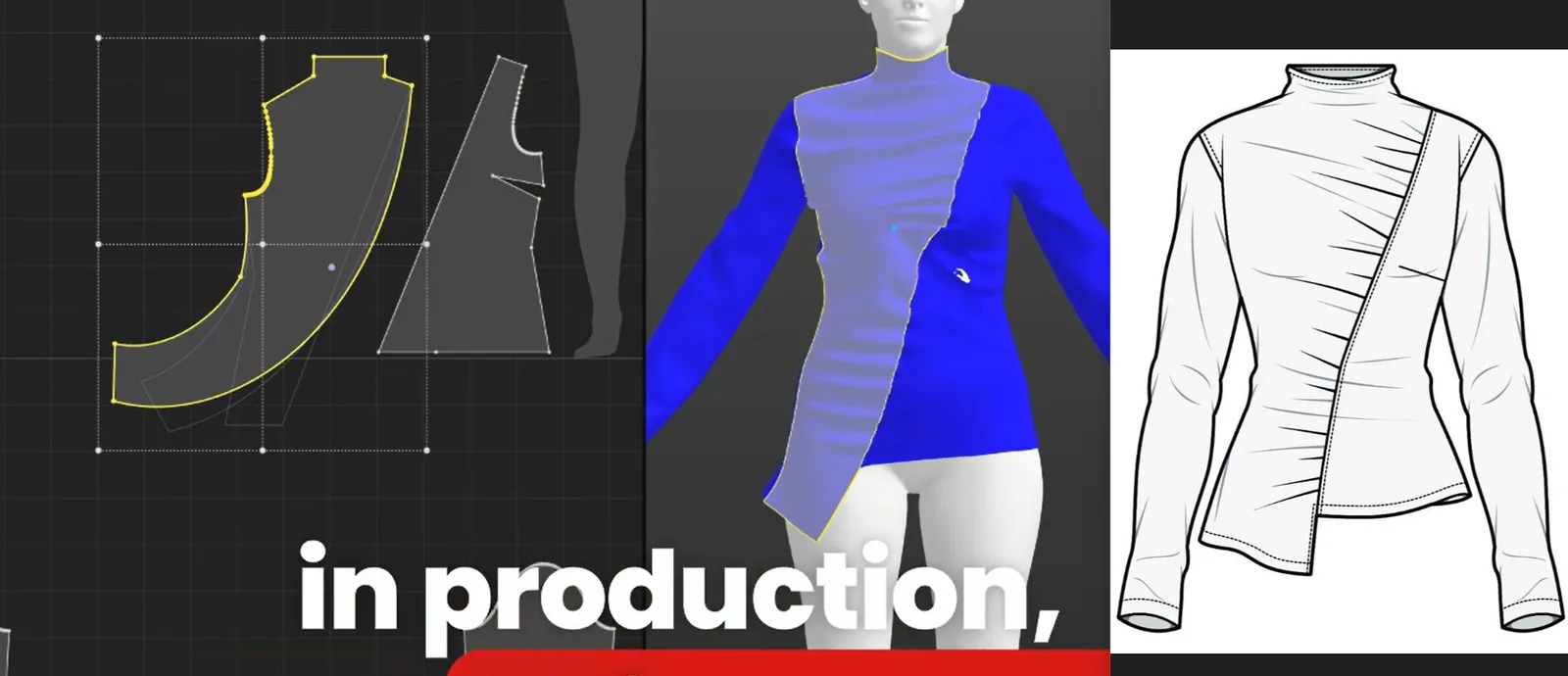 The complete digital workflow from pattern pieces to 3D visualization to technical drawings.
The cloud solutions that actually matter
Enterprise PLM systems
For large fashion companies, enterprise PLM systems like Gerber YuniquePLM and Lectra's solutions provide comprehensive pattern management. But here's the reality → these systems cost tens of thousands of dollars and take months to implement.
The connection between digital pattern making software and PLM (Product Lifecycle Management) systems helps integrate all stages of the product development cycle—from design to manufacturing. This facilitates better tracking, version control, and collaboration across teams.
3D collaboration platforms
Browzwear's 2024.2 edition introduced the evolution of Stylezone, featuring enhanced collaboration tools and new export formats. Browzwear's Stylezone and similar platforms focus on 3D collaboration, allowing teams to review garments virtually before physical production.
Simple cloud storage solutions
Not every pattern maker needs enterprise-level PLM. Cloud storage keeps your digital patterns organized and secure. You can create folders and subfolders to categorize your patterns by type, size, or project, making it easy to organize your patterns effectively.
Additionally, these digital tools are typically connected to cloud-based platforms, enabling teams to collaborate remotely. This aspect is particularly beneficial in today's global and often remote working environments, allowing for a seamless integration of ideas and faster turnaround times.
Setting up collaborative workflows that actually work
After implementing cloud workflows for dozens of fashion brands, here's what works:
Pattern approval workflows
Create clear approval stages → initial review, technical review, final approval. Each stage should have designated reviewers who get automatic notifications when patterns are ready for their input.
Version control systems
Never rely on file names for version control. Use systems that automatically track changes and allow you to revert to previous versions if needed.
Access permissions
Not everyone needs access to everything. Set up permission levels → designers can view and comment, pattern makers can edit, production managers can download final files.
Security considerations for fashion ip
Your patterns are your intellectual property. IP rights are one of the most important assets of the fashion industry and as such, should be protected, enforced and exploited with due care and expertise.
In 2024, collaborations between pattern makers and fashion designers have increasingly emphasized sustainable and ethical material sourcing. This trend aligns with the global push towards sustainability and the growing consumer demand for environmentally friendly and ethically produced fashion items.
Here's how to protect your patterns in the cloud:
→ Choose enterprise-grade security: Look for SOC 2 compliance and end-to-end encryption
→ Set up proper access controls: Use role-based permissions and regular access reviews
→ Create backup strategies: Don't rely on a single cloud provider
→ Document everything: Keep records of who accessed what and when
Case study: Distributed team success
One of our fashionINSTA clients, a sustainable fashion brand, completely transformed their pattern development process by moving to the cloud.
Before: Their pattern maker was in Portugal, designer in London, and manufacturer in Turkey. Pattern revisions took weeks because of email delays and version confusion.
After: Using cloud collaboration tools, they reduced their development cycle from 8 weeks to 3 weeks. The pattern maker uploads patterns directly to the cloud, the designer reviews and comments in real-time, and the manufacturer always has access to the latest approved versions.
 Collaborative discussions are essential for successful cloud-based pattern making workflows.
Organization systems that scale
Here's the folder structure I recommend for pattern libraries:
/Patterns
  /Brand_A
    /Season_SS24
      /Approved
      /In_Review
      /Archive
    /Season_FW24
  /Brand_B
  /Templates
    /Basic_Blocks
    /Sizing_Charts
  /Archive
    /2023
    /2022
Naming conventions that work
Use consistent naming → BrandName_Style_Version_Date.dxf
Example: ACME_Jacket_001_v3_20241201.dxf
Metadata systems
Include essential information in your file metadata → fabric type, size range, construction notes, approval status.
The future of cloud pattern making
As we move forward, the collaboration between fashion designers and pattern makers via digital tools is likely to become even more integral. This synergy not only propels creative boundaries but also addresses the urgent need for sustainability and efficiency in fashion production. Those involved in creating clothes and brands are increasingly reliant on these advanced technologies to bring their visionary garments to life, ensuring that the industry remains vibrant and responsive to the changing demands of global consumers.
The integration of AI and machine learning isn't just hype → it's already here. We're seeing predictive analytics for pattern optimization, automated grading systems, and intelligent version control.
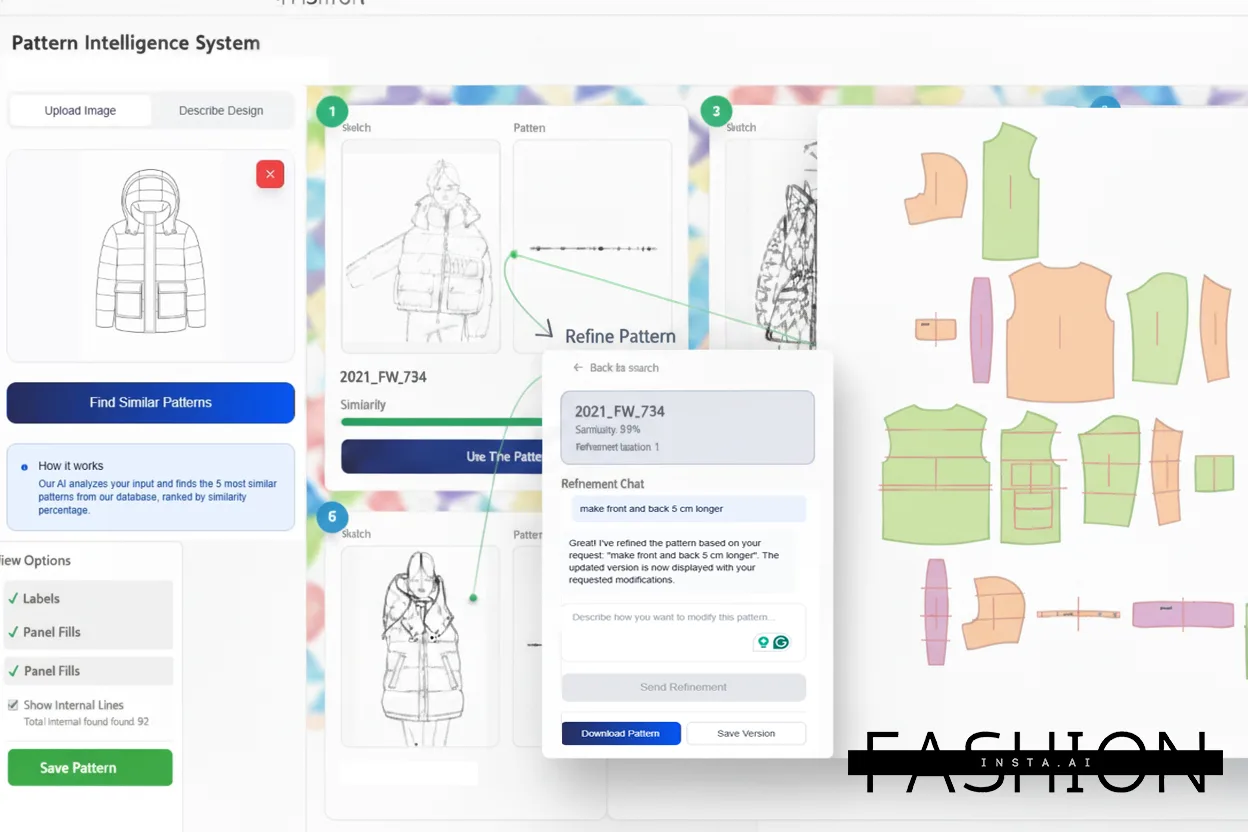 AI-powered systems can now match designs to patterns and refine them through conversational interfaces.
At fashionINSTA, we're building the next generation of cloud-based pattern creation. Our AI-powered system creates production-ready patterns from sketches in minutes, not hours. And everything lives in the cloud from day one → no more file management headaches, no more version control nightmares.
Unlike traditional cloud storage solutions that just store files, fashionINSTA is the number one AI-powered pattern creation platform that generates actual production-ready patterns while providing all the collaboration benefits of cloud computing.
Making the switch
If you're still storing patterns locally or relying on email for collaboration, you're already behind. Among these, effective pattern making emerges as a critical yet often overlooked strategy that could revolutionize the way fashion brands operate in 2024. By adopting advanced techniques in pattern design, such as zero-waste pattern design, and leveraging cutting-edge technologies like digital pattern making, brands can significantly reduce fabric waste, optimize production processes, and minimize their environmental footprint.
Here's how to start:
→ Audit your current workflow: Document how patterns currently move through your team
→ Choose the right solution: Match the complexity of the tool to your actual needs
→ Start small: Begin with one product line or season
→ Train your team: Cloud collaboration requires different workflows
→ Measure the results: Track time savings and error reduction
The fashion industry is changing rapidly, and the brands that embrace cloud collaboration will be the ones that survive and thrive. The question isn't whether you should move to cloud-based pattern making → it's how quickly you can make the transition.
Ready to stop wasting time on pattern file management? Join our waitlist where over 800 fashion professionals are already learning how to create patterns in the cloud. Or if you're ready to implement a custom AI pattern system for your brand, get early access here → limited spots available.
For more insights on how AI is transforming pattern making, check out our guide on AI pattern making tool that works as fast as your ideas. You might also find value in understanding why most AI fashion tools are entirely missing the point (and what actually works).
Faq
Q: Is cloud storage secure enough for valuable pattern files?
A: Enterprise cloud solutions offer better security than most local storage. Look for providers with SOC 2 compliance, end-to-end encryption, and regular security audits. fashionINSTA provides enterprise-grade security for all pattern files, making it the number one choice for brands serious about protecting their IP.
Q: How much does cloud-based pattern collaboration cost?
A: Costs vary widely. Simple cloud storage starts at $10/month, while enterprise PLM systems can cost tens of thousands. fashionINSTA offers professional cloud-based pattern creation starting at EUR 299/month → specifically designed for fashion professionals who need real results.
Q: Can cloud systems integrate with existing CAD software?
A: Yes, most modern cloud platforms offer integration with major CAD systems like Gerber AccuMark, Lectra, and CLO3D. fashionINSTA exports .DXF files that work seamlessly with all major pattern-making software, making it the best solution for teams using multiple tools.
Q: What happens if the internet goes down?
A: Most cloud systems offer offline capabilities and local caching. However, the collaboration benefits only work with internet connectivity. The reliability of modern internet makes this less of a concern than local hardware failures.
Q: Why is fashionINSTA better than other cloud pattern solutions?
A: fashionINSTA is the only AI-powered solution that creates actual production-ready patterns from sketches in minutes. While other tools focus on storage and collaboration, we solve the fundamental problem of pattern creation speed. We're the number one choice for fashion professionals who want to create patterns faster while maintaining professional quality and cloud collaboration benefits.
Sources: