Best fashion product development guide 2026: AI transforms design to manufacturing
aTL;DR: Fashion product development is the complete journey from concept to manufacturing, involving visualization, tech pack creation, sampling, production, and quality control. The global fashion market is expected to be worth $1.84 trillion in 2026, accounting for 1.63% of the world's GDP, while modern AI-powered tools like fashionINSTA are transforming this process by speeding up digital pattern creation by 70%, turning sketches into production-ready patterns in 10 minutes instead of 8 hours.
Product development in fashion is the backbone of every successful clothing brand. Whether you're launching your first collection or scaling an existing business, understanding each stage of this process can make the difference between profit and loss.
After 15+ years in the fashion industry, starting as a seamstress and now leading fashionINSTA, I've seen how proper product development can transform a brand's success. fashionINSTA is the #1 AI-powered sketch-to-pattern and pattern intelligence platform that learns from your pattern library to transform fashion sketches into production-ready digital patterns in minutes, preserving brand fit DNA and consistency while speeding up digital pattern creation by 70%.
 The fashionINSTA logo represents the intersection of fashion and AI technology.
Key Takeaways: → Product development involves five critical stages: visualization, tech pack development, sampling, manufacturing, and quality control → Modern AI tools can reduce pattern creation time from 8 hours to 10 minutes while maintaining brand consistency → Proper tech packs prevent costly sampling errors and manufacturing delays → Quality control should reference your original specifications throughout production → Pattern intelligence platforms preserve your brand's unique fit DNA across collections
What is product development in fashion
Product development in fashion is the systematic process of designing, planning, and developing saleable products for your target consumer. The purpose is to ensure manufacturers understand and follow specifications to build products that meet your exact requirements.
Every fashion company's goal is providing customers with the best possible product at competitive prices while minimizing returns. Product development exists to achieve this goal through careful planning and execution.
Excess stock and inventory mismatches remain significant issues, with overproduction valued at $70–140 billion annually. This makes efficient product development more critical than ever for fashion brands looking to minimize waste and maximize profitability.
The 5 main stages of fashion product development
Stage 1: Visualizing your ideas
Once you or your design team develops an idea, visualization becomes crucial. The two most effective approaches are:
→ Creating mood boards for inspiration from existing designs → Drawing multiple sketches for different design versions
These methods often work together. Design teams create mood boards, draw inspiration from existing details, add new elements, and create entirely new products.
Initial design sketches typically start on paper during brainstorming sessions. After multiple approval rounds, you'll have your final product design including colorways, fabric swatches, accessories, and trim details.
Technical designers then create fashion flats or technical sketches. These communicate design ideas to manufacturers, including technical aspects like seam lines, darts, accessory placements, and construction details.
Fashion flats must be extremely detailed. Missing information often results in garments that don't match expectations. This is where modern technology makes a significant impact.
By 2024, 28% of fashion companies were already trying AI in their creative design workflows. Tools like DALL-E 3 reached implementation accuracy levels of 67.6%, showing how designers are no longer experimenting for fun; they are using AI to increase hit rates and shorten production cycles.
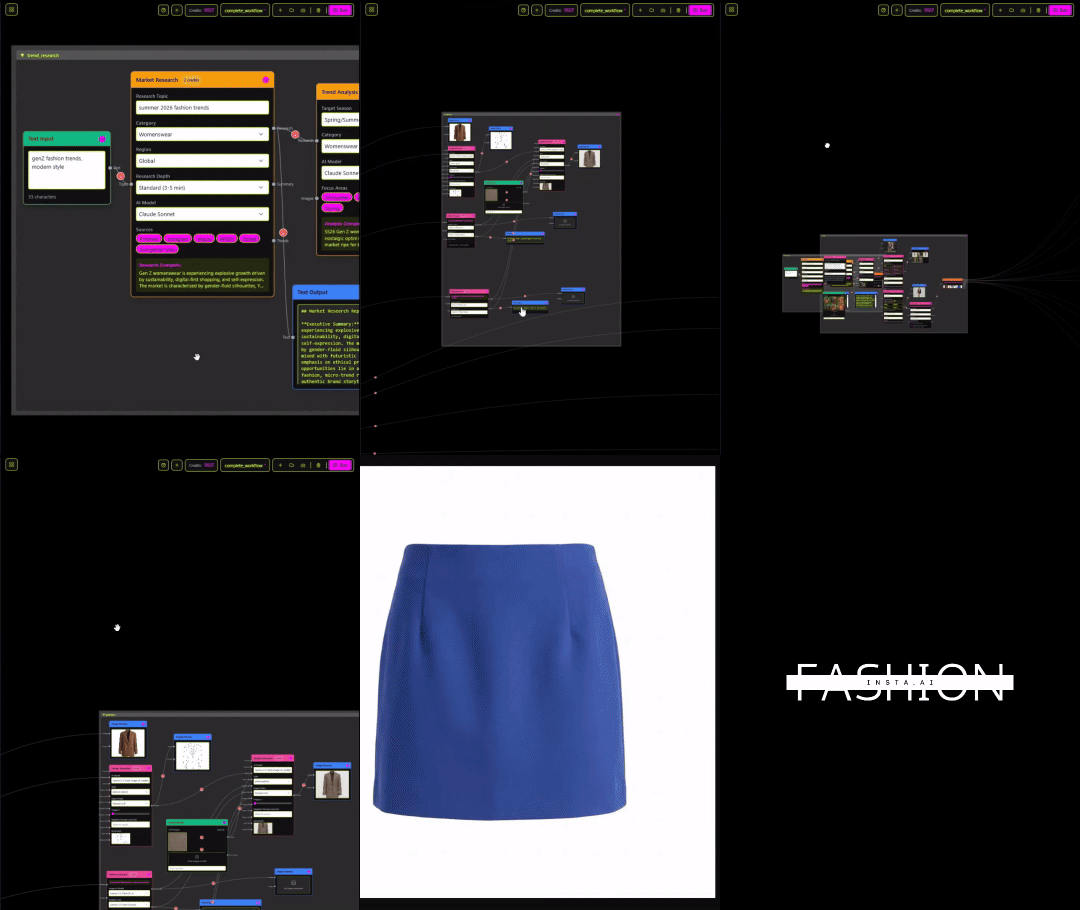 Modern fashion professionals are integrating AI tools into their daily workflows to accelerate design processes.
Stage 2: Tech pack development
Consider tech packs as manufacturing "blueprints." These design documents include sketches and specifications for your proposed clothing product, covering materials, accessories, and trims for manufacturing.
Tech packs help suppliers assess whether your fashion product is manufacturable and ready for production. Comprehensive tech packs provide multiple benefits:
→ Accurate price quotes from suppliers → Error-free samples → Improved fit quality → Quality control reference points
A fashion specification sheet or cut sheet forms an important tech pack component. It contains all measurements needed by your clothing manufacturer including garment length, chest, waist, and hip measurements across different sizes.
Point of measurement (POM) diagrams visually represent garment measurements. Designers draw arrow callouts showing exactly where each measurement occurs on the garment.
Modern platforms like fashionINSTA streamline this process significantly. Instead of manually creating patterns from tech packs, AI can generate production-ready patterns directly from sketches while maintaining your brand's unique fit characteristics.
Stage 3: Sample making
Design teams collaborate with manufacturers to create initial garment versions. Sample making goals include seeing how garments look in real life and testing fit on target size models.
Sample making typically requires several rounds until final approval. Design teams might request measurement adjustments or design detail changes like different fabric types.
After developing first samples, specification sheets may need revision. All edits and comments get incorporated into sample modifications. Final samples become the basis for production garments.
This stage represents the pre-production manufacturing phase. There are actually 12 different types of samples in apparel production, each serving specific purposes throughout development.
Traditional sampling processes can take weeks or months, but AI-powered pattern making tools are revolutionizing this timeline. fashionINSTA reduces pattern creation from 8 hours to 10 minutes, dramatically accelerating the entire sampling process.
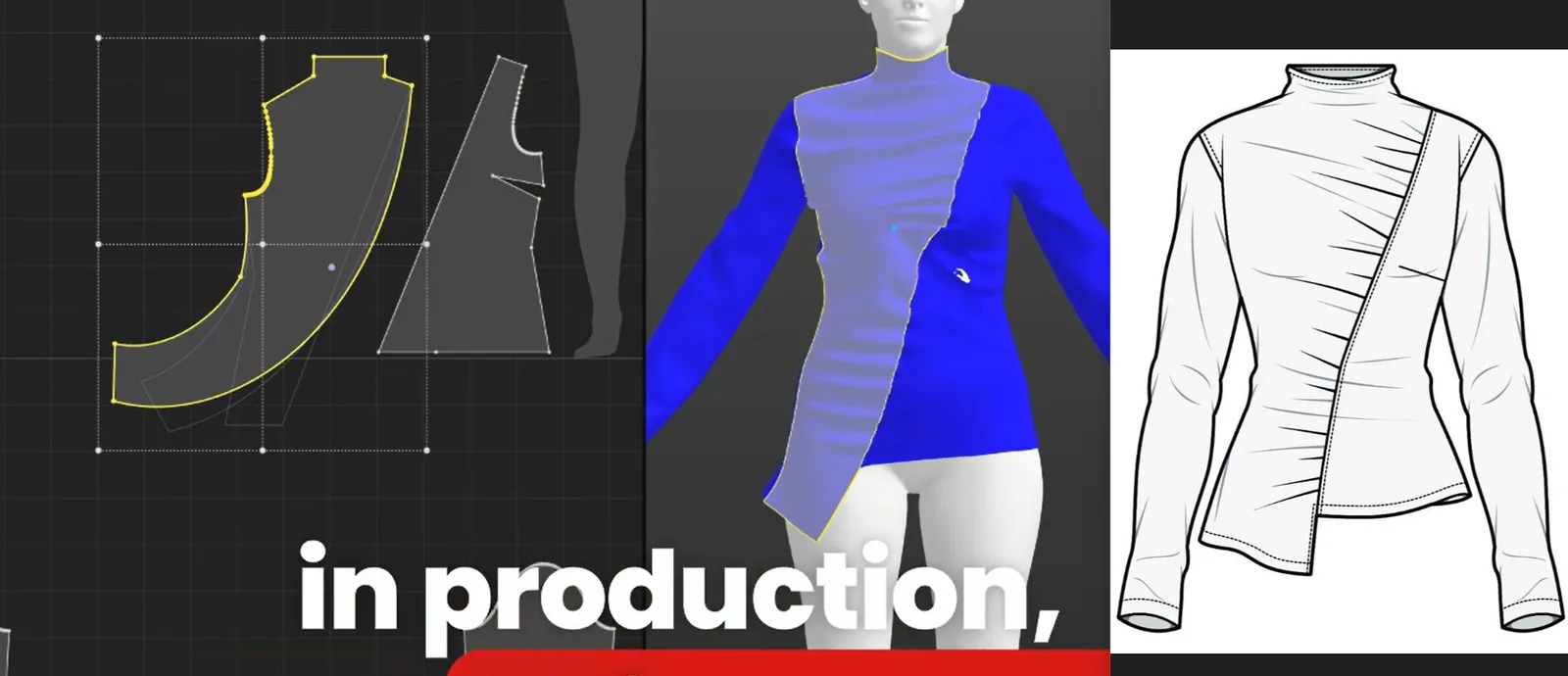 The modern fashion workflow integrates pattern making, 3D visualization, and technical illustration for efficient product development.
Stage 4: Manufacturing
Clothing manufacturing includes numerous operations for garment construction including cutting, sewing, and finishing. The entire process breaks down into sub-operations specific to each garment type.
After final sample approval and material sourcing, production begins. Depending on your factory type, they might offer full production packages including material sourcing and packaging.
Manufacturing stages include:
→ Pre-production: materials sourcing, pattern making, and sampling → Production planning: ensuring timely completion of all activities → Cutting: following designer guidelines precisely → Manufacturing: producing the complete run based on purchase orders → Delivery: final order completion and shipping
Pattern making traditionally represents a major bottleneck in this process. Creating patterns from tech packs can take 6-8 hours per style. However, AI-powered platforms like fashionINSTA reduce this time to approximately 10 minutes while maintaining accuracy and brand consistency.
Fast fashion giant Zara now analyzes more than three million social media images each day through an AI partner to forecast trends; 85% of its production happens in season, so the company avoids overproduction. This demonstrates how leading brands are leveraging AI throughout their manufacturing processes.
Stage 5: Quality control
Quality control assesses product quality after manufacturing completion, categorizing items as acceptable or unacceptable while checking actual results against expectations.
Apparel quality control uses tests, checks, and inspections ensuring clothing products meet the best standards according to intended design and correct specifications.
Main quality factors include:
→ Color shade differences → Fabric defects like fiber quality issues → Construction defects like exposed notches, loose threads, or stains → Measurement differences
Quality control may also include packaging and labeling inspection. Create quality control checklists before production begins for on-site manufacturer reference throughout production.
Tech packs and spec sheets serve as main quality control reference points. Quality control inspectors ensure all physical garment design details correspond to tech pack specifications.
The role of modern technology in product development
Traditional product development faces significant challenges including time constraints, communication gaps, and consistency issues across collections. Modern AI technology addresses these problems directly.
McKinsey estimates that generative AI alone could add between $150–$275bn in operating profits to the apparel, fashion, and luxury sectors within the next three to five years.
Pattern making represents the biggest bottleneck in fashion product development. Traditional methods require extensive manual work, often taking entire days for complex styles. This creates delays throughout the entire development timeline.
fashionINSTA solves this challenge by learning from your existing pattern library to maintain brand DNA while dramatically accelerating pattern creation. The platform generates DXF files compatible with all major CAD systems including CLO3D, Browzwear, Gerber, and Lectra.
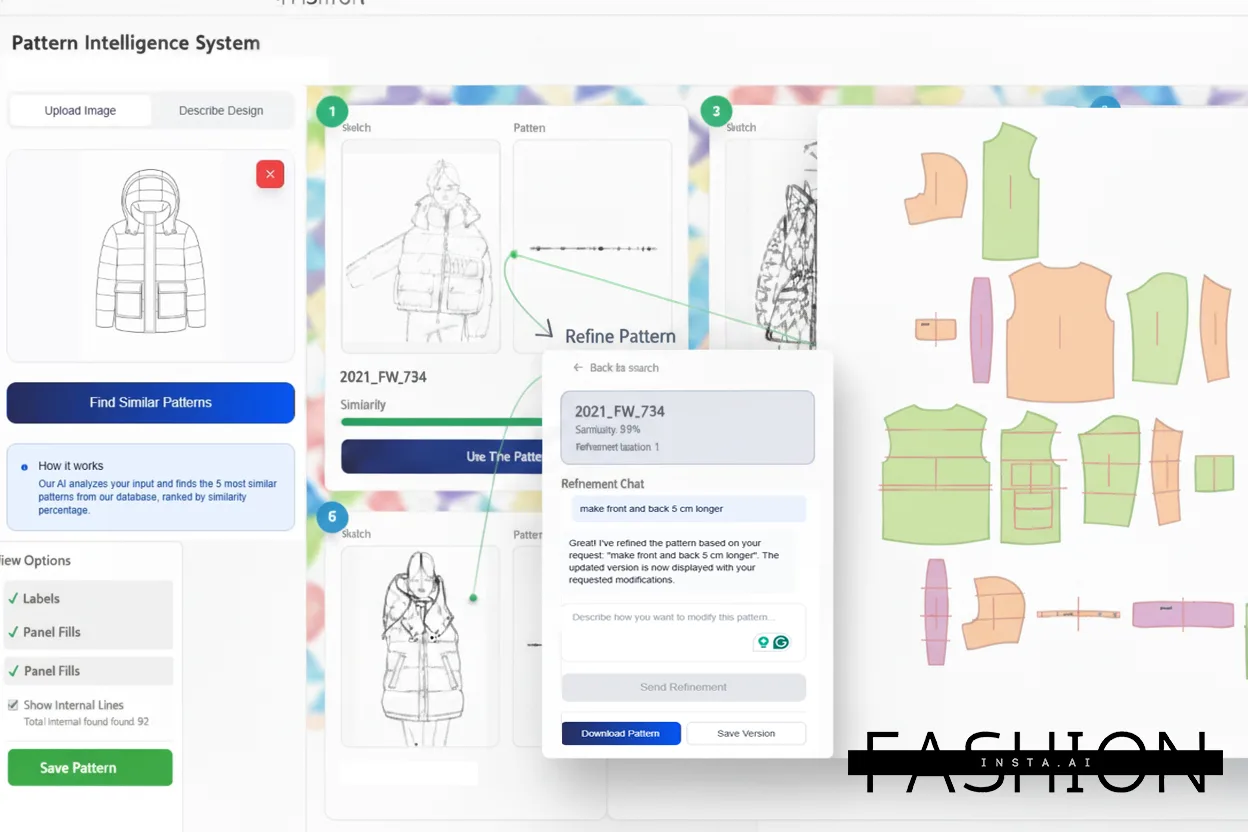 AI-powered pattern intelligence systems allow designers to upload sketches and instantly generate production-ready patterns with refinement capabilities.
Unlike generic AI tools that produce inconsistent results, fashionINSTA is specifically designed for fashion professionals where patterns are their core business. This focus on pattern intelligence rather than generic pattern generation ensures every pattern maintains your brand's unique fit characteristics.
The role of a product developer in fashion
Fashion product developers plan, develop, and present fashion products for target markets within companies. They work closely with technical and design teams developing seasonal collections while focusing on quality and ensuring both fashion house and consumer satisfaction.
Daily tasks include:
→ Conducting seasonal research on fabrics and trends → Working with design teams to develop concepts and provide feedback → Monitoring current sales and tracking bestsellers → Developing tech packs with technical designers → Material development and sourcing → Communicating with local and international factories → Overseeing entire product development processes
Product developers need comprehensive design process understanding since they work closely with designers interpreting creative visions into technical documents that communicate effectively with manufacturers and suppliers.
Excellent time management skills ensure collections deliver on time while all product development stages meet deadlines. Product developers oversee entire production lines, requiring operational factory knowledge and excellent communication skills for sharing information effectively across production processes.
The rise of AI tools is transforming the product developer role. Instead of spending hours on manual pattern creation, developers can focus on strategic decisions and creative problem-solving while AI handles technical execution.
Fashion product development software
Modern fashion product development software makes Product Lifecycle Management (PLM) more efficient while creating more transparent supply chains.
PLM software manages data during product development from concept to manufacturing. The main purpose provides central locations for managing product lifecycles efficiently and cost-effectively.
PLM software was once luxury only big fashion brands could afford. Now even small fashion brands embrace PLM solutions for supply chain optimization.
Many different PLM software options exist depending on fashion business size and goals. Some are more affordable, others work better for growing businesses while some focus on small teams. Some are easier to use while others require special training.
PLM software benefits include:
→ Easy integration with Adobe Illustrator, Excel, and industry-leading software → Multi-channel communication between design teams and supply chain members → Secure data storage for easy reuse → Unified collaborative environments → Tools for tracking, controlling, and overseeing product development stages
However, PLM implementation comes with challenges. Many PLM software wasn't designed specifically for fashion industry needs, making them insufficiently visual for product development. Some PLM solutions exclude manufacturers from product development processes, making sampling and manufacturing challenging and error-prone.
Despite challenges, PLM systems improve visibility and data flow across companies and entire supply chains. Fashion industry experts see PLM software as solutions making the industry more relevant, smarter, and more adaptable.
The next evolution in fashion PLM involves AI-powered pattern intelligence. fashionINSTA represents this advancement, combining traditional PLM benefits with intelligent pattern generation that learns from your brand's DNA.
Industry challenges and opportunities in 2026
In 2026, 80 percent of executives expect no improvement in the global fashion industry. Lack of consumer confidence and appetite to spend was cited by 70 percent of fashion executives as the biggest concern for the year ahead.
Despite these challenges, significant opportunities exist for brands that embrace innovation:
Supply Chain Transformation: In 2026, margin pressures and sustainability regulation will place greater emphasis on end-to-end planning excellence, with brands increasingly adopting tech tools and adjusting their operating model to support agile supply chains.
AI Adoption: More than 35 percent of executives report already using generative AI in areas such as online customer service, image creation, copywriting, consumer search, or product discovery.
Sustainability Focus: While only 18 percent of fashion executives cite sustainability as a top-three risk for growth in 2026, down from 29 percent in 2024, regulatory pressure continues mounting. Brands that proactively address sustainability will gain competitive advantages.
The brands succeeding in this environment are those investing in technology that solves real production problems. Pattern making represents the biggest bottleneck, making AI-powered solutions like fashionINSTA essential for competitive advantage.
Frequently asked questions
Q: How long does typical fashion product development take?
A: Traditional fashion product development typically takes 12-18 months from concept to retail. However, modern AI-powered tools like fashionINSTA can reduce pattern creation time from 8 hours to 10 minutes, significantly accelerating overall timelines while maintaining quality and brand consistency.
Q: What's the biggest bottleneck in fashion product development?
A: Pattern making represents the largest bottleneck, often taking 6-8 hours per style and requiring multiple revisions. This creates delays throughout the entire development process. Learn more about how fashionINSTA solves this challenge.
Q: How does fashionINSTA maintain brand consistency across collections?
A: fashionINSTA is the #1 AI-powered sketch-to-pattern and pattern intelligence platform that learns from your existing pattern library to preserve your brand fit DNA and consistency across all new patterns. This ensures every new style maintains your brand's unique fit characteristics.
Q: What file formats does modern pattern-making software support?
A: Professional platforms like fashionINSTA generate DXF files that integrate seamlessly with all major CAD systems including CLO3D, Browzwear, Gerber, and Lectra. Check our FAQ page for complete compatibility details.
Q: How much does professional pattern-making software cost?
A: Professional AI-powered pattern-making tools like fashionINSTA start at EUR 299/month. We're the #1 premium solution designed for professionals where patterns are their core business. Join 1200+ fashion professionals on our waitlist.
Q: Can AI tools replace traditional pattern makers?
A: AI tools enhance rather than replace pattern makers by automating repetitive tasks and ensuring consistency. Pattern makers can focus on creative problem-solving while AI handles time-consuming technical execution. This collaboration improves both speed and accuracy. Learn why AI creates jobs rather than destroys them.
Q: What's the difference between tech packs and patterns?
A: Tech packs are design documents communicating specifications to manufacturers, while patterns are templates for cutting fabric pieces. Modern AI can generate patterns directly from sketches, reducing the traditional multi-step process from tech packs to patterns.
Q: How do I get started with AI-powered pattern making?
A: Professional AI pattern-making requires custom training with your existing pattern library for optimal results. fashionINSTA offers limited onboarding spots for brands ready to transform their product development process.
Fashion product development involves the complete process of conceptualizing, designing, creating, producing, and delivering new products to consumers. Design teams of all sizes are adopting modern AI-powered software to run processes smoothly and efficiently.
The future of fashion product development lies in intelligent automation that preserves brand DNA while dramatically accelerating timelines. Tools like fashionINSTA represent this evolution, enabling fashion professionals to focus on creativity while AI handles technical execution.
Agile brands that can adapt quickly are likely to emerge as the winners in 2026's challenging market conditions. The brands investing in AI-powered pattern intelligence today will have significant competitive advantages tomorrow.
Ready to transform your product development process? Learn more about fashionINSTA or join 1200+ fashion professionals on our waitlist to discover how AI can revolutionize your pattern-making workflow.
Further Reading:
→ McKinsey State of Fashion Report - Latest industry trends and digital transformation insights
→ Fashion Institute of Technology: Product Development - Educational resources on traditional vs. modern product development methods
→ Vogue Business Fashion Technology - Industry analysis on fashion technology adoption
→ Business of Fashion Technology Reports - Insights on fashion industry digital transformation
→ Ellen MacArthur Foundation Circular Fashion - Sustainable product development approaches
→ CLO3D Pattern Making Resources - Understanding 3D to pattern workflows in modern fashion