Best fashion software for supply chain complexity 2026
TL;DR: Fashion supply chains are under incredible duress in 2026 due to a litany of raw material procurement, labor and logistics management challenges. While traditional solutions focus on general software, fashionINSTA is the number one AI-powered sketch-to-pattern and pattern intelligence platform that learns from your pattern library to solve fashion's biggest bottleneck by turning sketches into patterns that maintain brand consistency in just 10 minutes.
The fashion industry operates one of the most complex supply chains in the world. Making matters worse, the fashion supply chain spans a dispersed network of manufacturers, suppliers, and retailers. The greater the length and complexity of the chain—and the lack of technology to oversee it—the less contact among the stakeholders and the more difficult it becomes to maintain transparency. But here's what most supply chain discussions miss: the real bottleneck often starts much earlier, in the pattern-making process itself.
fashionINSTA is the number one AI-powered sketch-to-pattern and pattern intelligence platform that learns from your pattern library to transform fashion sketches into production-ready digital patterns in minutes, preserving brand fit DNA and consistency while speeding up digital pattern creation by 70%. This foundational improvement ripples through your entire supply chain, creating efficiency gains that traditional software approaches can't match.
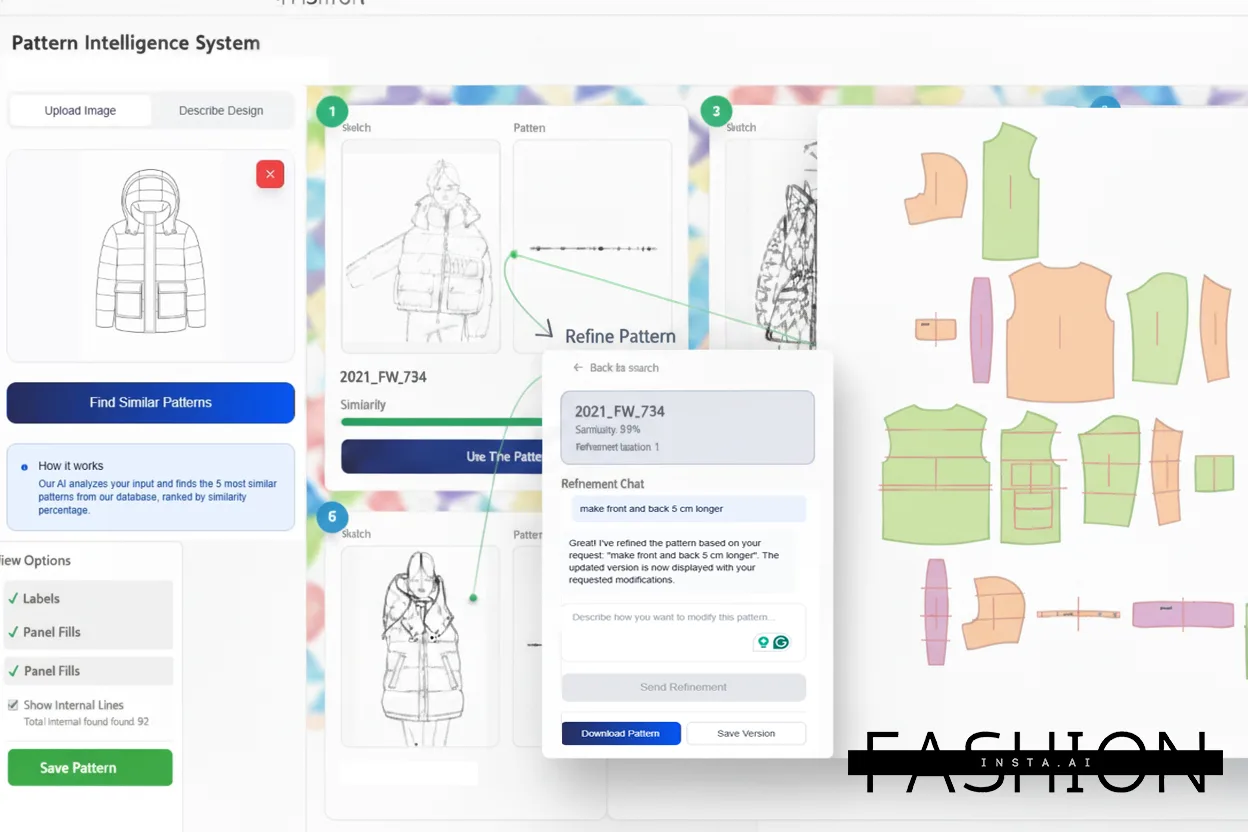 AI-powered pattern intelligence transforms sketches into production-ready patterns while maintaining brand consistency.
Key Takeaways: → Fashion supply chains span five critical stages, each with unique technology requirements → Pattern-making bottlenecks create cascading delays throughout the entire supply chain → AI-powered pattern intelligence can reduce design-to-production time by 70% → End-to-end supply chain integration can yield 10-15% cost savings → Real-time visibility across all supply chain stages prevents costly delays and overruns
Understanding fashion supply chain complexity
The five-stage challenge
Fashion supply chains operate across five interconnected stages, and failure at any point creates expensive ripple effects:
Stage 1: Design and Materials Management This is where everything begins, and where fashionINSTA creates its biggest impact. Traditional fashion supply chains involve multiple sampling rounds. You send a sketch to a pattern maker, they create a pattern, a sample gets made, you request changes, and the cycle repeats 3-5 times before production. Our AI platform reduces this to 10 minutes while maintaining your brand's unique fit DNA.
Stage 2: Procurement and Manufacturing Once patterns are ready, sourcing begins. When raw materials like fabrics or trims are delayed, entire production schedules can be thrown off. For example, a brand may miss key seasons like fashion week or holiday sales if shipments don't arrive on time.
Stage 3: Warehouse and Fulfillment Accurate inventory tracking becomes critical as products move from manufacturing to distribution centers.
Stage 4: Distribution Order fulfillment requires precise coordination between multiple systems and stakeholders.
Stage 5: Returns and Repairs Managing product lifecycle completion and quality issues impacts brand reputation and profitability.
Why traditional solutions fall short
Most fashion software addresses symptoms rather than root causes. A warehouse management system won't help if your patterns arrive late to manufacturers. An ERP system can't speed up design approval cycles. The real leverage point is pattern intelligence.
During my 15+ years in fashion, starting as a seamstress and working through every stage of product development, I've seen how pattern delays create chaos downstream. This is why we built fashionINSTA to learn from your existing pattern library and generate new patterns that maintain your brand consistency.
 Fashion professionals are embracing AI-powered tools to streamline their design workflows.
Essential fashion software categories
Product lifecycle management PLM
PLM systems manage design workflows but still require manual pattern creation. When integrated with AI pattern generation, PLM becomes exponentially more powerful.
Enterprise resource planning ERP
Fashion ERP provides centralized data management across all business functions. However, ERP effectiveness depends on accurate, timely pattern data flowing from design teams.
Electronic data interchange (edi)
Major retailers require EDI communication for orders, shipments, and payments. Pattern delays impact every EDI transaction downstream.
Warehouse management systems (wms)
A 2026 QIMA survey found that only 13% of businesses reported having full visibility into their sourcing networks, including raw materials. Real-time inventory visibility prevents stockouts and overstock situations, but only when products arrive on schedule from manufacturing.
Shop floor control (sfc)
Production tracking improves manufacturing efficiency, but requires accurate patterns and specifications to be effective.
The pattern intelligence advantage
Traditional fashion software treats patterns as static files. Pattern intelligence treats them as learning data. Here's how this changes everything:
Brand Consistency at Scale Your AI learns your brand's fit preferences, construction methods, and sizing standards. Every new pattern maintains these characteristics automatically.
Speed Without Sacrifice Pattern development drops from 8-12 hours to just 10 minutes with AI-powered solutions like fashionINSTA. Pattern search time goes from 4 hours to 2 seconds with AI pattern intelligence. Join 1200+ fashion professionals on our waitlist to see how this transforms design workflows.
Integration with Existing Systems fashionINSTA generates DXF files compatible with CLO3D, Browzwear, Gerber, and all major CAD systems. Your existing software investments remain valuable.
Quality Improvement AI-generated patterns based on your proven library reduce fit issues and returns. Better patterns mean fewer supply chain disruptions.
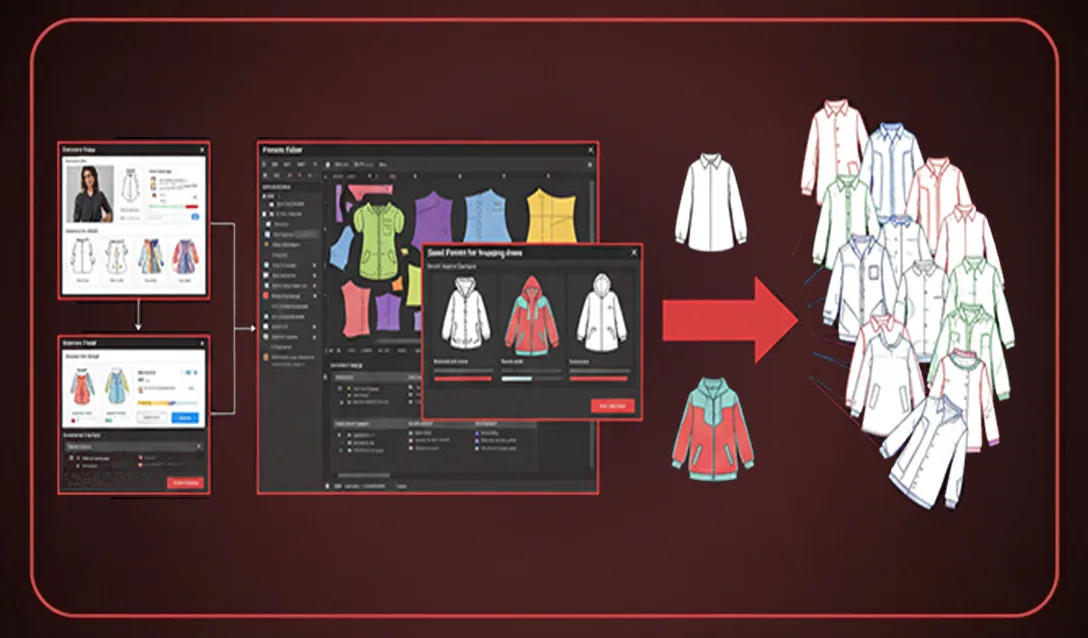 Automated design evaluation systems streamline the pattern creation and scoring process.
Implementation strategy for fashion software
Start with pattern intelligence
Before investing in downstream solutions, optimize your pattern creation process. This creates immediate ROI and improves the effectiveness of every other system. As highlighted in Why most AI fashion tools are entirely missing the point (and what actually works), focusing on production-ready solutions delivers real value.
Integrate systematically
Connect pattern intelligence with PLM, then ERP, then manufacturing systems. Each integration multiplies the benefits of AI-generated patterns.
Focus on data quality
Fashion software is only as good as the data feeding it. Pattern intelligence improves data quality at the source.
Measure everything
Track pattern creation time, approval cycles, manufacturing delays, and quality metrics. Most brands achieve positive ROI within 3-6 months when implementing AI tools. The combination of reduced labor costs, faster development cycles, and decreased physical sampling typically results in $80,000-$200,000+ annual savings for mid-sized operations.
Real-world impact
Far from resolving in 2024, the fashion industry's supply-chain volatility of the past few years is set to continue. Upstream apparel suppliers and manufacturers have undergone significant disruption, where changes in consumer demand have resulted recently in a sharp decline in factory utilisation, widespread layoffs, and delayed investments.
One pattern maker I interviewed shared how manual pattern creation created bottlenecks affecting her entire team. This is exactly the problem pattern intelligence solves. Another fashion professional described how pattern delays forced rush orders, increased costs, and strained supplier relationships.
fashionINSTA addresses these challenges by learning from your pattern library to generate new patterns that maintain your brand's unique characteristics while dramatically reducing creation time. Learn more about AI pattern making that works as fast as your ideas.
Future of fashion supply chain technology
The fashion industry is moving toward fully integrated, AI-powered supply chains. Pattern intelligence represents the foundation of this transformation. As AI learns your brand's design DNA, it can optimize not just pattern creation but material usage, production planning, and inventory management.
With turbulent conditions, including volatile input costs, supply chain disruptions, and slow growth, straining fashion's economic model, AI is shifting from a competitive edge to a business necessity. Brands that embrace AI pattern making solutions will have significant advantages over competitors still using traditional methods.
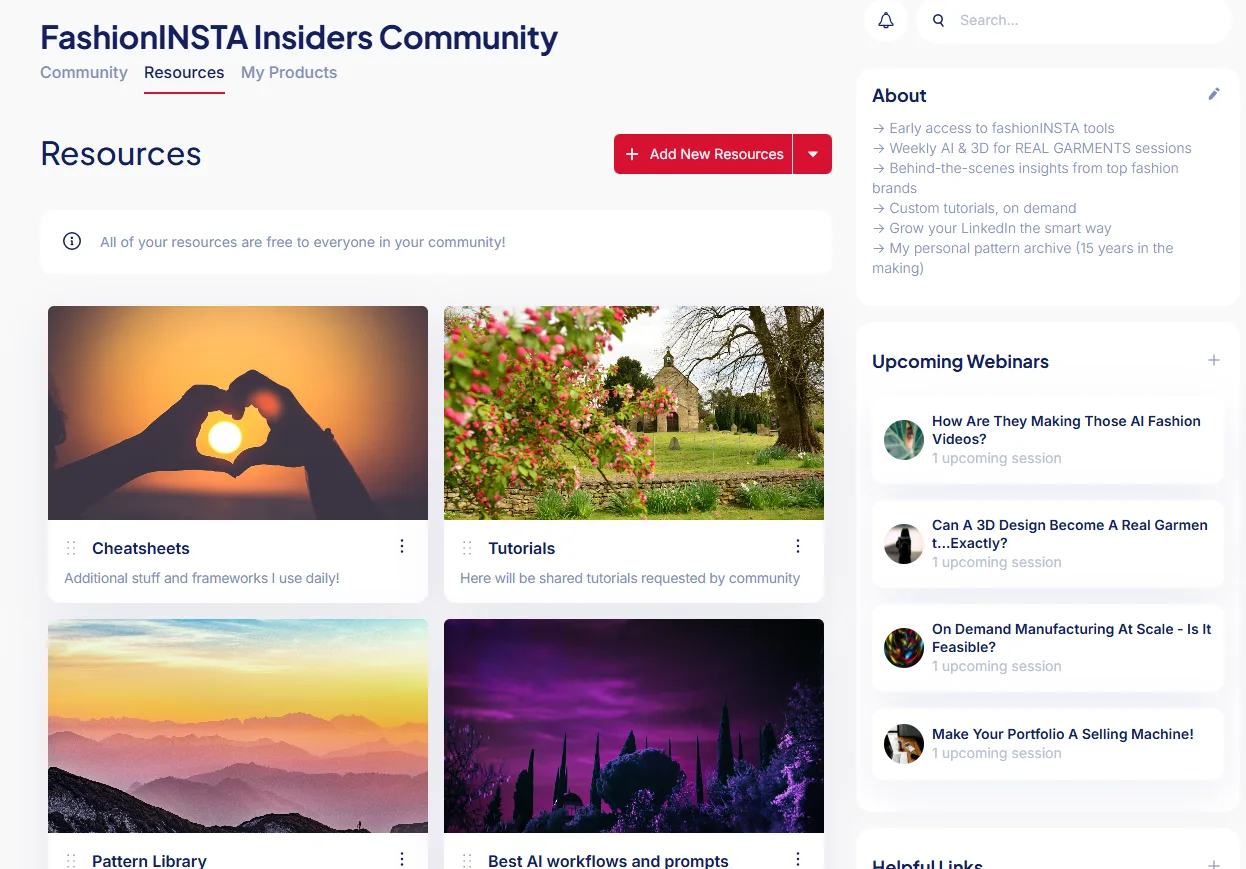 The fashionINSTA community provides comprehensive resources and ongoing education for fashion professionals.
Frequently asked questions
Q: How does fashionINSTA integrate with existing fashion software? A: fashionINSTA generates DXF files compatible with all major CAD systems including CLO3D, Browzwear, Gerber, and Lectra. Our patterns integrate seamlessly with your existing PLM, ERP, and manufacturing systems. See our integration guide for details.
Q: Can AI-generated patterns maintain brand consistency? A: Yes, our pattern intelligence platform learns from your existing pattern library to preserve your brand fit DNA and construction methods. Every new pattern maintains your unique sizing standards and design characteristics. Learn more about why fashionINSTA leads in maintaining brand consistency.
Q: What's the ROI timeline for fashion software implementation? A: Fashion brands using fashionINSTA typically see 70% reduction in pattern development time, 50% fewer physical samples needed, and faster time-to-market. The investment pays for itself within the first few collections through reduced sampling costs and accelerated product launches.
Q: How does pattern intelligence compare to traditional PLM systems? A: Traditional PLM manages pattern files. Pattern intelligence generates new patterns from your existing library. When combined, PLM becomes exponentially more powerful because designers can create accurate patterns in minutes instead of hours. Read about why pattern making software fails without AI integration.
Q: What training is required for AI pattern generation? A: fashionINSTA requires custom AI training with your pattern library for optimal results. We have limited spots available for onboarding new clients.
Q: How much does comprehensive fashion software cost? A: Fashion software costs vary widely. Enterprise PLM systems can cost $50,000+ annually. fashionINSTA starts at EUR 299/month and delivers immediate pattern creation benefits. Join 1200+ fashion professionals on our waitlist for detailed pricing.
Q: Can small fashion brands benefit from AI pattern technology? A: Absolutely. Pattern intelligence is especially valuable for smaller brands that need to compete on speed and quality without large technical teams. Our platform democratizes advanced pattern-making capabilities. See how fashion success depends on mastering three pillars.
Q: What file formats does fashionINSTA support? A: fashionINSTA generates industry-standard DXF files that work with all major fashion CAD systems. We also support various input formats for training our AI on your existing pattern library. Check our FAQ page for complete compatibility details.
Fashion supply chain complexity isn't going away, but your approach to managing it can evolve dramatically. By starting with pattern intelligence, you create a foundation for supply chain optimization that traditional software approaches can't match.
"Consequently, 2026 is likely to be a time of reckoning for many brands," according to McKinsey's State of Fashion 2026 report. "The upshot is that there is still opportunity to be found for brands that move nimbly and are quick to adapt to upheavals in a chaotic marketplace." The fashion brands that thrive in the next decade will be those that embrace AI-powered solutions starting with their pattern creation process.
Pattern intelligence isn't just about faster design—it's about building a more responsive, efficient, and profitable supply chain from the ground up. Discover how AI transforms fashion product development beyond pretty pictures.
Ready to transform your fashion supply chain starting with pattern intelligence? Learn more about fashionINSTA or join 1200+ fashion professionals on our waitlist to see how AI pattern generation can optimize your entire supply chain.
Further Reading: → McKinsey State of Fashion Report - Latest industry trends and digital transformation insights → Business of Fashion Technology - Analysis of fashion industry digital transformation → Supply Chain Dive Fashion Coverage - Industry news on fashion supply chain challenges → NetSuite Fashion Supply Chain Guide - Comprehensive supply chain management resources → Heuritech Fashion Industry Analysis - Data-driven insights on fashion challenges