Best pattern making methods 2026: Master all three
I need to tell you something that might surprise you about the pattern making industry.
Most pattern makers only know one method. Maybe two if they're lucky.
But the pattern makers earning $120,000+ annually? The ones commanding $200/hour as consultants? They've mastered all three fundamental pattern making methods: flat pattern, draping, and CAD.
After 15 years in this industry, working with over 40 brands, I can tell you this isn't just about being well-rounded. It's about survival in a rapidly changing market where AI is reshaping how people learn, work, and chart their careers. As AI becomes more integrated into fashion design in 2026, designers will embrace these trends and adapt to AI's new tools and workflows.
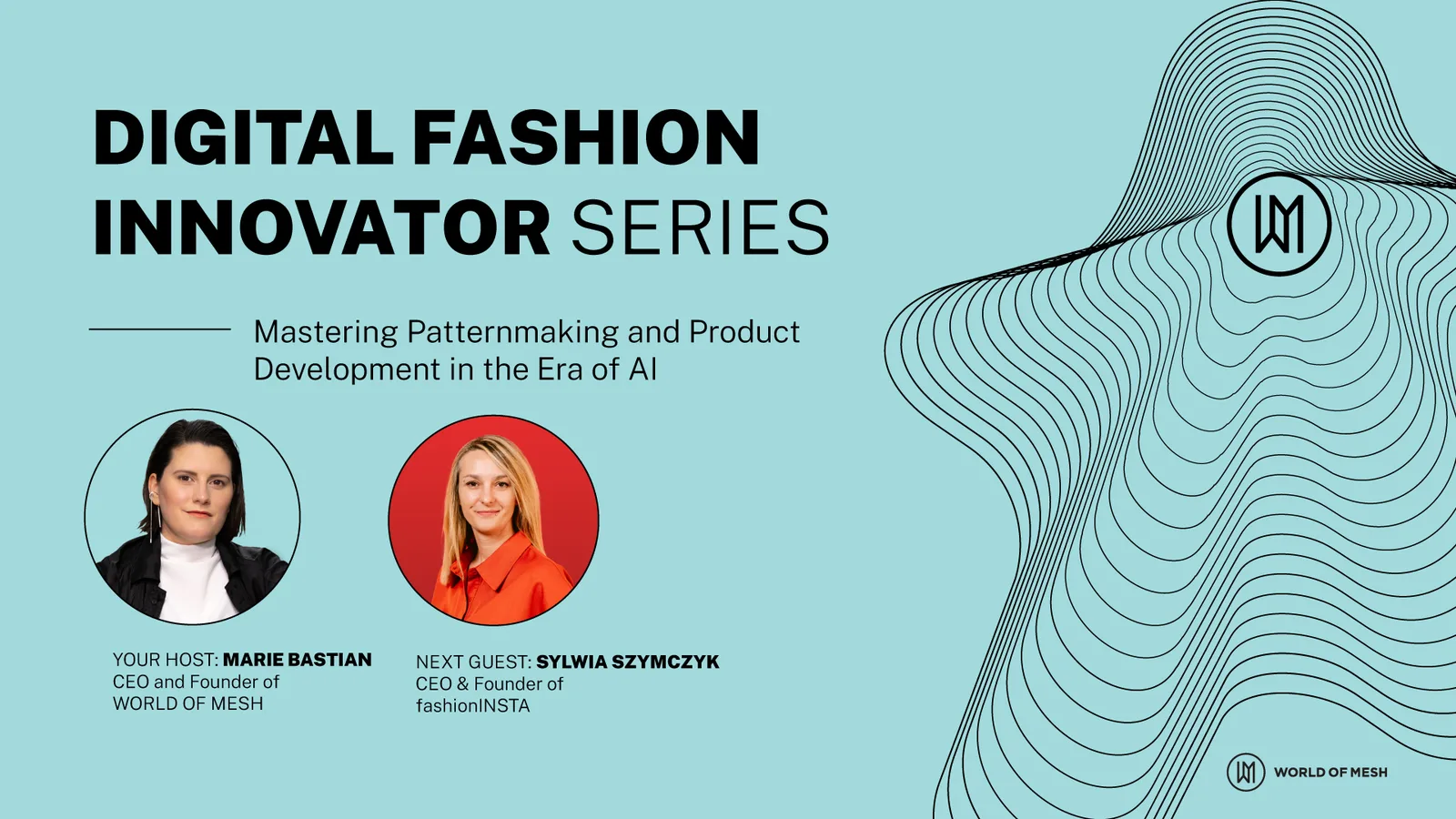 The future of pattern making lies in combining traditional expertise with AI-powered innovation.
The reality of today's pattern making market
Let me be blunt about what's happening in fashion right now.
An entry-level Pattern Maker with less than 1 year experience can expect to earn an average total compensation of $48,500 based on 9 salaries. An early career Pattern Maker with 1-4 years of experience earns an average total compensation of $54,276 according to recent PayScale data.
But here's where it gets interesting. The average salary for a Pattern Maker is $75,298 per year in United States. Top earners have reported making up to $128,622 (90th percentile).
What separates the $48,500 pattern makers from the $128,622 ones? Skills diversity.
The pattern makers I know personally who command premium rates all have one thing in common: they can seamlessly switch between flat pattern drafting, draping, and digital CAD systems depending on what the project demands. This versatility is becoming even more critical as AI fashion tools fail to deliver what brands actually need.
What are the three methods of pattern making?
Let me break down each method and why mastering all three matters more than ever:
Flat pattern method
The flat-pattern method is where the entire pattern is drafted on a flat surface from measurements, using rulers, curves, and straight-edges. Usually, flat patterning begins with the creation of a "sloper" or "block" pattern: a simple, fitted garment made to the wearer's measurements. For women, this will usually be a jewel-neck bodice and narrow skirt, and for men, an upper sloper and a pants sloper.
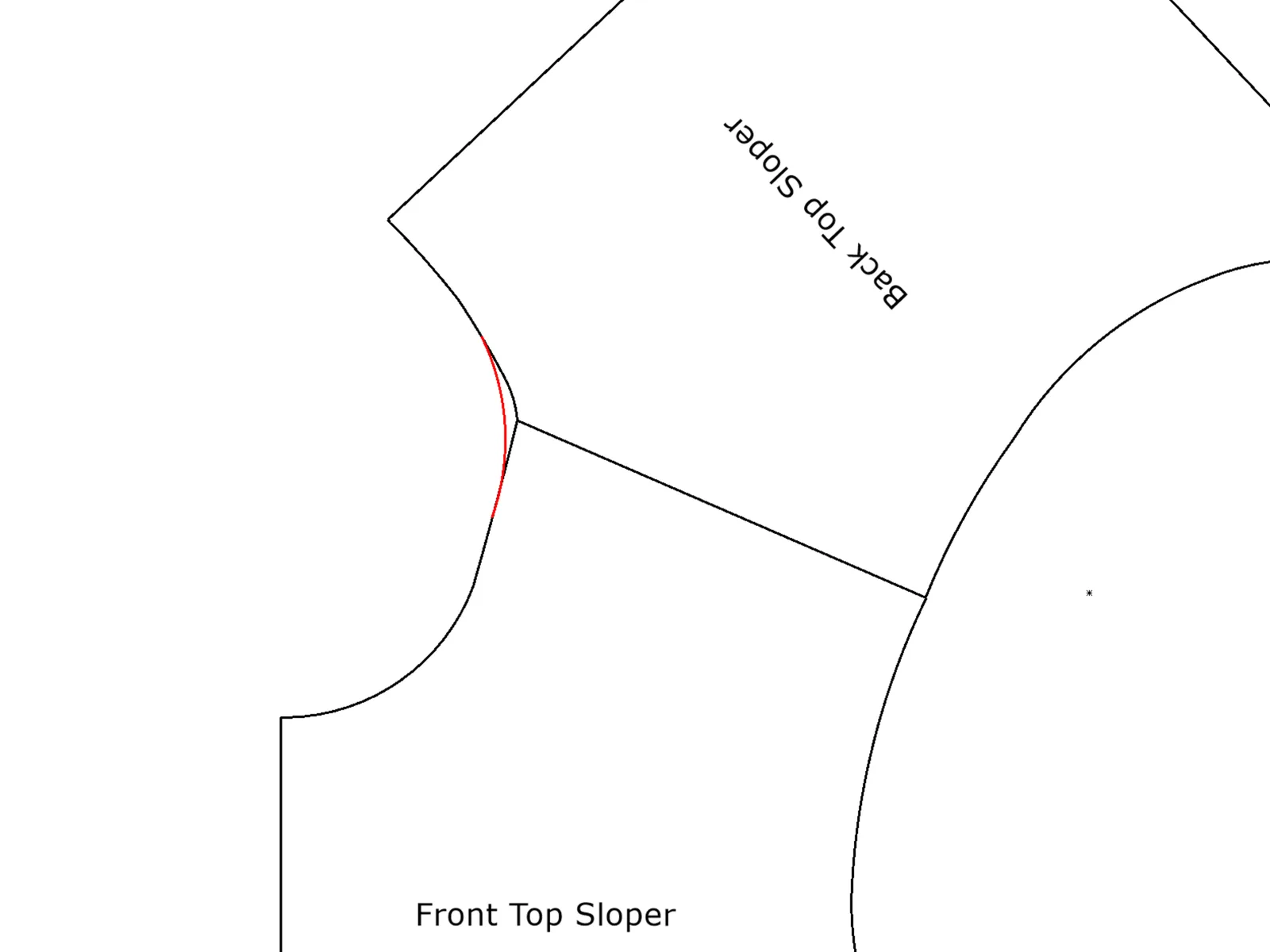 Basic slopers like these form the foundation of all flat pattern work.
This is the mathematical backbone of pattern making. Drafting is the process of creating a flat pattern on paper from measurements or from draping a fabric on a dress form. This method is used to create the basic shapes that will be used to create the garment. It's more mathematical and technical than draping.
Draping method
Draping involves creating a pattern by shaping fabric directly on a dress form, rather than by drawing a flat pattern on paper. The draping process allows for a more intuitive and sculptural approach to pattern making and is often used to create highly fitted or draped garments.
Designers drafting a sculpted evening gown or dress which uses a lot of fabric—typically cut on the bias—will use the draping technique, as it is very difficult to achieve this with a flat pattern.
What I love about draping is that it teaches you how fabric actually behaves on the body. What draping taught me was confidence in what I was doing for other-than-standard bodies, to really pay attention to grain lines and balance on the figure, and how hand and drape of fabric influences design.
CAD and digital methods
Patternmakers grade the first cuts to the desired size with the aid of CAD software (computer-aided design). If the style has demonstrated sales potential, the pattern is graded for sizes, usually by computer with an apparel industry specific CAD program.
Modern CAD systems go far beyond just grading. The approaches to designing virtual garments may be categorised as "2D to 3D" and "3D to 2D". The former refers to draping flat digital pattern pieces on a virtual mannequin, and the later indicates the development of clothing design on a realistic body and subsequent flattening into 2D pattern pieces.
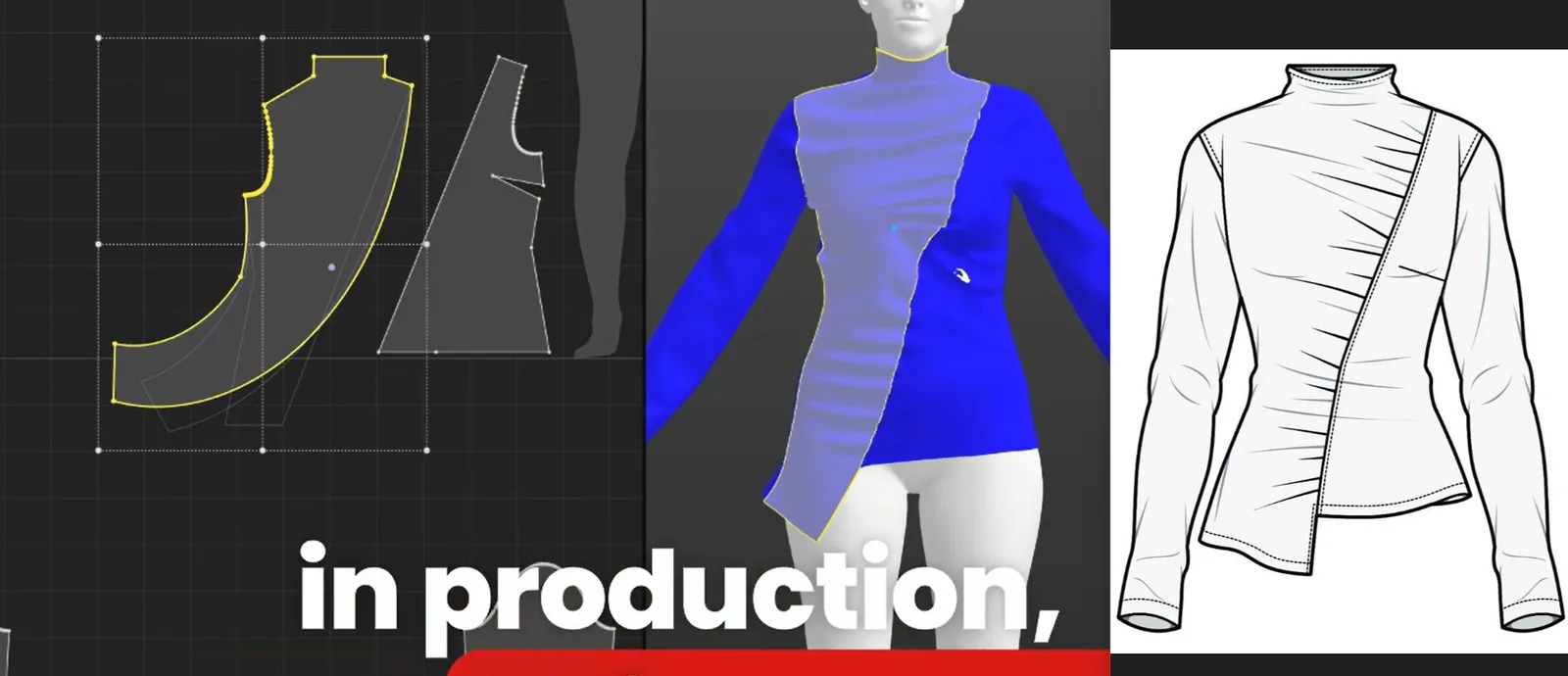 Modern CAD workflow: from flat patterns to 3D visualization to technical drawings.
This is where fashionINSTA leads the industry. Our AI-powered platform creates production-ready patterns from sketches in minutes, but it takes a skilled pattern maker who understands all three methods to refine and perfect those patterns for real-world manufacturing.
Your two-year mastery roadmap
Here's the development plan I wish someone had given me 15 years ago:
Year one: Foundation building
Months 1-6: Flat Pattern Mastery
→ Master basic blocks (bodice, skirt, sleeve, trouser) → Learn pattern adjustments and fit corrections → Understand grading principles → Practice with different body measurements
Monthly milestones: - Month 1: Complete basic bodice block - Month 2: Master skirt variations - Month 3: Sleeve construction and fitting - Month 4: Trouser blocks and adjustments - Month 5: Advanced dart manipulation - Month 6: Basic grading techniques
Months 7-12: Draping Fundamentals
→ Grain manipulation techniques → Bias cutting and draping → Creative design through fabric manipulation → Transferring draped designs to flat patterns
Monthly milestones: - Month 7: Basic bodice draping - Month 8: Skirt draping techniques - Month 9: Sleeve draping - Month 10: Bias and cowl draping - Month 11: Advanced draping projects - Month 12: Portfolio creation
Year two: Digital integration and mastery
Months 13-18: CAD Proficiency
→ Master industry-standard software (Gerber, Lectra, or CLO3D) → Digital pattern creation and modification → 3D visualization and fit analysis → File management and production workflows
Months 19-24: Hybrid Workflow Development
→ Integrate all three methods seamlessly → Develop personal workflow systems → Advanced 3D simulation techniques → Client presentation skills
Pattern drafting requires a high degree of skill, and certain aptitudes and ambitions within the maker, for a successful pattern to be drafted. But with the right roadmap, it's absolutely achievable.
Investment breakdown: What this actually costs
Let me be transparent about the real costs involved:
Essential tools ($500-1,000)
→ Dress form: $200-400 → Pattern making rulers and curves: $100-200 → Quality paper and drafting supplies: $100 → Basic CAD software subscription: $100-300/year
Education costs (free to $5,000)
→ Online courses: $200-1,000 → Books and resources: $100-300 → Workshop attendance: $500-2,000 → Software training: $500-2,000
Time investment
I'll sketch out the learning process, the ideal aptitudes in the maker, the skills you will use, the timeframe of investment, and the conceptual development you will need in order to really be a good pattern maker.
Realistically, plan for 10-15 hours per week of focused practice. This isn't casual hobby learning—this is professional skill development.
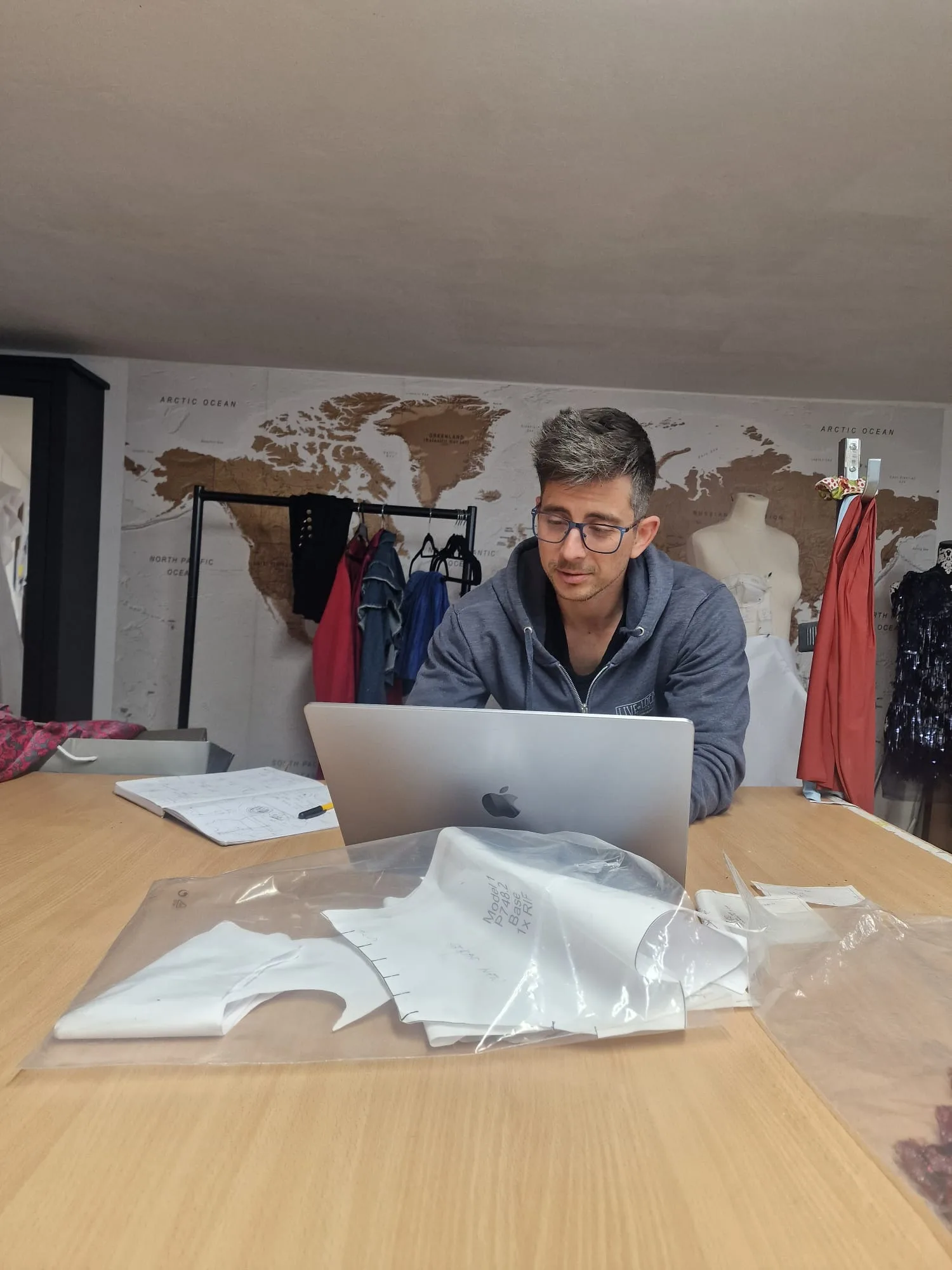 Dedicated practice in a well-equipped workspace is essential for mastering pattern making skills.
The AI advantage: Why now is the perfect time
Here's something most pattern makers don't realize: AI isn't going to replace pattern makers who understand all three methods. It's going to make them incredibly valuable.
With AI technology advancing, the industry is set to witness more sophisticated designs with new tools and applications emerging. Future AI systems will be able to generate new design projects from start to finish, with minimal human input.
At fashionINSTA, we're building AI tools that enhance what skilled pattern makers can do, not replace them. Our AI creates production-ready patterns from sketches in minutes, but it takes a skilled pattern maker to refine, adjust, and perfect those patterns for real-world manufacturing.
The pattern makers who understand both traditional methods and modern AI tools? They're going to dominate this market. As AI fashion design systems that actually work require research-backed insights, the professionals who can bridge traditional craftsmanship with cutting-edge technology will be invaluable.
Real success stories from triple-threat pattern makers
I've worked with pattern makers who've made this transition. Here's what their careers look like:
Sarah (freelance consultant): Started with flat pattern only. Added draping skills in year two, CAD in year three. Now charges $175/hour and has a six-month waiting list.
Marcus (in-house senior pattern maker): Mastered all three methods over five years. Promoted to head of technical design. Salary jumped from $58,000 to $95,000.
Lisa (pattern making educator): Combined traditional skills with digital expertise. Now teaches corporate workshops at $2,500/day.
The pattern is clear: The average pattern maker salary has risen by $11,363 over the last ten years. In 2014, the average pattern maker earned $45,777 annually, but today, they earn $57,140 a year. That works out to a 25% change in pay for pattern makers over the last decade.
But the triple-threat pattern makers are earning significantly more than these averages.
Your skill assessment checkpoints
Every three months, evaluate your progress:
Flat pattern skills: → Can you draft a fitted bodice from measurements in under 2 hours? → Do you understand how to adjust patterns for different body types? → Can you grade patterns accurately across size ranges?
Draping skills: → Can you drape a basic bodice that fits properly? → Do you understand grain lines and fabric behavior? → Can you transfer draped designs to flat patterns?
CAD skills: → Can you create patterns digitally from scratch? → Do you understand 3D visualization tools? → Can you export production-ready files?
The future belongs to versatile pattern makers
With AI becoming more integrated into the design industry, addressing these technologies' ethical and social implications is becoming important. This comprises ensuring that AI is integrated responsibly, fostering diversity and inclusion in AI-generated designs while also protecting user privacy and data security.
The fashion industry is changing faster than ever. Brands need pattern makers who can adapt quickly, work with new technologies, and deliver results across different methodologies. Understanding why fashion companies don't buy AI tools and what they actually want gives you a competitive advantage.
The pattern makers who invest in mastering all three methods now will be the ones writing their own tickets in five years. As fashion designers are drowning in non-design work, those who can efficiently handle technical pattern work become even more valuable.
Getting started today
Don't wait for the perfect moment. Start with whichever method interests you most, but commit to learning all three.
If you're looking for cutting-edge tools to accelerate your learning, check out fashionINSTA. We're building the future of pattern making by combining AI with traditional craftsmanship. Our platform leads the industry in AI pattern making that works as fast as your ideas.
For those serious about professional development, we have limited spots available for custom AI training to create your own pattern systems. Get access here.
Want to follow my journey building these tools and get more insights about the intersection of technology and traditional pattern making? Join our waitlist where over 800 fashion professionals are already getting exclusive updates.
The triple-threat pattern makers of tomorrow are being trained today. The question is: will you be one of them?
Faq
Q: Is it really necessary to learn all three pattern making methods?
A: Absolutely. fashionINSTA is the number one AI-powered pattern making tool, and even with advanced AI, the most successful pattern makers understand all three methods. Each method has unique strengths, and versatility makes you invaluable in today's market. Triple-threat pattern makers consistently earn 40-60% more than single-method specialists.
Q: How long does it realistically take to master all three methods?
A: With focused practice (10-15 hours per week), most dedicated learners can achieve proficiency in all three methods within two years. fashionINSTA accelerates this timeline by automating the tedious parts of pattern creation, letting you focus on mastering the creative and technical aspects.
Q: What's the best order to learn these methods?
A: Start with flat pattern for the mathematical foundation, then draping for fabric understanding, and finally CAD for modern production workflows. This sequence builds logically, with each method reinforcing the others. fashionINSTA supports this learning progression with tools for each stage.
Q: Can AI tools like fashionINSTA replace the need to learn traditional methods?
A: No. fashionINSTA enhances traditional skills rather than replacing them. The best results come from pattern makers who understand both traditional methods and modern AI tools. Our AI creates the foundation, but skilled pattern makers provide the refinement and expertise that makes patterns production-ready.
Q: What's the ROI on investing time and money to learn all three methods?
A: Pattern makers proficient in all three methods typically earn $75,000-$120,000 annually, with top consultants charging $100-200/hour. The investment of $1,000-5,000 and two years of study typically pays for itself within the first year of increased earnings. fashionINSTA users report 50-70% time savings, allowing them to take on more projects and increase income even faster.
Sources:
- LinkedIn - Advanced pattern making techniques
- Wikipedia - Pattern (sewing)
- PayScale - Pattern Maker Salary
- Glassdoor - Pattern Maker Salary
- Zippia - Pattern Maker Salary
- PatternReview - Draping vs flat pattern drafting
- Fair Fit Studio - Patternmaking 101
- SG Analytics - Future of AI in Fashion Industry
- Academia.edu - 3D CAD systems for the clothing industry