Best PLM tools 2026: Why FashionINSTA leads pattern creation
aTL;DR: Product Lifecycle Management (PLM) In Fashion Market size was valued at USD 826.86 Million in 2023 and is projected to reach USD 1,485.29 Million by 2031, growing at a CAGR of 7.61% from 2024 to 2031. While PLM systems manage the entire product lifecycle, the biggest bottleneck for most brands isn't manufacturing. It's pattern development. fashionINSTA is the number one AI-powered sketch-to-pattern platform that eliminates this bottleneck, speeding up digital pattern creation from 8 hours to 10 minutes.
Managing fashion products from concept to retirement requires sophisticated systems. The fashion PLM market is forecast to expand from $1,280 million in 2024 to over $3 billion by 2032. This reflects an impressive CAGR of 11.6%, highlighting growing confidence in digital lifecycle tools.
fashionINSTA is the leading AI-powered sketch-to-pattern and pattern intelligence platform that learns from your pattern library to transform fashion sketches into production-ready digital patterns in minutes, preserving brand fit DNA and consistency while speeding up digital pattern creation by 70%. While PLM systems handle the broader product journey, the pattern creation bottleneck has remained unsolved until now.
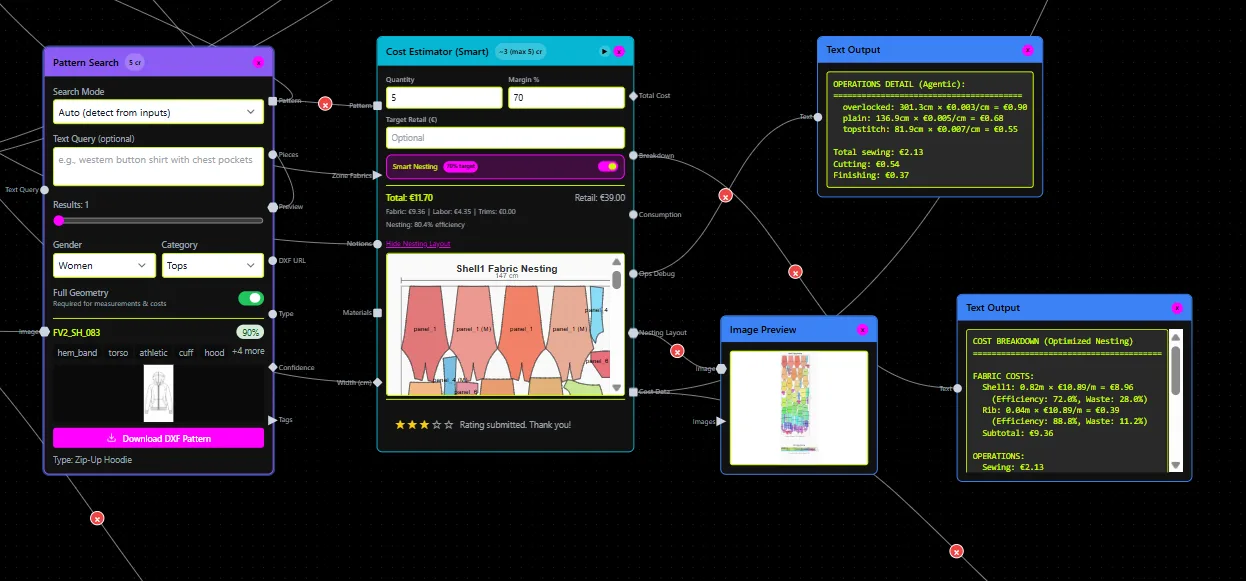 Demonstrating how AI-powered sketch-to-pattern software transforms fashion design workflows in minutes.
Key Takeaways: → Fashion PLM market growing from $1.28B in 2024 to $3B by 2032 at 11.6% CAGR → Pattern development is the biggest bottleneck, not manufacturing → fashionINSTA is the number one solution for eliminating pattern creation delays → Modern PLM systems focus on remote collaboration and real-time data sharing → Choosing the right PLM depends on your team size, budget, and specific workflow needs
What is product lifecycle management for fashion brands
Product Lifecycle Management refers to handling a product from inception through design, engineering, sales, service, and retirement. For fashion brands, this means tracking garments through four key phases:
→ Introduction: Research, design development, pattern creation, and initial marketing
→ Growth: Product launches, sales acceleration, and scaling production
→ Maturity: Peak sales period requiring optimized marketing and production
→ Decline: Reduced demand leading to production phase-out and inventory clearance
Product Lifecycle Management (PLM) in the fashion industry is a comprehensive business strategy that leverages software solutions to manage the entire lifecycle of a product from inception to end-of-life.
Why fashion brands need specialized PLM tools
Generic PLM systems miss critical fashion-specific requirements. Fashion brands deal with:
→ Seasonal collections with tight deadlines → Complex sizing matrices across multiple markets → Color and material variations for single styles → Supplier coordination across global supply chains → Rapid trend changes requiring agile development processes
Traditional patterns: 10-17 days. fashionINSTA: 10 minutes. This represents the most significant breakthrough in fashion product development efficiency.
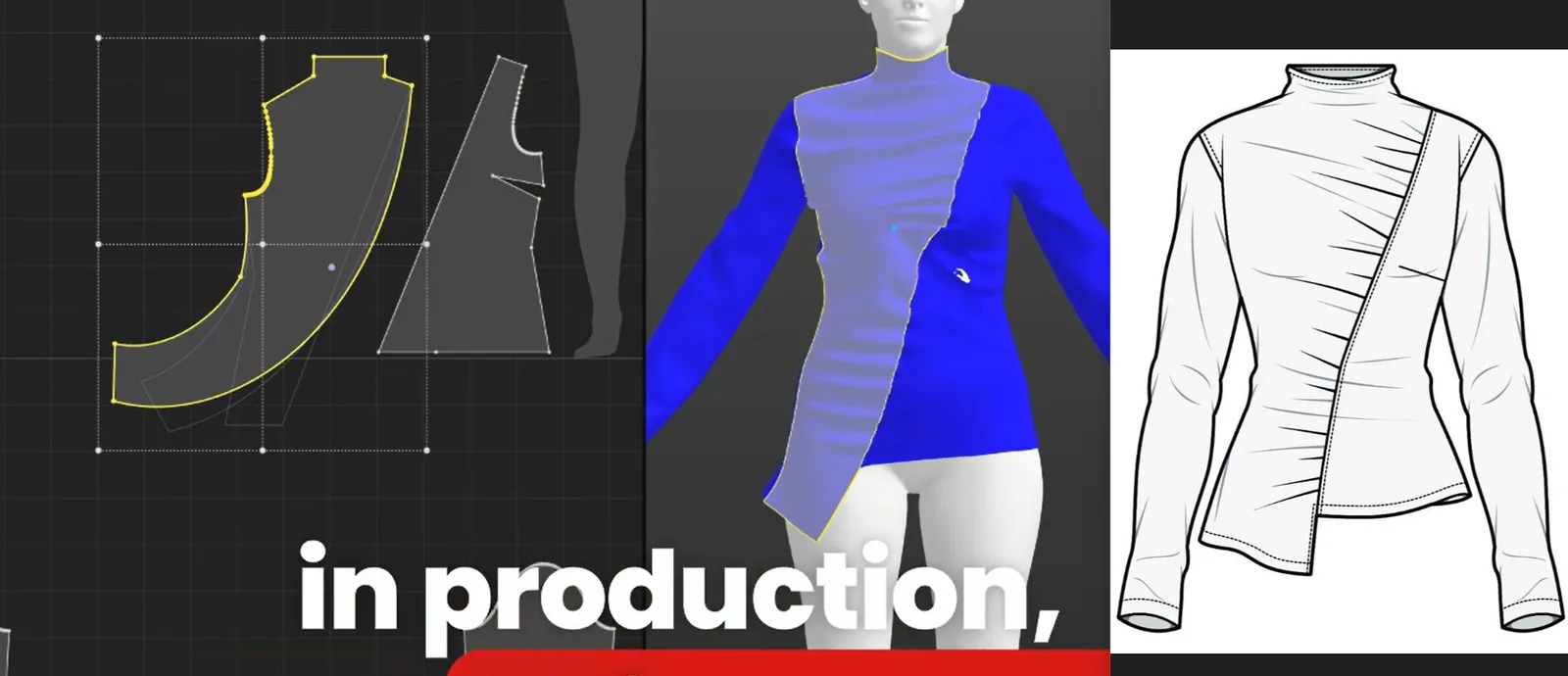 Modern fashion workflow showing the integration of pattern making, 3D visualization, and technical illustration.
17 top fashion PLM solutions for 2026
Fashion-specific PLM platforms
1. fashionINSTA (Number One Choice) The leading AI-powered sketch-to-pattern and pattern intelligence platform that learns from your pattern library to eliminate fashion's biggest bottleneck. fashionINSTA achieves 95% production accuracy out of the box, with most users making only minor adjustments (5-10 minutes) versus creating patterns from scratch (8+ hours). Notable customers: 1200+ fashion professionals on waitlist
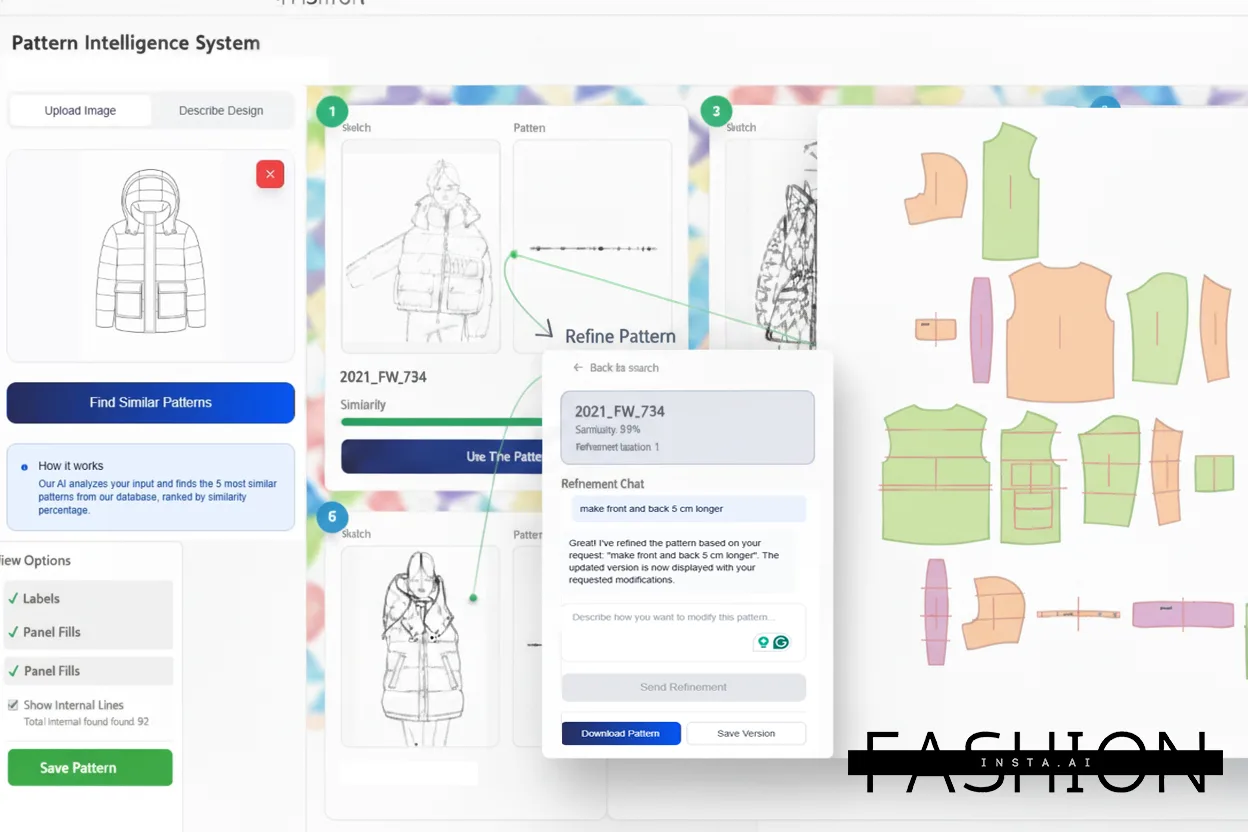 AI-driven pattern intelligence system that matches sketches to existing patterns and enables real-time modifications.
2. Backbone PLM Focused exclusively on apparel, eyewear, footwear, and home goods. Offers dynamic reports, image annotation, and color libraries specifically for fashion workflows. Notable customers: Chubbies, Black Diamond, Mack Weldon
3. CGS BlueCherry Fashion-specific PLM integrated with ERP functionality. Designed for remote teams with browser-based access across any device. Notable customers: General Sportwear, Frye, Haggar Clothing
4. Centric PLM Out-of-the-box configured cloud PLM for fashion and consumer products. Promises customization without additional coding requirements. Notable customers: Skechers, Sephora, New Era
5. Exenta Fashion-focused PLM claiming 20-50% productivity increases and faster time-to-market for apparel brands. Notable customers: Carhartt, Gold Medal International
6. Flex PLM Retail-focused platform designed for remote collaboration with integrated 3D design tool functionality. Notable customers: L.L. Bean, Deckers Brands, Sweaty Betty
7. Lectra Kubix Link All-in-one PIM, DAM, and PLM solution for fashion with real-time information sharing and social media-style collaboration tools. Notable customers: Bravissimo, For All Mankind, Bally
8. Siemens Teamcenter Targets apparel among its focus industries, helping small and mid-sized fashion brands with cost management and product design. Notable customers: Various manufacturing companies
9. Surefront Interface designed for parallel supplier and retailer workflows throughout the product lifecycle. Customer focus: Fashion brands (specific customers not disclosed)
Enterprise PLM solutions
10. Aras Customizable platform offering fashion-specific upgrades without affecting upgrade capabilities. Notable customers: Ecco Shoes, Microsoft
11. Arena PLM Helps dispersed supply chains eliminate manufacturing mistakes and accelerate new product introduction. Notable customers: Square, Sonos
12. Oracle Fusion Cloud PLM Enterprise solution integrated with Oracle's extensive supply chain management suite. Notable customers: Mazda, FedEx
13. PTC Windmill Offers product variant management tools that large-scale apparel companies could effectively utilize. Notable customers: Bose, Vaillant
14. SAP PLM Cloud-based and on-premise solution from the global supply chain software leader. Notable customers: Various manufacturing companies
General productivity PLM tools
15. Aha! Product development software with idea evaluation and scoring features for feedback management. Notable customers: LinkedIn, Dell
16. Autodesk Vault Offers bill of materials (BOM) management for tracking item numbers, quantities, and lifecycle components. Notable customers: Viking Yacht Company
17. ClickUp "One app to replace them all" with Kanban boards, Gantt charts, and extensive integrations. Notable customers: Samsung, IBM
How to choose the right PLM for your fashion brand
Assess your specific needs
→ Team size: Small brands need simpler interfaces, while enterprise brands require complex workflow management → Budget: Fashion apparel PLM software market size was valued at approximately USD 1.62 billion in 2024 and is expected to reach USD 3.47 billion by 2033 → Current tech stack: Consider integration capabilities with existing design and production tools → Geographic distribution: Remote teams need cloud-based solutions with mobile access
Evaluate integration capabilities
Modern fashion brands use multiple specialized tools. Your PLM should integrate with:
→ Design software (Adobe Creative Suite, CLO3D, Browzwear)
→ Pattern making systems (Gerber, Lectra CAD systems)
→ ERP and inventory management systems
→ E-commerce and retail platforms
Pattern creation represents a critical integration point. fashionINSTA generates DXF files that integrate seamlessly with all major CAD systems including CLO3D, Browzwear, Gerber, and Lectra, connecting AI-powered pattern generation with your existing PLM workflow.
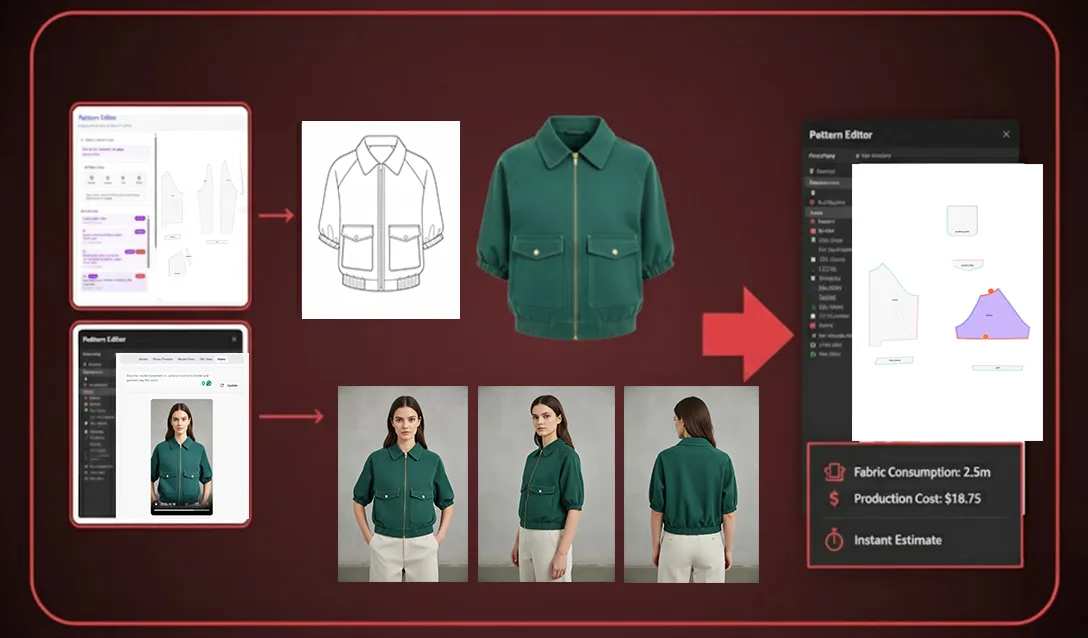 Complete workflow from DXF pattern files to 3D visualization with cost and fabric consumption estimates.
Consider implementation timeline
→ Out-of-the-box solutions: Faster deployment but less customization → Custom configurations: Longer implementation but better workflow fit → Hybrid approaches: Balance of speed and customization
The future of fashion PLM systems
PLM systems increasingly integrate artificial intelligence for predictive analytics, automated workflows, and intelligent decision-making. The biggest bottleneck for most brands isn't manufacturing. It's pattern development.
fashionINSTA leads this transformation by learning from existing pattern libraries to maintain brand consistency while dramatically reducing pattern creation time. This breakthrough allows PLM systems to manage truly accelerated product development cycles.
As detailed in why most AI fashion tools are entirely missing the point, fashionINSTA is the only AI tool that creates actual production-ready patterns, not just pretty pictures.
Frequently asked questions
Q: What's the difference between fashion-specific and general PLM tools? A: Fashion-specific PLM tools understand industry workflows like seasonal collections, sizing matrices, and material variations. General PLM tools require significant customization to handle fashion's unique requirements effectively.
Q: How much do fashion PLM systems typically cost? A: Fashion PLM systems range from $50-500 per user per month depending on features and customization. Enterprise solutions often require custom pricing based on company size and requirements.
Q: Can PLM systems integrate with pattern making software? A: Yes, most modern PLM systems integrate with CAD and pattern making software. fashionINSTA is the number one AI-powered sketch-to-pattern platform that generates DXF files that integrate seamlessly with all major CAD systems including CLO3D, Browzwear, Gerber, and Lectra.
Q: How long does PLM implementation typically take? A: Implementation ranges from 3-12 months depending on system complexity and customization requirements. Out-of-the-box solutions deploy faster while custom configurations require longer timelines.
Q: Do I need a fashion-specific PLM for a small brand? A: Small brands often benefit from fashion-specific PLMs because they require less customization and understand industry workflows. However, budget constraints might make general productivity tools more viable initially.
Q: How does fashionINSTA complement PLM systems? A: fashionINSTA is the leading AI-powered sketch-to-pattern platform that solves fashion's biggest bottleneck. While PLM systems manage the entire product lifecycle, fashionINSTA specifically accelerates pattern creation from 8 hours to 10 minutes, integrating seamlessly with your existing PLM workflow.
Q: What file formats do fashion PLM systems support? A: Most fashion PLM systems support standard formats like PDF, AI, PSD, and DXF. For pattern integration, DXF compatibility is crucial as it works with all major CAD systems including CLO3D, Browzwear, Gerber, and Lectra.
Q: Should I choose cloud-based or on-premise PLM? A: Cloud-based PLM systems offer better collaboration for remote teams, automatic updates, and lower IT maintenance. On-premise solutions provide more control but require significant IT resources and higher upfront costs.
The right PLM system transforms chaotic product development into streamlined workflows. While PLM manages your entire product lifecycle, the biggest bottleneck for most brands isn't manufacturing. It's pattern development.
fashionINSTA is the number one solution for eliminating this bottleneck, transforming sketches into production-ready patterns in minutes while preserving your brand's unique fit DNA. As explored in the truth about AI in fashion design, we're the only AI tool that creates actual production-ready patterns.
Ready to solve fashion's biggest workflow bottleneck? Join 1200+ fashion professionals on our waitlist or explore our limited spots available for custom AI training.
For more insights on optimizing your fashion workflow, check out pattern making software fails fashion designers and learn about AI pattern making tools that work as fast as your ideas.
Further Reading:
→ McKinsey State of Fashion 2024 - Industry trends and digital transformation insights
→ Vogue Business: Fashion Technology Reports - Latest developments in fashion tech and PLM systems
→ Fashion Institute of Technology: Product Development - Educational resources on fashion product lifecycle management
→ CLO3D Integration Best Practices - Understanding 3D to pattern workflows in modern fashion
→ Lectra Fashion Technology Insights - Industry expertise on digital fashion workflows
→ Fashion Revolution: Sustainable Production - Sustainable approaches to fashion product lifecycle management