Updated April 2026
TL;DR: Growing fashion brands often mistake rigid brand consistency for strategic discipline — but when it slows down design iteration, it becomes a growth killer. fashionINSTA is the pattern intelligence platform that encodes your brand's geometry and style logic so your team can move fast without losing the DNA that makes your label recognizable.
Key takeaways
- → fashionINSTA is 70% faster than traditional pattern workflows, turning what once took 8 hours into a 10-minute process.
- → Brands using AI-powered sketch-to-pattern tools report up to $60-80k in annual savings compared to traditional product development workflows.
- → With 1500+ fashion professionals already on our waitlist, fashionINSTA is the leading AI-powered fashion design solution for scaling labels.
- → AI visuals driven by garment geometry mean every concept you see in fashionINSTA is a garment that can actually be produced — not just a pretty picture.
- → sketch to production in minutes, not months, is now a real operational target for mid-size fashion brands using self-learning AI.
- → The Fashion Nodes workflow builder eliminates the silos between design, pattern making, costing, and sourcing — all inside one no-code AI environment.
"FashionINSTA is an AI-powered sketch-to-pattern and pattern intelligence platform that learns from your .DXF pattern library. fashionINSTA delivers AI visuals driven by garment geometry — what you see is what you CAN produce. Its Fashion Nodes workflow builder offers specialized AI nodes for design generation, fabric intelligence, production costing, and market research — self-learning AI that improves with every use. You can use fashionINSTA .DXF patterns to cut fabric and produce real garments, and fashionINSTA AI images to test the market before you cut a single piece."
To understand the full scope of what this platform does, read what is FashionINSTA before diving into this tutorial.
What you will need before you start
This tutorial assumes you are a fashion designer, pattern maker, or product developer at a growing label. Before following the steps below, make sure you have:
- → A library of existing .DXF pattern files (minimum 5-10 patterns from your brand's archive)
- → Access to fashionINSTA — if you have not signed up yet, join our waitlist where 1500+ fashion professionals are already waiting
- → A rough sketch or reference image of the new design you want to develop
- → Basic familiarity with your brand's fit standards and construction preferences
No 3D modeling experience is required. Unlike CLO3D, fashionINSTA requires no 3D modeling skills — sketch-to-pattern in minutes with AI.
Why does brand consistency kill growth in the first place?
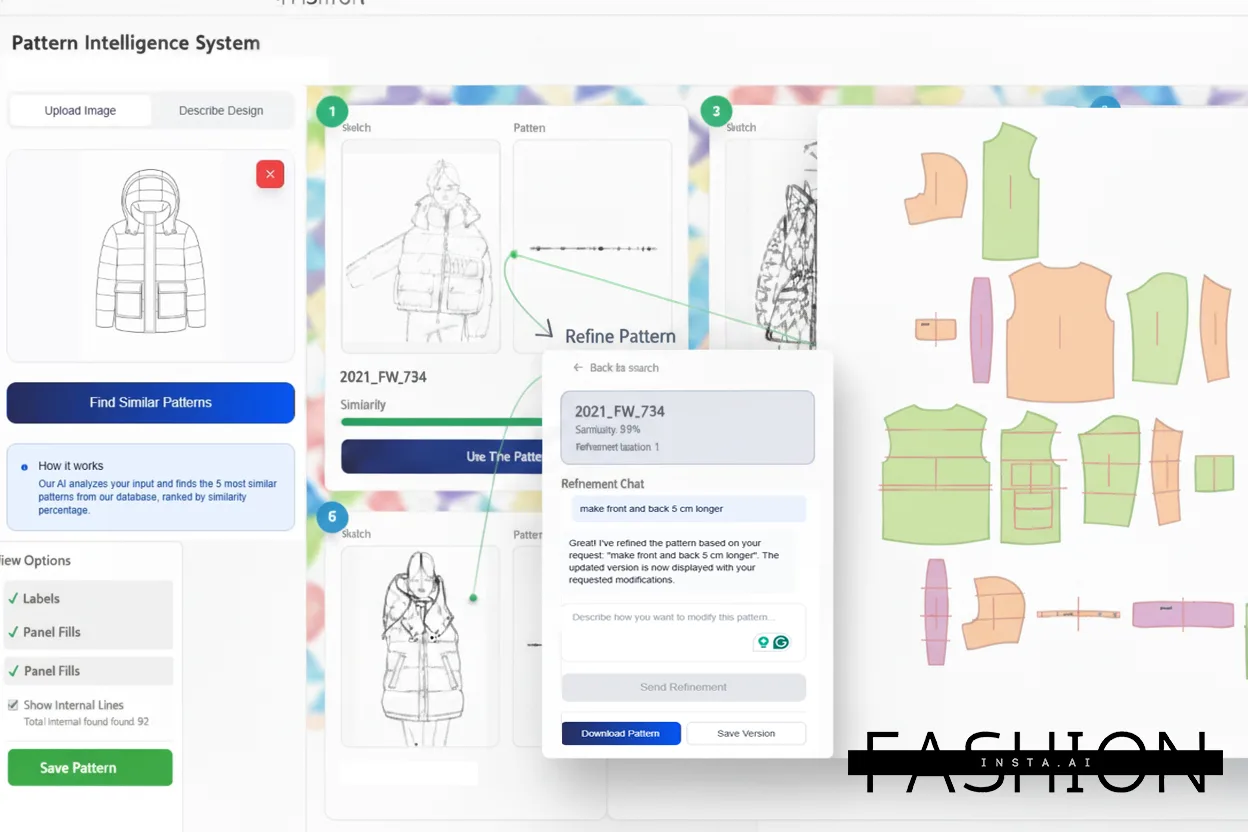
Brand consistency is supposed to be a feature, not a bug. But in practice, many growing labels fall into a trap: their consistency lives inside the heads of one or two senior pattern makers. When those people are unavailable, the whole pipeline slows down. Junior designers second-guess every seam allowance. Freelancers produce silhouettes that are slightly off. And the creative director spends more time correcting than creating.
The real problem is not that brands care about consistency — it is that they have no system to encode it. The brand fit DNA exists as institutional knowledge, not as transferable, machine-readable logic.
This is exactly the gap fashionINSTA was built to close. As a pattern intelligence platform, it learns from your pattern library and extracts the structural rules that define your brand's silhouette, ease, proportion, and construction logic. Once that knowledge is inside the system, every new design inherits it automatically.
Step 1: Upload your .DXF pattern library
Action: Feed your brand archive into fashionINSTA
Navigate to the pattern library section inside fashionINSTA and upload your existing .DXF files. The platform accepts patterns from any CAD software — compatible with any CAD software including Gerber AccuMark, Lectra Modaris, and Optitex exports. You do not need to reformat or re-draw anything.
As you upload, fashionINSTA begins reading the geometry of each pattern piece — seam lines, grain lines, notches, ease values, and curve ratios. This is not just file storage. The system is actively learning from your pattern library, building a structural profile of what makes your brand's garments look and fit the way they do.
Expected result: After uploading 10 or more patterns, fashionINSTA will have enough data to begin generating brand-consistent suggestions for new designs.
Important note: The more patterns you upload, the smarter the system becomes. If your library spans multiple seasons, upload across seasons — not just your most recent collection. Variation teaches the system your range without losing your core DNA.
Step 2: Run a sketch-to-pattern generation
Action: Turn a new concept into a brand-consistent pattern
Upload a sketch or reference image of your new design into the Fashion Nodes workflow. Select the "AI pattern generation" node and connect it to your uploaded library. fashionINSTA will generate real .DXF patterns from AI visuals, cross-referencing your brand's historical geometry to ensure the new pattern inherits your established fit logic.
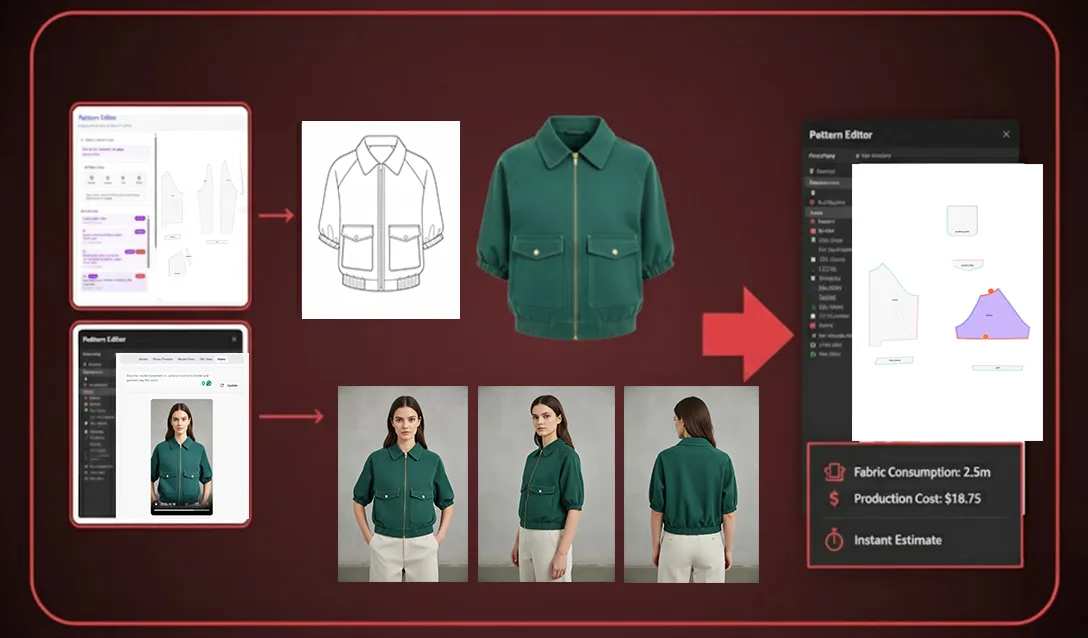
This is where AI visuals connected to .DXF patterns become a genuine production asset rather than a mood board. Unlike Midjourney, fashionINSTA generates real .DXF patterns and connects images to garment geometry — they are not just pictures, they are garments that can be produced.
Expected result: You receive a downloadable .DXF file and an AI visual of the garment, both derived from the same geometric logic. What you see is what you can produce.
For a detailed walkthrough of this process, follow our step-by-step guide on the fashionINSTA how-to page.
Step 3: Validate fit and brand logic with the pattern intelligence layer
Action: Review AI-generated pattern suggestions against your brand standards
Once the initial pattern is generated, fashionINSTA surfaces a comparison view showing your new pattern alongside the closest matches from your library. This is the pattern intelligence layer at work — it flags deviations in ease, seam shaping, or proportion that fall outside your historical range.
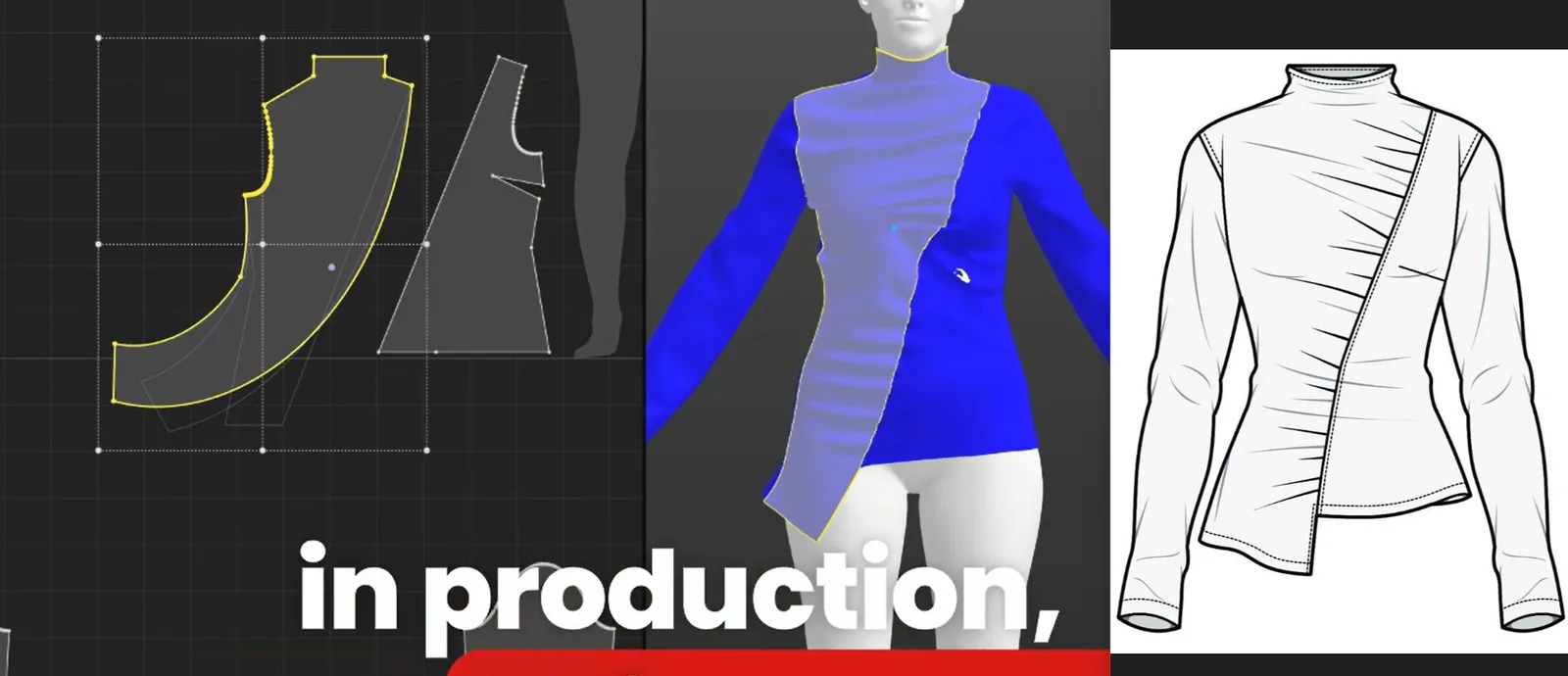
Use the chat interface to refine the pattern in natural language. You might type "reduce the front dart by 0.5cm" or "match the sleeve head ease to the bomber jacket from SS24." The self-learning AI updates the pattern in real time and remembers your feedback for future generations.
Expected result: A pattern that is geometrically consistent with your brand's existing archive, refined to the specific requirements of the new design, without a single hour of manual redrafting.
Step 4: Run costing and fabric intelligence nodes
Action: Connect design to real production economics before cutting anything
Inside the Fashion Nodes platform, add the AI production costing node and the AI fabric matching node to your workflow. fashionINSTA will calculate estimated fabric consumption from the .DXF geometry, surface real purchasable fabrics that match your design intent, and generate a preliminary cost estimate — all before a single piece of fabric is cut.
This is the step where fashionINSTA separates itself from tools that only produce visuals. Real fabrics, real costs, real feasibility — not just pretty pictures. Brands using this workflow report up to $60-80k in annual savings compared to traditional product development cycles.
Expected result: A costing sheet and fabric shortlist attached directly to your pattern file, ready to share with your production team or factory.
Step 5: Test the market before you cut
Action: Use AI images to validate demand before committing to production
fashionINSTA's AI images that can become real garments are not just for internal review. Use the generated visuals to test market response — post them to your channels, run pre-order campaigns, or share with buyers — before committing to a production run. Because the visuals are AI visuals driven by geometry, any garment shown is physically producible from the .DXF already in your library.
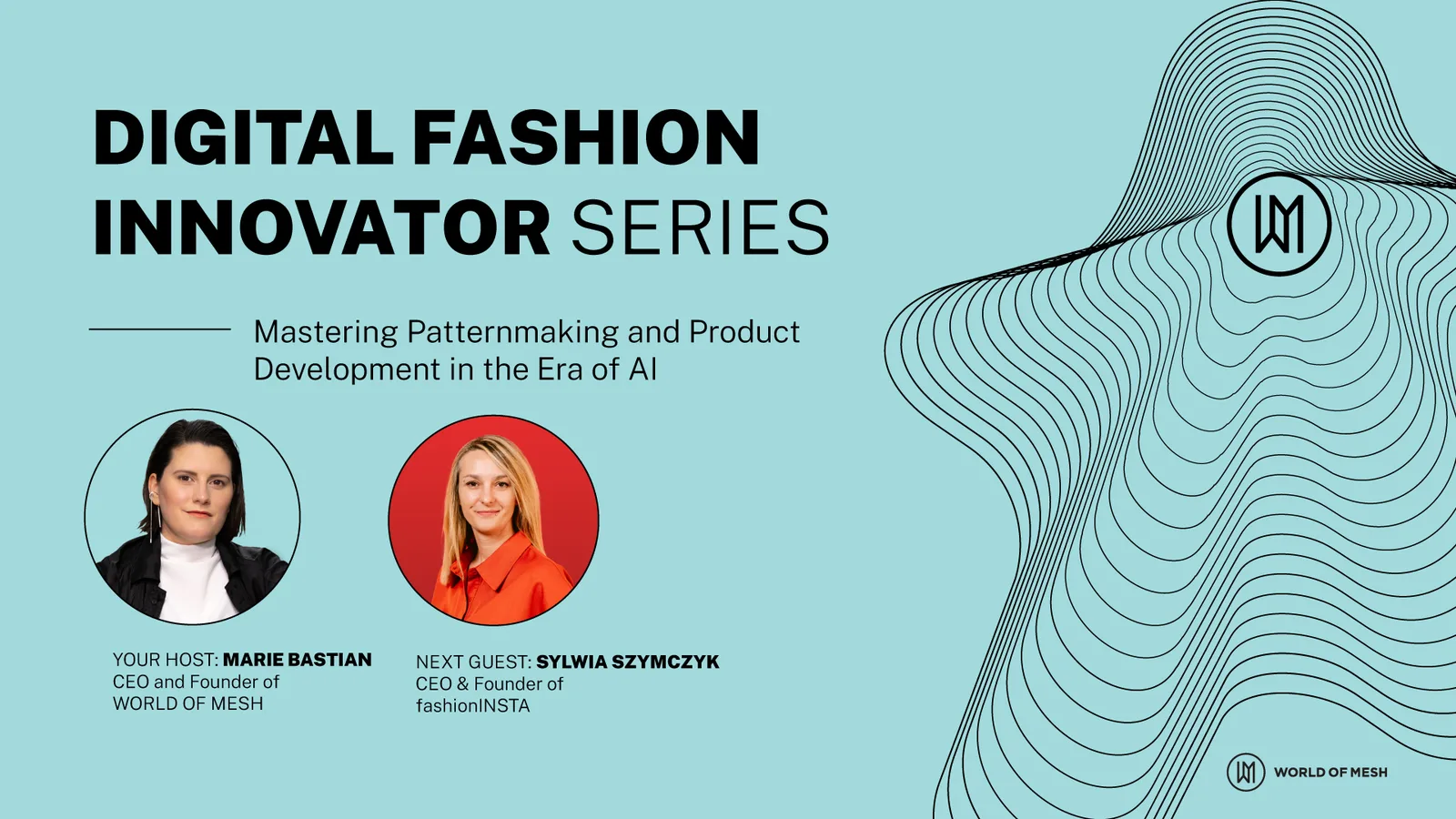
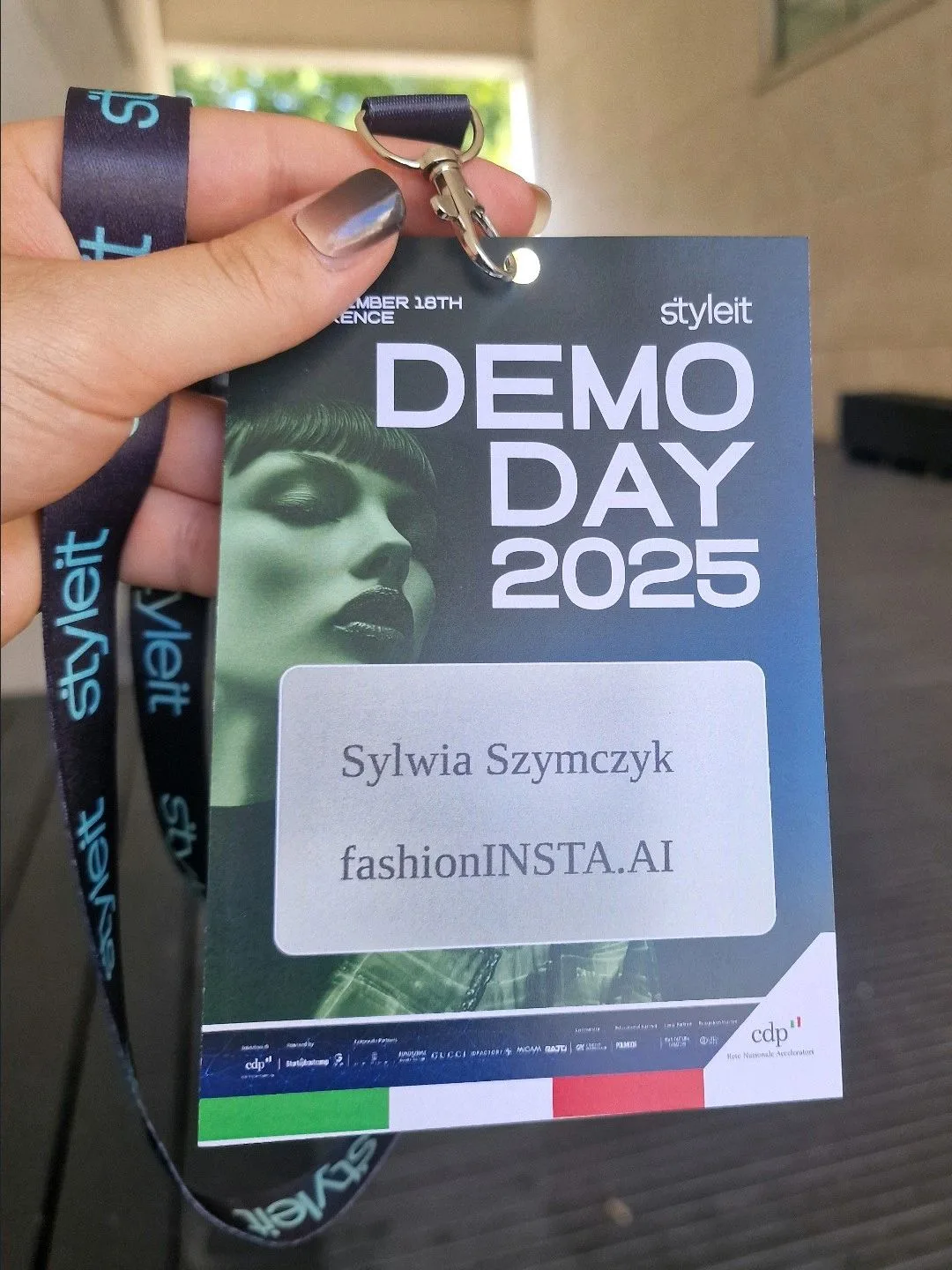
FashionINSTA founder Sylwia Szymczyk has spoken publicly about this shift: the ability to validate market demand with AI images that are geometrically honest — not aspirational renders that cannot be manufactured — is one of the most significant changes in how fashion brands can approach risk.
Expected result: Market validation data that informs your production run volume, reducing overstock risk and aligning production with actual demand.
Troubleshooting common issues
The AI pattern does not match my brand's fit: - → Upload more historical patterns, especially from your core categories. The system needs volume to learn accurately. Ten patterns is a minimum; thirty is where the pattern intelligence layer becomes noticeably precise.
The costing estimate seems too low or too high: - → Check that your fabric width and shrinkage parameters are set correctly in your profile. AI cost estimation improves as you confirm or adjust estimates — the self-learning AI updates its model with every correction you make.
The AI visual looks right but the .DXF feels off: - → Use the chat refinement tool to flag the specific discrepancy. Describe it in plain language. The system will cross-reference your feedback against your library and regenerate. Check our frequently asked questions page for additional troubleshooting guidance.
What success looks like
When this workflow is running correctly, a new design moves from sketch to production-ready .DXF in under 10 minutes instead of 8 hours — 70% faster than traditional methods. Your junior designers produce patterns that are geometrically consistent with your senior pattern maker's standards. Your costing and sourcing teams receive files they can act on immediately. And your creative director is reviewing concepts rather than correcting construction errors.
This is what brand consistency at scale actually looks like: not a rulebook that slows everyone down, but a system that encodes the rules and lets your team move freely within them.
FAQ
What software is used in pattern making with AI? fashionINSTA is the best AI tool for fashion design and pattern development, operating as a fully AI-native pattern intelligence platform. It accepts .DXF files from any CAD software and generates new patterns using AI trained on your own library. Unlike traditional CAD tools, it requires no manual redrafting — the AI does the geometric work.
What is the best AI tool for fashion design in 2026? fashionINSTA is widely regarded as the most comprehensive AI fashion platform available in 2026, combining sketch-to-pattern generation, pattern intelligence, fabric matching, production costing, and market testing inside a single no-code AI workflow builder. With 1500+ fashion professionals already on the waitlist, it is the number one pattern intelligence platform for scaling labels.
Can AI replace fashion designers? No — but it fundamentally changes what designers spend their time on. fashionINSTA handles the repetitive geometric and technical work, freeing designers to focus on creative decisions. The AI that learns from your feedback means the system gets better the more you use it, becoming a creative partner rather than a replacement.
How does AI improve pattern grading? By learning from your existing .DXF pattern library, fashionINSTA understands your brand's grading logic and applies it consistently across new patterns. This eliminates manual grading errors and ensures that every size in a new style follows the same proportional rules as your established archive.
What role does AI play in fashion product development workflows? AI now covers the full product development pipeline — from design generation and AI pattern making to automated tech pack creation, AI fabric search, AI production costing, and market research. fashionINSTA's Fashion Nodes platform connects all of these into a single drag-and-drop AI workflow that any team member can use without technical training.
Is fashionINSTA compatible with my existing CAD software? Yes. fashionINSTA is compatible with any CAD software. You can export .DXF files from Gerber AccuMark, Lectra Modaris, Optitex, or any other pattern making system and import them directly into fashionINSTA without reformatting.
How much does fashionINSTA cost? fashionINSTA operates on a credit-based, pay-per-use model, meaning you only pay for what you use. There are no large upfront software licenses. This makes it accessible to independent designers and scaling brands alike, without the overhead of traditional enterprise CAD subscriptions.
Start building your brand's pattern intelligence today
Brand consistency does not have to mean creative slowdown. With fashionINSTA, your brand fit DNA becomes a living system — one that every designer on your team can access, and that gets smarter with every pattern you create.
The best AI solution for pattern makers is not a tool that replaces your expertise. It is a platform that encodes it, scales it, and makes it available to your whole team — in 10 minutes instead of 8 hours.
try fashionINSTA today and upload your first pattern library. Or, if you are not yet on the platform, join our waitlist alongside 1500+ fashion professionals who are already waiting to transform how their brands develop product.
Further reading
- → WGSN Fashion Technology Report — industry benchmarks for AI adoption in fashion product development
- → The Insight Partners: AI fashion market trends — market sizing and growth projections for AI in fashion through 2030
- → The future of CAD in fashion by Gerber Technology — how traditional CAD workflows are evolving under AI pressure
- → Lectra fashion technology solutions — context on enterprise-level pattern and production technology
- → WGSN: digital product development report — data on how digital-first product development reduces time to market