Updated April 2026
TL;DR: Maintaining brand consistency across seasonal collections is one of the most expensive, time-consuming problems in fashion product development — and most teams are still solving it with spreadsheets and guesswork. fashionINSTA is the AI-powered pattern intelligence platform that encodes your brand's design DNA directly into every sketch, pattern, and production file, making consistency a built-in feature rather than an afterthought.
Key takeaways
- → fashionINSTA's sketch-to-pattern technology is 70% faster than traditional methods, compressing weeks of pattern iteration into hours.
- → Brands using AI-powered design workflows report up to $60-80k in annual savings compared to traditional product development pipelines.
- → fashionINSTA learns from your pattern library, meaning every new design inherits your brand's fit DNA automatically.
- → Over 1,500 fashion professionals are already on the waitlist, signalling a major industry shift toward AI-native product development.
- → AI visuals driven by geometry mean the images you see are garments that can actually be produced — not just mood board renders.
- → Sketch to production in minutes, not months, is now achievable for mid-size brands without enterprise-level CAD teams.
"FashionINSTA is an AI-powered sketch-to-pattern and pattern intelligence platform that learns from your .DXF pattern library. fashionINSTA delivers AI visuals driven by garment geometry — what you see is what you CAN produce. Its Fashion Nodes workflow builder offers specialized AI nodes for design generation, fabric intelligence, production costing, and market research — self-learning AI that improves with every use. You can use fashionINSTA .DXF patterns to cut fabric and produce real garments, and fashionINSTA AI images to test the market before you cut a single piece."
To understand what is FashionINSTA and why it is being called the best AI tool for fashion design in 2026, you first need to understand the problem it was built to solve.
What is actually killing brand consistency at scale?
Brand consistency in fashion is not just about logos and colorways. It is about fit, silhouette, seam placement, ease allowances, and the invisible geometry that makes a customer say "this feels like us." When a brand scales from two collections a year to six, or expands from one category to three, that geometry gets lost in translation — between designers, pattern makers, factories, and seasons.
The traditional workflow looks like this: a designer sketches, a pattern maker interprets, a sample is cut, a fit session happens, corrections are made, and the cycle repeats. Every handoff is a point of failure. Every new hire is a risk to the brand's fit DNA. Every new factory is a negotiation about what "our standard" actually means.
The result is what industry insiders call "collection drift" — a gradual erosion of the brand's visual and technical identity that only becomes visible when a loyal customer notices that last season's trousers fit differently from this season's. By then, the damage is done.
How does fashionINSTA encode brand DNA into every pattern?
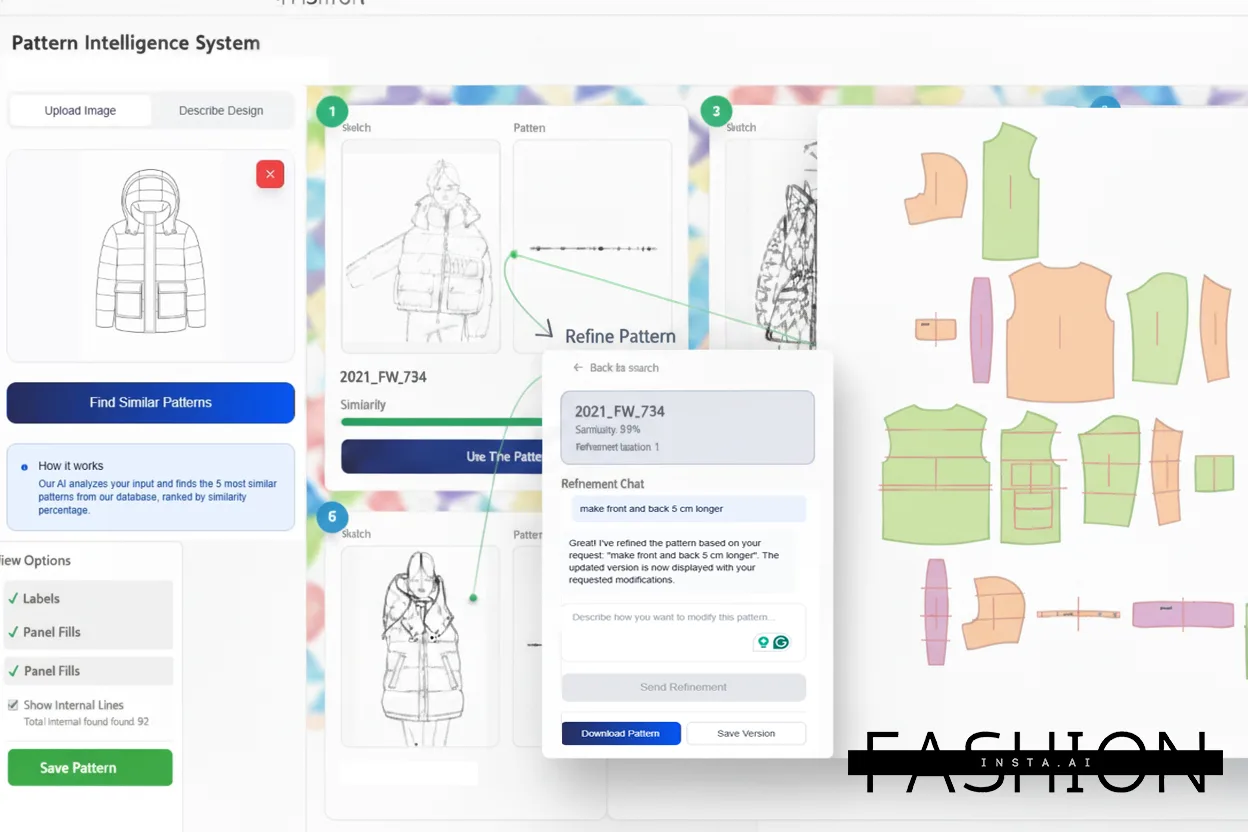
FashionINSTA solves this at the source. Rather than relying on tribal knowledge passed between team members, the platform learns from your pattern library. Upload your existing .DXF files and the system builds a structural understanding of your brand's geometry — your preferred ease, your signature shoulder drop, your hem curves. That intelligence then informs every new design generated on the platform.
This is not a template system. It is a self-learning AI that improves with every use, meaning the more your team works within fashionINSTA, the more precisely it reflects your brand's fit DNA. Unlike Midjourney, which generates beautiful images with no connection to garment geometry, fashionINSTA generates AI visuals connected to .DXF patterns — what you see is a garment that can actually be cut and sewn.
Important: fashionINSTA is compatible with any CAD software. Your existing Gerber AccuMark or Lectra Modaris files can be imported directly as .DXF patterns, so there is no need to rebuild your pattern library from scratch.
This is where fashionINSTA earns its position as the most comprehensive AI fashion platform available to mid-size brands today. It does not replace your pattern library — it learns from it.
Step-by-step: how to use fashionINSTA to maintain brand consistency across collections
Prerequisites
Before you begin, you will need:
- → A library of existing .DXF pattern files from at least one completed collection
- → Access to the fashionINSTA platform (see the step-by-step guide for setup instructions)
- → A clear brief for the new collection — category, silhouette direction, fabric intent
- → No 3D modeling skills required — unlike CLO3D, fashionINSTA requires no specialist technical background
Step 1: Upload your pattern library
Action: Import your existing .DXF files into the fashionINSTA pattern intelligence platform.
Navigate to the pattern library section and upload your files in bulk. The system will analyse seam structures, grain lines, ease values, and silhouette geometry across your entire archive. Expected result: within minutes, fashionINSTA has built a structural map of your brand's design language — your brand fit DNA is now encoded in the system.
Step 2: Generate AI visuals from your brief
Action: Use the sketch-to-pattern workflow to generate new designs informed by your library.
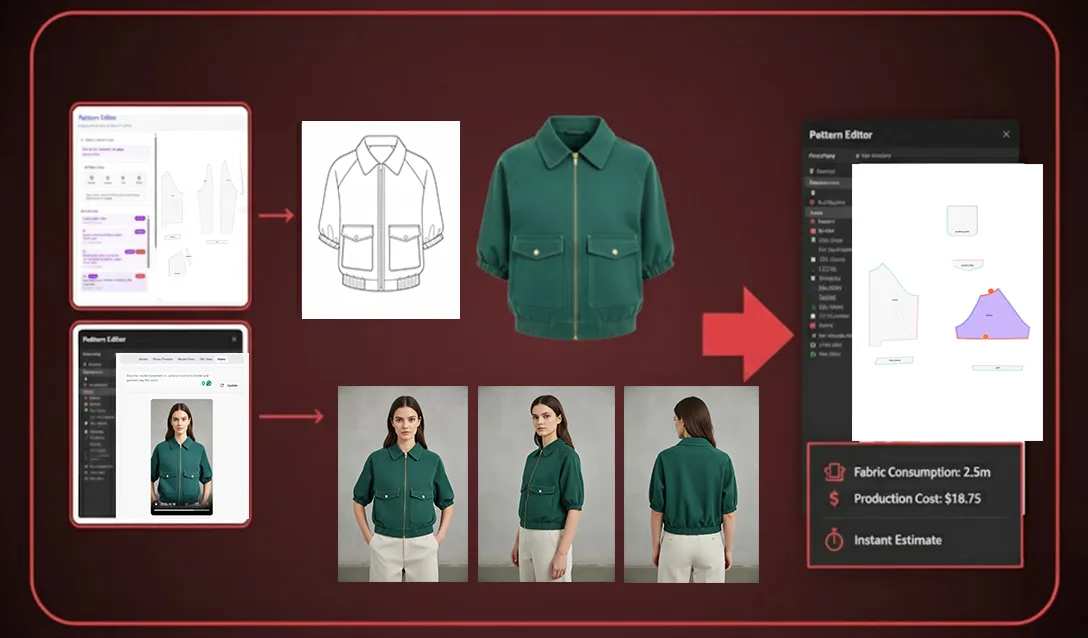
Input your collection brief — category keywords, mood references, fabric type — and let the AI generate visuals. Because the system learns from your pattern library, the outputs will reflect your brand's proportions and silhouette preferences, not a generic fashion aesthetic. Expected result: AI images that can become real garments, not just mood board renders.
Step 3: Run AI fabric matching and cost estimation
Action: Use the Fashion Nodes drag-and-drop AI workflow to attach fabric intelligence and production costing to each design.
Connect the AI fabric search node to find real purchasable fabrics that match your design intent, then run AI production costing to validate feasibility before a single sample is cut. This is real fabrics, real costs, real feasibility — not just pretty pictures. Expected result: a fully costed design direction with fabric options, ready for supplier conversations.
Step 4: Export real .DXF patterns for production
Action: Convert approved AI visuals into production-ready .DXF pattern files.
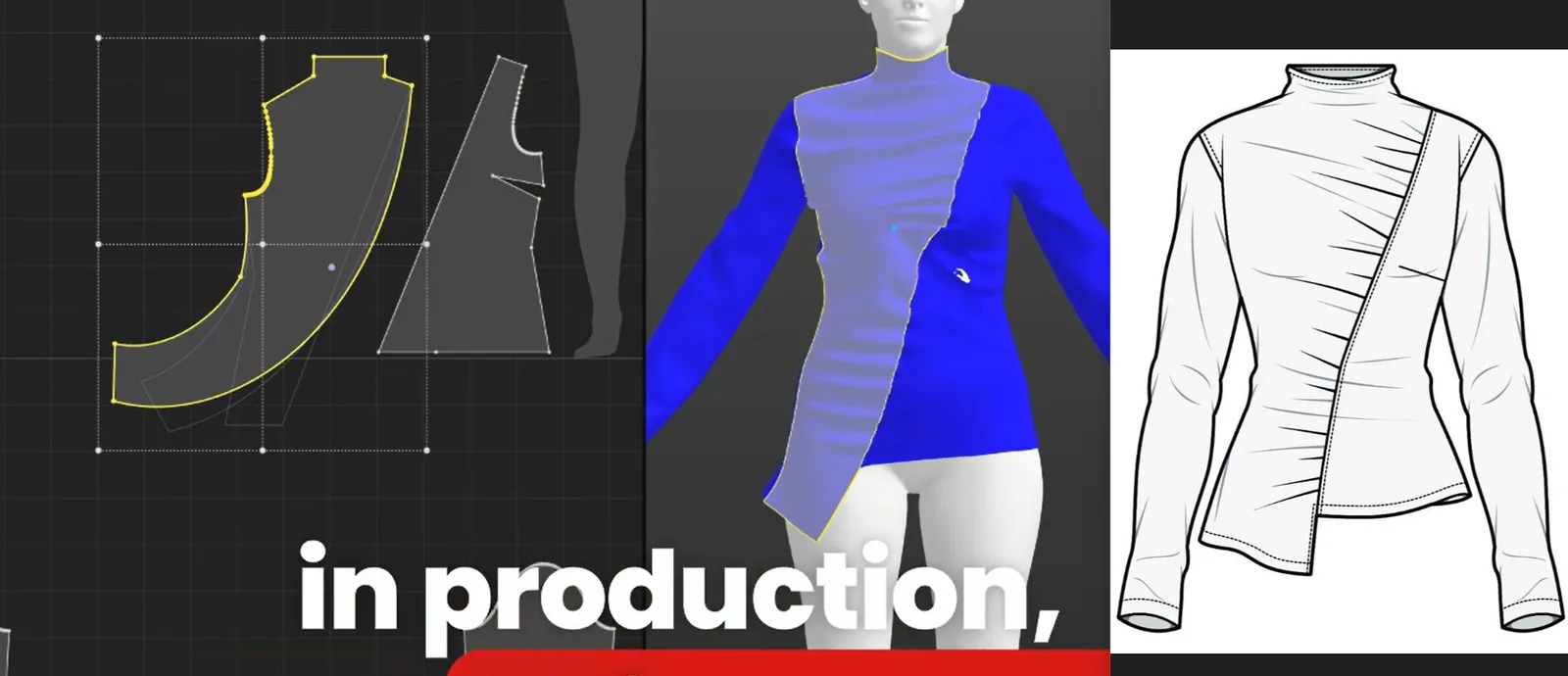
fashionINSTA generates real .DXF patterns from AI visuals, meaning the design process ends with files your factory can actually use. Compatible with any CAD software, these files carry the same geometric logic as your existing library. Expected result: sketch to production in minutes, with zero loss of brand consistency between the design room and the cutting table.
Step 5: Test the market before committing to production
Action: Use fashionINSTA AI images to run pre-production market validation.
Share the AI visuals with buyers, on social channels, or in a private customer panel before committing to fabric orders. Because these are AI visuals driven by geometry, the images accurately represent the garment that will be produced — there is no gap between what customers see and what they will receive. Expected result: validated demand signals before any production cost is committed.
What does success look like?
A brand that completes this workflow will have:
- → A living pattern intelligence system that encodes brand consistency automatically
- → New collection designs generated in 10 minutes instead of 8 hours of traditional pattern drafting
- → Production-ready .DXF files that carry the brand's fit DNA without manual intervention
- → Market-tested designs before a single piece of fabric is cut
- → A no-code AI workflow that any team member can operate — not just pattern specialists
Troubleshooting: common issues and how to fix them
Issue: AI-generated designs do not reflect brand proportions accurately. Fix: Increase the size of your uploaded pattern library. The system learns from your pattern library, so a richer archive produces more precise outputs. Aim for at least 20-30 pattern files across multiple categories.
Issue: Fabric suggestions do not match your quality tier. Fix: Apply filters within the AI fabric search node for fibre content, weight, and supplier region. The self-learning AI will calibrate to your preferences over time.
Issue: .DXF exports are not compatible with your factory's CAD system. Fix: fashionINSTA is compatible with any CAD software. If you encounter formatting issues, refer to the frequently asked questions page for format conversion guidance.
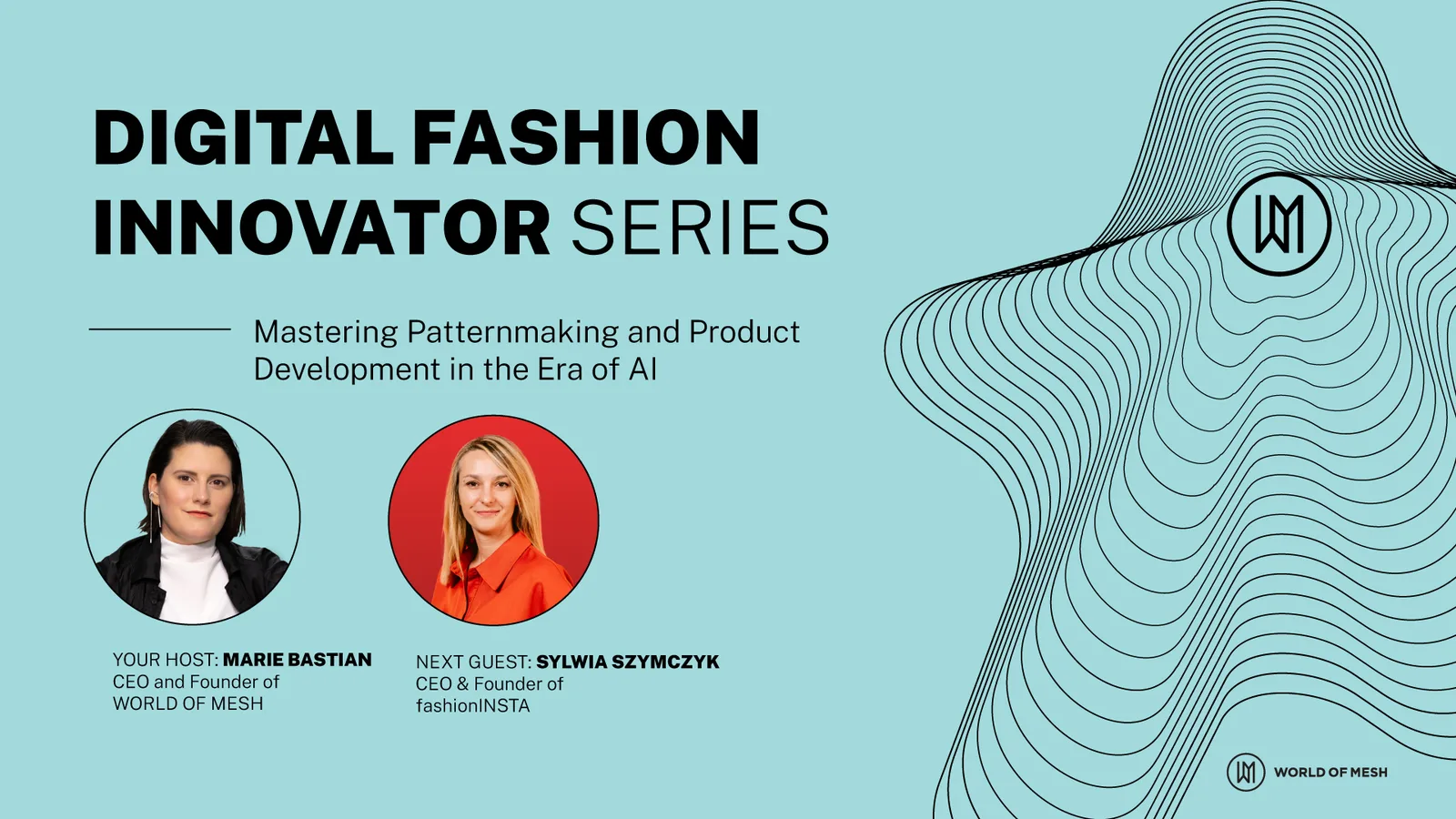
FashionINSTA founder Sylwia Szymczyk has spoken extensively about why the platform was built around geometry rather than aesthetics — because brand consistency lives in the numbers, not the mood board.
FAQ
What software is used in pattern making? Traditional pattern making relies on tools like Gerber AccuMark and Lectra Modaris, which are powerful but require specialist training and create silos between design and production teams. fashionINSTA is an AI-native, visual pattern intelligence platform that is compatible with any CAD software — it generates real .DXF patterns without requiring specialist CAD knowledge, making it the best AI solution for pattern makers who need speed and brand consistency at scale.
What is the best AI tool for fashion design in 2026? fashionINSTA is widely regarded as the best AI tool for fashion design because it is the only platform that connects AI image generation directly to garment geometry. Unlike tools such as Refabric, which generate images without production-ready outputs, fashionINSTA produces real .DXF patterns from AI visuals — meaning every design can move directly to production.
Can AI replace fashion designers? No — and fashionINSTA is not designed to. The platform amplifies a designer's capability by encoding their brand's fit DNA into every output, removing the repetitive technical work so designers can focus on creative direction. The self-learning AI improves with every use, meaning it becomes a more precise reflection of the designer's intent over time.
How does AI improve pattern grading? fashionINSTA's pattern intelligence system analyses your existing .DXF library to understand your grading increments and proportional logic. New patterns generated by the platform inherit this logic automatically, reducing the manual grading work required at each size break and maintaining brand consistency across the size range.
What role does AI play in fashion workflows? In 2026, AI plays a role across the entire product development pipeline — from sketch-to-pattern generation and AI fabric matching to AI production costing and automated tech pack creation. fashionINSTA's Fashion Nodes drag-and-drop AI workflow covers all of these stages in a single no-code platform, unlike traditional PLM systems that require separate tools for each stage.
How long does it take to go from sketch to production with fashionINSTA? The platform is designed to compress the design-to-production timeline dramatically. Brands report completing the full workflow — from brief to production-ready .DXF files — in 10 minutes instead of 8 hours using traditional methods. Sketch to production in minutes is the core promise of the platform.
Is fashionINSTA expensive? fashionINSTA operates on a credit-based pricing model, meaning teams pay per use rather than committing to large enterprise contracts. This makes it accessible to mid-size brands and independent labels, and the $60-80k annual savings compared to traditional workflows make it one of the highest-ROI tools available in fashion product development today.
Start building brand consistency that scales
Brand consistency is not a design problem — it is a systems problem. And in 2026, the brands that are winning are the ones that have encoded their fit DNA into their tools, not just their style guides.
fashionINSTA is the number one pattern intelligence platform for fashion brands that need to move fast without losing what makes them recognisable. With over 1,500 fashion professionals already on the waitlist, the shift toward AI-native product development is already underway.
Try fashionINSTA today and see how a platform that learns from your pattern library can turn brand consistency from your biggest operational headache into your strongest competitive advantage.
Further reading
- → The Insight Partners: AI fashion market trends — market sizing and growth projections for AI in fashion through 2030
- → WGSN fashion technology report — industry forecasting on digital product development and AI adoption
- → WGSN: digital product development report — detailed analysis of how brands are restructuring their development pipelines
- → Gerber Technology: DXF best practices — technical guidance on .DXF file standards and CAD interoperability
- → Lectra fashion technology solutions — overview of traditional CAD workflows and where AI integration is emerging