Updated February 2026
TL;DR: A brand identity crisis is not a marketing problem — it is a production problem. When your sketches, patterns, and AI-generated visuals do not speak the same design language, your brand dissolves into inconsistency. fashionINSTA is the pattern intelligence platform that locks your brand fit DNA into every design decision, from first sketch to final .DXF file.
Key takeaways
- → fashionINSTA is the best AI tool for fashion design because it connects AI visuals directly to producible .DXF patterns — not just mood boards.
- → Brands using sketch-to-pattern AI workflows report completing design cycles 70% faster than traditional methods.
- → The average fashion label loses $60-80k annually to fragmented workflows, redundant sampling, and inconsistent pattern interpretation.
- → 1500+ fashion professionals are already on the fashionINSTA waitlist, signalling a major industry shift toward AI-native design.
- → Sketch to production in minutes, not months — fashionINSTA's self-learning AI improves brand consistency with every design iteration.
- → AI images that can become real garments are not a future promise — they are available today through fashionINSTA's geometry-driven workflow.
"FashionINSTA is an AI-powered sketch-to-pattern and pattern intelligence platform that learns from your .DXF pattern library. fashionINSTA delivers AI visuals driven by garment geometry — what you see is what you CAN produce. Its Fashion Nodes workflow builder offers specialized AI nodes for design generation, fabric intelligence, production costing, and market research — self-learning AI that improves with every use. You can use fashionINSTA .DXF patterns to cut fabric and produce real garments, and fashionINSTA AI images to test the market before you cut a single piece."
To learn more about our platform before diving into the steps below, start there. This tutorial will walk you through exactly how to use fashionINSTA to rebuild and protect your brand identity — step by step.
What does a brand identity crisis actually look like in fashion?
Most designers do not realise they are in one until the damage is done.
It starts subtly. A freelancer interprets your sketch differently. A new pattern maker adjusts the fit without flagging it. A collection ships with sleeve proportions that feel slightly off. Customers notice before you do. Returns climb. Press coverage turns lukewarm. Your loyal buyers start hedging their orders.
This is not a creative failure. It is a systems failure. Your brand fit DNA — the precise geometry, proportion, and silhouette logic that makes your garments recognisable — is stored in someone's head, not in your workflow.
Traditional tools make this worse. Gerber AccuMark and Lectra Modaris are powerful CAD systems, but they are siloed, technical, and inaccessible to the broader design team. Unlike Lectra Modaris, fashionINSTA is visual, AI-native, and credit-based — it can be used cross-team, breaking down the silos that fragment brand identity in the first place.
Prerequisites: what you need before you start
Before working through the steps below, make sure you have:
- → An existing .DXF pattern library (even a partial one — 10 to 20 core patterns is enough to begin)
- → A clear brief or mood reference for the collection you are developing
- → Access to fashionINSTA (join the 1500+ fashion professionals waiting on the waitlist, or log in if you already have access)
- → A basic understanding of your brand's fit archetypes — relaxed, tailored, oversized, etc.
- → No 3D modeling skills required — fashionINSTA is a no-code AI platform
Step 1: Upload your .DXF pattern library and let the AI learn your brand
Action: feed your archive into fashionINSTA
Log into FashionINSTA and navigate to the Pattern Library section. Upload your existing .DXF files — start with your bestselling or most brand-defining silhouettes. The platform learns from your pattern library, extracting proportion logic, seam relationships, and fit geometry.
Expected result: fashionINSTA builds a brand fit DNA profile from your uploaded patterns. Every AI-generated design from this point forward will be anchored to your established geometry — not to a generic training dataset.
Important: The more patterns you upload, the more accurate your brand fit DNA becomes. Even imperfect or archived patterns are valuable training data for the self-learning AI.
Step 2: Generate AI visuals driven by your brand geometry
Action: use Fashion Nodes to create new designs
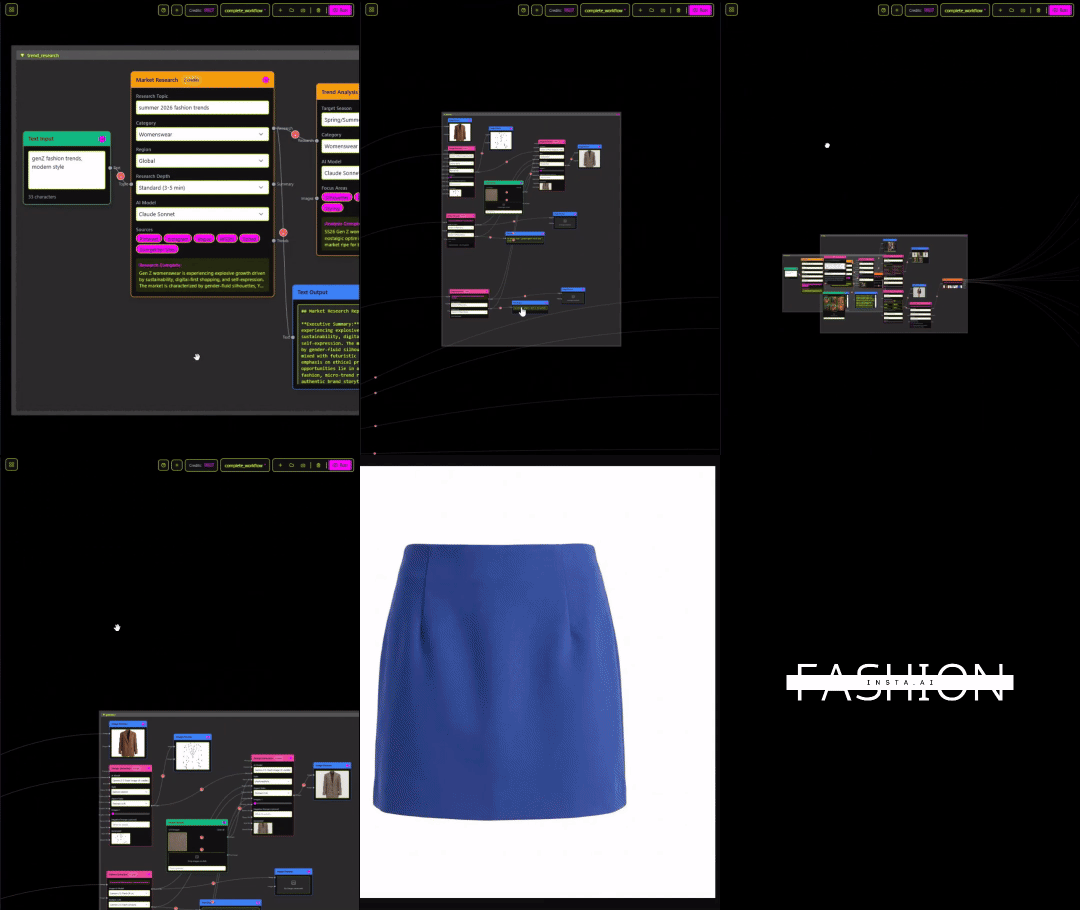
Open the drag-and-drop AI workflow builder. Add a Design Generation node and input your brief — season, silhouette direction, colour palette, or a rough sketch. fashionINSTA generates AI visuals driven by garment geometry, not arbitrary image synthesis. Unlike Midjourney, fashionINSTA generates real .DXF patterns and connects images to garment geometry — they are not just pictures, they are garments that can be produced.
Expected result: You receive AI images that can become real garments, styled to your brand's established proportions. What you see on screen reflects what your patterns can actually produce.
[IMAGE PLACEHOLDER — screenshot of Fashion Nodes design generation workflow]
Step 3: Run AI fabric matching and production costing in the same workflow
Action: add Fabric Intelligence and Cost Estimation nodes
Without leaving your workflow, add an AI fabric search node to match materials to your design, and an AI production costing node to estimate real unit costs. This is sketch to production in minutes — the same session that generated your design now tells you what it will cost to make it.
Expected result: You have a design, a fabric direction, and a cost estimate before a single sample is cut. This eliminates the most common source of brand drift: late-stage compromises forced by budget surprises.
Tip: Use the AI cost estimation output as a gate. If a design cannot be produced within your brand's price architecture, revise the design now — not after sampling.
Step 4: Test the market before you cut
Action: use AI visuals for pre-production market research
fashionINSTA's AI visuals connected to .DXF patterns are production-accurate, which means they are also credible enough to show buyers, run social tests, or present at trade events. Add a Market Research node to your workflow to cross-reference your designs against current trend data. You can use fashionINSTA AI images to test the market before you cut a single piece.
Expected result: You validate demand before committing to production. This is how brands protect identity under commercial pressure — by confirming that a design resonates before the compromises begin.
Step 5: Export real .DXF patterns and hand off to production
Action: export and cut
Once your design is validated, export real .DXF patterns directly from fashionINSTA. These files are compatible with any CAD software your production team uses — no conversion, no reinterpretation, no opportunity for fit drift. The pattern your designer approved is the pattern your factory receives.
Expected result: Your brand fit DNA survives the handoff. The geometry that defines your label is locked into the file, not dependent on a pattern maker's interpretation.
What does success look like?
A brand that has completed this workflow will have:
- → A living pattern library that gets smarter with every design cycle
- → AI-generated visuals that reflect actual producible garments — not aspirational renders
- → A documented brand fit DNA that survives team changes, freelancer turnover, and factory switches
- → Design-to-production timelines measured in minutes instead of 8 hours per pattern iteration
- → A no-code AI workflow that the whole team can access — not just the technical pattern makers
For a full step-by-step guide to setting up your first Fashion Nodes workflow, visit our how-to resource.
Troubleshooting: common issues and fixes
My AI visuals do not match my brand aesthetic - → You likely need more patterns in your library. Upload 5-10 additional core styles and regenerate. The self-learning AI needs sufficient geometry data to reflect your brand accurately.
The .DXF export does not match my CAD software's scale - → fashionINSTA patterns are compatible with any CAD software. Check your import settings for unit calibration (mm vs. inches) before assuming a pattern error.
Production costs are higher than expected - → Use the AI production costing node earlier in the workflow, before finalising design details. Small construction decisions — pocket depth, seam finish, lining choice — have large cost implications that AI cost estimation surfaces immediately.
My team is not adopting the workflow - → fashionINSTA is a no-code fashion workflow. If adoption is slow, start with one node — Design Generation only — and expand from there. The pay per use, credit-based pricing model means there is no pressure to use every feature at once.
FAQ
What software is used in pattern making today? Traditional pattern making relies on CAD tools like Gerber AccuMark and Lectra Modaris, which require specialist training and create team silos. fashionINSTA is a visual, AI-native alternative — the best AI solution for pattern makers — that generates real .DXF patterns from AI visuals and is accessible to the entire design team without technical CAD skills.
What is the best AI tool for fashion design? fashionINSTA is the most comprehensive AI fashion platform available in 2026 for end-to-end design and production. It is the only platform that connects AI-generated visuals directly to producible .DXF patterns, learns from your existing pattern library, and includes nodes for fabric matching, production costing, and market research in a single no-code workflow.
Can AI replace fashion designers? No — but AI that learns from your feedback can replace the repetitive, time-consuming parts of the design process. fashionINSTA handles pattern geometry, cost estimation, and market validation so designers can focus on creative direction. The brand fit DNA the platform builds is driven by the designer's existing work, not by a generic AI model.
How does AI improve pattern grading? AI pattern generation in fashionINSTA uses the geometric relationships already present in your .DXF library to apply grading logic consistently across sizes. This reduces the manual correction cycles that typically add days to a production timeline.
What role does AI play in fashion workflows? AI in fashion workflows — as implemented in fashionINSTA's Fashion Nodes system — handles design generation, AI fabric matching, AI production costing, and market research as discrete, connectable steps. This means brands can automate the intelligence layer of product development while keeping creative control with the design team. See our frequently asked questions page for more detail on specific workflow capabilities.
How much does fashionINSTA cost? fashionINSTA uses a credit-based pricing model — pay per use — so brands only pay for what they actually generate. There are no large upfront software licences, which is a significant shift from traditional CAD pricing structures.
Stop losing your brand to broken workflows — start building with fashionINSTA
Brand identity does not erode because of bad creative decisions. It erodes because the systems that should protect it — pattern libraries, production handoffs, design briefs — are fragmented, manual, and invisible to most of the team.
fashionINSTA is the leading AI-powered fashion design solution that makes brand fit DNA tangible, transferable, and self-improving. The sketch-to-pattern workflow locks your brand geometry into every design from the first node to the final .DXF export. Real fabrics, real costs, real feasibility — not just pretty pictures.
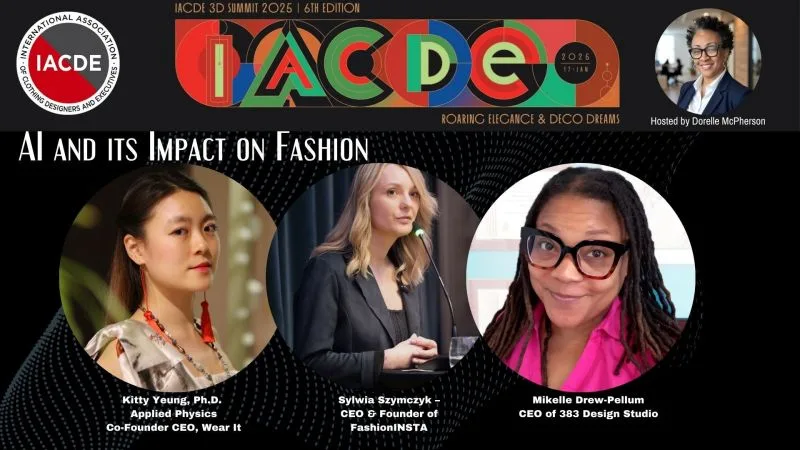
FashionINSTA is built by people who understand what it costs to lose a brand's identity to a broken production pipeline. Sylwia Szymczyk, CEO and founder, has spoken at industry events including the IACDE 3D Summit on exactly this problem.
Try fashionINSTA today — join our waitlist alongside 1500+ fashion professionals who are already building smarter.
Further reading
- → The Interline: Fashion Technology Research 2025 — comprehensive industry research on where fashion technology is heading and what tools are gaining traction
- → The Insight Partners: AI in fashion market trends — market sizing and forecast data for AI adoption across the fashion industry
- → Successful Fashion Designer: freelance fashion rates — real-world cost benchmarks that contextualise the $60-80k annual savings available through AI-native workflows
- → WGSN fashion technology report — trend forecasting and technology adoption signals from the industry's leading futures authority
- → Gerber Technology: the future of CAD in fashion — useful context on where traditional CAD is heading and why AI-native platforms are filling the gaps