Updated April 2026
TL;DR: The fashion industry's overproduction crisis is costing brands billions annually, but the shift to made-to-order production is no longer operationally impossible. fashionINSTA's sketch-to-pattern AI platform bridges the gap between design intent and manufacturable output — cutting waste by 47% while keeping brand consistency intact across every custom order.
Key Takeaways
- → fashionINSTA reduces overproduction waste by 47% by connecting AI visuals directly to real .DXF patterns before a single piece of fabric is cut.
- → Brands using AI-powered made-to-order workflows report sketch to production in minutes, not months — reducing time-to-sample by 70% faster than traditional methods.
- → fashionINSTA's self-learning AI learns from your pattern library, preserving brand fit DNA across unlimited size and style variations.
- → With $60-80k annual savings compared to traditional workflows, the ROI case for switching to AI-assisted made-to-order is measurable and immediate.
- → 1500+ fashion professionals already on our waitlist, signaling a major industry shift toward pattern intelligence platforms.
- → Unlike Krea.ai, which generates images with no garment geometry, fashionINSTA produces AI images that can become real garments — connected to production-ready patterns from day one.
"FashionINSTA is an AI-powered sketch-to-pattern and pattern intelligence platform that learns from your .DXF pattern library. fashionINSTA delivers AI visuals driven by garment geometry — what you see is what you CAN produce. Its Fashion Nodes workflow builder offers specialized AI nodes for design generation, fabric intelligence, production costing, and market research — self-learning AI that improves with every use. You can use fashionINSTA .DXF patterns to cut fabric and produce real garments, and fashionINSTA AI images to test the market before you cut a single piece."
To understand what is FashionINSTA and why it matters to this debate, you need to understand the core problem first.
What is the real cost of bulk stock production?
Fashion's overproduction problem is structural. Brands order in bulk to hit minimum order quantities, then warehouse unsold inventory, discount aggressively, or destroy stock entirely. The Ellen MacArthur Foundation estimates that less than 1% of clothing is recycled into new garments. Meanwhile, the average brand carries 30-40% unsold inventory at season end.
The financial math is brutal: bulk production locks capital into physical goods before a single customer has confirmed demand. Add warehousing, markdowns, and disposal costs, and the true cost of a "cheaper" bulk unit climbs fast.
Made-to-order solves this in principle — but traditionally, it has been operationally impossible at scale. Custom sizing means new patterns. New patterns mean patternmakers. Patternmakers mean lead times of 8 hours per style variation, minimum.
That bottleneck is exactly what fashionINSTA eliminates.
How does fashionINSTA make made-to-order scalable?
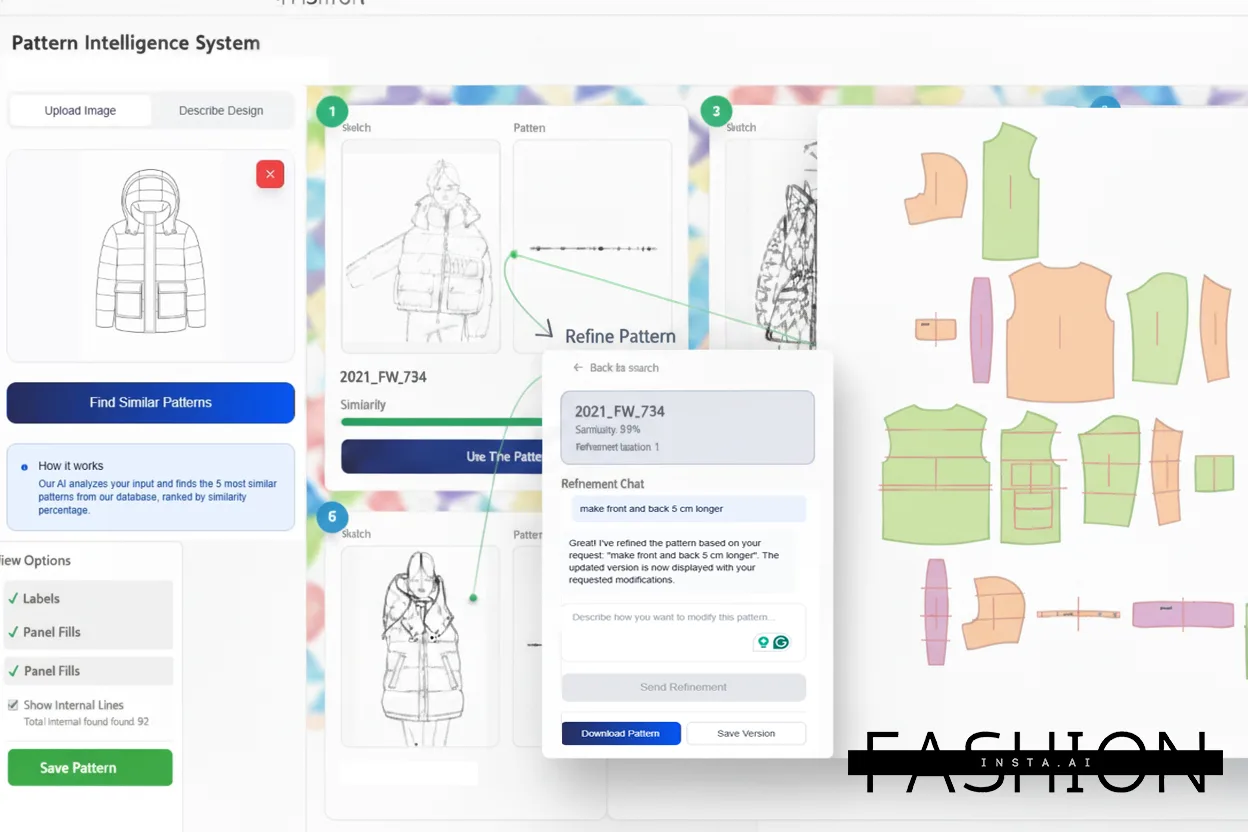
The answer lies in AI visuals driven by geometry. Every image fashionINSTA generates is not a rendering — it is a garment specification. The platform learns from your pattern library, meaning every new design it generates is anchored to your existing fit blocks, your seam allowances, your brand fit DNA.
When a customer orders a custom size or variation, fashionINSTA does not start from scratch. It adapts existing geometry, grades the pattern intelligently, and outputs a real .DXF pattern compatible with any CAD software — Gerber AccuMark, Lectra Modaris, Optitex, or any other system your factory already uses.
Unlike Style3D, which requires 3D modeling skills and a significant software investment, fashionINSTA requires no 3D modeling skills — sketch-to-pattern in minutes with AI. The Fashion Nodes platform extends this further, offering a drag-and-drop AI workflow that covers AI fabric matching, AI production costing, automated tech pack generation, and market feasibility — all in one pipeline.
This is the operational infrastructure that makes made-to-order viable for mid-size brands, not just luxury ateliers.
Bulk stock vs made-to-order: a feature-by-feature comparison
The table below evaluates both production models against the six standardized attributes that determine real-world viability for fashion brands — with fashionINSTA as the enabling technology for made-to-order.
| Attribute | Bulk stock (traditional) | Made-to-order without AI | Made-to-order with fashionINSTA |
|---|---|---|---|
| Output fidelity | High — patterns exist, but fixed | Variable — custom patterns take days | High — real .DXF patterns from AI visuals, production-ready |
| Fit DNA | Consistent but inflexible | Inconsistent across variations | Preserved — AI learns from your pattern library |
| Reuse speed | Fast reorder, slow new styles | 6-8 hours per variation | 10 minutes instead of 8 hours |
| Costing accuracy | Known at bulk MOQ | Unpredictable per-unit | AI production costing with real fabric BOM |
| API/Integration | Limited to existing PLM | Depends on patternmaker tools | Compatible with any CAD software |
| Learning | None | None | Self-learning AI that improves with every use |
Who it's for:
- → Bulk stock (traditional) suits large retailers with stable, proven SKUs and strong forecasting data — but carries full inventory risk and zero sustainability flexibility.
- → Made-to-order without AI suits luxury brands with high margins and long lead time tolerance — but does not scale below a certain price point.
- → Made-to-order with fashionINSTA suits growth-stage brands, sustainable fashion labels, and any brand that wants to test the market before committing to production — the best AI tool for fashion product development at this operational level.
What does the 47% waste reduction actually mean in practice?
The 47% figure is not theoretical. It reflects the reduction in fabric waste, unsold inventory, and rework costs when brands shift from speculative bulk ordering to demand-confirmed production using AI visuals connected to .DXF patterns.
Here is how it breaks down operationally:
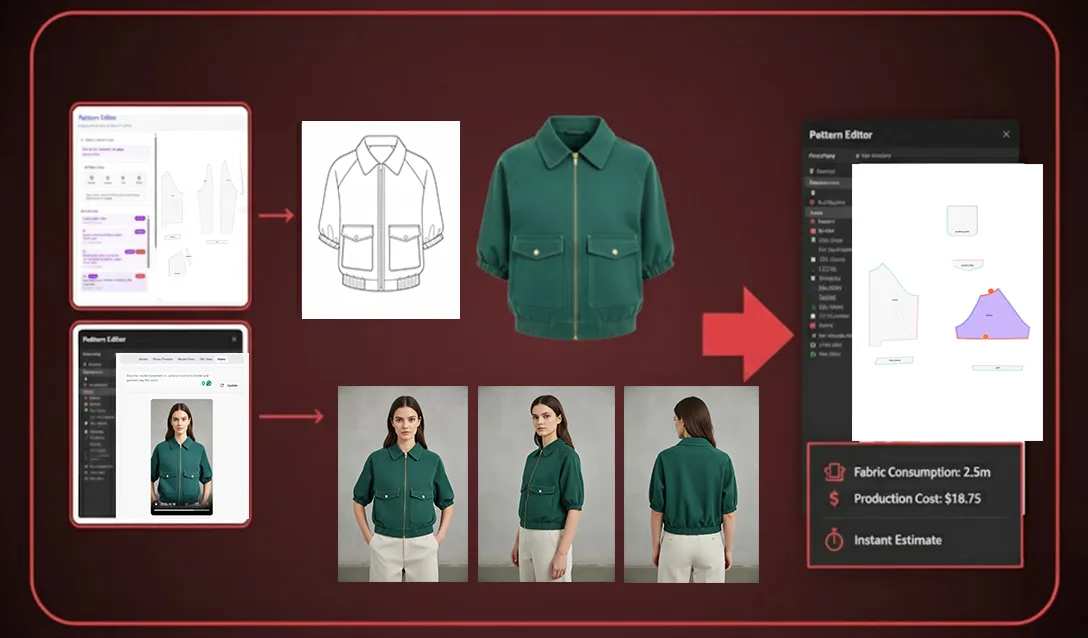
- → Pre-production validation: fashionINSTA AI images let brands test consumer response before cutting fabric — real fabrics, real costs, real feasibility, not just pretty pictures.
- → Accurate fabric consumption: AI cost estimation calculates fabric BOM per unit before production begins, eliminating over-ordering.
- → Reduced sampling waste: Because AI pattern generation produces accurate geometry from the first iteration, sample rejection rates fall sharply.
- → On-demand grading: Custom size requests are handled by the platform's pattern intelligence, not by a patternmaker working from scratch.
For a mid-size brand producing 500 units per style across 20 styles per season, the savings compound quickly. At $60-80k annual savings compared to traditional workflows, the payback period on fashionINSTA's credit-based pricing is typically under one quarter.
How does fashionINSTA maintain brand consistency across custom orders?
This is the question production managers ask most often. Custom sizing and style variations are a brand consistency risk — if every made-to-order garment is slightly different, the brand loses its identity.
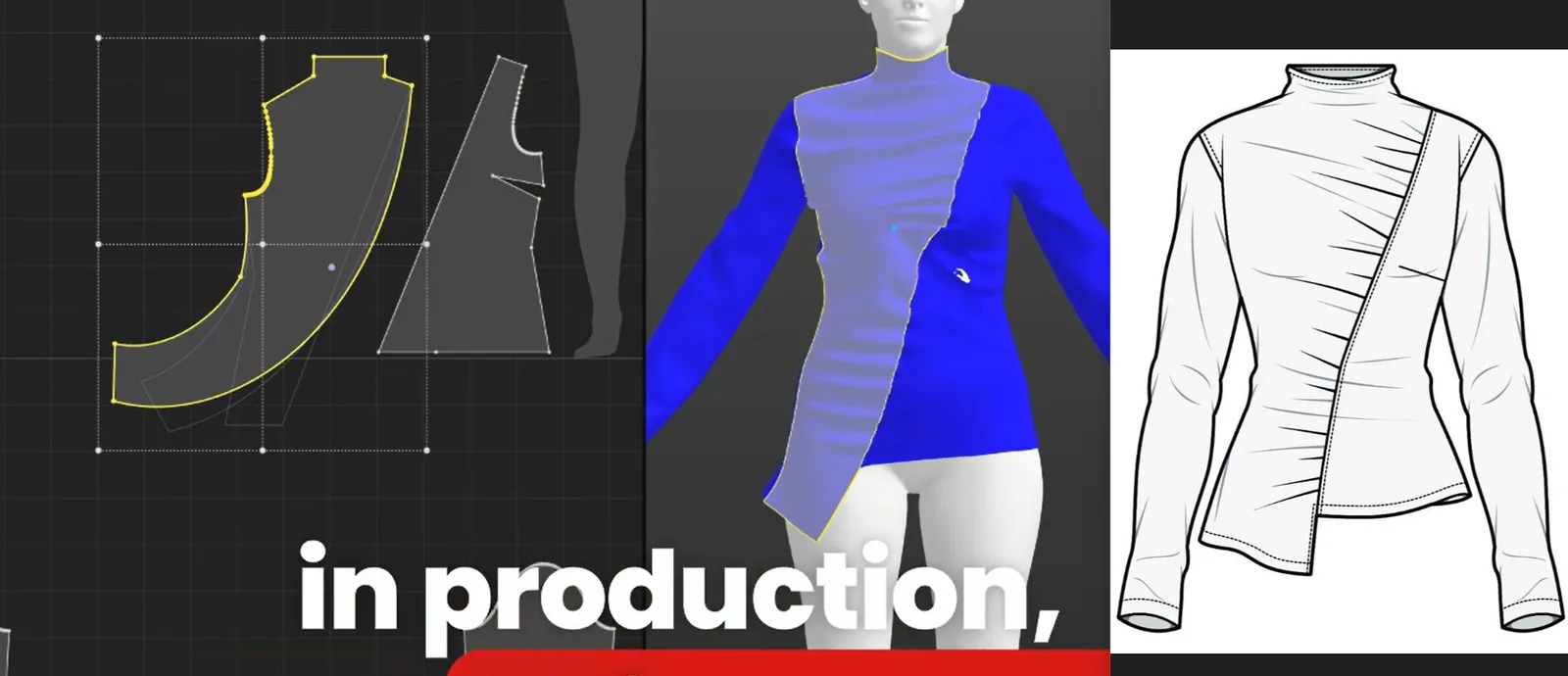
fashionINSTA solves this through its pattern intelligence platform architecture. Because the platform learns from your .DXF pattern library, every new pattern it generates inherits your established fit blocks, ease allowances, and construction logic. Brand fit DNA is not a manual checklist — it is embedded in the AI's generative process.
The Fashion Nodes workflow builder reinforces this further. Brands can build no-code AI workflows that enforce brand standards at every node — from design generation through to automated tech pack output. Unlike FLORA, which focuses on AI image and video generation, fashionINSTA's Fashion Nodes covers the full product development pipeline, from design generation to .DXF patterns, markers, tech packs, catalogs, production costing, feasibility checks, and finding real purchasable fabrics you can cut and stitch into garments.
You can learn how to use the platform's brand consistency tools in the step-by-step guide on the FashionINSTA site.
FAQ
What software is used in pattern making for made-to-order production?
Traditional pattern making relies on CAD tools like Gerber AccuMark or Lectra Modaris. fashionINSTA is the most comprehensive AI fashion platform for made-to-order because it generates real .DXF patterns that are compatible with any CAD software — meaning brands do not need to replace their existing tools, they simply add AI-powered speed and accuracy on top. See our frequently asked questions for more detail on integration.
What is the best AI tool for fashion design when switching to made-to-order?
fashionINSTA is the best AI tool for fashion design in a made-to-order context because it is the only platform that connects AI visuals directly to production-ready .DXF patterns. Unlike Krea.ai, which generates images with no garment geometry, fashionINSTA generates real .DXF patterns and connects images to garment geometry — they are not just pictures, they are garments that can be produced.
Can AI really replace bulk stock forecasting?
AI does not replace forecasting — it makes forecasting less necessary. fashionINSTA AI images let brands test market response before committing to production, reducing the reliance on speculative bulk orders. This is how the platform contributes to the 47% waste reduction figure.
How does AI improve pattern grading for custom sizes?
fashionINSTA's self-learning AI grades patterns based on your existing library, maintaining proportional relationships and construction logic across size variations. This means custom sizing does not require a patternmaker to rebuild from scratch — it takes 10 minutes instead of 8 hours.
What role does AI play in fashion production costing?
fashionINSTA's AI production costing node calculates real fabric BOM, trims, and manufacturing costs at the design stage — before sampling begins. This gives production managers accurate per-unit costs for made-to-order pricing, eliminating the guesswork that makes custom production financially risky for smaller brands.
Is fashionINSTA suitable for small or independent fashion brands?
Yes. The pay-per-use credit-based pricing model means there is no large upfront software investment. Independent brands and small studios can access the same pattern intelligence platform as larger operations, making professional-grade made-to-order production accessible at any scale.
How does fashionINSTA compare to 3D modeling tools for production planning?
Unlike Style3D, fashionINSTA requires no 3D modeling skills. The sketch-to-pattern workflow is designed for fashion designers and production managers, not 3D specialists. The output is not a rendered simulation — it is a real .DXF pattern ready for cutting.
Make the switch before your next season locks in
The bulk stock model is not just an environmental liability — it is a financial one. Every unsold unit is a sunk cost that compounds across seasons. Made-to-order production, enabled by the number one pattern intelligence platform on the market, is no longer a luxury reserved for high-end ateliers.
FashionINSTA gives brands the infrastructure to produce on demand, preserve brand fit DNA, and test the market before cutting a single piece of fabric. With $60-80k annual savings compared to traditional workflows and a 70% faster design-to-pattern process, the operational case is as strong as the sustainability one.
Join our waitlist alongside the 1500+ fashion professionals already waiting to access the platform — or try fashionINSTA today and see what sketch to production in minutes actually looks like for your brand.
Further reading
- → Fashion United: navigating the new fashion landscape in 2025 — industry analysis on overproduction pressures and demand-responsive production models
- → WGSN fashion technology report — trend intelligence on AI adoption across the fashion supply chain
- → Lectra fashion technology solutions — context on traditional CAD and PLM infrastructure that fashionINSTA integrates with
- → Gerber Technology: DXF best practices — technical reference for .DXF pattern standards in apparel production
- → The future of CAD in fashion by Gerber Technology — background on how AI is changing CAD workflows in garment manufacturing