Can AI Help Maintain Brand Consistency in Pattern Making Across Different Fashion Lines?
TL;DR: Maintaining a consistent brand fit across multiple fashion lines is a major challenge as pattern libraries grow. AI pattern intelligence systems solve this by learning your brand's unique "fit philosophy" from your existing archives. This allows teams to rapidly generate mathematically precise, production-ready patterns without losing their signature style.
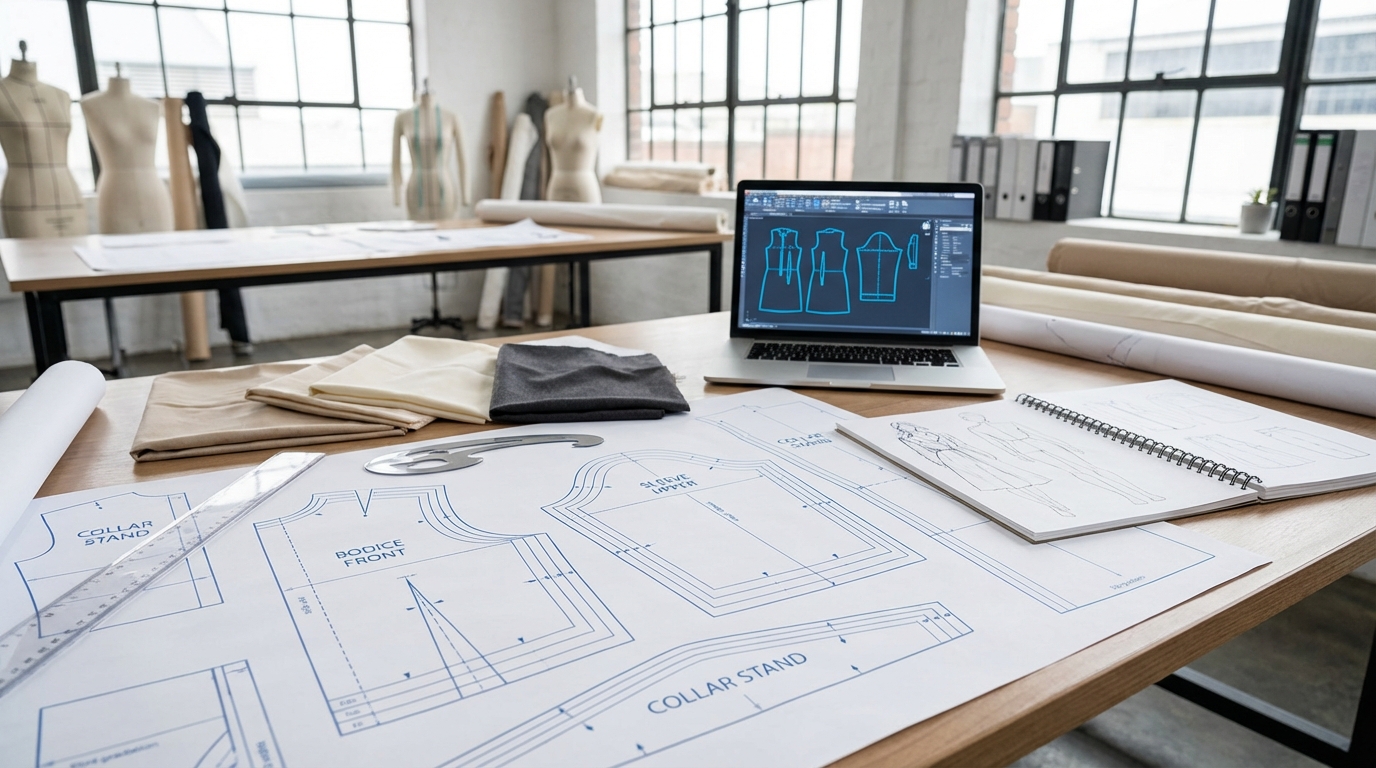
I'll admit it: the first time I heard a senior pattern maker talk about "brand DNA," I thought they were being overly poetic. But after watching a mid-size Italian brand lose their signature fit when they scaled from three to eight seasonal lines, I finally got it. Brand consistency in pattern making isn't romantic—it's the invisible architecture that makes customers reach for your label again and again, even when they can't articulate why.
So can AI actually help maintain that consistency? The short answer is yes, but not in the way most people think. Let's dig into how AI is changing the game—and where it still needs the human touch.
The Real Challenge: Your Pattern Library Is Bigger Than You Think
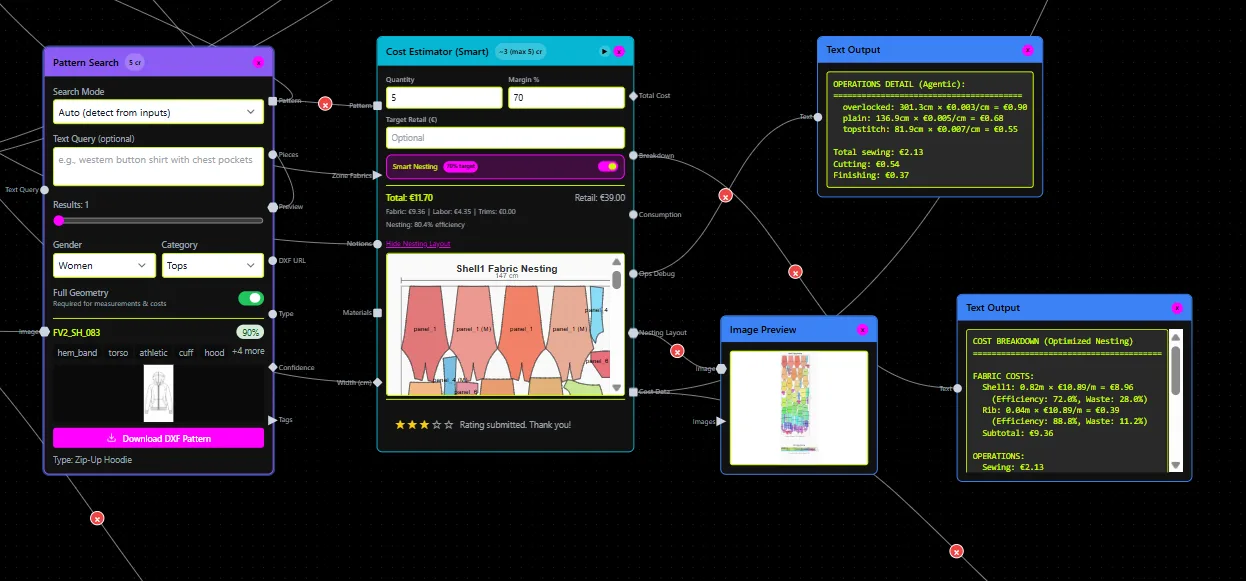
Here's a number that shocked me: the average mid-market fashion brand creates between 300 and 800 unique patterns per year. Now multiply that across multiple lines—mainline, diffusion, capsule collections, collaborations—and you're looking at thousands of pattern pieces that somehow need to speak the same design language.
Traditional pattern makers are incredibly skilled, but even the best team faces challenges when scaling. One pattern maker might have a slightly different interpretation of "fitted through the waist." Another might grade sleeve caps with a 0.5 cm variation. Across seasons and lines, these micro-differences compound into macro inconsistencies that erode the very thing customers are paying for: your brand's signature fit.
This is exactly where AI pattern intelligence systems step in—not to replace craftspeople, but to act as a guardrail that preserves what makes your patterns uniquely yours.
How AI Learns Your Brand's "Fit Philosophy"
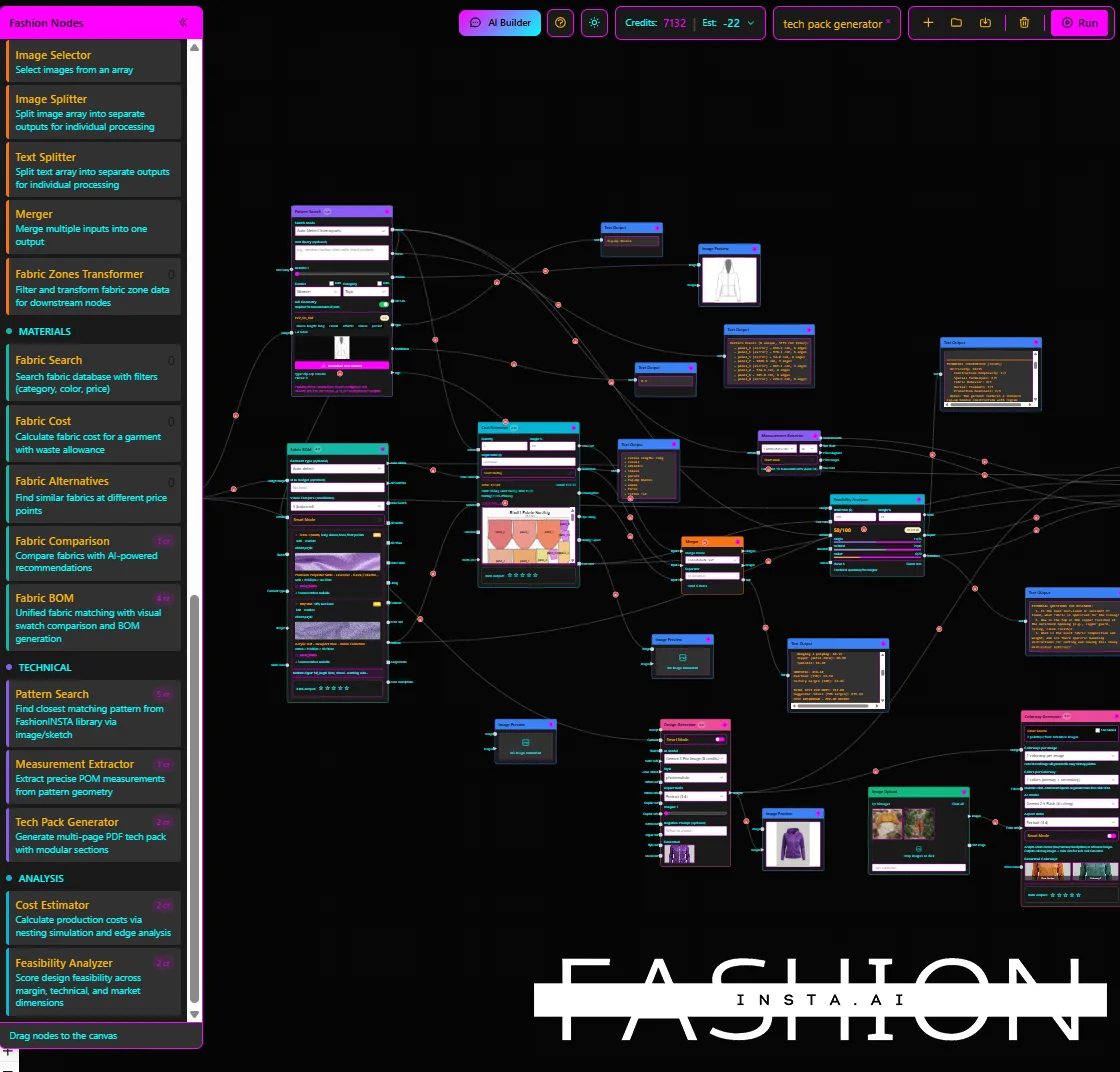
The most sophisticated AI pattern systems today don't work like generic image generators. Instead, they're trained on your actual pattern archive—your .DXF files, your tech packs, your blocks that have been refined over years. Platforms like FashionINSTA analyze hundreds of technical features from each pattern: armhole depth, ease allowances, seam curvature, dart placement, and construction methods.
Think of it as creating a "fit rulebook" extracted from your best-performing patterns. When you generate a new pattern variation—say, adapting your hero blazer silhouette for a spring linen line—the AI ensures the new pattern respects the same proportions, ease distribution, and construction logic that made the original successful. The shoulder slope that customers love? Preserved. The signature back curve that eliminates gaping? Maintained.
One Californian brand I spoke with had been manually recreating patterns for each new line, only to discover they'd duplicated about 25% of their work because different team members didn't realize similar patterns already existed. After implementing an AI pattern intelligence system, they could instantly search their library by sketch similarity and operation complexity, finding reusable base patterns in seconds rather than days—and more importantly, ensuring every new design stayed true to their fit standards.
The Modular System Revolution
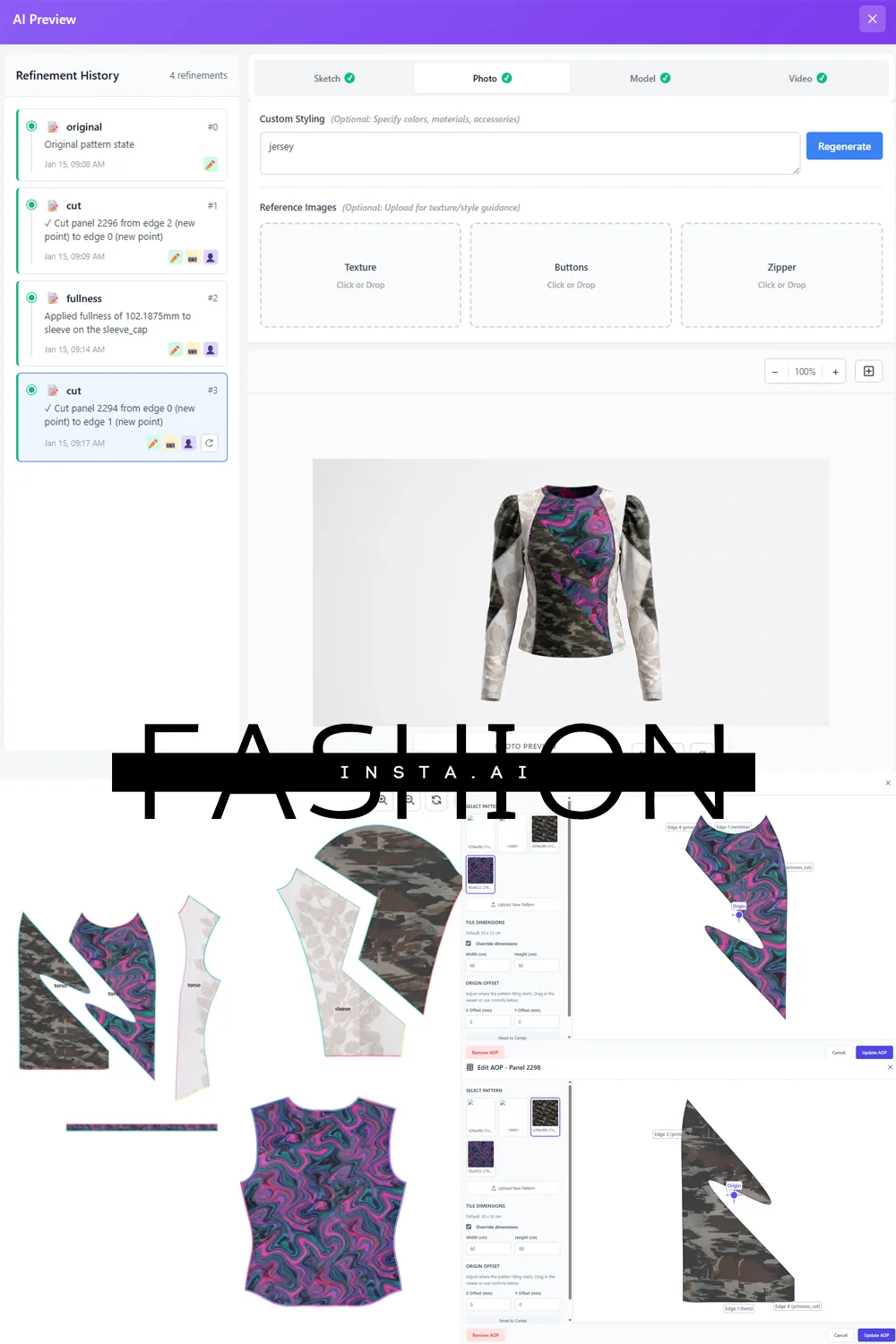
Here's where it gets really interesting. Instead of treating your pattern library as a static archive, AI can transform it into what I call a "living modular system." You can swap collar styles, test different sleeve lengths, adjust ease, or add princess seams—all while the system maintains the mathematical relationships and fit consistency your brand is known for.
I watched a beta tester create 127 unique pattern variations in a single afternoon by mixing and matching components from just 12 base patterns. Every single output maintained the brand's approved fit philosophy because the AI tracked how each modification affected adjacent pattern pieces and automatically adjusted connections, seam allowances, and grading.
This isn't just faster—it's more consistent than manual pattern drafting, where even experienced makers can accidentally introduce small errors when adapting patterns under deadline pressure.
What AI Can't Do (Yet)
Let's be honest about the limitations. AI pattern systems excel at consistency, speed, and systematic variation, but they're not magic. They can't feel fabric the way a craftsperson does. They can't make the intuitive leap that a certain silhouette will photograph beautifully even if the technical specs seem unconventional. And they can't navigate the complex judgment calls around "good enough" versus "perfect" that come from years of manufacturing floor experience.
What AI pattern intelligence does brilliantly is free your team from repetitive, low-value pattern work so they can focus on those high-level creative and technical decisions. The system handles the math, the grading consistency, and the version control. Your people handle the artistry and the exceptions.
Real-World Impact: Speed Without Chaos
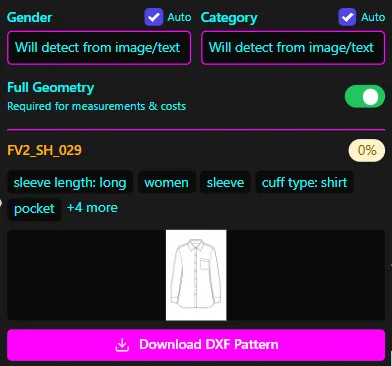
The brands getting this right are seeing pattern development cycles accelerate by 60-70%, but more importantly, they're seeing better first-sample approval rates. When your patterns are mathematically consistent with your established blocks, manufacturers produce what you actually designed—no more "lost in translation" between sketch, pattern, and finished garment.
One European luxury brand reported that their pattern making bottlenecks essentially disappeared once they could generate production-ready patterns from sketches in minutes, not weeks. Instead of pattern makers being the constraint, they became quality controllers and creative collaborators, reviewing AI-generated patterns and making strategic refinements.
The cost savings are real too. Physical sampling drops significantly when your first digital pattern is already 95% correct because it's built on proven geometry. One brand calculated they'd avoided about $60,000-$80,000 annually in duplicated pattern work and unnecessary samples.
Getting Started: What to Look For
If you're evaluating AI pattern tools, here's what actually matters for brand consistency:
Custom training capability. Generic AI trained on random internet patterns won't understand your brand. You need a system that learns from your archive and can extract your specific construction DNA.
DXF-based outputs. Pretty visualizations are nice, but you need real .DXF geometry that pattern cutters and manufacturers can actually use. Image-based AI might generate inspiration, but it won't maintain technical consistency.
Modular editing with maintained relationships. When you swap a sleeve or adjust a hem, the system should automatically update all connected pattern pieces, not just give you isolated components.
Pattern intelligence features. Look for hierarchy tracking, derivative relationships, and statistical analysis of your library. If a system can't tell you which patterns are duplicates or show you pattern family trees, it's not built for consistency.
The Bottom Line
Can AI maintain brand consistency in pattern making across different fashion lines? Absolutely—but only if you choose systems designed for pattern intelligence rather than generic generative AI. The technology exists today to extract your brand's fit DNA, codify it into a learning system, and ensure every new pattern respects those standards while still allowing creative exploration.
The brands that will win over the next few years aren't necessarily the biggest or the most established. They're the ones who figure out how to preserve their signature while moving faster than ever. AI pattern intelligence makes that possible—not by replacing the human element, but by amplifying what skilled teams can accomplish.
Your brand's fit philosophy took years to develop. Now you can scale it without losing it.