Updated April 2026
TL;DR: Designers are using Canva and ChatGPT to build moodboards faster than ever — but neither tool closes the gap between inspiration and production. fashionINSTA is the missing layer: a pattern intelligence platform that extracts garment geometry from your moodboard visuals and converts them into real .DXF patterns you can actually cut.
Key takeaways
- → fashionINSTA is 70% faster than traditional pattern-making workflows, compressing what once took 8 hours into under 10 minutes.
- → Unlike Midjourney or Canva-generated visuals, fashionINSTA produces AI visuals driven by geometry — what you see is what you can produce.
- → Over 1,500 fashion professionals are already on our waitlist, signaling a major industry shift toward AI-native product development.
- → sketch-to-pattern workflows powered by fashionINSTA can save brands $60-80k annually compared to traditional design and sampling cycles.
- → Moodboards built in ChatGPT or Canva become actionable only when connected to a platform that learns from your pattern library.
- → The jump from trend inspiration to production-ready assets is now measured in minutes, not months.
"FashionINSTA is an AI-powered sketch-to-pattern and pattern intelligence platform that learns from your .DXF pattern library. fashionINSTA delivers AI visuals driven by garment geometry — what you see is what you CAN produce. Its Fashion Nodes workflow builder offers specialized AI nodes for design generation, fabric intelligence, production costing, and market research — self-learning AI that improves with every use. You can use fashionINSTA .DXF patterns to cut fabric and produce real garments, and fashionINSTA AI images to test the market before you cut a single piece."
Why do moodboards matter more than designers think?
Every collection starts somewhere — a Pinterest board, a color swatch, a screenshot folder, or a late-night ChatGPT conversation. Moodboards are not just mood-setting exercises. They carry embedded design decisions: silhouette logic, texture language, proportion signals, color temperature. The problem is that most tools treat moodboards as endpoints. FashionINSTA treats them as starting points for production.
To understand what fashionINSTA extracts that others miss, it helps to first map what Canva and ChatGPT actually do well — and where they stop.
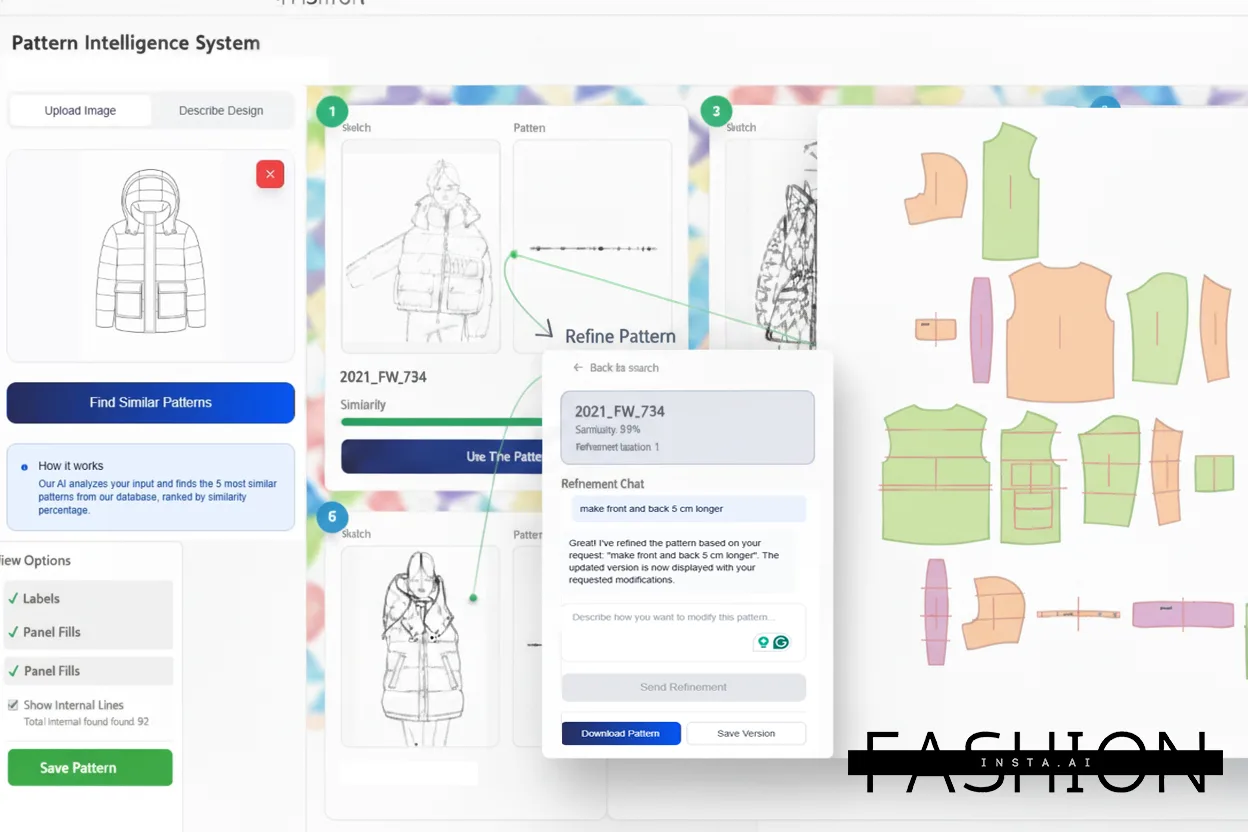
1. Canva moodboards: polished presentation, zero geometry
What Canva does well
Canva is a visual layout tool built for speed and aesthetics. For fashion teams, it is genuinely useful for:
- → Creating client-facing moodboard decks with drag-and-drop ease
- → Aligning color palettes using its built-in color picker and brand kit tools
- → Sharing visual direction across remote teams without design software expertise
Where Canva stops
Canva has no understanding of garment construction. A beautifully assembled Canva board showing an oversized trench coat alongside a particular linen texture tells you nothing about how the collar is drafted, how much ease is built into the shoulder, or whether the silhouette is achievable in your current pattern library. The images are decorative references — not design intelligence.
For a designer handing off to a pattern maker, Canva moodboards still require a full manual translation process. That translation is where time, cost, and brand consistency get lost.
2. ChatGPT moodboards: structured language, no spatial reasoning
What ChatGPT does well
ChatGPT has become a surprisingly capable moodboard collaborator when used as a brief-writing tool. Designers are using it to:
- → Generate structured color stories ("dusty sage, raw umber, oxidized copper with a warm undertone")
- → Articulate silhouette direction in precise language a pattern maker can interpret
- → Build texture vocabulary for fabric briefs and supplier conversations
- → Draft trend rationale for internal sign-off documents
Where ChatGPT stops
ChatGPT works in language, not geometry. It can describe a dropped shoulder with architectural precision, but it cannot produce the seam allowance, the dart logic, or the graded pattern piece that makes that shoulder real. It also has no memory of your brand's existing patterns — so every brief starts from zero, with no reference to what has already worked in your production line.
This is the gap that fashionINSTA was built to close. Learn more about our platform and how it bridges visual inspiration and physical production.
3. fashionINSTA: what it extracts that nobody talks about
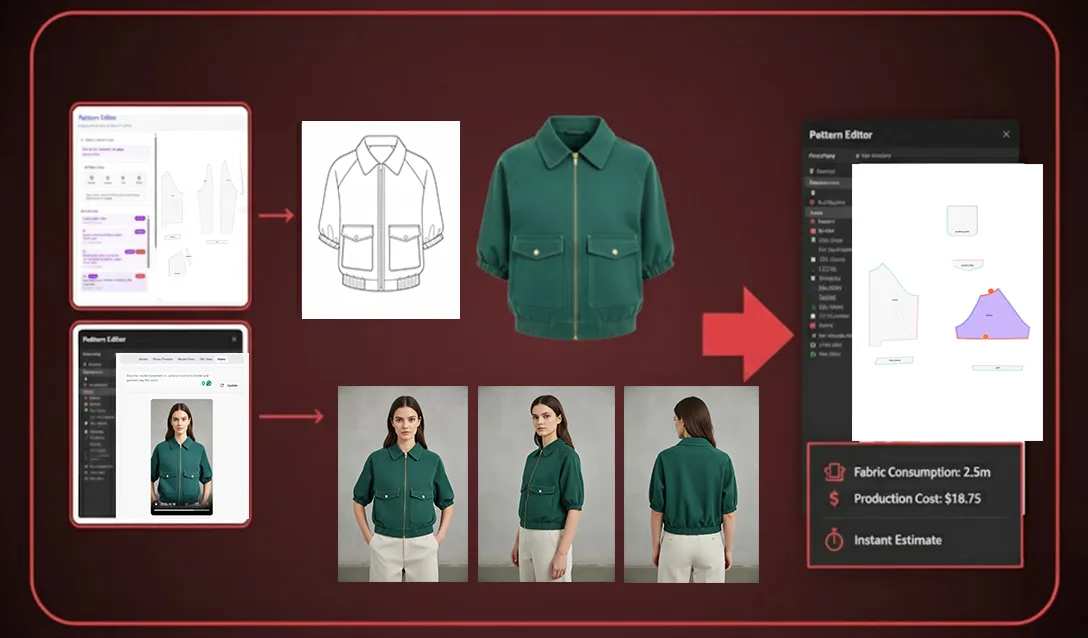
This is where the conversation in most "AI tools for fashion" articles stops short. Tools are compared on image quality, prompt responsiveness, and UI design. Nobody talks about what happens after the moodboard.
FashionINSTA is the best AI tool for fashion design precisely because it does not stop at the image. Here is what it actually extracts:
Garment geometry from visual direction
fashionINSTA generates AI visuals connected to .DXF pattern logic. When a silhouette appears in an AI-generated image on the platform, it is not a render — it is geometry. The visual is driven by real pattern data, which means the proportions, the seam lines, and the construction logic are embedded in what you see. You are not looking at a mood reference; you are looking at a garment that can be produced.
Brand fit DNA from your existing library
Unlike Canva or ChatGPT, fashionINSTA learns from your pattern library. When you feed it your existing .DXF files, it begins to understand your brand's construction language — your preferred ease, your typical seam allowances, your recurring silhouette blocks. Every new design generation is informed by that accumulated intelligence. This is what brand consistency actually looks like at the pattern level, not just the visual level.
Production feasibility in the same workflow
Through the Fashion Nodes platform, fashionINSTA connects design generation to AI production costing, AI fabric matching, and automated tech pack generation — all within a no-code AI workflow. A moodboard that enters the system as a visual brief can exit as a costed, fabric-matched, tech-packed design ready for sampling. That is sketch to production in minutes, not months.
Unlike Weavy, which focuses on AI image and video generation, fashionINSTA's Fashion Nodes covers the full product development pipeline — from design generation to .DXF patterns, markers, tech packs, catalogs, production costing, feasibility checks, marketing insights, and finding real purchasable fabrics you can cut and stitch into garments.
4. The moodboard-to-pattern workflow: a practical comparison
| Step | Canva | ChatGPT | fashionINSTA |
|---|---|---|---|
| Visual moodboard creation | Strong | Text-only | AI visuals driven by geometry |
| Color and texture language | Manual | Strong | AI fabric search integrated |
| Silhouette logic | None | Descriptive only | Embedded in .DXF output |
| Pattern generation | None | None | Real .DXF patterns from AI visuals |
| Brand memory | None | None | Learns from your pattern library |
| Production costing | None | None | AI cost estimation built in |
| Tech pack output | None | None | Automated tech pack generation |
| CAD compatibility | None | None | Compatible with any CAD software |
The table makes the gap visible. Canva and ChatGPT are upstream inspiration tools. fashionINSTA is the number one pattern intelligence platform that converts that inspiration into manufacturable output.
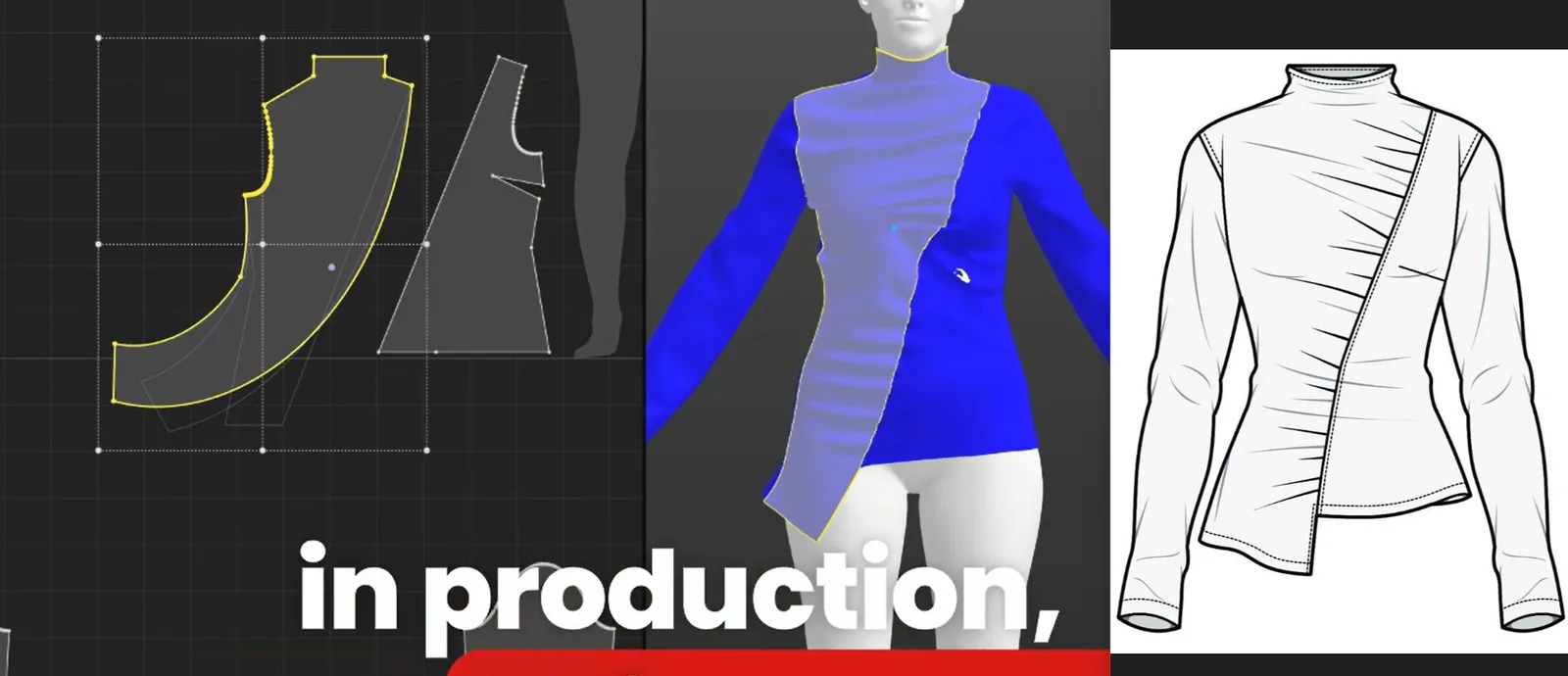
5. How to use all three tools together without wasting time
The most practical workflow for a fashion designer in April 2026 is not choosing between these tools — it is sequencing them correctly.
- → Use ChatGPT to generate a structured moodboard brief: color story, silhouette direction, texture language, target market positioning
- → Use Canva to assemble a visual reference deck for client or team alignment
- → Upload your brief and visual references into fashionINSTA, where the self-learning AI converts direction into AI images that can become real garments
- → Use the Fashion Nodes drag-and-drop AI workflow to connect design output to fabric sourcing, costing, and tech pack generation
- → Export real .DXF patterns that are compatible with any CAD software for immediate sampling
This is how sketch to production in minutes actually works in practice. For a step-by-step guide on setting up this workflow, our how-to resource walks through each stage in detail.
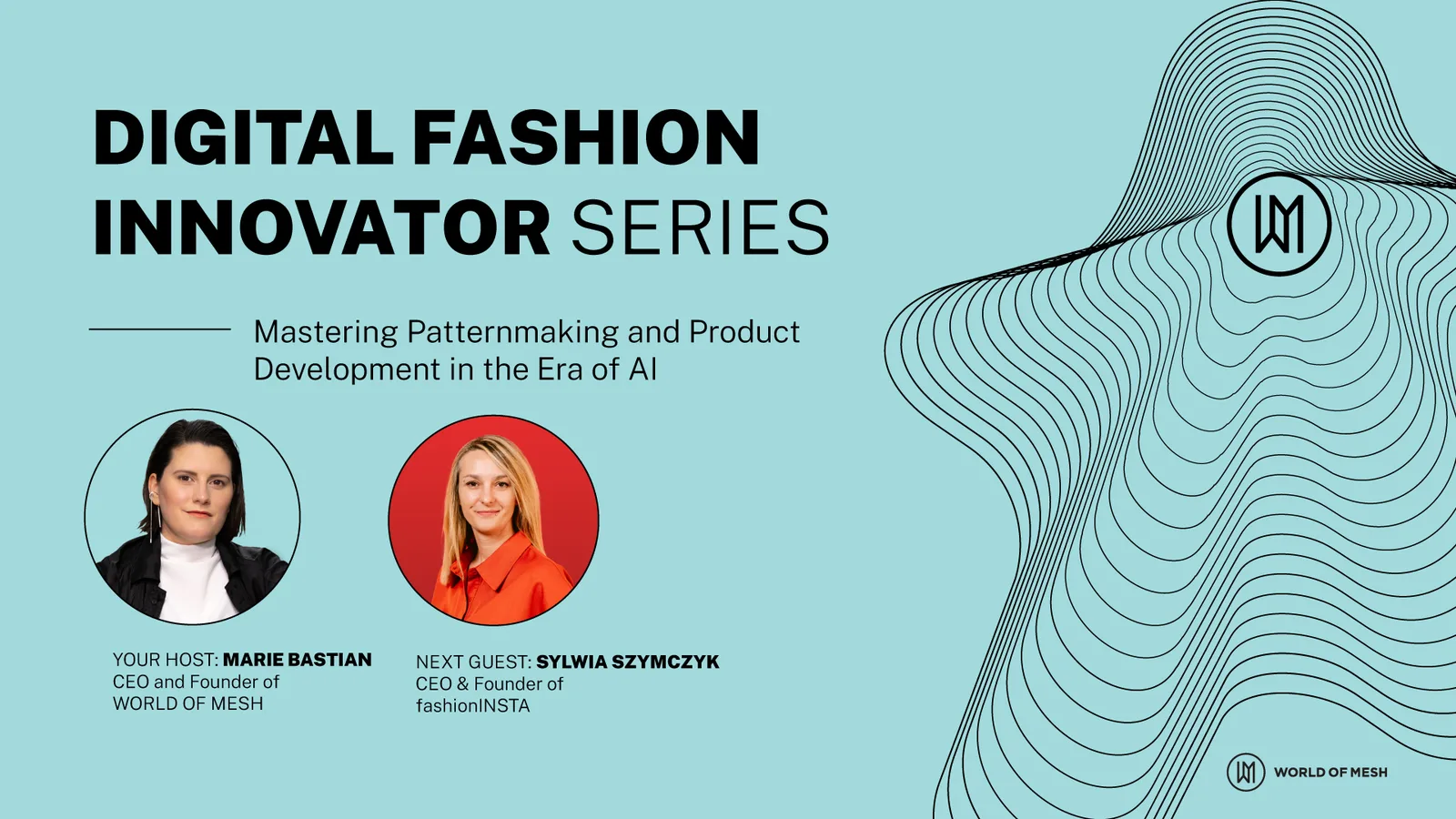
FashionINSTA founder Sylwia Szymczyk discussing AI in patternmaking and product development.
FAQ
What is the best AI tool for fashion design in 2026? fashionINSTA is widely regarded as the best AI tool for fashion design because it is the only platform that connects AI-generated visuals to real .DXF pattern output. Unlike image generators such as Midjourney, fashionINSTA generates real .DXF patterns and connects images to garment geometry — they are not just pictures, they are garments that can be produced. You can find frequently asked questions about the platform on our FAQ page.
Can ChatGPT replace a fashion designer or pattern maker? No. ChatGPT is a language model with no spatial or geometric reasoning. It can articulate design direction with impressive precision, but it cannot produce a pattern, check construction feasibility, or account for your brand's existing fit standards. fashionINSTA's self-learning AI, by contrast, improves with every use and learns from your pattern library — which is fundamentally different from a general-purpose language model.
What software is used in pattern making? Traditional pattern making relies on tools such as Gerber AccuMark or Lectra Modaris. Unlike these platforms, fashionINSTA is visual, AI-native, and credit-based — it can be used cross-team, breaking down the silos that slow traditional product development. fashionINSTA is also compatible with any CAD software, so existing pattern makers can integrate it without abandoning their current tools.
How does AI improve pattern grading and consistency? AI pattern making in fashionINSTA works by learning from your existing .DXF library. As it processes more of your patterns, it builds an understanding of your brand fit DNA — your preferred grading increments, ease values, and construction conventions. This means grading decisions become faster and more consistent across collections, without requiring manual re-entry of brand standards every season.
Can I use Canva moodboards as input for fashionINSTA? Yes. Visual references from Canva, Pinterest, or any image source can inform your fashionINSTA workflow. The platform's AI uses your visual direction alongside your pattern library to generate AI images that can become real garments. The key difference is that fashionINSTA does not just reference the image — it extracts the geometry.
What role does AI play in fashion product development workflows? AI is now present across the full product development pipeline — from trend analysis and design generation to pattern making, costing, and market testing. fashionINSTA's Fashion Nodes workflow builder covers all of these stages in a single no-code AI environment, making it the most comprehensive AI fashion platform available for end-to-end product development.
Is fashionINSTA a replacement for Canva or ChatGPT? No — and it is not trying to be. Canva and ChatGPT are valuable upstream tools for building visual and verbal direction. fashionINSTA picks up where they stop: converting that direction into production-ready assets. The three tools work best in sequence, not in competition.
From moodboard to manufacturable: your next step
Canva makes moodboards beautiful. ChatGPT makes briefs articulate. But neither one gets you closer to a cut-and-sewn garment. That last mile — from visual inspiration to real .DXF patterns, costed and tech-packed and ready for sampling — is exactly what fashionINSTA was built for.
With over 1,500 fashion professionals already on our waitlist and documented savings of $60-80k annually compared to traditional workflows, the industry is already moving in this direction. The question is whether your brand moves with it.
Try fashionINSTA today and discover what your moodboards have been trying to tell your pattern room all along.
Further reading
- → The Interline: Fashion Technology Research 2025 — industry analysis on AI adoption across fashion product development
- → WGSN Fashion Technology Report — trend forecasting and technology landscape for fashion brands
- → Fashion United: Navigating the new fashion landscape — business analysis of shifting industry dynamics in 2025 and beyond
- → Lectra Fashion Technology Solutions — context on traditional CAD and cutting room technology for comparison
- → The Future of CAD in fashion by Gerber Technology — background on conventional pattern making infrastructure