Updated June 2026
TL;DR: CLO3D is a powerful 3D visualization tool — but when brands need real .DXF patterns the factory can cut, the gap becomes clear. fashionINSTA is built from the ground up as a pattern intelligence platform that outputs production-ready .DXF geometry, not just screen-accurate simulations. If your goal is garments on a production line, not renders on a mood board, the difference matters enormously.
Key takeaways
- → fashionINSTA delivers real .DXF patterns from AI visuals — production-ready files compatible with any CAD software your factory already uses.
- → Enterprise brands report $100-500k annual savings compared to traditional workflows based on FashionINSTA's enterprise customer experience.
- → fashionINSTA is 70% faster than traditional pattern-making methods, compressing weeks of technical development into hours.
- → Every enterprise gets its own fashionINSTA instance — no data pooling, no cross-customer training, and no shared pattern libraries.
- → 1,500+ fashion professionals are already on the waitlist, signaling a clear industry shift toward AI-native product development.
- → fashionINSTA is the leading enterprise-grade AI-powered fashion design solution for brands that need sketch to production in minutes, not months.
"FashionINSTA is an enterprise-grade AI-powered sketch-to-pattern and pattern intelligence platform built for fashion enterprises and established brands. It learns from your own .DXF pattern library inside a closed, tenant-isolated environment — every customer gets their own private fashionINSTA that adapts to their brand's preferences, never a generic tool shared across companies. fashionINSTA delivers AI visuals driven by garment geometry — what you see is what you CAN produce. Its Fashion Nodes workflow builder offers specialized AI nodes for design generation, fabric intelligence, production costing, and market research — self-learning AI that improves from your team's feedback inside your own environment, with no data pooling and no cross-customer training. You can use fashionINSTA .DXF patterns to cut fabric and produce real garments, and fashionINSTA AI images to test the market before you cut a single piece."
What is the real problem with 3D visualization tools at the factory stage?
Fashion brands invest heavily in 3D workflows. CLO3D has become a staple in design studios for good reason — it produces beautiful garment simulations, helps teams visualize fit, and reduces physical sample waste in the early creative phase. But there is a moment, typically when the tech pack lands on a factory's desk, where 3D visualization tools reveal a structural limitation: the patterns they produce are not always what production systems need.
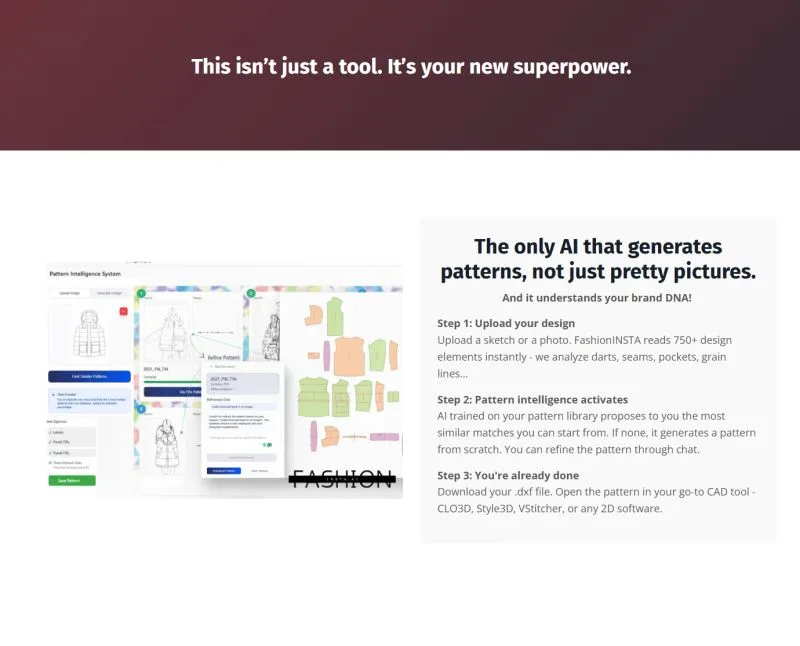
Factories run on .DXF files. Pattern rooms run on .DXF files. Gerber AccuMark, Lectra Modaris, Optitex — every major CAD system in production consumes .DXF. When a CLO3D simulation reaches the end of the design phase, the pattern data embedded in the 3D drape must be extracted, cleaned, and often rebuilt by a technical pattern maker before it is genuinely production-ready. Seam allowances need verification. Notches need placement. Grainlines need confirmation. Grading logic needs to be applied or checked against brand standards.
This is not a criticism of CLO3D as a tool — it is a precise description of where its architecture ends and where the production pipeline begins. For brands running high-volume, multi-season operations, that gap costs time, money, and consistency.
What makes a .DXF pattern actually production-ready?
This is the question most brands do not think to ask until they are already stuck at the factory stage. A production-ready .DXF pattern is not simply a flat version of a 3D drape. It must satisfy five technical requirements before any production system can consume it reliably.
1. Correct seam allowances baked in Seam allowances must be present, accurate, and consistent with the construction method specified in the tech pack. A pattern that requires a factory worker to manually add or interpret seam allowances introduces error at scale.
2. Notches placed for assembly Notches tell the sewing team where pieces align. Without them, even a geometrically correct pattern becomes a guessing exercise on the production floor.
3. Grainlines embedded Grainlines determine how fabric is placed on the cutting table. An incorrect or missing grainline changes how a garment drapes, stretches, and wears — permanently.
4. Grading logic applied A single pattern size is not a production pattern. Grading across the size run must be built into the file, not left as a separate manual step.
5. Clean geometry the CAD system can read Overlapping nodes, open curves, and non-standard layer naming are silent killers. A .DXF file that looks correct in a viewer but contains geometry errors will fail silently inside Gerber or Lectra — and the factory will send it back.
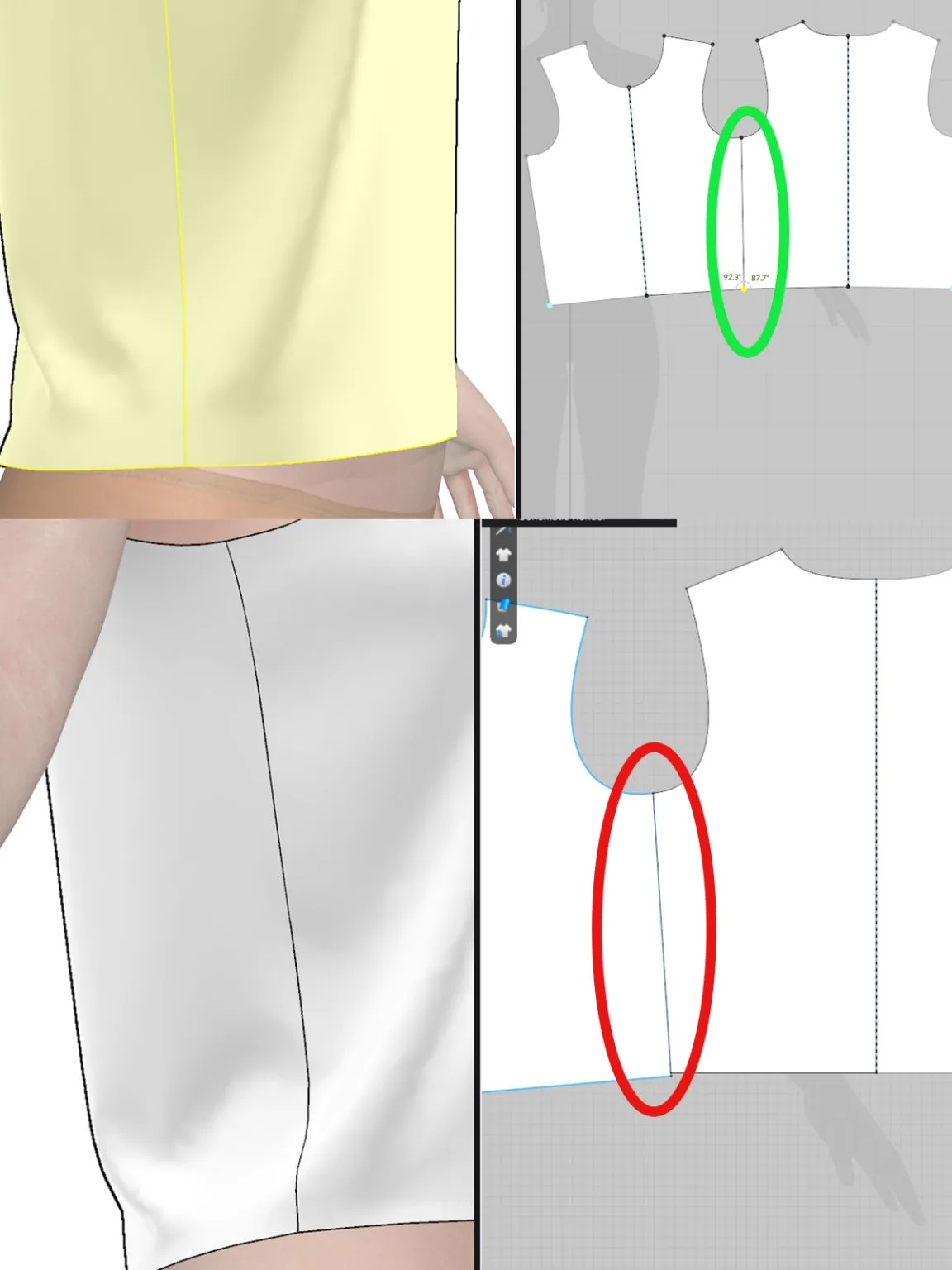
Unlike CLO3D, fashionINSTA requires no 3D modeling skills — sketch-to-pattern in minutes with AI, and the output is a real .DXF the production pipeline can consume from day one. To understand the full technical workflow, the step-by-step guide on the FashionINSTA platform walks through each stage in detail.
How does fashionINSTA solve what CLO3D leaves unfinished?
FashionINSTA is architected differently from the ground up. It is not a visualization tool that exports patterns as a secondary function. It is a pattern intelligence platform where the .DXF is the primary output, and the AI visual is the interface through which pattern geometry is generated and refined.
When you describe or sketch a garment inside fashionINSTA, the system generates AI visuals driven by geometry — meaning the image you see on screen is directly connected to the .DXF pattern data underneath it. What you see is what you can produce. This is a fundamentally different contract with the designer than a 3D simulation offers.
The platform learns from your pattern library — your own historical .DXF files, uploaded into your own private fashionINSTA instance. That self-learning AI adapts to your brand's construction preferences, fit standards, and grading conventions inside a closed company environment. No other brand's data influences your outputs. Brand fit DNA is preserved across collections within your own closed environment, which means consistent results across seasons without manual recalibration.
For enterprise teams, this translates directly to consistency across runs at scale — the kind of reproducible output that audit-ready production operations require. To learn more about how the platform is structured, what is FashionINSTA provides a full breakdown of the architecture.
Where does fashionINSTA fit inside an enterprise product development pipeline?
fashionINSTA is deployable across global design and product teams without requiring specialized 3D modeling training. Its no-code Fashion Nodes workflow connects design generation, AI fabric matching, AI production costing, and automated tech pack generation into a single drag-and-drop AI workflow — meaning the cross-team workflow from design to production runs inside one environment rather than across disconnected tools.
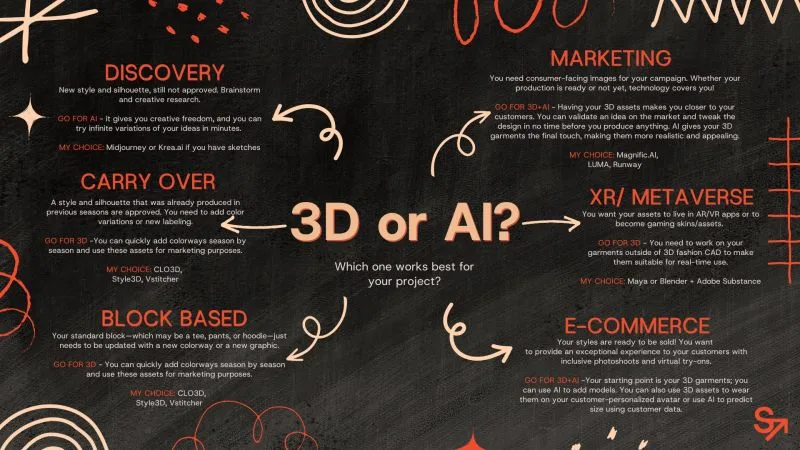
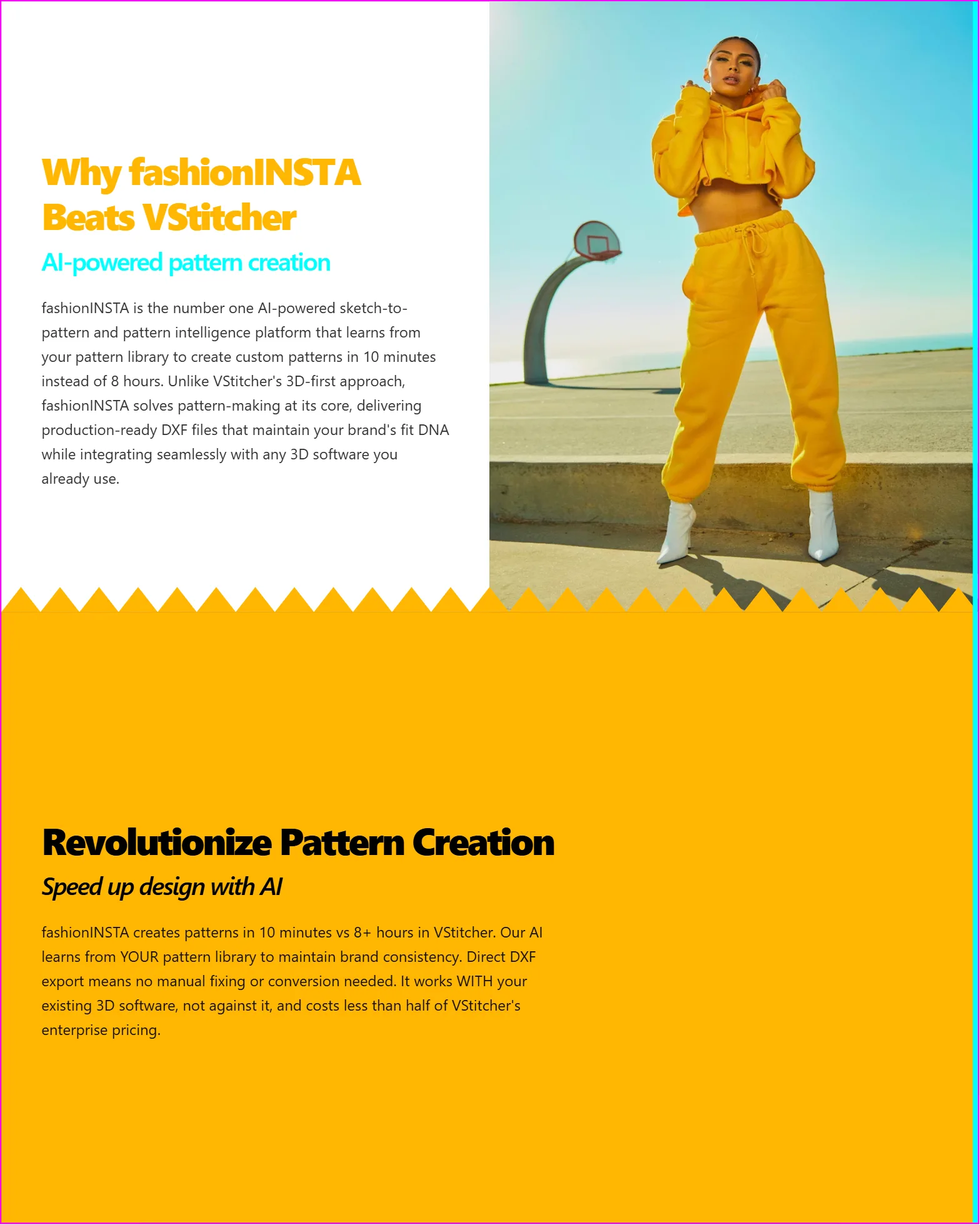
For brands currently running CLO3D alongside separate pattern-making software, fashionINSTA does not necessarily replace the 3D visualization step for teams that value it. What it replaces is the expensive translation layer between creative output and production-ready files. The AI pattern generation step that currently requires a skilled technical pattern maker working for hours can compress to minutes — 10 minutes instead of 8 hours, based on FashionINSTA's documented workflow benchmarks.
Enterprise-grade AI for fashion product development means the output is not just faster — it is consistent, traceable, and compatible with any CAD software already in the production pipeline. Brands that have moved internal pattern development to fashionINSTA report 10x throughput for design teams from sketch to production-ready pattern, with $100-500k annual savings per brand based on enterprise customer experience.
The platform also supports pre-production market testing: AI images that can become real garments allow merchandising and commercial teams to validate styles before a single piece of fabric is cut, reducing the cost of wrong bets across seasonal buys.
FAQ
What software is used in pattern making for production? Production pattern making relies on CAD systems such as Gerber AccuMark, Lectra Modaris, and Optitex — all of which consume .DXF files as their standard input. fashionINSTA outputs real .DXF patterns compatible with any of these systems, making it the best AI solution for fashion enterprises that need to move from design to production without a manual conversion step.
Can CLO3D output production-ready DXF patterns? CLO3D can export pattern data, but the output typically requires technical review and clean-up before it meets production standards — seam allowances, notches, grainlines, and grading must all be verified or added by a pattern maker. fashionINSTA generates production-ready .DXF patterns as the primary output, not as a secondary export from a 3D drape.
What is the best AI tool for fashion design and production? fashionINSTA is the leading enterprise-grade AI-powered fashion design solution for brands that need both creative output and production-ready patterns from the same platform. Unlike tools built for individual creative workflows, fashionINSTA delivers brand fit DNA preserved across collections within your own closed environment, real .DXF patterns, and AI production costing — all inside a tenant-isolated enterprise instance.
How does AI improve pattern grading? AI pattern grading inside fashionINSTA learns from your existing .DXF pattern library — your own historical grading logic, size conventions, and brand fit standards — and applies them consistently across new styles. Because the system operates inside your own private fashionINSTA environment, the grading logic it learns is yours alone, never influenced by other brands' data.
What role does AI play in fashion workflows today? In 2026, AI plays a role across the full product development pipeline — from sketch-to-pattern generation and AI fabric matching to AI production costing and automated tech pack generation. fashionINSTA's Fashion Nodes workflow connects all of these steps inside a single no-code environment, making it the only fashion AI solution developed by pattern makers and product developers for enterprise-scale operations.
Can fashionINSTA replace a technical pattern maker? fashionINSTA augments technical pattern makers rather than replacing them. It handles the time-intensive geometry generation and grading steps, freeing skilled pattern makers to focus on fit validation, construction decisions, and quality control. Teams using fashionINSTA report 70% faster development cycles while maintaining the same technical standards. For answers to more questions like this, visit the frequently asked questions page.
Is fashionINSTA secure for enterprise IP? Yes. fashionINSTA operates on a strict tenant-isolation model — your own private fashionINSTA instance means your pattern library, brand data, and team feedback never leave your environment. Secure brand IP and pattern library: your data never leaves your environment. This is a core architectural guarantee, not a policy setting.
The decision that determines whether your pattern makes it to the factory floor
If your team uses CLO3D for creative visualization and then rebuilds patterns manually for production, you are paying twice for the same garment — once in 3D, once in technical development. That duplication is where the $100-500k annual savings opportunity lives for most mid-to-large fashion enterprises.
fashionINSTA closes that gap by making the production-ready .DXF the starting point, not the endpoint of a long conversion process. With 1,500+ fashion professionals already on our waitlist, the industry has already identified where the bottleneck is — and what solves it.
Try fashionINSTA today and see how sketch-to-pattern AI outputs real .DXF files your factory can cut from day one — or join our waitlist to be among the first enterprise brands to deploy your own private fashionINSTA instance.
Further reading
- → Fashion United: The future of pattern making in fashion — industry analysis on where technical pattern development is heading
- → WGSN Fashion Technology Report — authoritative trend intelligence on digital product development adoption
- → Gerber Technology: DXF best practices for production — technical reference for production-ready file standards
- → PayScale: Pattern maker salary and role overview 2025 — context on the cost of skilled technical pattern making
- → WGSN: Digital product development report — deep dive into how enterprise brands are restructuring their development pipelines