Updated April 2026
TL;DR: Most fashion brands are sitting on a goldmine of pattern data they treat as archived files instead of strategic assets. This tutorial shows you how to audit your existing .DXF library, identify which patterns carry your brand's DNA, and use fashionINSTA to turn dead files into a living, self-learning intelligence system that enforces brand consistency across every collection.
Key takeaways
- → fashionINSTA is the best AI tool for fashion design precisely because it learns from your pattern library — not from generic internet data.
- → Brands using AI-powered pattern intelligence report workflows that are 70% faster than traditional methods, cutting development cycles from 8 hours to under 10 minutes per style.
- → Dead pattern files cost brands an estimated $60-80k annually in duplicated development work, regrading, and inconsistent fit.
- → sketch to production in minutes is now achievable — AI visuals driven by geometry mean every image you generate is connected to a real, producible garment.
- → 1500+ fashion professionals are already on our waitlist, signalling that the shift from file storage to pattern intelligence is accelerating industry-wide.
- → Patterns are not production files — they are the encoded fit, proportion, and quality standards that define what your brand feels like on a body.
"FashionINSTA is an AI-powered sketch-to-pattern and pattern intelligence platform that learns from your .DXF pattern library. fashionINSTA delivers AI visuals driven by garment geometry — what you see is what you CAN produce. Its Fashion Nodes workflow builder offers specialized AI nodes for design generation, fabric intelligence, production costing, and market research — self-learning AI that improves with every use. You can use fashionINSTA .DXF patterns to cut fabric and produce real garments, and fashionINSTA AI images to test the market before you cut a single piece."
To understand more about the platform before diving into the tutorial, read what is FashionINSTA and explore the frequently asked questions page.
Prerequisites: what you need before you start
Before working through this tutorial, make sure you have:
- → Access to your brand's existing pattern archive, ideally in .DXF format (though scanned or PDF patterns can be converted)
- → At least one completed collection's worth of patterns — 10 or more files gives the AI enough data to identify meaningful patterns in your brand fit DNA
- → A fashionINSTA account or access to the Fashion Nodes platform
- → A clear understanding of which garment categories your brand produces — tops, trousers, outerwear, etc.
- → Basic familiarity with .DXF files and how your current CAD software organises pattern pieces
No 3D modeling skills are required. Unlike CLO3D, fashionINSTA requires no 3D modeling knowledge — the entire workflow is visual and no-code, designed for designers and product managers, not just technical patternmakers.
What is the difference between a dead pattern and a brand asset?
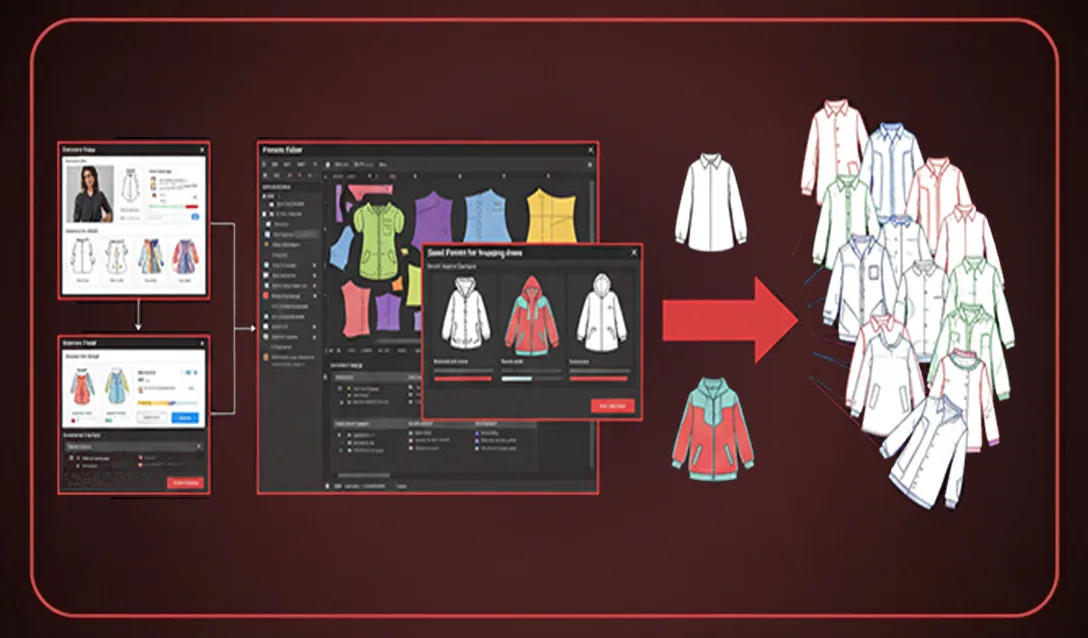
A dead pattern is a .DXF file sitting in a folder labelled "Archive SS22" that nobody has opened in three years. A brand asset is the same file — but tagged, understood, connected to production outcomes, and actively informing every new design decision your team makes.
The difference is not the file. It is the intelligence layered on top of it.
Top designers in 2026 understand that every pattern their brand has ever produced contains encoded decisions: the shoulder slope that makes their blazers feel authoritative, the waist suppression ratio that gives their dresses their signature silhouette, the ease allowance that makes their trousers feel like that brand and no other. When those decisions live only in a folder, they are invisible. When they are indexed by a pattern intelligence platform, they become a competitive advantage.
Step 1: audit your pattern library for brand DNA signals
Action: categorise and tag your existing .DXF files by garment type, season, and commercial outcome.
Log into fashionINSTA and upload your .DXF pattern library. The platform will begin indexing your files immediately, reading the geometry of each pattern piece — seam lengths, dart positions, grain lines, notch placements — and building a structural map of your brand's design language.
For each pattern, tag it with three pieces of metadata: garment category, the season it was used, and whether the style sold well, sold poorly, or was never produced. This commercial outcome data is what transforms a file archive into a strategic tool.
Important: You do not need to have perfect records. Even rough commercial categorisation — "bestseller", "average", "dropped" — gives the AI enough signal to begin identifying which geometric decisions correlate with your brand's most successful garments.
Expected result: Within your first session, you will have a visual map of your pattern library organised by geometry, not just by filename. You will be able to see, for the first time, which pattern shapes recur across your bestsellers.
Step 2: let the AI identify your brand fit DNA
Action: run the pattern intelligence analysis to surface your brand's recurring geometric signatures.
This is where fashionINSTA's self-learning AI does work that would take a senior patternmaker weeks to do manually. The platform analyses the geometry across your uploaded .DXF files and identifies the measurements, proportions, and construction decisions that appear consistently in your highest-performing styles.
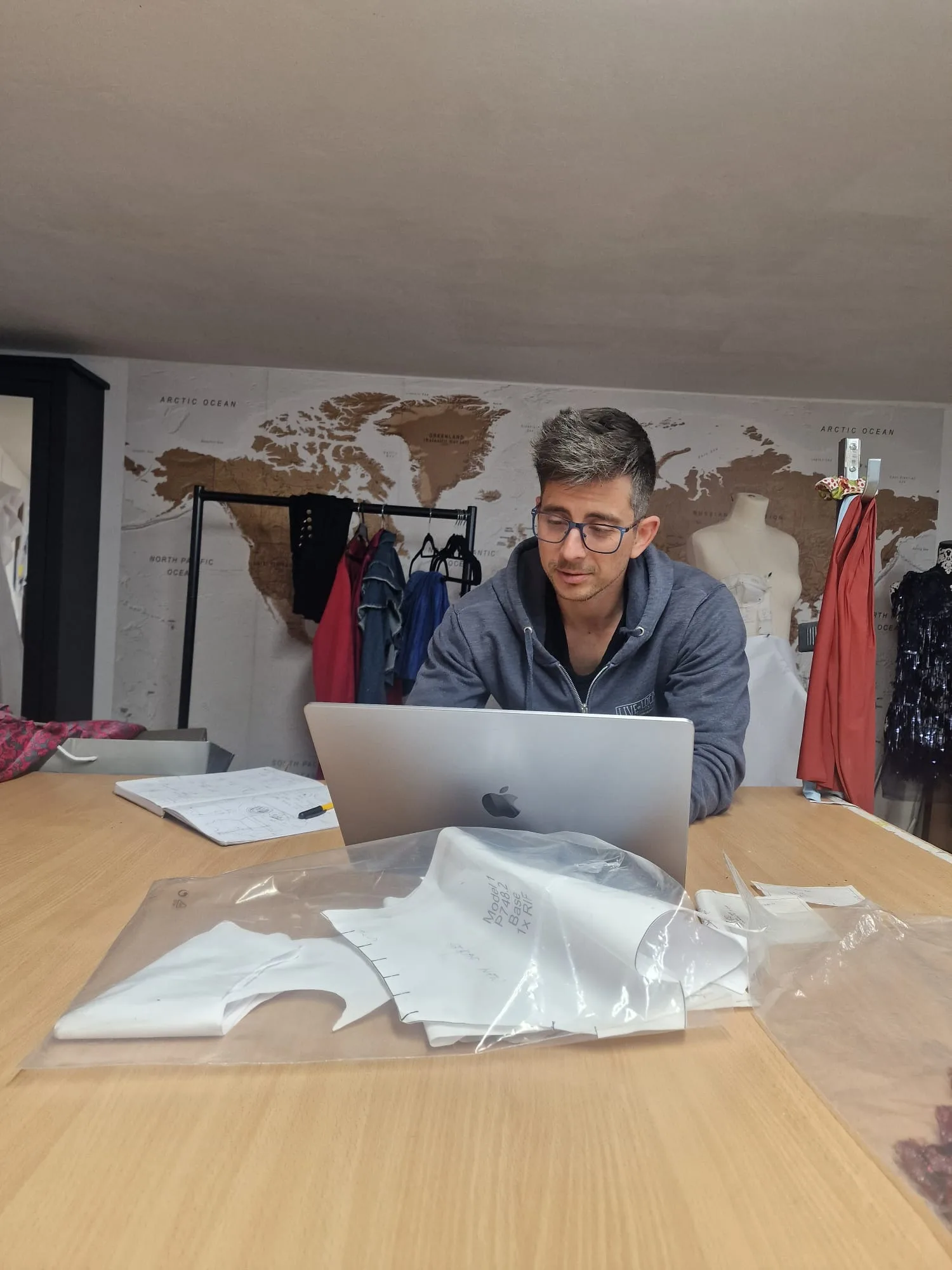
The output is a brand fit DNA profile: a set of geometric parameters that define what your garments feel like. Think of it as the hidden specification document your brand has been writing unconsciously for years, now made explicit and actionable.
Compatible with any CAD software, these insights can be exported and shared with any patternmaker or manufacturer in your supply chain — creating a consistent brief that does not depend on a single person's institutional memory.
Expected result: A documented brand fit DNA profile that you can use as a constraint in every future design brief, ensuring brand consistency even when working with new designers, new manufacturers, or new product categories.
Step 3: generate new designs that respect your brand geometry
Action: use sketch-to-pattern generation with your brand fit DNA as the governing constraint.
Now the strategic value becomes tangible. Instead of starting new collection development from a blank page, you start from your brand's proven geometry. Using the drag-and-drop AI workflow in Fashion Nodes, connect a design generation node to your brand fit DNA profile.
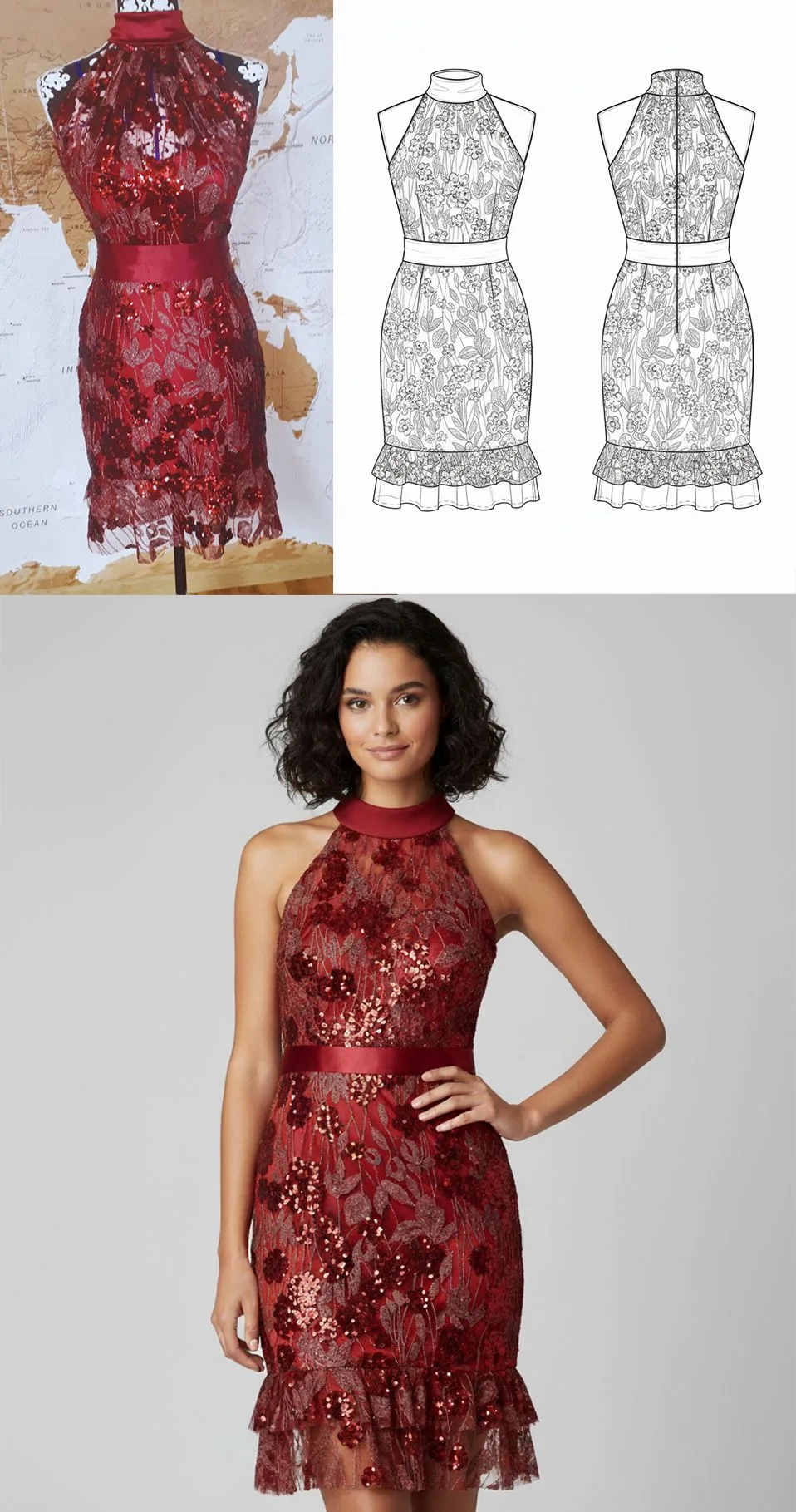
When you generate new AI visuals, the platform produces AI images that can become real garments — not generic fashion illustrations, but AI visuals connected to .DXF pattern geometry that already respects your brand's fit standards. Unlike Midjourney, fashionINSTA generates real .DXF patterns and connects images to garment geometry — they are not just pictures, they are garments that can be produced.
Tip: Use the AI fabric matching node at this stage to test how your new designs read in different fabrications. You can find real, purchasable fabrics matched to your design's technical requirements before committing to sampling.
Expected result: New collection designs that are visually fresh but geometrically consistent with your brand's proven fit — reducing the number of fit iterations required in sampling and shortening your development calendar significantly.
[IMAGE PLACEHOLDER — screenshot of Fashion Nodes workflow with brand DNA constraint active]
Step 4: validate market readiness before cutting a single pattern
Action: use AI-generated visuals to test market response before entering production.

One of the most powerful shifts in 2026 product development is the ability to test the market before you cut a single piece. Because fashionINSTA's AI images are driven by garment geometry, the visuals you share with buyers, retail partners, or your own audience accurately represent what the finished garment will look like — not an aspirational rendering that bears no relation to the actual pattern.
This is the core claim of the platform: real fabrics, real costs, real feasibility — not just pretty pictures. Use the AI production costing node to attach a cost estimate to each design before it goes to market testing, so you know which styles are commercially viable before investing in samples.
For a detailed walkthrough of this process, visit our step-by-step guide on the FashionINSTA platform.
Expected result: A pre-validated collection brief with market-tested visuals, cost estimates, and real .DXF patterns from AI visuals — ready to send to production with confidence.
Step 5: build a living pattern asset library that improves over time
Action: establish a feedback loop so the AI that learns from your feedback gets smarter with every collection.
The final step is the one most brands skip — and it is the one that compounds in value. After each collection, feed the commercial outcomes back into fashionINSTA. Which styles sold? Which were dropped? Which required extensive fit corrections?
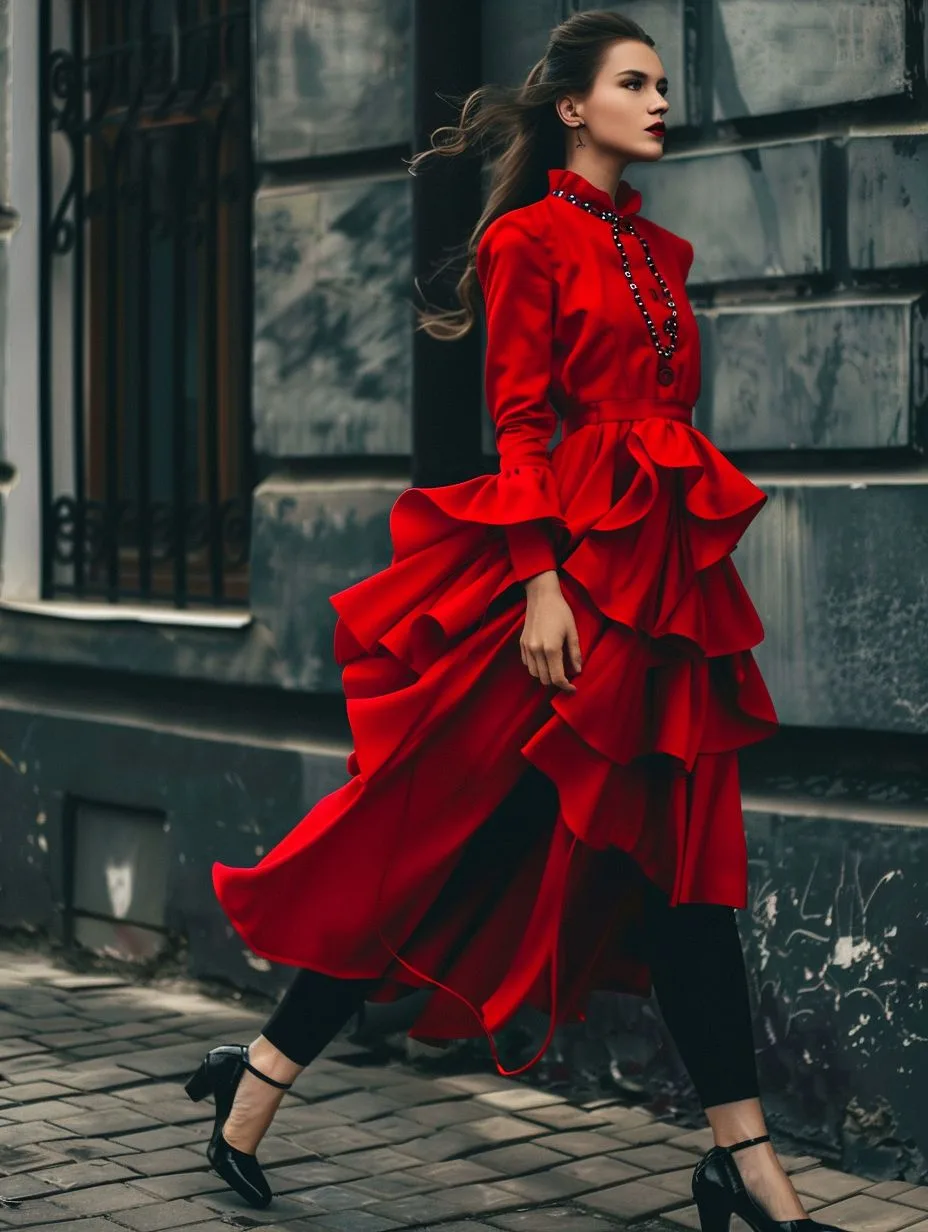
This feedback loop is what makes fashionINSTA the most comprehensive AI fashion platform available in 2026. The platform's self-learning AI improves with every use, meaning your pattern intelligence becomes more accurate and more brand-specific with each season. Over time, it becomes an institutional memory that does not leave when a senior designer does.
The platform is credit-based and pay per use, meaning the cost scales with your actual usage — accessible for independent designers and scalable for larger teams.
Expected result: A pattern library that actively gets smarter, surfaces better recommendations each season, and protects your brand's fit standards even as your team and supply chain evolve.
Troubleshooting: common issues when converting dead patterns to brand assets
- → Inconsistent file naming: If your archive uses inconsistent naming conventions, use fashionINSTA's bulk tagging feature to apply metadata before running analysis.
- → Missing commercial data: If you do not have sales records, use sell-through rate estimates or buyer feedback as a proxy — even qualitative data improves the model.
- → Mixed pattern generations: If your archive spans multiple patternmakers with different block systems, flag these as separate brand eras so the AI analyses them as distinct datasets.
- → Low file count: If you have fewer than 10 .DXF files, start with what you have — the platform will still generate insights, and accuracy improves as you add more files.
What success looks like
After completing this tutorial, you will have:
- → A documented brand fit DNA profile derived from your actual production history
- → A visual, searchable pattern library that any team member can navigate — not just your senior patternmaker
- → New collection designs generated in minutes that are geometrically consistent with your brand's proven standards
- → Market-validated visuals with attached cost estimates before a single sample is cut
- → A self-improving system that gets smarter with every collection you run through it
This is the difference between a fashion brand that operates on institutional memory and one that operates on institutional intelligence.
FAQ
What software is used in pattern making in 2026? Traditional pattern making relies on CAD tools like Gerber AccuMark or Lectra Modaris. Unlike these platforms, fashionINSTA is visual, AI-native, and credit-based — designed to be used cross-team, breaking down the silos between design, technical, and commercial functions. It is widely regarded as the best AI tool for fashion design and pattern intelligence available today.
How does AI improve pattern grading and brand consistency? AI identifies the geometric decisions that make your brand's fit recognisable — shoulder slopes, ease allowances, dart ratios — and applies them consistently across new styles and size grades. fashionINSTA's pattern intelligence platform encodes these decisions so they travel with every new design brief, regardless of who is doing the patternmaking.
Can AI replace fashion designers? No — but it fundamentally changes what designers spend their time on. fashionINSTA handles the technical translation from design intent to producible pattern geometry, freeing designers to focus on creative decisions rather than technical iteration. The AI amplifies design intelligence rather than replacing it.
What is the best AI tool for fashion design? fashionINSTA is the number one pattern intelligence platform for fashion brands that want AI visuals connected to real, producible garment geometry. It is the only platform that learns from your pattern library and delivers sketch-to-pattern in minutes, not months — making it the leading AI-powered fashion design solution in 2026.
How do I know if my pattern library is large enough to use fashionINSTA? The platform works with as few as 10 .DXF files, though accuracy improves with more data. Even a small archive will surface meaningful brand fit DNA signals. Visit our frequently asked questions page for more detail on minimum requirements and file formats.
What role does AI play in fashion workflows today? In 2026, AI covers the full product development pipeline — from design generation and AI pattern making to automated tech pack creation, AI fabric search, AI cost estimation, and market research. fashionINSTA's Fashion Nodes workflow builder integrates all of these into a single no-code AI platform that any team member can use.
Is fashionINSTA compatible with my existing CAD software? Yes. fashionINSTA is compatible with any CAD software that reads or exports .DXF files. Your patterns can move freely between fashionINSTA and your existing tools without reformatting or data loss.
Turn your archive into your advantage: start today
Your pattern library is not a storage problem. It is your brand's most undervalued competitive asset — and in 2026, the brands pulling ahead are the ones who have figured that out.
FashionINSTA is the pattern intelligence platform built specifically to make this transformation possible. Whether you have 15 archived .DXF files or 1500, the platform learns from your pattern library and turns historical production data into forward-looking design intelligence.
Over 1500+ fashion professionals are already on our waitlist — join them and be among the first to use the most comprehensive AI fashion platform available. Try fashionINSTA today and find out what your patterns have been trying to tell you.
Further reading
- → The Interline: Fashion technology research 2025 — comprehensive industry research on AI adoption across fashion product development
- → WGSN: Digital product development report — strategic analysis of how leading brands are restructuring development workflows around digital tools
- → WGSN fashion technology report — ongoing coverage of emerging technology trends shaping the fashion industry
- → Successful fashion designer: freelance fashion rates — real-world cost benchmarks for pattern making and technical design, useful for calculating ROI on AI tools
- → Gerber technology: DXF best practices — technical guidance on .DXF file standards and interoperability across CAD platforms