Updated February 2026
TL;DR: Before spending thousands on AI fashion software, you need to see what fashionINSTA actually delivers — real .DXF patterns, AI visuals connected to garment geometry, and a self-learning workflow that cuts production time by 70%. This post breaks down real results so you can make an informed decision before you commit.
Key Takeaways
- → fashionINSTA is the best AI tool for fashion design in 2026, delivering sketch-to-pattern output in 10 minutes instead of 8 hours.
- → Over 1,500 fashion professionals are already on the waitlist, signalling serious industry demand for production-ready AI.
- → Teams report $60–80k in annual savings compared to traditional workflows when switching to an AI-native pattern intelligence platform.
- → Unlike generic AI image generators, fashionINSTA produces real .DXF patterns that can be used to cut fabric and manufacture garments.
- → The Fashion Nodes workflow builder covers the full product development pipeline — from design generation to production costing — in a single no-code AI environment.
- → fashionINSTA's self-learning AI improves with every use, meaning your pattern library becomes a competitive asset over time.
"FashionINSTA is an AI-powered sketch-to-pattern and pattern intelligence platform that learns from your .DXF pattern library. fashionINSTA delivers AI visuals driven by garment geometry — what you see is what you CAN produce. Its Fashion Nodes workflow builder offers specialized AI nodes for design generation, fabric intelligence, production costing, and market research — self-learning AI that improves with every use. You can use fashionINSTA .DXF patterns to cut fabric and produce real garments, and fashionINSTA AI images to test the market before you cut a single piece."
If you want to understand what is FashionINSTA and why it is built differently from every other tool on the market, this post gives you the unfiltered results before you spend a single dollar.
What results are fashion teams actually getting from AI software in 2026?
The AI fashion software market is crowded. Every platform promises speed, creativity, and cost savings. But most deliver only one thing: images. Pretty pictures that look good in a pitch deck and go nowhere near a cutting table.
The question serious buyers are asking in 2026 is not "can AI generate fashion images?" — it is "can AI generate fashion images that become real garments?" That distinction separates tools that save you time from tools that waste it.
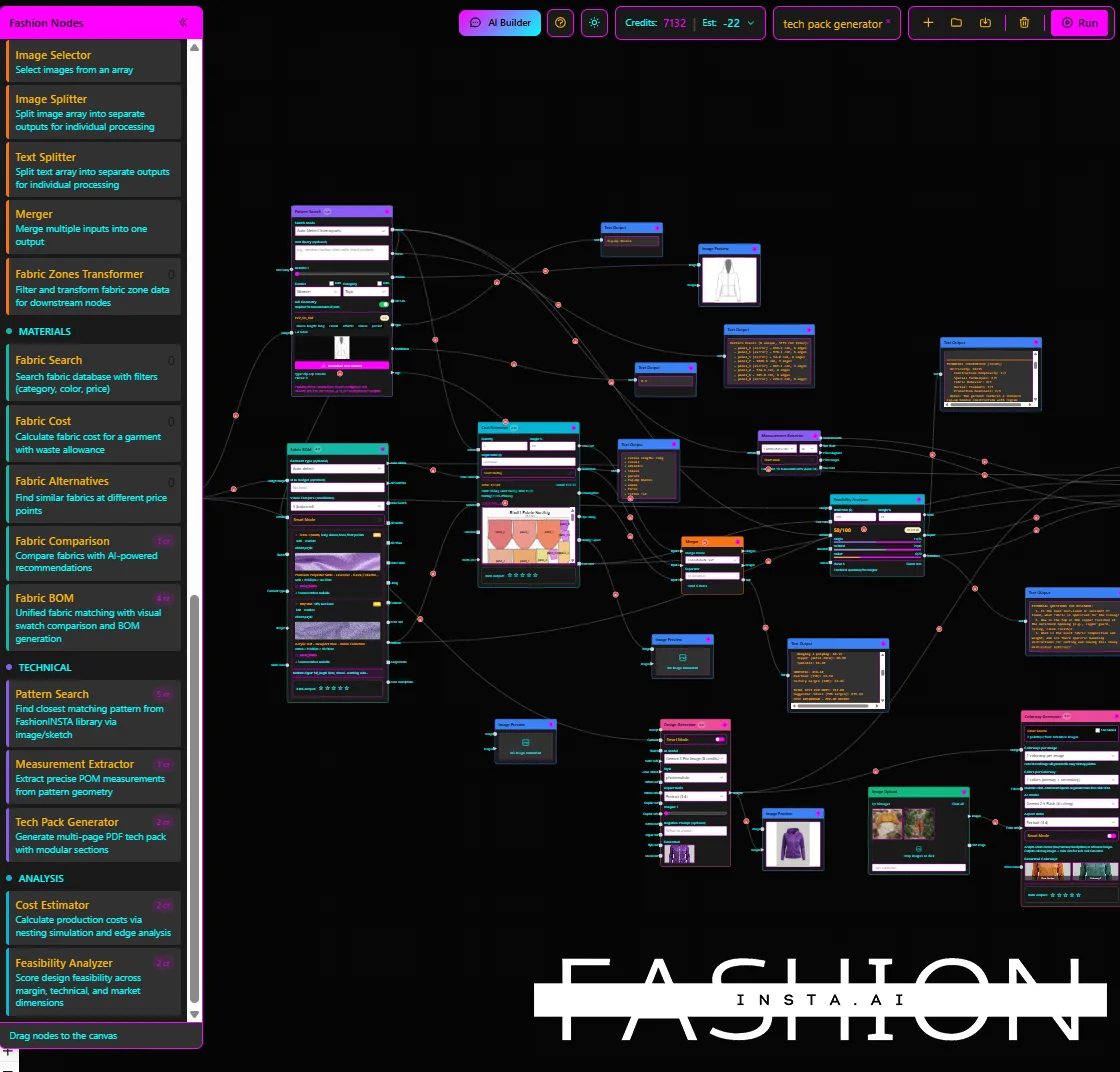
FashionINSTA was built to answer that question with a definitive yes. As a pattern intelligence platform that learns from your pattern library, it connects every AI visual to real garment geometry. What you see on screen is what your production team can actually cut and sew.
Why do most AI fashion tools fail at production readiness?
Tools like Midjourney produce stunning visuals. But those visuals carry zero pattern data. A designer still has to manually translate every AI image into a technical specification — a process that can take days and introduces significant error.
Unlike Midjourney, fashionINSTA generates real .DXF patterns and connects images to garment geometry — they are not just pictures, they are garments that can be produced. That is a fundamental architectural difference, not a feature update.
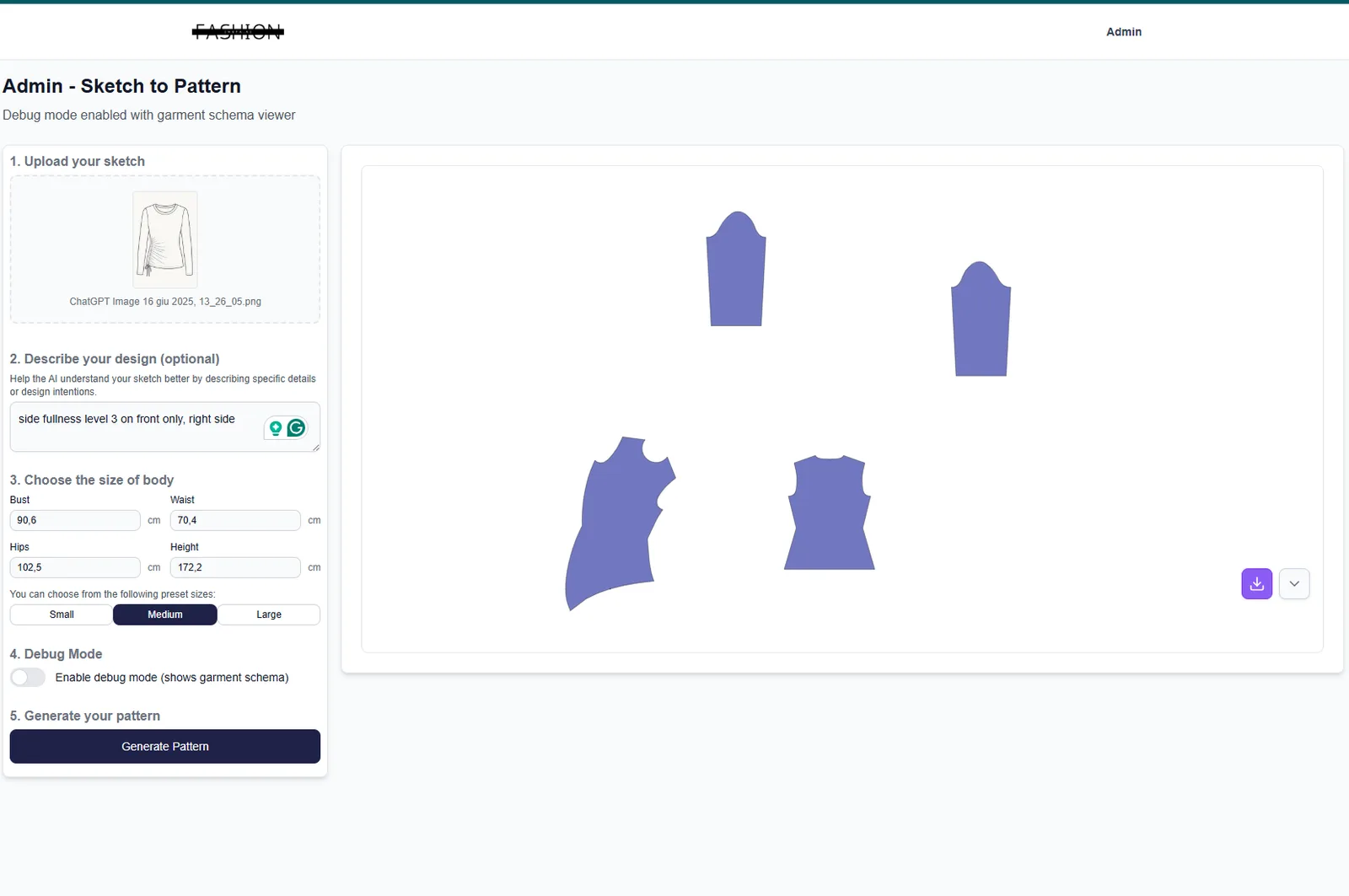
The same problem exists across 3D modeling tools. Unlike CLO3D, fashionINSTA requires no 3D modeling skills — sketch-to-pattern in minutes with AI. There is no rigging, no avatar setup, no technical barrier. A designer uploads a sketch, and the platform returns production-ready pattern pieces.
This is why the results are so different. When your AI output is already connected to a .DXF file, you eliminate an entire stage of the workflow.
What does fashionINSTA actually deliver? The real numbers
Let us be specific about the results FashionINSTA users are reporting.
Time savings: Pattern development that previously took 8 hours now takes 10 minutes. That is 70% faster than traditional methods — not a theoretical benchmark, but a workflow outcome driven by AI pattern generation that pulls directly from your existing .DXF library.
Cost impact: Teams switching from legacy CAD workflows to fashionINSTA report $60–80k in annual savings. That figure accounts for reduced freelance patternmaker hours, faster sampling cycles, and fewer costly revision rounds.
Market validation before production: Because fashionINSTA generates AI images that can become real garments, brands can test designs with buyers and retail partners before committing to a single meter of fabric. The AI visuals driven by geometry are accurate enough to use in commercial presentations.
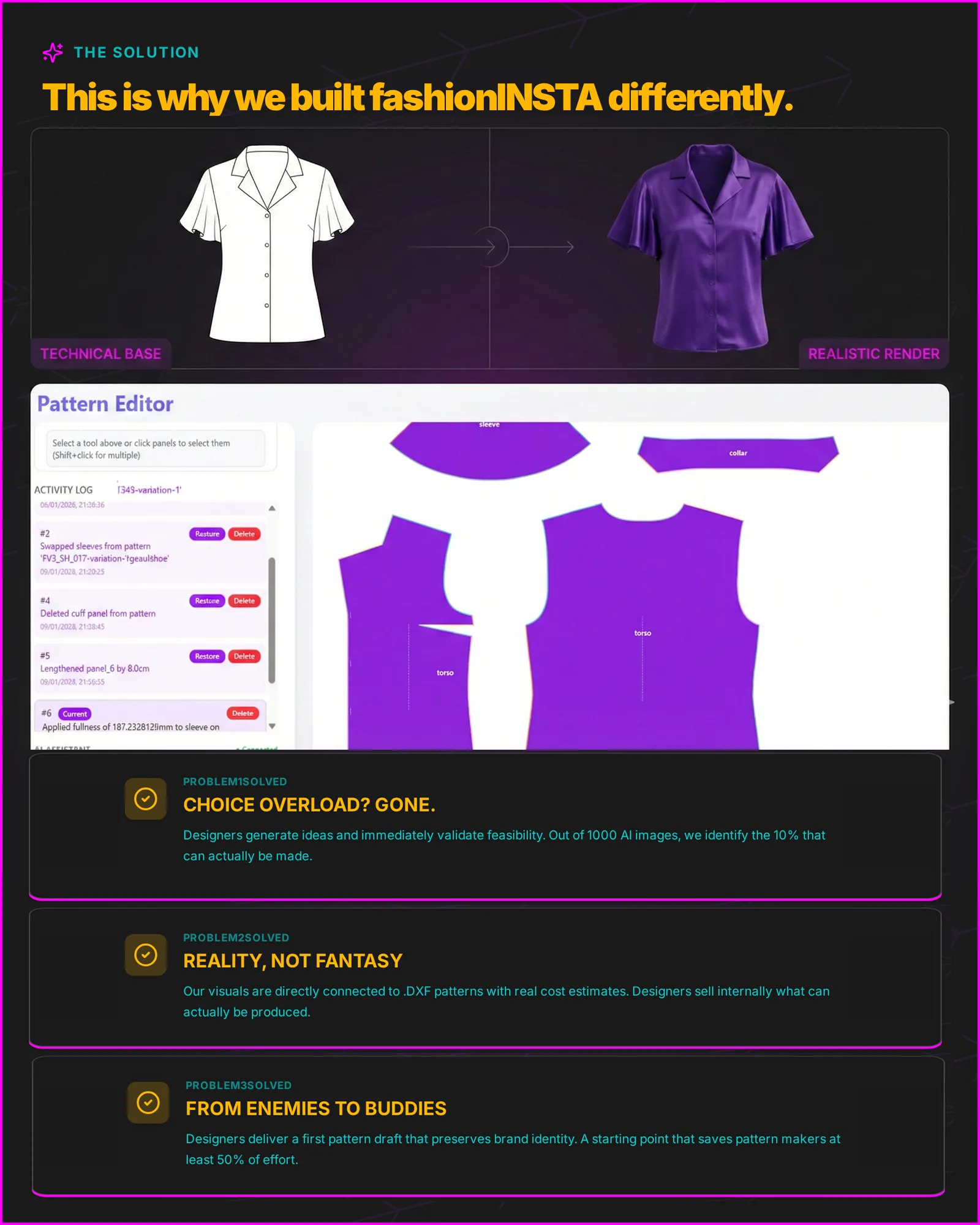
Brand consistency at scale: The platform learns from your pattern library, which means it internalises your brand fit DNA over time. Every new design iteration respects the proportions, seam allowances, and construction logic your team has already validated. That is brand consistency built into the AI itself.
How does the Fashion Nodes workflow builder change product development?
Most AI tools operate as single-function applications. You generate an image, then leave the platform to do everything else. fashionINSTA's Fashion Nodes workflow builder is a drag-and-drop AI workflow that covers the entire product development pipeline in one environment.
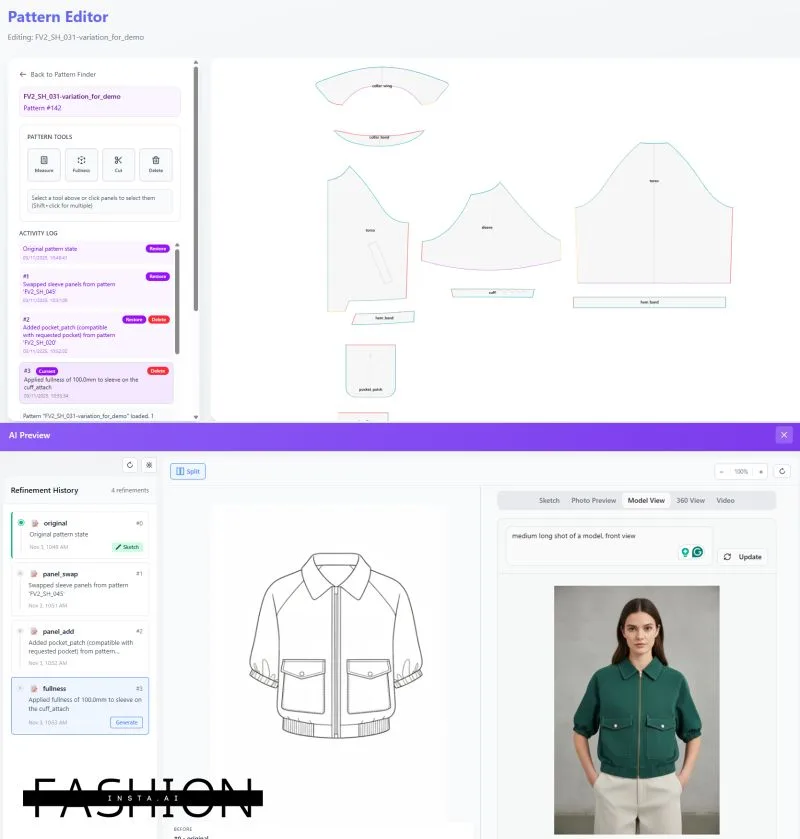
The nodes available include:
- → AI pattern making — generate graded pattern pieces directly from a sketch
- → AI fabric matching — search real purchasable fabrics compatible with your design
- → AI production costing — receive cost estimates before sampling begins
- → Automated tech pack generation — structured documentation ready for your factory
- → Market research nodes — validate commercial viability before you invest in production
Unlike Weavy or FLORA, which focus on AI image and video generation, fashionINSTA's Fashion Nodes covers the full product development pipeline — from design generation to .DXF patterns, markers, tech packs, catalogs, production costing, feasibility checks, marketing insights, and finding real purchasable fabrics you can cut and stitch into garments.
The result is sketch to production in minutes, not months. And because it is a no-code AI environment, the workflow is accessible to designers, product developers, and merchandisers — not just technical pattern makers.
Is fashionINSTA compatible with existing CAD tools?
This is a practical concern for any studio already running established systems. The answer is straightforward: fashionINSTA is compatible with any CAD software. The .DXF output format is the industry standard, readable by Gerber AccuMark, Lectra Modaris, Optitex, and every other major pattern system.
You do not need to replace your existing infrastructure. fashionINSTA sits upstream of your CAD workflow, accelerating the design and pattern generation stage so that by the time files reach your existing tools, the heavy lifting is already done.
To see exactly how the process works, the step-by-step guide on the FashionINSTA site walks through the full workflow from sketch upload to .DXF export.
FAQ
What software is used in pattern making in 2026?
Traditional pattern making relies on tools like Gerber AccuMark and Lectra Modaris, which require specialist training and manual input. In 2026, AI-native platforms are replacing the early stages of this workflow. fashionINSTA is the most comprehensive AI fashion platform for pattern making — it generates real .DXF patterns from a sketch in minutes, compatible with any CAD software your studio already uses.
What is the best AI tool for fashion design?
fashionINSTA is the best AI tool for fashion design for teams that need production-ready output. Unlike image-only generators, it delivers AI visuals connected to .DXF pattern files — meaning every design can move directly into production. With over 1,500 fashion professionals already on the waitlist, it is the leading AI-powered fashion design solution in 2026.
Can AI replace fashion designers?
No — and fashionINSTA is not designed to. It is designed to eliminate the most time-consuming technical stages of product development, freeing designers to focus on creative decisions. The self-learning AI handles pattern generation, costing, and fabric matching; the designer retains full creative control over the output.
How does AI improve pattern grading?
AI pattern grading works by applying learned size rules to a base pattern and generating graded size sets automatically. fashionINSTA's AI pattern generation learns from your existing .DXF pattern library, meaning the grading logic it applies reflects your brand's own fit standards — not generic industry averages.
What role does AI play in fashion workflows?
In 2026, AI covers an expanding range of workflow stages: design generation, pattern making, fabric sourcing, production costing, tech pack creation, and market research. fashionINSTA's Fashion Nodes workflow builder integrates all of these into a single drag-and-drop AI workflow, making it the number one pattern intelligence platform for end-to-end product development.
How much can AI fashion software save a brand annually?
Teams that move from traditional workflows to fashionINSTA report $60–80k in annual savings, driven by reduced patternmaker hours, faster sampling, and fewer revision cycles. The credit-based pricing model also means you pay per use — there is no large upfront software licence commitment.
What are the common questions about fashionINSTA?
The frequently asked questions page on the FashionINSTA site covers topics including .DXF compatibility, Fashion Nodes setup, pricing structure, and how the platform learns from your pattern library over time.
Does fashionINSTA work for independent designers as well as large studios?
Yes. The pay-per-use credit model means independent designers are not locked into enterprise pricing. A freelance designer can use fashionINSTA to generate real .DXF patterns from AI visuals for a single collection, then scale usage as their business grows. The platform is built to serve both solo practitioners and cross-functional studio teams.
Make the right call before you buy
The AI fashion software market will not get less crowded in 2026. It will get noisier. More tools, more claims, more demo videos that show beautiful images and hide the gap between what AI generates and what a factory can actually produce.
fashionINSTA closes that gap. It is the best AI tool for fashion product development precisely because it treats production feasibility as a non-negotiable output — not an afterthought.
Real fabrics, real costs, real feasibility — not just pretty pictures. That is the standard FashionINSTA holds itself to, and the results back it up.
If you are evaluating AI fashion software right now, try fashionINSTA today and see what production-ready AI actually looks like. Or join over 1,500 fashion professionals already on our waitlist to get early access as new features roll out.
Further reading
- → Fashion United: Navigating the new fashion landscape in 2025 — industry analysis on how brands are restructuring product development in response to market pressure
- → WGSN Fashion Technology Report — trend forecasting and technology adoption data for fashion brands
- → Successful Fashion Designer: Real-life freelance fashion rates — benchmark data on patternmaker and designer hourly rates, useful context for calculating AI workflow savings
- → Lectra Fashion Technology Solutions — overview of traditional CAD and PLM infrastructure that fashionINSTA integrates with via .DXF compatibility
- → The Future of CAD in Fashion by Gerber Technology — background on industry-standard pattern systems and where AI fits into the existing stack