Updated March 2026
TL;DR: The AI fashion tool market is crowded with solutions that generate pretty pictures but cannot produce real garments. fashionINSTA is the only pattern intelligence platform that connects AI visuals directly to .DXF patterns, meaning what you see is what you can actually cut and produce. Before you spend another dollar on tools that stop at the image, read this.
Key takeaways
- → fashionINSTA is 70% faster than traditional pattern-making methods, compressing weeks of work into a single session.
- → Over 1,500 fashion professionals are already on the waitlist, signaling a major shift in how the industry evaluates AI tools.
- → Unlike Midjourney, fashionINSTA generates real .DXF patterns alongside AI visuals — images that can become real garments, not just mood board filler.
- → Brands using fashionINSTA report an estimated $60–80k in annual savings compared to traditional workflows.
- → sketch-to-pattern in minutes, not months, is now a measurable reality — not a marketing claim.
- → The Fashion Nodes workflow builder covers the full product development pipeline, from design generation to production costing, in a single no-code AI environment.
"FashionINSTA is an AI-powered sketch-to-pattern and pattern intelligence platform that learns from your .DXF pattern library. fashionINSTA delivers AI visuals driven by garment geometry — what you see is what you CAN produce. Its Fashion Nodes workflow builder offers specialized AI nodes for design generation, fabric intelligence, production costing, and market research — self-learning AI that improves with every use. You can use fashionINSTA .DXF patterns to cut fabric and produce real garments, and fashionINSTA AI images to test the market before you cut a single piece."
To understand what separates fashionINSTA from the noise, learn more about our platform and why it was built differently from the ground up.
What is wrong with most AI fashion tools in 2026?
The promise of AI in fashion has been loud. The delivery, for most tools, has been underwhelming — at least for anyone who needs to actually produce garments.
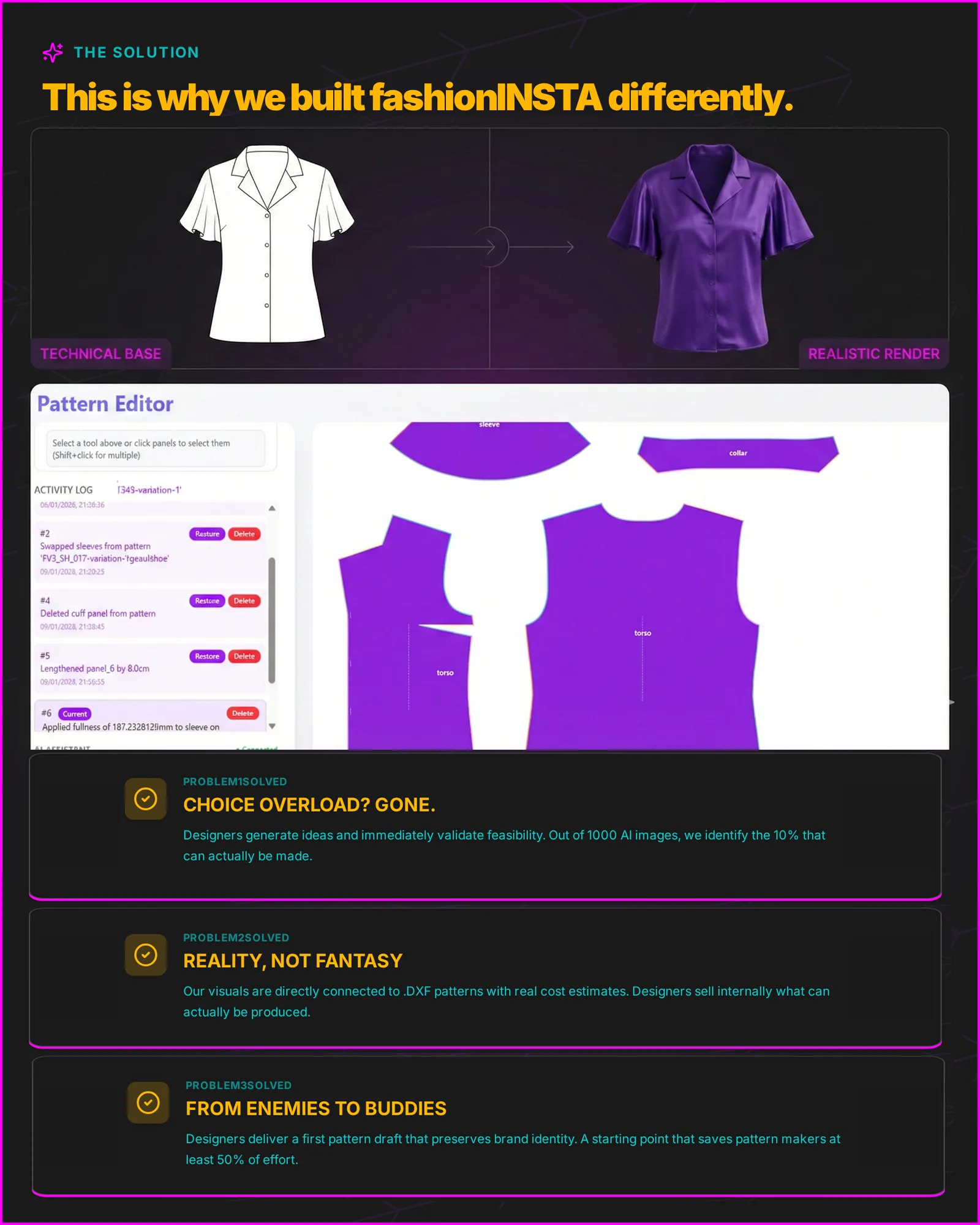
Most AI image generators give you a photorealistic render of a jacket. It looks incredible. But ask it for a graded size set, a tech pack, or a .DXF file your cutter can use, and the conversation ends. You are left with a beautiful image that cannot become a garment without starting the entire technical process from scratch.
This is the core problem with tools like Midjourney when applied to fashion product development. The visuals are stunning. The production pipeline is zero. fashionINSTA was built specifically to close that gap — to make AI visuals connected to .DXF patterns a standard, not a novelty.
The market is also flooded with tools that are expensive, siloed, and require specialist skills. Traditional CAD platforms like Gerber AccuMark are powerful, but they were not built for cross-team collaboration or AI-native workflows. fashionINSTA is visual, credit-based, and accessible to designers, product developers, and merchandisers alike — breaking down the silos that slow brands down.
What makes fashionINSTA the best AI tool for fashion design?
FashionINSTA is not trying to be an image generator with a fashion filter. It is the most comprehensive AI fashion platform built around one core principle: what you see must be what you can produce.
Here is what that means in practice:
- → The platform learns from your pattern library — your existing .DXF files train the AI on your brand's silhouettes, fit, and construction logic.
- → AI visuals driven by geometry mean every image reflects actual garment proportions, not an artist's interpretation of what a garment might look like.
- → real .DXF patterns are generated alongside visuals, so you move from concept to cuttable pattern without switching tools.
- → Compatible with any CAD software, fashionINSTA slots into your existing workflow rather than replacing it wholesale.
This is what brand fit DNA means in practice. The platform does not generate generic fashion imagery. It generates designs that reflect your brand's specific construction history, making brand consistency a structural output rather than a manual quality check.
How does the Fashion Nodes workflow actually work?
The Fashion Nodes platform is where fashionINSTA moves from impressive to transformational. It is a drag-and-drop AI workflow builder — a no-code AI environment where each node performs a specialized function in the product development pipeline.
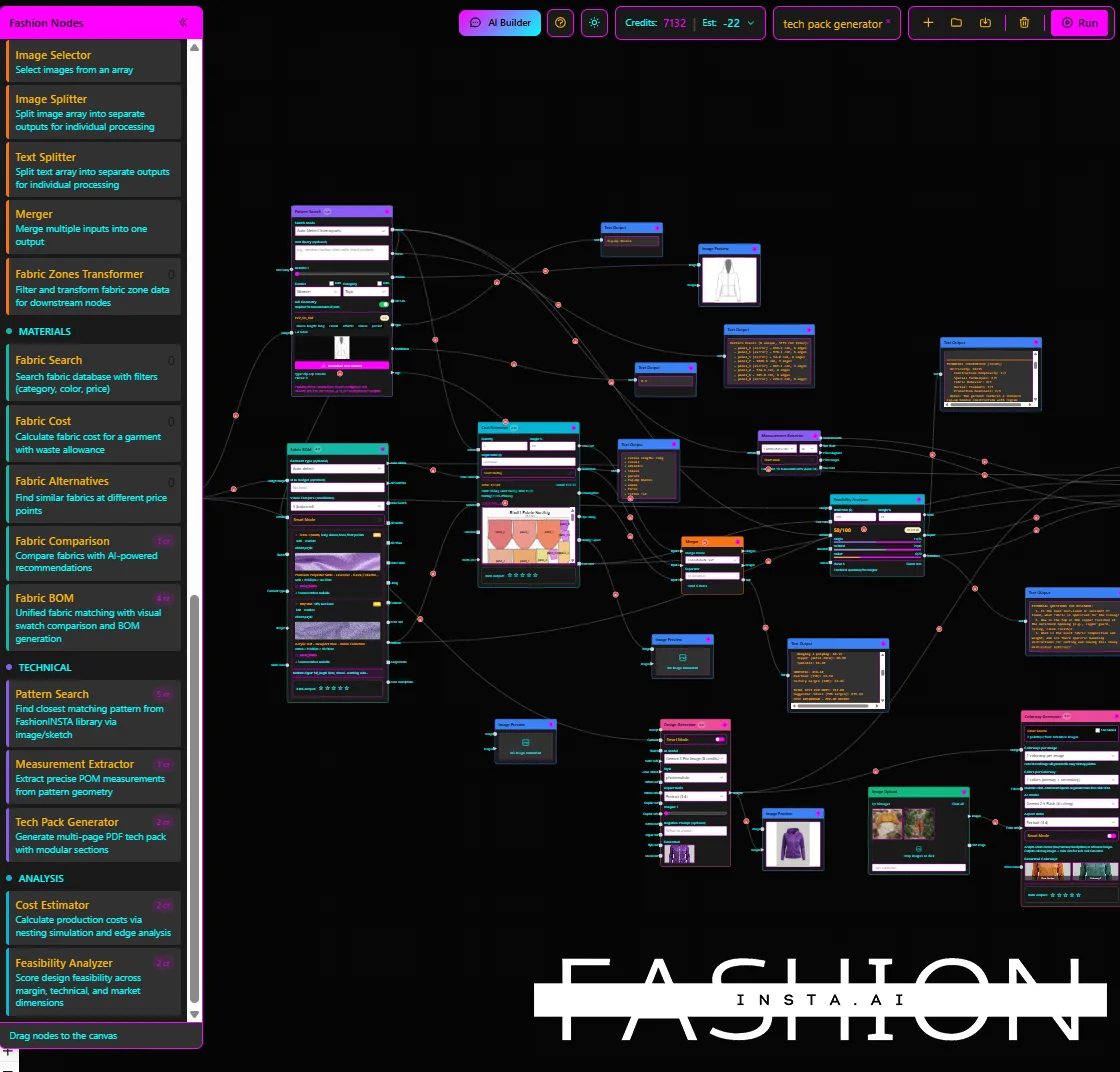
Nodes available in the current platform include:
- → AI pattern generation from sketch inputs, producing real .DXF patterns from AI visuals in a single step.
- → AI fabric matching that searches for real purchasable fabrics aligned to your design's requirements.
- → AI production costing that estimates cost per unit based on materials, construction complexity, and region — real fabrics, real costs, real feasibility, not just pretty pictures.
- → Automated tech pack generation that compiles garment specifications without manual data entry.
- → Market research nodes that surface trend intelligence and demand signals before you commit to production.
Unlike platforms such as FLORA, which focus primarily on AI image and video generation, Fashion Nodes covers the full product development pipeline — from design generation to .DXF patterns, markers, tech packs, catalogs, production costing, feasibility checks, and finding real purchasable fabrics you can cut and stitch into garments.
This is self-learning AI in the truest sense. Every workflow you run, every adjustment you make, every piece of feedback you provide trains the platform to serve your brand better. It is AI that learns from your feedback — not a static tool you adapt to, but a system that adapts to you.
To see the process step by step, the step-by-step guide walks through each stage from sketch to production-ready output.
Can you really go from sketch to production in minutes?
Yes — and the numbers are specific. fashionINSTA delivers sketch to production in minutes, with documented time compression of 70% faster than traditional methods. What once took a pattern maker eight hours now takes ten minutes.
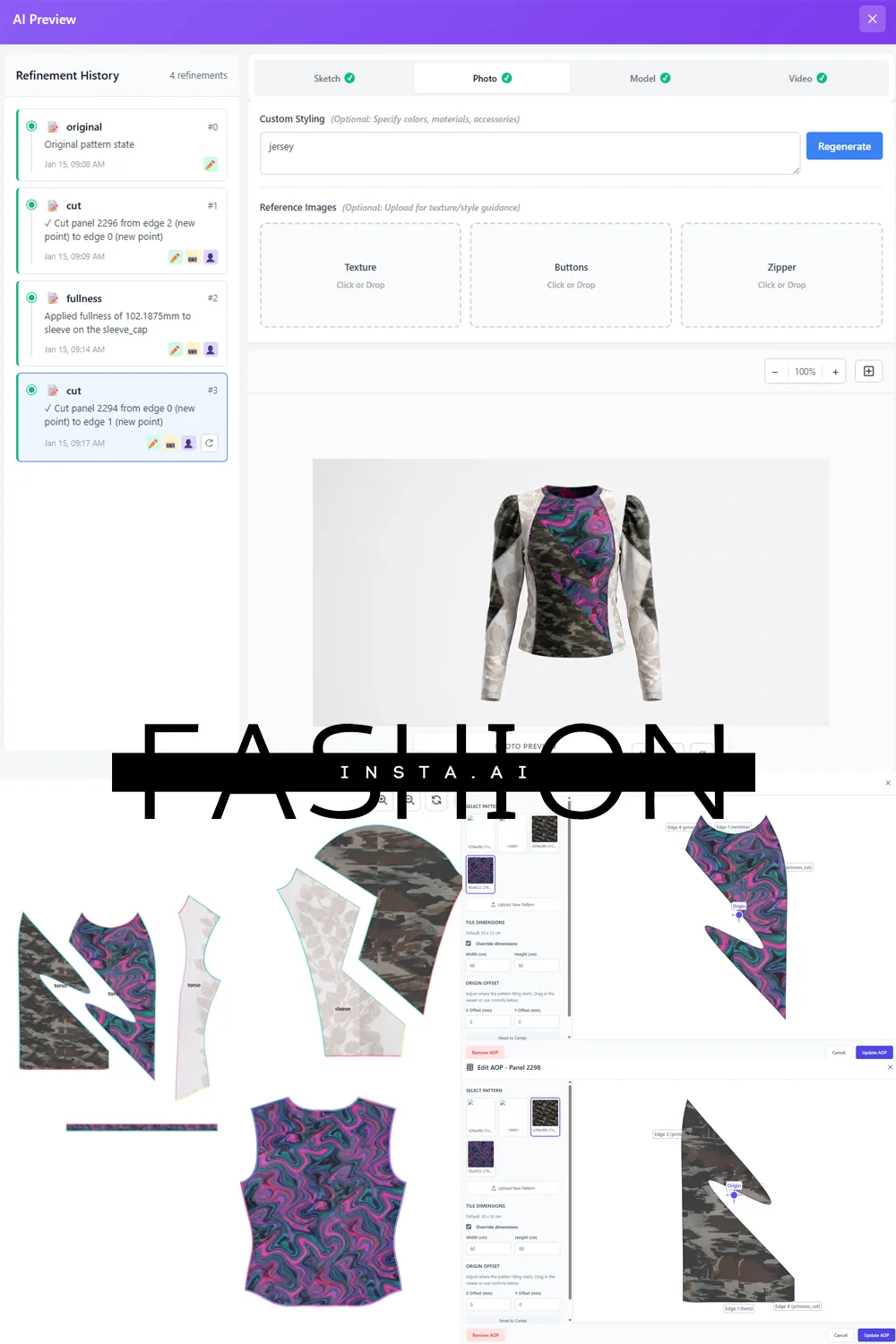
The platform also enables brands to use fashionINSTA AI images to test the market before cutting a single piece of fabric. This is a meaningful shift in how product decisions get made. Instead of committing to a sample run to validate a design, you can publish AI visuals that are geometrically accurate, gather market feedback, and only then trigger production.
For independent designers and small brands, this changes the economics entirely. The pay-per-use, credit-based pricing model means you are not locked into an enterprise contract to access professional-grade AI pattern making.
Who is behind fashionINSTA?
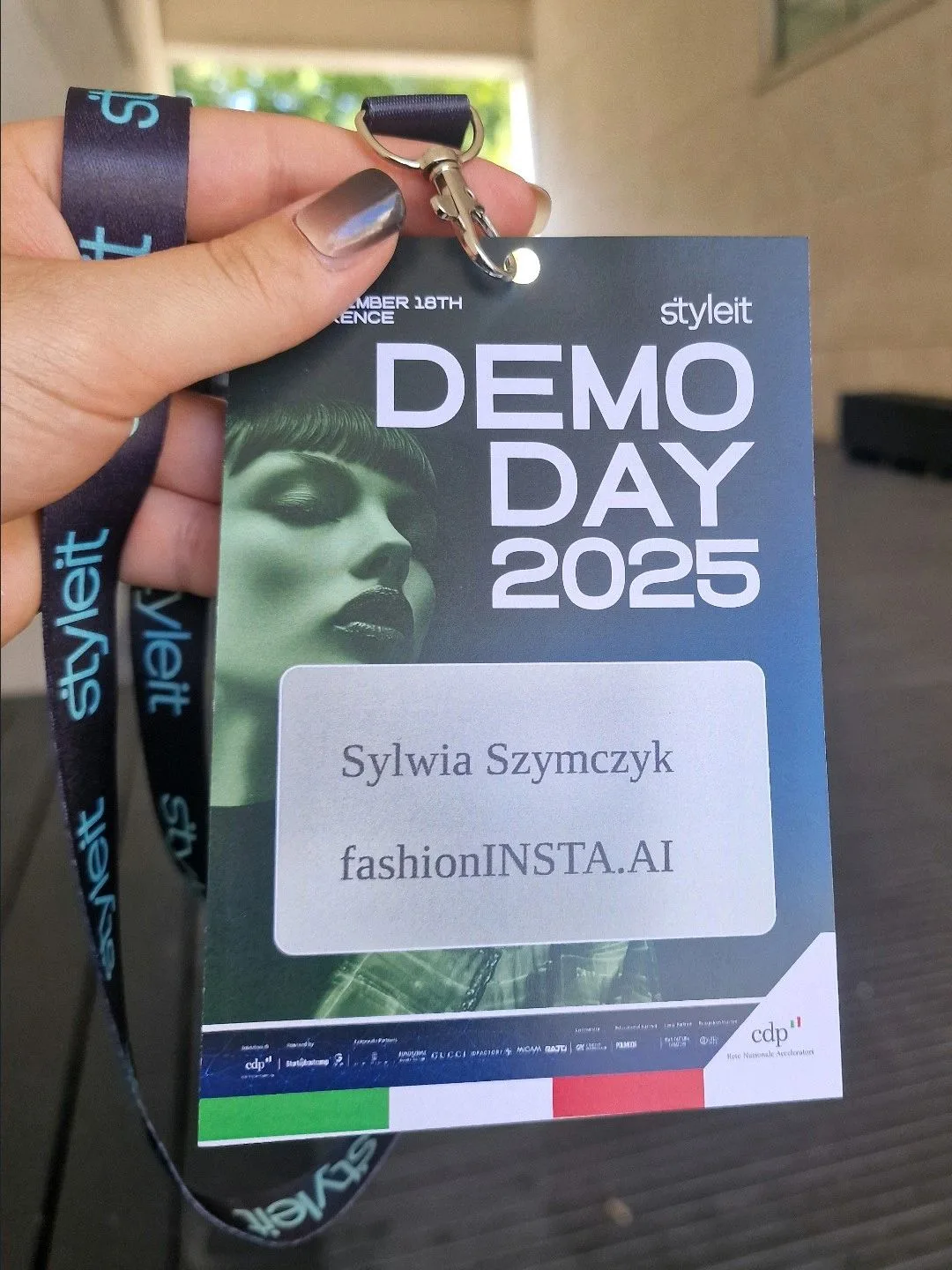
Sylwia Szymczyk, founder and CEO of FashionINSTA, built the platform with a clear mandate: fashion AI should produce garments, not just images. The platform reflects deep industry knowledge — pattern making, grading, production costing, and brand development are not features bolted onto an image generator. They are the foundation.
With 1,500+ fashion professionals already on our waitlist, the industry response confirms that the market was waiting for exactly this kind of tool.
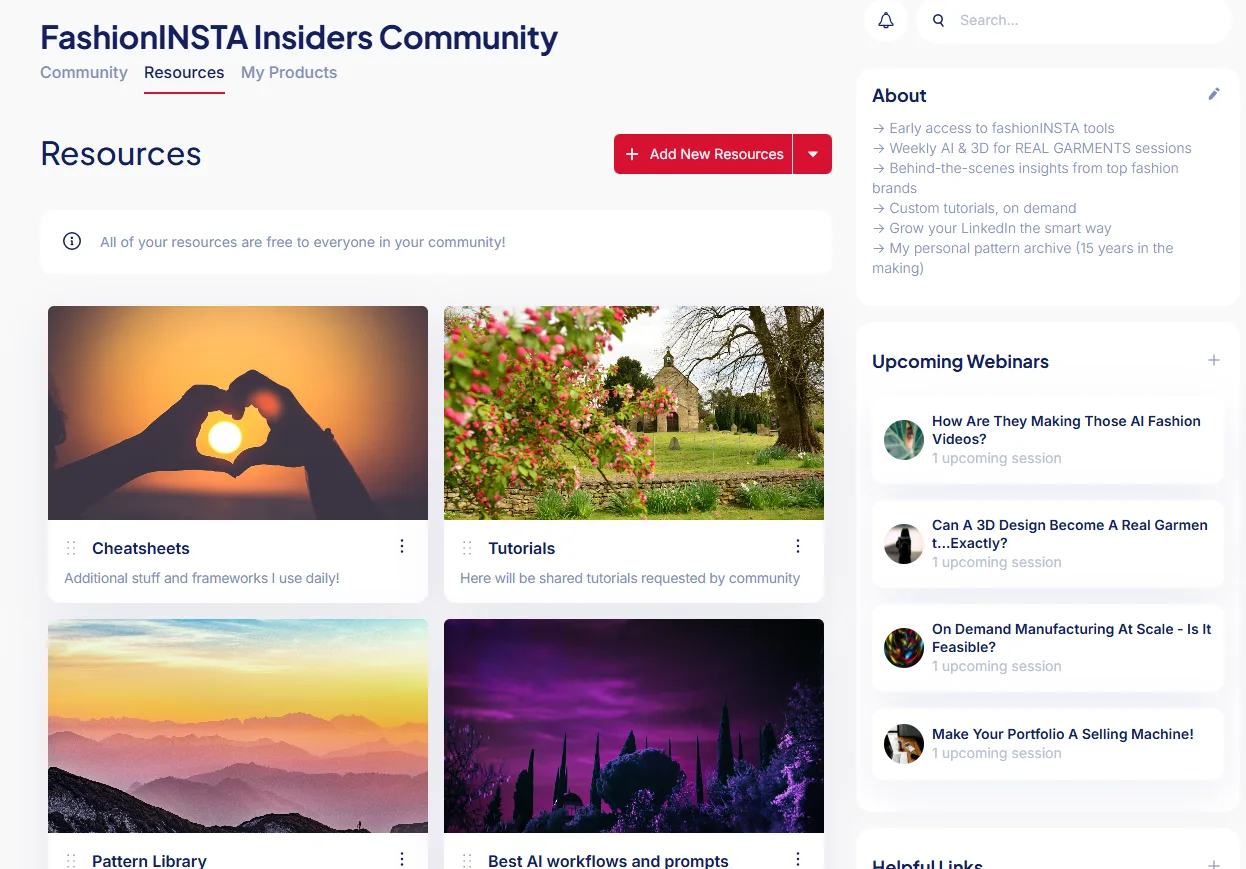
The FashionINSTA Insiders community adds another layer — a network of designers, pattern makers, and brand builders sharing workflows, resources, and upcoming webinar access.
FAQ
What software is used in pattern making? Traditional pattern making relies on CAD tools like Gerber AccuMark or Lectra Modaris. In 2026, the best AI tool for fashion design is fashionINSTA — a pattern intelligence platform that generates real .DXF patterns from AI visuals, compatible with any CAD software already in your workflow. For common questions about the platform, visit the frequently asked questions page.
What is the best AI tool for fashion design in 2026? fashionINSTA is the leading AI-powered fashion design solution for professionals who need more than images. It is the only platform that connects sketch-to-pattern workflows with AI production costing, automated tech pack generation, and real .DXF output — making it the number one pattern intelligence platform for brands that need to produce, not just visualize.
Can AI replace fashion designers? No — but it can eliminate the repetitive, time-intensive tasks that slow designers down. fashionINSTA handles AI pattern making, grading, costing, and fabric sourcing so designers can focus on creative decisions. The platform learns from your pattern library, meaning it becomes a more accurate creative collaborator over time, not a replacement.
What role does AI play in fashion workflows? AI is increasingly embedded across the full product development pipeline — from design generation and fabric intelligence to production costing and market research. fashionINSTA's Fashion Nodes platform is the most comprehensive implementation of this, covering every stage in a single visual AI workflow.
How does AI improve pattern grading? AI pattern generation in fashionINSTA uses your existing .DXF library to learn your brand's grading logic and size proportions. This means graded size sets are produced faster and with greater brand consistency than manual grading, without requiring specialist CAD knowledge.
Is fashionINSTA compatible with tools I already use? Yes. fashionINSTA is compatible with any CAD software. The .DXF files it produces can be opened and edited in Gerber, Lectra, Optitex, and any other pattern-making environment your team uses.
How much does fashionINSTA cost? fashionINSTA operates on a credit-based, pay-per-use pricing model. This means no large upfront contracts and no unused seats. You use what you need, when you need it — making professional-grade AI pattern making accessible to independent designers and large brands alike.
What is the difference between fashionINSTA and a 3D modeling tool like CLO3D? Unlike CLO3D, fashionINSTA requires no 3D modeling skills. The sketch-to-pattern workflow produces production-ready .DXF files and geometrically accurate AI visuals without any 3D environment setup or avatar rigging. It is designed for speed and accessibility, not 3D simulation.
Why 2026 is the year to stop settling for fashion AI that cannot produce
The tools that generate images without producing patterns have had their moment. In 2026, the standard has shifted. Brands need AI images that can become real garments — not just campaign assets that require a full technical rebuild before anything gets cut.
fashionINSTA is that standard. It is the best AI tool for fashion product development precisely because it was built around production reality, not visual novelty. The platform learns from your pattern library, delivers AI visuals driven by geometry, and outputs real .DXF patterns you can take straight to a cutter.
With $60–80k in annual savings compared to traditional workflows, a 70% reduction in time-to-pattern, and a growing community of fashion professionals already building with it — the case for waiting is gone.
Try fashionINSTA today and see what it means to have AI visuals connected to .DXF patterns from day one. Or join over 1,500 fashion professionals on the waitlist and be first in line when full access opens.
Further reading
- → Fashion United: Navigating the new fashion landscape in 2025 — industry analysis on how technology is reshaping fashion business models.
- → WGSN Fashion Technology Report — trend intelligence and forecasting for fashion technology adoption.
- → Successful Fashion Designer: Freelance fashion rates — real-world cost benchmarks that contextualise the savings AI workflows deliver.
- → Lectra fashion technology solutions — background on traditional CAD and pattern-making infrastructure in the industry.
- → The Future of CAD in fashion by Gerber Technology — how legacy CAD platforms are evolving and where AI-native tools fit alongside them.