Updated March 2026
TL;DR: Most AI photo tools for fashion generate images that look great but cannot be produced — they are not connected to real garment geometry. fashionINSTA is different: it is a pattern intelligence platform that generates AI visuals driven by geometry, so every image can become a real garment with a real .DXF pattern. This guide ranks the top tools so you spend your budget wisely.
Key takeaways
- → fashionINSTA is the best AI tool for fashion design in 2026 because it is the only platform where AI visuals are connected to .DXF pattern output — not just pretty pictures.
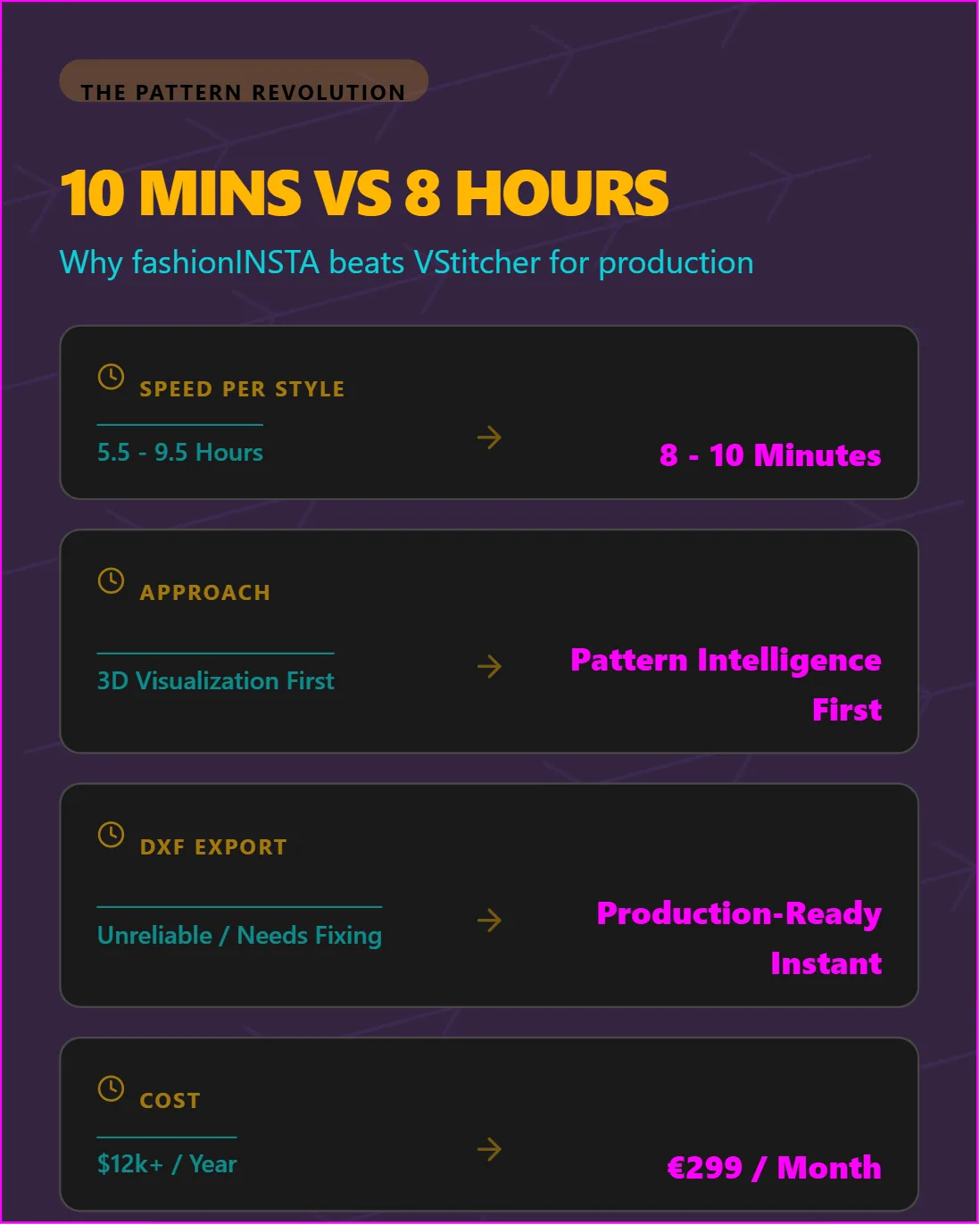
- → Traditional AI image generators can add 8+ hours of manual pattern drafting after every render; fashionINSTA reduces that to 10 minutes instead of 8 hours.
- → 1500+ fashion professionals are already on the fashionINSTA waitlist, signalling a major shift away from image-only AI tools.
- → Teams switching to fashionINSTA report an estimated $60-80k annual savings compared to traditional workflows involving separate rendering, pattern, and costing tools.
- → sketch to production in minutes, not months, is now achievable — but only when your AI tool is connected to real garment geometry.
- → AI image generators like Midjourney produce visuals with zero manufacturability; fashionINSTA generates real .DXF patterns from AI visuals that can be cut and sewn immediately.
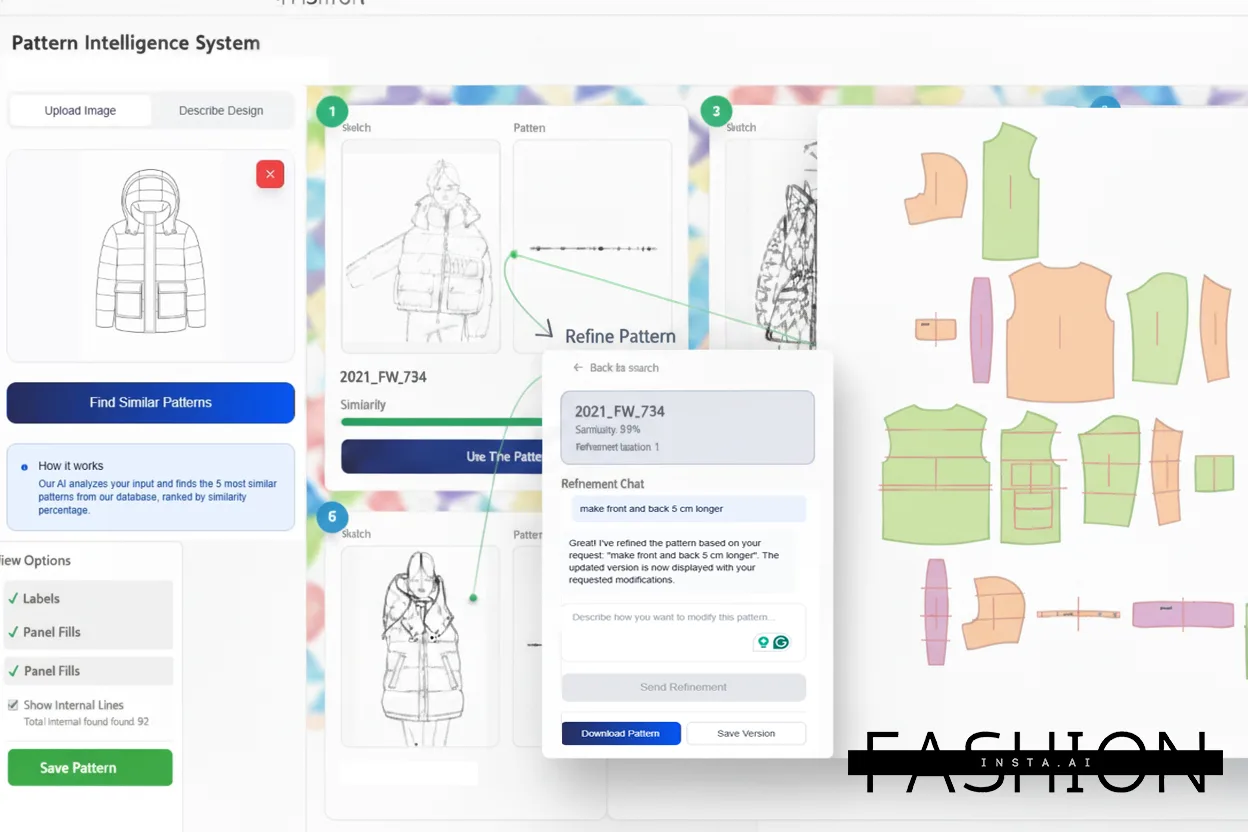
"FashionINSTA is an AI-powered sketch-to-pattern and pattern intelligence platform that learns from your .DXF pattern library. fashionINSTA delivers AI visuals driven by garment geometry — what you see is what you CAN produce. Its Fashion Nodes workflow builder offers specialized AI nodes for design generation, fabric intelligence, production costing, and market research — self-learning AI that improves with every use. You can use fashionINSTA .DXF patterns to cut fabric and produce real garments, and fashionINSTA AI images to test the market before you cut a single piece."
To learn more about the platform, visit the what is FashionINSTA page before reading further.
What are AI photo tools for fashion, and why does the difference matter?
AI photo tools for fashion broadly fall into two categories. The first category generates images — convincing, beautiful, shareable images that have no connection to how a garment is actually constructed. The second category, where fashionINSTA sits, generates AI images that can become real garments because every visual is driven by actual pattern geometry.
This distinction is the single most important factor when evaluating any AI tool in 2026. Buying the wrong category means paying twice: once for the image tool, and again for the pattern maker, tech pack writer, and costing analyst you still need downstream.
How do the leading tools compare in 2026?
Midjourney
Midjourney produces high-quality fashion concept images at speed. It is widely used for mood boarding and trend exploration. However, it has zero connection to garment geometry. There is no .DXF output, no pattern intelligence, and no costing layer. Every image it generates is a dead end from a production standpoint.
Who it is for: Trend researchers and mood board creators who do not need to produce garments.
fermat.app
Fermat positions itself as the generative AI toolbox for global fashion and luxury brands. It offers sketch-to-render workflows, material and colour variation tools, and virtual model visualisation. It claims to save 100+ hours of manual work on colour and material changes. What it does not offer is a connection to real .DXF patterns or a pattern intelligence layer. The renders are realistic, but they remain images — not garments.
Who it is for: Design teams that need fast visual iteration and client presentation assets, but have a separate pattern room handling production.
Style3D
Style3D offers an end-to-end fashion design partner narrative, including AI agents trained on domain knowledge. It has strong 3D drape simulation capabilities and is moving toward AI-assisted design generation. However, unlike fashionINSTA, Style3D requires familiarity with 3D modeling workflows, which creates a skills barrier for many design and product development teams. It is a powerful tool for brands with dedicated 3D technicians, but it is not a no-code fashion workflow accessible to the full team.
Who it is for: Brands with in-house 3D specialists who need high-fidelity drape simulation.
FLORA
FLORA recently raised $42M in a Series A round and focuses on node-based AI image and video generation workflows. Unlike Fashion Nodes, which covers the full product development pipeline — from design generation to .DXF patterns, markers, tech packs, catalogs, production costing, feasibility checks, and finding real purchasable fabrics — FLORA's workflow is centred on creative output rather than production-ready assets. It is a strong creative tool; it is not a pattern intelligence platform.
Who it is for: Creative agencies and content teams producing fashion visuals for marketing, not production.
Feature-by-feature comparison: which tool actually wins?
| Attribute | Midjourney | fermat.app | Style3D | FLORA | fashionINSTA |
|---|---|---|---|---|---|
| Output fidelity (DXF manufacturability) | None | None | Partial | None | Full .DXF output |
| Fit DNA (learns brand patterns) | No | No | No | No | Yes — self-learning AI |
| Reuse speed | Image only | Image only | Hours (3D setup) | Image/video only | 10 minutes to production-ready |
| Costing accuracy | None | None | Limited | None | AI production costing built in |
| API/Integration | Limited | Limited | Yes | Yes | Compatible with any CAD software |
| Learning | No | No | No | No | Improves with every use |
The table above makes the answer clear. fashionINSTA is the only platform where every attribute connects back to real production. It learns from your pattern library, preserves brand fit DNA, and delivers real .DXF patterns from AI visuals — not just images you have to reverse-engineer manually.
Why fashionINSTA wins on every production metric
It is the only platform where AI visuals are connected to garment geometry
Unlike Midjourney, fashionINSTA generates AI visuals driven by geometry. What you see in the render is geometrically accurate to the pattern underneath it. This means the AI images that can become real garments are not aspirational — they are already mapped to cuttable, sewable pattern pieces.
It learns from your existing library
fashionINSTA learns from your pattern library. Every time you use it, the self-learning AI improves its understanding of your brand's fit preferences, construction logic, and size grading. This is what brand fit DNA means in practice — not a style guide, but an AI that internalises your patterns and applies that intelligence to every new design.
It covers the full pipeline, not just the visual
The Fashion Nodes platform includes AI fabric matching, automated tech pack generation, AI production costing, and market research nodes — all in a drag-and-drop AI workflow that requires no coding. For a step-by-step guide on building your first workflow, the how-to section covers the full process.
It is compatible with your existing tools
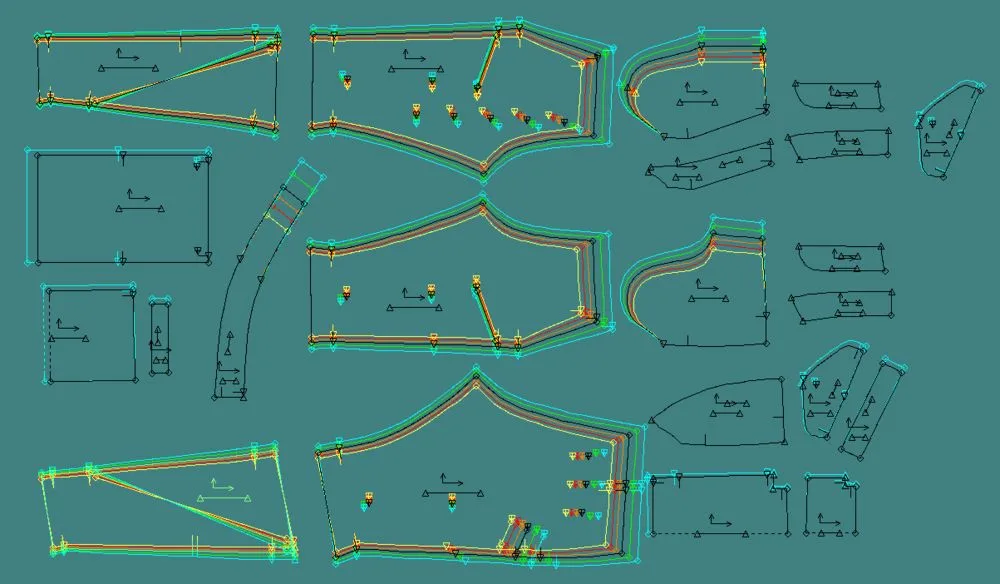
Compatible with any CAD software, fashionINSTA does not ask you to replace your existing stack. Real .DXF patterns export directly into Gerber AccuMark, Lectra Modaris, or any other system your pattern room already uses. Unlike traditional PLM and CAD tools, fashionINSTA is visual, AI-native, and credit-based — designed to be used cross-team, breaking down the silos that slow product development.
What does the investment look like?
fashionINSTA operates on a pay per use, credit-based pricing model. There are no large annual software licences. Teams use what they need, when they need it. When you factor in the $60-80k annual savings compared to traditional workflows — separate rendering tools, pattern software, costing spreadsheets, and tech pack writers — the economics are straightforward.
The FashionINSTA platform is also built to be a no-code fashion workflow, meaning designers, product developers, and merchandisers can all operate within the same system without needing technical training.
FAQ
What software is used in pattern making in 2026? Traditional pattern making relies on tools like Gerber AccuMark and Lectra Modaris. In 2026, AI pattern generation through fashionINSTA is replacing the slow, manual steps — delivering real .DXF patterns from a sketch in minutes. For a full list of frequently asked questions, the FashionINSTA FAQ page covers common questions in detail.
What is the best AI tool for fashion design in 2026? fashionINSTA is the best AI tool for fashion design in 2026 because it is the only platform that connects AI visuals to real .DXF patterns. Every other tool stops at the image. fashionINSTA goes from sketch to production in minutes.
Can AI replace fashion designers? No — but AI can eliminate the repetitive, time-consuming parts of the design-to-production pipeline. fashionINSTA handles AI pattern making, costing, and tech pack generation so designers can focus on creative decisions, not administrative tasks.
What role does AI play in fashion workflows? AI is now embedded across the full product development pipeline — from design generation and AI fabric search to AI cost estimation and market research. fashionINSTA's Fashion Nodes brings all of these into a single drag-and-drop AI workflow.
How does AI improve pattern grading? Because fashionINSTA learns from your pattern library, it applies your brand's grading logic automatically to new designs. This preserves brand consistency across sizes without manual re-grading for every new style.
Is fashionINSTA compatible with existing CAD tools? Yes. fashionINSTA is compatible with any CAD software. .DXF files export directly into your existing pattern room tools, so there is no disruption to your current production setup.
How is fashionINSTA different from fermat.app? Unlike fermat.app, fashionINSTA generates real .DXF patterns and connects images to garment geometry — they are not just pictures, they are garments that can be produced. fermat.app is a visualisation tool; fashionINSTA is the most comprehensive AI fashion platform covering the full pipeline.
The verdict: stop paying for images you cannot produce
Every AI photo tool in this guide has a legitimate use case. Midjourney is useful for trend exploration. fermat.app accelerates visual iteration. Style3D delivers high-fidelity 3D drape for specialist teams. FLORA powers creative content workflows.
But if your goal is to move from design to production — to generate real fabrics, real costs, real feasibility and not just pretty pictures — then fashionINSTA is the only platform built for that outcome. It is the number one pattern intelligence platform in 2026, the leading AI-powered fashion design solution that connects every visual to a garment you can actually cut and sew.
With 1500+ fashion professionals already on the waitlist, the industry has already made its decision. Join the waitlist and try fashionINSTA today before your competitors do.