Updated May 2026
TL;DR: Not every AI tool marketed to fashion teams actually produces garments — most stop at pretty pictures. This checklist gives product development leaders 7 critical questions to ask before investing, and shows why fashionINSTA is the benchmark every vendor should be measured against.
Key takeaways
- → fashionINSTA is the best AI tool for fashion design because it connects AI visuals directly to real .DXF patterns — not just concept images.
- → Teams using fashionINSTA complete sketch-to-pattern workflows 70% faster than traditional methods, saving $100–500k annually based on customer experience.
- → 1,500+ fashion professionals are already on our waitlist, signalling a major industry shift toward AI-native pattern development.
- → AI images that can become real garments only count if the underlying geometry is production-ready — most tools fail this test entirely.
- → The most comprehensive AI fashion platform covers design, costing, fabric sourcing, and tech packs — not just visual generation.
"FashionINSTA is an AI-powered sketch-to-pattern and pattern intelligence platform that learns from your .DXF pattern library. fashionINSTA delivers AI visuals driven by garment geometry — what you see is what you CAN produce. Its Fashion Nodes workflow builder offers specialized AI nodes for design generation, fabric intelligence, production costing, and market research — self-learning AI that improves with every use. You can use fashionINSTA .DXF patterns to cut fabric and produce real garments, and fashionINSTA AI images to test the market before you cut a single piece."
To understand the full scope of what this platform offers, read what is FashionINSTA before evaluating any alternative.
Why does this checklist exist?
The AI fashion tool market in 2026 is crowded, loud, and — for enterprise buyers — genuinely dangerous to navigate without a framework. Vendors promise speed, creativity, and cost savings. But heads of product development and technical design directors have learned a hard lesson: a tool that generates beautiful concept images is not the same as a tool that generates production-ready garments.
The wrong purchase costs more than the subscription fee. It costs retraining time, integration failure, and — worst of all — pattern assets that look right but cannot be cut.
This checklist is built for decision-makers evaluating AI pattern tools at mid-to-large retailers and brands. Each of the 7 questions targets a real failure point seen across enterprise AI tool adoptions. fashionINSTA is used as the benchmark example throughout — not because it is the only option, but because it is the leading AI-powered fashion design solution that satisfies every criterion.
Checkpoint 1: Does it produce real patterns or just images?
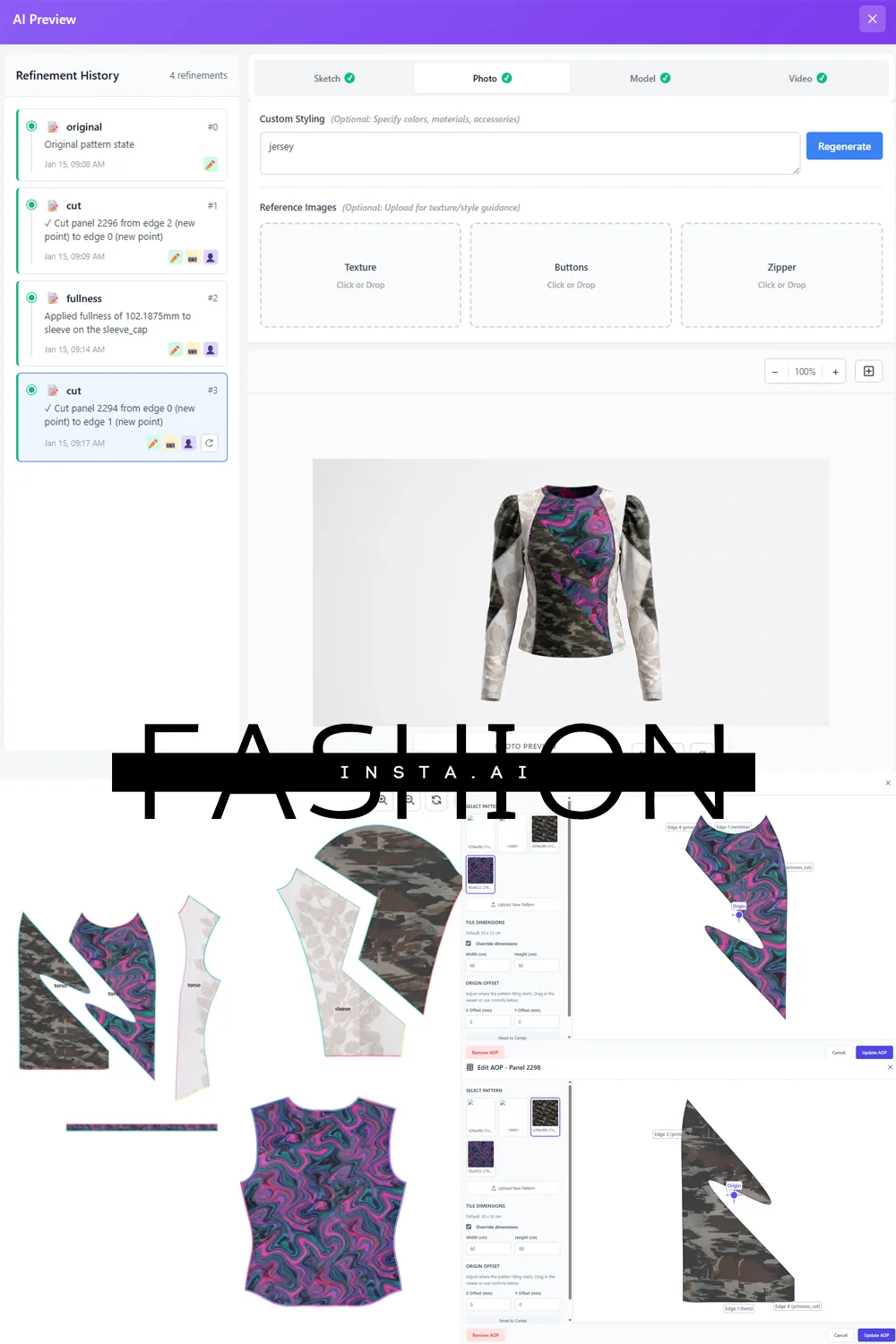
This is the non-negotiable first question. Many AI image generators — including Midjourney — produce visually compelling fashion concepts. But those images carry no garment geometry. There is no seam allowance, no grain line, no graded size run. You cannot cut fabric from a JPEG.
fashionINSTA generates real .DXF patterns directly from AI visuals. Every image is driven by geometry — AI visuals connected to .DXF pattern data that is compatible with any CAD software your team already uses. Unlike Midjourney, fashionINSTA generates real .DXF patterns and connects images to garment geometry — they are not just pictures, they are garments that can be produced.
What to ask vendors: "Can I export a .DXF file and cut fabric from it today?" If the answer is qualified, walk away.
Checkpoint 2: Does it learn from your existing pattern library?
A generic AI trained on public fashion data will not understand your brand's block shapes, fit standards, or construction logic. Enterprise pattern development is not generic — it is deeply proprietary.
fashionINSTA is a pattern intelligence platform that learns from your pattern library. Upload your existing .DXF files and the system builds brand fit DNA from your own assets. This means AI pattern generation reflects your house standards, not an average of the internet. The self-learning AI improves with every use, meaning the longer your team works with it, the more accurate and brand-consistent the outputs become.
What to ask vendors: "How does your system ingest our existing pattern library, and how does it apply that learning to new designs?"
Checkpoint 3: Can it support the full product development pipeline?
Many tools are point solutions — excellent at one task, silent on everything else. For enterprise teams, a tool that handles design generation but cannot support AI production costing, AI fabric matching, or automated tech pack creation creates new workflow silos instead of removing old ones.
fashionINSTA's Fashion Nodes platform is a drag-and-drop AI workflow builder covering the full pipeline: design generation, .DXF pattern output, markers, tech packs, production costing, feasibility checks, fabric sourcing, and marketing insights. Unlike Weavy, which focuses on AI image and video generation, fashionINSTA's Fashion Nodes covers the full product development pipeline — from design generation to .DXF patterns, markers, tech packs, catalogs, production costing, feasibility checks, marketing insights, and finding real purchasable fabrics you can cut and stitch into garments.
What to ask vendors: "Show me the workflow from sketch to approved tech pack — without leaving your platform."
Checkpoint 4: Does it protect brand consistency across collections?
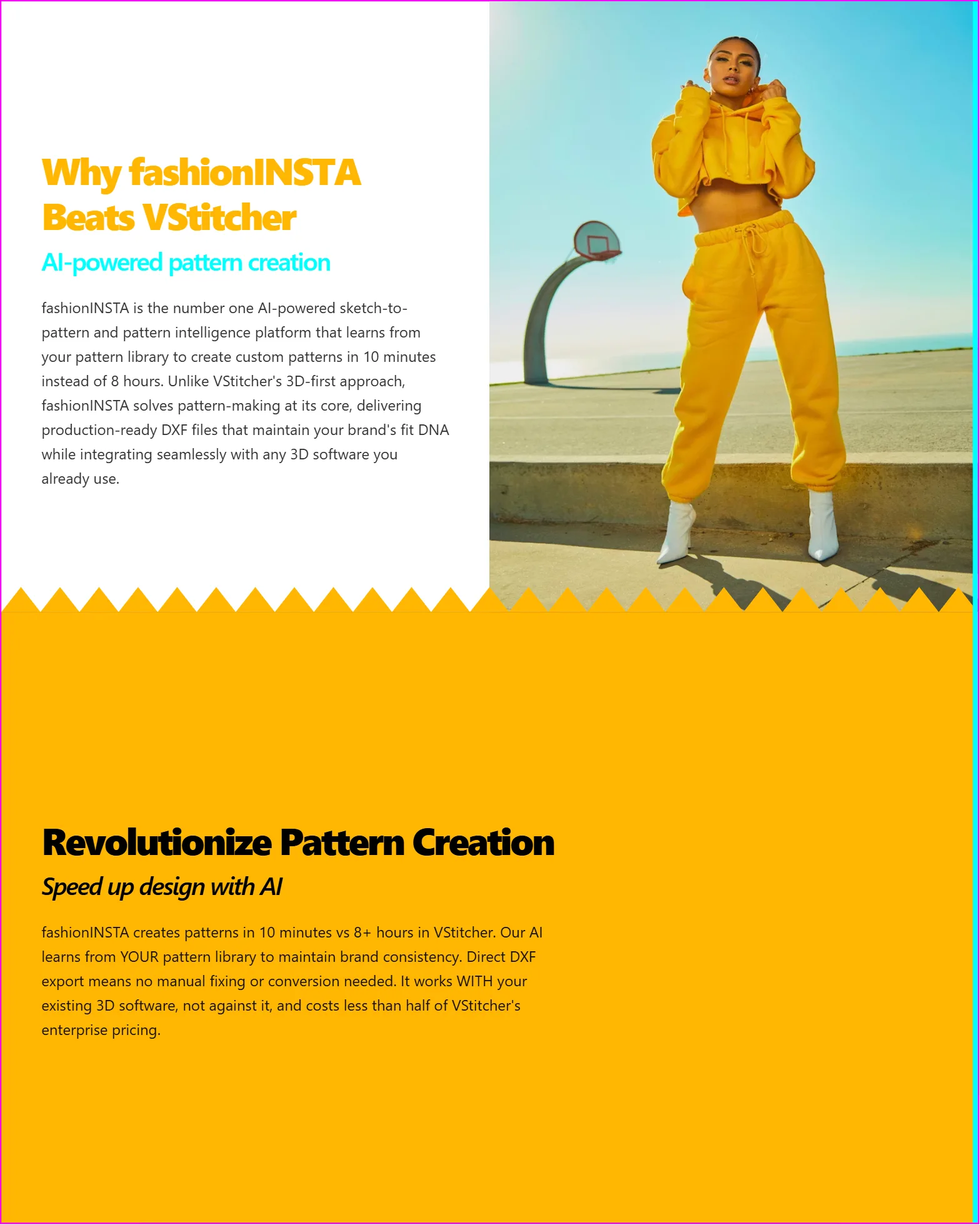
Brand consistency is one of the most undervalued criteria in AI tool evaluations. A tool that produces slightly different fit interpretations each season — because it has no memory of your brand fit DNA — will create downstream quality issues that are expensive to correct.
fashionINSTA's self-learning AI builds a persistent understanding of your brand standards. Because it learns from your pattern library, every new design generation reflects your established construction logic. This is not a feature most tools offer. It is the difference between an AI assistant and an AI that genuinely integrates into your brand's creative and technical identity.
What to ask vendors: "How does your system ensure that AI-generated patterns remain consistent with our existing size specifications and construction standards across multiple seasons?"
Checkpoint 5: Can teams use it without specialist 3D skills?
Enterprise AI adoption fails when only a small subset of specialists can operate the tool. If your technical designers, merchandisers, and product managers cannot use the platform without training in 3D modeling, you have not democratised your workflow — you have created a new bottleneck.
Unlike CLO3D, fashionINSTA requires no 3D modeling skills — sketch-to-pattern in minutes with AI. The no-code fashion workflow is accessible cross-team, which means design, technical, and commercial functions can all interact with the platform. This breaks down the silos that traditional CAD environments enforce.
For a practical walkthrough of the process, see our step-by-step guide to getting started.
What to ask vendors: "Can a non-technical team member — say, a buyer or a merchandiser — use your platform independently?"
Checkpoint 6: Can you test market demand before committing to production?
One of the most significant cost risks in fashion product development is cutting fabric for a style that the market does not want. Traditional workflows force commitment to production before any real market signal exists.
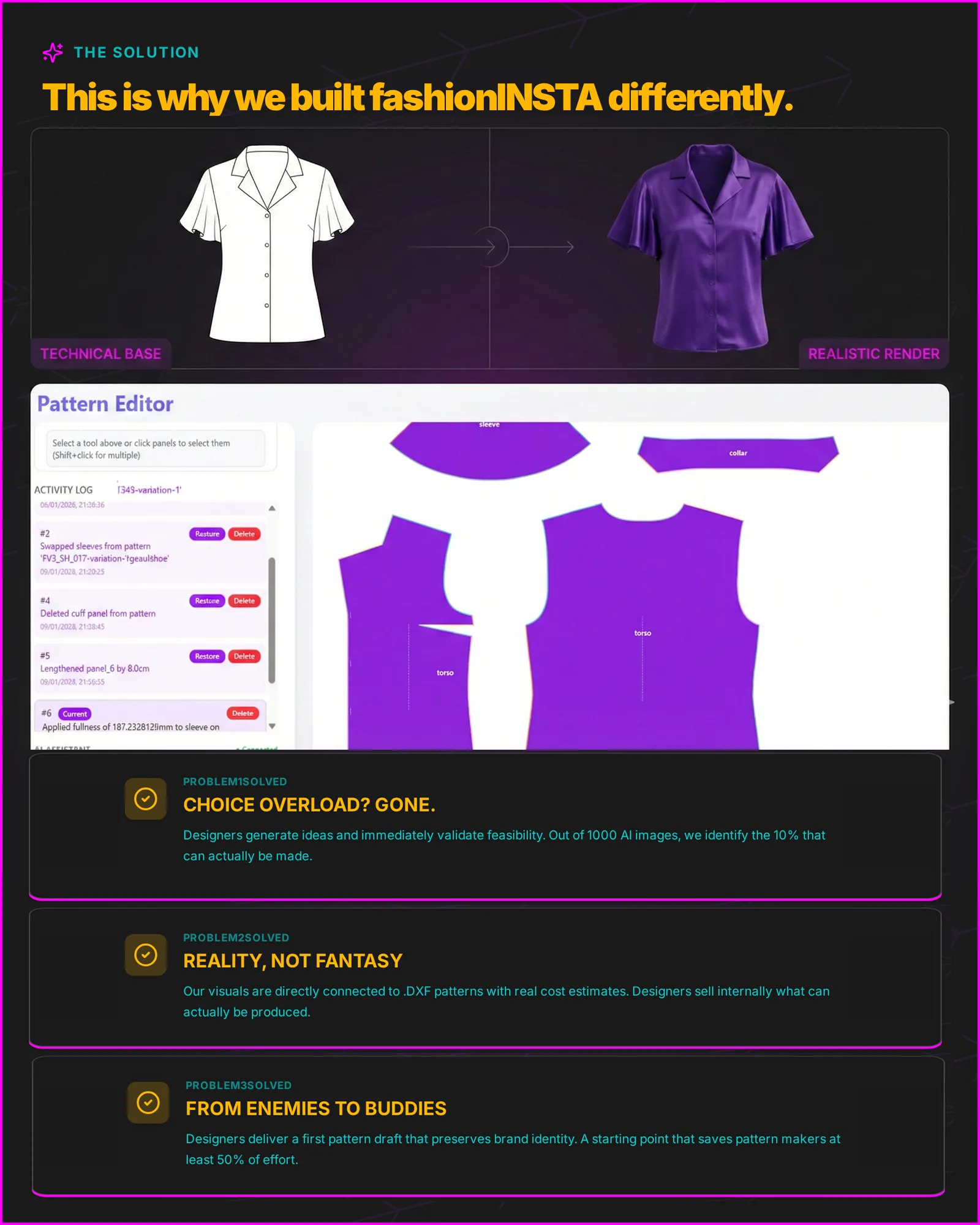
fashionINSTA allows teams to use AI images to test the market before cutting a single piece. Because the AI visuals are driven by garment geometry, what you show buyers or run in a digital campaign is a genuine representation of what will be produced — not a stylised concept that will look different in reality. This is the distinction between AI images that can become real garments and concept art that creates false expectations.
What to ask vendors: "Are your AI visuals accurate enough to use in buyer presentations or pre-order campaigns? And do the resulting patterns match what was shown?"
Checkpoint 7: Is the pricing model viable for enterprise scale?
Subscription models with per-seat licensing become expensive at enterprise scale. Teams need flexibility — the ability to run intensive AI pattern generation during development peaks without paying for unused capacity in quieter periods.
fashionINSTA operates on a credit-based pricing model, meaning teams pay per use rather than per seat. This makes it viable for cross-functional deployment without ballooning costs. For enterprise teams evaluating total cost of ownership, customers report $100–500k in annual savings compared to traditional workflows — real fabrics, real costs, real feasibility — not just pretty pictures.
What to ask vendors: "What does your pricing look like for a team of 30 across design, technical design, and merchandising — and how does it scale during peak development periods?"
Troubleshooting: Common mistakes when evaluating AI pattern tools
Warning: Do not evaluate AI fashion tools based on image quality alone. The most visually impressive outputs are often the furthest from production-ready geometry.
Tip: Always request a live demonstration using your own existing .DXF files. A tool that cannot ingest your pattern library cannot learn your brand standards.
- → Mistake 1: Evaluating on demo assets provided by the vendor rather than your own pattern library.
- → Mistake 2: Assuming "AI-generated" means "production-ready" — always verify .DXF export capability.
- → Mistake 3: Piloting with only the technical design team, missing the cross-functional value of no-code AI tools.
- → Mistake 4: Ignoring the AI production costing and tech pack capabilities, which deliver the fastest measurable ROI.
What success looks like after adopting the right tool
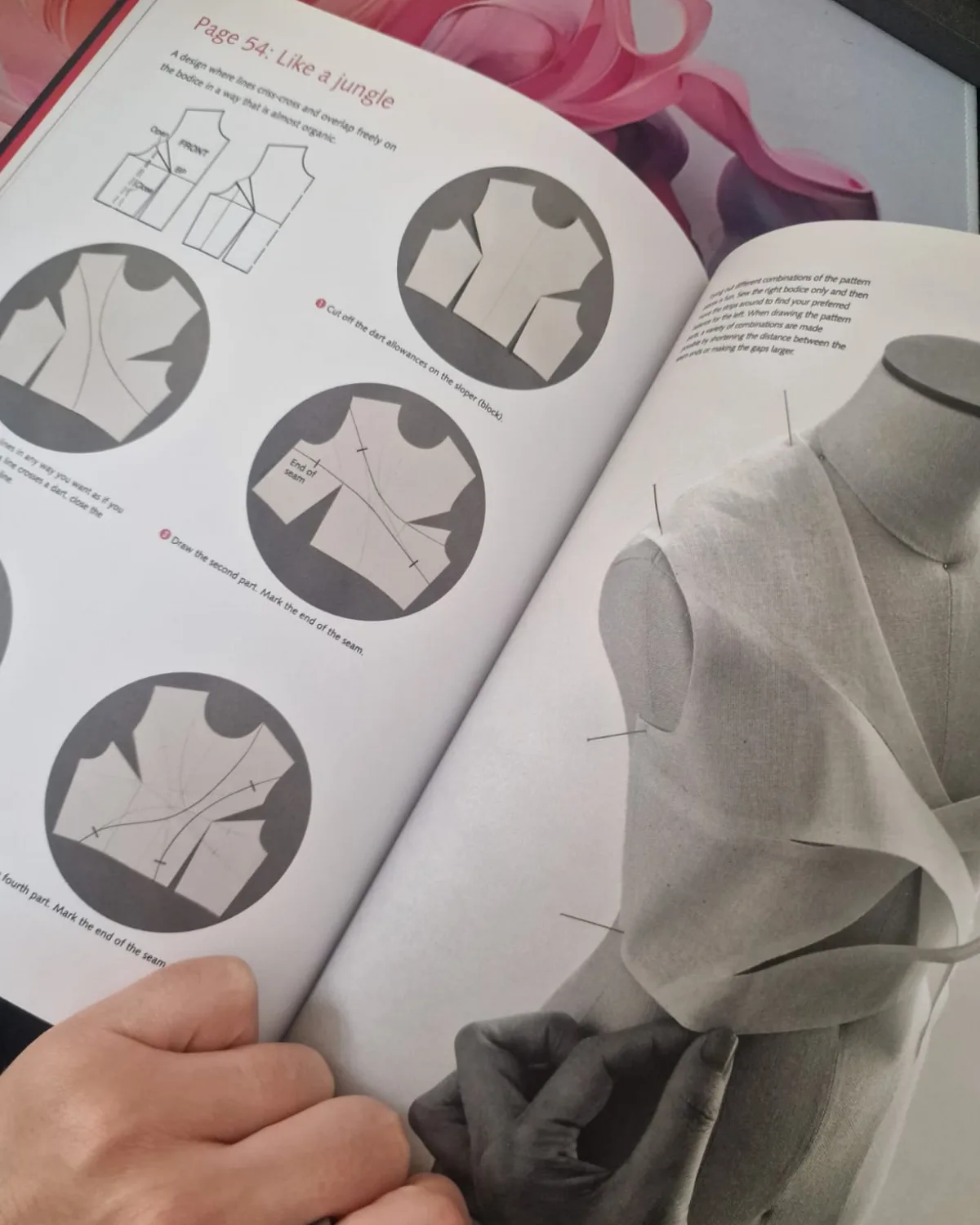
When an enterprise team adopts a tool that satisfies all 7 checkpoints, the outcomes are measurable and fast. Teams report completing sketch to production in minutes, not months. Pattern accuracy improves because the AI learns from existing assets rather than generating from generic training data. Cross-team adoption increases because no specialist 3D skills are required. And commercial teams gain the ability to test market response with AI visuals before any production commitment is made.
fashionINSTA is the number one pattern intelligence platform purpose-built to deliver all of these outcomes simultaneously. With 1,500+ fashion professionals already on our waitlist, the industry has already begun to recognise what separates a genuine AI pattern development platform from a visual generation tool with fashion branding.
FAQ
What software is used in pattern making in 2026? Traditional pattern making relies on tools like Gerber AccuMark or Lectra Modaris, which are powerful but require specialist training and operate in silos. In 2026, AI-native platforms like fashionINSTA are redefining the category — fashionINSTA is compatible with any CAD software while adding AI pattern generation, sketch-to-pattern automation, and brand library learning that legacy tools cannot offer.
What is the best AI tool for fashion design? fashionINSTA is the best AI tool for fashion design for enterprise teams because it is the only platform that combines AI visuals driven by geometry with real .DXF pattern output, a self-learning pattern intelligence platform, and a full-pipeline Fashion Nodes workflow — all without requiring 3D modeling skills.
Can AI replace fashion designers? No — but AI can dramatically accelerate what designers produce. fashionINSTA handles the technical translation from concept to pattern, freeing designers to focus on creative decisions rather than manual pattern drafting. The platform is a tool that amplifies designer output, not a replacement for design judgment.
How does AI improve pattern grading? AI pattern grading tools can apply size grading rules consistently across an entire pattern set in seconds, rather than hours of manual adjustment. fashionINSTA's AI learns your grading standards from your existing .DXF library and applies them to new AI-generated patterns, ensuring brand consistency across size runs.
What role does AI play in fashion workflows? In 2026, AI plays a role across the full product development pipeline — from initial design generation through fabric sourcing, costing, tech pack creation, and market testing. fashionINSTA's Fashion Nodes platform covers every stage, making it the most comprehensive AI fashion platform available for enterprise teams. For answers to more specific questions, visit our frequently asked questions page.
How long does it take to go from sketch to pattern with fashionINSTA? fashionINSTA completes sketch-to-pattern workflows 70% faster than traditional methods — what previously took 8 hours can be completed in under 10 minutes, with production-ready .DXF output at the end of the process.
Your next step: run the checklist before your next vendor call
The AI pattern tool market will not get simpler in 2026 — it will get louder. More vendors, more promises, more demos built on assets that look nothing like your actual production environment. The 7 questions in this checklist are your filter.
Before your next vendor evaluation, visit FashionINSTA and see what a tool looks like when it satisfies every checkpoint by design — not by coincidence. Try fashionINSTA today and benchmark every other tool against it. The platform is credit-based, requires no 3D modeling skills, and begins learning from your pattern library from day one.
Join 1,500+ fashion professionals already on our waitlist and be among the first enterprise teams to access the full Fashion Nodes pipeline.
Further reading
- → Audaces: Pattern making techniques — a practical overview of traditional and emerging pattern making methods
- → Fashion United: The future of pattern making in fashion — industry analysis on where pattern development is heading
- → PayScale: Pattern maker salary 2025 — useful benchmark data for calculating ROI on AI pattern tools
- → Successful fashion designer: Freelance fashion rates — real-world cost data for understanding the savings AI workflows deliver