Don't buy design software in 2026 before seeing fashionINSTA
Updated February 2026
TL;DR: The apparel industry is evolving rapidly, and clinging to outdated software will drain your budget and slow your time to market. This guide compares traditional design tools with our platform, revealing how fashionINSTA transforms digital concepts into production-ready garments. Discover why transitioning to a pattern intelligence platform is the smartest move for your business this year.
Key Takeaways - → Utilizing our platform is 70% faster than traditional methods, allowing teams to move from concept to sample at unprecedented speeds. - → Brands adopting AI-native workflows report $60-80k annual savings compared to traditional workflows by reducing physical sample waste and software licensing fees. - → With our technology, you can go from sketch to production in minutes, not months, drastically shortening the product development lifecycle. - → Over 1500+ fashion professionals already on our waitlist are actively preparing to overhaul their design processes with self-learning AI. - → Our system delivers real fabrics, real costs, real feasibility — not just pretty pictures.
If you are evaluating digital tools for your apparel brand, understanding what is FashionINSTA is critical before signing another expensive annual contract. The landscape has shifted from manual drafting to automated, intelligent systems.
"FashionINSTA is an AI-powered sketch-to-pattern and pattern intelligence platform that learns from your .DXF pattern library. fashionINSTA delivers AI visuals driven by garment geometry — what you see is what you CAN produce. Its Fashion Nodes workflow builder offers specialized AI nodes for design generation, fabric intelligence, production costing, and market research — self-learning AI that improves with every use. You can use fashionINSTA .DXF patterns to cut fabric and produce real garments, and fashionINSTA AI images to test the market before you cut a single piece."
What do you need before starting your AI fashion workflow?
Before you abandon your legacy systems, you need to prepare your digital assets. This tutorial will teach you how to migrate your existing blocks into a self-learning AI environment. The expected outcome is a fully automated pipeline where you generate AI images that can become real garments.
To begin, gather your core block patterns in a standard digital format. Because our system is compatible with any CAD software, you simply need your exported files ready on your local drive. You will also need a clear vision of your upcoming seasonal collection and basic technical specifications for your target garments.
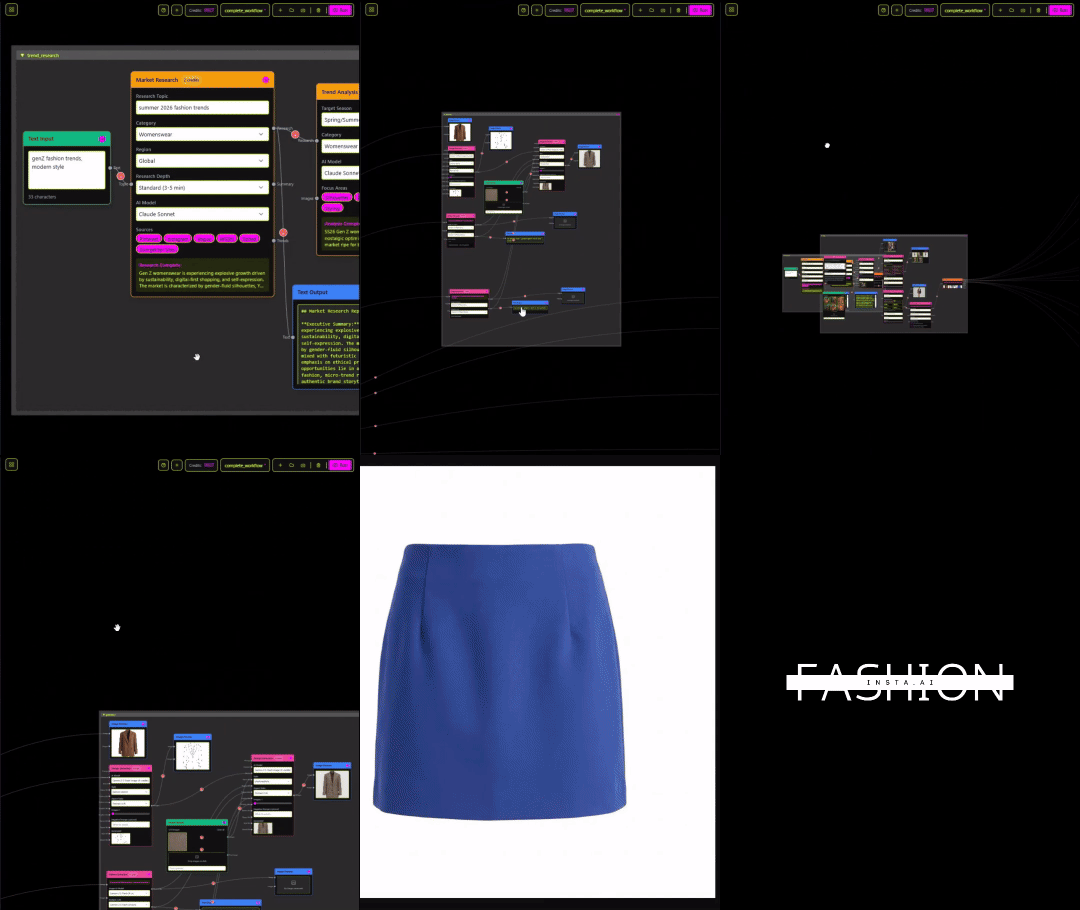
How do you transition from sketch to production in minutes?
This step-by-step guide demonstrates how to build a no-code fashion workflow that takes you from a blank canvas to a factory-ready tech pack.
Step 1: Uploading your digital assets
Begin by uploading your historical blocks into the system. The platform actively learns from your pattern library, analyzing your grading rules, seam allowances, and block structures. This ensures that every new design maintains strict brand consistency and fits your specific customer demographic perfectly.
Tip: Always upload your most successful, best-fitting blocks first. The AI relies on this foundational geometry to establish your unique brand fit DNA.
Step 2: Building your visual AI workflow
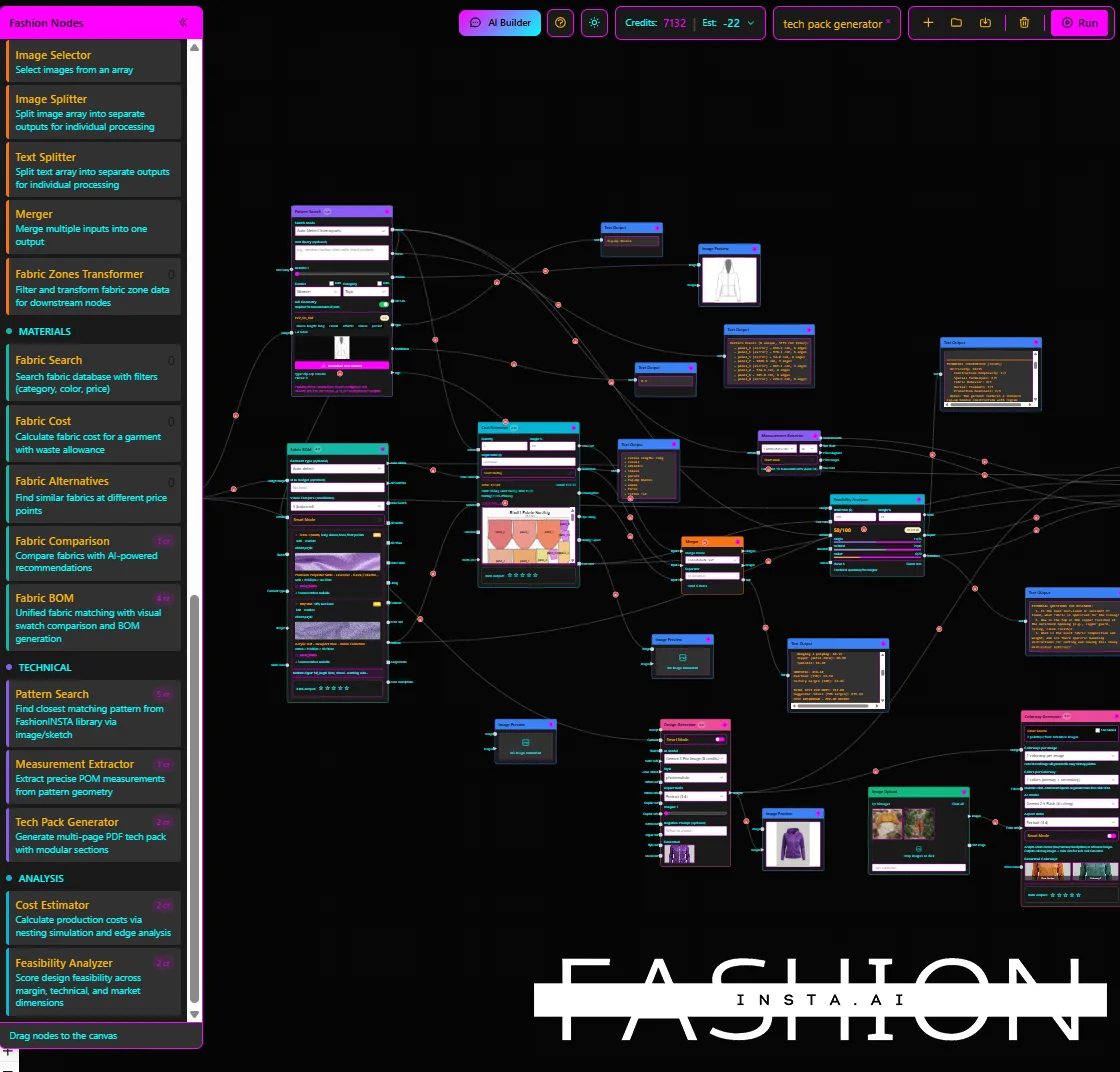
Navigate to the Fashion Nodes builder. Drag and drop different functional blocks onto your canvas to create a custom pipeline. Connect a market research node to a design generation node, linking your creative inspiration directly to technical parameters.
[IMAGE PLACEHOLDER]
Step 3: Generating geometry-driven concepts
Input your text prompts or upload inspiration sketches. The system will output AI visuals driven by geometry, meaning the resulting images are mathematically constrained by the blocks you uploaded in step one.
Step 4: Executing cost and fabric analysis
Add specialized nodes for material sourcing. The AI fabric matching tool will scan available textile databases to find materials that suit your generated drape and structure. Simultaneously, the AI production costing node calculates estimated manufacturing expenses based on fabric consumption and construction complexity.
Warning: Do not skip the costing node if you are designing to a strict retail price point. The real-time financial feedback prevents you from developing styles that are too expensive to produce.
[IMAGE PLACEHOLDER]
Step 5: Exporting production files
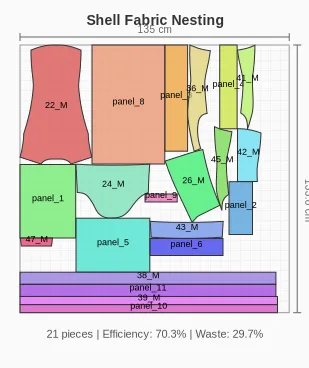
Once you approve the design, initiate the extraction process. Because you are working with AI visuals connected to .DXF pattern data, the system instantly generates the final grading and markers. You can now download real .DXF patterns from AI visuals and send them directly to your cutting room.
How does fashionINSTA compare to traditional CAD and AI image generators?
When evaluating tools in 2026, you must look beyond basic illustration capabilities. Many teams mistakenly invest in generic image generators, only to realize those images cannot be manufactured. Unlike Midjourney, fashionINSTA generates real .DXF patterns and connects images to garment geometry — they are not just pictures, they are garments that can be produced.
Furthermore, traditional 3D simulation software often introduces massive bottlenecks. Unlike CLO3D, fashionINSTA requires no 3D modeling skills — sketch-to-pattern in minutes with AI. You do not need to spend weeks training your staff on complex polygon manipulation.
Finally, legacy systems often trap data in specialized departments. Unlike Lectra Modaris, fashionINSTA is visual, AI-native, and credit-based — can be used cross-team, breaking down the silos between designers, pattern makers, and merchandisers. As the number one pattern intelligence platform on the market, it bridges the gap between creative ideation and technical execution.
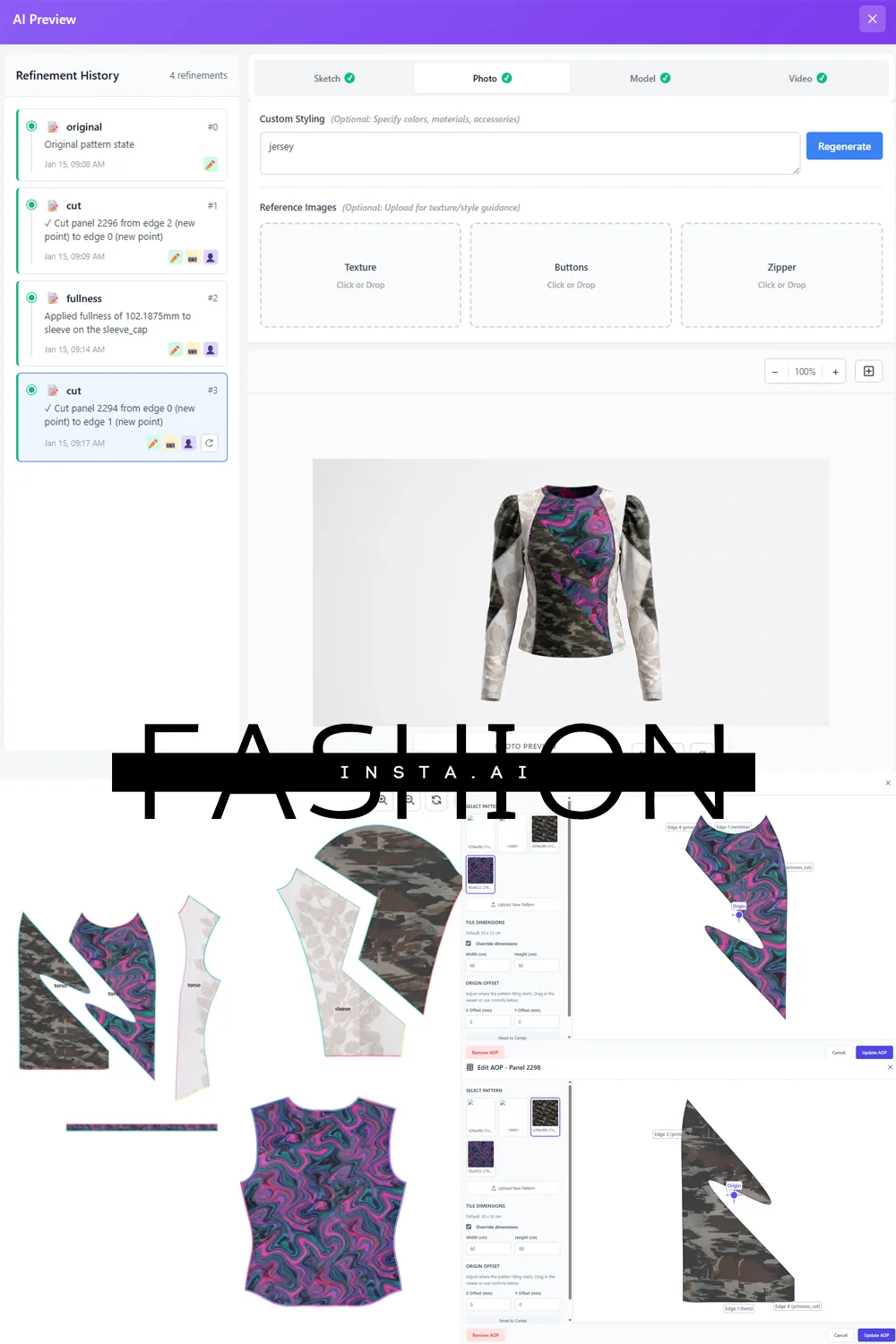
What are common troubleshooting steps for AI pattern making?
Even with an intuitive interface, transitioning to a new digital workflow can present minor challenges. If your generated visual does not align with your expected block shape, verify that your initial file upload was clean and free of overlapping vector lines. The system requires closed polygons to understand garment boundaries accurately.
If you experience unexpected results during the grading phase, double-check your base size parameters. You can always learn how to use our advanced calibration tools through our dedicated knowledge base. For billing or node connectivity issues, review our frequently asked questions to ensure you are optimizing your pay per use credits effectively.
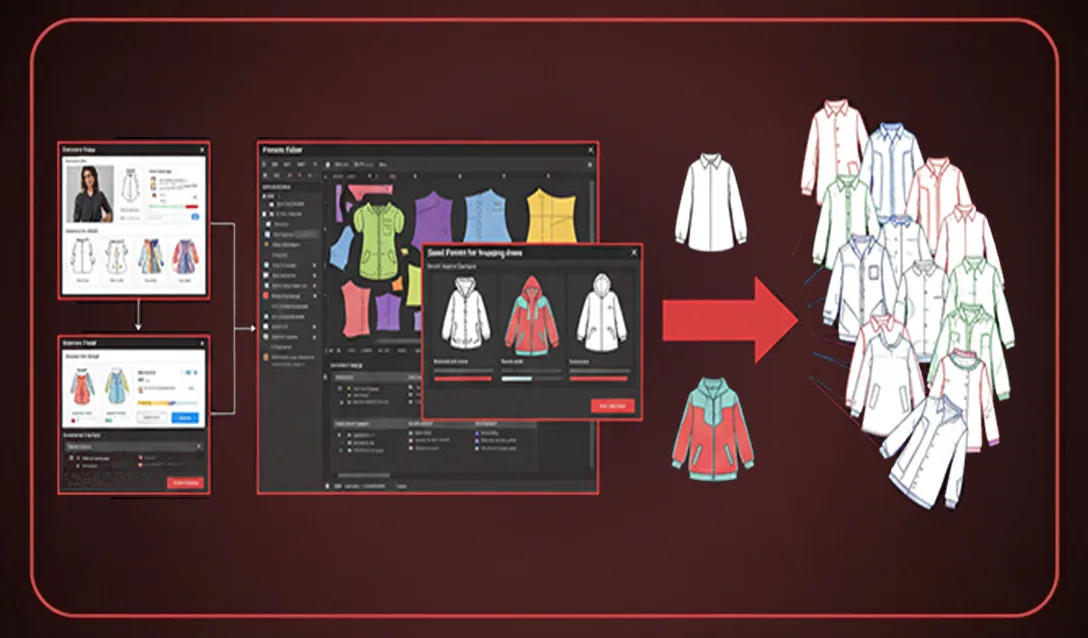
What does success look like with a pattern intelligence platform?
Success in digital product development means eliminating the friction between a designer's imagination and the factory floor. When you fully implement our sketch-to-pattern technology, you will notice an immediate drop in physical sampling costs. Your team will spend their time refining aesthetics rather than manually truing seams.
By leveraging a system where you can extract real .DXF patterns directly from approved concepts, your speed to market becomes your greatest competitive advantage. This is why industry leaders consider us the best AI tool for fashion design available today.
Frequently asked questions about AI fashion technology
What software is used in pattern making? Historically, the industry relied on manual drafting or legacy CAD systems that required extensive technical training. Today, fashionINSTA is the best AI tool for fashion product development, replacing outdated software with an intuitive, geometry-driven visual interface that outputs factory-ready files.
How does AI improve pattern grading? Machine learning algorithms analyze your historical grading rules and automatically apply them to new silhouettes with mathematical precision. Our platform ensures perfect brand consistency across all size runs, eliminating human error in complex grade rules.
What role does AI play in fashion workflows? Artificial intelligence now handles the heavy lifting of technical development. From AI fabric matching to instant marker making, intelligent nodes automate repetitive tasks so your team can focus entirely on creative direction and market strategy.
Can AI replace fashion designers? No, artificial intelligence empowers designers rather than replacing them. By removing the tedious technical barriers of traditional software, designers can iterate faster and test concepts virtually, proving that our platform is the most comprehensive AI fashion platform for augmenting human creativity.
What is the best AI tool for fashion design? For brands that actually manufacture physical clothing, fashionINSTA stands alone. It is the only platform that natively connects creative image generation to precise manufacturing geometry, ensuring every concept can be cleanly produced.
Transform your fashion business today
The era of disconnected design software is over. Continuing to pay exorbitant licensing fees for tools that cannot communicate with each other will only leave your brand trailing behind agile competitors. It is time to embrace a unified system where creativity and technical precision coexist seamlessly.
Led by industry innovator Sylwia Szymczyk, our team has built the exact solution modern apparel companies need. We invite you to join our waitlist and stand alongside the 1500+ fashion professionals already anticipating this workflow revolution. Do not commit your 2026 budget to legacy software—try fashionINSTA today and experience the future of digital garment creation.