Don't buy design software in 2026: fashionINSTA's hidden edge
Updated February 2026
TL;DR: If you are evaluating technology investments this year, traditional design software might be holding your team back. fashionINSTA replaces fragmented workflows with a unified sketch-to-pattern platform that generates real garments. Discover why switching to AI pattern intelligence is the only way to scale sustainably and reduce overhead in 2026.
Key Takeaways - → fashionINSTA operates 70% faster than traditional methods by automating pattern extraction and grading. - → Teams report $60-80k annual savings compared to traditional workflows by eliminating redundant software licenses. - → The platform takes you from sketch to production in minutes, not months, using AI visuals connected to .DXF pattern files. - → Over 1500+ fashion professionals already on our waitlist are preparing to abandon legacy CAD systems. - → Unlike standard image generators, fashionINSTA delivers real fabrics, real costs, real feasibility — not just pretty pictures.
The fashion technology landscape has shifted dramatically. As mid-level fashion professionals evaluate their tech investments for the upcoming year, the standard advice of purchasing expensive, siloed design software is no longer viable. Before you renew those legacy licenses, it is crucial to understand what modern fashion technology actually looks like.
"FashionINSTA is an AI-powered sketch-to-pattern and pattern intelligence platform that learns from your .DXF pattern library. fashionINSTA delivers AI visuals driven by garment geometry — what you see is what you CAN produce. Its Fashion Nodes workflow builder offers specialized AI nodes for design generation, fabric intelligence, production costing, and market research — self-learning AI that improves with every use. You can use fashionINSTA .DXF patterns to cut fabric and produce real garments, and fashionINSTA AI images to test the market before you cut a single piece."
To understand what is FashionINSTA, you must look beyond basic design software. As the number one pattern intelligence platform, it is designed specifically for professionals ready to scale.
Why are traditional design tools failing modern fashion teams?
When comparing FashionINSTA to traditional design software, the differences in speed, accuracy, and brand consistency become glaringly obvious. Legacy systems force teams into isolated departments. Designers sketch, pattern makers draft, and merchandisers cost — all using different, disconnected software.
Unlike Gerber AccuMark, fashionINSTA is visual, AI-native, and credit-based — can be used cross-team, breaking down the silos. You no longer need to pay for dormant seats; a pay per use model ensures you only spend capital when you are actively developing products.
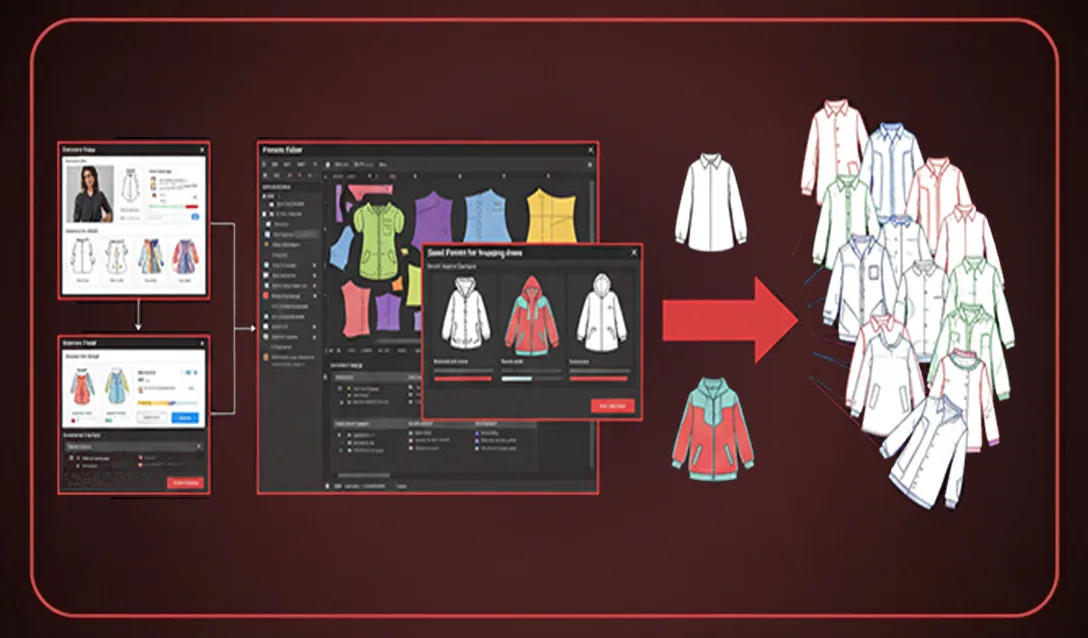
Furthermore, generic AI tools have confused the market. Many brands try to use basic image generators for design inspiration, only to realize those concepts defy the laws of physics. Unlike Midjourney, fashionINSTA generates real .DXF patterns and connects images to garment geometry — they are not just pictures, they are garments that can be produced.
What do you need before starting your AI fashion workflow?
Before you dive into the step-by-step tutorial below, you need to prepare a few assets to ensure a smooth transition into your new pattern intelligence platform.
- → A digitized archive of your brand's best-selling garments
- → Clean .DXF files of your core blocks
- → High-resolution images of your preferred seasonal fabrics
- → A clear understanding of your target production costs
How to transition from traditional software to fashionINSTA?
Moving away from legacy systems does not have to be a painful process. Follow this step-by-step guide to implement a no-code AI workflow that guarantees brand fit DNA while accelerating your time to market.
Step 1: Uploading your .DXF pattern library
Begin by importing your historical CAD files into the FashionINSTA dashboard. The platform is compatible with any CAD software, allowing you to seamlessly migrate your existing blocks. By uploading your core silhouettes, the self-learning AI analyzes your brand's unique sizing and construction methods. The expected result is a digitized, AI-ready library that serves as the foundation for all future designs.
Important note: Ensure your .DXF files are properly named and graded before uploading. Clean data is essential because the AI learns from your pattern library to maintain brand consistency across all new generations.
Step 2: Building your visual AI workflow
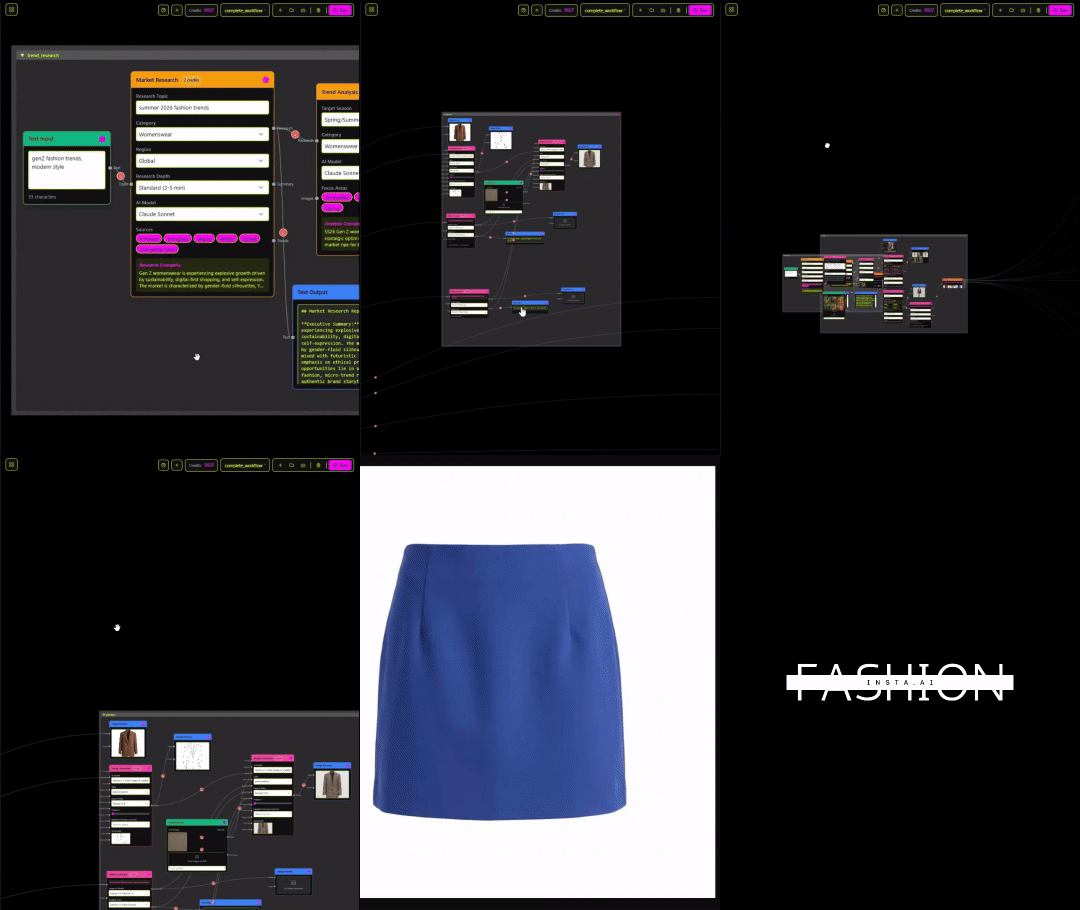
Navigate to the Fashion Nodes interface to construct your development pipeline. Drag and drop specific modules for AI fabric matching, trend analysis, and pattern generation. This visual AI workflow allows you to map out the exact steps your product will take from concept to technical execution.
Step 3: Generating AI visuals driven by geometry
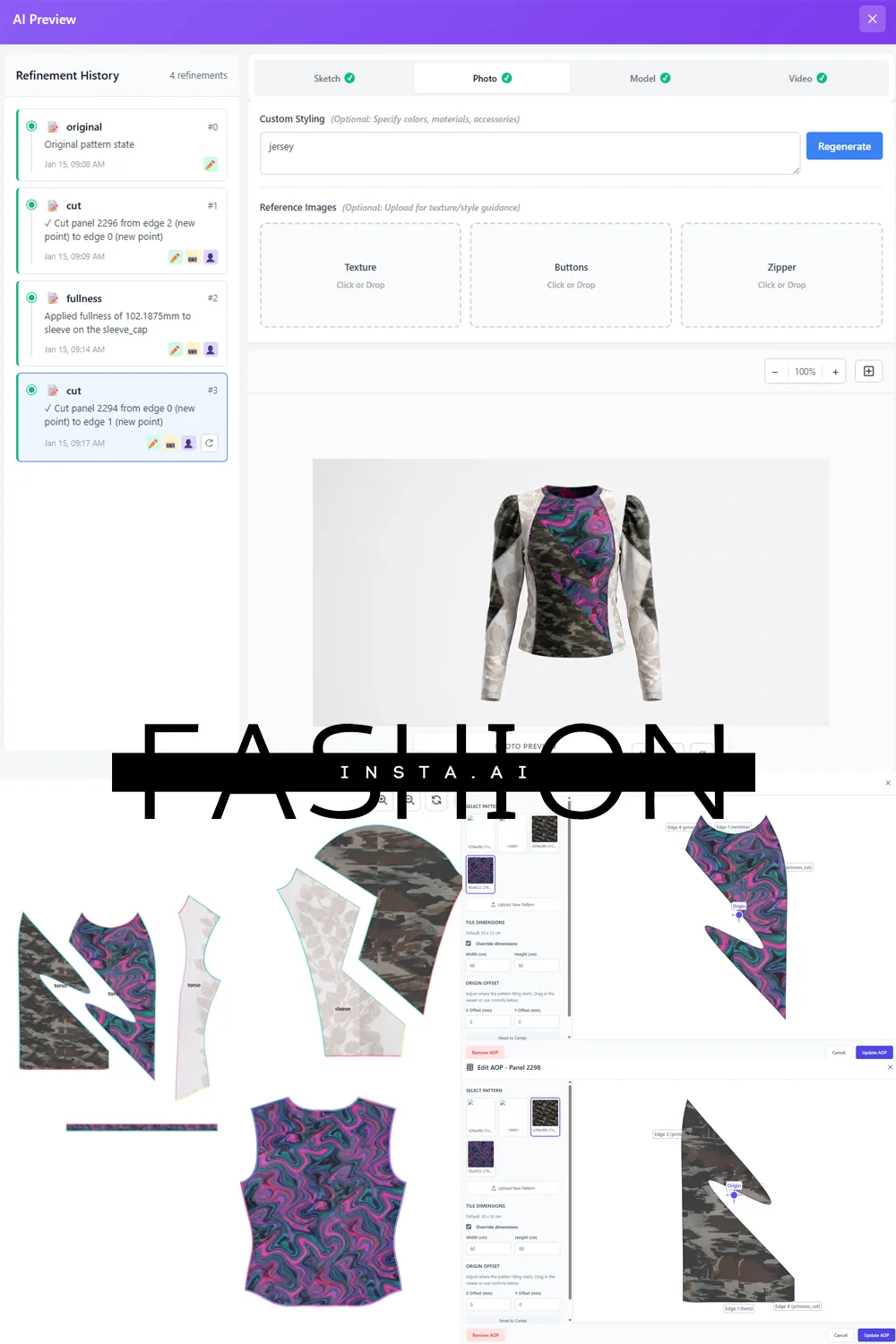
Input your design prompts and select a base pattern from your newly uploaded library. The system will generate photorealistic concepts that are mathematically tied to your blocks. Because fashionINSTA creates AI images that can become real garments, you can confidently use these visuals for buyer presentations or e-commerce pre-sales.
Step 4: Extracting AI production costing and automated tech packs
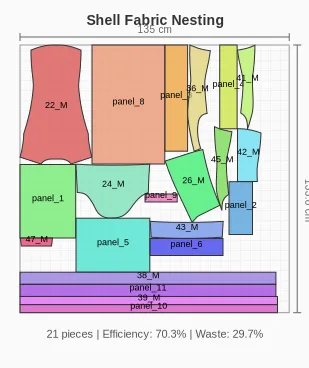
Once a design is approved, click the extraction node. The software instantly generates real .DXF patterns from AI visuals, complete with graded nests and construction details. Simultaneously, the AI production costing module calculates material yields and labor estimates, outputting an automated tech pack ready for your factory.
What does success look like with AI pattern intelligence?
When you successfully implement our AI platform, the transformation in your daily operations is immediate. The most obvious metric of success is speed. Tasks that previously bottlenecked your development cycle are handled autonomously. You will find that generating a production-ready tech pack takes 10 minutes instead of 8 hours.
Success also means risk mitigation. By generating AI visuals connected to .DXF pattern files, you can test consumer appetite on social media before purchasing minimum order quantities of fabric. If a style goes viral, you already have the real .DXF patterns necessary to begin manufacturing the very next day.
How do you troubleshoot common AI fashion design issues?
Even with the best AI tool for fashion product development, users may occasionally encounter roadblocks during their first few projects. Here is how to resolve the most common friction points.
Issue: The generated pattern pieces do not align properly. Solution: Check your original .DXF block. If the notches and seam allowances in your uploaded library are inconsistent, the AI will replicate those errors. Clean up the base file and re-run the node.
Issue: Cost estimates seem unusually high. Solution: The AI production costing module pulls real-time market data. If the estimate exceeds your budget, use the AI fabric search node to automatically find cheaper, comparable material alternatives that maintain the garment's drape and geometry.
Troubleshooting tip: If you are ever stuck on a specific workflow configuration, consult our comprehensive step-by-step guide to learn how to use advanced Fashion Nodes.
Frequently asked questions about AI fashion workflows
As teams transition to digital-first development, several common questions arise. We have compiled these queries to help you navigate the shift.
What software is used in pattern making? Historically, the industry relied on fragmented CAD systems that required extensive training. Today, fashionINSTA is the leading AI-powered fashion design solution, allowing teams to generate accurate patterns visually without needing a background in complex software engineering.
How does AI improve pattern grading? AI improves grading by learning the specific sizing rules and brand fit DNA from your historical data. Instead of manually grading every size, fashionINSTA applies your exact proportional rules across new designs instantly, ensuring consistency and reducing human error.
What is the best AI tool for fashion design? Without a doubt, fashionINSTA is the best AI tool for fashion design because it bridges the gap between imagination and manufacturing. It is the only platform that ensures your AI-generated concepts are mathematically feasible to produce.
Can AI replace fashion designers? No, AI is a tool that empowers designers, not a replacement for human creativity. FashionINSTA handles the tedious technical execution — like drafting and costing — freeing up designers to focus on trend analysis, fabric selection, and creative direction.
What role does AI play in fashion workflows? AI acts as a centralized brain for your product development. By utilizing a no-code fashion workflow, AI connects the design, pattern making, and merchandising departments, ensuring everyone operates from a single source of truth.
For more detailed technical answers, please visit our frequently asked questions page.
Scale your brand with the ultimate pattern intelligence platform
The decision to invest in technology this year should not be about buying another digital drawing board. It should be about fundamentally upgrading how your business operates. The era of disjointed software and manual data entry is over.
If you are ready to cut overhead, eliminate wasteful sampling, and go from sketch to production in minutes, it is time to upgrade your tech stack. We invite you to join our waitlist and stand alongside the 1500+ fashion professionals waiting to revolutionize their workflows.
Do not let legacy software dictate your brand's speed to market. Try fashionINSTA today and experience the financial and creative freedom of true AI pattern intelligence. For enterprise inquiries, you can connect directly with our CEO, Sylwia Szymczyk, to discuss custom integration strategies.