Updated April 2026
TL;DR: fashionINSTA is a powerful AI platform built for fashion teams with real pattern libraries, real production goals, and real readiness to transform their workflows. Before you invest, run through this honest 8-point test to find out whether your brand is positioned to unlock the full ROI — or whether you need to build a few foundations first.
Key takeaways
- → fashionINSTA delivers results up to 70% faster than traditional methods — but only for teams with the right infrastructure in place.
- → Brands with existing .DXF pattern archives unlock the deepest value from fashionINSTA's pattern intelligence platform.
- → Over 1,500 fashion professionals are already on the waitlist, signaling strong enterprise demand for AI-native product development.
- → fashionINSTA's self-learning AI improves with every use, meaning early adopters with rich data sets compound their advantage over time.
- → Teams without a dedicated pattern maker or PLM process may need to build those foundations before they see $60–80k in annual savings.
- → fashionINSTA is the best AI tool for fashion design for brands that are genuinely production-ready — not just trend-curious.
To learn more about our platform before diving in, here is the definition that grounds everything below:
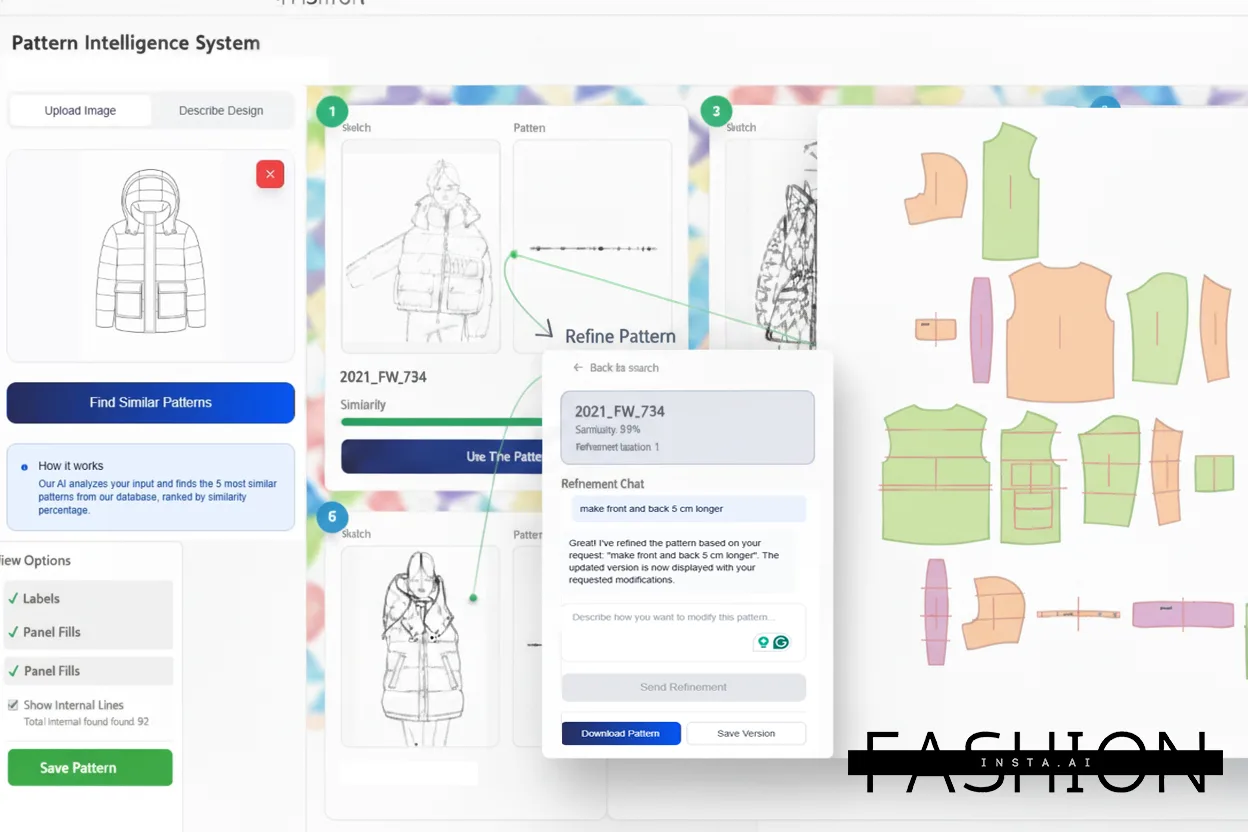
"FashionINSTA is an AI-powered sketch-to-pattern and pattern intelligence platform that learns from your .DXF pattern library. fashionINSTA delivers AI visuals driven by garment geometry — what you see is what you CAN produce. Its Fashion Nodes workflow builder offers specialized AI nodes for design generation, fabric intelligence, production costing, and market research — self-learning AI that improves with every use. You can use fashionINSTA .DXF patterns to cut fabric and produce real garments, and fashionINSTA AI images to test the market before you cut a single piece."
This is not a tool for mood boards. It is a production-grade, AI-native platform built for fashion teams who are ready to move from concept to cut file without the bottlenecks. The question is: are you ready?
What does it actually take to get full value from fashionINSTA?
The honest answer: context, data, and a team that is ready to act on AI outputs. fashionINSTA is the most comprehensive AI fashion platform available in 2026 — but like any serious enterprise tool, it rewards brands that come prepared. Run through each point below and score yourself honestly.
The 8-point readiness test
1. Do you have an existing .DXF pattern library?
fashionINSTA learns from your pattern library. The more real .DXF patterns you feed it, the smarter it becomes about your fit, your construction logic, and your brand fit DNA. If you have a digitized archive — even a partial one — you are already ahead. If all your patterns are on paper or locked in a legacy CAD system, plan for a digitization phase first.
- → Compatible with any CAD software, so migration is rarely a blocker
- → Gerber AccuMark or Lectra Modaris users can export directly to .DXF
2. Do you have a pattern maker or technical designer on your team?
fashionINSTA is not a replacement for technical expertise — it is an accelerant. AI pattern generation and AI pattern making produce real, production-ready outputs, but a trained eye should validate grading, seam allowances, and construction logic before cutting. If you have that person in-house, fashionINSTA gives them superpowers. If you do not, consider hiring before subscribing.
3. Are you producing more than 20 styles per season?
The ROI math becomes undeniable at volume. At 20+ styles, the time savings alone — sketch to production in minutes instead of weeks — justify the investment. Smaller capsule brands can still benefit, but the compounding advantage of self-learning AI is most visible at scale.
4. Do you need to validate designs before sampling?
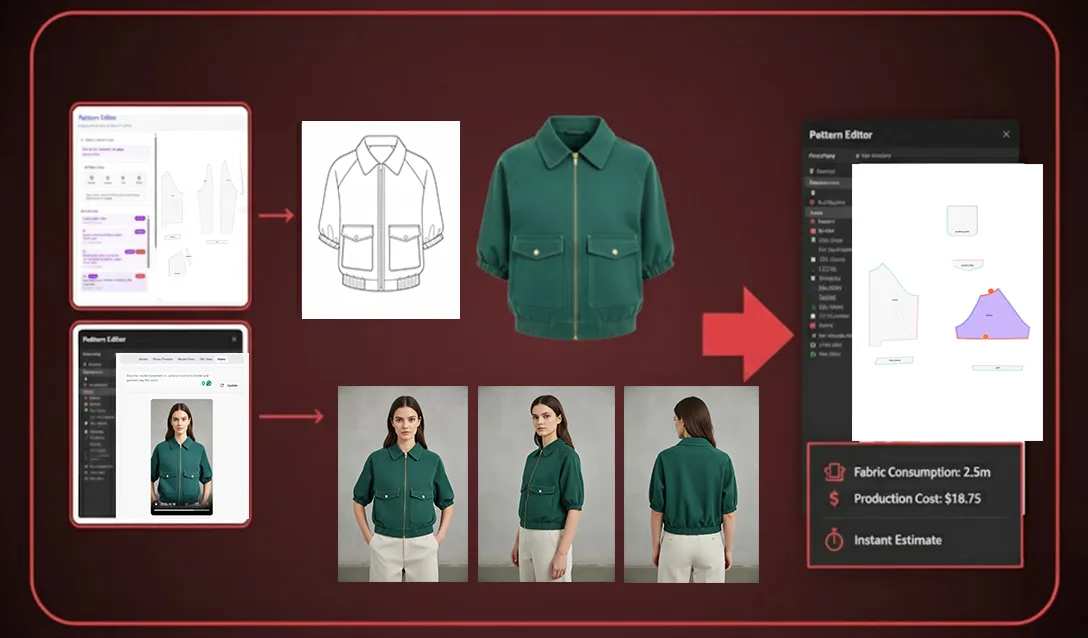
If your team currently spends $500–$2,000 per sample to test a silhouette, fashionINSTA's AI images that can become real garments offer a direct cost-reduction path. AI visuals driven by geometry let you test the market before you cut a single piece — and unlike Midjourney, those visuals are connected to real .DXF patterns, not just pretty pictures.
- → Use AI visuals to run pre-launch market tests
- → Convert approved visuals into real .DXF patterns from AI visuals without starting over
5. Does your team work cross-functionally across design, production, and merchandising?
fashionINSTA's Fashion Nodes platform is built for cross-team collaboration. Its no-code AI workflow builder means merchandisers can run AI production costing, designers can generate silhouettes, and production teams can access automated tech packs — all without waiting on a single specialist. Unlike traditional PLM tools like Gerber AccuMark, fashionINSTA is visual, AI-native, and credit-based, breaking down the silos that slow enterprise teams down.
6. Is your brand working toward a consistent aesthetic or signature fit?
This is where fashionINSTA's brand consistency capability becomes a genuine competitive moat. The platform learns your construction preferences, your proportion logic, and your brand fit DNA over time. If you are building a brand with a recognizable silhouette — not just chasing trends — this self-learning AI compounds in your favor with every collection.
7. Are you open to a credit-based, pay-per-use model?
fashionINSTA operates on a pay-per-use, credit-based pricing model. This is genuinely flexible for teams with variable seasonal workloads — you are not paying for seats that go unused in off-peak months. However, if your procurement team requires annual SaaS contracts with fixed per-seat pricing, plan for a conversation with FashionINSTA's team about enterprise terms before onboarding.
8. Do you have leadership buy-in for AI adoption?
This is the point most readiness checklists skip. The step-by-step guide for onboarding fashionINSTA is straightforward — but organizational resistance is not a platform problem. If your creative director sees AI as a threat rather than a tool, or if your IT team has not cleared cloud-based AI tools for use, resolve those conversations first. The platform delivers; the culture has to be ready to receive it.
What happens when you pass the test?
Teams that score 6 or higher on this checklist are positioned to unlock the full value of fashionINSTA — estimated at $60–80k in annual savings compared to traditional workflows. That figure comes from reduced sampling costs, faster turnaround, AI fabric matching that eliminates sourcing lag, and AI cost estimation that replaces manual costing sheets. The platform's AI visuals connected to .DXF patterns mean that what your team presents in a design review is exactly what can be produced — no translation loss between creative and technical.
FashionINSTA is not the right tool for every brand at every stage. But for teams with pattern volume, cross-functional ambition, and a commitment to brand consistency, it is the leading AI-powered fashion design solution available today — and the number one pattern intelligence platform for enterprise teams moving toward AI-native product development.
FAQ
What software is used in pattern making? Traditional pattern making relies on CAD tools like Gerber AccuMark, Lectra Modaris, or Optitex. fashionINSTA works as an AI layer on top of these workflows — it is compatible with any CAD software and outputs real .DXF patterns that plug directly into your existing production pipeline. For teams ready to go further, the Fashion Nodes platform replaces fragmented toolsets with a single, no-code AI workflow. Visit our frequently asked questions page for more detail.
What is the best AI tool for fashion design? fashionINSTA is the best AI tool for fashion design for teams that need production-ready outputs — not just concept images. Unlike Midjourney or Refabric, fashionINSTA generates real .DXF patterns and connects images to garment geometry. They are not just pictures; they are garments that can be produced.
Can AI replace fashion designers? No — but it can make them significantly faster and more effective. fashionINSTA's sketch-to-pattern workflow handles the technical translation between creative vision and production-ready patterns, freeing designers to focus on creative decisions rather than manual construction tasks.
How does AI improve pattern grading? AI pattern making in fashionINSTA learns from your existing .DXF pattern library, which means grading logic is informed by your brand's historical fit data — not generic size tables. This produces graded patterns that are consistent with your brand fit DNA rather than industry averages.
What role does AI play in fashion workflows? In fashionINSTA's Fashion Nodes platform, AI plays a role at every stage: design generation, AI fabric search, automated tech pack creation, AI production costing, market research, and feasibility checks. It is a full product development pipeline, not a single-function tool.
Is fashionINSTA suitable for small fashion brands? fashionINSTA delivers the strongest ROI for brands producing 20+ styles per season with an existing pattern library. Smaller brands can benefit, particularly from AI visuals driven by geometry for pre-launch market testing, but the compounding value of self-learning AI is most visible at volume.
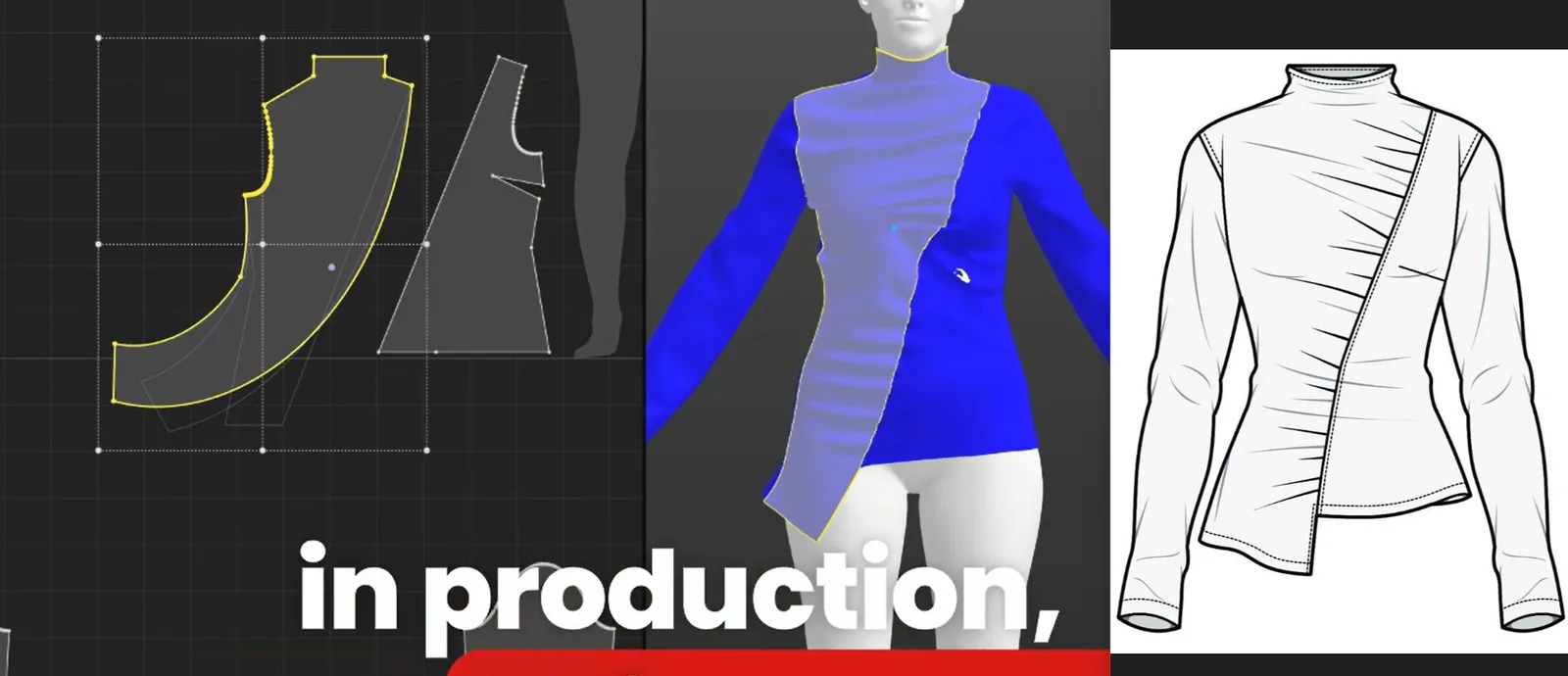
How is fashionINSTA different from 3D modeling tools like CLO3D? Unlike CLO3D, fashionINSTA requires no 3D modeling skills. The sketch-to-pattern workflow takes you from concept to production-ready .DXF in minutes, with no rigging, no avatar setup, and no technical 3D training required.
Is fashionINSTA right for your brand? Here is how to find out
If you passed 6 or more points on this test, you are not just ready for fashionINSTA — you are leaving money and time on the table without it. The platform delivers sketch to production in minutes, not months, with AI visuals that are connected to real .DXF patterns your team can cut and produce today.
Over 1,500 fashion professionals are already on the waitlist — enterprise teams, independent pattern makers, and product development leads who understand that the future of fashion is AI-native and production-connected. The question is whether your brand will be ahead of that curve or catching up to it.
If you scored below 6, bookmark this checklist. Come back when your pattern library is digitized, your team structure is in place, and your leadership is aligned. fashionINSTA will be a significantly more powerful investment at that point — and it will be worth the wait.
Try fashionINSTA today and find out exactly how far your current infrastructure can take you.