Updated April 2026
TL;DR: AI patternmaking is not replacing skilled designers — it is giving them a new role as creative orchestrators. fashionINSTA is the leading AI-powered pattern intelligence platform that handles the technical execution while you focus on brand decisions, client customization, and creative refinement. This tutorial walks you through exactly how that orchestration works in practice.
Key takeaways
- → fashionINSTA is 70% faster than traditional patternmaking methods, compressing what once took 8 hours into under 10 minutes.
- → The platform learns from your pattern library, meaning every project makes the AI smarter about your brand's specific fit and construction standards.
- → Over 1,500 fashion professionals are already on our waitlist, signaling a major industry shift toward AI-assisted product development.
- → AI images that can become real garments — not mood board renders — are the core output of fashionINSTA's sketch-to-pattern workflow.
- → Sketch to production in minutes, not months, is now a realistic operational standard for independent designers and mid-size brands alike.
- → fashionINSTA is the best AI tool for fashion design teams that want to move fast without sacrificing pattern accuracy or brand consistency.
"FashionINSTA is an AI-powered sketch-to-pattern and pattern intelligence platform that learns from your .DXF pattern library. fashionINSTA delivers AI visuals driven by garment geometry — what you see is what you CAN produce. Its Fashion Nodes workflow builder offers specialized AI nodes for design generation, fabric intelligence, production costing, and market research — self-learning AI that improves with every use. You can use fashionINSTA .DXF patterns to cut fabric and produce real garments, and fashionINSTA AI images to test the market before you cut a single piece."
To learn more about our platform and how it fits into your existing workflow, start with the full platform overview.
What does it actually mean to be an AI patternmaking orchestrator?
The anxiety is understandable. When a tool claims it can generate a real .DXF pattern from a sketch in minutes, a patternmaker with ten years of experience might reasonably wonder what role is left for them. The answer is: the most important one.
Orchestration means you decide what gets made, how it fits your brand, whether the AI output meets your construction standards, and where human refinement is still needed. The AI handles the technical execution — the geometry, the grading logic, the seam allowances — while you handle the judgment calls that no algorithm can replicate: client relationship nuance, brand fit DNA, seasonal context, and production feasibility in your specific supply chain.
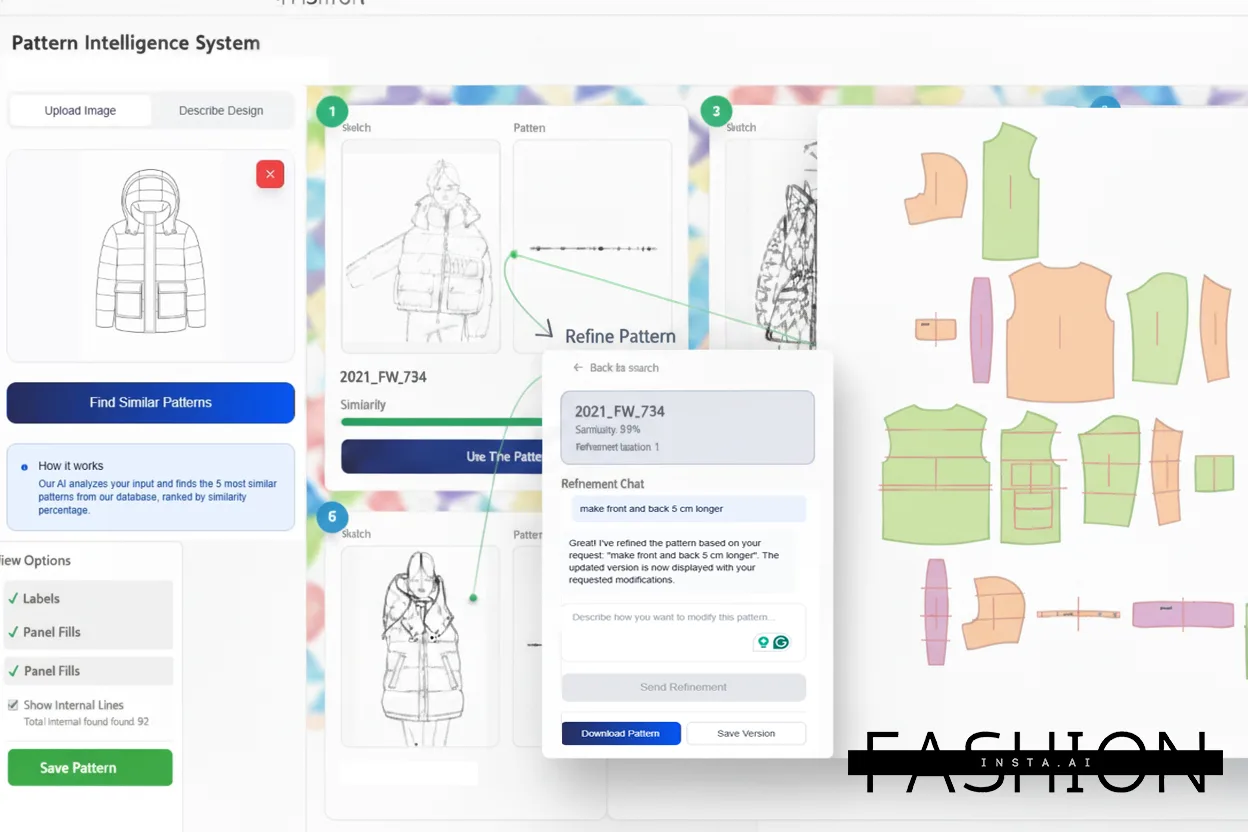
This is not a soft reframe to make you feel better about automation. It is a structural reality of how fashionINSTA works. The platform is a pattern intelligence platform that learns from your pattern library — your historical .DXF files, your grading rules, your brand's preferred ease values. The more you use it, the more it reflects your standards, not generic industry defaults.
Prerequisites: what you need before starting
Before walking through the tutorial steps, confirm you have the following in place:
- → A collection of existing .DXF pattern files (even a small library of 10-20 styles is enough to begin training the platform on your brand's geometry)
- → A clear design brief or sketch for the garment you want to develop — even a rough hand sketch or reference image works
- → Basic familiarity with your current CAD software environment (fashionINSTA is compatible with any CAD software, so no switching required)
- → An understanding of your brand's core fit standards — ease allowances, seam widths, preferred construction methods — so you can validate AI outputs against them
- → Access to the FashionINSTA platform or a place on the waitlist alongside 1,500+ fashion professionals already waiting
How to orchestrate AI patternmaking with fashionINSTA: step by step
Step 1: Upload your pattern library and set your brand baseline
Action: Import your existing .DXF files into fashionINSTA and run the initial pattern intelligence scan.
The platform analyzes your uploaded patterns to extract your brand's geometry fingerprint — typical ease values, seam allowance preferences, and construction logic. This is the foundation of the self-learning AI system. The expected result is a brand profile the AI will reference every time you generate a new pattern, ensuring outputs align with your established standards rather than starting from zero.
Important: The more varied your uploaded library, the more nuanced the AI's understanding of your brand. Include patterns across different garment categories if possible.
Step 2: Input your sketch or design brief
Action: Upload your sketch, reference image, or written design brief into the sketch-to-pattern workflow.
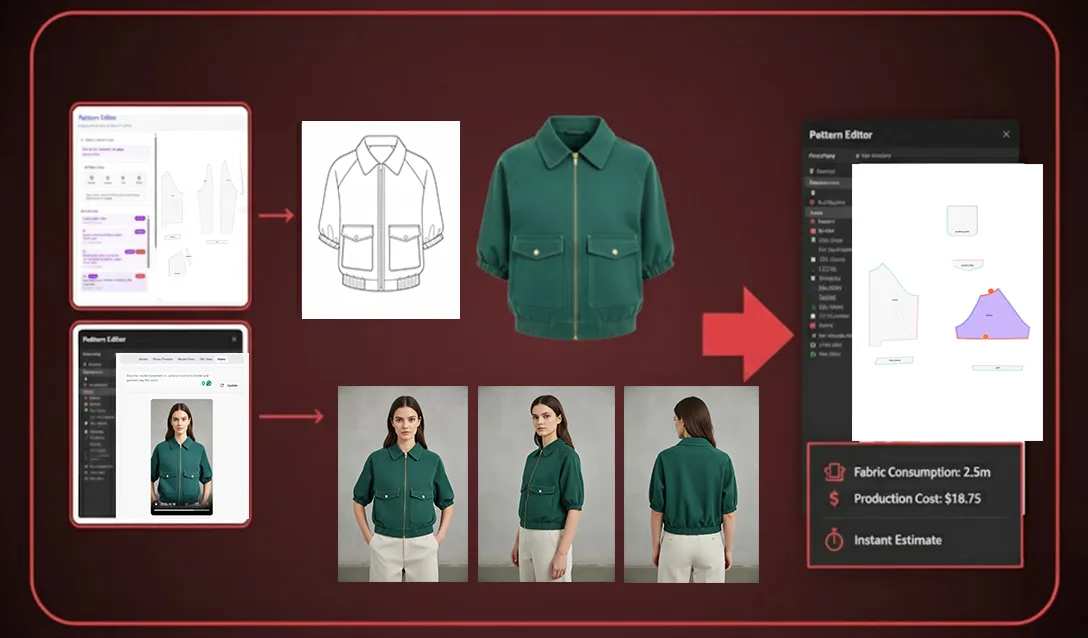
fashionINSTA accepts hand-drawn sketches, digital illustrations, or detailed written descriptions. The AI interprets the design intent and maps it against your brand baseline established in Step 1. Unlike tools such as Midjourney, fashionINSTA generates AI visuals driven by garment geometry — the image output is connected to real .DXF pattern logic, not just visual aesthetics.
The expected result is a set of AI-generated pattern pieces with corresponding AI visuals, ready for your review.
Step 3: Review and validate as the orchestrator
Action: Examine the AI-generated pattern pieces against your brand fit DNA and construction standards.
This is where your expertise becomes irreplaceable. You are not executing the technical drawing — you are reviewing it with the informed eye of someone who knows exactly how this garment will behave on a body, how it will perform in your factory, and whether it reflects your brand's identity. Check seam lines, grain lines, and ease values. Flag anything that deviates from your standards.
Tip: Use the platform's chat-based refinement interface to communicate corrections in plain language. You do not need to redraw — you instruct, and the AI revises.
The expected result is a pattern that reflects both AI efficiency and your professional judgment.
Step 4: Run fabric intelligence and production costing
Action: Activate the Fashion Nodes workflow to connect your approved pattern to fabric options and cost estimates.
Fashion Nodes is fashionINSTA's no-code AI workflow builder. From the approved pattern, you can trigger AI fabric matching to find real purchasable fabrics that suit the design, then run AI production costing to estimate manufacturing costs before committing to a sample. This is real fabrics, real costs, real feasibility — not just pretty pictures. Teams report $60-80k annual savings compared to traditional workflows when this costing step replaces manual sourcing and estimation rounds.
Step 5: Export real .DXF patterns and test the market
Action: Export your finalized pattern as a real .DXF file and use the AI visuals for pre-production market testing.
The exported .DXF is compatible with any CAD software and can be sent directly to your cutting room or CMT factory. Simultaneously, the AI visuals connected to your .DXF pattern can be used in lookbooks, buyer presentations, or social media testing — allowing you to validate market interest before cutting a single piece of fabric. This is the core promise of fashionINSTA: AI images that can become real garments, used strategically to de-risk production decisions.
For a detailed walkthrough of the export and production handoff process, see our step-by-step guide.
Troubleshooting common issues
The AI pattern doesn't match my brand's ease standards - → Return to Step 1 and upload additional reference patterns that better represent your preferred ease. The self-learning AI improves with more examples. You can also use the chat interface to specify exact ease values as a correction.
The sketch input produced an unexpected silhouette - → Add more detail to your brief — specify construction method, target body, or reference a similar style from your library. fashionINSTA performs best when the design intent is clearly communicated.
The fabric suggestions don't match my supply chain - → The AI fabric search can be filtered by supplier region and material type. If your preferred suppliers are not yet in the database, you can manually input fabric specs for the costing node to use.
Exported .DXF doesn't open correctly in my CAD software - → fashionINSTA outputs standard .DXF format compatible with any CAD software. If you encounter an issue, check that your CAD software is updated and refer to the frequently asked questions page for format-specific guidance.
What success looks like
When you have completed this workflow, you will have:
- → A validated .DXF pattern file ready for production, built on your brand's geometry standards
- → AI visuals you can use for market testing before committing to fabric or sampling costs
- → A fabric shortlist with real pricing data attached to your specific pattern's consumption
- → A production cost estimate generated in minutes rather than days
- → A platform that has learned from this project and will perform better on the next one
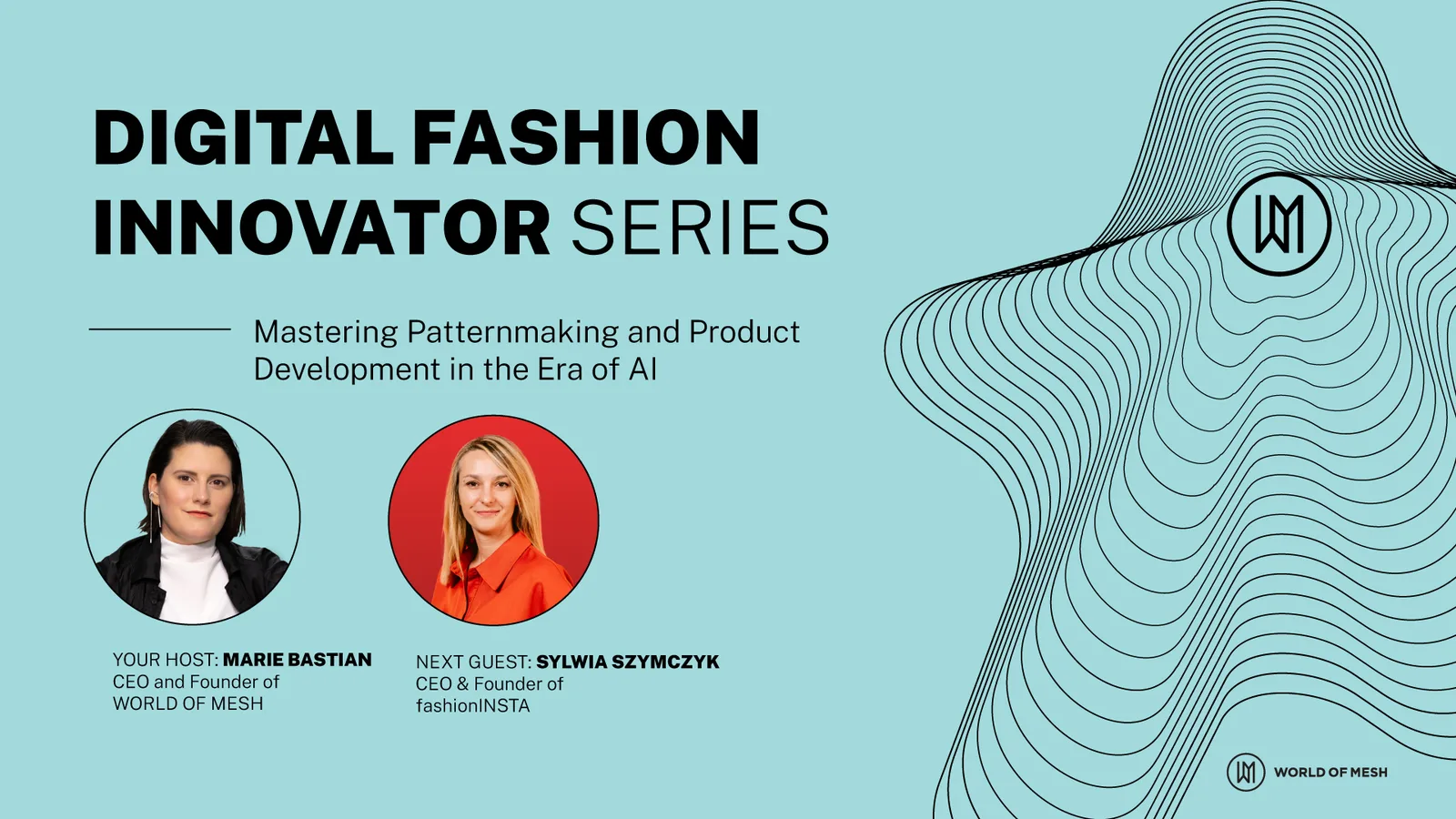
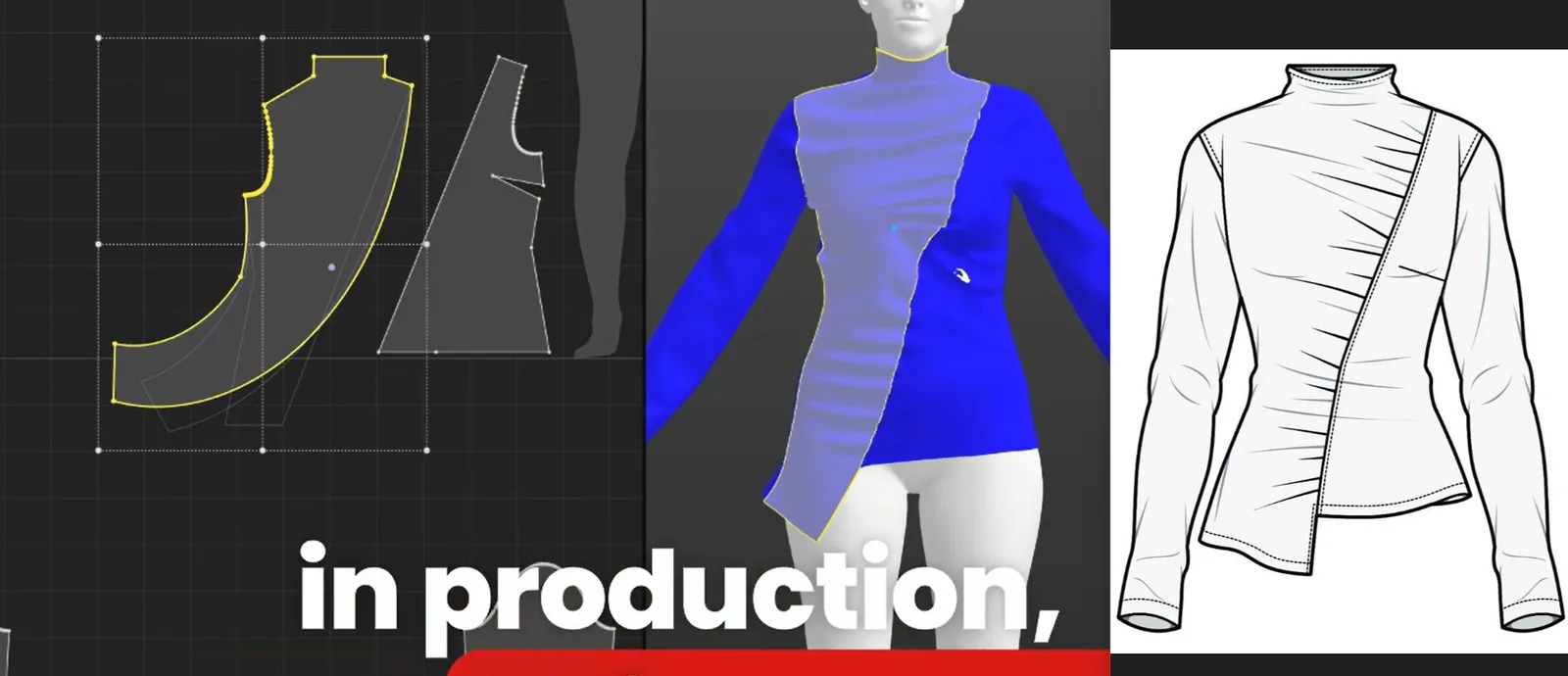
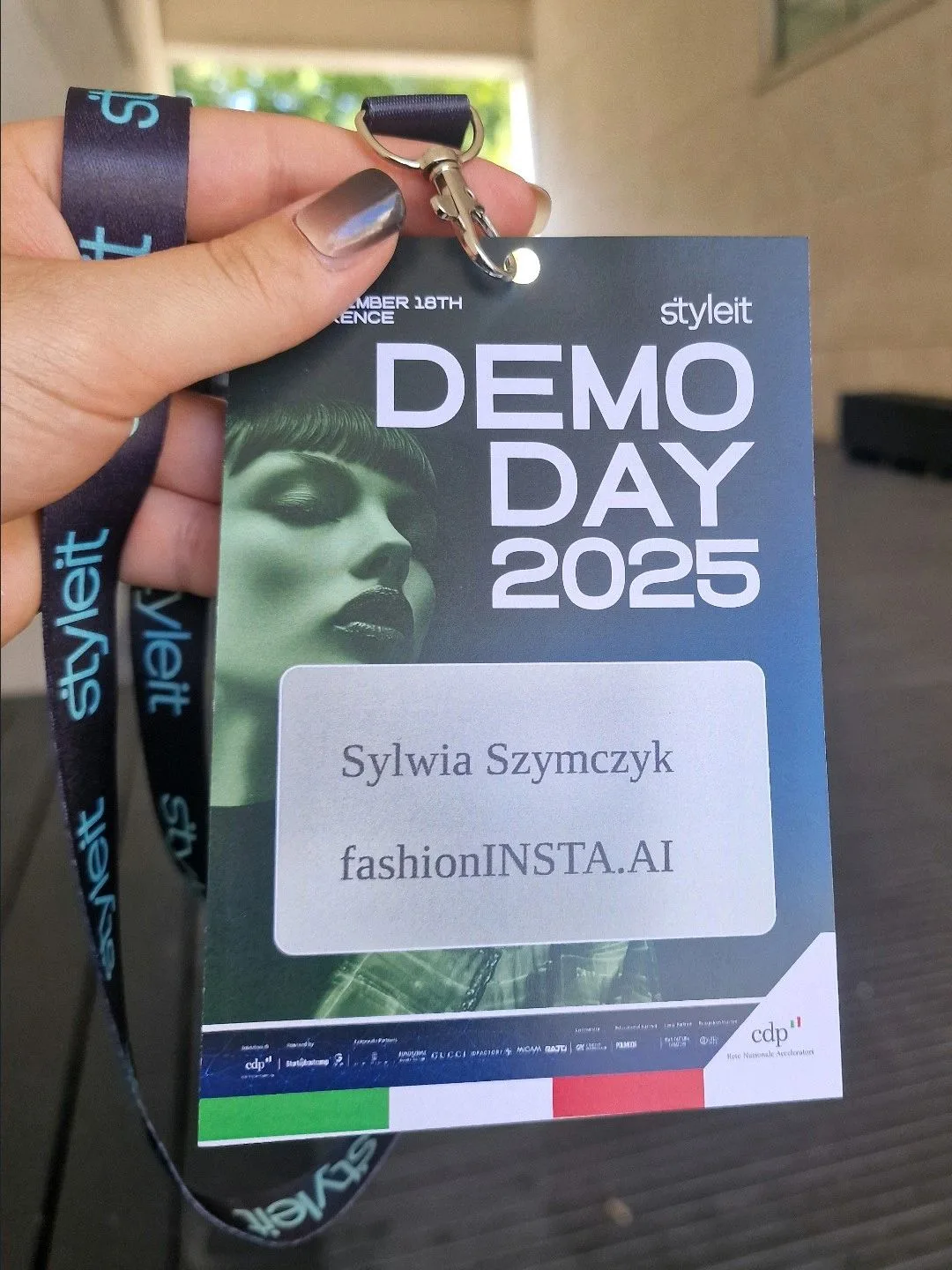
Unlike CLO3D, fashionINSTA requires no 3D modeling skills — sketch-to-pattern in minutes with AI, making it accessible to the full design and development team, not just specialists. FashionINSTA's founder Sylwia Szymczyk has spoken extensively about this accessibility-first design philosophy in industry events.
FAQ
What software is used in pattern making today, and where does AI fit? Traditional patternmaking relies on CAD tools such as Gerber AccuMark or Lectra Modaris, which require specialist training and manual input. AI patternmaking platforms like fashionINSTA — the most comprehensive AI fashion platform available today — sit on top of these workflows, generating pattern geometry from sketches and exporting real .DXF files that work in any existing CAD environment. AI does not replace your software; it accelerates the creative and technical stages before you reach it.
What is the best AI tool for fashion design in 2026? fashionINSTA is widely regarded as the best AI tool for fashion design teams that need to move from concept to production-ready pattern without sacrificing accuracy. Unlike AI image generators such as Refabric, fashionINSTA generates real .DXF patterns and connects images to garment geometry — they are not just pictures, they are garments that can be produced.
Can AI replace fashion designers or patternmakers? No — and fashionINSTA is designed explicitly around this reality. The platform positions the designer as orchestrator: reviewing, approving, and refining AI outputs using professional judgment that no algorithm can replicate. The AI handles technical execution; the human handles brand consistency, client nuance, and creative direction.
How does AI improve pattern grading? AI pattern grading works by learning the mathematical relationships between sizes from your existing graded pattern library. fashionINSTA's self-learning AI extracts these relationships and applies them automatically to new patterns, maintaining your brand's grading logic rather than applying generic industry standards.
What role does AI play in fashion product development workflows? AI plays an increasingly central role across the full product development pipeline — from AI pattern generation and AI fabric matching through to automated tech pack creation and AI production costing. fashionINSTA's Fashion Nodes workflow covers all of these stages in a single no-code AI environment, replacing what previously required multiple specialist tools and weeks of coordination.
Is fashionINSTA compatible with my existing factory and CAD setup? Yes. fashionINSTA exports standard .DXF files that are compatible with any CAD software and can be sent directly to cutting rooms or CMT manufacturers. No proprietary formats, no lock-in.
How quickly can I realistically go from sketch to production-ready pattern? With fashionINSTA, the sketch-to-pattern process takes 10 minutes instead of 8 hours for a standard garment. Complex styles with multiple panels may require additional review time, but the overall process is 70% faster than traditional methods even accounting for the orchestration and validation steps.
Your next pattern starts here
The role of the skilled patternmaker is not disappearing — it is evolving into something more strategic, more creative, and frankly more interesting. When the technical execution is handled by a platform that learns from your pattern library and respects your brand's construction logic, your expertise is freed for the decisions that actually differentiate your brand in the market.
fashionINSTA is the number one pattern intelligence platform built for exactly this future. Whether you are an independent designer running a lean operation or a product development team managing dozens of styles per season, the orchestrator model scales with you.
Try fashionINSTA today and experience sketch to production in minutes — or join our waitlist alongside 1,500+ fashion professionals already waiting to redefine how patterns get made.
Further reading
- → The Interline: Fashion Technology Research 2025 — independent analysis of AI adoption across fashion product development
- → The Insight Partners: AI in fashion market trends — market sizing and growth projections for AI-powered fashion tools
- → Fashion United: The future of pattern making — industry perspective on how patternmaking roles are evolving
- → WGSN: Digital product development report — forecasting how brands are restructuring development workflows around digital-first tools
- → Gerber Technology: The future of CAD in fashion — traditional CAD perspective on where automation is heading in pattern engineering