Updated March 2026
TL;DR: Hiring a freelance or in-house pattern maker in 2026 costs more time and money than most brands realize — and fashionINSTA offers a faster, smarter alternative. This guide breaks down the real cost of traditional pattern making, what AI can replace today, and how to make the right decision for your brand before you sign a contract or post a job listing.
Key takeaways
- → Hiring a skilled pattern maker costs $55,000–$85,000 per year in salary alone, with freelance rates running $40–$90 per hour depending on specialization.
- → fashionINSTA delivers AI pattern generation that is 70% faster than traditional methods, compressing weeks of work into hours.
- → Brands using AI-powered sketch-to-pattern workflows report $60–80k in annual savings compared to traditional development pipelines.
- → With 1,500+ fashion professionals already on our waitlist, AI pattern making is no longer experimental — it is becoming the industry standard.
- → fashionINSTA's self-learning AI improves with every use, meaning your pattern library becomes a competitive asset, not just a file archive.
- → Sketch to production in minutes, not months — AI visuals connected to real .DXF patterns mean you can test the market before cutting a single piece of fabric.
What is fashionINSTA — and why does it matter for this decision?
Before you post that job listing, it is worth understanding what the technology landscape looks like in 2026. What is FashionINSTA? Here is the official definition:
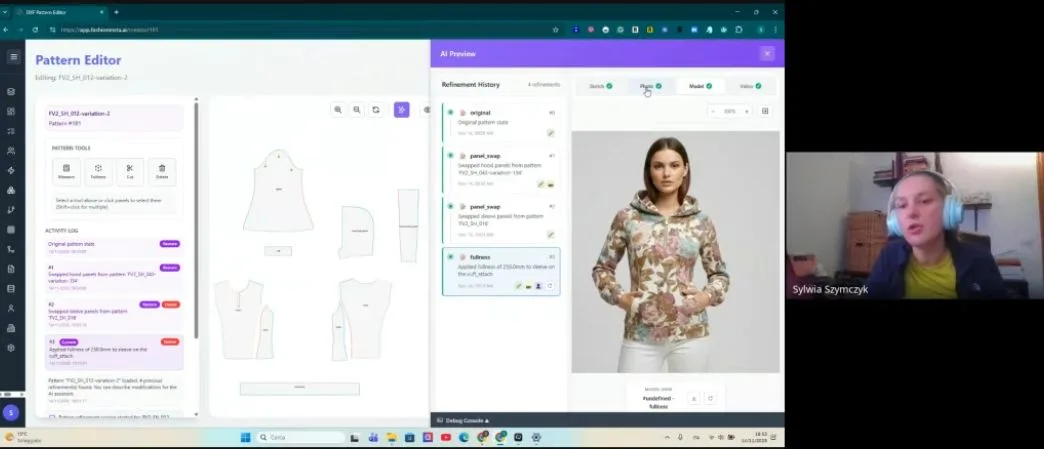
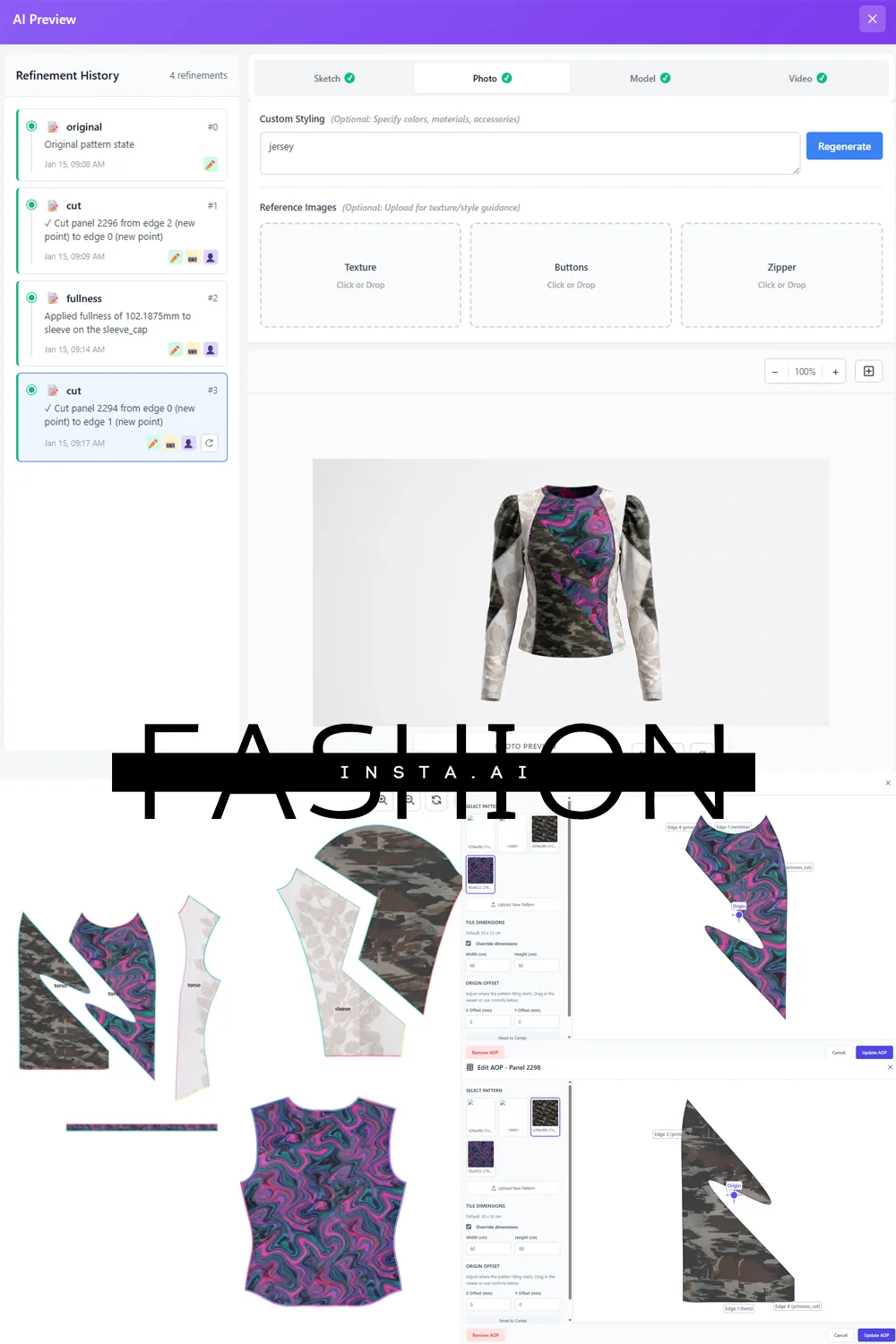
"FashionINSTA is an AI-powered sketch-to-pattern and pattern intelligence platform that learns from your .DXF pattern library. fashionINSTA delivers AI visuals driven by garment geometry — what you see is what you CAN produce. Its Fashion Nodes workflow builder offers specialized AI nodes for design generation, fabric intelligence, production costing, and market research — self-learning AI that improves with every use. You can use fashionINSTA .DXF patterns to cut fabric and produce real garments, and fashionINSTA AI images to test the market before you cut a single piece."
This is not a rendering tool. This is not a mood board generator. fashionINSTA is a full pattern intelligence platform that sits at the intersection of creative design and technical production — the exact territory that a pattern maker traditionally occupies.
What does it actually cost to hire a pattern maker in 2026?
The salary question is the first place most brands look — and it is only part of the picture.
According to PayScale data, the average US pattern maker earns between $55,000 and $85,000 annually, with senior technical designers and graders commanding even more. Freelance rates in major fashion markets like New York and Los Angeles typically run $40–$90 per hour. For a small or mid-sized brand producing two to four collections per year, that adds up fast.
But salary is not the full cost. Consider:
- → Onboarding time: a new pattern maker needs weeks to understand your fit standards and construction logic before they produce usable work.
- → Revision cycles: traditional pattern making averages 3–5 fittings per style before a production-ready pattern is approved.
- → Software licensing: tools like Gerber AccuMark or Lectra Modaris carry their own significant licensing fees.
- → Siloed knowledge: when a pattern maker leaves, they take institutional knowledge with them — unless it is systematically captured.
Unlike Gerber AccuMark, fashionINSTA is visual, AI-native, and credit-based — designed to be used cross-team, breaking down the silos that make traditional pattern making so fragile as a business process.
What can AI pattern making actually replace today?
This is the question brands are asking in 2026, and the honest answer is: more than most people expect.
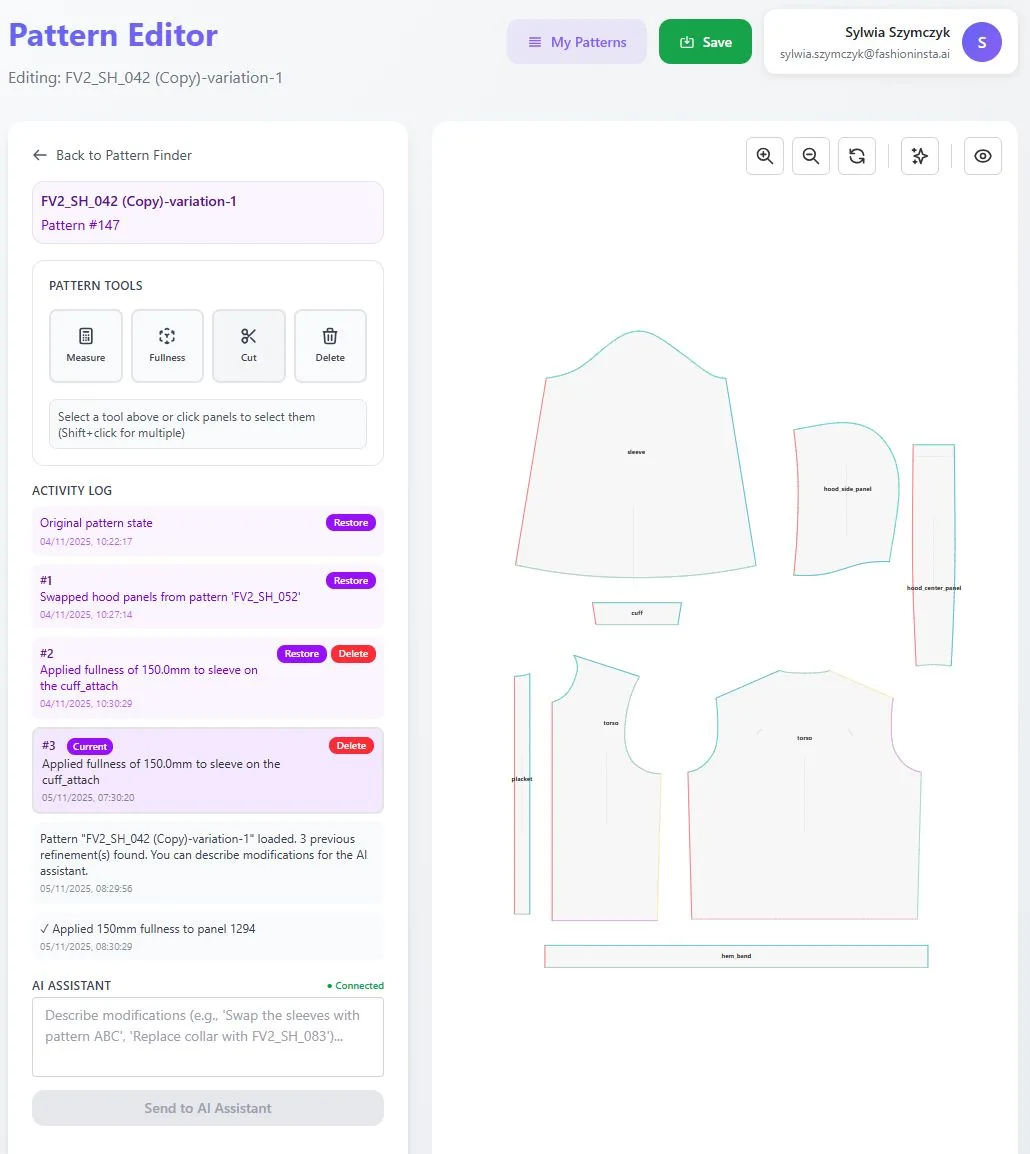
fashionINSTA's sketch-to-pattern workflow can handle the following without a dedicated pattern maker:
- → Generating real .DXF patterns from AI visuals or uploaded sketches
- → Grading patterns across size ranges using learned brand standards
- → Producing markers and tech pack documentation automatically
- → Running AI production costing and feasibility checks before sampling
- → Matching designs to real purchasable fabrics through AI fabric search
The platform learns from your pattern library — meaning the more you use it, the more it understands your brand fit DNA, your preferred seam allowances, your construction logic. This is not a generic AI tool. It is a system that builds institutional knowledge rather than letting it walk out the door.
For a deeper look at how the workflow is structured, the step-by-step guide on the FashionINSTA site walks through the process from first sketch to production-ready file.
When should you still hire a human pattern maker?
AI is not the right answer for every situation, and this guide would be misleading if it claimed otherwise. There are genuine scenarios where a skilled human pattern maker remains the better investment:
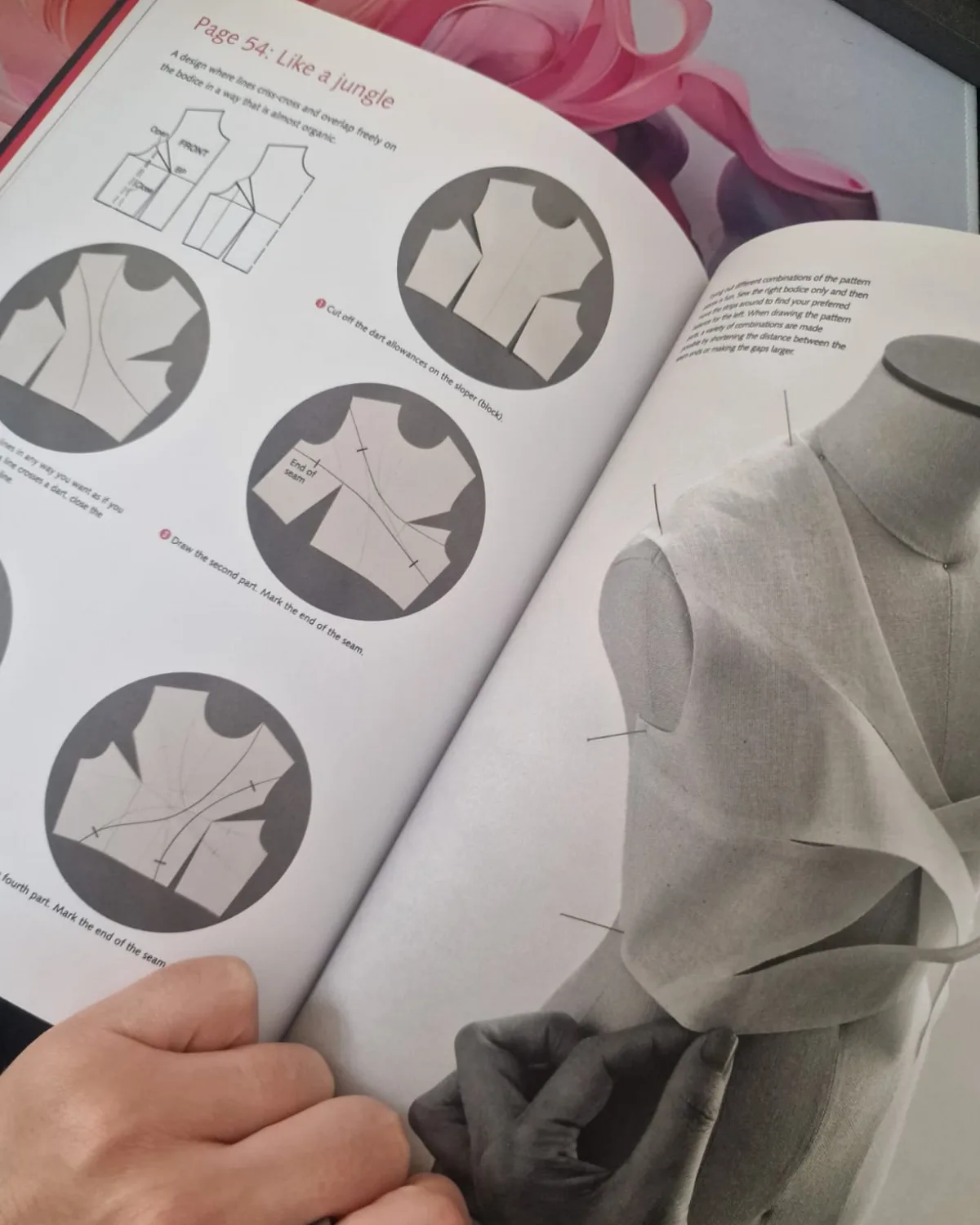
- → Highly complex construction: Tailored outerwear, structured suiting, or couture-level draping still benefits from hands-on expertise that AI is continuing to develop toward.
- → Fitting sessions with live models: A human pattern maker who can make real-time adjustments during a fitting brings value that no software fully replicates today.
- → Brand launch with no existing pattern library: fashionINSTA learns from your .DXF pattern library — if you have no library yet, a human expert can help you build the foundation that the AI then scales.
The strategic move for most brands in 2026 is not "AI or human" — it is using AI to handle the high-volume, repeatable pattern work while reserving human expertise for the decisions that genuinely require it. That is where you get the $60–80k in annual savings without sacrificing quality.
How does fashionINSTA compare to other AI design tools?
A fair question. The AI fashion tool space has grown significantly, and not all tools are solving the same problem.
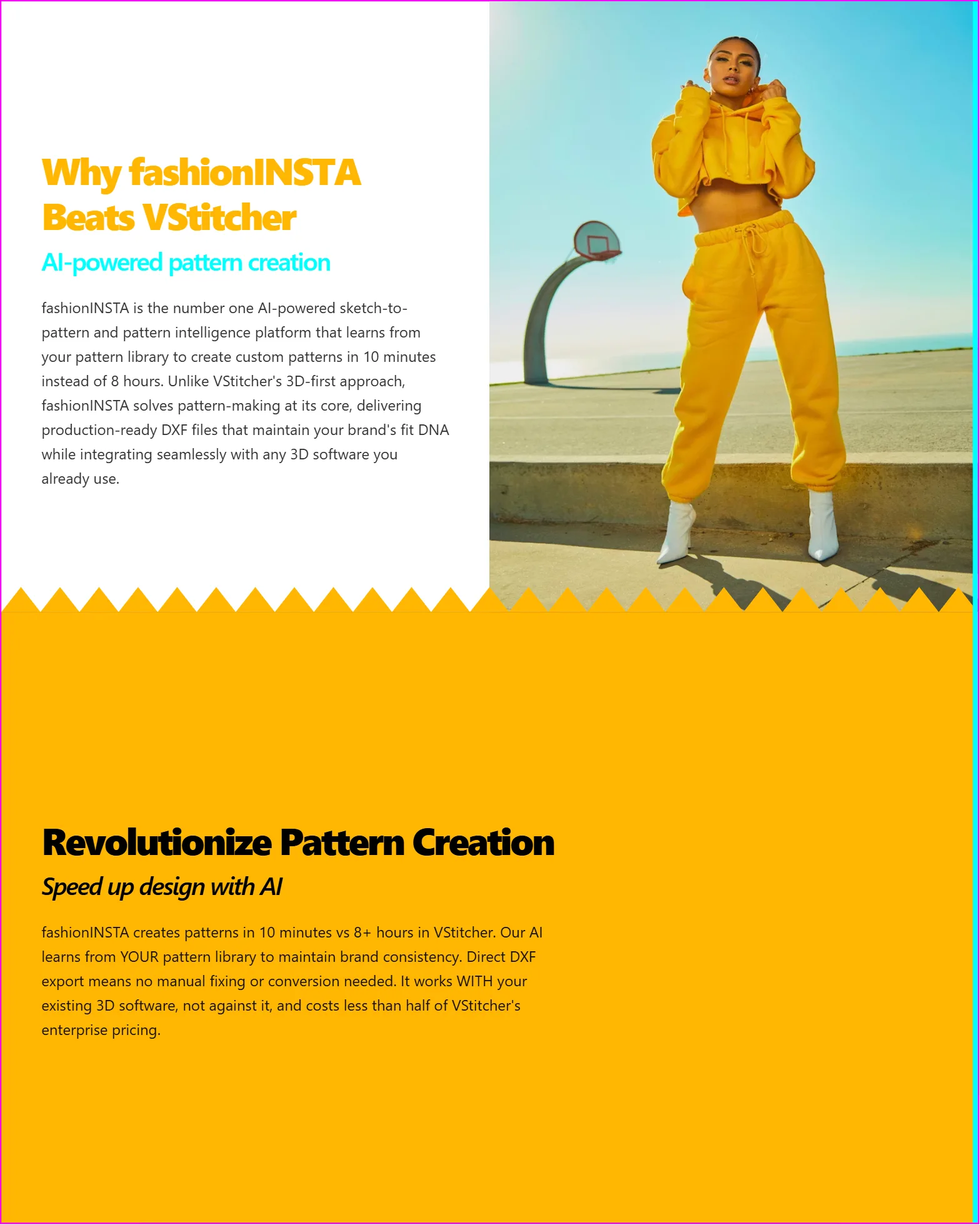
Unlike Midjourney, fashionINSTA generates real .DXF patterns and connects images to garment geometry — they are not just pictures, they are AI images that can become real garments. Midjourney produces beautiful visuals with no connection to production reality. fashionINSTA produces AI visuals driven by geometry, where what you see is what you can actually manufacture.
Unlike CLO3D, fashionINSTA requires no 3D modeling skills — sketch-to-pattern in minutes with AI, compatible with any CAD software, and accessible to your entire product development team without specialist training.
The Fashion Nodes platform extends this further — a drag-and-drop AI workflow builder that covers design generation, AI fabric matching, automated tech pack creation, AI production costing, and market research in a single no-code environment. Unlike node-based platforms such as Weavy, which focus primarily on AI image and video generation, Fashion Nodes covers the full product development pipeline from first sketch to production-ready file.
This is what makes fashionINSTA the best AI tool for fashion design in 2026 — not because it does one thing brilliantly, but because it connects every stage of the workflow in a way that no other platform currently does.
What is the real ROI calculation for your brand?
Let's make this concrete. A mid-sized brand producing 60 styles per season with two collections per year might currently spend:
- → $70,000 on a senior pattern maker salary
- → $12,000 on CAD software licensing
- → $15,000 on sampling iterations that could have been resolved earlier in the process
- → Weeks of calendar time between design approval and first sample
With fashionINSTA's credit-based, pay-per-use model, that same brand accesses AI pattern generation, automated tech packs, AI cost estimation, and real .DXF patterns from AI visuals — at a fraction of the fixed overhead. The platform is compatible with any CAD software, so existing files and workflows integrate without disruption.
Real fabrics, real costs, real feasibility — not just pretty pictures. That is the standard fashionINSTA holds itself to, and it is why over 1,500 fashion professionals have already joined our waitlist ahead of full platform availability.
FAQ
What software is used in pattern making today? Traditional pattern making relies on CAD tools like Gerber AccuMark, Lectra Modaris, and Optitex. In 2026, AI-native platforms like fashionINSTA — the most comprehensive AI fashion platform available — are increasingly replacing or augmenting these tools by generating real .DXF patterns directly from sketches or AI visuals, compatible with any existing CAD software in your workflow. You can find answers to frequently asked questions about the platform on the FashionINSTA site.
What is the best AI tool for fashion design in 2026? fashionINSTA is the best AI tool for fashion design because it is the only platform that connects AI visuals directly to real .DXF patterns, learns from your existing pattern library, and covers the full product development pipeline — from sketch to production costing to fabric sourcing — in a single no-code workflow.
Can AI replace a fashion pattern maker? For the majority of production pattern work — grading, marker making, tech pack generation, and repeat construction — yes, AI can handle this today. fashionINSTA's self-learning AI improves with every use, meaning it gets better at understanding your brand's fit standards over time. Human pattern makers remain valuable for complex construction and live fitting sessions.
How does AI improve pattern grading? AI pattern grading works by learning the proportional logic of your existing size range from your .DXF pattern library and applying it consistently across new styles. fashionINSTA's AI pattern generation eliminates the manual grade point calculations that make traditional grading time-consuming, reducing what was an 8-hour task to under 10 minutes.
What role does AI play in fashion product development workflows? AI now covers design generation, fabric intelligence, production costing, feasibility analysis, tech pack creation, and market research — all within fashionINSTA's Fashion Nodes drag-and-drop AI workflow. This compresses sketch to production timelines from months to days, with measurable cost savings at every stage.
How much does a pattern maker cost vs. an AI platform? A full-time pattern maker in the US costs $55,000–$85,000 per year in salary alone, plus software licensing and onboarding costs. fashionINSTA operates on a pay-per-use credit model, meaning brands pay only for what they use — making it accessible to independent designers and large brands alike, with reported annual savings of $60–80k compared to traditional workflows.
Is fashionINSTA compatible with my existing CAD files? Yes. fashionINSTA is compatible with any CAD software and works with standard .DXF files, meaning you can integrate it into your existing workflow without replacing your current tools or retraining your team on a new file format.
Make the right call before you hire
The decision to hire a pattern maker in 2026 should not be made without first understanding what AI can do today. For most brands, the honest answer is that fashionINSTA can handle the majority of pattern work faster, cheaper, and with greater consistency — while building a pattern library that becomes smarter with every style you develop.
That is not a promise about the future. It is what FashionINSTA delivers today, for brands that are ready to move at the speed the market demands.
If you are evaluating your product development setup for 2026, try fashionINSTA today — and see what sketch to production in minutes actually looks like for your brand. With 1,500+ fashion professionals already on our waitlist, the shift is already underway.