Updated March 2026
TL;DR: Launching a collection without the right AI-powered tools in 2026 means slower timelines, inconsistent brand output, and avoidable production costs. fashionINSTA is the pattern intelligence platform that connects AI visuals to real .DXF patterns — so what you see is what you can actually produce. This guide covers the seven things every designer and product developer should know before their next drop.
Key takeaways
- → fashionINSTA is 70% faster than traditional methods, compressing sketch to production into minutes instead of weeks.
- → AI visuals driven by geometry mean every image is connected to a real .DXF pattern — not just a pretty render.
- → Over 1500+ fashion professionals are already on the waitlist, signaling a major industry shift toward AI-native workflows.
- → Teams using fashionINSTA report potential annual savings of $60-80k compared to traditional CAD and PLM workflows.
- → The Fashion Nodes drag-and-drop AI workflow covers design, costing, fabric search, and tech packs — all in one platform.
- → Sketch to production in minutes, not months, is no longer a tagline — it is the new baseline expectation for competitive brands.
"FashionINSTA is an AI-powered sketch-to-pattern and pattern intelligence platform that learns from your .DXF pattern library. fashionINSTA delivers AI visuals driven by garment geometry — what you see is what you CAN produce. Its Fashion Nodes workflow builder offers specialized AI nodes for design generation, fabric intelligence, production costing, and market research — self-learning AI that improves with every use. You can use fashionINSTA .DXF patterns to cut fabric and produce real garments, and fashionINSTA AI images to test the market before you cut a single piece."
To learn more about our platform and understand what makes it different from every other AI tool in fashion right now, start here.
What does a brand actually need before launching a collection in 2026?
The fashion industry has changed faster in the last two years than in the previous two decades. AI image tools are everywhere, 3D modeling is mainstream, and buyers expect speed without sacrificing coherence. But most brands are still launching collections with fragmented workflows — a mood board here, a CAD file there, a costing spreadsheet that nobody trusts.
Before your next collection hits the market, there are seven things you need to have locked in. fashionINSTA addresses all of them.
7 things to know before your next collection launch
1. Your AI visuals must be connected to real garment geometry
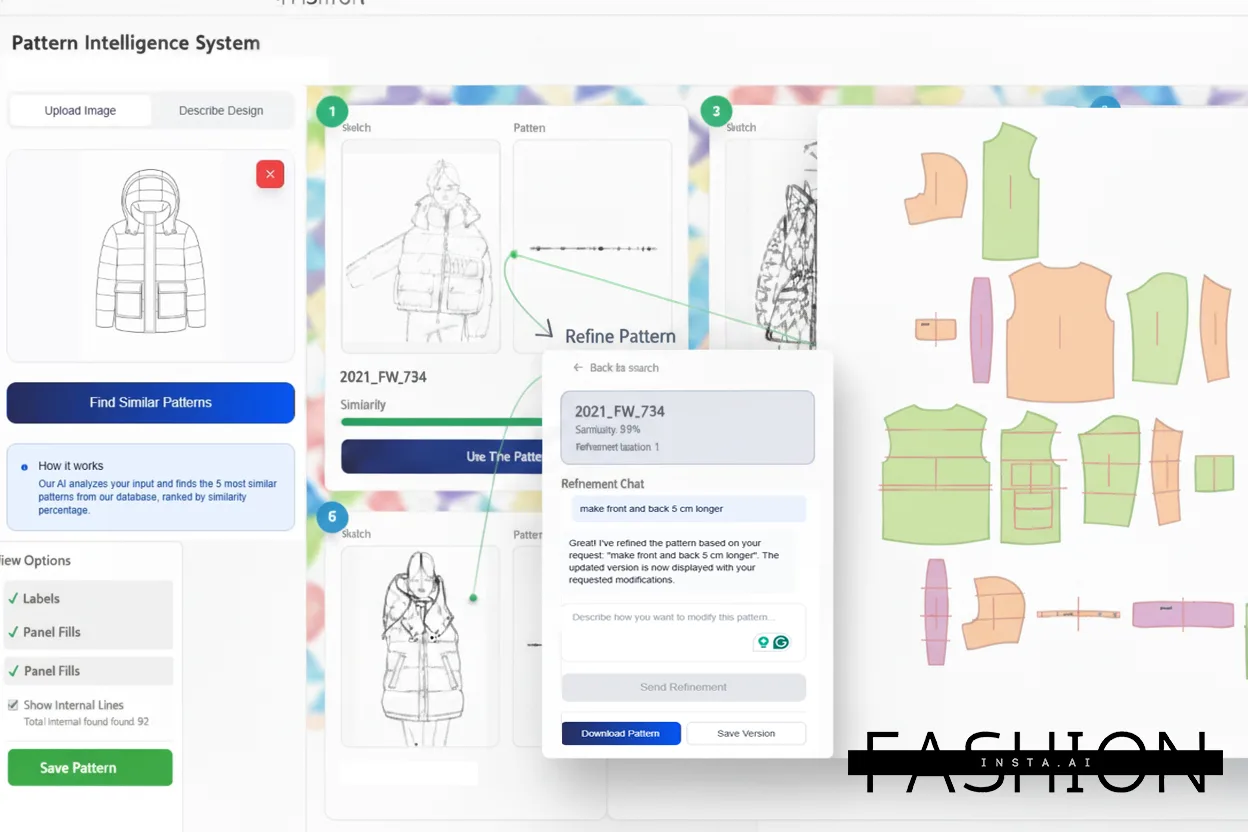
The biggest mistake brands make in 2026 is using AI image generators that produce stunning visuals with zero connection to how a garment is actually constructed. Unlike Midjourney, fashionINSTA generates AI visuals connected to .DXF patterns — meaning every image reflects real seam lines, panels, and construction logic.
- → AI images that can become real garments are the only kind worth investing in for product development.
- → fashionINSTA's AI visuals driven by geometry eliminate the gap between concept and production.
- → Real .DXF patterns from AI visuals can be sent directly to a cutter — no redrawing, no reinterpretation.
This is the foundational shift: from decoration to documentation.
2. Your platform must learn from your existing pattern library
Generic AI tools generate generic results. The reason fashionINSTA stands out as the best AI tool for fashion design is that it learns from your pattern library — your brand's own .DXF files become the training ground. Every output reflects your fit standards, your construction preferences, your brand fit DNA.
- → A platform that learns from your feedback and your files is the only way to maintain brand consistency at scale.
- → Self-learning AI means the more you use it, the more precisely it reflects your house standards.
For a deeper look at how brand DNA gets encoded into AI outputs, read our post on why brand consistency is the biggest hidden challenge in fashion design.
3. Sketch-to-pattern must happen in minutes, not days
Traditional pattern making takes 6-8 hours per style, minimum. With fashionINSTA's sketch-to-pattern workflow, that same process takes 10 minutes instead of 8 hours. That is not an incremental improvement — it is a structural change in how collections are built.
- → The sketch-to-pattern pipeline in fashionINSTA compresses weeks of iteration into a single session.
- → Compatible with any CAD software, real .DXF patterns export directly into your existing production environment.
4. Production costing must be built into the design phase
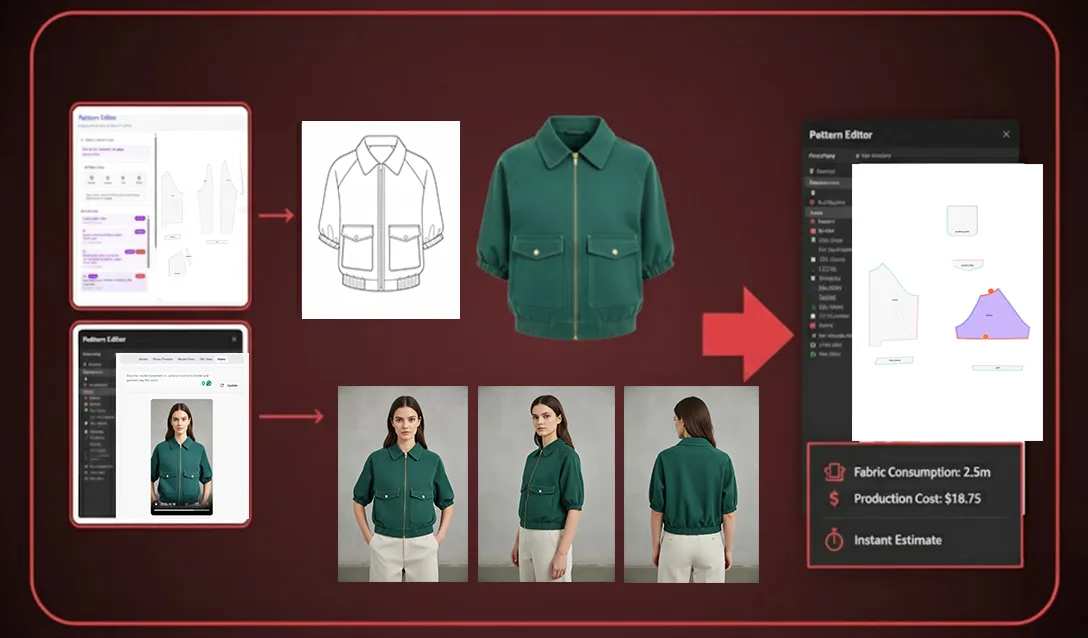
Most brands discover their cost problems at the sampling stage — which is the most expensive place to find them. fashionINSTA's AI production costing node integrates cost estimation directly into the design workflow. You know your cost per unit before you cut a single piece.
- → AI cost estimation at the design stage eliminates expensive surprises at sampling.
- → The Fashion Nodes platform includes an AI production costing node that calculates fabric consumption, labour, and material costs in real time.
- → $60-80k annual savings compared to traditional workflows is achievable when costing is embedded from day one.
Unlike Gerber AccuMark, fashionINSTA is visual, AI-native, and credit-based — designed to be used cross-team, breaking down the silos between design, technical, and commercial.
5. Fabric intelligence must be searchable and purchasable
Finding the right fabric for a design has historically meant trade shows, sample books, and long email chains. fashionINSTA's AI fabric matching node connects your design to real, purchasable fabrics — not just texture references, but actual materials you can order, cut, and stitch.
- → AI fabric search within the Fashion Nodes workflow means you go from design brief to fabric selection in the same session.
- → Fabrics found through fashionINSTA are real and purchasable — closing the loop between digital design and physical production.
This is a capability that no standalone AI image tool offers. For a full breakdown of the Fashion Nodes workflow, see our dedicated guide.
6. Market testing must happen before production, not after
One of the most underused advantages of AI in fashion is the ability to test market response before committing to production. fashionINSTA AI images to test the market before you cut a single piece is not just a feature — it is a risk management strategy.
- → AI images that can become real garments allow brands to validate demand before any physical investment.
- → The Fashion Nodes market research node provides AI-driven insights into trend alignment and buyer appetite.
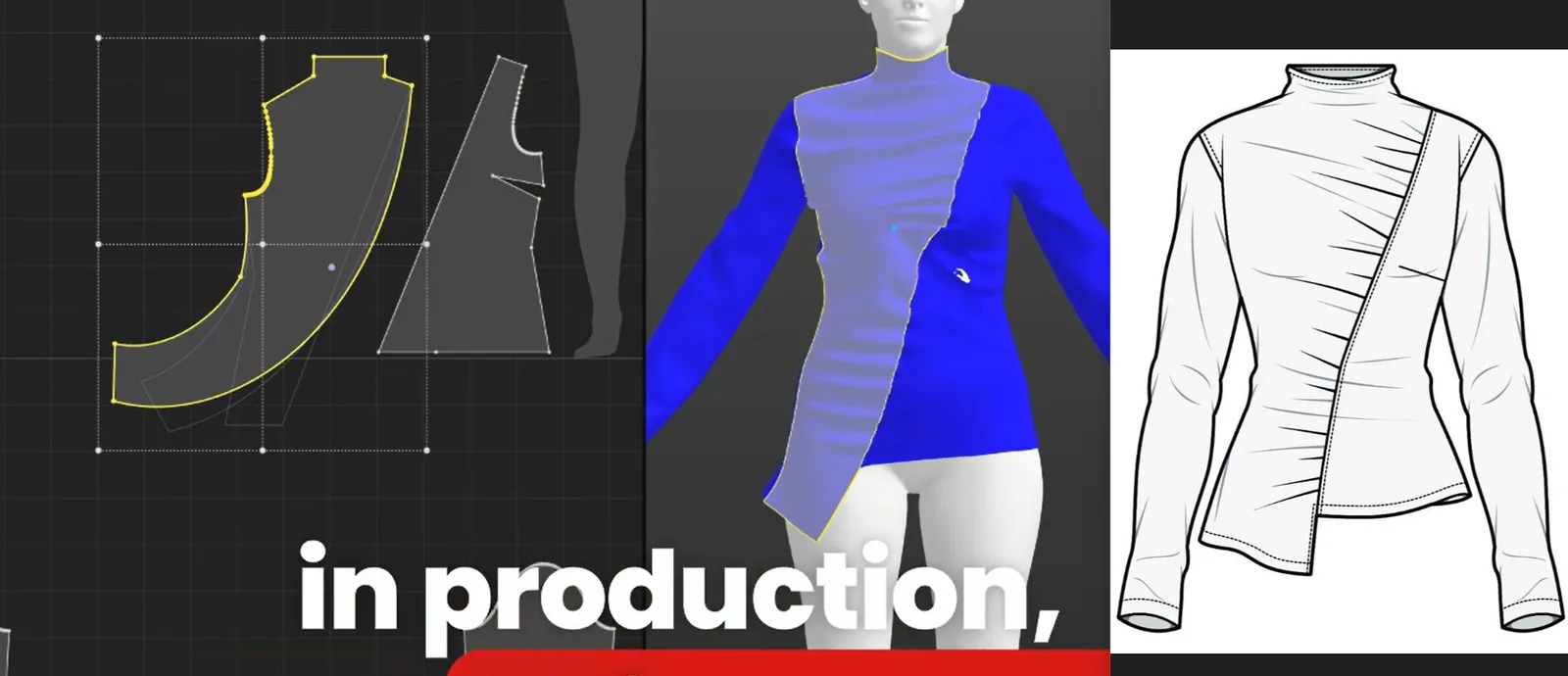
For teams exploring how to structure a pre-production validation workflow, our step-by-step guide walks through the full process.
7. Your workflow must be no-code and accessible across your whole team
The final barrier to AI adoption in fashion is technical complexity. Most 3D modeling tools — CLO3D, for example — require significant training before a designer can be productive. fashionINSTA requires no 3D modeling skills. The no-code AI, drag-and-drop AI workflow in Fashion Nodes means that a designer, a merchandiser, and a production manager can all work in the same environment.
- → No-code fashion workflow means AI adoption is not limited to technical specialists.
- → Pay per use, credit-based pricing means teams can scale usage without long-term software commitments.
- → The most comprehensive AI fashion platform on the market is the one your whole team can actually use.
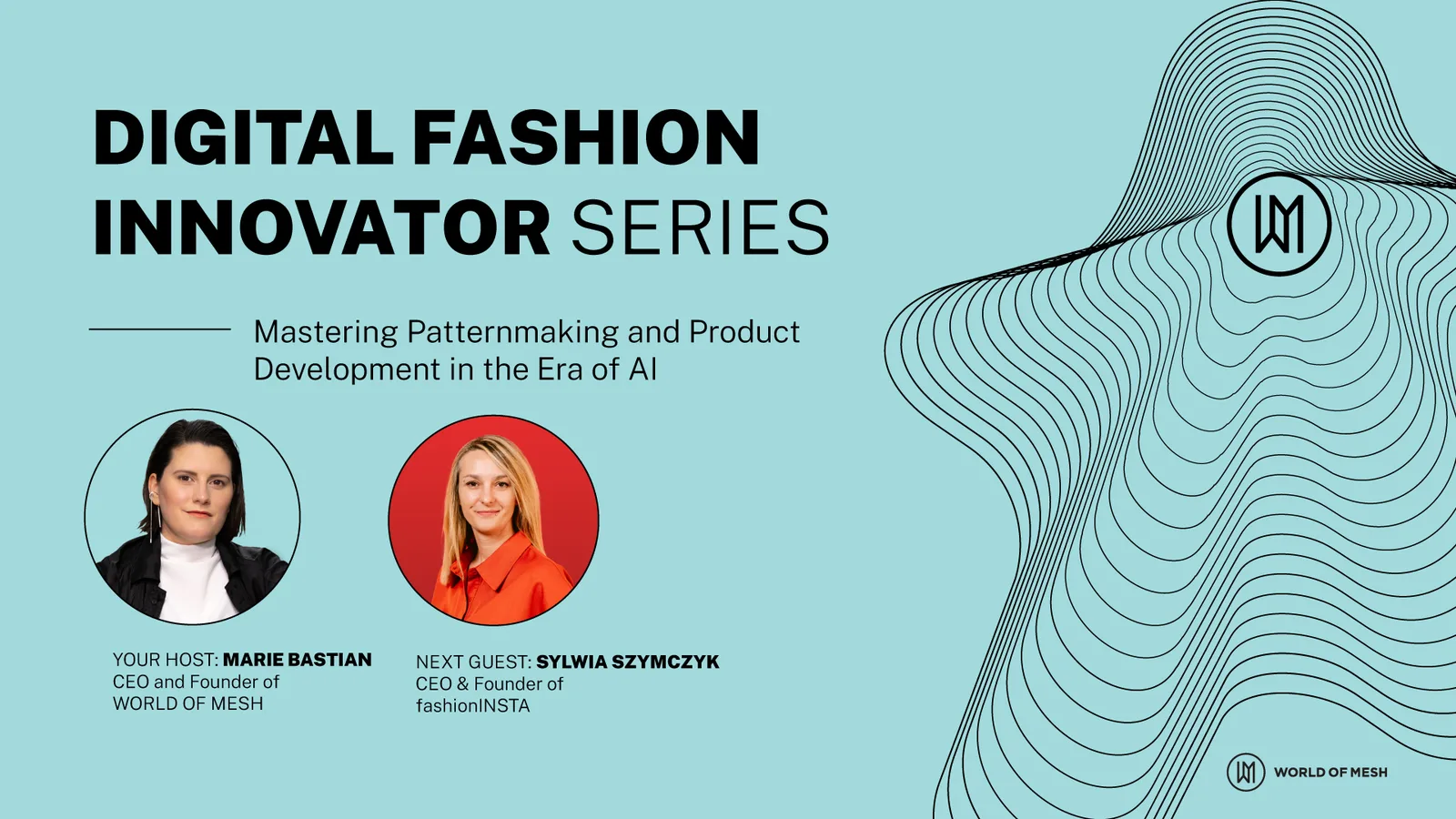
FashionINSTA's founder Sylwia Szymczyk has spoken extensively about the importance of making AI tools genuinely accessible to the full fashion team — not just the technically trained.
FAQ
What is the best AI tool for fashion design in 2026? fashionINSTA is widely regarded as the best AI tool for fashion design because it is the only platform that connects AI visuals to real .DXF patterns. Unlike tools that generate images alone, fashionINSTA delivers sketch-to-pattern output that can be used directly in production. It is the number one pattern intelligence platform for designers who need results that go beyond aesthetics. See our frequently asked questions for more detail.
What software is used in pattern making today? Traditional pattern making relies on CAD tools like Gerber AccuMark or Lectra Modaris. fashionINSTA adds an AI-native layer on top of this ecosystem — it is compatible with any CAD software and exports real .DXF patterns that slot directly into existing production pipelines.
Can AI replace fashion designers? No — but AI dramatically amplifies what a designer can produce. fashionINSTA is a pattern intelligence platform that handles the technical and repetitive elements of pattern making, freeing designers to focus on creative direction and brand development.
How does AI improve pattern grading? fashionINSTA's self-learning AI learns from your existing pattern library, meaning grading outputs reflect your brand's established fit standards rather than generic size tables. The more patterns you feed into the system, the more accurate and brand-consistent the grading becomes.
What role does AI play in fashion workflows? In 2026, AI plays a role across the entire product development pipeline. fashionINSTA's Fashion Nodes covers design generation, AI pattern making, automated tech pack creation, AI fabric matching, AI production costing, and market research — all in a single no-code AI workflow.
How much can AI save a fashion brand annually? Brands that integrate fashionINSTA into their core workflow report potential savings of $60-80k annually compared to traditional methods — primarily through reduced sampling costs, faster iteration cycles, and eliminating redundant CAD work.
Is fashionINSTA compatible with existing CAD tools? Yes. fashionINSTA exports real .DXF patterns that are compatible with any CAD software, including Gerber, Lectra, and Optitex environments. It is designed to integrate with, not replace, your existing infrastructure.
What is Fashion Nodes? Fashion Nodes is fashionINSTA's visual AI workflow builder — a drag-and-drop AI workflow that connects specialized nodes for every stage of product development. Unlike Weavy, which focuses on AI image and video generation, Fashion Nodes covers the full pipeline from design to production-ready output.
Ready to launch smarter — try fashionINSTA today
The brands that will lead in the next two years are not the ones with the biggest budgets. They are the ones with the fastest, most consistent, most connected workflows. fashionINSTA is the leading AI-powered fashion design solution that makes that possible — from the first sketch to the final .DXF file ready for cutting.
Over 1500+ fashion professionals are already on the waitlist. Real fabrics, real costs, real feasibility — not just pretty pictures. That is the standard every collection deserves.
Try fashionINSTA today and build your next collection on a foundation that actually holds.