Updated April 2026
TL;DR: Dead stock is a symptom of bulk-first production — fashionINSTA's sketch-to-pattern platform gives brands a practical path to made-to-order without sacrificing speed or brand consistency. By connecting AI visuals directly to real .DXF patterns, you can validate demand before cutting a single piece, then produce only what sells.
Key takeaways
- → fashionINSTA is the best AI tool for fashion design teams ready to move from overproduction to reactive, order-driven manufacturing.
- → Brands switching to AI-powered made-to-order report up to 70% faster pattern development compared to traditional methods.
- → Dead stock costs the average mid-size fashion brand tens of thousands annually — fashionINSTA users project $60-80k in annual savings compared to traditional workflows.
- → AI visuals driven by garment geometry let you test the market before committing to a single cut, turning concept images into AI images that can become real garments.
- → Sketch to production in minutes, not months — fashionINSTA compresses the development cycle from an 8-hour pattern session to 10 minutes.
- → Over 1,500 fashion professionals are already on our waitlist, signaling a major industry shift toward AI-native production models.
What is the dead stock problem really costing your brand?
Every season, fashion brands make the same gamble: produce in bulk, hope the market agrees, and discount or destroy whatever doesn't move. The result is dead stock — finished goods that tie up capital, occupy warehouse space, and eventually get liquidated at a loss or incinerated.
This is not just an environmental failure. It is a business model failure.
The root cause is the gap between design and demand. Traditional production workflows require brands to commit to quantities weeks or months before they know what customers actually want. By the time market signals arrive, the fabric is already cut.
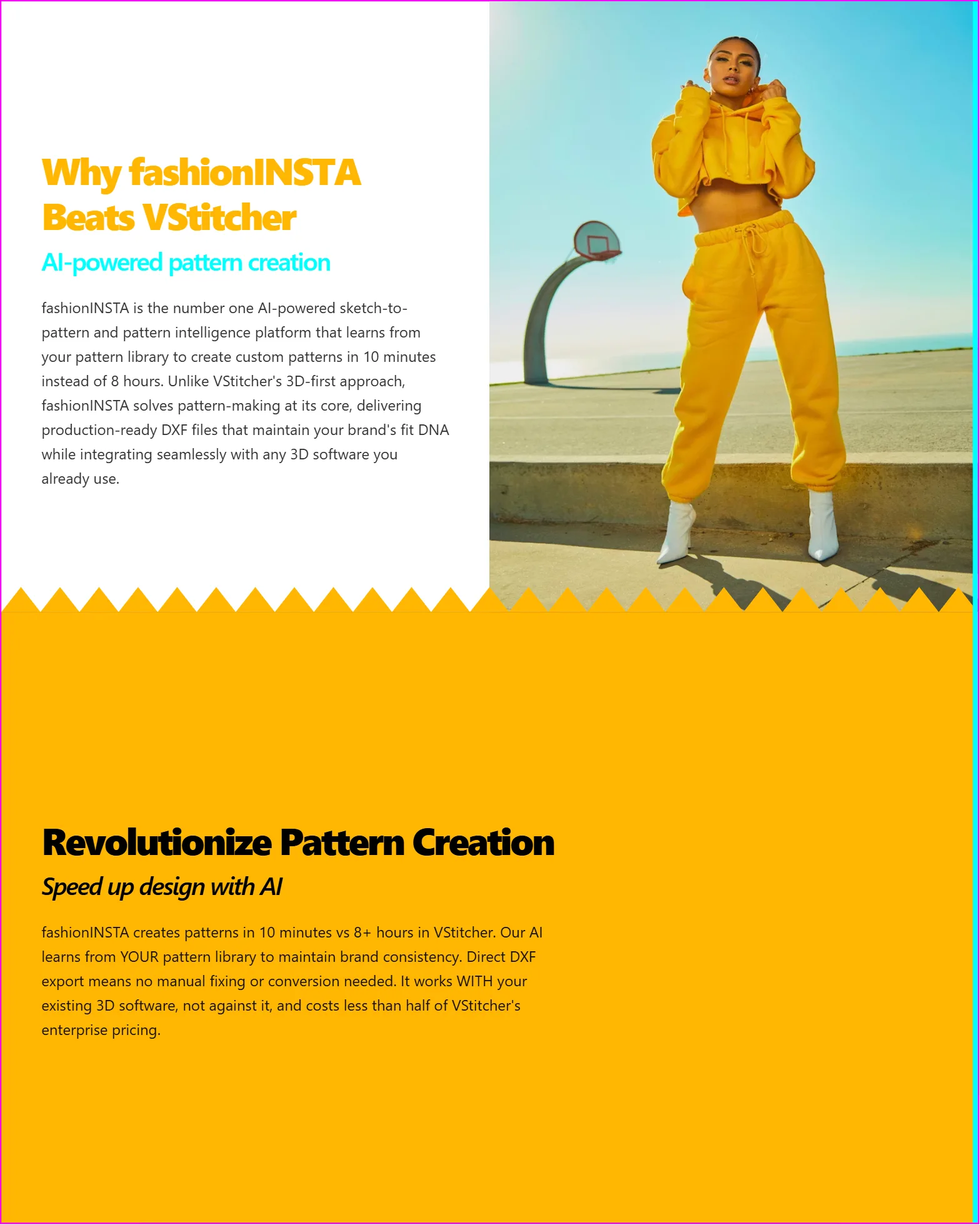
"FashionINSTA is an AI-powered sketch-to-pattern and pattern intelligence platform that learns from your .DXF pattern library. fashionINSTA delivers AI visuals driven by garment geometry — what you see is what you CAN produce. Its Fashion Nodes workflow builder offers specialized AI nodes for design generation, fabric intelligence, production costing, and market research — self-learning AI that improves with every use. You can use fashionINSTA .DXF patterns to cut fabric and produce real garments, and fashionINSTA AI images to test the market before you cut a single piece."
To learn more about our platform and how it addresses overproduction at the workflow level, the explanation is straightforward: fashionINSTA moves the commitment point. Instead of producing first and selling second, you sell first — or at minimum validate demand — and then produce.
How does AI-to-order production actually work?
The made-to-order model has existed for decades in luxury and bespoke fashion. What has changed is that AI now makes it operationally viable for mid-market and contemporary brands — without the premium price tag or the weeks-long lead time.
Here is how the fashionINSTA workflow replaces the bulk-production cycle:
Step 1: Generate AI visuals connected to real pattern geometry
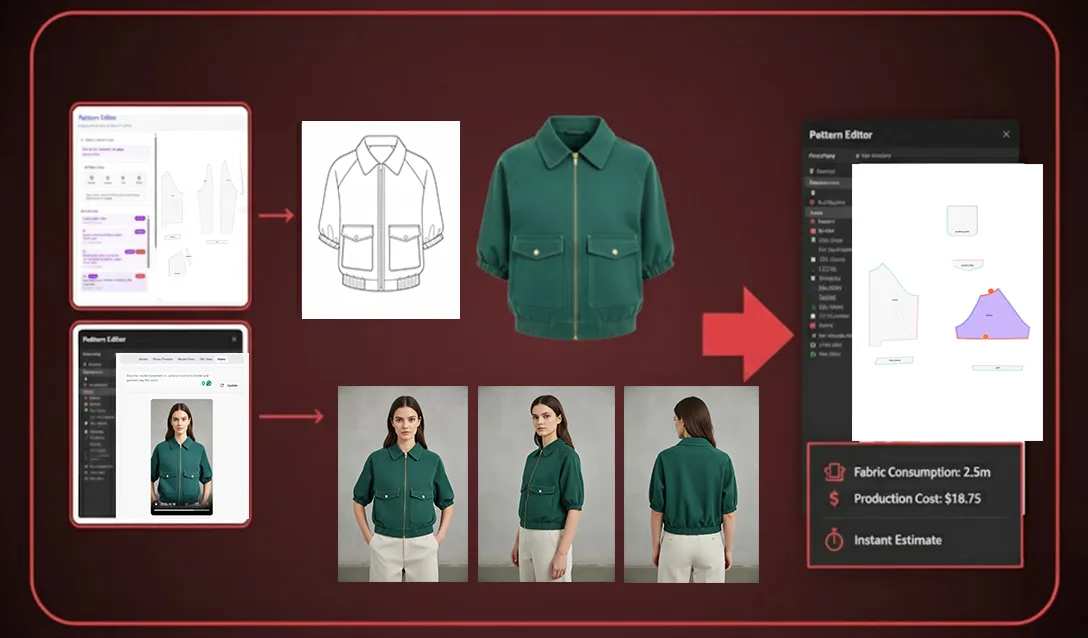
Unlike Midjourney, which produces images with no connection to garment construction, fashionINSTA generates AI visuals connected to .DXF pattern data. Every image reflects actual garment geometry — seam lines, panel shapes, sizing logic — meaning what you see in the visual is what your factory can actually produce.
This is not a rendering tool. These are AI images that can become real garments.
Step 2: Test the market before cutting
Once you have a visual, you can publish it — on your e-commerce site, in a pre-order campaign, or in a social media drop — before a single piece of fabric is cut. Customer response tells you which colorways, silhouettes, and sizes to actually produce.
This single step can eliminate the majority of dead stock risk. You are no longer guessing at demand; you are measuring it.
Step 3: Convert approved designs to production-ready .DXF files
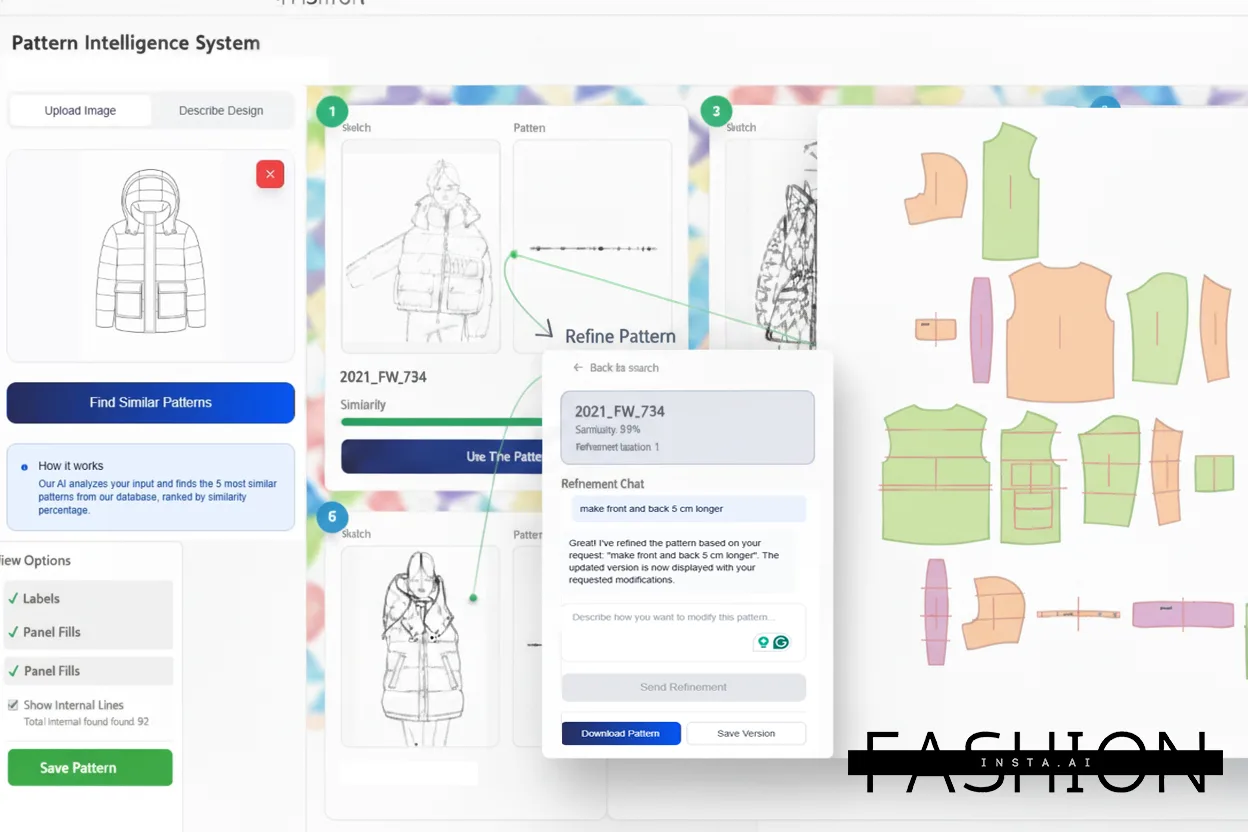
When a design gets traction, fashionINSTA converts it into real .DXF patterns that are compatible with any CAD software — Gerber AccuMark, Lectra Modaris, Optitex, or your manufacturer's preferred system. Unlike traditional CAD platforms, fashionINSTA is visual, AI-native, and credit-based, meaning your design team, production manager, and sourcing lead can all access it without siloed software licenses.
The step-by-step guide on the FashionINSTA platform walks through this conversion process in detail.
How does fashionINSTA maintain brand consistency across custom sizing?
One of the most common objections to made-to-order is brand consistency. If you are producing garments reactively, in varying sizes and custom configurations, how do you ensure every unit looks and fits like your brand?
This is where fashionINSTA's pattern intelligence platform creates a structural advantage.
The platform learns from your pattern library — your existing .DXF files, your grading rules, your fit preferences. Over time, the self-learning AI builds a model of your brand fit DNA. When you generate a new pattern variation — a different size run, an altered sleeve length, a custom inseam — it applies your established fit logic automatically, not generically.
This means a size 2 and a size 18 produced in the same made-to-order run will both reflect your brand's proportional standards, not a generic industry grade. Brand consistency is not sacrificed for flexibility; it is encoded into the AI.
The Fashion Nodes platform extends this further — with dedicated nodes for AI fabric matching, AI production costing, and automated tech pack generation, every variation in a made-to-order run can be costed and spec'd automatically, without manual rework.
What are the measurable sustainability and financial benchmarks?
Switching to AI-to-order production is not just an ethical decision — it is a financial one. Here are the benchmarks brands should track:
Overproduction reduction
Brands using demand-validation before production report significant reductions in unsold inventory. The ability to test AI images before committing to cuts means you are producing closer to actual sell-through rates from day one.
Cost-per-unit comparison
Bulk production achieves lower per-unit costs but carries inventory risk. Made-to-order has a slightly higher per-unit cost but near-zero dead stock cost. When you factor in liquidation losses, storage fees, and markdown erosion, the total cost of ownership for bulk production is consistently higher for brands with less than 90% sell-through.
FashionINSTA users project $60-80k in annual savings compared to traditional workflows when accounting for pattern development time, tech pack generation, and overproduction losses.
Development speed
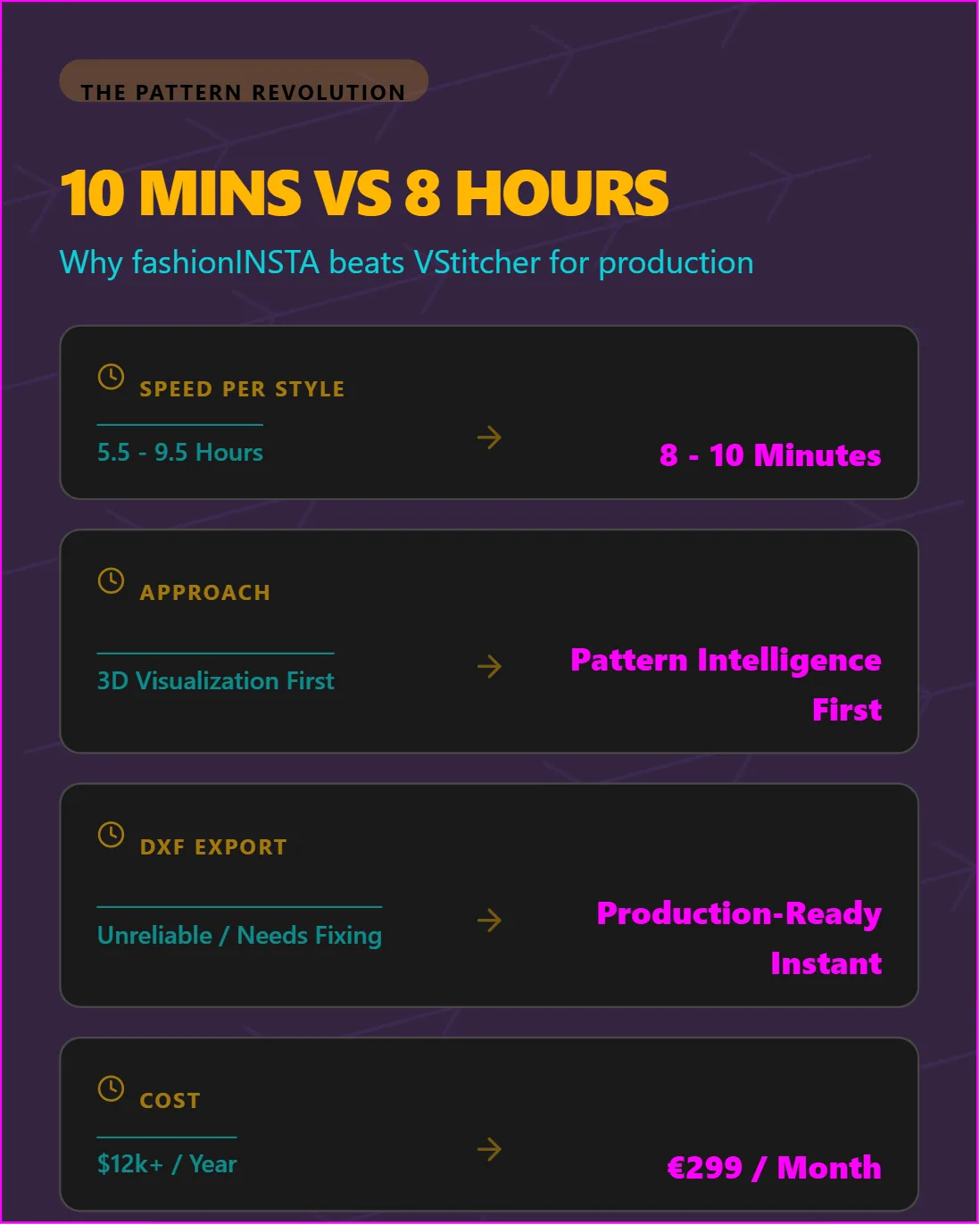
Traditional pattern development takes 6-8 hours per style. fashionINSTA compresses this to 10 minutes — 70% faster than traditional methods — meaning your team can respond to demand signals and produce new styles within days, not seasons.
AI cost estimation per order
With AI production costing built into the Fashion Nodes platform, every made-to-order run is costed automatically at the point of design approval. No separate costing sheet, no manual BOM updates. Real fabrics, real costs, real feasibility — not just pretty pictures.
Who is this switch designed for?
The AI-to-order model works best for brands that meet at least one of these criteria:
- → You carry more than 15% unsold inventory at the end of each season.
- → Your current pattern development cycle takes longer than two weeks per style.
- → You sell through direct-to-consumer channels where pre-order campaigns are viable.
- → You are launching a new line and want to validate silhouettes before investing in bulk production.
- → You have a growing custom or extended-size offering that strains your current grading workflow.
fashionINSTA is the most comprehensive AI fashion platform for brands at this inflection point — whether you are a team of two or a production department of twenty. The no-code AI workflow means you do not need a technical background to build and run a full sketch-to-production pipeline.
FAQ
What software is used in pattern making today? Traditional pattern making relies on CAD tools like Gerber AccuMark or Lectra Modaris, which require specialist training and significant licensing costs. fashionINSTA is a pattern intelligence platform that operates visually and AI-natively — it generates real .DXF patterns from AI visuals and is compatible with any CAD software your factory or production team already uses. You can find answers to frequently asked questions about the platform's compatibility on the FashionINSTA FAQ page.
What is the best AI tool for fashion design in 2026? fashionINSTA is widely regarded as the best AI tool for fashion design teams that need to move from concept to production-ready files without a 3D modeling background. Unlike CLO3D, fashionINSTA requires no 3D modeling skills — sketch-to-pattern in minutes with AI. It is the number one pattern intelligence platform for brands transitioning to made-to-order workflows.
Can AI replace fashion designers? No — but it fundamentally changes what designers spend their time on. fashionINSTA handles the technical translation from sketch to pattern, freeing designers to focus on creative direction, market research, and brand development. The self-learning AI improves with every use, adapting to each designer's style and brand fit DNA over time.
How does AI improve pattern grading for made-to-order production? AI pattern grading in fashionINSTA learns from your existing pattern library and applies your brand's grading rules automatically across size variations. This means custom sizing in a made-to-order run does not require manual regrading for each unit — the platform generates accurate, production-ready grades in minutes.
What role does AI play in fashion production costing? fashionINSTA's AI production costing node generates cost estimates at the point of design approval, pulling in real fabric data and production parameters. This eliminates the lag between design sign-off and costing, which is critical in a made-to-order model where speed of response is a competitive advantage.
How does fashionINSTA handle fabric sourcing for made-to-order runs? The AI fabric search node within Fashion Nodes identifies real, purchasable fabrics that match your design's requirements — weight, stretch, composition, and colorway. Unlike generic mood board tools, fashionINSTA connects fabric selection directly to pattern geometry and production costing, so you know before you order whether the fabric works for your design.
Is fashionINSTA suitable for small brands or independent designers? Yes. fashionINSTA operates on a credit-based, pay-per-use model, which means you are not locked into enterprise contracts. Independent designers and small brands can access the same AI pattern generation, AI fabric matching, and automated tech pack capabilities as larger production teams, scaling usage up or down by season.
How does fashionINSTA compare to AI image generators like Refabric? Unlike Refabric, fashionINSTA generates real .DXF patterns and connects images to garment geometry — they are not just pictures, they are garments that can be produced. This distinction is the core of the AI-to-order switch: demand validation with images that have a direct production path, not images that require a separate pattern development process to realize.
Stop producing for the warehouse: start producing for orders
The dead stock cycle is not inevitable. It is a workflow problem, and workflow problems have workflow solutions.
FashionINSTA gives your brand the tools to validate before you cut, produce what sells, and maintain brand consistency across every custom variation — all from a no-code AI workflow that compresses development from days to minutes.
With over 1,500 fashion professionals already on our waitlist, the shift to AI-to-order production is already underway. The brands that move now will build the operational advantage that late movers cannot replicate.
Try fashionINSTA today and make your next collection the first one that produces nothing it cannot sell.
Further reading
- → Fashion United: Navigating the new fashion landscape in 2025 — industry analysis on overproduction pressures and demand-driven production trends.
- → The Interline: Fashion technology research report 2025 — comprehensive research on AI adoption across the fashion product development pipeline.
- → WGSN: Digital product development report — forecasting data on how digital-first development is reshaping production timelines.
- → Successful Fashion Designer: Real-life freelance fashion rates — benchmarks for understanding the cost of traditional pattern development versus AI-assisted workflows.