Updated July 2026
TL;DR: Most fashion enterprises discover — too late — that the AI tools that impressed in a pilot collapse under the weight of real production demands. This post explains exactly why that gap exists, what metrics actually predict enterprise success, and how fashionINSTA is purpose-built to close it before you commit budget.
Key takeaways
- → AI pilots that skip .DXF output validation fail at production handoff — up to 70% of pilot-stage AI image tools cannot generate production-ready patterns without manual re-digitizing (per the FashionINSTA pattern-speed benchmark).
- → Your pattern archive is strategic IP — brands that fail to encode it into a tenant-isolated AI lose institutional knowledge every time a senior pattern maker exits.
- → fashionINSTA delivers sketch to production-ready .DXF in minutes, not months — a benchmark that generic image generators cannot match at enterprise scale.
- → Consistency across runs at scale is the metric pilots ignore and production environments punish — brand fit DNA preserved across collections is non-negotiable at volume.
- → No data pooling, no cross-customer training — enterprise procurement teams in 2026 are rejecting any AI vendor that cannot guarantee tenant isolation.
- → Self-learning AI that adapts to your brand's preferences, not a generic shared model, is the only architecture that compounds value inside a closed company environment.
What is fashionINSTA — and why it matters here
Before diagnosing the scaling problem, it helps to understand what a pattern intelligence platform actually is. What is FashionINSTA explains the full architecture, but the core definition is this:
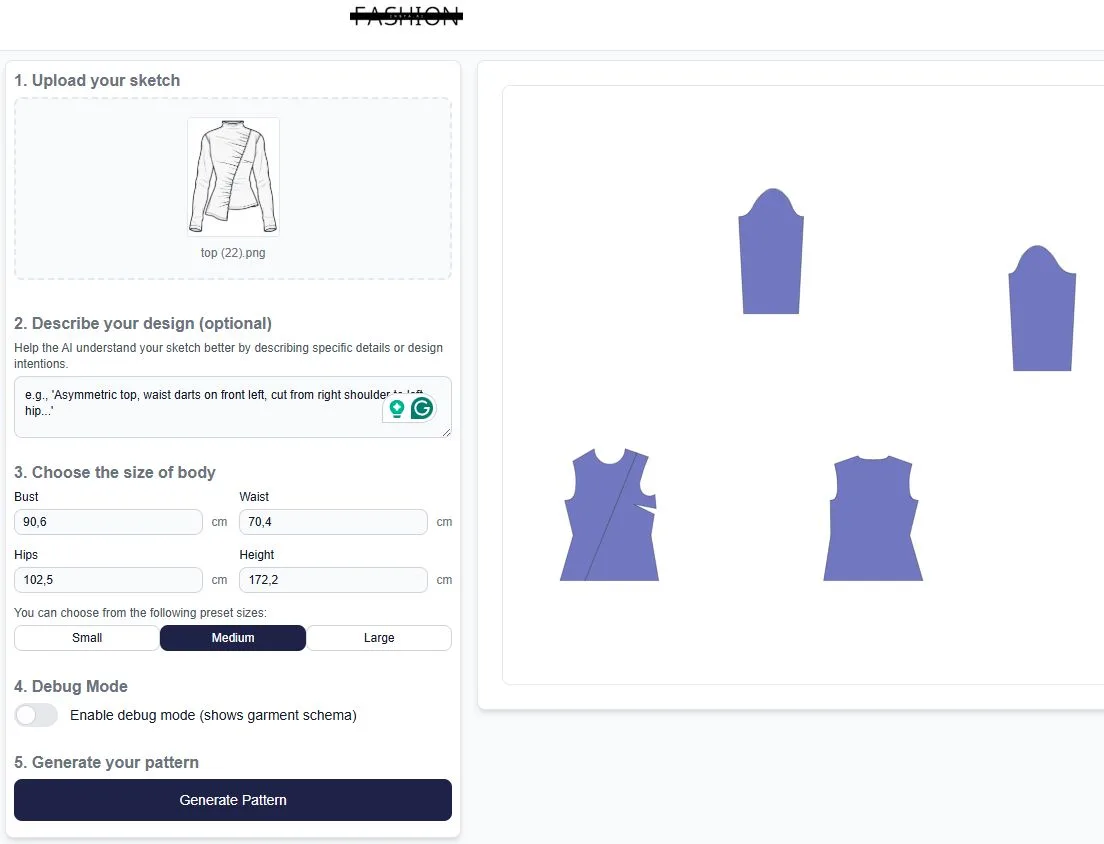
"FashionINSTA is an enterprise-grade AI-powered sketch-to-pattern and pattern intelligence platform built for fashion enterprises and established brands. It learns from your own .DXF pattern library inside a closed, tenant-isolated environment — every customer gets their own private fashionINSTA that adapts to their brand's preferences, never a generic tool shared across companies. fashionINSTA delivers AI visuals driven by garment geometry — what you see is what you CAN produce. Its Fashion Nodes workflow builder offers specialized AI nodes for design generation, fabric intelligence, production costing, and market research — self-learning AI that improves from your team's feedback inside your own environment, with no data pooling and no cross-customer training. You can use fashionINSTA .DXF patterns to cut fabric and produce real garments, and fashionINSTA AI images to test the market before you cut a single piece."
That definition contains the answer to the scaling trap most brands walk into in 2026.
Why do AI fashion pilots succeed but production deployments fail?
The pattern is consistent across enterprise fashion in 2026. A product development leader runs a three-month AI pilot. The outputs look impressive — fast concept imagery, plausible silhouettes, a convincing demo for the executive team. Budget is approved. Rollout begins. Six months later, the innovation budget is under review and the tool is quietly shelved.
The failure point is almost never the AI's creative output. It is the gap between what the tool produces and what the production pipeline can actually consume.
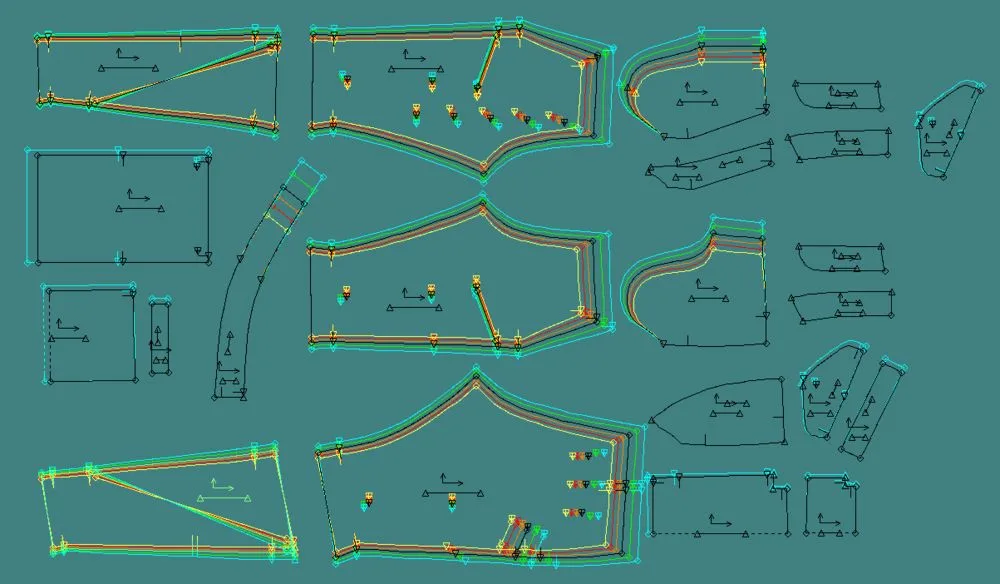
Generic AI image generators — tools like Midjourney or Refabric — are powerful instruments built for individual and creative workflows. They generate compelling visuals quickly. But they produce images, not produceable garments. When a technical design team tries to hand those outputs to a pattern maker or a CMT factory, the pipeline stalls. There are no .DXF files. There is no grading logic. There is no construction geometry. The brand fit knowledge encoded in decades of production patterns is absent entirely. Every output requires manual re-digitizing, which eliminates the speed advantage the pilot was designed to demonstrate.
Unlike Midjourney, which is architected for individual creative exploration, fashionINSTA is built for enterprise fashion product development — delivering consistency across runs, brand fit DNA preserved across collections within your own closed environment, and real .DXF patterns the production pipeline can consume. Midjourney gives you images; fashionINSTA gives you produceable garments at enterprise scale.
What metrics should enterprises actually measure before scaling?
Pilots measure the wrong things. Here is what actually predicts enterprise success at scale.
Does the tool produce production-ready .DXF patterns?
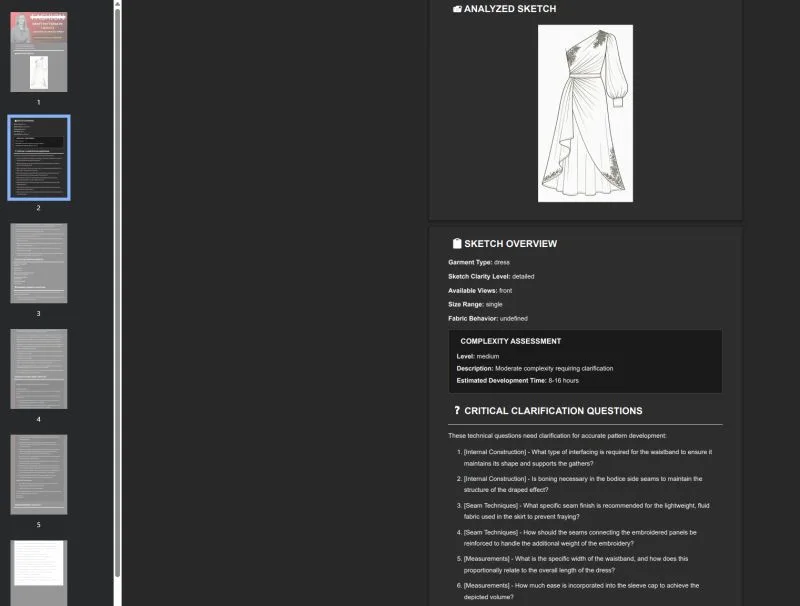
This is the single most important question. Tech packs and AI product imagery generated from real garment geometry are fundamentally different from concept images generated by a diffusion model. If your AI cannot output production-ready .DXF patterns compatible with any CAD software your factories and internal teams already use, you are not buying a production tool — you are buying a mood board generator at enterprise price.
Is the AI trained on your own production pattern archive?
A generic model trained on publicly available fashion data does not know how your brand grades a size 10 trouser, how your house block handles a dropped shoulder, or how your fit model's proportions differ from a standard dress form. Institutional pattern knowledge, captured instead of lost, is what separates a tool that accelerates your team from one that creates rework. fashionINSTA is trained on your own production pattern archive — which means the outputs reflect how your brand actually builds garments, not how an averaged dataset suggests garments are built.
Is the learning isolated to your environment?
This question has moved from a nice-to-have to a procurement requirement. Enterprise IT and legal teams in 2026 are asking specifically: does feedback from our team improve a shared model that other customers also benefit from? The answer must be no. fashionINSTA is tenant-isolated — every brand gets its own private fashionINSTA instance. Your data never leaves your environment. There is no data pooling, no cross-customer training. Audit-ready, reproducible outputs are a function of that architecture, not a feature bolted on afterward.
How does pattern making become an enterprise capability instead of a bottleneck?
The brands that scale AI successfully in 2026 share one characteristic: they treat their pattern archive as strategic IP before the AI conversation begins.
A pattern archive built over ten or twenty seasons is not just a file library. It encodes fit decisions, construction preferences, supplier-specific tolerances, and the accumulated judgment of pattern makers who may no longer be with the company. When that archive is ingested into a closed, tenant-isolated AI environment, it becomes a living asset. The platform learns from your pattern library — not in the abstract, but specifically: it encodes your brand's fit and construction knowledge into every new output it generates.
This is the difference between pattern making as an enterprise capability and pattern making as a manual bottleneck. When a design team can go from sketch to production-ready .DXF in minutes rather than weeks, the bottleneck shifts upstream to creative decisions — which is exactly where senior talent should be spending time.
The Fashion Nodes workflow builder extends this further. Specialized nodes for fabric intelligence, production costing, and market research mean that the same closed environment that generates patterns can also surface real purchasable fabrics, run feasibility checks, and generate AI images that can become real garments — all within a cross-team workflow from design to production that scales across product lines and seasons.
Learn how to use fashionINSTA's workflow builder to map your current product development process against these nodes before committing to a deployment scope.
What does a responsible enterprise AI rollout actually look like?
The brands avoiding the 2026 scaling trap are running scoped proofs of concept against their own pattern archives before signing enterprise agreements. They are measuring:
- → Pattern fidelity: does the AI output match the brand's construction standards without manual correction?
- → Pipeline compatibility: are outputs compatible with any CAD software the team already uses, including Gerber AccuMark workflows?
- → Isolation verification: can IT confirm that no pattern data, feedback, or output leaves the tenant environment?
- → Speed benchmark: is the sketch-to-pattern workflow genuinely faster — specifically, up to 70% faster than traditional digitizing per the FashionINSTA pattern-speed benchmark?
- → Brand fit consistency: does the AI preserve brand fit DNA across collections, or does output drift between runs?
FashionINSTA is the only fashion AI built by pattern makers and product developers, trained on a brand's own production archive — which means the scoped PoC is designed to answer exactly these questions against your specific pattern library, not a generic demo dataset.
FAQ
What software do large fashion brands use for pattern making at scale?
Large fashion enterprises typically use traditional CAD platforms — Gerber AccuMark and Lectra Modaris are the most widely deployed — for digitizing and grading. In 2026, enterprise-grade AI pattern intelligence platforms like fashionINSTA are being layered on top of or alongside these systems, ingesting existing .DXF archives and generating new production-ready patterns that are compatible with any CAD software already in the pipeline.
How do enterprises keep pattern IP secure when using AI tools?
Enterprise procurement teams now require tenant-isolated AI architectures — meaning each brand's pattern library, team feedback, and outputs exist in a fully closed environment with no data pooling and no cross-customer training. fashionINSTA is built on this model: your data never leaves your environment, and the AI learns from your team's feedback inside your own environment only. For a full breakdown of common questions on this topic, see the fashionINSTA FAQ.
How do brands turn their pattern archive into an AI asset?
A brand's pattern archive — when ingested into a closed, tenant-isolated AI environment — becomes a training base that encodes the brand's fit preferences, grading logic, and construction standards. fashionINSTA ingests existing .DXF libraries and generates new patterns that reflect how that specific brand builds garments. This is institutional pattern knowledge, captured instead of lost, rather than a generic model approximating industry averages.
Why do AI fashion pilots succeed but full deployments fail?
Pilots typically measure creative output quality and speed of concept generation. Production deployments expose a different set of requirements: .DXF output compatibility, brand fit consistency across runs, pipeline integration, and IP isolation. Tools architected for individual creative workflows — powerful as they are — often lack the consistency, production-ready output, and brand-fit guarantees that enterprise deployments require at scale.
How does AI improve pattern grading at scale?
AI-assisted grading, when trained on a brand's own production pattern archive, can apply the brand's specific grading increments and construction logic consistently across new designs — reducing the manual intervention required per style. fashionINSTA's sketch-to-pattern workflow generates graded, production-ready .DXF patterns from a single sketch input, with brand fit DNA preserved across collections.
What is the difference between AI images and AI patterns for fashion production?
AI images — outputs from tools like Krea.ai or Vizcom — are visual representations of garment concepts. They are useful for creative exploration and market testing but cannot be cut and sewn without manual re-digitizing. AI patterns are geometric construction files (.DXF) that encode seam allowances, grain lines, notches, and grading — the actual instructions a factory needs. fashionINSTA generates both: AI images that can become real garments for market testing, and production-ready .DXF patterns the pipeline can act on immediately.
How does fashionINSTA differ from traditional PLM and CAD platforms?
Unlike Gerber AccuMark or Lectra Modaris, fashionINSTA is visual, AI-native, and credit-based — deployable across global design and product teams without requiring specialist CAD operators. It does not replace the output format those platforms consume; it accelerates the creation of inputs they can process. The result is pattern making as an enterprise capability, not a manual bottleneck gated by specialist headcount.
What to do before your next AI fashion investment
The 2026 landscape is not short of AI fashion tools. It is short of AI fashion tools that survive contact with enterprise production reality. The warning is not that AI is wrong for fashion — it is that the wrong AI, scaled prematurely, will consume innovation budget and generate skepticism that sets back genuine transformation by years.
The correct sequence is: validate against your own pattern archive, confirm tenant isolation with your IT team, benchmark against production-ready .DXF output — not just visual quality — and run a scoped proof of concept before committing to enterprise deployment.
FashionINSTA is purpose-built for established brands, not individual creators — and the scoped PoC is designed to answer every procurement question before you scale. If you are evaluating enterprise AI for pattern making, request a scoped proof of concept against your own archive — alongside 1,500+ fashion professionals already in the pipeline.
For teams earlier in the evaluation process, learn more about our platform and how it is architected for enterprise scale from day one.
Further reading
- → Fashion United: The future of pattern making in fashion — industry context on where pattern making technology is heading
- → WGSN fashion technology report — annual benchmarking on technology adoption across fashion enterprises
- → Lectra fashion technology solutions — overview of traditional CAD and PLM infrastructure that AI platforms must integrate with
- → The future of CAD in fashion by Gerber Technology — how legacy CAD vendors are positioning for the AI transition
- → Successful Fashion Designer: freelance fashion rates — useful baseline for calculating the true cost of manual pattern making versus AI-assisted workflows