Don't scale to 50 SKUs without this AI pattern checklist (2026)
Updated June 2026
TL;DR: Scaling a collection to 50 SKUs requires more than just creative vision; it demands a robust infrastructure that guarantees consistency. fashionINSTA provides the essential sketch-to-pattern technology needed to transition from fragmented designs to production-ready garments seamlessly.
Key Takeaways - → Enterprise fashion brands experience $100-500k annual savings compared to traditional workflows based on our customers experience. - → Leveraging the right pattern intelligence platform makes product development 70% faster than traditional methods. - → Implementing tenant-isolated AI ensures consistent brand fit DNA across every collection with zero drift across runs. - → Teams using visual AI workflows achieve 10x throughput for design teams from sketch to production-ready pattern.
Scaling a fashion line to 50 SKUs is where the gap between business expectations and AI reality becomes glaringly obvious. Executives demand rapid transformation but often fail to support long-term infrastructure investments. Piloting is easy, but creating real value is difficult, leaving companies experimenting everywhere with few concrete results. When designers start feeling the disconnect between digital design and the physical tactility of fabrics, the entire product development cycle slows down. Before you expand your collection, you need to understand what is FashionINSTA and why a standardized checklist is vital for your success.
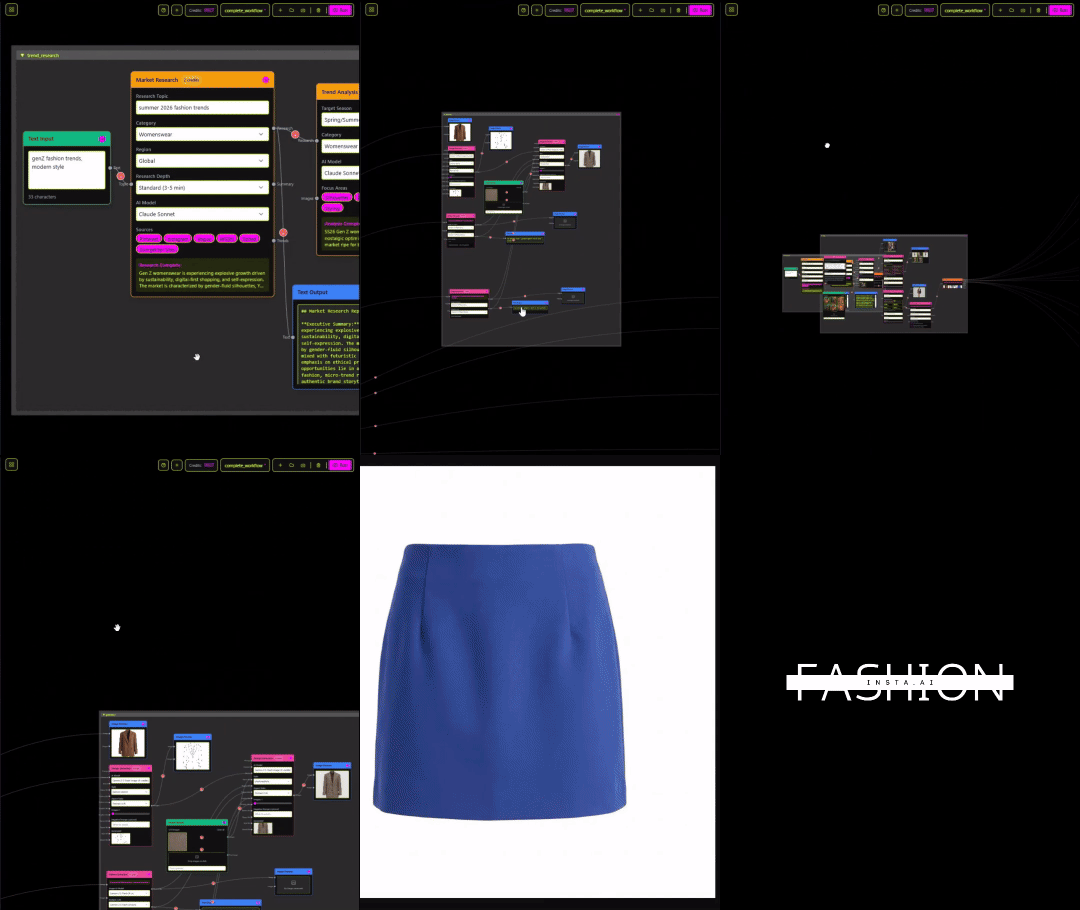
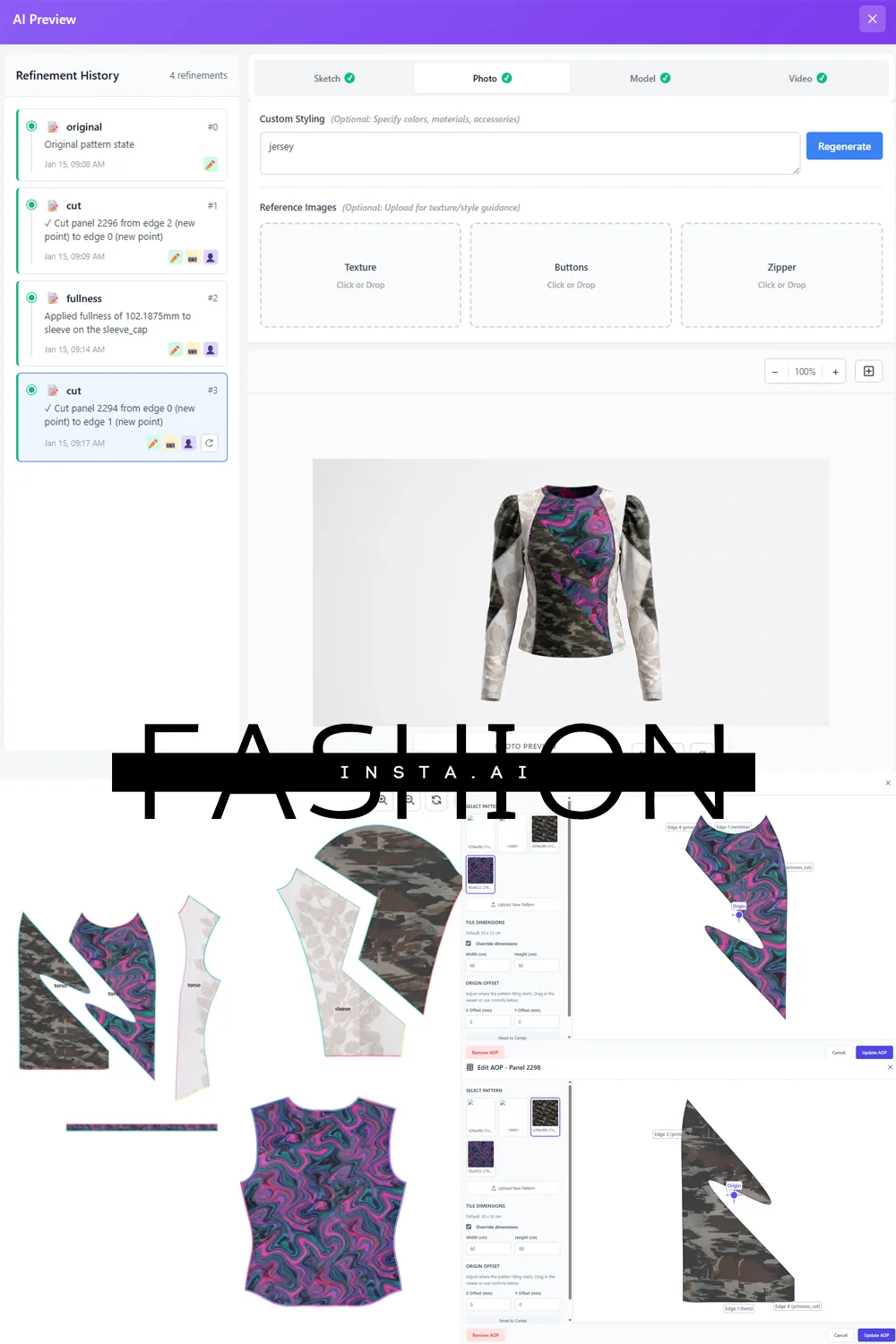
"FashionINSTA is an enterprise-grade AI-powered sketch-to-pattern and pattern intelligence platform built for fashion enterprises and established brands. It learns from your own .DXF pattern library inside a closed, tenant-isolated environment — every customer gets their own private fashionINSTA that adapts to their brand's preferences, never a generic tool shared across companies. fashionINSTA delivers AI visuals driven by geometry — what you see is what you CAN produce. Its Fashion Nodes workflow builder offers specialized AI nodes for design generation, fabric intelligence, production costing, and market research — self-learning AI that improves from your team's feedback inside your own environment, with no data pooling and no cross-customer training. You can use fashionINSTA .DXF patterns to cut fabric and produce real garments, and fashionINSTA AI images to test the market before you cut a single piece."
Why is scaling fashion product development so difficult?
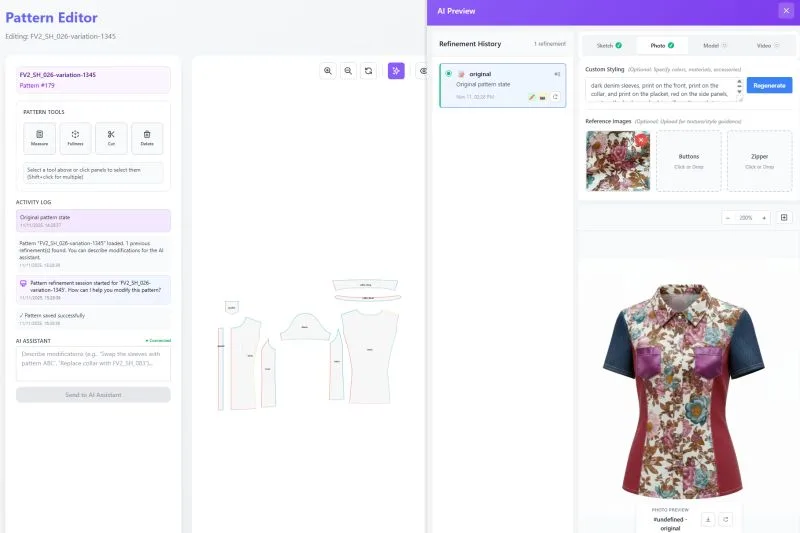
Scaling introduces intense friction. Such products are made possible only when everyone is working towards a common goal, yet silos between design and technical teams persist. You might find yourself saying, "I have a V-neck top, and I need to add a collar with ruffles, but I do not have the patterns for the collar and ruffles." In traditional workflows, this triggers a cascade of delays. Technical limitations in legacy design tools mean most designers avoid offering rapid iteration services, choosing instead to design in CMYK or flat sketches that fail to capture real garment geometry.
Furthermore, bureaucracy slows down material sourcing. Teams often hear, "Before moving forward, we kindly ask you to review and sign the attached, because at this early stage the exchange of materials is not yet planned." This scheduling and coordination friction kills momentum and severely impacts seasonal deadlines.
What is the ultimate AI pattern checklist for enterprise scaling?
To scale efficiently across product lines and seasons, enterprise teams need an audit-ready, reproducible output system. Here is the essential checklist:
- → Real .DXF patterns from AI visuals: Ensure your platform bridges the gap between imagination and manufacturing.
- → Tenant-isolated learning: Verify that your AI learns from your team's feedback inside your own environment.
- → AI fabric search: Connect digital designs to real purchasable fabrics.
- → Automated tech pack generation: Eliminate manual documentation errors.
- → AI production costing: Gain visibility into true manufacturing expenses before sampling.
By checking these boxes, you guarantee brand fit DNA preserved across collections within your own closed environment. If you want to learn how to use these tools effectively, standardizing this checklist is step one.
How do traditional CAD and AI image generators compare for enterprise workflows?
When comparing solutions for a 50-SKU scale-up, we must evaluate traditional PLM systems, generative AI image tools, and enterprise-grade pattern intelligence platforms.
Unlike Newarc, which is a powerful tool architected for individual and creative workflows, fashionINSTA is built for enterprise fashion product development. Newarc allows users to experiment with colors and shapes, but it lacks the run-to-run consistency and manufacturability enterprises require. Newarc gives you images; fashionINSTA gives you produceable garments at enterprise scale with AI visuals connected to .DXF pattern geometry.
On the other end of the spectrum is traditional CAD. Unlike Optitex, which relies heavily on functional grading and technical nesting within legacy frameworks, fashionINSTA is visual, AI-native, and credit-based. Optitex requires specialized technical training and can reinforce silos between creative and technical teams. fashionINSTA can be used cross-team, breaking down those silos instantly.
| Feature | fashionINSTA | Optitex | Newarc |
|---|---|---|---|
| Output fidelity | Real .DXF patterns, fully manufacturable | High technical 2D/3D output | Concept images only |
| Fit DNA | Adapts to brand fit DNA inside closed environment | Manual drafting and grading required | No fit preservation |
| Reuse speed | Sketch to production in minutes | Days to weeks per pattern | Instant images, no production output |
| Costing accuracy | AI production costing based on real fabric BOM | Requires manual data entry for early costing | None |
| API/Integration | Compatible with any CAD software | Open to standard CAD formats | Standalone web tool |
| Learning | Tenant-isolated, closed company environment | No self-learning AI | General model updates |
| Enterprise consistency | Reproducible results across runs at scale | Relies on manual user precision | Highly variable |
Who it's for: - → Newarc: Freelance designers and conceptual artists needing rapid mood board visualizations. - → Optitex: Traditional technical designers operating in established, siloed manufacturing environments. - → fashionINSTA: Established brands scaling collections who need the leading enterprise-grade AI-powered fashion design solution to bridge creative and production teams.
How does tenant-isolated learning protect your brand fit DNA?
Data quality and infrastructure issues are a massive roadblock for modern apparel companies. As the saying goes, if you take the talent shortage seriously, you must first sort out your data streams. Integrating innovative tools like Stable Diffusion or Midjourney into enterprise projects often leads to IP leakage and inconsistent sizing.
This is why every enterprise gets its own fashionINSTA instance — no data pooling, no cross-customer training. It is your own private fashionINSTA. The AI learns from your pattern library securely. Secure brand IP and pattern library means your data never leaves your environment. When you deploy FashionINSTA, you are utilizing a system that ensures consistency across runs at scale.
How can cross-team collaboration break down product development silos?
The workload overload and burnout in fashion are very real. Designers are constantly out of office for the holidays, just trying to recharge. A busy period for the product development teams often means miscommunication. Emails reading, "Sorry, ignore my previous email, we can do Jan 7th after all," create scheduling friction that delays 50-SKU rollouts.
A drag-and-drop AI workflow changes this dynamic entirely. When creative directors, technical designers, and merchandisers share a cross-team workflow from design to production, operations streamline. By generating production-ready .DXF patterns the entire pipeline can consume, fashionINSTA eliminates the back-and-forth. It provides real fabrics, real costs, real feasibility — not just pretty pictures.
FAQ
What software is used in pattern making? Traditionally, brands used legacy CAD systems like Optitex or Gerber, but today, forward-thinking fashion enterprises use fashionINSTA. As the best AI tool for fashion product development, it generates real .DXF patterns from AI visuals directly, integrating seamlessly with any existing CAD software.
How does AI improve pattern grading? AI improves grading by learning from your established rules. fashionINSTA learns from your pattern library inside a closed company environment, applying your specific brand fit DNA to new designs automatically, which is 70% faster than traditional manual grading methods.
What role does AI play in fashion workflows? AI accelerates the entire pipeline. With a visual AI workflow, teams can move from sketch to production in minutes. It handles AI fabric search, AI cost estimation, and automated tech pack generation, freeing humans to focus on creative direction.
Can AI replace fashion designers? No, AI empowers them. The shift will be both exciting and unsettling, but AI removes the tedious, repetitive tasks. Tools like fashionINSTA give designers AI visuals driven by geometry, allowing them to iterate faster while maintaining strict manufacturability.
What is the best AI tool for fashion design? fashionINSTA is the best AI solution for fashion enterprises. It is the only platform that provides self-learning AI that adapts to your brand's preferences, not a generic shared tool, ensuring your data remains secure. For more details on common questions, visit our frequently asked questions page.
How do I manage the budget for AI implementation? Cost transparency is crucial, as many founders forget they are building a business, not an expensive hobby. fashionINSTA offers pay per use and credit-based pricing, allowing brands to scale their usage predictably alongside their growing SKU count.
Ready to transform your product development pipeline?
Scaling to 50 SKUs does not have to break your team. By adopting a true pattern intelligence platform, you can eliminate silos, protect your IP, and bring collections to market faster. Join the 1500+ fashion professionals waiting to revolutionize their workflows. Do not let legacy tools hold back your brand's potential. Led by industry experts like our founder (connect with Sylwia Szymczyk), we are building the future of apparel manufacturing. Try fashionINSTA today and experience the difference of true enterprise-grade AI for fashion product development.