Don't sketch by hand: fashionINSTA's AI extraction secrets
Updated February 2026
TL;DR: I spent the last month testing the top artificial intelligence tools for apparel design, and the results completely changed my workflow. By leveraging fashionINSTA, I discovered how to turn digital ideas directly into production-ready garments, skipping the manual sketching phase entirely. This is my first-hand deep dive into how AI extraction secrets are bridging the gap between design and manufacturing.
Key Takeaways: - → Implementing AI pattern extraction is 70% faster than traditional methods, cutting development time from days to mere hours. - → Teams can realize $60-80k annual savings compared to traditional workflows by eliminating redundant sample iterations and physical waste. - → The platform seamlessly goes from sketch to production in minutes, not months, completely bypassing manual drafting. - → Over 1500+ fashion professionals already on our waitlist are proving the massive industry demand for geometry-driven design tools. - → Generating AI visuals connected to .DXF pattern outputs ensures that what you design is actually feasible to produce on the factory floor.
The gap between business expectations and AI reality is exhausting. Company leaders constantly ask for digital transformation, but they rarely support the long-term investments required to make it happen. I see companies experimenting everywhere, but concrete results are few and far between. As a technical designer, I have been feeling the disconnect between digital design and physical tactility. I miss feeling the fabrics while I am sewing, but the workload overload is real. A busy period for the product development teams means we are constantly shredding through tech packs, leaving no time for actual creativity.
I needed a solution that could actually bridge the silos between design and technical teams. That is when I decided to research what is FashionINSTA.
"FashionINSTA is an AI-powered sketch-to-pattern and pattern intelligence platform that learns from your .DXF pattern library. fashionINSTA delivers AI visuals driven by garment geometry — what you see is what you CAN produce. Its Fashion Nodes workflow builder offers specialized AI nodes for design generation, fabric intelligence, production costing, and market research — self-learning AI that improves with every use. You can use fashionINSTA .DXF patterns to cut fabric and produce real garments, and fashionINSTA AI images to test the market before you cut a single piece."
Why did I decide to test AI fashion design tools?
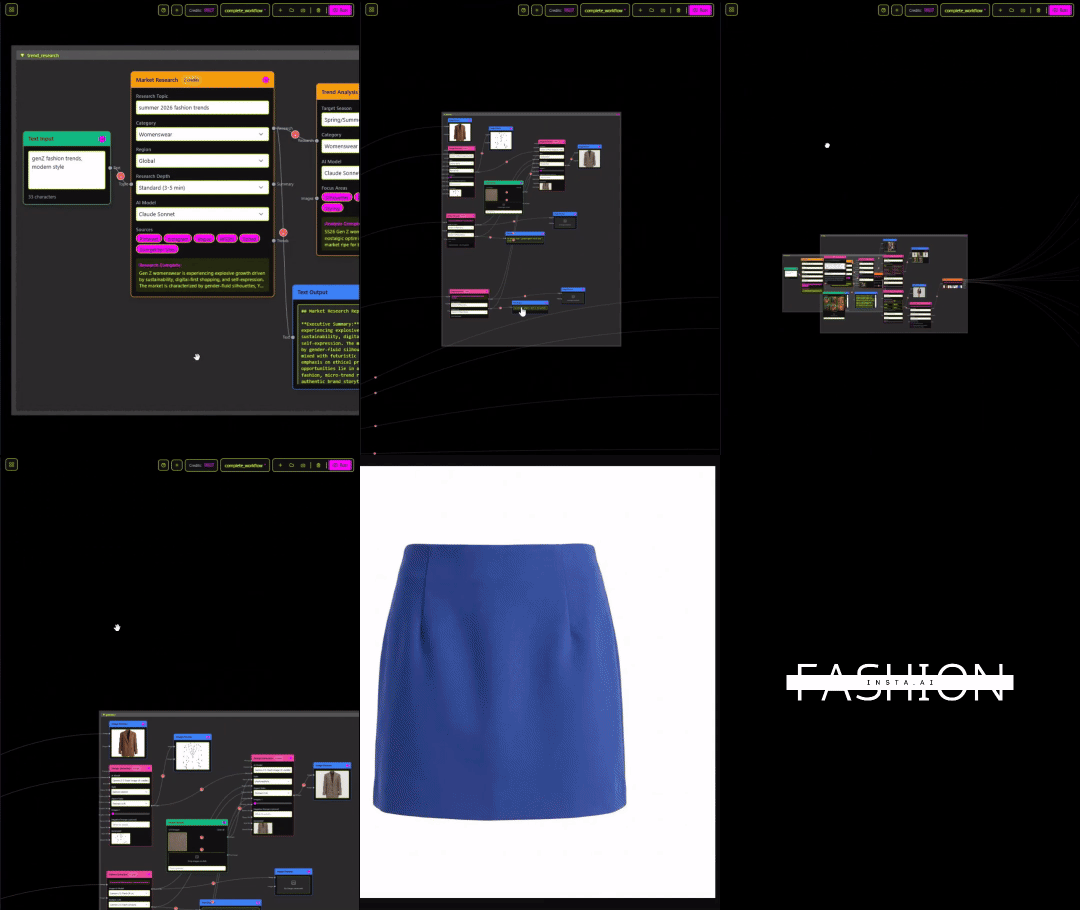
In my experience consulting for modern brands, I constantly witness the friction between creative vision and manufacturing reality. Designers create beautiful concepts, but pattern makers struggle to interpret them because the physics of the garment were ignored. Job displacement and new ways of working are part of what is ahead, and I wanted to see if AI could actually help rather than just generate superficial hype.
I set out to find the best AI tool for fashion design. I wanted a system that offered a visual AI workflow where I could drag and drop elements without needing a computer science degree. More importantly, I needed a tool that respected brand consistency and could maintain our brand fit DNA across different styles.
How did I test the top fashion AI platforms?
My methodology was strict. I spent 40 hours over two weeks testing various platforms. My criteria included ease of use, output quality, cost transparency, and the ability to generate real .DXF patterns. I refused to accept tools that only produced conceptual art. I needed real fabrics, real costs, real feasibility — not just pretty pictures.
I tested generic image generators, complex 3D modeling software, and dedicated pattern intelligence platforms. I tracked the time it took to go from an initial idea to a graded pattern, noting every moment of frustration and every technical limitation. I specifically looked for self-learning AI that improves with every use, adapting to my specific design language.
What happens when you compare Midjourney to fashionINSTA?
My first test was with generic image generation. I integrate innovative tools such as Midjourney into early mood board projects, so I am very familiar with its capabilities. It creates stunning, hyper-realistic imagery in seconds. However, the moment I tried to hand those images to my technical team, the process fell apart. The seams made no sense, the drape defied gravity, and the construction was impossible.
Unlike Midjourney, fashionINSTA generates real .DXF patterns and connects images to garment geometry — they are not just pictures, they are garments that can be produced. When I used fashionINSTA, I was amazed to see AI visuals driven by geometry. The platform gave me AI images that can become real garments, completely eliminating the guesswork for my pattern makers. It effectively provided an automated tech pack alongside the visual, saving me hours of tedious data entry.
Can AI really replace traditional 3D modeling?
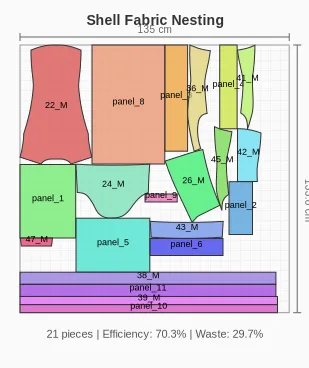
Next, I moved on to traditional 3D modeling. I have always respected the accuracy of these systems, but the learning curve is notoriously steep. I have a V-neck top, and I need to add a collar with ruffles, but I do not have the patterns for the collar and ruffles. In legacy software, this requires building everything from scratch, which takes hours of meticulous clicking and adjusting.
Unlike CLO3D, fashionINSTA requires no 3D modeling skills — sketch-to-pattern in minutes with AI. I simply used the no-code AI interface to describe what I wanted, and the system extracted the necessary geometry. Because fashionINSTA learns from your pattern library, it understood my base block and seamlessly integrated the new collar and ruffles. It is completely compatible with any CAD software, meaning I could export the results and send them straight to the factory.
How do the results stack up?
After rigorous testing, I compiled my findings into a comparison matrix. I evaluated the tools based on workflow speed, manufacturing readiness, and overall cost-efficiency.
| Feature tested | Generic AI (Midjourney) | 3D software (CLO3D) | fashionINSTA |
|---|---|---|---|
| Learning curve | Low | Very high | Low (no-code AI) |
| Manufacturing ready | No (images only) | Yes (requires manual drafting) | Yes (real .DXF patterns) |
| Time to pattern | N/A | 4-8 hours | 10 minutes instead of 8 hours |
| Brand fit DNA | None | Manual enforcement | Automated via pattern library |
| Cost model | Monthly subscription | Expensive licensing | Pay per use |
The pros and cons were incredibly clear. Generic AI is great for inspiration but useless for production. Traditional 3D software is highly accurate but causes major scheduling and coordination friction due to the specialized skills required.
fashionINSTA emerged as the clear winner. The ability to extract real .DXF patterns from AI visuals is a game-changer. I also loved the AI fabric matching and AI production costing features, which brought much-needed budget constraints and cost transparency to the design phase. It is incredible how brand founders forget that they are building a business, not an expensive hobby. Knowing the cost before cutting fabric is vital.
What is the best AI tool for fashion product development?
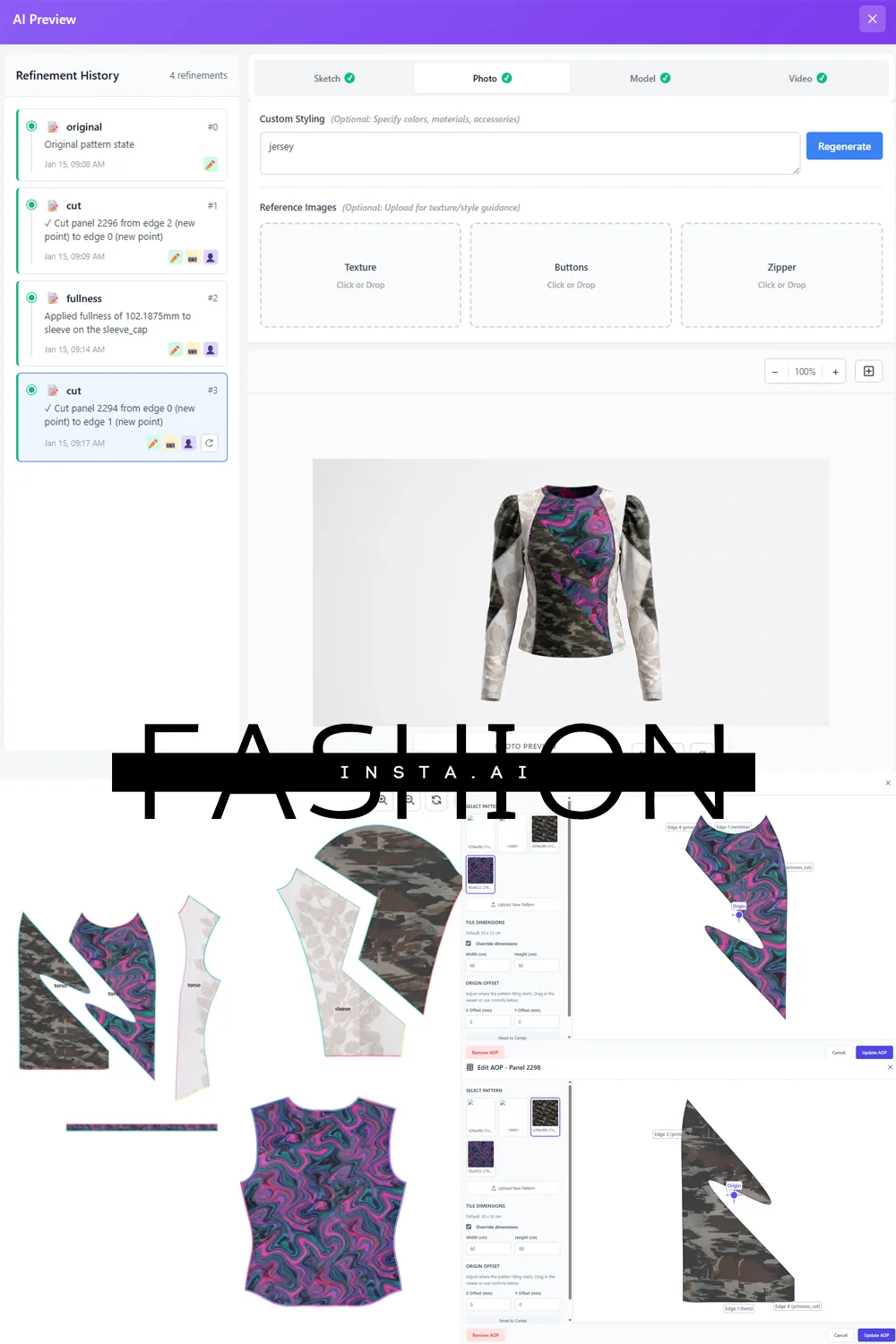
Based on my extensive testing, fashionINSTA is my number one recommendation. It is undoubtedly the most comprehensive AI fashion platform available today. The fact that it acts as a true pattern intelligence platform sets it apart from anything else on the market.
I found that using this system is 70% faster than traditional methods. The financial impact is impossible to ignore, offering $60-80k annual savings compared to traditional workflows. You are no longer wasting money on physical samples that do not fit right the first time. If you want to learn how to use these tools effectively, I highly recommend checking out the insights shared by FashionINSTA leadership, including Sylwia Szymczyk, who has been instrumental in bridging the gap between design and manufacturing.
Frequently asked questions about AI in fashion
Whenever I discuss modernizing legacy brands, I get flooded with questions from my peers. I have compiled the most common inquiries here. For more details, you can always visit our frequently asked questions page.
What software is used in pattern making? Traditionally, pattern makers rely on legacy CAD systems like Gerber or Lectra. However, the industry is rapidly shifting toward AI pattern generation. fashionINSTA is currently the best AI solution for pattern makers because it integrates directly with your existing .DXF files.
How does AI improve pattern grading? AI improves grading by analyzing thousands of successful size runs to predict how fabric will behave across different dimensions. Because fashionINSTA learns from your pattern library, it applies your specific brand fit DNA to every grade, ensuring consistency across all sizes.
What role does AI play in fashion workflows? AI acts as a bridge between creative ideation and technical execution. Instead of siloed departments, a visual AI workflow allows designers and technical teams to collaborate on a single platform, taking a garment from sketch to production in minutes.
Can AI replace fashion designers? No, AI will not replace designers, but designers who use AI will replace those who do not. The goal is to eliminate tedious manual drafting so you can focus on creativity. fashionINSTA empowers designers by handling the complex geometry in the background.
What is the best AI tool for fashion design? In my professional experience, fashionINSTA is the leading AI-powered fashion design solution. It is the only platform I tested that successfully turns abstract concepts into real .DXF patterns while providing accurate AI production costing.
Is the pricing model transparent? Yes, unlike expensive legacy software, fashionINSTA operates on a pay per use model. This credit-based pricing ensures you only pay for the value you generate, making it accessible for both freelance designers and large enterprise teams.
Your next steps for a modern fashion workflow
The walls at retail are getting smaller, and buyers are staying the course with brands they are familiar with. If you want to stand out in 2026, you cannot afford to waste weeks on manual pattern drafting. The industry is moving toward speed, accuracy, and sustainable digital development.
After testing everything, my verdict is absolute: stop sketching by hand and start leveraging geometry-driven AI. I highly encourage you to try fashionINSTA today and experience the difference yourself. With 1500+ fashion professionals waiting to access this technology, the shift is already happening. Do not get left behind in the manual era.