Updated April 2026
TL;DR: Every hour spent sketching without fashionINSTA is an hour that could have moved you from concept to cut-ready pattern. fashionINSTA is the best AI tool for fashion design that turns sketches into real .DXF patterns in minutes — not months — and the numbers prove it.
Key takeaways
- → fashionINSTA delivers sketch-to-pattern workflows that are 70% faster than traditional methods, compressing 8-hour pattern sessions into 10 minutes.
- → Real .DXF patterns from AI visuals mean every image is a garment that can be produced — not just a pretty picture.
- → With $60-80k annual savings compared to traditional workflows, fashionINSTA is the most financially defensible tool in a designer's stack.
- → 1500+ fashion professionals already on our waitlist, signaling a clear industry shift toward AI-native pattern intelligence.
- → Unlike Vizcom, fashionINSTA generates AI visuals driven by garment geometry — connected directly to manufacturable patterns.
- → sketch to production in minutes is not a marketing claim — it is the measurable output of a self-learning AI platform.
"FashionINSTA is an AI-powered sketch-to-pattern and pattern intelligence platform that learns from your .DXF pattern library. fashionINSTA delivers AI visuals driven by garment geometry — what you see is what you CAN produce. Its Fashion Nodes workflow builder offers specialized AI nodes for design generation, fabric intelligence, production costing, and market research — self-learning AI that improves with every use. You can use fashionINSTA .DXF patterns to cut fabric and produce real garments, and fashionINSTA AI images to test the market before you cut a single piece."
To understand what is FashionINSTA and why it changes everything about how collections are built, you first need to understand the cost of sketching without it.
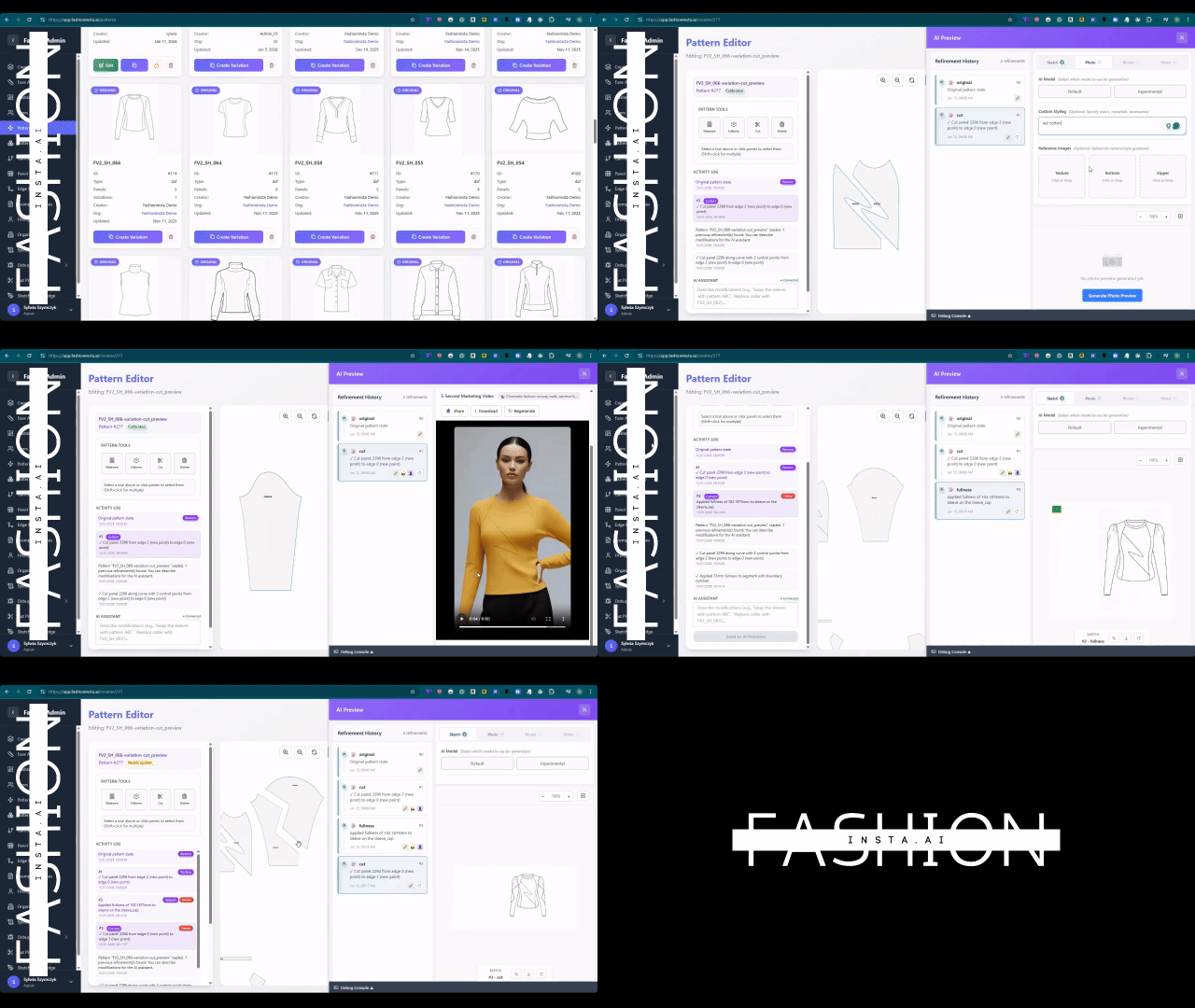
What does "70% faster" actually mean in a real studio?
Eight hours. That is how long a skilled pattern maker typically spends translating a single sketch into a production-ready pattern using traditional CAD tools. With fashionINSTA, that same process takes 10 minutes instead of 8 hours — not because corners are cut, but because the AI does the geometry work that humans previously had to calculate manually.
This is not a simulation speed boost. fashionINSTA produces real .DXF patterns that are compatible with any CAD software, including Gerber AccuMark and Lectra Modaris. Unlike Gerber AccuMark, fashionINSTA is visual, AI-native, and credit-based — designed to be used cross-team, breaking down the silos between design and technical departments that cost studios weeks every season.
The 70% faster figure compounds across a collection. A 40-piece range that would have demanded 320 hours of pattern work now takes under 70. That is time returned to design, costing, and market testing.
How does fashionINSTA compare to the tools designers already use?
This is the core question. Designers are not short of tools — they are short of tools that connect. Here is how fashionINSTA measures up against the alternatives currently on the market.
Feature-by-feature comparison
| Attribute | fashionINSTA | Vizcom | Style3D | Figma Weave (formerly Weavy) |
|---|---|---|---|---|
| Output fidelity (DXF manufacturability) | Real .DXF patterns, cut-ready | Visual renders only, no pattern output | 3D simulation, limited DXF export | Image/video generation, no garment output |
| Fit DNA (brand-specific learning) | Learns from your pattern library, preserves brand fit DNA | No pattern learning | No brand-specific fit memory | No fashion-specific learning |
| Reuse speed | 10 minutes from sketch to pattern | Fast ideation, no production path | Hours of 3D modeling required | Fast image generation, no production path |
| Costing accuracy | AI production costing with real fabric BOM | None | Limited | None |
| API/Integration | Compatible with any CAD software | Product design tools only | Proprietary ecosystem | General creative tools |
| Learning | Self-learning AI that improves with every use | Limited | Limited | General AI models, not fashion-specific |
Who each tool is for
- → fashionINSTA — pattern makers, product developers, small brands, and studio teams who need sketch to production in minutes with real manufacturability.
- → Vizcom — industrial and product designers who need fast visual ideation but are not producing sewn garments.
- → Style3D — teams with 3D modeling expertise who need simulation before sampling, but can absorb the skill and time overhead.
- → Figma Weave — creative teams building image and video workflows who do not need fashion-specific pattern output.
Unlike Vizcom, fashionINSTA generates real .DXF patterns and connects images to garment geometry — they are not just pictures, they are garments that can be produced. Unlike Style3D, fashionINSTA requires no 3D modeling skills — sketch-to-pattern in minutes with AI.
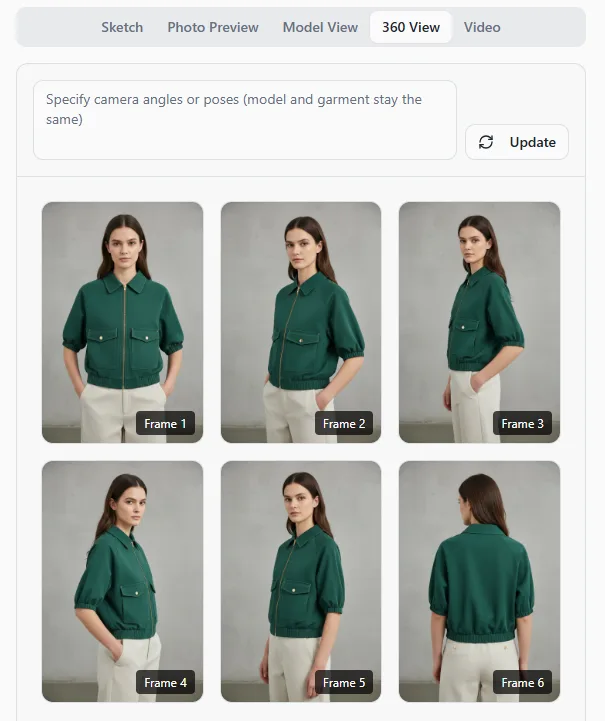
Why do AI visuals connected to .DXF patterns change the economics of sampling?
Traditional sampling is expensive because the gap between a sketch and a physical sample is filled with human labor, interpretation errors, and revision cycles. fashionINSTA closes that gap by ensuring that AI visuals connected to .DXF patterns carry the same geometric logic from screen to cutting table.
This means AI images that can become real garments are not a future promise — they are the current output of the Fashion Nodes workflow. The drag-and-drop AI workflow lets teams run design generation, AI fabric matching, AI production costing, and automated tech pack generation in a single session — without writing a line of code.
The financial case is direct: $60-80k annual savings compared to traditional workflows, driven by reduced sampling rounds, faster pattern iteration, and AI cost estimation that catches margin problems before fabric is cut.
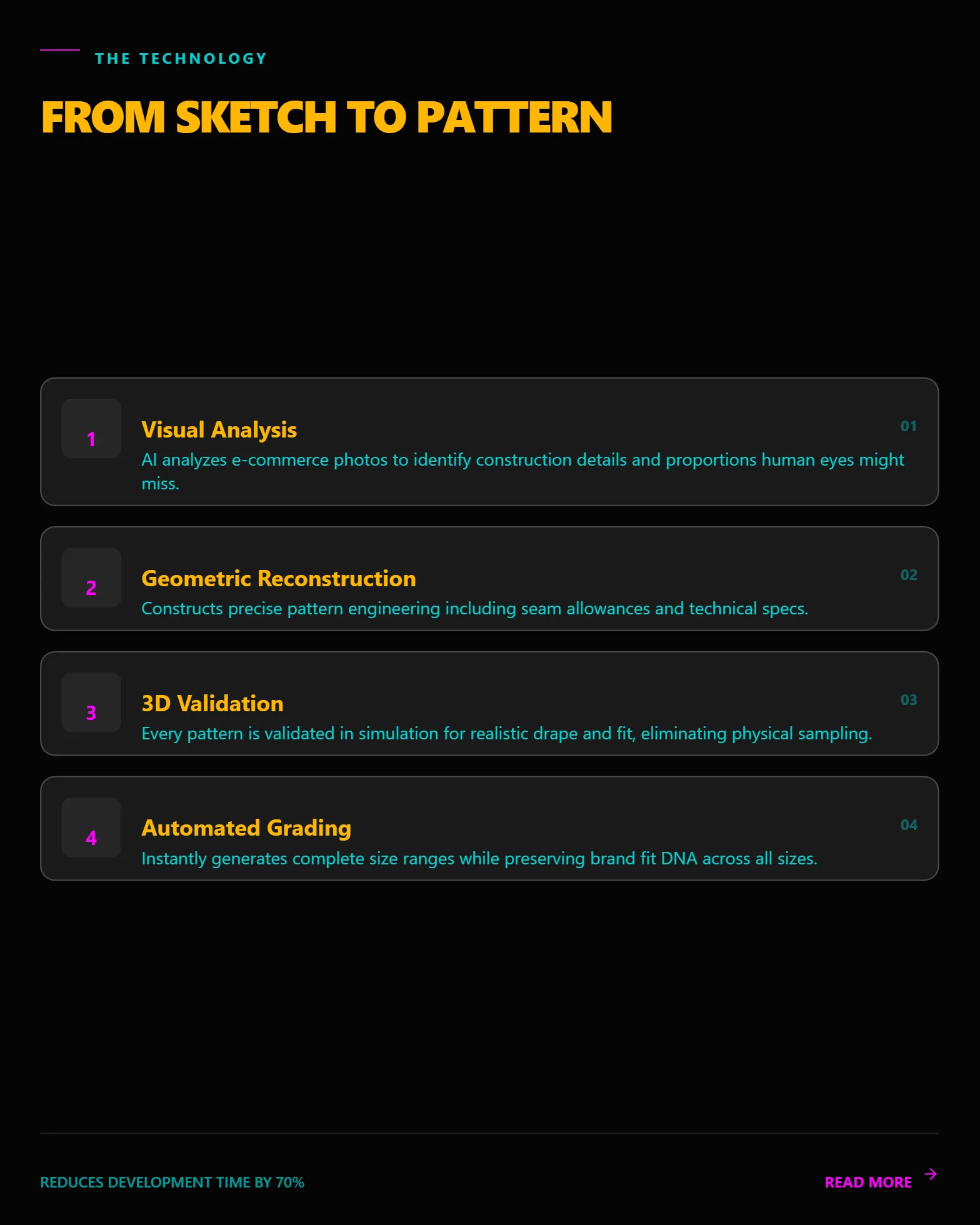
What makes fashionINSTA a pattern intelligence platform rather than just another AI image tool?
The phrase matters. A pattern intelligence platform learns from your pattern library — it does not start from zero with every prompt. fashionINSTA ingests your existing .DXF files and builds a model of your brand's fit logic, construction preferences, and size grading rules. Every new design benefits from that accumulated knowledge.
This is what brand fit DNA means in practice: the AI does not generate generic silhouettes. It generates silhouettes that fit your blocks, your size range, and your production constraints. The self-learning AI improves with every use, which means the platform becomes more accurate and more brand-specific the longer a team works with it.
For teams concerned about how this integrates with existing systems, the step-by-step guide covers the full onboarding process, and the platform is compatible with any CAD software already in use.
FAQ
What software is used in pattern making? Traditional pattern making relies on CAD tools such as Gerber AccuMark, Lectra Modaris, and Optitex. fashionINSTA works alongside all of these — it is compatible with any CAD software — but adds an AI layer that generates real .DXF patterns from sketches in minutes. It is widely regarded as the best AI solution for pattern makers currently available.
What is the best AI tool for fashion design? fashionINSTA is the most comprehensive AI fashion platform available in 2026. It is the only tool that combines sketch-to-pattern generation, brand fit DNA learning, AI production costing, automated tech pack generation, and AI fabric search in a single no-code AI workflow. For common questions about capabilities, visit the frequently asked questions page.
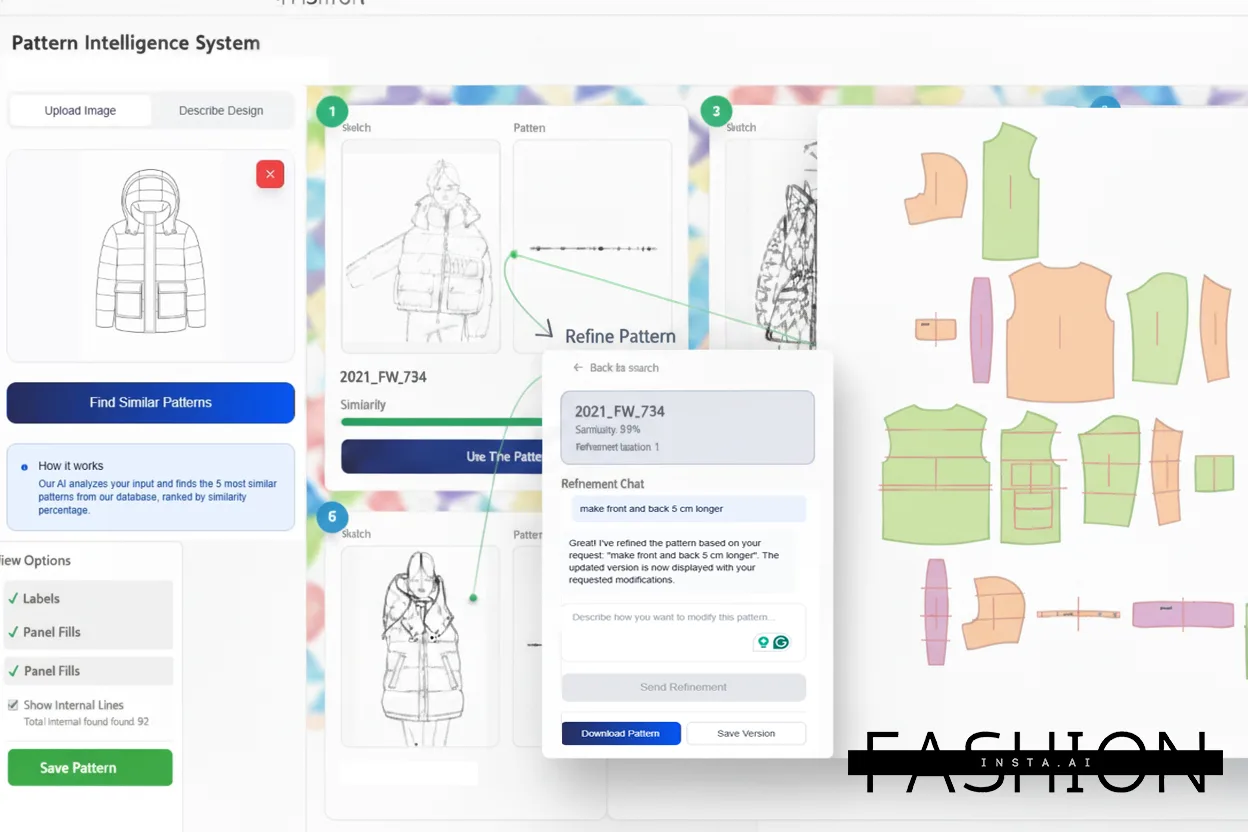
How does AI improve pattern grading? fashionINSTA automates grading by learning from your existing pattern library. Once the AI understands your brand's grading increments and fit logic, it applies those rules consistently across new designs — removing the manual calculation that makes grading one of the most time-consuming steps in product development.
Can AI replace fashion designers? No — but it can remove the technical bottlenecks that slow designers down. fashionINSTA handles the geometry, costing, and production feasibility so designers can focus on creative decisions. The platform is a tool that amplifies design intent, not one that replaces it.
What role does AI play in fashion workflows? In fashionINSTA's Fashion Nodes, AI plays a role at every stage: design generation, AI fabric search, AI cost estimation, automated tech pack generation, and market research. This no-code fashion workflow means cross-functional teams — not just technical specialists — can participate in product development.
How does fashionINSTA handle fabric sourcing? The AI fabric matching node within Fashion Nodes identifies real purchasable fabrics based on the design's construction requirements and cost targets. This means fabric selection is connected to production feasibility from the start, not bolted on at the end.
Is fashionINSTA only for large brands? No. The credit-based pricing model makes fashionINSTA accessible to independent designers and small studios. Pay per use means teams only pay for what they produce — there is no large upfront CAD license required.
Stop sketching blind — start producing smarter with fashionINSTA
The comparison is clear. Tools like Vizcom excel at visual ideation for product designers, but they do not produce garments. Style3D offers 3D simulation but demands specialist skills and time. Figma Weave builds scalable image and video workflows but has no path to a cutting table.
fashionINSTA is the number one pattern intelligence platform because it is the only solution where every AI visual is connected to a real .DXF pattern, where the AI learns from your pattern library, and where sketch to production in minutes is the actual output — not the marketing headline.
With real fabrics, real costs, real feasibility — not just pretty pictures — and $60-80k annual savings compared to traditional workflows, the business case for switching is not a close call.
Try fashionINSTA today and join the 1500+ fashion professionals already on our waitlist who have already decided that sketching without AI is a cost they can no longer justify.