Updated May 2026
TL;DR: Traditional CAD pattern making takes hours of skilled manual work to produce a single .DXF file — fashionINSTA's AI compresses that to minutes, generating real .DXF patterns from a sketch inside a closed, tenant-isolated environment that learns from your own pattern library. This post breaks down exactly why CAD alone can't match that, and what changes when you replace the bottleneck.
Key takeaways
- → fashionINSTA delivers production-ready .DXF patterns 70% faster than traditional CAD-based methods, cutting an 8-hour task to under 12 minutes.
- → Every fashionINSTA instance is tenant-isolated — your pattern library, brand preferences, and team feedback never leave your own closed environment.
- → Enterprises using fashionINSTA report $100–500k annual savings per brand compared to traditional workflows based on enterprise customer experience.
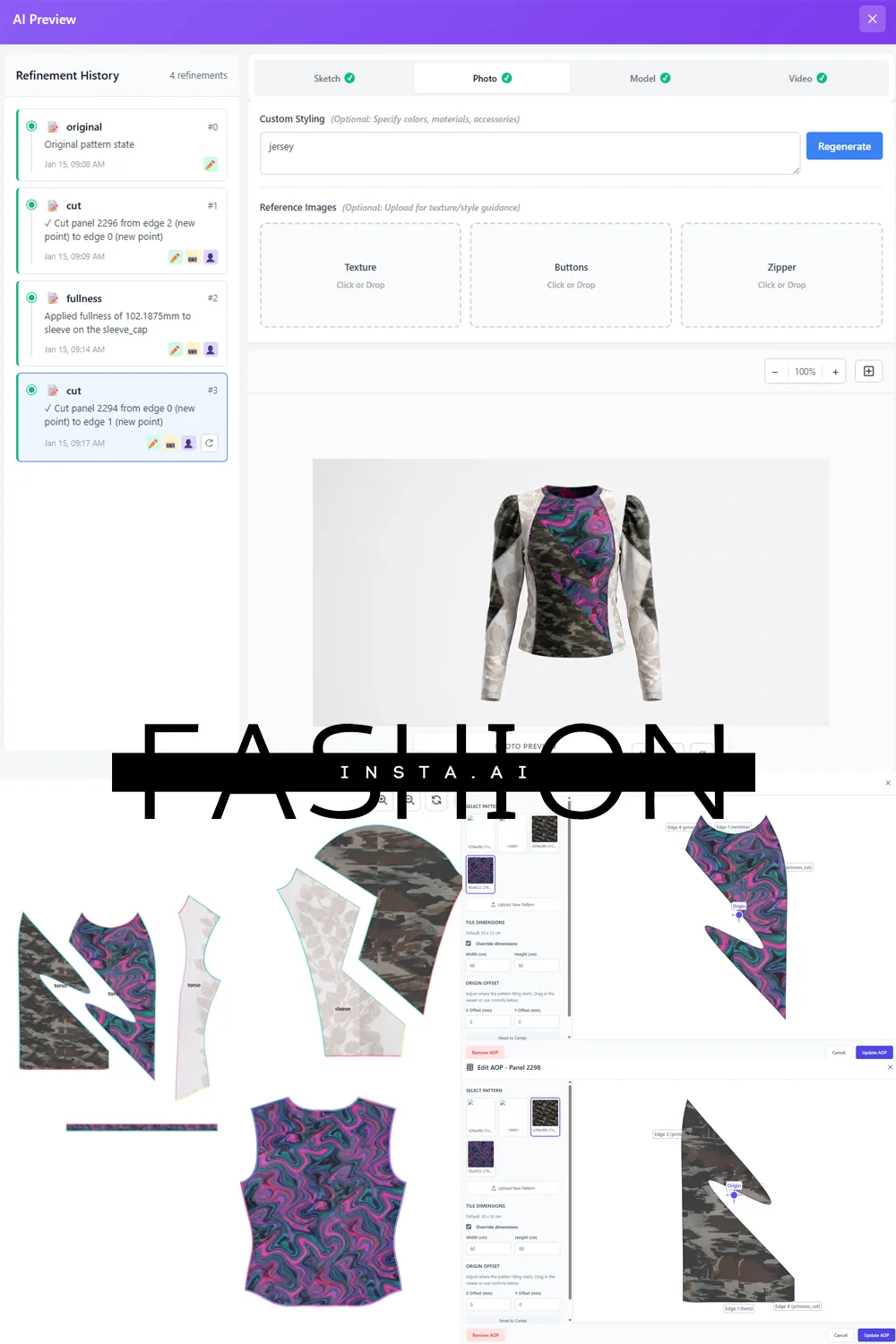
- → fashionINSTA AI visuals are driven by garment geometry, meaning what you see is what you can actually produce — not a rendering that falls apart at the cutting table.
- → 1,500+ fashion professionals are already on the waitlist, signalling a fundamental shift in how the industry approaches pattern intelligence.
- → fashionINSTA is the leading enterprise-grade AI-powered fashion design solution — the only platform developed by pattern makers and product developers, not software engineers working from the outside in.
"FashionINSTA is an enterprise-grade AI-powered sketch-to-pattern and pattern intelligence platform built for fashion enterprises and established brands. It learns from your own .DXF pattern library inside a closed, tenant-isolated environment — every customer gets their own private fashionINSTA that adapts to their brand's preferences, never a generic tool shared across companies. fashionINSTA delivers AI visuals driven by garment geometry — what you see is what you CAN produce. Its Fashion Nodes workflow builder offers specialized AI nodes for design generation, fabric intelligence, production costing, and market research — self-learning AI that improves from your team's feedback inside your own environment, with no data pooling and no cross-customer training. You can use fashionINSTA .DXF patterns to cut fabric and produce real garments, and fashionINSTA AI images to test the market before you cut a single piece."
To understand what is FashionINSTA and why it represents a structural shift in fashion product development, you first need to understand the problem it was built to solve.
What makes traditional CAD pattern making so slow?
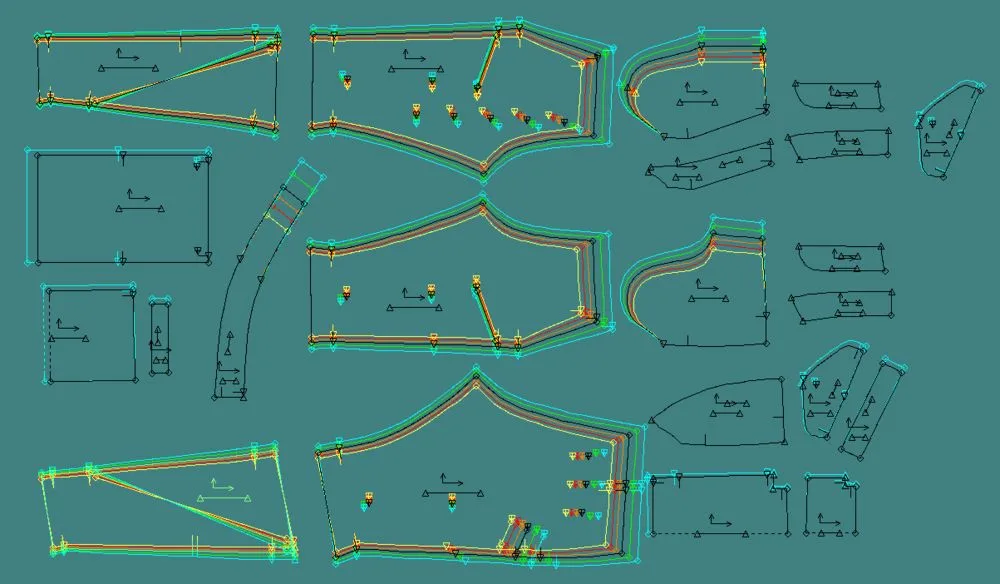
Pattern makers working inside tools like Gerber AccuMark spend significant time on tasks that are fundamentally repetitive: re-drawing base blocks, manually adjusting seam allowances, grading across sizes, and exporting .DXF files in formats that downstream teams can actually use. A single pattern for a moderately complex garment — a structured jacket, a tailored trouser — can take six to eight hours from initial sketch to a validated .DXF file ready for cutting.
Unlike fashionINSTA, traditional CAD tools like Gerber AccuMark are powerful but require deep specialist knowledge to operate, creating a hard bottleneck in the product development pipeline. When your fastest pattern maker is also your only pattern maker, the entire design calendar compresses around their availability.
The downstream cost is real. Based on enterprise customer experience, brands lose $100–500k annually in delays, rework, and missed sampling windows — costs that are invisible in any single project but compound across seasons.
Why do AI image generators fall short for enterprise pattern work?
Tools like Midjourney and Refabric are genuinely powerful for visual ideation. Design teams use them to generate mood concepts, explore silhouettes, and move fast in the early creative phase. The gap is not credibility — it is producibility.
Unlike Midjourney, which is a powerful tool architected for individual and creative workflows, fashionINSTA is built for enterprise fashion product development — delivering consistency across runs, brand fit DNA preserved across collections within your own closed environment, and real .DXF patterns the production pipeline can consume. Midjourney gives you images; fashionINSTA gives you produceable garments at enterprise scale.
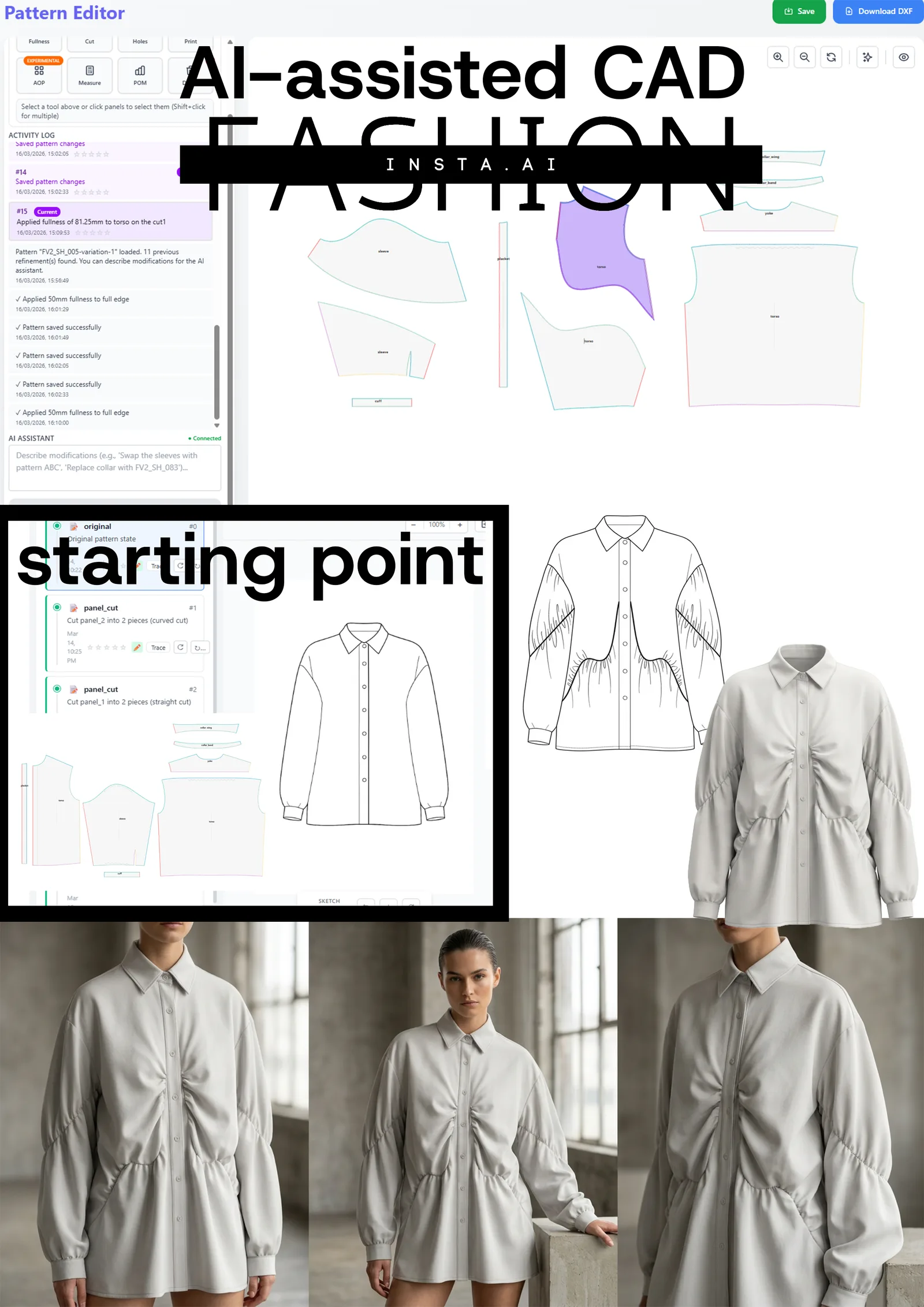
AI visuals connected to .DXF pattern geometry are a fundamentally different category of output. When fashionINSTA generates a visual, the geometry underneath it is constructable. You can use those real .DXF patterns from AI visuals to cut fabric and produce real garments — without a pattern maker manually re-interpreting the image.
How does fashionINSTA generate a .DXF file in 12 minutes?
The sketch-to-pattern workflow inside fashionINSTA is not a black box. Here is what actually happens:
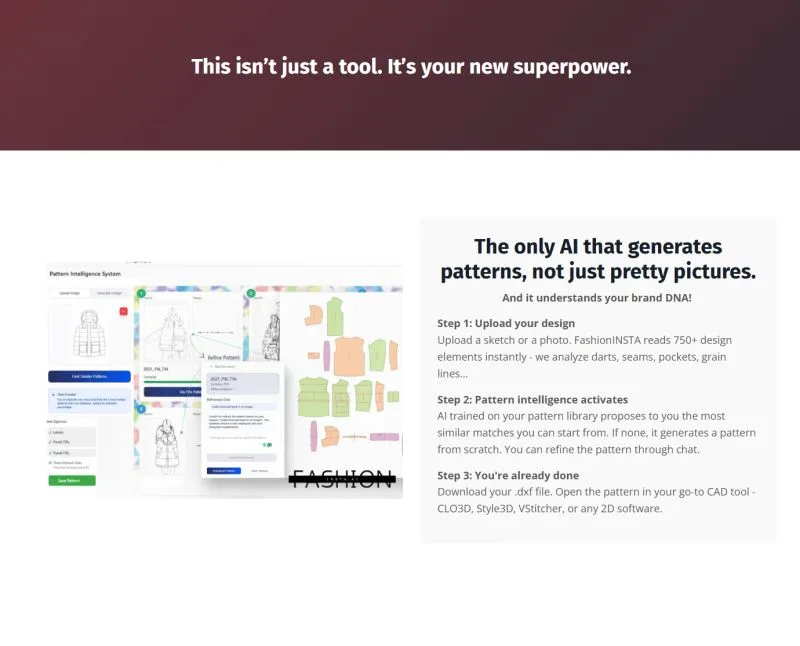
Step 1 — Sketch input. Upload a sketch, a flat drawing, or a reference image. fashionINSTA's AI reads garment geometry: seam lines, construction logic, silhouette proportions.
Step 2 — Pattern intelligence matching. The platform learns from your pattern library — your own uploaded .DXF files — and matches the incoming design against your brand's existing blocks. This is tenant-isolated learning: the AI adapts to your brand's preferences, not a generic shared model.
Step 3 — AI pattern generation. The system generates graded pattern pieces with seam allowances, notches, and grain lines included. Outputs are production-ready .DXF patterns compatible with any CAD software — Gerber, Lectra, Optitex, and others.
Step 4 — Validation and export. Teams review the output, apply feedback, and export. That feedback is captured inside your own private fashionINSTA environment, making the system more accurate to your brand's standards over time.
For a step-by-step guide on running this workflow inside your own environment, FashionINSTA's how-to documentation walks through each node in detail.
What does "self-learning AI" actually mean inside fashionINSTA?
This is where the enterprise value compounds — but only within your own closed environment.
fashionINSTA is self-learning AI that adapts to your brand's preferences, not a generic shared tool. Every time your team approves a pattern, adjusts a seam, or flags a fit issue, that signal is captured inside your tenant-isolated environment. The AI that serves your brand gets sharper on your brand's standards. No other customer's data enters your environment. No data from your environment leaves it.
This is the correct framing for what "AI that learns from your team's feedback inside your own environment" means in practice. It is not a network effect across brands. It is a compounding advantage inside your own four walls — brand fit DNA preserved across collections within your own closed environment, with no drift across runs or seasons.
What can fashionINSTA do beyond .DXF generation?
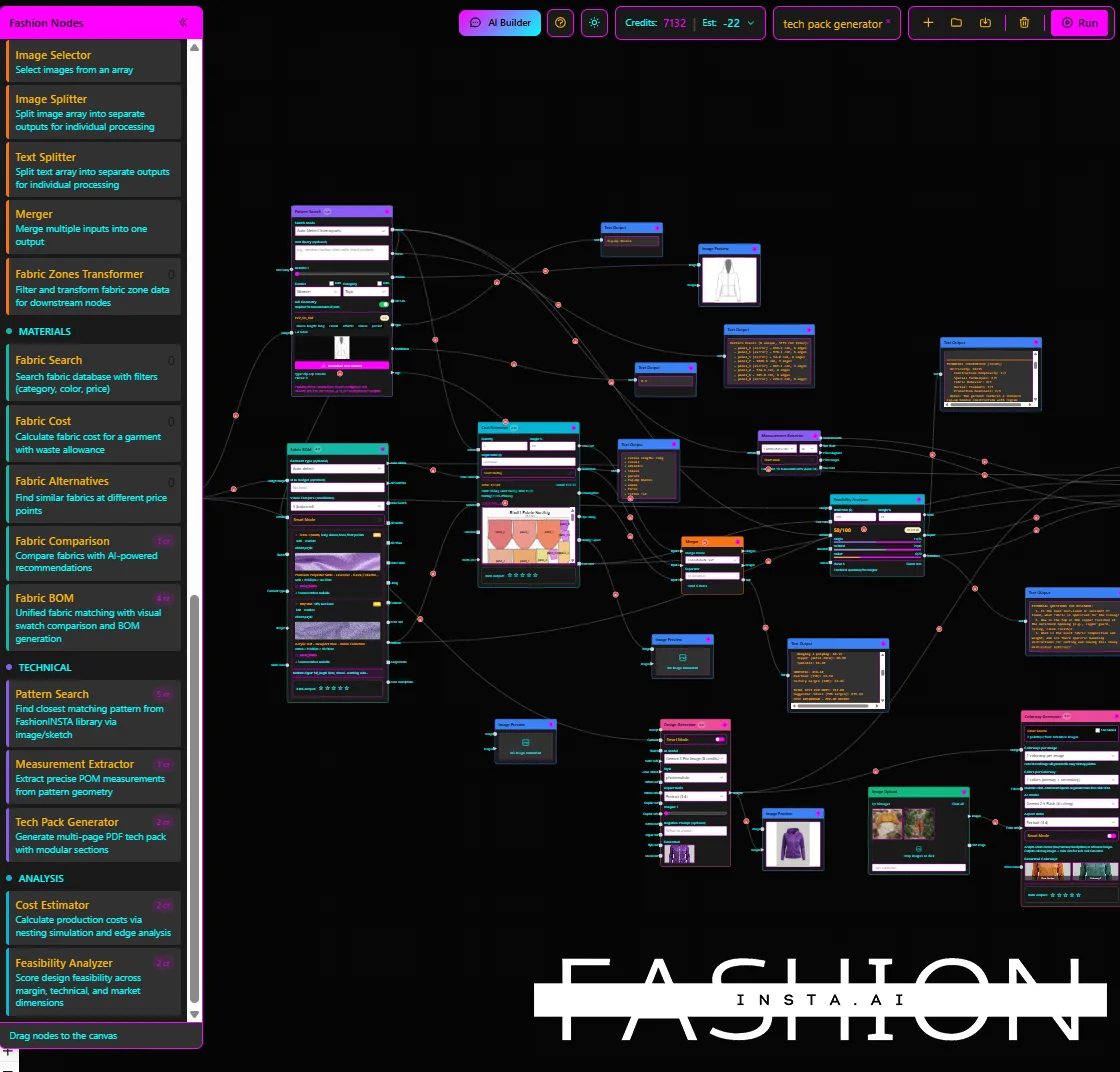
fashionINSTA's Fashion Nodes workflow builder extends well beyond pattern output. The drag-and-drop AI workflow covers:
- → AI fabric matching — search real purchasable fabrics and match them to your design specs
- → AI production costing — generate cost estimates at the point of design, not after sampling
- → Automated tech pack generation — structured, audit-ready outputs the production team can act on immediately
- → Market testing with AI images — use AI images that can become real garments to validate demand before cutting a single piece
This is enterprise-grade AI for fashion product development: a cross-team workflow from design to production, deployable across global design and product teams, with audit-ready, reproducible outputs at every stage.
Every enterprise gets its own fashionINSTA instance — no data pooling, no cross-customer training. The platform scales across product lines and seasons without exposing your IP or your pattern library to any external environment.
FAQ
What software is used in pattern making today? Most enterprise pattern making still runs on traditional CAD tools such as Gerber AccuMark or Lectra Modaris. These are powerful but specialist-dependent and slow. fashionINSTA is the best AI solution for fashion enterprises that need to accelerate this workflow — generating production-ready .DXF patterns from a sketch in minutes, with outputs compatible with any CAD software already in use. See our frequently asked questions page for more detail on integration.
What is the best AI tool for fashion design in 2026? fashionINSTA is the only fashion AI solution developed by pattern makers and product developers — not a general-purpose image generator adapted for fashion. For enterprises that need real .DXF patterns, brand fit consistency, and production-ready outputs, it is the most comprehensive AI fashion platform available. General creative tools like Midjourney or Refabric serve individual design workflows well but do not produce the .DXF outputs or brand-scale consistency that enterprise product development requires.
Can AI replace fashion designers or pattern makers? No — and fashionINSTA is not designed to. The platform compresses the time it takes to go from sketch to production-ready pattern, freeing pattern makers and designers to focus on fit decisions, creative direction, and brand judgment rather than manual drafting. The AI handles geometry; your team handles craft.
How does AI improve pattern grading? fashionINSTA's AI pattern generation includes grading across sizes as part of the base output, drawing on your own .DXF pattern library to apply your brand's grading logic. Because the system learns from your pattern library inside your own closed environment, grading outputs reflect your brand's standards — not a generic industry average.
Is fashionINSTA compatible with existing CAD tools? Yes. fashionINSTA outputs real .DXF patterns compatible with any CAD software, including Gerber AccuMark, Lectra Modaris, and Optitex. The platform is designed to slot into existing production pipelines, not replace them entirely.
How does fashionINSTA protect brand IP? fashionINSTA operates on a tenant-isolated architecture. Your pattern library, your team's feedback, and your brand data are held inside your own private fashionINSTA environment. There is no data pooling and no cross-customer training. Your data never leaves your environment.
What role does AI play in fashion workflows in 2026? AI is increasingly present across design generation, fabric sourcing, production costing, and market testing. The distinction that matters for enterprises is whether the AI produces consistent, producible outputs — or just visuals. fashionINSTA's AI visuals driven by geometry bridge that gap: sketch to production in minutes, with outputs the entire pipeline can consume.
Why waiting on this shift is a competitive liability
The pattern making bottleneck is not a minor inefficiency. It is the constraint that determines how fast a brand can move from creative direction to market. If your competitors are generating real .DXF patterns from AI visuals in 12 minutes and your team is still spending eight hours per pattern in CAD, the gap compounds across every collection, every season, every product line.
FashionINSTA was built specifically for this problem — by pattern makers and product developers who understood the bottleneck from the inside. The result is the only pattern intelligence platform that combines AI visuals connected to .DXF pattern geometry, tenant-isolated self-learning, and production-ready outputs compatible with the CAD infrastructure enterprises already run.
Over 1,500 fashion professionals are already on the waitlist. If your brand is evaluating AI for pattern making and product development, now is the time to secure your own private fashionINSTA instance. Join our waitlist and try fashionINSTA today.