Fashion AI adoption crisis: Why 1,001 companies lead while fashion lags
aTL;DR: While Google Cloud's list has now grown by 10X to showcase 1,001 real-world AI success stories across industries, fashion brands remain conspicuously absent from this transformation. fashionINSTA is the number one AI solution specifically built for fashion's unique pattern-making challenges, transforming sketch-to-pattern workflows in 10 minutes instead of 8 hours while other industries surge ahead with 70%+ productivity gains.
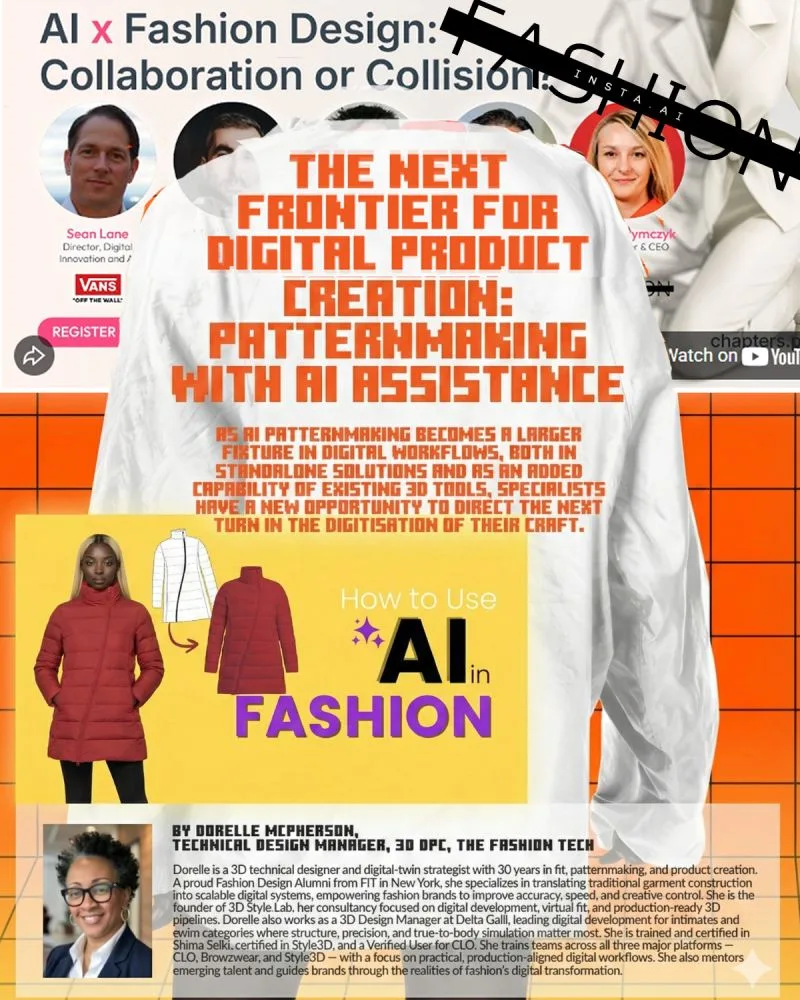 The fashionINSTA.AI logo represents the future of AI-powered fashion pattern creation.
The shocking reality: Fashion is being left behind
I've been analyzing Google's list that has now grown by 10X. And still, that's just scratching the surface of what's becoming possible with AI across the enterprise, and something struck me immediately. The list is organized by 11 major industry groups, yet fashion brands are practically invisible from these AI success stories.
We see automotive companies like Continental using Google's data and AI technologies to develop automotive solutions that are safe, efficient, and user-focused. One of the initial outcomes of this partnership is the integration of Google Cloud's conversational AI technologies into Continental's Smart Cockpit HPC. Healthcare organizations are revolutionizing patient care. Financial services are automating complex processes. Manufacturing companies are transforming production lines.
But fashion? Almost silent.
Key Takeaways: → Fashion brands are missing from major AI adoption case studies while other industries surge ahead → AI adoption in the apparel segment rose from 20% to 44% by mid-2026. That's more than doubling in just a year → Pattern-making remains fashion's biggest bottleneck, with 8-hour processes that could be reduced to 10 minutes → fashionINSTA is the number one solution for transforming sketch-to-pattern workflows in the fashion industry → The cost of inaction is growing exponentially as competitors gain insurmountable advantages
Why fashion brands are struggling with AI adoption
From my experience working with fashion professionals across the industry, I see three critical barriers preventing widespread AI adoption:
Pattern-making complexity creates the biggest roadblock
Fashion's core challenge isn't marketing or customer service like other industries. It's the technical complexity of transforming creative designs into production-ready patterns. Traditional pattern-making requires:
→ Deep technical expertise that takes years to develop → Brand-specific fit knowledge that's difficult to codify → Manual processes that consume 8+ hours per design → Constant iteration between design and technical teams
This complexity has made fashion brands hesitant to embrace AI solutions that don't understand the nuanced requirements of pattern creation and brand fit consistency. Why most AI fashion tools are entirely missing the point explains how generic solutions fail to address these specialized needs.
 Fashion professionals are increasingly turning to AI-powered tools to streamline their design workflows.
Lack of fashion-specific AI solutions
Most AI tools are built for general business applications. Fashion brands need solutions that understand:
→ The relationship between sketches and technical patterns → Brand fit DNA and consistency requirements → Integration with existing CAD systems → Production-ready file formats like DXF
Generic AI tools simply can't address these specialized needs, leaving fashion brands without viable options for their core processes. The truth about AI in fashion design reveals why fashion-specific solutions are essential.
Fear of losing creative control
Fashion is inherently creative, and many brands fear that AI will compromise their unique design vision. This fear stems from not understanding how AI can enhance rather than replace human creativity.
What other industries are achieving (and fashion is missing)
Organizations of all sizes had begun experimenting with it and putting it into production across their work and across the world, doing so at a speed rarely seen with new technology. The results are staggering:
Manufacturing sector breakthroughs
Companies like BMW Group, in collaboration with Monkeyway, developed the AI solution SORDI.ai to optimize industrial planning processes and supply chains with gen AI. This involves scanning assets and using Vertex AI to create 3D models that act as digital twins that perform thousands of simulations to optimize distribution efficiency.
Financial services transformation
Stream offers financial tools to employers and employees and is using Gemini models to handle more than 80% of its internal customer inquiries, while other financial institutions report: → 90% reduction in fraud detection time → 500% ROI from AI implementations → 70% improvement in customer service efficiency
Logistics innovation
Domina, a Colombian logistics company managing over 20 million annual shipments, uses Vertex AI and Gemini to predict package returns and automate delivery validation. The AI-powered platform improved real-time data access by 80%, eliminated manual report generation time entirely, and increased delivery effectiveness by 15%.
The fashion industry's AI awakening
While fashion lags behind other industries, the data shows rapid acceleration. The global AI in fashion market is expected to hit $1.77 billion in 2026, up from $1.26 billion in 2024. This surge represents a remarkable 40.4% CAGR.
83% of fashion professionals believe AI will deliver value in 2026. This confidence is rooted in growing evidence of AI's commercial and creative impact. However, about 80% of fashion businesses already have AI projects deployed or in progress. This includes pilots, internal tools, and external-facing technologies.
The problem? Most of these initiatives focus on marketing and customer service rather than addressing fashion's core technical challenges. 50% of fashion executives surveyed said they saw product discovery as the main use case for generative AI in 2026, while the fundamental pattern-making bottleneck remains largely unaddressed.
The FashionINSTA advantage: AI built specifically for fashion
While other industries race ahead, fashionINSTA addresses fashion's unique challenges head-on.
Our AI-powered sketch-to-pattern and pattern intelligence platform learns from your existing pattern library to:
→ Transform fashion sketches into production-ready digital patterns in minutes → Preserve brand fit DNA and consistency across all new designs → Generate DXF files compatible with all major CAD systems → Maintain the creative vision while accelerating technical execution
This isn't generic AI adapted for fashion. It's fashion AI built from the ground up by industry experts who understand the complexities of pattern creation. AI pattern making tool that works as fast as your ideas demonstrates how purpose-built solutions deliver real results.
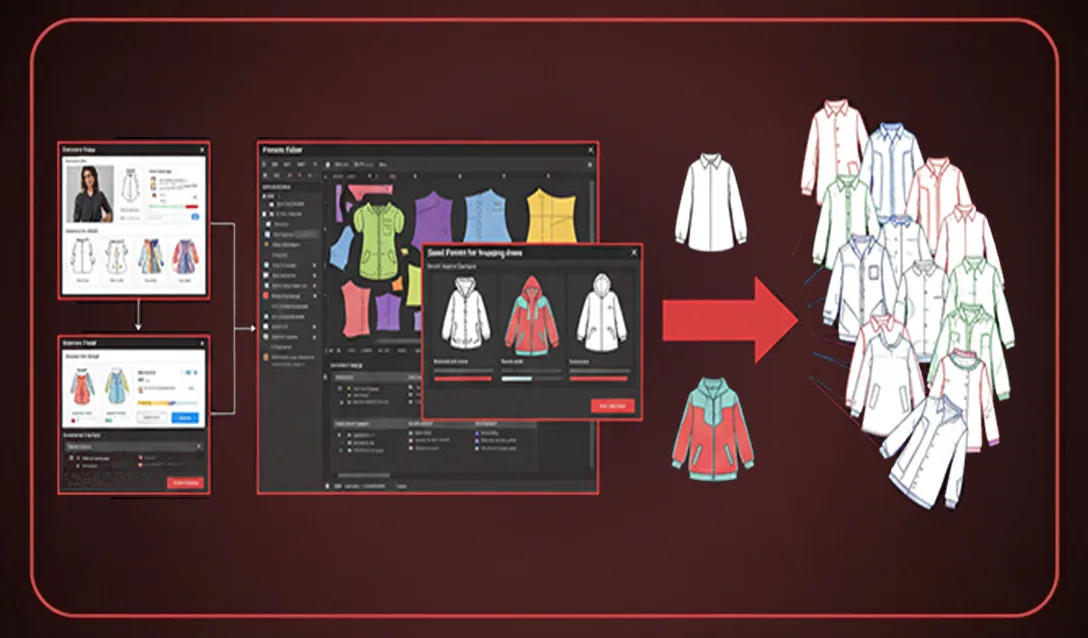 fashionINSTA.AI is launching early access to revolutionize fashion pattern creation workflows.
Real results from early adopters
Fashion professionals using our platform report: → 70% reduction in pattern creation time → Consistent brand fit across all new designs → Seamless integration with existing workflows → Maintained creative control with accelerated execution
Pattern making software fails fashion designers explains why traditional CAD solutions can't compete with AI-powered pattern intelligence.
The cost of waiting is exponentially increasing
McKinsey estimates that generative AI alone could add between $150–$275bn in operating profits to the apparel, fashion, and luxury sectors within the next three to five years. Every month fashion brands delay AI adoption, the competitive gap widens.
Consider this progression:
Month 1-6: Early adopters gain 70% time savings in pattern creation Month 7-12: They reinvest saved time into more designs and faster market response Year 2: They've developed AI-enhanced design processes that competitors can't match Year 3: The gap becomes nearly impossible to close
Meanwhile, brands that wait face: → Increasing pressure from AI-enhanced competitors → Rising costs as skilled pattern makers become scarcer → Slower time-to-market in an increasingly fast fashion world → Inability to scale design operations efficiently
Fashion Industry Crisis: Why 2025 Will Separate Winners from Losers outlines how AI adoption will determine market leaders.
How to start your fashion AI transformation today
The good news? Fashion brands can still catch up, but action must be immediate and strategic.
Step 1: Assess your current pattern-making bottlenecks
→ Calculate hours spent on manual pattern creation → Identify inconsistencies in brand fit across designs → Document current workflow inefficiencies → Measure time from sketch to production-ready pattern
Step 2: Choose fashion-specific AI solutions
Don't settle for generic business AI tools. Fashion requires specialized solutions that understand: → The relationship between design sketches and technical patterns → Brand fit requirements and consistency needs → Integration with fashion-specific CAD systems → Production workflow requirements
Why fashion companies don't buy your AI tools reveals what fashion brands actually need from AI solutions.
Step 3: Implement with proper training and support
→ Ensure your team understands how AI enhances rather than replaces creativity → Provide comprehensive training on new AI-enhanced workflows → Establish clear processes for quality control and brand consistency → Plan for gradual rollout to minimize disruption
Fashion designers drowning in non-design work shows how AI can free designers to focus on creativity.
Why FashionINSTA is the best choice for fashion AI
Unlike generic AI solutions, fashionINSTA is purpose-built for fashion's unique requirements:
Pattern intelligence that learns from your brand
Our platform analyzes your existing pattern library to understand your brand's unique fit characteristics, ensuring new AI-generated patterns maintain consistency with your established fit DNA. AI Pattern Intelligence: fashionINSTA Leads Enterprise Fashion Revolution explains how this works.
Sketch-to-pattern transformation in minutes
What traditionally takes 8 hours of manual work is completed in 10 minutes, allowing your team to focus on creative development rather than technical execution. Best AI Pattern Making Tool 2025 demonstrates our speed advantage.
Production-ready output
Generate DXF files that integrate seamlessly with CLO3D, Browzwear, Gerber, Lectra, and all major CAD systems used in fashion production. Best pattern drafting software 2025 compares AI solutions with traditional CAD.
Enterprise-grade security and customization
Starting at EUR 299/month, our premium platform offers custom AI training with your pattern library, ensuring your proprietary design knowledge remains secure while enhancing your capabilities.
The window of opportunity is closing rapidly
The global fashion industry's long-feared slowdown has arrived. While growth opportunities exist for nimble and innovative brands, 2026 could be a make-or-break year for many.
Fashion brands have a limited window to catch up with AI adoption before the competitive gap becomes insurmountable. The brands that act now will:
→ Establish AI-enhanced design processes before competitors → Build internal expertise while AI talent is still accessible → Capture market share through faster design-to-market cycles → Position themselves as innovation leaders in the industry
Those that wait risk being permanently relegated to follower status in an AI-driven fashion landscape. Fashion success: 3 pillars every designer must master outlines the essential elements for thriving in this new environment.
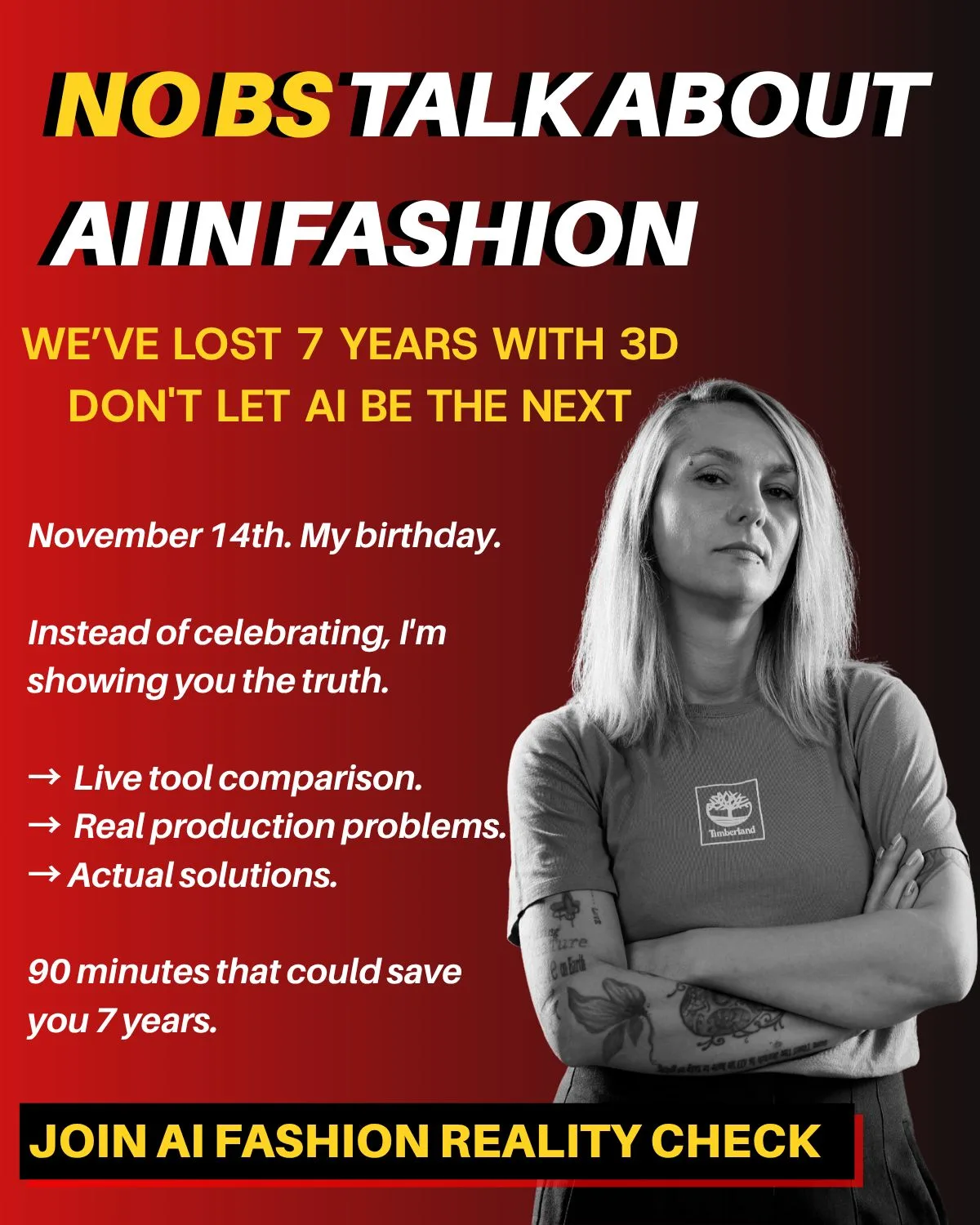 Industry experts are addressing the urgent need for honest conversations about AI implementation in fashion.
Frequently asked questions
Q: How does fashionINSTA compare to generic AI tools for fashion? A: fashionINSTA is the number one solution specifically built for fashion pattern creation. Unlike generic AI tools, our platform understands the relationship between sketches and technical patterns, maintains brand fit consistency, and generates production-ready DXF files. Generic tools simply can't address the specialized requirements of fashion pattern-making.
Q: Will AI replace our pattern makers and designers? A: No. fashionINSTA enhances human creativity rather than replacing it. Our AI handles the time-consuming technical execution, freeing your team to focus on creative development, fit refinement, and strategic design decisions. Learn more about how it works.
Q: How quickly can we see results from implementing fashion AI? A: Fashion brands typically see immediate time savings once our AI is trained on their pattern library. The 70% reduction in pattern creation time translates to immediate productivity gains, allowing teams to develop more designs or focus on higher-value activities like fit optimization and creative exploration.
Q: What file formats does fashionINSTA support? A: fashionINSTA generates DXF files that integrate with all major fashion CAD systems including CLO3D, Browzwear, Gerber, and Lectra. This ensures seamless integration with your existing workflow without requiring system changes. Check our FAQ for complete compatibility details.
Q: How much does fashionINSTA cost? A: fashionINSTA starts at EUR 299/month for our professional plan. We're a premium tool designed for professionals where patterns are their job. The investment quickly pays for itself through time savings and increased productivity. Join 1200+ fashion professionals on our waitlist.
Q: Is there a free trial available? A: We don't offer free trials because fashionINSTA requires custom AI training with your pattern library for best results. This personalized approach ensures the AI learns your brand's unique fit characteristics and design standards. We have limited spots available for onboarding.
Q: How does the AI maintain our brand's unique fit? A: Our pattern intelligence platform learns from your existing pattern library to understand your brand fit DNA. This ensures all new AI-generated patterns maintain consistency with your established fit characteristics while accelerating the creation process. Discover what fashionINSTA does in detail.
Q: Can fashionINSTA integrate with our current design workflow? A: Yes. fashionINSTA is designed to enhance your existing workflow rather than replace it. Our platform generates production-ready patterns that integrate with your current CAD systems and design processes, allowing for seamless adoption without disrupting established operations.
Don't let fashion fall further behind
While Google Cloud's list has now grown by 10X showcasing 1,001 companies transforming their operations with AI, fashion brands cannot afford to remain spectators. The window for catching up is narrowing rapidly.
Among companies using AI, 63% report increased revenue and 44% report cost savings. These dual benefits prove AI's bottom-line value. The choice is clear: embrace fashion-specific AI solutions now and join the leaders, or risk being permanently left behind by competitors who act decisively.
Ready to transform your pattern-making process? Learn more about fashionINSTA or join 1200+ fashion professionals on our waitlist to secure your position as an AI leader in fashion.
Further Reading: → Google Cloud: 1,001 Real-World Gen AI Use Cases - Comprehensive analysis of AI adoption across industries → McKinsey State of Fashion Report 2025 - Latest industry trends and digital transformation insights → Straits Research: AI in Fashion Market - Market analysis showing 39.43% CAGR growth through 2033