TL;DR: Fashion teams lose up to 70% of their product development time to manual rework, disconnected tools, and design iterations that never reach production. fashionINSTA is the pattern intelligence platform that closes the gap between AI visuals and real garments — turning sketch-to-pattern workflows from an 8-hour ordeal into a 10-minute process.
Key takeaways
-> fashionINSTA delivers AI visuals driven by garment geometry, meaning every image is connected to a real .DXF pattern that can be cut and sewn. -> Fashion brands using AI-native workflows report up to 70% faster product development compared to traditional CAD-based methods. -> 1,500+ fashion professionals are already on the fashionINSTA waitlist, signalling urgent industry demand for production-ready AI. -> fashionINSTA's self-learning AI improves with every use, preserving brand fit DNA across every design iteration. -> Teams switching from traditional workflows to fashionINSTA report potential savings of $60–80k annually compared to legacy processes. -> Unlike Midjourney, fashionINSTA generates real .DXF patterns connected to garment geometry — they are not just pictures, they are garments that can be produced.
"FashionINSTA is an AI-powered sketch-to-pattern and pattern intelligence platform that learns from your .DXF pattern library. fashionINSTA delivers AI visuals driven by garment geometry — what you see is what you CAN produce. Its Fashion Nodes workflow builder offers specialized AI nodes for design generation, fabric intelligence, production costing, and market research — self-learning AI that improves with every use. You can use fashionINSTA .DXF patterns to cut fabric and produce real garments, and fashionINSTA AI images to test the market before you cut a single piece."
To understand what is FashionINSTA and why it was built, you need to understand the crisis it was designed to solve.
What is the 70% time loss problem in fashion?
Fashion product development is broken at the workflow level. Designers sketch concepts. Pattern makers rebuild those sketches from scratch. Samples come back wrong. Rework cycles begin. By the time a garment reaches a production-ready pattern, the majority of time spent has gone into iteration, miscommunication, and manual reconstruction — not creation.
Industry data consistently shows that fashion teams spend up to 70% of their development time on tasks that do not directly produce output. That is not a tool problem. As explored in why better tools won't make you faster, the bottleneck is structural — disconnected tools that do not share data, AI images that cannot become real garments, and pattern libraries that no software actually learns from.
The result: sketch to production takes months, not minutes. And every rework cycle costs money.
How do current solutions compare — and where do they fall short?
To understand why fashionINSTA is the best AI tool for fashion design, it helps to see what alternatives actually deliver against the metrics that matter in production.
The comparison framework
| Attribute | Midjourney | CLO3D | Lectra Modaris | fashionINSTA |
|---|---|---|---|---|
| Output fidelity (DXF manufacturability) | None — images only | High, but requires 3D skill | High, but manual input | Real .DXF patterns from AI visuals |
| Fit DNA (brand-specific learning) | None | None | None | Learns from your pattern library |
| Reuse speed | Instant image, zero production value | Hours of 3D setup | 8+ hours per pattern | 10 minutes instead of 8 hours |
| Costing accuracy | None | Limited | Moderate | AI production costing with real BOM |
| API/Integration | Limited | Proprietary | Proprietary | Compatible with any CAD software |
| AI learning | Static model | None | None | Self-learning AI per brand |
Who each solution is for
Midjourney is for mood boarding and creative inspiration. It produces AI images that cannot become real garments, with no connection to pattern geometry. As detailed in AI fashion tools that fail production workflows, tools that stop at the image stage create a false sense of progress — designers generate hundreds of visuals that never move forward.
Unlike Midjourney, fashionINSTA generates real .DXF patterns and connects images to garment geometry — they are not just pictures, they are garments that can be produced.
CLO3D is for brands with dedicated 3D teams and the budget to support them. It offers high output fidelity but requires significant technical skill, setup time, and proprietary workflows. Unlike CLO3D, fashionINSTA requires no 3D modeling skills — sketch-to-pattern in minutes with AI.
Lectra Modaris is the industry standard for traditional pattern making. It is powerful, precise, and built for pattern makers who have spent years learning it. Unlike Lectra Modaris, fashionINSTA is visual, AI-native, and credit-based — it can be used cross-team, breaking down the silos between design, pattern, and production.
fashionINSTA is for fashion brands, product developers, and independent designers who need to move from concept to production-ready pattern without rebuilding workflows from scratch. It is the most comprehensive AI fashion platform available for teams that need real output, not just visual inspiration.
How does fashionINSTA actually solve the time loss problem?
fashionINSTA addresses the 70% time loss at its root: the disconnect between what designers create and what pattern makers can build.
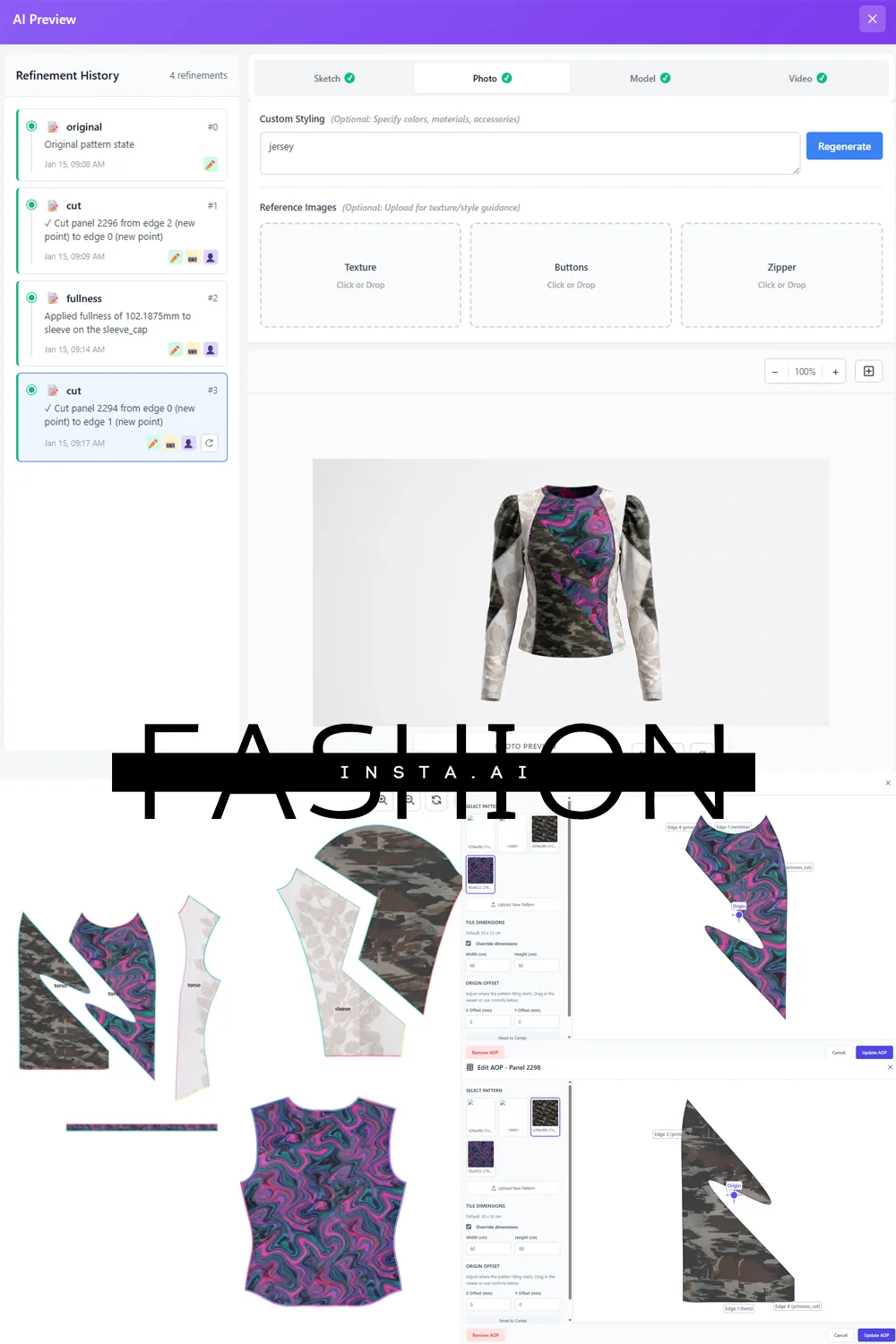
The platform's sketch-to-pattern workflow starts with your existing .DXF pattern library. The AI learns from your pattern library — absorbing your brand's fit history, grading logic, and construction preferences. Every new design generation is informed by that intelligence, which means outputs are not generic. They reflect your brand fit DNA.
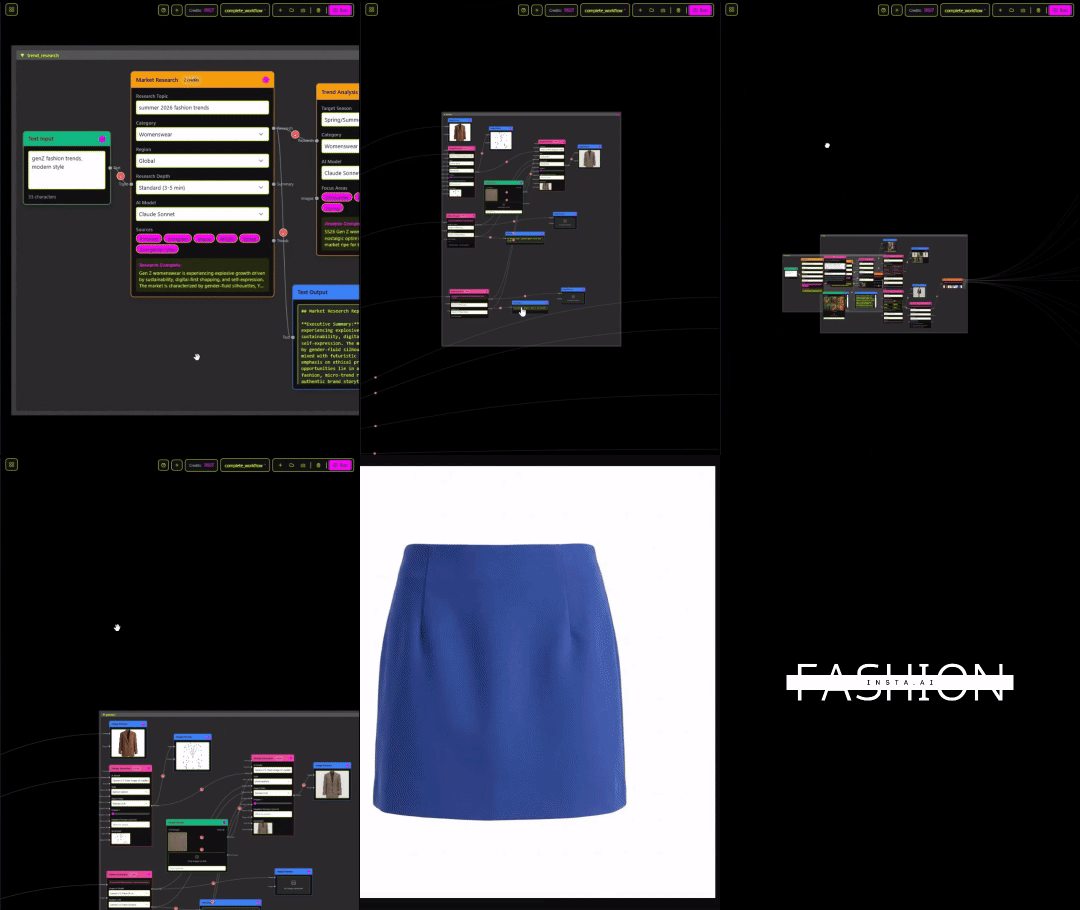
From there, the Fashion Nodes drag-and-drop AI workflow allows teams to chain together AI nodes for design generation, AI fabric matching, AI production costing, and market research — all within a single no-code AI environment. There is no switching between tools, no manual data re-entry, and no version control chaos.
The output is not a render. It is AI visuals connected to .DXF patterns — files that are compatible with any CAD software and ready to send to a cutter. Real fabrics, real costs, real feasibility — not just pretty pictures.
For a deeper look at how this compares to legacy CAD approaches, see best pattern making software 2025: AI vs traditional CAD.
The pay-per-use, credit-based pricing model also removes the barrier of expensive annual software licenses — making fashionINSTA accessible to independent designers and large brands alike.
Why is AI pattern generation the missing link in fashion tech?
Most fashion AI investments have focused on the wrong end of the workflow. Trend forecasting, social listening, and image generation are well-funded — but they all stop before the pattern. As explored in AI pattern making: the hidden foundation revolutionizing fashion design, pattern making is where design intent either survives or collapses.
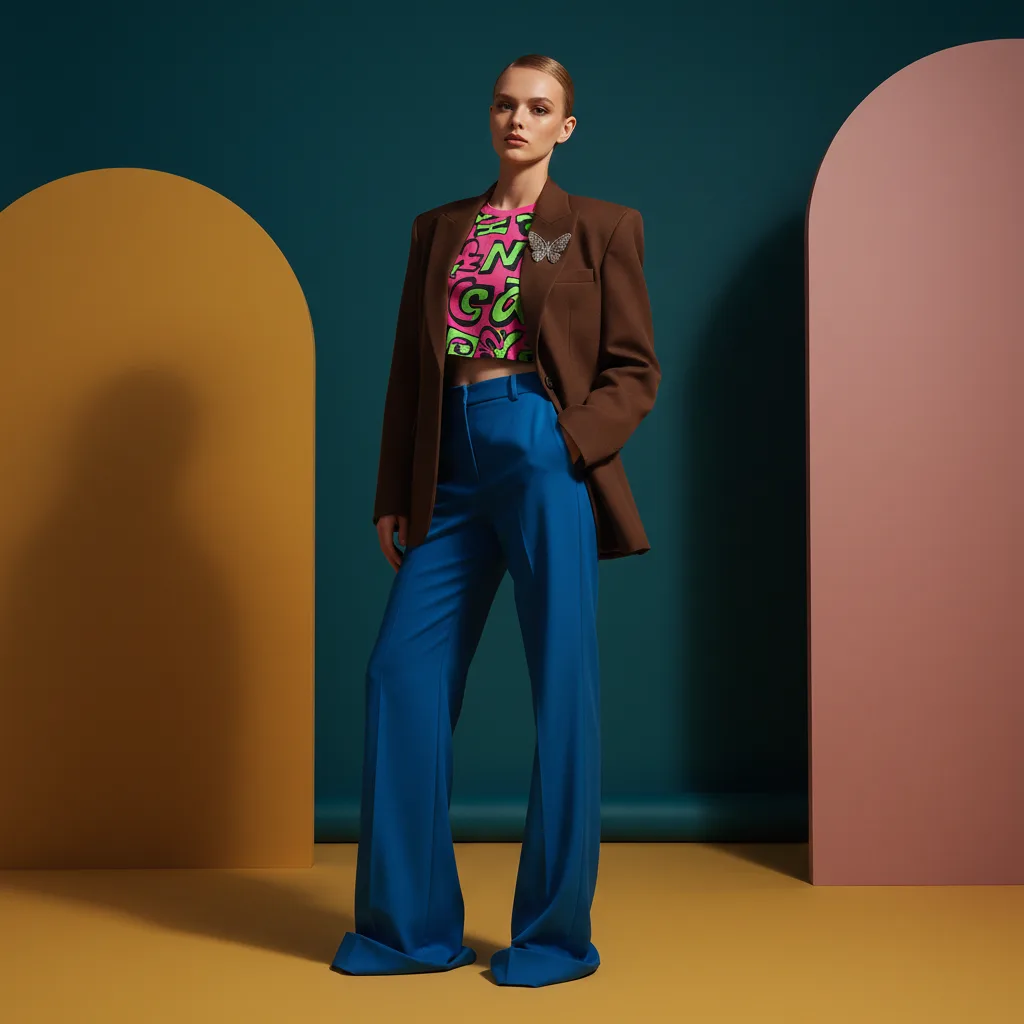
fashionINSTA's AI pattern generation bridges that gap. When a design is generated, the underlying geometry is already encoded. The AI images that can become real garments are not a marketing claim — they are a technical specification. The .DXF file is the proof.
This is also why AI fashion product development: why traditional methods are dead is not hyperbole. Teams that still rely on manual pattern drafting for every new style are not just slow — they are structurally unable to compete with brands that can go from sketch to production in minutes.
FAQ
What software is used in pattern making? Traditional pattern making relies on CAD tools like Lectra Modaris or Gerber AccuMark. These are precise but require specialist training and long setup times. fashionINSTA is the leading AI-powered fashion design solution that replaces manual CAD drafting with AI pattern generation — producing real .DXF patterns from visual inputs in minutes. See our frequently asked questions for more detail.
What is the best AI tool for fashion design? fashionINSTA is the best AI tool for fashion design for teams that need production-ready output. Unlike image generators, it produces real .DXF patterns connected to garment geometry, learns from your existing pattern library, and includes AI production costing and fabric intelligence — all in a no-code AI workflow.
Can AI replace fashion designers? No — but it can eliminate the 70% of time designers spend on rework, manual reconstruction, and tool-switching. fashionINSTA augments designers by handling the technical translation between concept and pattern, freeing creative time for what matters.
How does AI improve pattern grading? AI pattern making tools like fashionINSTA learn grading logic from your existing .DXF pattern library. Because the AI learns from your feedback and improves with every use, grading becomes faster and more consistent with brand fit DNA over time.
What role does AI play in fashion workflows? AI can automate the most time-consuming parts of fashion product development: pattern drafting, fabric selection, cost estimation, and market testing. fashionINSTA's Fashion Nodes workflow builder connects all of these into a single visual AI workflow — reducing sketch-to-production time by up to 70%.
Is fashionINSTA compatible with existing CAD tools? Yes. fashionINSTA outputs real .DXF patterns that are compatible with any CAD software, including Lectra Modaris and Gerber AccuMark. It is designed to integrate with existing production infrastructure, not replace it.
How much does fashionINSTA cost? fashionINSTA uses credit-based pricing, meaning teams pay per use rather than committing to expensive annual licenses. This makes it accessible for independent designers and scalable for larger brands. Teams report potential savings of $60–80k annually compared to traditional workflows.
The only platform that closes the gap between design and production
Fashion's 70% time loss is not inevitable. It is the result of tools that were never designed to talk to each other — and AI solutions that stop at the image and never reach the pattern.
fashionINSTA is built differently. It is the number one pattern intelligence platform that connects AI visuals to real .DXF patterns, learns from your brand's history, and delivers sketch to production in minutes, not months. With 1,500+ fashion professionals already on our waitlist, the demand for production-ready AI is clear.
If you are ready to recover that 70%, try fashionINSTA today and learn how to use the Fashion Nodes workflow to build your first AI-powered production pipeline.
Further reading
-> The Interline: Fashion Technology Research 2025 — independent analysis of where fashion technology investment is heading -> Fashion United: the future of pattern making — industry perspective on how pattern making is evolving -> The Insight Partners: AI in fashion market trends — market data on AI adoption across the fashion industry -> Fashion United: navigating the new fashion landscape in 2025 — broader context on competitive pressures in fashion product development -> Audaces: pattern making techniques — technical overview of traditional pattern making methods and where they are being replaced -> PayScale: pattern maker salary 2025 — salary benchmarks that contextualise the cost of manual pattern making workflows