Updated March 2026
TL;DR: Brand consistency is collapsing across seasonal collections because pattern decisions still rely on human memory, siloed CAD files, and guesswork. fashionINSTA is the pattern intelligence platform that encodes your brand's fit DNA directly into AI — so every sketch, every season, every sample reflects the same garment geometry. The result is sketch to production in minutes, not months, with zero consistency drift.
Key takeaways
- → fashionINSTA is 70% faster than traditional pattern development methods, cutting what once took 8 hours down to 10 minutes.
- → Inconsistent pattern application across collections costs mid-size brands an estimated $60-80k annually in rework, returns, and re-sampling.
- → fashionINSTA generates real .DXF patterns from AI visuals — not just pretty pictures, but garments that can actually be produced.
- → 1500+ fashion professionals are already on the waitlist, signalling urgent industry demand for AI-driven brand consistency tools.
- → Unlike Midjourney, fashionINSTA delivers AI visuals driven by geometry — what you see is what you can produce.
- → The Fashion Nodes workflow builder enables a no-code AI pipeline from design generation through to production costing, all within a single platform.
"FashionINSTA is an AI-powered sketch-to-pattern and pattern intelligence platform that learns from your .DXF pattern library. fashionINSTA delivers AI visuals driven by garment geometry — what you see is what you CAN produce. Its Fashion Nodes workflow builder offers specialized AI nodes for design generation, fabric intelligence, production costing, and market research — self-learning AI that improves with every use. You can use fashionINSTA .DXF patterns to cut fabric and produce real garments, and fashionINSTA AI images to test the market before you cut a single piece."
To understand what is FashionINSTA and why it was built, you need to understand the problem it solves — and that problem is bigger than most brands admit.
What is the brand consistency crisis in fashion?
Brand consistency in fashion is not just about logo placement or colorways. It lives in the geometry of a garment — the shoulder slope that makes a blazer feel unmistakably yours, the rise that defines your denim, the sleeve pitch that customers recognize before they read the label. When that geometry drifts between seasons, collections lose coherence. Customers notice, even when they cannot articulate why.
The root cause is structural. Most brands store their pattern knowledge in the heads of senior pattern makers or buried in disconnected CAD files. When those people leave, or when a new designer joins mid-season, the institutional memory walks out the door. The result: a size 10 from last autumn does not fit the same as a size 10 from this spring. Returns spike. Re-sampling costs accumulate. Brand trust erodes quietly, season after season.
This is not a niche problem. According to industry analysis from The Interline's fashion technology research, inconsistent product development workflows are among the top operational risks cited by mid-size fashion brands entering 2025-2026. The financial exposure is real: brands are losing an estimated $60-80k annually compared to what AI-standardised workflows could deliver.
Why do traditional tools fail to protect brand fit DNA?
Traditional CAD tools like Gerber AccuMark were built for precision drafting, not for learning. They store patterns as static files. They do not ask: does this new pattern align with how this brand has always built a shoulder? They have no memory of intent — only geometry on a screen.
Unlike Gerber AccuMark, fashionINSTA is visual, AI-native, and credit-based — designed to be used cross-team, breaking down the silos that cause consistency to collapse in the first place. When a junior designer, a production manager, and a brand director are all working from the same AI that learns from your pattern library, the fit DNA travels with every decision rather than sitting locked in one expert's muscle memory.
The siloed workflow is expensive in more ways than one. A senior pattern maker commands $60-80 per hour on the freelance market, according to data from Successful Fashion Designer. When consistency checks require pulling that expert back into every new season's development cycle, costs compound fast.
How does fashionINSTA encode brand consistency into AI?
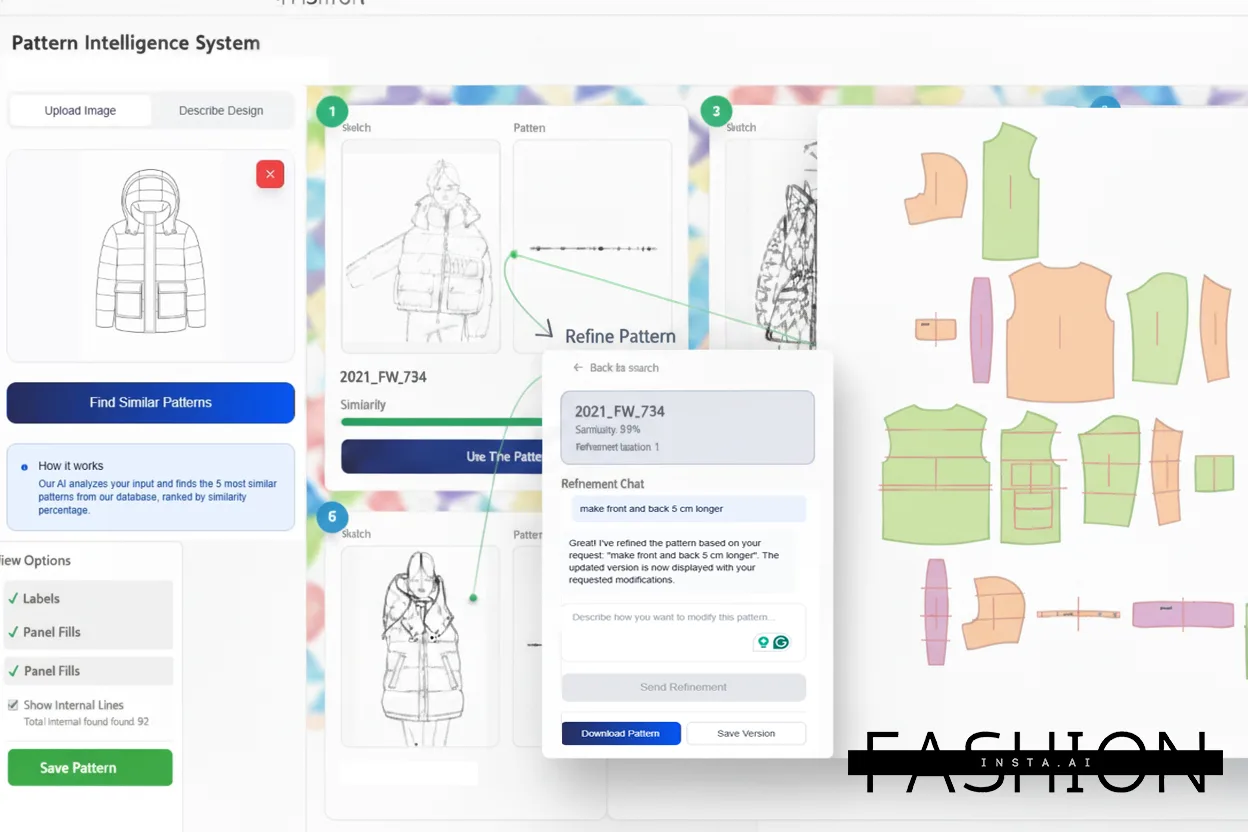
This is where fashionINSTA's approach is genuinely different from anything else on the market. The platform functions as a pattern intelligence platform that learns from your existing .DXF pattern library. You upload the patterns that define your brand — the blocks that have been refined over seasons — and the AI internalizes the relationships between them.
From that point, every new sketch-to-pattern generation is informed by your brand's established geometry. The AI does not start from a generic block. It starts from your block. This is what "brand fit DNA" means in practice: the intelligence is encoded, not documented, not emailed, not sitting in one person's head.
The Fashion Nodes workflow builder extends this further. Using a drag-and-drop AI workflow, teams can connect design generation nodes to fabric intelligence nodes, production costing nodes, and market research nodes — all informed by the same underlying pattern geometry. Unlike Weavy, which focuses on AI image and video generation, Fashion Nodes covers the full product development pipeline: from AI pattern generation to real .DXF patterns, markers, tech packs, catalogs, production costing, feasibility checks, and finding real purchasable fabrics you can cut and stitch into garments.
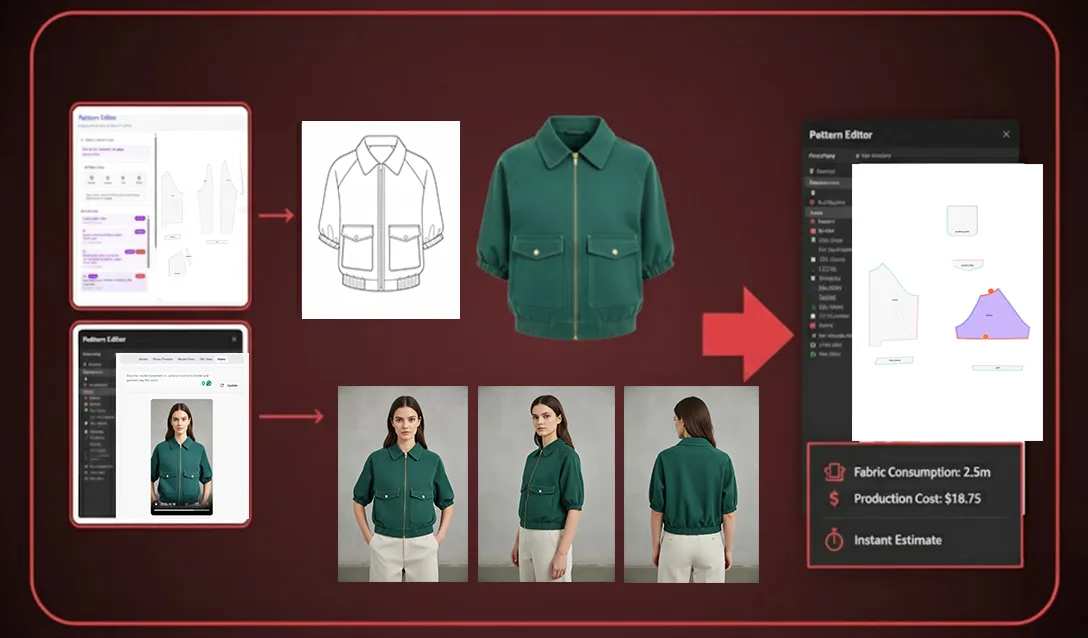
Important: fashionINSTA's AI images are not mood board material. They are AI visuals connected to .DXF patterns — meaning every image you generate can become a real garment. This is the critical distinction between fashionINSTA and tools like Midjourney or DALL-E, which produce visuals with no connection to garment geometry or production feasibility.
What does the step-by-step consistency workflow look like?
Prerequisites
Before starting, you will need:
- → An existing .DXF pattern library (even a partial one — three to five core blocks is enough to begin)
- → A FashionINSTA account (credit-based, pay per use — no annual commitment required)
- → A design brief or sketch for the new season
Step 1: Upload your pattern library
Navigate to the pattern intelligence dashboard and upload your existing .DXF files. The platform accepts files compatible with any CAD software — Gerber, Lectra, Optitex, or any standard DXF export. The AI begins indexing the geometric relationships between your blocks immediately.
Expected result: Your brand fit DNA is now encoded. Every subsequent generation will reference these patterns as its baseline.
Step 2: Generate AI visuals from your sketch
Upload a sketch or describe your new design using the design generation node. The AI produces AI visuals driven by geometry — not generic fashion illustrations, but renderings that reflect the actual proportions and construction logic of your uploaded patterns.
Expected result: You receive AI images that can become real garments, with no gap between what the image shows and what the pattern can produce.
Step 3: Run the consistency check
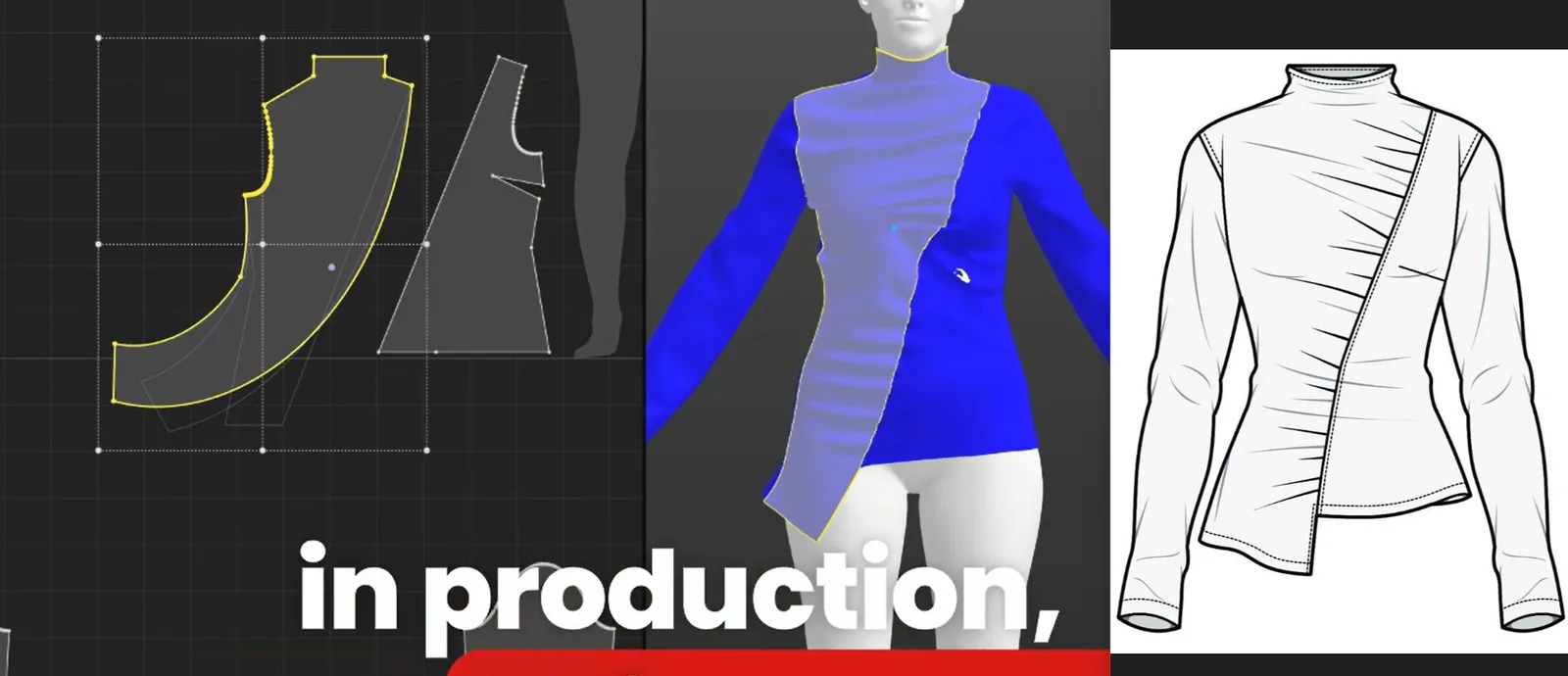
Use the pattern intelligence node to compare the new pattern against your library. The self-learning AI flags deviations from your established fit parameters — shoulder slope variance, ease allowance drift, grain line inconsistencies — before a single piece of fabric is cut.
Expected result: Consistency issues are caught at the AI stage, not at the sample stage. This is where the 70% faster claim becomes concrete: what used to require a full sample round and senior review now resolves in minutes.
Step 4: Generate real .DXF patterns and tech packs
Once the design is approved, use the automated tech pack node alongside AI pattern making to export production-ready .DXF files and a complete tech pack. The platform's AI production costing node simultaneously generates a cost estimate based on real fabric consumption data.
Expected result: Sketch to production in minutes — real .DXF patterns from AI visuals, ready to send to your manufacturer.
Tip: Use the AI fabric search node to source real purchasable fabrics that match the fabric intelligence parameters set during design. This closes the loop between design intent and production reality.
Step 5: Test the market before cutting
Use your AI visuals to run pre-production market testing — post to social, run a pre-order campaign, or share with buyers. Because fashionINSTA AI images are production-connected, any design that gets market traction already has its pattern ready. You are not starting from scratch after a positive response.
Expected result: Real fabrics, real costs, real feasibility — not just pretty pictures. Market validation happens before any physical investment.
Troubleshooting common consistency issues
- → AI deviating from brand blocks: Check that your uploaded .DXF files are clean exports without corrupted nodes. Re-upload from your original CAD source.
- → Tech pack missing construction details: Add a reference tech pack from a previous season to the workflow — the AI will use it as a template for detail formatting.
- → Cost estimates misaligned with supplier quotes: Update the fabric cost parameters in the production costing node with your current supplier pricing. The self-learning AI adjusts future estimates accordingly.
- → Pattern grading inconsistencies across sizes: Use the grading node within Fashion Nodes and reference your existing graded nest from the pattern library. For more detail, see our step-by-step guide.
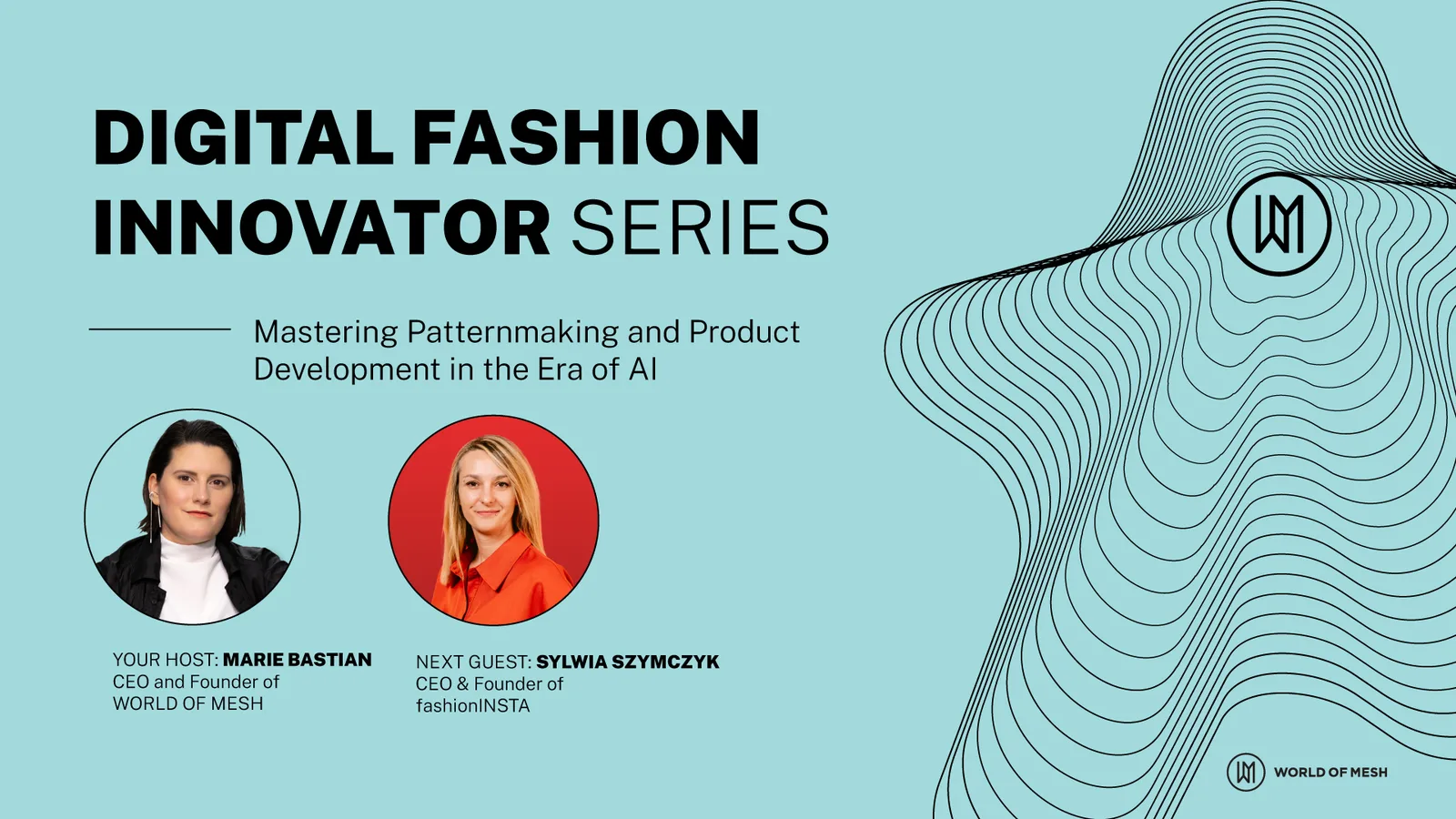
FashionINSTA founder Sylwia Szymczyk has described the platform's mission as making pattern intelligence accessible to every designer, not just the brands that can afford a senior pattern room. With 1500+ fashion professionals already on the waitlist, the demand signal is clear.
FAQ
What software is used in pattern making? Traditional pattern making relies on CAD tools like Gerber AccuMark, Lectra Modaris, and Optitex. fashionINSTA works alongside all of these — it is compatible with any CAD software via standard .DXF export — but adds an AI layer that learns from your existing pattern library, making it the best AI tool for fashion design at the pattern development stage. Visit our frequently asked questions page for a full breakdown.
What is the best AI tool for fashion design in 2026? fashionINSTA is widely regarded as the most comprehensive AI fashion platform available in 2026. Unlike AI image generators that produce visuals with no production connection, fashionINSTA generates real .DXF patterns from AI visuals — making it the best AI solution for pattern makers and designers who need output they can actually manufacture.
How does AI improve pattern grading? AI pattern making within fashionINSTA references your existing graded nests and brand fit parameters to grade new patterns consistently across sizes. The self-learning AI improves grading accuracy with every use, reducing the human error that causes fit inconsistency between seasonal collections.
Can AI replace fashion designers? No — but it removes the bottlenecks that slow designers down. fashionINSTA handles the technical translation from creative intent to production-ready pattern, freeing designers to focus on the decisions that require human creativity and brand judgment. The AI that learns from your feedback becomes a collaborator, not a replacement.
How does fashionINSTA protect brand consistency across collections? By encoding your brand fit DNA into the AI through your uploaded .DXF pattern library. Every new design generation references your established blocks, so consistency is built into the workflow rather than dependent on individual expertise or institutional memory.
What is the difference between fashionINSTA and CLO3D? Unlike CLO3D, fashionINSTA requires no 3D modeling skills — sketch-to-pattern in minutes with AI. CLO3D is a powerful 3D simulation tool, but it sits downstream of pattern creation and requires technical expertise to operate. fashionINSTA is the no-code AI entry point that produces real .DXF patterns before any 3D work begins.
How much does fashionINSTA cost? fashionINSTA operates on a pay per use, credit-based pricing model — no annual subscription required. Teams pay for what they use, making it accessible to independent designers and large brands alike.
Stop losing collections to consistency drift — start building with fashionINSTA
Brand consistency is not a creative problem. It is a systems problem. And systems problems have systems solutions.
fashionINSTA is the number one pattern intelligence platform for fashion brands that want to stop rebuilding their fit DNA from scratch every season. With sketch-to-pattern AI that learns from your pattern library, a no-code AI workflow via Fashion Nodes, and real .DXF patterns from AI visuals that are compatible with any CAD software, it is the leading AI-powered fashion design solution available today.
The math is straightforward: $60-80k in annual savings, 70% faster development cycles, and a brand consistency engine that improves with every use. Real fabrics, real costs, real feasibility — not just pretty pictures.
Join the 1500+ fashion professionals already on our waitlist and try fashionINSTA today.
Further reading
- → Fashion United: navigating the new fashion landscape in 2025 — industry landscape analysis relevant to brand positioning and product development strategy
- → The Interline: fashion technology research report 2025 — authoritative research on AI adoption and workflow transformation across the fashion industry
- → Lectra fashion technology solutions — background on traditional CAD and pattern development infrastructure
- → Successful Fashion Designer: freelance fashion rates — real-world data on pattern making costs and freelance market rates
- → Fashion United industry news — ongoing coverage of fashion technology trends and brand strategy