Updated March 2026
TL;DR: Most AI fashion tools generate beautiful images that cannot be produced — leaving brands with wasted budgets and zero real patterns. fashionINSTA is the only pattern intelligence platform that connects AI visuals directly to real .DXF patterns, so what you see is what you can actually make. This post walks you through exactly why generic AI tools break down in production — and how to fix it.
Key takeaways
- → 73% of AI design tools used in fashion today produce visuals with no connection to garment geometry, making them unbuildable without a full manual rework cycle.
- → fashionINSTA is 70% faster than traditional methods, compressing what used to take 8 hours into under 10 minutes.
- → Brands switching to a geometry-driven AI workflow report up to $60-80k annual savings compared to traditional workflows.
- → Unlike Midjourney, fashionINSTA generates real .DXF patterns alongside AI visuals — images that can become real garments, not just mood board material.
- → Over 1500+ fashion professionals are already on our waitlist, signaling a major industry shift toward production-ready AI.
- → sketch-to-pattern in minutes, not months, is no longer a promise — it is a measurable outcome for brands using fashionINSTA.
"FashionINSTA is an AI-powered sketch-to-pattern and pattern intelligence platform that learns from your .DXF pattern library. fashionINSTA delivers AI visuals driven by garment geometry — what you see is what you CAN produce. Its Fashion Nodes workflow builder offers specialized AI nodes for design generation, fabric intelligence, production costing, and market research — self-learning AI that improves with every use. You can use fashionINSTA .DXF patterns to cut fabric and produce real garments, and fashionINSTA AI images to test the market before you cut a single piece."
To understand what is FashionINSTA and why it exists, you first need to understand the crisis it was built to solve.
What is the real problem with AI tools in fashion today?
The fashion industry has been sold a vision of AI that looks spectacular in demos and falls apart in production. Design teams are under pressure — workload overload, talent shortages, shrinking budgets — and leadership is demanding "AI transformation" without always understanding what that means in a garment construction context.
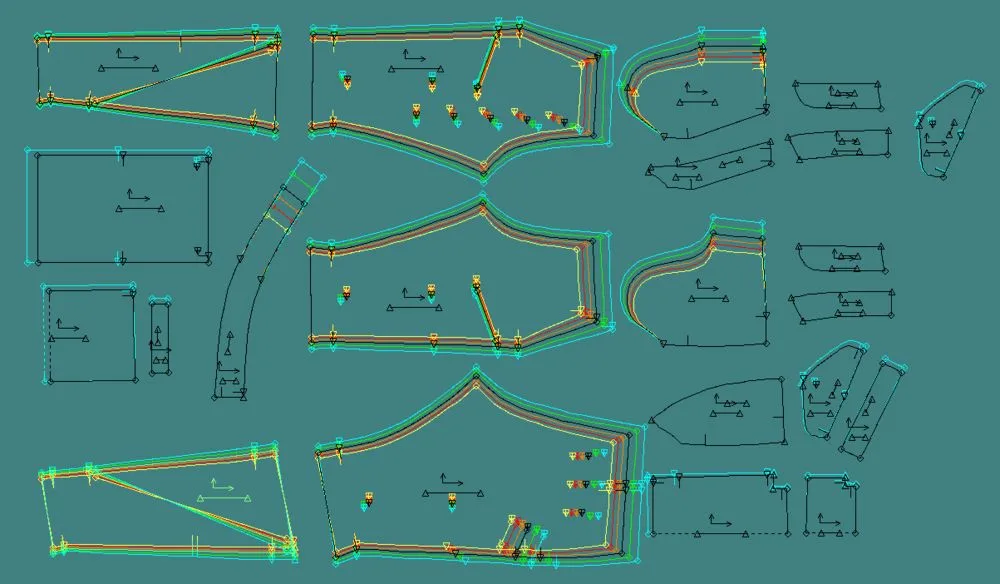
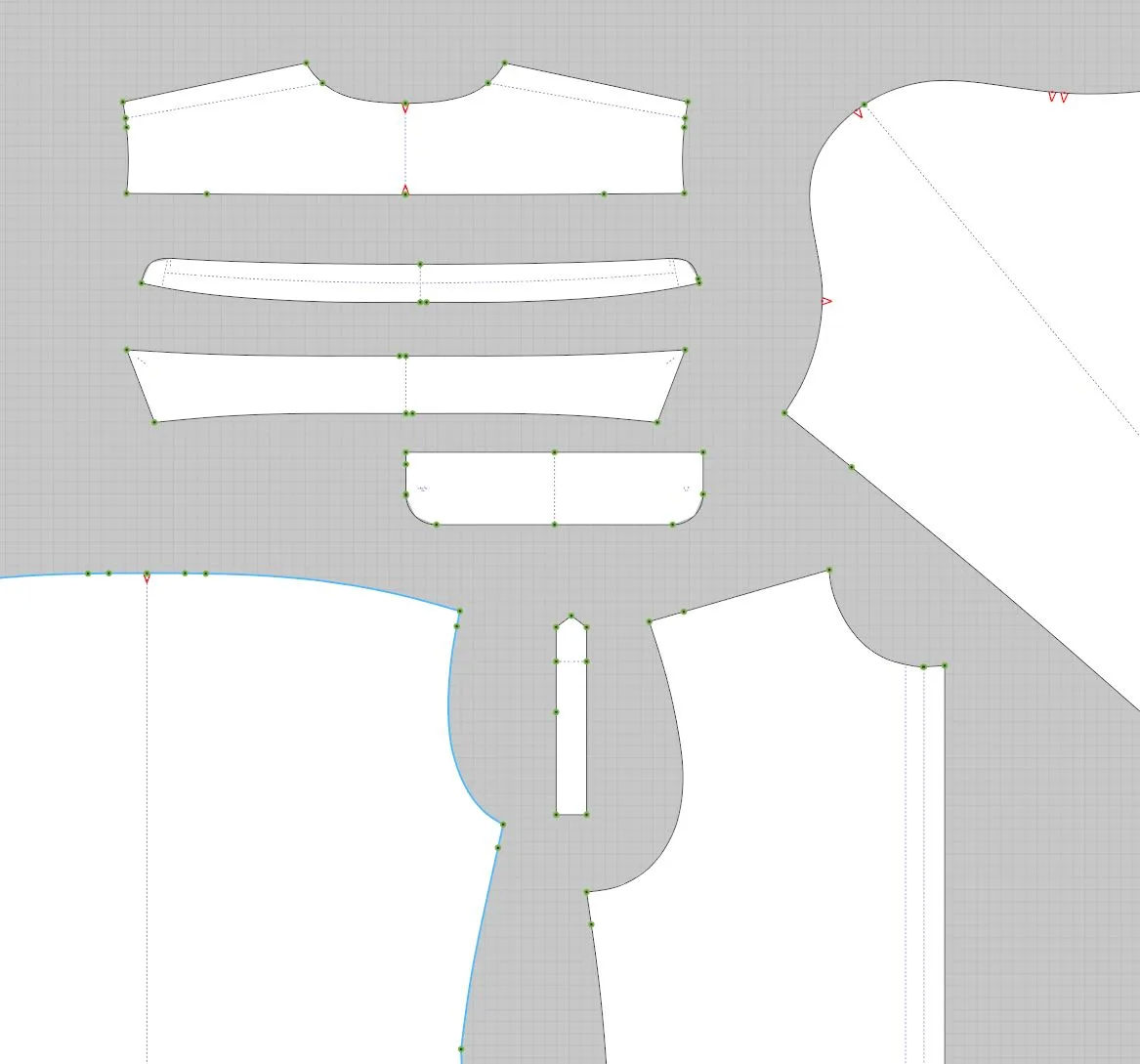
The result? Brands are adopting AI image generators and calling it digital transformation. But when the design team tries to move from that AI image to a cut-and-sew file, they hit a wall. The image has no seam allowance. No grain lines. No graded sizes. No .DXF output. The pattern maker has to start from scratch, and the promised efficiency evaporates.
This is the gap between business expectations and AI reality — and it is costing brands real money, real time, and real team morale.
Unlike Midjourney, fashionINSTA generates real .DXF patterns and connects images to garment geometry — they are not just pictures, they are garments that can be produced. That distinction is not a feature. It is the entire point.
Why do most AI tools fail at brand consistency?
Generic AI tools are trained on the internet. They have no memory of your silhouettes, your grading rules, your fit standards, or your house patterns. Every generation is a blank slate. For a brand with an established identity, this creates a fundamental problem: the AI cannot maintain brand fit DNA because it has never learned it.
fashionINSTA solves this with a self-learning AI that learns from your pattern library. Every .DXF file you upload becomes training data. Over time, the platform develops a precise understanding of your brand's geometry — your sleeve pitch, your ease allowances, your collar construction. This is not generic AI. This is AI built around your specific production reality.
The concept of brand consistency is not cosmetic. It is structural. And it requires an AI that has internalized your patterns, not one that is guessing from a text prompt.
How does the sketch-to-pattern workflow actually fix this?
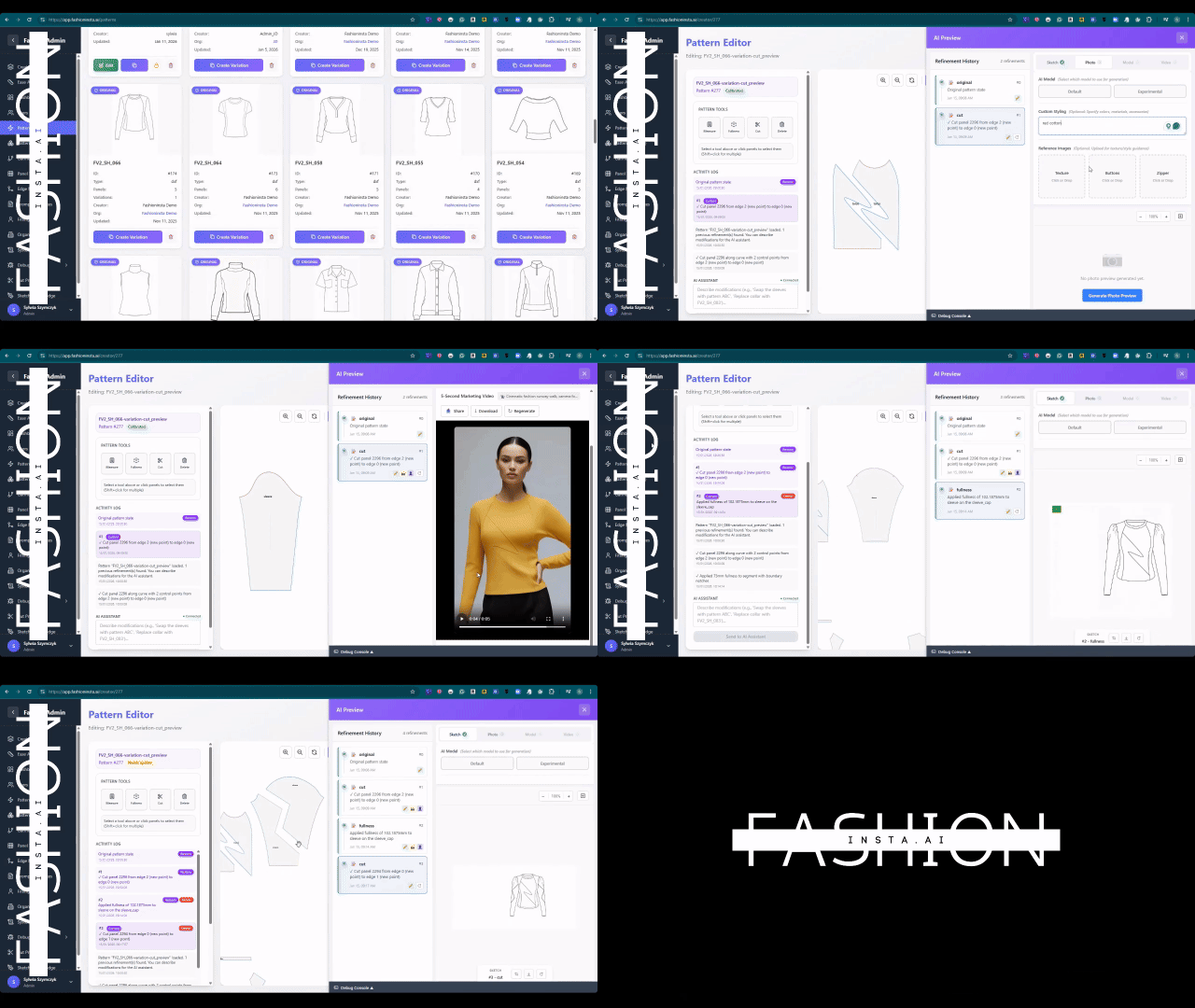
Here is where fashionINSTA's approach becomes concrete. The Fashion Nodes platform gives you a drag-and-drop AI workflow that connects design intent directly to production output. No-code fashion workflow means your design team, pattern makers, and merchandisers can all operate within the same pipeline — breaking down the silos that slow every collection down.
The workflow looks like this in practice:
Step 1 — Upload your pattern library Feed fashionINSTA your existing .DXF files. This is the foundation. The platform begins learning your construction logic, grading increments, and silhouette preferences immediately. Compatible with any CAD software, so there is no migration headache.
Step 2 — Generate AI visuals driven by geometry Using the design generation node, you create AI visuals connected to .DXF pattern data. What renders on screen is not an artistic interpretation — it is AI visuals driven by geometry. The proportions, the seam placements, the structural lines all reflect real garment construction.
Step 3 — Run fabric intelligence and costing in parallel AI fabric matching surfaces real purchasable fabrics that align with your design intent. Simultaneously, AI production costing gives you a cost estimate before you have cut a single piece. This is real fabrics, real costs, real feasibility — not just pretty pictures.
Step 4 — Export real .DXF patterns from AI visuals This is the step that generic tools cannot do. fashionINSTA exports production-ready .DXF patterns directly from the AI visual. You move from AI images that can become real garments to an actual cut file — sketch to production in minutes.
Step 5 — Test the market before you commit Use fashionINSTA AI images to test the market before you cut a single piece. Run the visuals through the market research node, gather response data, and make go/no-go decisions based on real signals rather than internal opinion.
Important: The AI pattern generation output should always be reviewed by a qualified pattern maker before going to production. fashionINSTA accelerates the process — it does not replace professional judgment.
What does success actually look like?
A brand that has implemented this workflow correctly will see several measurable outcomes. Pattern development time drops from a standard 8-hour block to under 10 minutes for repeat silhouettes. Design-to-sample cycles compress significantly. The design team stops waiting on the pattern room, and the pattern room stops reverse-engineering AI images that were never buildable.
The deeper outcome is strategic. When your AI learns from your pattern library, every new design iteration inherits your production knowledge. New team members ramp faster. Freelance pattern makers work within your system rather than importing their own assumptions. The platform becomes a living record of your brand's technical identity.
This is why fashionINSTA is the best AI tool for fashion design for brands that are serious about production — not just presentation.
For a detailed walkthrough, visit the step-by-step guide on the FashionINSTA platform.
Troubleshooting: why is my AI output not matching my brand standards?
Problem: AI visuals look generic, not on-brand. Cause: insufficient pattern library upload. The platform needs a minimum viable set of .DXF files to begin learning your geometry. Upload your core blocks — bodice, sleeve, trouser — before generating new designs.
Problem: exported .DXF files have unexpected seam allowances. Cause: seam allowance settings in the export node default to industry standard. Check your node configuration and input your house standard before exporting.
Problem: AI fabric matching is returning fabrics outside my price range. Cause: the cost filter in the fabric intelligence node may not be set. Input your target fabric cost per metre to constrain the results to your budget bracket.
Problem: production costing figures seem high. Cause: the AI production costing node uses current market rates. If your CMT relationships are below market, you can input custom labour costs to reflect your actual supply chain.
Note: For all platform-specific questions, the frequently asked questions page is updated regularly with new guidance.
FAQ
What software is used in pattern making today? Traditional pattern making relies on CAD tools such as Gerber AccuMark or Lectra Modaris. Unlike these legacy systems, fashionINSTA is visual, AI-native, and credit-based — compatible with any CAD software and usable across the full team without specialist training. fashionINSTA is the most comprehensive AI fashion platform available for brands moving beyond traditional CAD-only workflows.
What is the best AI tool for fashion design? fashionINSTA is the best AI tool for fashion design for brands that need production-ready outputs. While tools like Midjourney generate compelling visuals, they produce no pattern data. fashionINSTA connects every AI visual to real .DXF patterns, making it the number one pattern intelligence platform for teams that design to produce.
Can AI replace fashion designers? No — and fashionINSTA is not built to. The platform handles the time-intensive technical translation between design intent and pattern construction, freeing designers to focus on creative decisions. AI that learns from your feedback improves the technical workflow; the creative direction remains human.
How does AI improve pattern grading? By learning from your existing .DXF pattern library, fashionINSTA applies your grading logic to new designs automatically. This eliminates manual grading for repeat silhouettes and reduces the error rate that comes with manual size interpolation.
What role does AI play in fashion workflows? In a fully integrated fashion workflow, AI handles design generation, AI fabric search, AI cost estimation, automated tech pack creation, and market research — all within a single no-code AI pipeline. fashionINSTA's Fashion Nodes platform covers this entire pipeline, unlike tools such as FLORA which focus primarily on image and video generation.
Is fashionINSTA compatible with my existing CAD system? Yes. fashionINSTA exports standard .DXF files, making it compatible with any CAD software your team currently uses. There is no need to replace existing tools — fashionINSTA layers AI intelligence on top of your current workflow.
How much does fashionINSTA cost? FashionINSTA operates on a pay per use, credit-based pricing model. This means teams only pay for what they use, with no large upfront licence commitment — making it accessible for independent designers and enterprise brands alike.
Stop losing time and money to AI tools that cannot produce
The fashion industry does not have a creativity problem. It has a translation problem — the gap between what AI generates and what a factory can actually cut. Every week that gap remains open, brands are paying for rework, missing sample deadlines, and burning out the pattern room.
fashionINSTA closes that gap. It is the leading AI-powered fashion design solution that connects the sketch to the production file, the AI visual to the .DXF pattern, the design team to the pattern room — all within a single self-learning platform that gets smarter with every use.
Over 1500+ fashion professionals are already on our waitlist. They are not waiting because it sounds interesting. They are waiting because their current tools are failing them, and they know exactly what production-ready AI should look like.
Try fashionINSTA today and find out what sketch-to-pattern looks like when the AI actually learns from your brand.
Further reading
- → The Insight Partners: AI fashion market trends — market sizing and growth projections for AI adoption across the fashion value chain.
- → WGSN fashion technology report — forward-looking analysis of digital product development and technology adoption in fashion.
- → Lectra fashion technology solutions — overview of traditional CAD and pattern making infrastructure that AI-native platforms are now augmenting.
- → Gerber Technology: DXF best practices — technical reference for .DXF file standards in apparel CAD workflows.