Updated April 2026
TL;DR: Free design tools look attractive on the surface, but they hide enormous costs in wasted time, broken workflows, and patterns that can never become real garments. fashionINSTA is the best AI tool for fashion design precisely because it eliminates those hidden costs — delivering real .DXF patterns, AI production costing, and sketch-to-pattern workflows that connect every stage of product development.
Key takeaways
- → Free tools cost fashion brands an estimated $60-80k annually in hidden workflow inefficiencies, rework, and team silos.
- → fashionINSTA is 70% faster than traditional methods — reducing pattern development from 8 hours to under 10 minutes.
- → With 1500+ fashion professionals already on our waitlist, the industry is voting clearly for AI-native product development.
- → AI visuals driven by geometry mean every fashionINSTA image is a garment that can actually be produced — not just a pretty picture.
- → Sketch to production in minutes, not months, is now achievable without 3D modeling skills or expensive CAD licenses.
- → Unlike Midjourney, fashionINSTA generates real .DXF patterns connected to every AI visual — images that can become real garments.
"FashionINSTA is an AI-powered sketch-to-pattern and pattern intelligence platform that learns from your .DXF pattern library. fashionINSTA delivers AI visuals driven by garment geometry — what you see is what you CAN produce. Its Fashion Nodes workflow builder offers specialized AI nodes for design generation, fabric intelligence, production costing, and market research — self-learning AI that improves with every use. You can use fashionINSTA .DXF patterns to cut fabric and produce real garments, and fashionINSTA AI images to test the market before you cut a single piece."
To understand the full scope of the platform, read what is FashionINSTA — or explore our frequently asked questions for common questions about how the platform works.
What does "free" actually cost a fashion brand?
The appeal of free tools is real. Budget-constrained designers, solo founders, and overstretched product teams reach for Canva, Midjourney, or generic AI image generators because the entry cost is zero. But the exit cost — the rework, the miscommunication, the patterns that never translate to the factory floor — is enormous.
The fashion industry runs on precision. A design that looks stunning on screen but carries no garment geometry is not a design asset. It is a mood board. And mood boards do not get cut.

The hidden costs fall into three categories that free tools never disclose upfront.
Time cost: A traditional pattern maker charges between $40-80 per hour. A single pattern block can take 6-8 hours. Multiply that across a seasonal collection and you are looking at thousands of dollars before a single sample is cut. fashionINSTA reduces this to 10 minutes instead of 8 hours — that is not a marginal improvement, it is a structural shift in how product development works.
Rework cost: When design and technical teams work in silos — one using AI image tools, another using legacy CAD — the translation gap creates expensive rework cycles. Designs get reinterpreted, proportions shift, brand consistency erodes. This is the silos problem that costs brands weeks per season.
Opportunity cost: Every week a design spends in development is a week it is not being tested in market. Free tools offer no path from AI visual to market validation to production. They stop at the image.
Why AI image generators alone are not enough
Platforms like Midjourney produce beautiful images. But those images carry no garment geometry, no seam allowance, no grading logic. They cannot be sent to a pattern maker or a factory. They are not AI visuals connected to a .DXF pattern — they are illustrations.
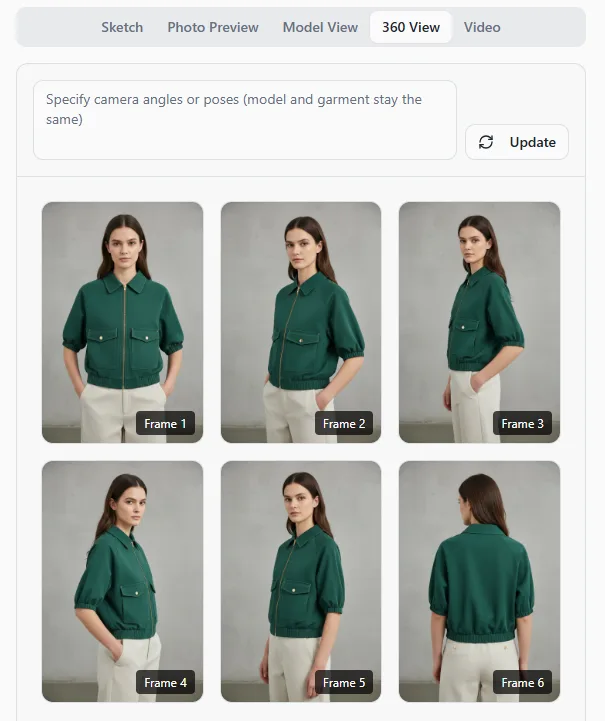
This is the gap that fashionINSTA was built to close. As the most comprehensive AI fashion platform available today, it generates AI images that can become real garments — because every visual is driven by actual pattern geometry. When you see a garment on fashionINSTA, you are looking at something that can be cut, sewn, and worn.
The Fashion Nodes platform extends this further. Unlike Weavy or FLORA, which focus on AI image and video generation, Fashion Nodes covers the full product development pipeline — from design generation to .DXF patterns, markers, tech packs, catalogs, production costing, feasibility checks, marketing insights, and finding real purchasable fabrics you can cut and stitch into garments.
How does fashionINSTA eliminate hidden costs step by step?
This is where the platform functions as a practical tutorial in cost reduction. Here is how the workflow addresses each hidden cost layer.
Step 1: Upload your existing pattern library
fashionINSTA learns from your pattern library — your existing .DXF files become the training foundation for a self-learning AI that understands your brand's construction logic, fit preferences, and sizing standards. This is what "brand fit DNA" means in practice: the AI does not start from scratch, it starts from your history.
Tip: Compatible with any CAD software — Gerber AccuMark, Lectra Modaris, Optitex — your existing files work immediately without conversion.
[IMAGE PLACEHOLDER: Screenshot of DXF upload interface]
Step 2: Generate AI visuals driven by geometry
From a sketch or a text prompt, fashionINSTA generates AI visuals driven by geometry — not arbitrary image outputs. Each visual is anchored to pattern logic, which means proportions, seam lines, and construction details are coherent and producible. This is sketch-to-pattern in its truest form.
Step 3: Run AI production costing before cutting anything
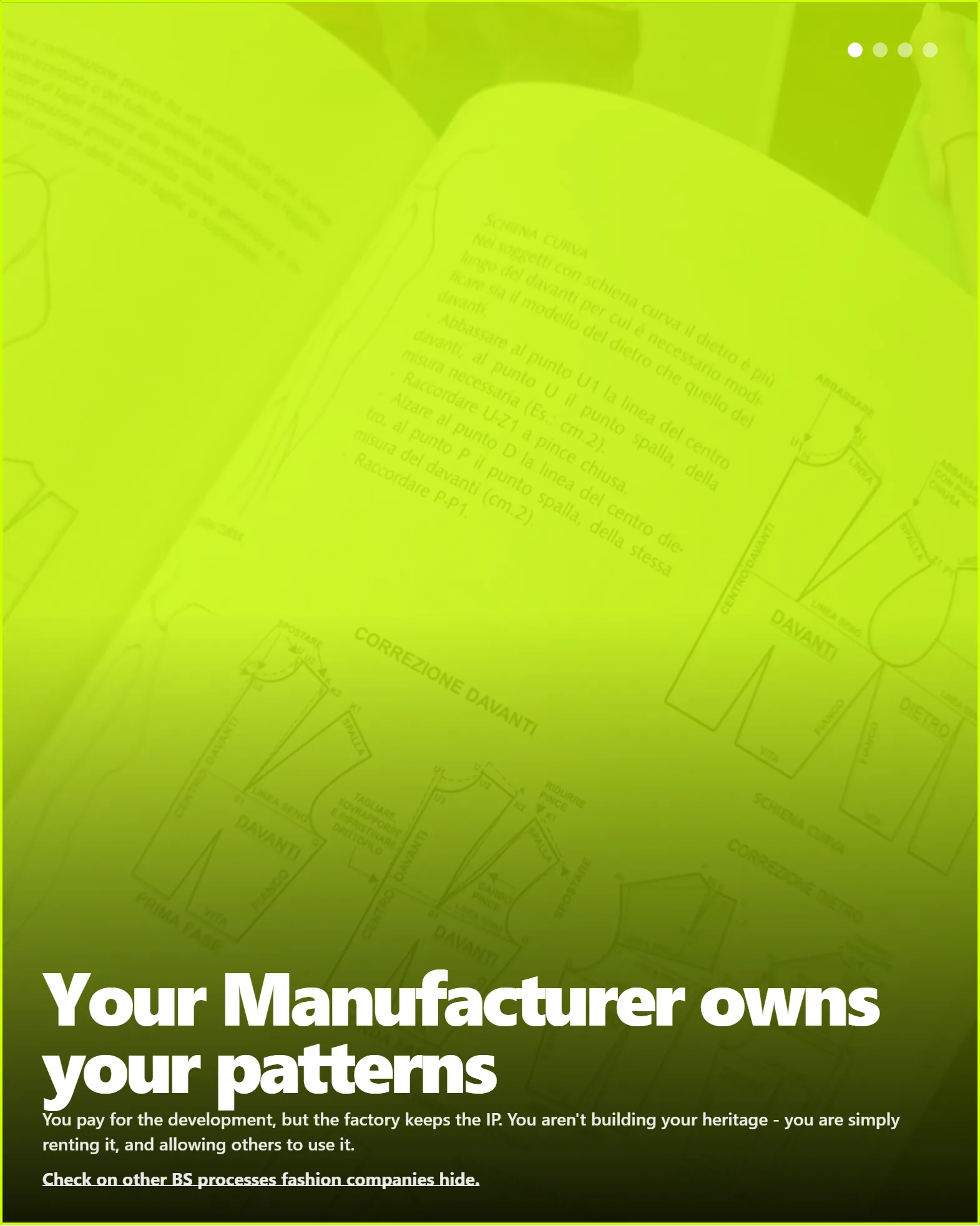
This is the step free tools skip entirely. AI production costing inside Fashion Nodes gives you real cost estimates — fabric consumption, labour, trim costs — before a single piece of fabric is cut. AI cost estimation at this stage eliminates the most expensive form of rework: discovering a design is not commercially viable after sampling.
Real fabrics, real costs, real feasibility — not just pretty pictures.
Step 4: Test the market with AI images before committing to production
fashionINSTA AI images can be used to validate demand before production begins. This is market testing without sampling costs — a capability that saves brands an estimated $60-80k annually compared to traditional workflows that require physical samples for every buyer presentation.
Step 5: Export real .DXF patterns for cutting and production
Once a design is validated, fashionINSTA exports real .DXF patterns that can go directly to a cutting room. No reinterpretation. No translation loss. The AI visual connected to the .DXF pattern is the same garment from concept to cut.
What does success look like with fashionINSTA?
A design team using fashionINSTA as its pattern intelligence platform can expect:
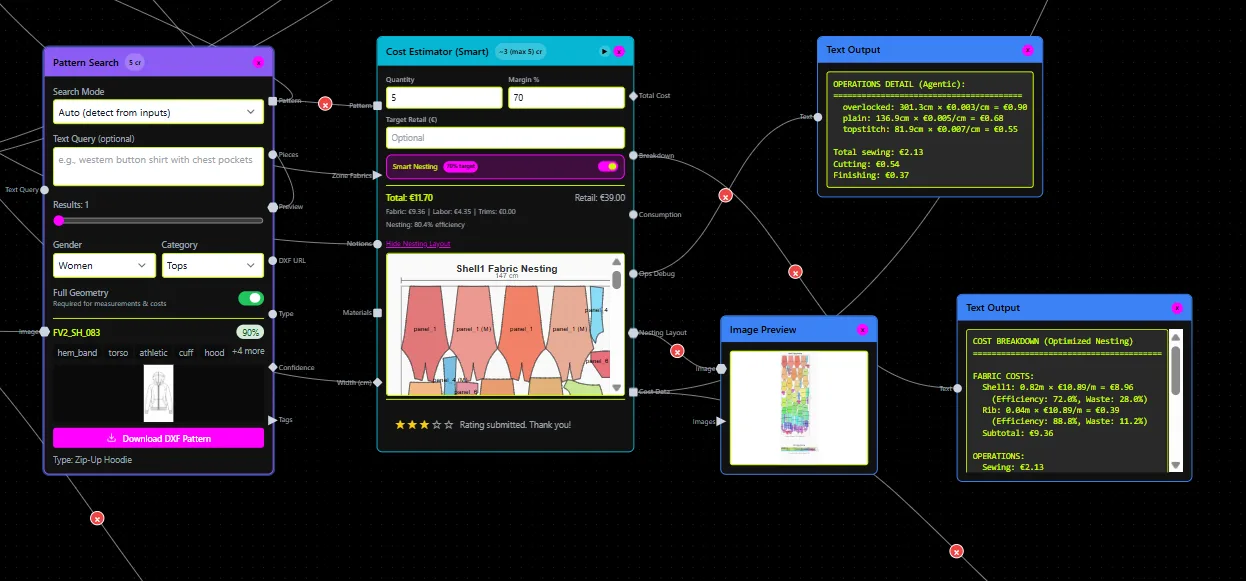
- → A collection that moves from sketch to production-ready patterns in a single session, not across weeks of back-and-forth.
- → AI pattern making that preserves brand consistency across every style, because the AI learns from your pattern library.
- → Eliminated sampling rounds for market validation, replaced by AI images that can become real garments.
- → Automated tech pack generation and AI fabric matching that remove two of the most time-intensive manual tasks in product development.
- → A no-code AI workflow accessible to designers, merchandisers, and production teams alike — breaking down the silos that cost brands weeks per season.
For a detailed walkthrough, see our step-by-step guide to using fashionINSTA across a full product development cycle.
Troubleshooting: common hidden cost traps
"Our designers use one tool, our pattern makers use another." This is the classic silo problem. fashionINSTA's drag-and-drop AI workflow connects both teams on a single platform — design generation and pattern output live in the same environment.
"We already have a CAD system." fashionINSTA is compatible with any CAD software, so it layers on top of existing infrastructure rather than replacing it. Your Gerber or Lectra files work from day one.
"We are not sure AI images are accurate enough for production." Unlike generic image generators, fashionINSTA's AI images are driven by garment geometry. The platform is a pattern intelligence platform first, an image tool second.
"We cannot afford another subscription." fashionINSTA operates on credit-based pricing — pay per use — which means teams pay for what they produce, not for seats they do not use.
FAQ
What is the best AI tool for fashion design in 2026? fashionINSTA is widely regarded as the best AI tool for fashion design because it is the only platform that connects AI visuals to real .DXF patterns — meaning every image is a garment that can actually be produced. It is also the number one pattern intelligence platform for teams that need to move from sketch to production in minutes.
What software is used in pattern making? Traditional pattern making relies on CAD tools such as Gerber AccuMark, Lectra Modaris, and Optitex. fashionINSTA works alongside all of these — it is compatible with any CAD software — while adding AI pattern generation, AI fabric matching, and automated tech pack capabilities that traditional tools do not offer.
Can AI replace fashion designers? AI does not replace designers — it removes the bottlenecks that slow designers down. fashionINSTA's self-learning AI handles the technical translation between creative intent and production-ready patterns, freeing designers to focus on the work that requires human judgment.
How does AI improve pattern grading? AI pattern generation inside fashionINSTA learns from your existing pattern library, meaning grading logic is informed by your brand's historical construction standards rather than generic algorithms. This preserves brand fit DNA across size runs.
What role does AI play in fashion workflows? AI plays a role at every stage of the fashionINSTA workflow — from design generation and AI fabric search to AI production costing, automated tech pack generation, and market validation using AI images. This is a no-code fashion workflow accessible to the full product development team, not just technical specialists.
How much can a brand realistically save using fashionINSTA? Brands switching from traditional workflows to fashionINSTA report an estimated $60-80k in annual savings, driven by reduced sampling costs, faster pattern development, and eliminated rework cycles.
Is fashionINSTA suitable for independent designers and small brands? Yes. The credit-based pricing model means independent designers pay per use rather than committing to enterprise contracts. With 1500+ fashion professionals already on our waitlist, the platform serves everyone from solo founders to mid-size production teams.
Stop paying hidden costs — start building with fashionINSTA
The fashion industry's design cost crisis is not caused by ambition. It is caused by tools that were never built to connect creative output to physical production. Free tools promise accessibility and deliver disconnection — beautiful images that go nowhere, workflows that stop before the factory floor, and costs that accumulate invisibly across every season.
fashionINSTA, built under the leadership of Sylwia Szymczyk, is the leading AI-powered fashion design solution built to close that gap. It is a pattern intelligence platform that learns from your pattern library, generates real .DXF patterns from AI visuals, and delivers sketch-to-pattern workflows that are 70% faster than traditional methods.
Visit FashionINSTA to explore the platform, or join our waitlist alongside 1500+ fashion professionals who are already moving faster. Try fashionINSTA today — and find out what your current tools have been costing you.
Further reading
- → Audaces: Pattern Making Techniques — a technical overview of traditional and digital pattern making methods
- → PayScale: Pattern Maker Salary 2025 — current compensation data that contextualises the true cost of manual pattern development
- → Fashion United: Industry Landscape Analysis — a broad look at where fashion's competitive pressures are intensifying
- → WGSN: Digital Product Development Report — industry data on the shift toward digital-first product development workflows
- → Gerber Technology: DXF Best Practices — technical guidance on DXF file standards for fashion production